 I’ve assigned Margaret Oliphant’s Autobiography many times over the years in the graduate seminar I’ve offered on Victorian women writers. I read it first myself in a similar seminar offered by Dorothy Mermin at Cornell: I realized later that this was while she was working on her excellent book Godiva’s Ride: Women of Letters in England 1830-1880, which I have always recommended to students as background reading in my course. I’ve usually focused on Oliphant’s self-conscious and often defensive positioning of herself as a woman and a writer (“I have written because it gave me pleasure, because it came natural to me, because it was like talking or breathing, besides the big fact that it was necessary for me to work for my children”) and especially on her much-quoted comments about George Eliot, which emanate both bitterness and pathos (“Should I have done better if I had been kept, like her, in a mental greenhouse and taken care of? . . . No one even will mention me in the same breath with George Eliot”).
Oliphant was incredibly prolific. I’ve read and enjoyed two or three of her 80+ novels as well as some of her short fiction and quite a bit of her criticism; I included her essay “Modern Novelists—Great and Small” in my Broadview anthology. But it’s the Autobiography that has made the strongest impression on me, as it did on Virginia Woolf, who though generally disparaging about Oliphant (notably in Three Guineas) singled the Autobiography out as “a most genuine and moving piece of work.”
It isn’t Oliphant’s literary or professional ruminations that are “moving,” of course; it’s her incredibly raw accounts of the deaths of her three children. How many times in class did I talk about how heartbreaking these sections are—just as, so many times, I have run down the sad record of the Brontë children’s deaths as part of my introductory lectures for Jane Eyre or Villette or The Tenant of Wildfell Hall, or noted that part of Gaskell’s impetus for writing Mary Barton was her struggle to cope with her grief after the death of her baby son. Imagine, I always said, the death of a child. How terrible. How terribly sad.
Now, of course, I don’t have to imagine it, and when I picked up Oliphant’s Autobiography again this week I found that it was not so much terribly sad as terribly familiar. “I have not been resigned,” she says after the shockingly sudden death of her ten-year-old daughter Maggie, her “dear bright child,” on a trip to Rome in 1864; “I cannot feel resigned, my heart is sore as if it was an injury.” “The hardest moment in my present sad life,” she goes on,
is the morning, when I must wake up and begin the dreary world again. I can sleep during the night, and I sleep as long as I can; but when it is no longer possible, when the light can no longer be gainsaid, and life is going on everywhere, then I, too, rise up to bear my burden. How different it used to be! . . . Things must be better than one thought, must be well, in a world which woke up to that new light, to the sweet dews and sweet air which renewed one’s soul. Now I am thankful for the night and the darkness, and shudder to see the light and the day returning.
Her grief throws her into agonizing religious doubt, especially when she wonders what Maggie might have felt at their separation (“Did she not stop short there and say, ‘Where is Mama?’ . . . This thought of very desolation”). She seeks but does not find consolation in the conviction she clings to, that “God cannot have done it without a reason.” I do not share her religious beliefs, but I understand her desperate struggle to reconcile her shocking loss with ideas about her life and its meaning and direction that she had taken for granted before.
 Twenty-one years pass between these painful sections and the next section of the Autobiography, and in that gap is, as she notes, “a little lifetime.” “I have just been rereading it all with tears,” she says, “sorry, very sorry for that poor little soul who has lived through so much since.” Writing those words in 1885, she had no idea how much more sorrow lay ahead. First came the death of her son Cyril in 1890 (“I have been permitted to do everything for him, to wind up his young life, to accept the thousand and thousand disappointments and thoughts of what might have been”), and then in 1894, the death of her son Cecco (“The younger after the elder and on this earth I have no son—I have no child. I am a mother childless”). “What have I left now?” she laments. “My work is over, my house is desolate. I am empty of all things.” In her despair (“It is not in me to take a dose and end it. Oh I wish it were”), her vast literary output brings her no comfort: “nobody thinks that the few books I will leave behind me count for anything.”
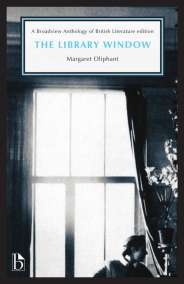 She kept writing, though, not just the Autobiography—which she reconceived somewhat, pragmatically, once it was no longer intended for her children, as something lighter and more anecdotal—but also more fiction, including her excellent ghost story “The Library Window,” recently reprinted by Broadview. It’s not hard to understand the appeal of ghost stories to a mother whose beloved children would have been there but not there every waking minute. I know what that’s like.
The Autobiography concludes on a note of supreme desolation:
And now here I am all alone
I cannot write any more.
It’s sad to think that Oliphant doubted her writing would last, that it would “count for anything.” If this were my seminar, something we’d probably talk about is why it might be that it’s her most personal writing, her writing as a mother, that (for me and Woolf, anyway) seems the most powerful. Are we just (and I do think Woolf was) underestimating her skill as a novelist, and the value of the contributions she made in other forms? How does the reception of the Autobiography play into the contradictions she, like so many of her contemporaries, knew were assumed between the identities “woman” and “writer”? (“Henceforward,” Elizabeth Gaskell writes in her biography of Charlotte Brontë, “Charlotte Brontë’s existence becomes divided into two parallel currents—her life as Currer Bell, the author; her life as Charlotte Brontë, the woman.”) I’m not teaching now, though, just reading, and grieving my own dear bright child.
 I’ve been thinking about how many times people have expressed their love and sympathy for us by saying “there are no words,” and then about how important it has felt to me, since Owen’s death, to try to find some words for what it feels like to lose him and grieve for him. Writing has helped, even though I have also often felt the truth of Tennyson’s lines:
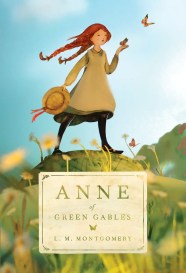 The last three months haven’t been very good reading months for me: I have picked up and then put back down a lot more books than I have finished. This is true of new (to me) books, at any rate: since January I have actually reread quite a few books that were easy and comforting, including the first four Anne books (thanks to a dear friend who sent me a lovely box set), several favorite romances and mysteries, and The Beethoven Medal (part of one of
  In January, I read Lauren Groff’s Matrix. I expected to like it more than I did. This is not to say I didn’t like it; the premise was fascinating, and I remember being impressed at how vividly Groff built her world, and how strong, strange, and specific she made Marie as a character. Female agency and empowerment, creativity, desire, spirituality: the book explores them all, with a compelling combination of grittiness and lyricism. For some reason, though, I was disappointed when I learned that this particular work of historical fiction is much more fictional than historical—that almost nothing is actually known about Marie, that Groff’s character and story is all invention. This retroactively took some of the life out of the book for me, which is hardly fair given that I read and love a lot of historical fiction that is mostly made up.
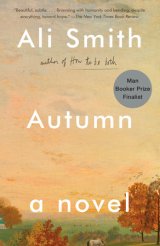 In February, I read through Ali Smith’s seasonal quartet. The sabbatical project I am picking away at has to do with the relationship between fictional form and social or political engagement (or, to put it another way, with fictional form as itself a kind of social or political engagement). With this in mind I was poking around in information about the Orwell Prize and this led me to some articles and interviews about Smith’s win, which in turn made me curious about whether her series might make a good contemporary example for me. I reread Autumn, and then picked up the other three and read them all through. By the end of Spring I was a bit less sure about using this series for my purposes, but some of my hesitation came from feeling unqualified to work on Smith: both her style and her influences, including the explicit invocation of Shakespeare plays, are a bit far afield for me. That doesn’t rule the books out, of course; it would just mean I would have to work hard to figure out how to talk about them, a prospect which is actually kind of appealing, or it would be if my mind didn’t feel so scattered all the time right now.
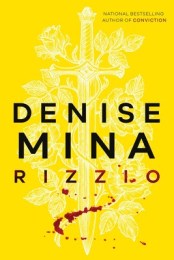 In March I read Denise Mina’s Rizzio, another historical novel I ended up being a bit disappointed in. There was something awkward (to my reading ear, anyway) about the combination of meticulous historical detail and a too-contemporary idiom, especially in the dialogue. Mina is good at foreboding and action, as you’d expect from a crime novelist. I reread Mrs. Palfrey at the Claremont, which I loved all over again, though it is even more melancholy than I’d remembered. Then I read Louise Erdrich’s The Sentence, which went really well at first and then started (I thought) to lose its focus and ended up feeling scattered, full of good bits but not a satisfying whole. I read two recently reissued novels by Rosalind Brackenbury, A Day to Remember to Forget and A Virtual Image, for an upcoming review (I finished a third, Into Egypt, yesterday). My last March book was Katherine Ashenburg’s Her Turn, which I enjoyed a lot. It’s less ambitious than some of my other recent reading, but it seemed to me to do well what it set out to do, including explore the possibilities and implications of both revenge and forgiveness in the context of our most intimate relationships.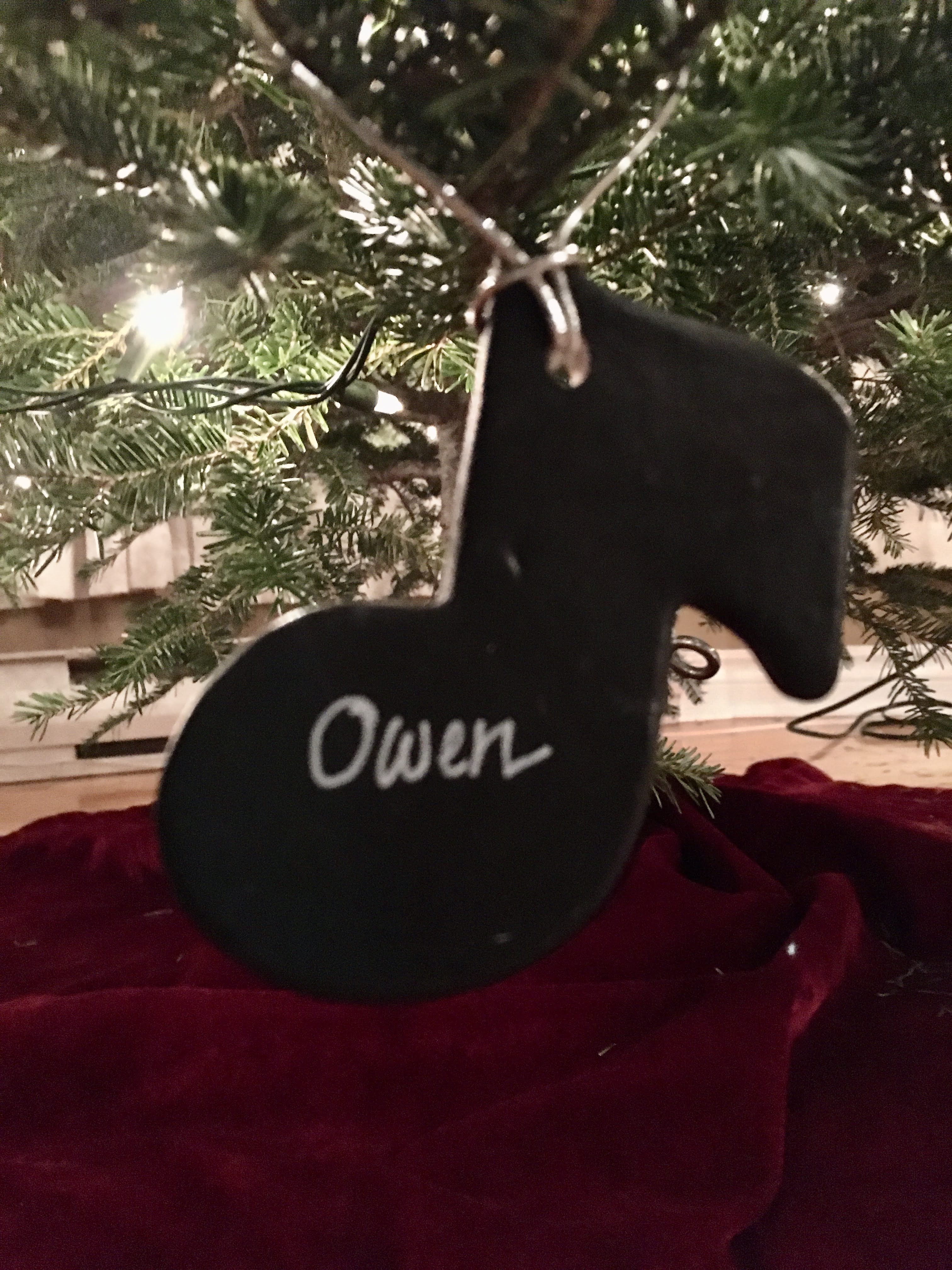




 It is terrible, the damage grief does to one’s own generosity. I don’t like it, though for now I can’t seem to help it. Anger is often mentioned as one of the ‘stages’ of bereavement; I haven’t seen any discussion of selfishness, but that’s what it feels like, or self-absorption. All these years reading Middlemarch and now I can’t displace myself and my sorrows from the center of my narrative: I’m disappointed in myself. How I have always admired Dorothea’s resolution after her night of mourning her lost love: “She said to her own irremediable grief, that it should make her more helpful, instead of driving her back from effort.” Of course, thinking the man you loved is not the man you thought him to be—even believing that your chance at joyful passion is over—is hardly the same as knowing your child walked away from you into the night and will never come back.
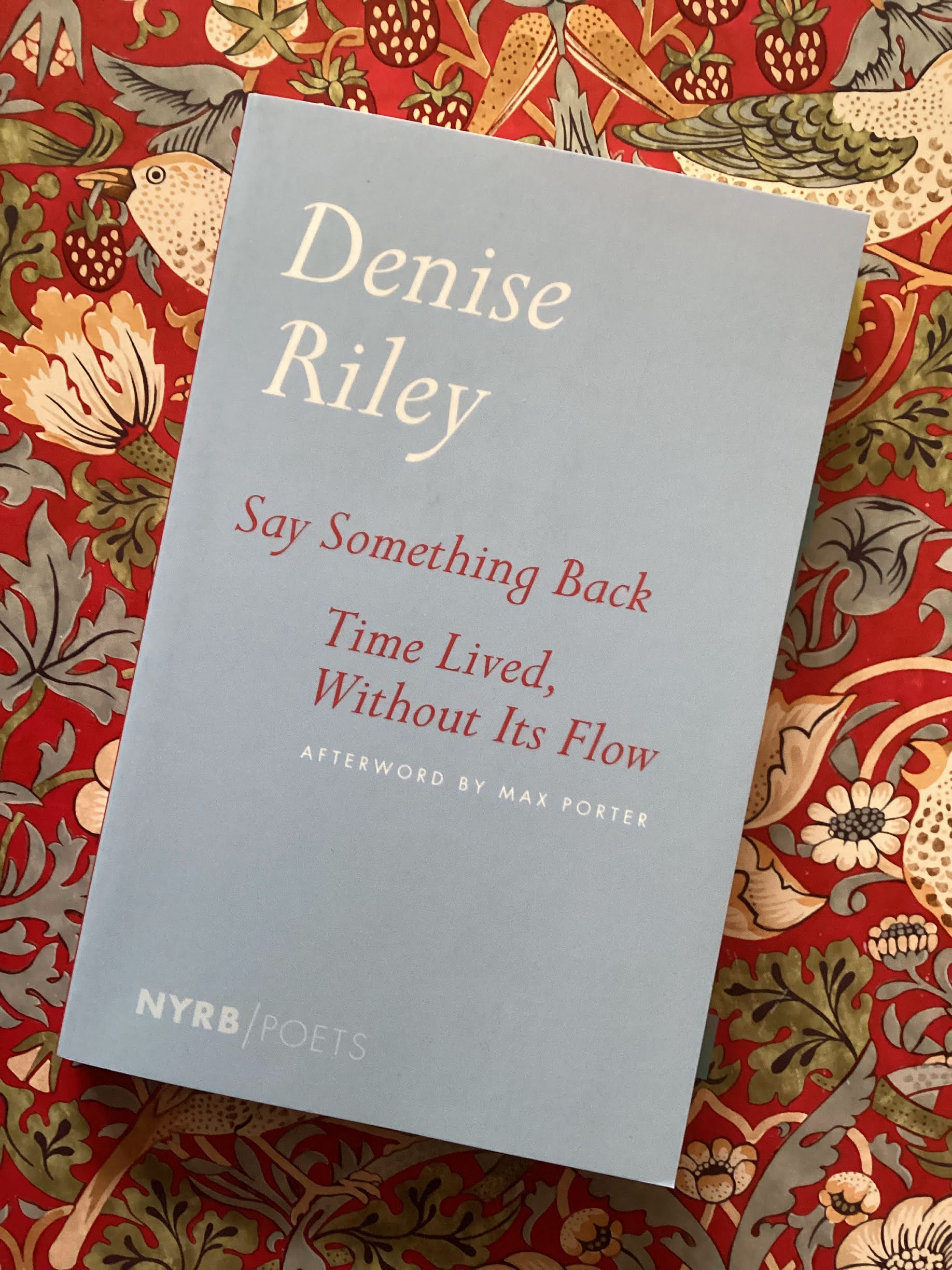
 The other question I’m hearing more and more is some variation on “have you considered talking to someone?”—meaning, of course, someone else, someone professional, someone who knows what to say. (Maybe that’s why the “how are you doing” question feels a bit loaded, as the combined subtext starts to seem like “this has gone on long enough.”) This has made me think again about Ignatieff’s comments in On Consolation about our current reliance on “therapeutic professionals” who “treat our suffering as an illness from which we need to recover.” “When suffering becomes understood as an illness with a cure,” he says, “something is lost.” I don’t think anyone who has suggested this to me means to imply that it is wrong for me to still be grieving; again, I know that they want to help, they want—for my sake—for me to be feeling better, doing better, living better. I don’t know if a therapist would approach my grief as something to be fixed or cured. I hope not: I don’t want to “recover” from it, and I don’t think I could. (“Some part of you may still remain in the underworld,” Riley says, and that seems right, meaning both true and appropriate.) I will find out, though: I have found someone to talk to (it’s not an easy process, as many of you probably know), though they can’t fit me in for a while. It is hard to think even that far ahead, but it seems likely I will still need whatever it is that they have to offer.
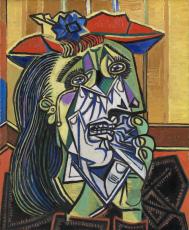 The two things I’ve heard or read most often about grief are “it takes time” and “wait until you’re ready.” These are helpful comments, as far as anything is helpful; they lessen my anxiety and confusion by reminding me that there is no timeline, there are no rules, there are no ‘oughts’ that follow from this shocking and disruptive ‘is.’ They are also, less reassuringly, very vague: nobody knows how much time or can say exactly what “it” is, or when, if ever, I’ll be “ready” for the things I currently can’t face doing—sorting through his belongings, for example, so poignantly scant and so heartbreakingly reminiscent of him. But it has been good to remind myself that it is OK for now just to get from one day to the next as best I can.
 The world won’t wait for me, though. The
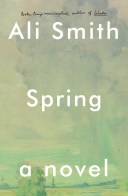 As it happens, my recent reading has also been seasonal, though I don’t think there’s any connection to these ruminations. At any rate, if there is a link, it’s not conscious or deliberate. Prompted by my attempts to conceptualize my book project, I looked up information about Ali Smith’s recent Orwell Prize win. What I read about it and her it sent me back to reread

 I am trying. I have read my first new book, now: Lauren Groff’s Matrix. It was a good choice

 Novel Readings