Our fall term started last week and so once again it has been warm-up time, for me and for the students. Even after all these years, I still find it hard to find my rhythm for a while: I try too hard at first, I think, always anxiously remembering that data showing that students make up their mind about you and the class in the first five minutes. I bring a lot of nervous energy to it as a result, although I also do my best to bring my genuine positivity. I am (more or less!) always really happy to be back in the classroom.
I am the undergraduate program coordinator and Honours advisor again this year, a position that comes with a course release, so I have just one class this fall. I sometimes feel guilty about that light load, especially because that one class is my beloved “19th-Century British Fiction from Dickens to Hardy.” It is a pretty big job, though: advising alone takes hours, not just because there are so many variations (hardly anyone is doing just a straight BA or Honours in English – there are combined honours and minors of all kinds, each with their own requirements and bureaucratic challenges) but because the software we rely on is sometimes more baffling than clarifying and because administrative services across campus are woefully understaffed. In the next few days I will begin drafting our slate of classes for next year, a process that was delayed last year first by the lockout and subsequent strike action, and then by some sudden and fairly radical interventions by our Dean’s office. We are all hoping it goes more quickly and smoothly than last year, not to mention more collegially, but there’s no way it can be anything but disheartening in some respects as our faculty complement is so depleted that we are going to be hard-pressed to offer any courses in a number of once well-represented fields.
Still, (to paraphrase We Rate Dogs!), the students are good again this year. It’s early days yet, but the room is full, the faces are attentive, the comments are smart, and there are plenty of signs that they are actually reading Hard Times. One of my favourite moments so far was overhearing one student telling another that while she liked it OK, it wasn’t her favourite Dickens novel. What is? David Copperfield. Hooray! And, fair! Hard Times isn’t my favourite Dickens novel either, but it’s so strange and insistent and fabular that I have come to appreciate it deeply, and even to be deeply moved by its relentless demand for a world that nourishes our humanity. It’s so weirdly timely, too, from its indictment of reductive ideas of what education is for to its depiction of powerful men who bluster and bloviate and bully without apology. In Dickens’s world, though, they either learn better or get their comeuppance. We should be so lucky in our own.
I’d like to keep this series up more regularly this year, but I said more or less that last year and didn’t do it. I think it was partly the sense that I’ve said what I’ve got to say about teaching at this point in my career: it’s not that I’m just going through the motions while I’m teaching (far from it, I hope!), but that my priorities and commitments and practises are well established. It has, after all, been 31 years since I started teaching at Dalhousie–and almost 20 since I started this blog! The hopes I had for it at times as offering a counter-narrative to negative accounts of higher ed have long faded, though the practice it has given me at articulating both how and why I teach has had its own unexpected value, some of which I hope will bear fruit in the George Eliot book that I am now under contract to write. As she says in Middlemarch, though, who shall tell what may be the effect of writing? Only if I post will I find out what I have to say this year, some of which might be new and different. And I do anticipate some coming changes that I will also want to write about, when the time is right.
In my last post I noted that I had been looking up passages in The Mill on the Floss for reasons I would say more about in another post. This is that other post! It’s about some exciting news–exciting for me at least.
Back in February, I got a surprise email from an editor at Routledge asking if I would be interested in providing the George Eliot volume for a series they publish with the general title Reading Literature Today. I looked pretty closely at the existing volumes before agreeing, because (as I also explained to the editor) my interest depended on what kind of book exactly they were looking for. They take a range of approaches, from fairly specialized edited collections to ones that are more clearly aimed at making their subjects accessible to non-academic audiences. It will not surprise anyone who has followed my work at all that it is the latter rather than the former kind of book that I said I would want to write, with a special interest in making ‘reading George Eliot’ a more inviting and rewarding experience for general readers, not just students. The editor was receptive–even enthusiastic–so I sent a proposal to her in June, received the feedback in August, and now have a signed contract to write Reading George Eliot: An Introduction by March 2028.
Honestly, I can’t think of a better project to be working on as I approach the end of my teaching career. (How soon will that be? Stay tuned for further updates!). There’s nothing I have worked harder at, enjoyed more, and felt more proud of than introducing new readers to George Eliot’s fiction, as a teacher and also as a modestly semi-public intellectual. While my way of doing that–from my ideas about Eliot as a thinker and novelist to my specific tactics in the classroom–is not everyone’s way (and some of the feedback on the proposal certainly made this point), well, I’m the one they asked, and like Lily Briscoe I can only pursue my own vision. (I admit I have wondered what made the editor reach out to me: somehow I feel sure they went to someone more eminent first and got turned down!)
The proposal they sent me as a model was the one for the Chaucer volume, and the full sample I got was Reading Milton: An Introduction. Both were extremely helpful as I began conceptualizing the kind of book that would best represent both why and how I would want to encourage people to read George Eliot today–or any day. My proposal eventually went in its own direction, of course, and no doubt once I am really writing, the project will continue to evolve. I actually had a lot of fun working on the proposal, which was encouraging. I tried hard not to second-guess myself (begone, imposter syndrome! be quiet, gremlins!) but just to think about the kind of book I really believed in and wanted to write, one that would reflect my own expertise as a scholar as well as my decades of experience working with students–and one that also conveyed my own enthusiasm, both for George Eliot’s novels and for the process of becoming a better reader. There’s really no point, this late in my career, of committing to anything else.
I’m sure I will post more about Reading George Eliot as it begins to take shape over the next year and half. For now I’ll just say that the distinctive feature of it, as I pitched it anyway, will be its emphasis on that first word, reading, with lots of time spend modelling the process, building outward from specific passages–hence my browsing in The Mill on the Floss looking for favourite moments that might work to launch sections of the book, or perhaps even the book as a whole! As the series is intended for potential adoption as classroom supplements, I want to keep my own commentary open-ended enough that it doesn’t preempt an instructor’s own ideas and plans; I want to frame my chapters with key questions and start down some paths for answering them, but not preclude students’ own analysis and interpretation. I especially want, though (and again this won’t surprise anyone who knows my work) to make the project of reading George Eliot better seem both fun and worthwhile to people outside college and university classrooms.
I’m excited about this: can you tell? It honestly seems like the book I have been preparing to write my whole career.
I hope you didn’t think I’d abandoned my art adventures! It’s just that July and August were mostly so drearily hot and humid that I lost a lot of energy, sometimes for going out, and other times for reporting back. But I have in fact crossed off nearly all the galleries on my summer bingo card. A couple of them turned out to be closed for the summer, but I happened across others that I hadn’t originally known about or planned to go to, like the little one at Fisherman’s Cove (an outing that was also on my bingo card). I may fit one or two more in before classes begin for me next Wednesday: I see 14 Bells is actually open weekends, for instance, unlike a lot of the others on my list.
I continued to find it a hit or miss experience; I continued to find myself more drawn to watercolours; and I continued to puzzle sometimes over what makes paintings that (to my amateur eye) seem to display little technical skill worth framing and displaying. I’m not going to call out any specific examples. I do know something about modern art in a kind of general way, not just from visiting major galleries and from reading but also from watching the Great Courses art history videos; I understand that a lot of it is conceptual rather than what I might think of as pictorial, or aims to provoke ideas or reactions besides “that’s beautiful.” I understand some similar things about contemporary ‘classical’ music–but I still usually hate listening to it, and while ‘hate’ is too strong a word, some of the art I have seen is similarly unappealing. I don’t think this makes me reactionary exactly. I have very positive reactions to some abstract art! I think that for me, seeing something I recognize as artistry makes a difference, maybe.
Anyway! I took away from these outings a better sense of just how much artistic activity there is in this region, and how intensely local most of it is. I made more notes of artists whose work I did like: at the Secord Gallery on Quinpool Street, I lingered over the work of Kelly Mitchelmore; at 1274 Hollis I really enjoyed the paintings by Heather Crout and Helene Martin. In the small gallery at Fisherman’s Cove I was very drawn to Edward Wedler’s work–and was particularly interested that he does a lot of his painting en plein air. I bought a small print of one of his paintings and had a brief chat with him too, as he was on duty at the counter the day I was there. At Argyle Fine Art, I found Adele Webster’s paintings beautiful and calming: they are acrylic on board yet have something of the translucency I like in watercolour. I saw a lot of paintings at the Teichert Gallery, where you can pull out their many racks to take a look–but the process is a bit annoying and noisy, so I found it hard to be attentive or contemplative!
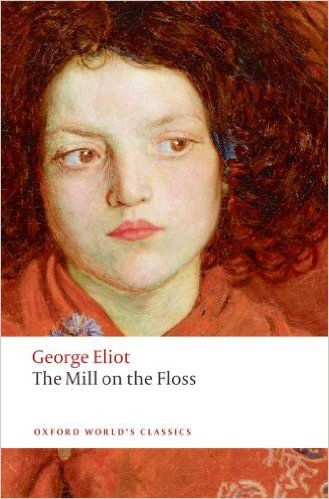
I wondered before if I would come to love the Nova Scotia landscape more through looking at it more often through an artist’s eyes. Maybe, a little? I was rereading some sections of The Mill on the Floss recently trying to choose a passage (for a purpose I will say more about in another post) and lingered over this beautiful bit:
We could never have loved the earth so well if we had had no childhood in it,—if it were not the earth where the same flowers come up again every spring that we used to gather with our tiny fingers as we sat lisping to ourselves on the grass; the same hips and haws on the autumn’s hedgerows; the same redbreasts that we used to call “God’s birds,” because they did no harm to the precious crops. What novelty is worth that sweet monotony where everything is known, and loved because it is known?
The wood I walk in on this mild May day, with the young yellow-brown foliage of the oaks between me and the blue sky, the white star-flowers and the blue-eyed speedwell and the ground ivy at my feet, what grove of tropic palms, what strange ferns or splendid broad-petalled blossoms, could ever thrill such deep and delicate fibres within me as this home scene? These familiar flowers, these well-remembered bird-notes, this sky, with its fitful brightness, these furrowed and grassy fields, each with a sort of personality given to it by the capricious hedgerows,—such things as these are the mother-tongue of our imagination, the language that is laden with all the subtle, inextricable associations the fleeting hours of our childhood left behind them. Our delight in the sunshine on the deep-bladed grass to-day might be no more than the faint perception of wearied souls, if it were not for the sunshine and the grass in the far-off years which still live in us, and transform our perception into love.
I no longer consider Vancouver my home, but I feel things deep inside whenever I fly in and finally see the mountains, or walk along the streets or beaches and in the parks, that I never feel here.
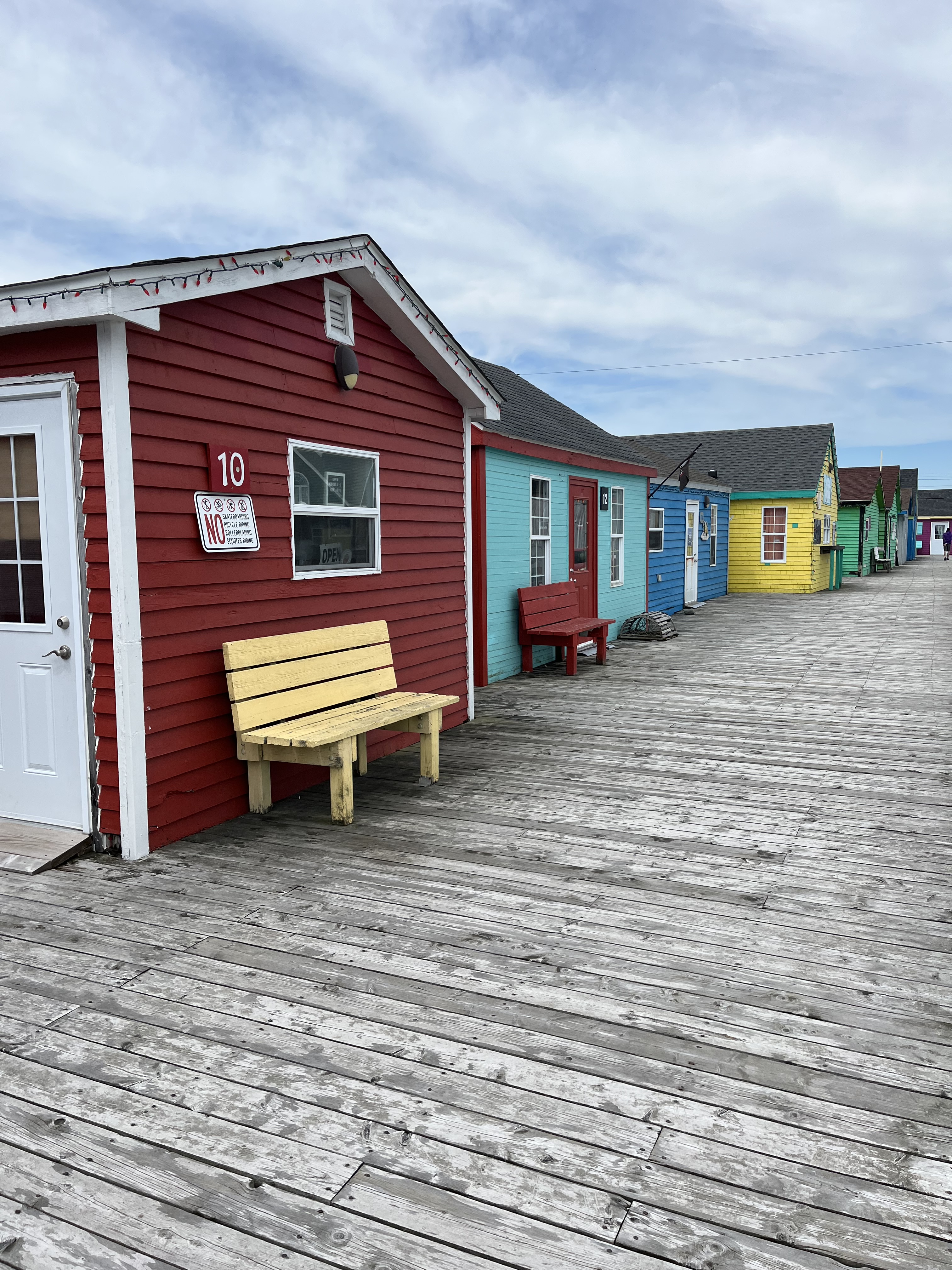
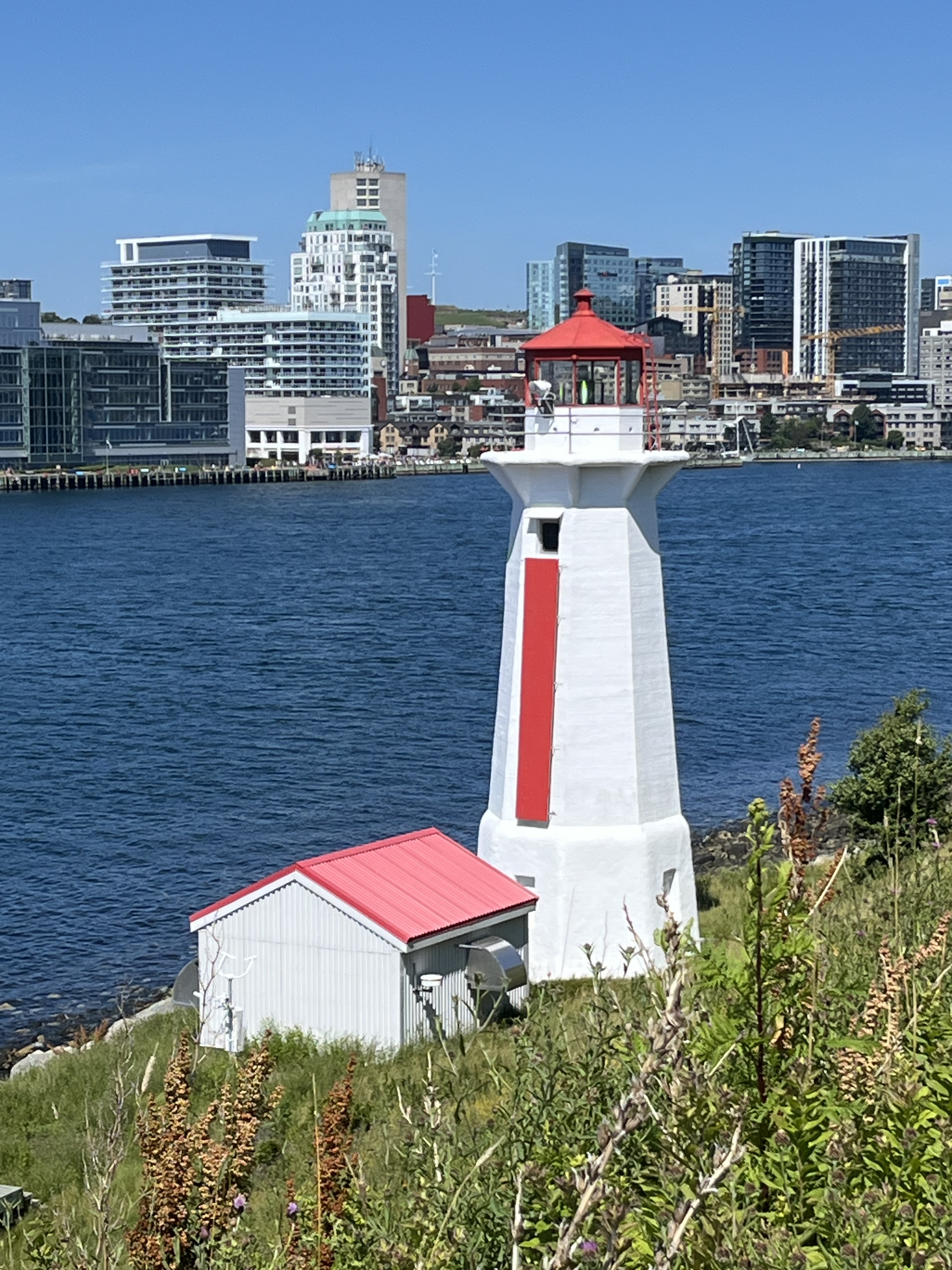
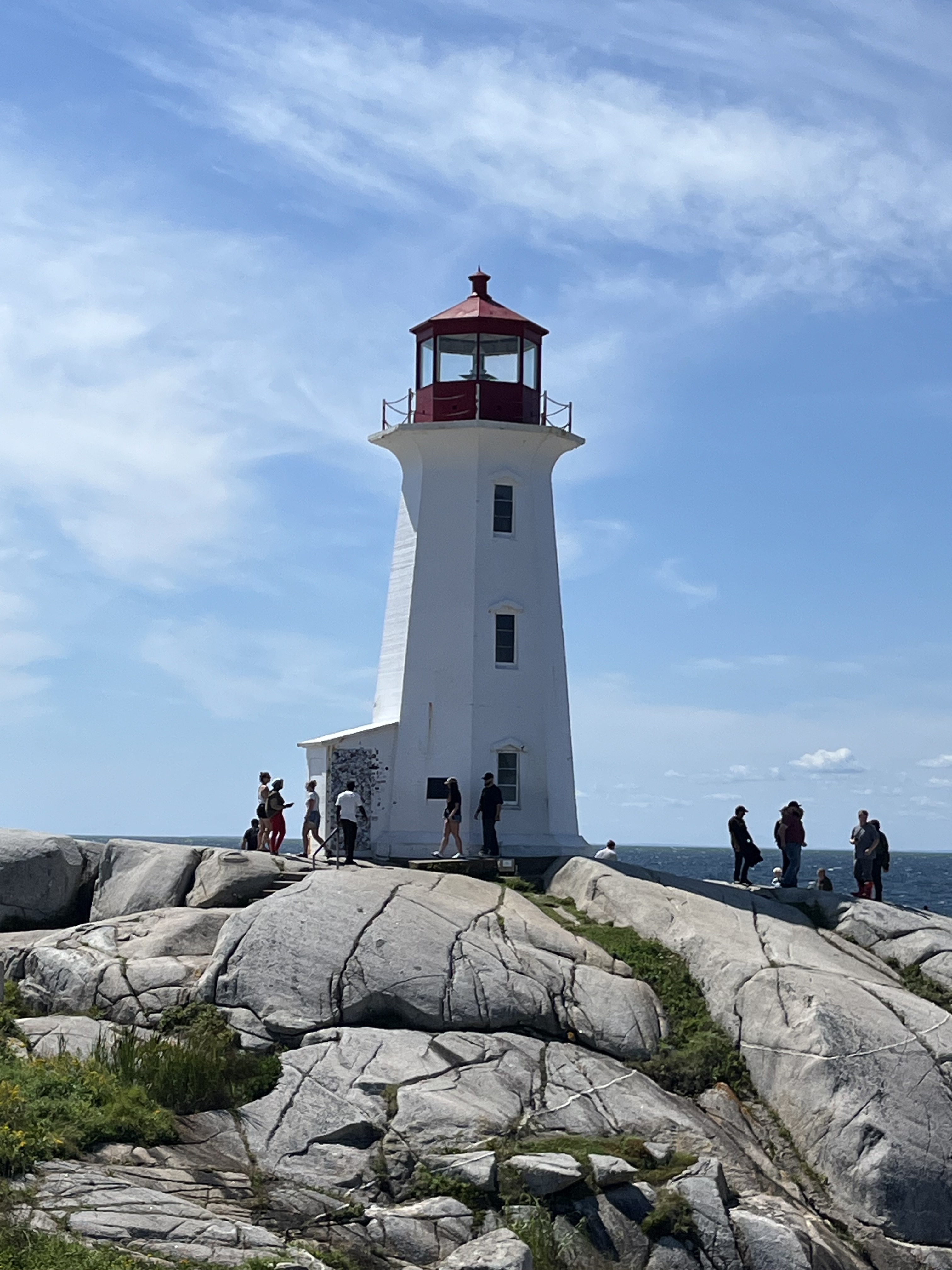
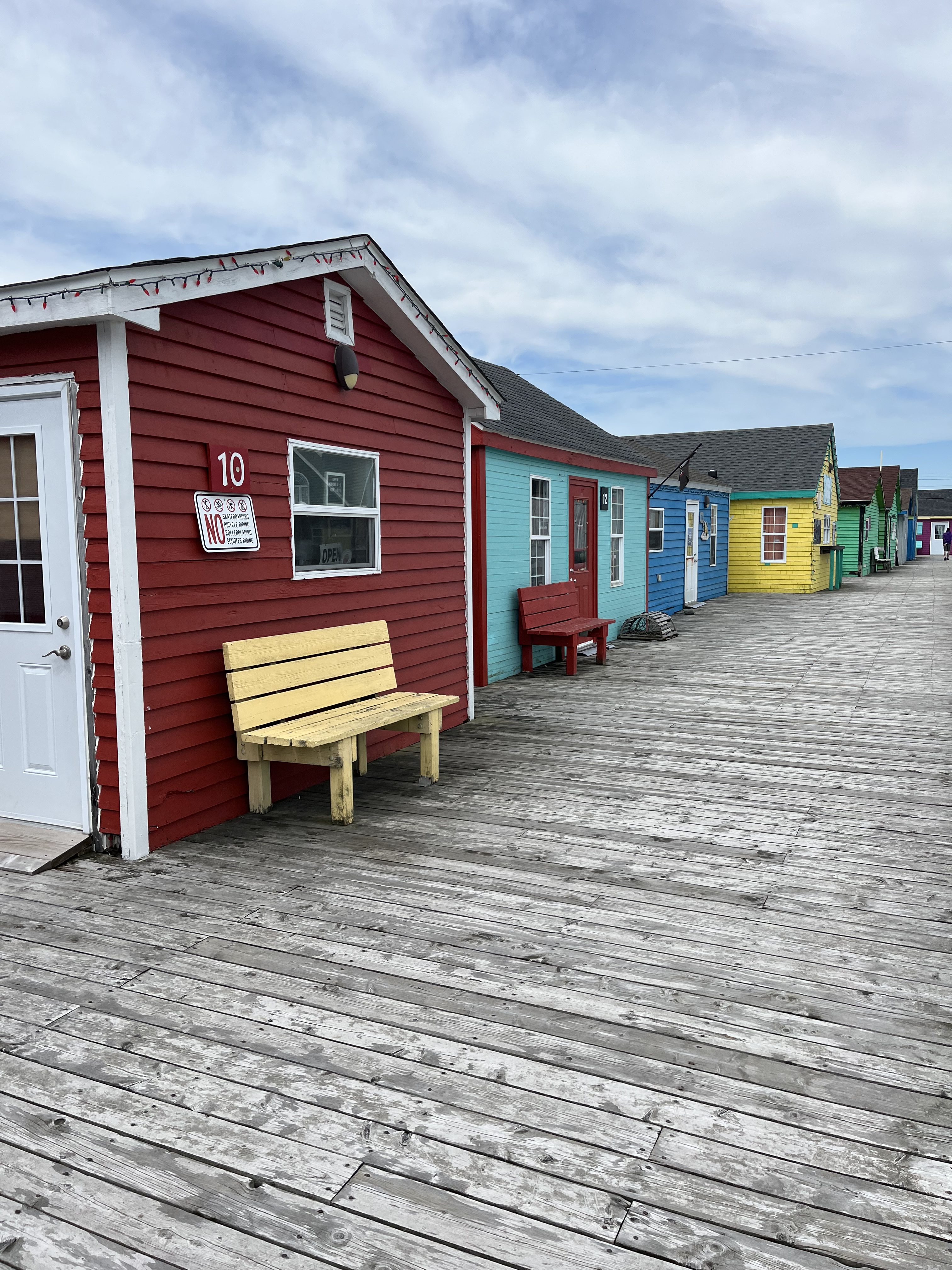
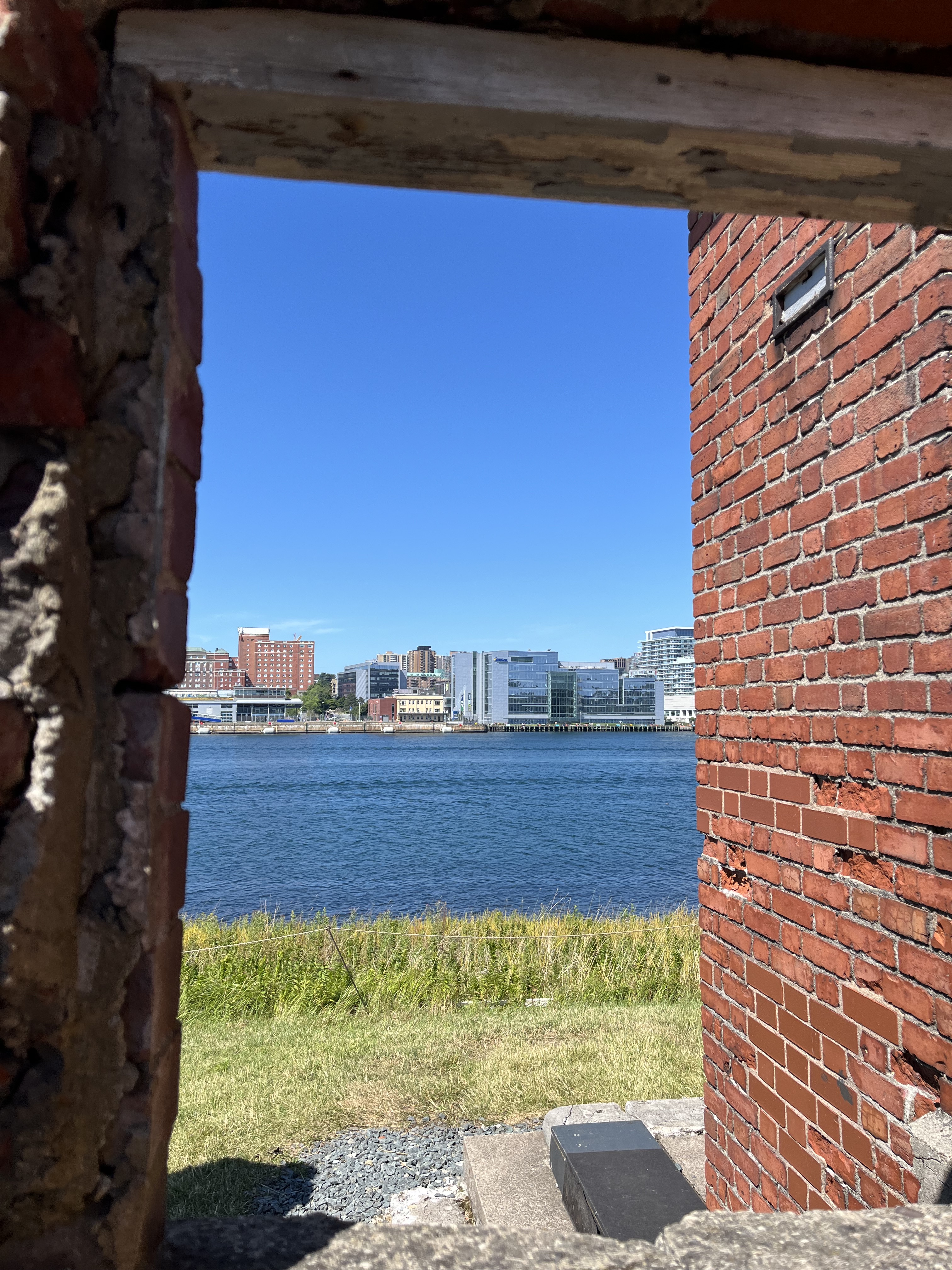
I made a point of seeing more of the local scenery myself this summer by going on outings that did not require me to drive on the highways. (I just don’t see how, if you’re doing something for fun, you can be expected to do it in a way that you find genuinely and not unreasonably stressful!) One was to Fisherman’s Cove: I’d been there before long ago and remembered it being charming, which it is, sort of. The village itself is charming, and the colourful row of little shops is sweet too, except that what they sell is just so unrelentingly cheesy and touristy. The same is true of Peggy’s Cove, which I finally (after 31 years of living in Halifax!) visited in person. Peggy’s Cove is a spectacular site, and I really enjoyed my expedition there, including the funny and informative commentary from the guide on the bus tour I took–but it really does look just like the photos, which makes it weirdly anticlimactic, and I can’t see any need to ever go back there. Just in terms of value for money, I give the edge to my trip to Georges Island in Halifax harbour. For a fraction of what it cost to go to Peggy’s Cove and a fraction of the time it took to trek out by ferry and bus to Fisherman’s Cove, I got a delightful boat trip there and back, including a loop around the island before docking there, and an interesting time poking around the fortifications and enjoying the view of the city from there.
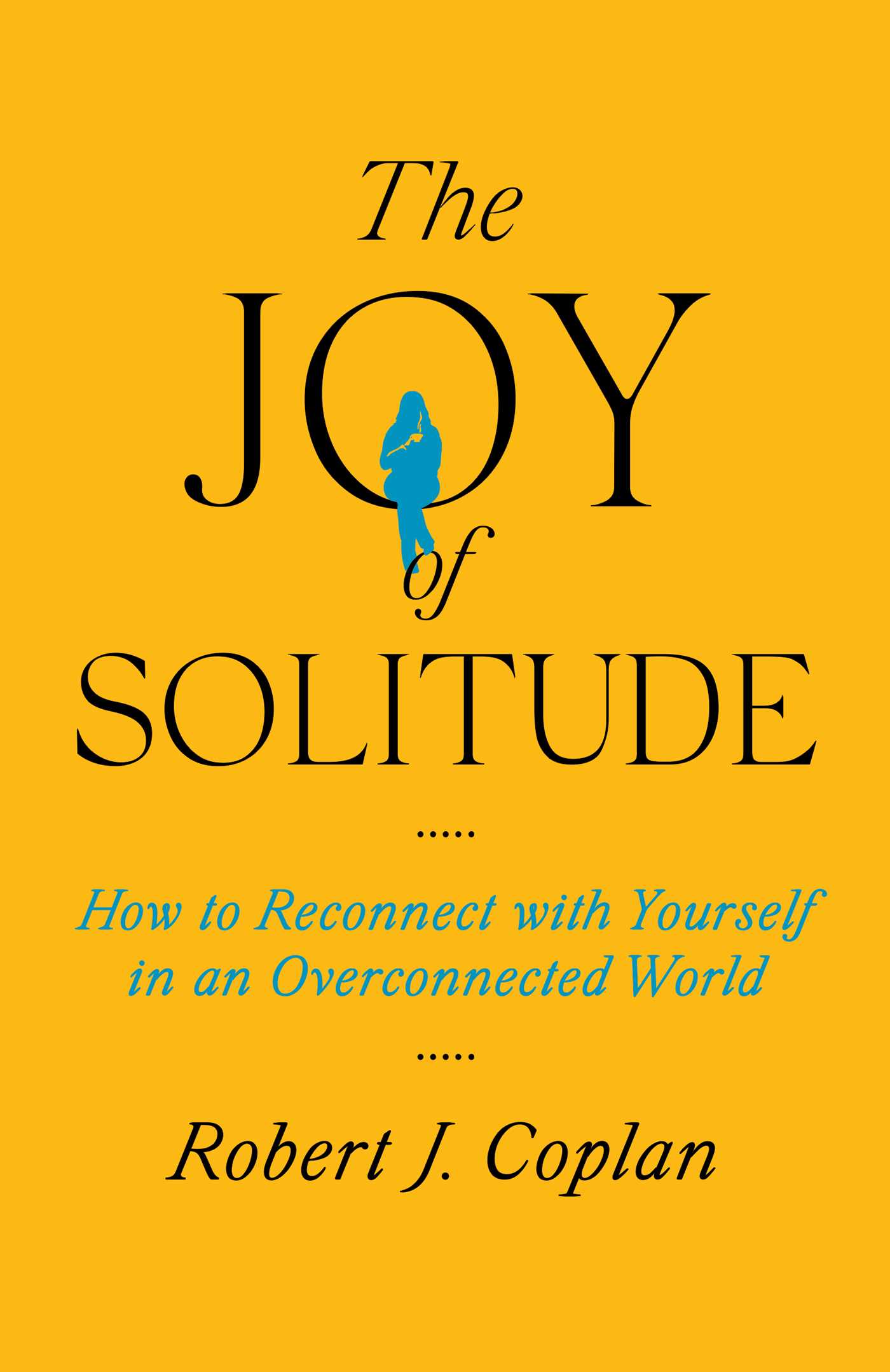
As you can tell, I made a concerted effort to have a better (richer, more interesting, less depressed) summer than I often have. (I did have work to do too, including a TLS review that will be out in the next issue, and another writing project I will say more about in a bit, as well as the usual preparation for the fall, an MA thesis to read, and bits of ongoing advising work.) On the whole, the effort was successful: it was a better summer. Still, the very phrase ‘concerted effort’ is a bit of a tell, right? I also worked hard to maintain the ‘social connections’ that my therapist is always reminding me are essential to our wellbeing. I was always happy to spend time with my friends–but again, ‘worked hard’ says something about the realities. People are busy with their own things in the summer, whether those are family things or travels or cottages: this is how it always is. Now they’re coming back and asking how my summer was and that says something too. I am working on being OK with that. I understand that social connection is a good thing, but maybe (and I have pointed this out to my therapist!) if someone just is alone a lot, it would be helpful not to constantly frame that as a problem but to work with them on approaching alone time as itself a good thing. I just finished Robert Coplan’s The Joy of Solitude and now I’m reading Solitude: The Science and Power of Being Alone by Netta Weinstein, Heather Hansen, and Thuy-vy T. Nguyen. Both books are really interesting on the research around solitude (including the need not to conflate it with loneliness)–and both books offer a potential counter-narrative to the familiar rhetoric around the current “epidemic of loneliness” or isolation that we hear so much about. There’s a chapter in the latter called “Can We Get Better at Being Alone?” and the answer, encouragingly, is yes.
I finished twelve books in August. Two were audiobooks and two (including one of the audiobooks) were rereads. I wrote up a couple of them here already: Jeanne Ray’s Calling Invisible Women and Mark Haddon’s Leaving Home–which was definitely the standout this month.
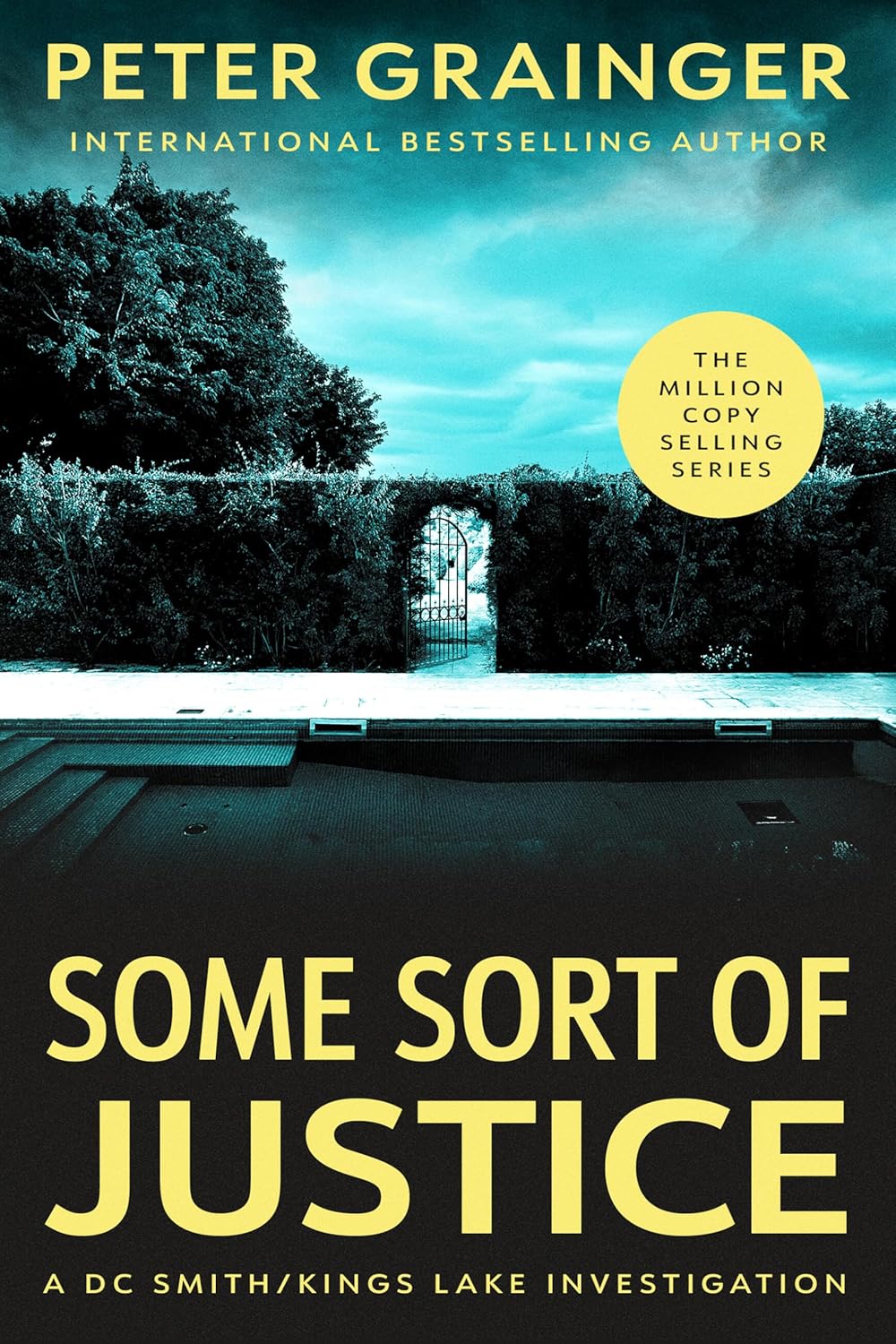
In lighter reading, I read another of Peter Grainger’s D. C. Smith mysteries, In This Bright Future. There are still a handful from the middle of the series that I haven’t gotten to you; the library doesn’t have them and the e-books go on sale intermittently so I’m waiting to snap them up when their turn comes. If you like classic British procedurals and haven’t read this series yet, I highly recommend it! They were self-published as e-boosk only initially, as I understand it, but have now been picked up by a “real” publisher and I even saw some on the shelf recently in a local bookstore. B. K. Borison’s And Now Back to You was an amusing romance (I enjoyed First Time Caller as well): predictable, but that more or less comes with the territory! I enjoyed the audiobook of Katherine Center’s Hello Stranger a lot even though I’d read the book before: credit to the narrator, Patti Murrin, who brought enough energy to it that it seemed to zip along. She made me think that Center might be generally better in audio, so I’m now listening to The Love-Haters, which I thought was just OK when I read it before. This is definitely the wild card factor with audiobooks: I was excited when my hold on The Gales of November finally came up but that narrator just was not for me, and I abandoned it after about half an hour.
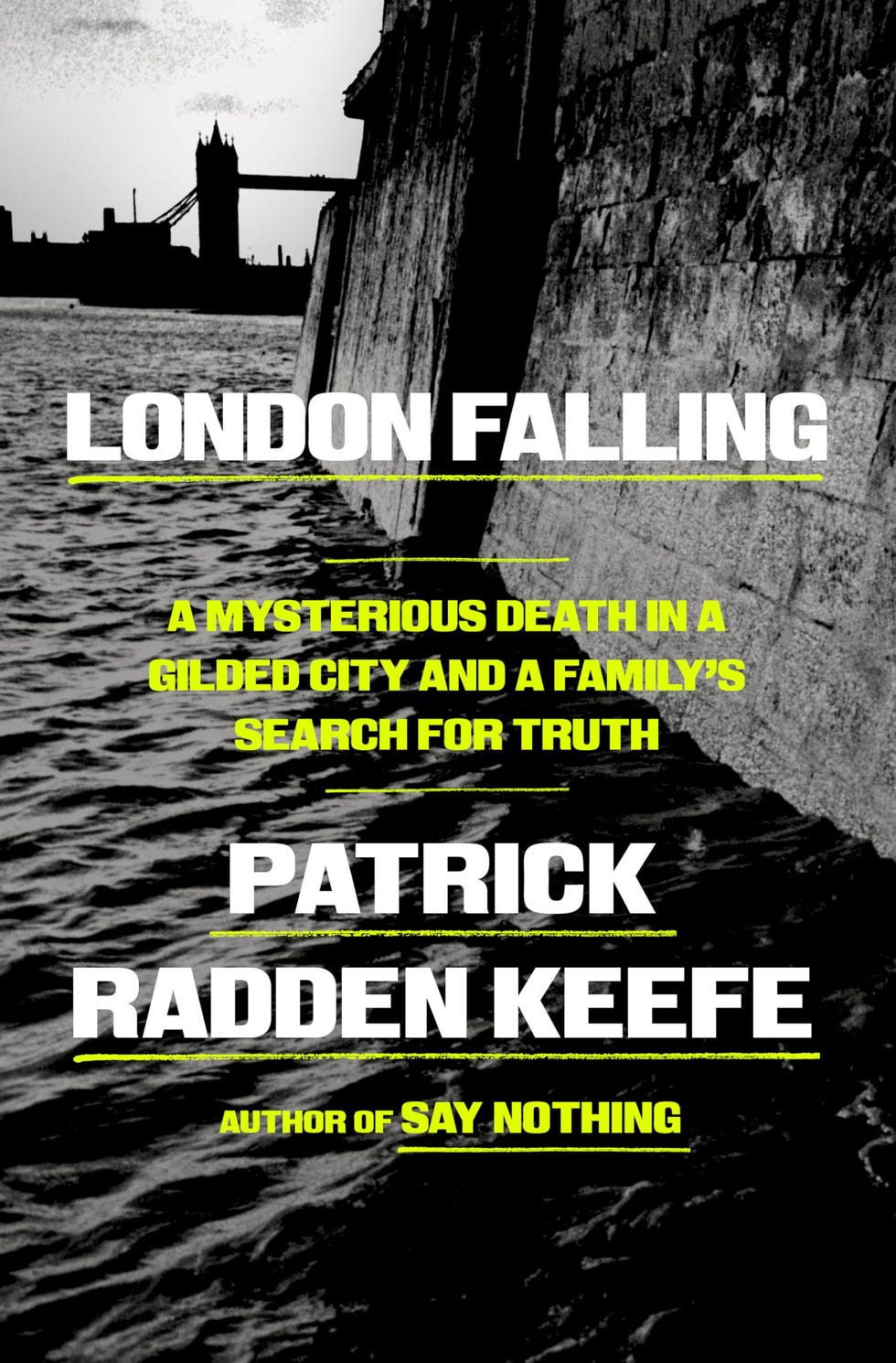
Audiobooks–which I didn’t used to have much patience for–have been proving a good alternative this summer to the podcasts that are my regular listening, some of which are on summer hiatus. I’m not sure what has made the difference, as I used to find them at once too slow (I read pretty fast, on my own) and too easy to lose track of, between street noise and other external distractions and my own wandering mind. I still would not want to listen to a book that, for me, required or rewarded really meticulous attention. I have had the most success with non-fiction, like The Wager or Empire of Pain, which was gripping but also heartbreaking and infuriating. Another notable audiobook this month was also by Patrick Radden Keefe, London Falling. I knew it might be a hard one for me in some ways given that its instigating incident is a fatal fall from a building; I was mostly able to depersonalize this, but still overall I had some ambivalence about the book, even though it is written clearly with a conscious effort not to sensationalize Zach’s death, to acknowledge it as a human tragedy and respect his parents’ suffering. Still, at times the fall felt like a plot point almost incidental to the outlandish chicanery that characterizes so much of the the story that unfolds. The line between investigative journalism and true crime seemed a lot blurrier to me than in either of the other of Radden Keefe’s books that I’ve read.
On a lighter note, my book club’s pick for our next meeting is Cold Comfort Farm, which somehow I’d never read before even though I bought it a few years back because it seemed sure to be delightful. It is delightful! I’m not sure what exactly we will find to discuss about it, but the send-up of rural fantasies is great, the constant undermining of the story’s gothic potential, the refreshing can-do attitude of the heroine–all so fun, and so funny, with plenty of genuine LOL moments.
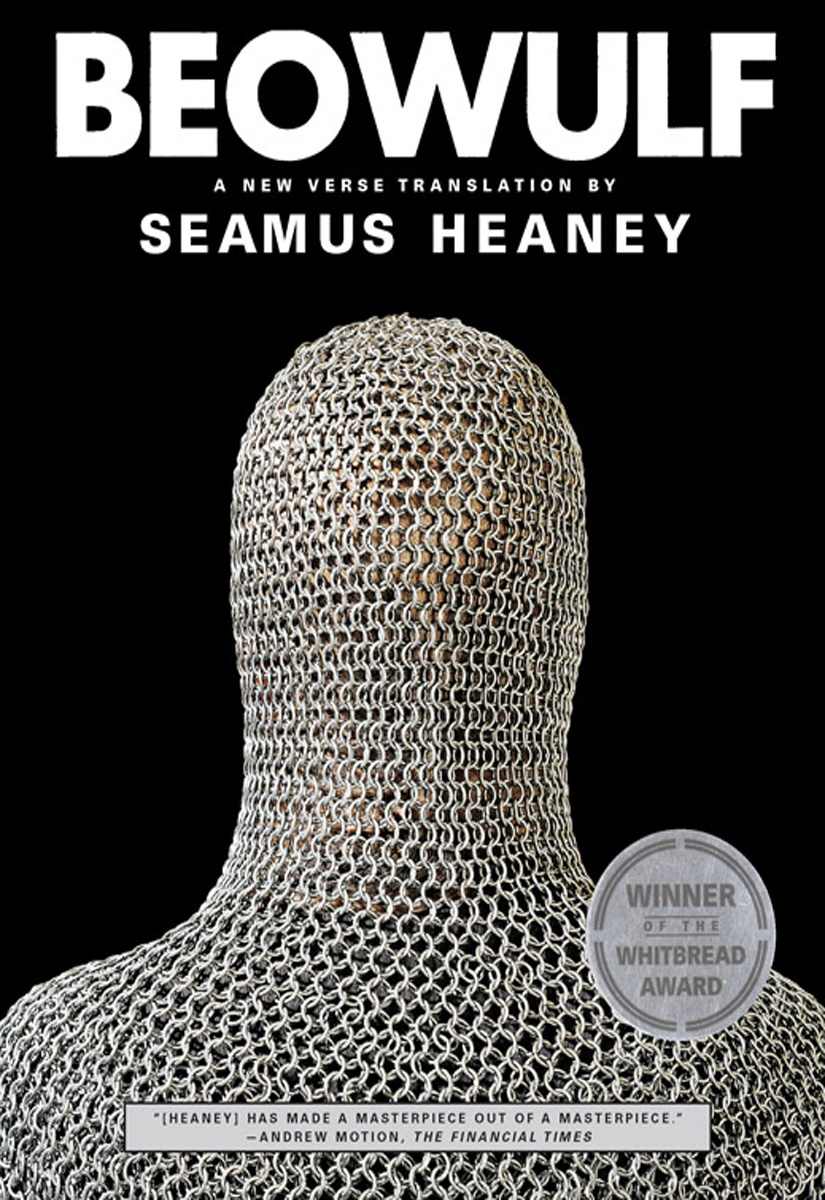
On my latest trip home to Vancouver, I helped my mother downsize her book collection by taking Seamus Heaney’s Beowulf away with me (I did more than that! we filled their whole car trunk with books to donate!). Once I took a closer look at it I decided that it really needed to be read out loud, so I did that, much to Fred’s puzzlement and annoyance (she looks over her shoulder at me so peevishly if I dare to talk on the phone when she’s snoozing on my lap too, and usually gets up after a while to find a properly quiet place to nap). This too was so fun! One good thing about reading aloud is that it makes sure you are getting every word, which for me can be harder with long poems than with prose, but Beowulf is also of course so well suited, even intended, for it. I wonder if this would be a good strategy for returning to Shakespeare’s plays, which I have read only about a dozen of and those mostly as an undergraduate, in the great Kate Sirluck’s Shakespeare survey at UBC. (Oh my, how she intimidated me! But then when she heard I was going off to Cornell for grad school she told me not to take any BS, and in retrospect that’s advice I wish I had known better how to appreciate and act on!)
I read one short story collection, Claire Keegan’s So Late in the Day. This was prompted by reading my friend Alice Brittan’s syllabus for her fall seminar called “On Beauty,” where this is on the syllabus. Like so many readers I know, Alice is a great admirer of Keegan’s, and I have long wondered if I underestimated Small Things Like These, which did not wow me. I was pretty impressed by So Late in the Day so I went back to get Antarctica from Bookmark–which turns out to include one of the same stories, so that was very mildly annoying. I have read a couple of the stories in it so far and I just can’t decide. Maybe the thing to do is reread Small Things Like These, since I am far from the best short story reader (I genuinely think of it as a different skill from reading very long books, or even medium-sized books).
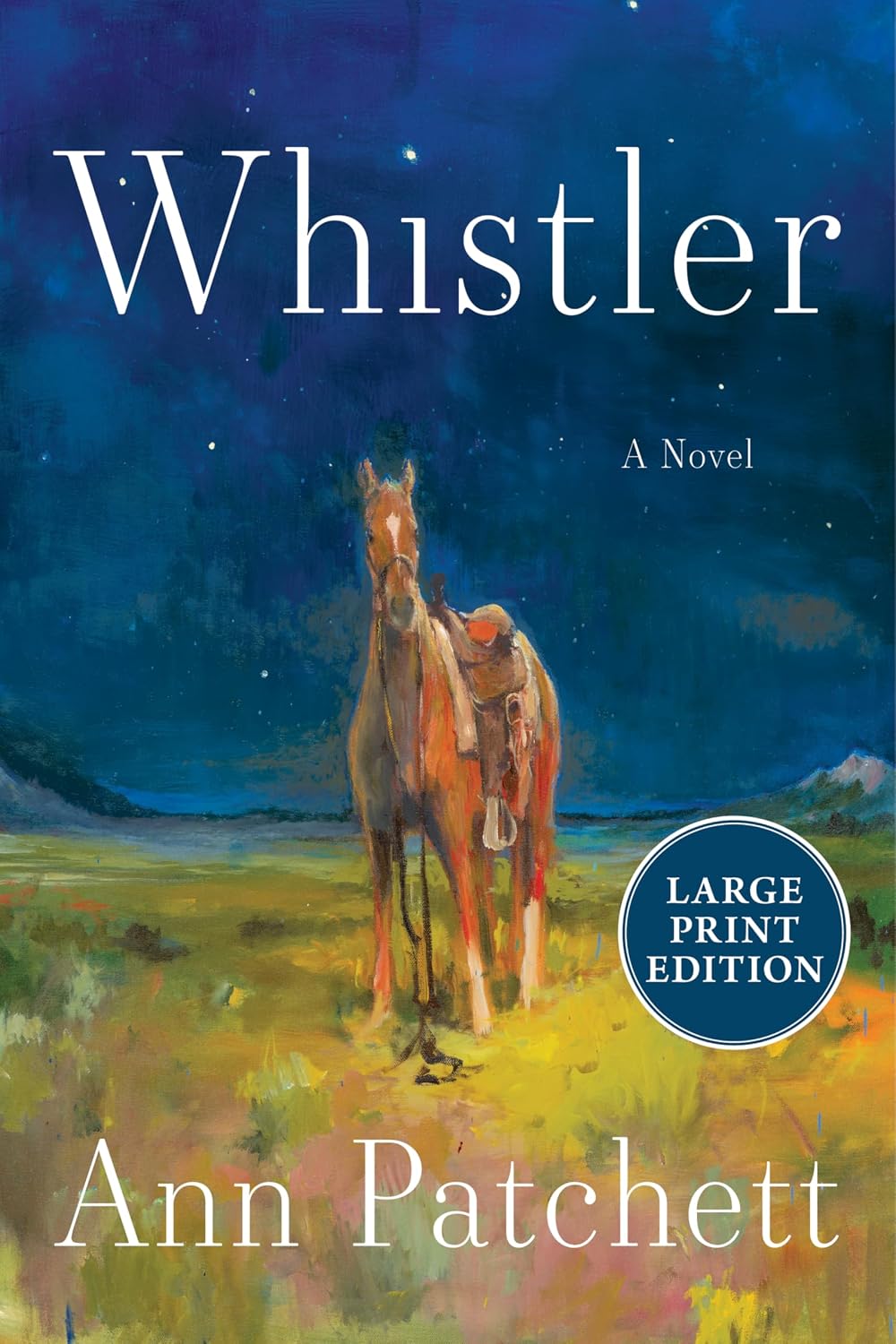
Last but not least I will mention Ann Patchett’s Whistler, which if I had had less heat-and-humidity-induced inertia over the past couple of weeks would have gotten its own post. I did really enjoy reading it. I appreciated its “glass half-full” view of the world, which contrasts so much with the “glass mostly empty” tone of Elizabeth Strout’s The Things We Never Say (my review of that is here). I found the gently metafictional ‘twist’ at the end perhaps unnecessary: the novel before it (unless I missed something crucial!) didn’t seem to me to be changed much by it, unlike, say, Atonement, which is a very different novel on a reread, or Kate Atkinson’s A God in Ruins–which, IMHO, was spoiled by Atkinson’s inability to let her story be what it was. (My cranky review of that one is here.) After I finished Whistler I poked around in the reviews and was surprised how many I came across that disliked for just the reasons I liked it: too nice, too feel-good, ‘sentimental,’ even ‘saccharine.’ It did not seem that way to me, and these complaints made me think about what our expectations are for fiction we think is offered up seriously (as good a working definition as I know for what we mean by ‘literary’ fiction). Must it be grim, or angry? Why (to go back to another pet peeve) is Elena Ferrante characterized as honest because she seems so furious–can’t other emotions, positive emotions, also be honest? (My rant about Ferrante’s effusive reception is here!) Whistler seemed to me an intelligent and nuanced novel, not cheesy feel-good pablum. Does it go really deep? Not really. Does it serve up social or political critique? Not explicitly, but you could see it as doing so implicitly by its tenderness for its characters and theirs for each other. A world in which people do brave things on each other’s behalf, in which broken relationships can be healed and complicated different realities can be reconciled–sounds nice! If we are left thinking (as one critic reasonably was) about the privilege her characters enjoy, both economically and emotionally, instead of being mad at them we could maybe more profitably be mad at the circumstances that limit those good things.
I’m in the middle of one more book but it seems unlikely I will finish it before the month is over: feeling frustrated with waiting for my library holds and with paying high prices to buy books that end up disappointing (ahem, The Very Secretive and Passionate Life of Miles Franklin, which I gave up on less than half way through), I decided to revisit Trollope’s Palliser series, which I read through in 2001-2002 and have not returned to since, with the exception of The Eustace Diamonds which I assigned in a graduate seminar around 2006. I am about half way through Can You Forgive Her? and am thoroughly enjoying it. Trollope’s pacing definitely takes a bit of adjustment at first, as not a lot happens from page to page but always at great length! Once you fall into the rhythm of it, though, it goes along more quickly than you expect, and you get invested really quickly in his characters’ dilemmas–which that expansiveness allows him to show us in all their complexity. Alice Vavasor’s “jilting” of the tediously worthy John Grey is (ostensibly) the main storyline, but I’d forgotten that here we are also plunged right into Lady Glencora’s wilder struggle between her tediously worthy husband “Planty Pall” and the handsome but unworthy Burgo Fitzgerald. Trollope has some conventional ideas about what makes women happy, but he is sharp about the constraints on and injustice for women who want to but can’t make their own decisions. I’m quite interested this time in the way Alice is (she thinks) financially supporting her less worthy suitor in his political ambitions: we know it isn’t actually her money, but both he and she believe it is, an unusual dynamic. I don’t remember exactly how things work out, but I’m all in at this point. I will probably intersperse some other reading along the way, but a full read-through of the series seems like a better fall-back when there’s a lull than doom-scrolling, a habit I am determined to break, not just because it is a waste of time but because it is so bad for my blood pressure. (“Lake America” indeed! Argh.)
I think I approached a great deal of my childhood and teenage years in much the same way that I approached the Blue Grotto, weeping internally and with a towel over my head, pretending that it was not happening and waiting till it was all over, and consequently forming very few memories of what was happening outside my head on the other side of the towel.
When Mark Haddon was a child, he had such an acute phobia of deep water that when his family went on a holiday to Malta and his father decided they would “take a boat tour of a marine cave called the Blue Grotto,” he was so terrified that he “spent the entire journey crying with a towel over [his] head.” As he goes on to note, this miserable experience, combining overwhelming dread with a combination of shelter and denial, was typical of what it was like for him growing up–and, as his memoir Leaving Home frankly details, what it was often like for him as a grown up as well.
It’s hard to know exactly how to classify Leaving Home. “Memoir” doesn’t quite capture its combination of family history, personal experience, observations on imagination and creativity, and copious illustrations, including many drawings of Haddon’s own along with family photos, reproductions of paintings and graphics, and the “Weetabix” chart of the solar system. I was so engrossed in the narrative–which, despite being structured as a series of short somewhat fragmentary parts, has a lot of forward momentum–that I am actually quite sure I did not give the illustrations the attention they deserve, so something I’ll be doing before I return the book to the library is leafing through it again.
One photo that definitely made me linger in the moment is of Haddon’s mother at a beach, around the time she and his father married. “She radiates something I never saw her radiate in real life,” Haddon remarks of it,
nor in any later photos, even those in which she is smiling and appears happy. It’s partly those freckles, which she came to hate, which she covered in foundation and which rarely came out in summer because she avoided the sun for fear it would trigger a migraine. But the real difference is internal. The woman on the beach seems confident in her own beauty and at ease in the world. Maybe the picture’s deceptive, but I think that soon after it was taken some kind of light died in her.
She does indeed look radiant and confident in the photograph, quite unlike the dour, oppressively conventional, critical, wholly unloving woman we get to know from the rest of Haddon’s account. After his mother is moved into an assisted living facility, she complains once to Mark that his sister Fiona rarely visits.
I decided, for once, to answer the question honestly by asking a question in return. ‘Mum, when was the last time you said something positive about, or to, Fiona?’ She bridled, but I insisted she give me an answer. She thought for a while before saying, ‘Well, I remember her bringing some homework back from school . . .’
‘That was over forty years ago.’
‘And there was a project she did at college . . .’
‘You can’t remember a single positive thing you’ve said about her, or to her, in forty years? Are you fucking surprised she doesn’t want to visit?’
Enraged, he storms out. “Mum never referred to the conversation again.” That kind of emotional neglect would be bad enough, but there’s more, worse: “Both Mum and Dad dismissed the multiple sexual assaults from which [Fiona] suffered”; when Fiona is hospitalized with meningitis, neither of her parents visit her; dying, Mum says to Fiona, her last words to her daughter, ‘I’ve never believed a word you’ve said.'” “We assume it’s hard when a loved and loving parent dies,” observes Haddon,
but it can be just as hard when you lose a parent whom you don’t love and who never loved you. When Mum and Dad died it was a relief for me. For my sister it was the moment when she knew for certain that she would never hear them say sorry.”
We learn a lot about “Mum and Dad” in Leaving Home, and about their parents, Mark and Fiona’s grandparents, as well. Unsurprisingly, given the kind of people, or at least the kind of parents, they were, their son’s account of them is not particularly tender or kind or forgiving. It is, occasionally, understanding, and Haddon does do what he can–as with that photo of his mother–to show them to us as real people, complicated and flawed. Does he owe them anything more than that, especially now that they are both dead and unable to offer their own versions of their stories? “What does it mean,” he asks at one point, “the injunction to not speak ill of the dead? Which dead? For how long after their passing are we meant to hold our tongues? And does speaking ill mean telling lies or telling the truth?” Leaving Home is, unsparingly, the truth as Haddon sees it about two people who taught him by negative example everything he himself has tried to be as a parent:
I’ve not been a perfect father. I’ve been bad-tempered, impatient and oversensitive when wrestling with problems of my own, but I”ve always tried hard to be a good one, and I’ve been guided in part by the cautionary example set by my own parents. Talk to your children. Listen to them. Say sorry when you make mistakes. Wish for them to be happy and kind and to find something that excites them. If you can, give them the tools to do these things. Don’t expect them to fulfil your ambitions or settle your debts.
Leaving Home is not just a litany of grievances, though (however justified they are), and it does not read like an angry settling of scores. It’s a reflection on Haddon’s own life, framed by the aging and deaths of the two people who might have made it a happier, safer one but didn’t. He talks about the freedom and joy he found in reading, and then in writing, and with his wife and his own children. He talks about his struggles with his mental health, including his ‘cutting’ (there’s a photo related to that topic which is not great to come upon unprepared), his heart surgery, his wife’s terrifying experience of being hit by a car at 6 months pregnant. There’s quite a bit about a very strange sounding Swedish TV series called Jordskott, which he says he finds “profoundly consoling” and has watched all the way through four times.
And there are moments of peace, in his life and in the book, like this one, when Haddon finds himself free for once of his terror of the deep:
Years later I was running regularly up the Thames. Godstow, King’s Lock, Eynsham, Babcock Hythe. It was shame that did it in the end, the realization that I was running beside this beautiful outdoor pool and missing something very special on every occasion. So one July afternoon, nearing home, I caught myself by surprise, stopped beside the river on Port Meadow, stripped down to my running shorts and walked in. It remains with me as a moment of revelation. Hopkins’s Binsey poplars shimmering overhead and the sun going down, monumental peach-coloured clouds. Swallows, midges, Canada geese, cows at the water’s edge. A C-17 banks over Wytham making its final approach into Brize Norton, all that suspended tonnage a kind of miracle. Being inside the landscape. And the fear gone.
You can’t outrun your past, but Leaving Home shows that you can make something pretty remarkable out of your memories, even the grim ones.
For maybe the first time since I was fourteen I don’t care what I weigh. I don’t care how my clothes look because most of the time I’m not wearing any. I don’t care that I’m getting older. I don’t feel bad about my neck. I feel like a source of good in the world. Everywhere I go I’m making things happen. My life hasn’t been like that in a long time.
Jeanne Ray’s Calling Invisible Women is what I think of as a ‘concept novel’: she clearly had an idea–what if we made the metaphorical invisibility older women so often experience quite literal?–and then carried it out. It might well have fallen completely flat, and I think it’s fair to say thatin fact Calling Invisible Women walks a fine line between being sharply funny and being pretty silly. On balance, though, I think Ray pulls it off: the novel is a pointed but mild feminist satire softened by empathy, including for those who are too busy or self-absorbed or distracted to notice that they can’t actually see the wives or mothers who are doing so much for them while dealing with so much themselves.
“What would it be like to be actually invisible?” is the initial starting point for the novel’s plot (tl;dr version? pretty disorienting, and yet oddly familiar, for these women). Annoyance quickly follows: it’s one thing to joke about being so familiar to your spouse that he hardly sees you anymore, and another for him to be oblivious to your literal disappearance! Then comes, for our protagonist Clover at least, a growing sense of exhilaration. “Had I really spent that much time on personal grooming?” she wonders.
On small exchanges with the postman when he came to deliver the mail? Now I dressed for rmaximum coverage without any thought as to how I looked. No one cared how I looked. no one saw. I felt like I was under quarantine, except that I could go wherever I liked. I picked up Arthur’s suit from the cleaners, I went to the grocery store. Sometimes someone would notice something was off and it was always a young girl who wouldn’t allow herself to believe what her eyes were telling her and so she’d look quickly away, the way she might have if I’d had one eye in the middle of my forehead. It was obvious her mother had drilled a lifetime of good manners into her. It isn’t polite to stare. But I always wanted to say to the girl, stare all you want, there’s nothing here to see.
Once she embraces nakedness (so there’s nothing to be seen at all), she likes being able to intervene in ways she never dared before. She can whisper in ears like an externalized conscience; she can give a nudge or a push; she can even foil bank robberies!
Clover’s courage grows out of the solidarity she finds with other invisible women–it turns out they have a support group (bonus: you don’t have to pay booking fees for hotel conference rooms if nobody can see you in them!). She also finds other older women quicker to notice and quite ready to help: if they haven’t actually been invisible themselves, they have felt like it. (I sure have! Now sometimes I stand stock still on my side of the sidewalk when being approached by a group walking three abreast and showing no sign of noticing that there’s someone they need to make room for.) Some sensitive men also are in on it: “A woman becomes invisible and nobody seems to care one way or the other,” one young fellow says; “But it’s my mom, you know, and now it’s Evie’s mom. I’m going to do something about it.”
It’s Clover and her fellow in(di)visibles (Invisibles Indivisible!) that really get a movement underway, confronting the pharmaceutical company whose products are the one common factor in every case of invisibility. This part of the plot is neat enough but also a bit strained. Would the novel maybe have been more fun and, oddly, more convincing if there had been no attempt to give us a “real” explanation? The drug combo that’s to blame does work well enough to represent the kinds of self-perpetuating trap older women might fall into (menopause, loss of bone density, depression, in a cycle both created and treated by Big Pharma). Once you’ve taken the risky move of literalizing a metaphor, though, how far do you want to lean into “and this is how it happens,” even if that too is obviously pure fiction (if rooted in reality)?
I picked up Calling Invisible Women at the library because I recognized Jeanne Ray’s name from her pretty delightful novel Julie and Romeo, a rare romance about middle-aged lovers. (Is there a name for this, as a trope? Please don’t it be “elder romance” or something like that!) It reads quickly and I found it both enjoyable and (sorry) relatable–and sometimes even touching, as when Clover suggests that her exhausted paediatrician husband doesn’t notice her invisibility because “he knows me so well [that] he sees me even when I’m not there.” “That is a very beautiful thought,” says her interlocutor, “but I do not believe it is true.” Maybe it is, maybe it isn’t, but it captures Ray’s care not to make her feminist critique too one-sided or unforgiving, as does the shock and penitence thoughtless husbands and children show when they realize that (to adapt Sherlock Holmes’s famous quip) they have been seeing, but not observing.
Summer: not my favourite season, as I have said here many times before. July included – as it so often does – a stretch of really hot weather. I was grateful for my portable air conditioner, which I trundled from living room to bedroom as needed (sorry, downstairs neighbours!). Fred finds the heat a bit dispiriting as well: she has not been as playful as usual (but the vet has given her a clean bill of health, don’t worry) and she even gets off my lap sometimes and just stretches out on the floor. I get it, Fred! It’s weird to find myself almost (almost!) looking forward to winter, just for the snuggles.
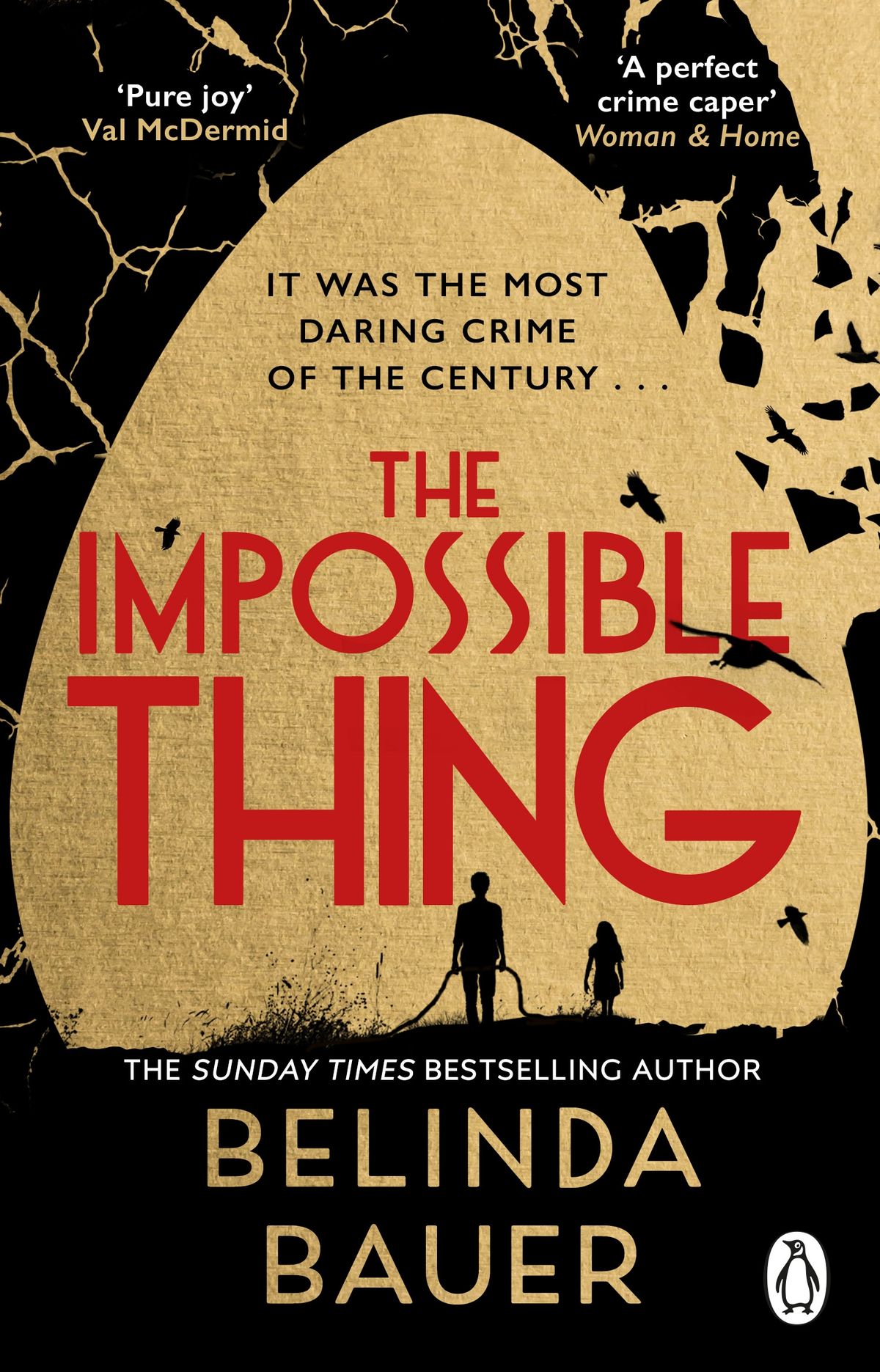
My reading slump has somewhat improved this month, I am glad to say. The most fun I’ve had with a book in a while was Belinda Bauer’s The Impossible Thing, which was one of those serendipitous bookstore choices. Its cover caught my eye–I had never heard of it, or Bauer, before–and the premise both amused and intrigued me, so I decided to risk it and was glad I did. It’s not a particularly weighty or cerebral book, but it’s an entertaining story set in a world I never knew existed: the world of high stakes and now illegal egg collecting. Who knew! The ImpossibleThing is based on a real historical incident to do with a fabulous rare egg that disappeared. It’s got good characters, a nice sense of time and place, and a twisty plot that just avoids being too wacky to care about. So many much-hyped books these days aren’t much fun (I DNF’d John of John, just for instance–I’m sure it’s very good and all, but it’s so dour!). If you are in a slump yourself and trying to gin up more enthusiasm for reading, you might give this one a try. I am curious now about Bauer’s other novels, one of which, I see, was a Booker nominee.
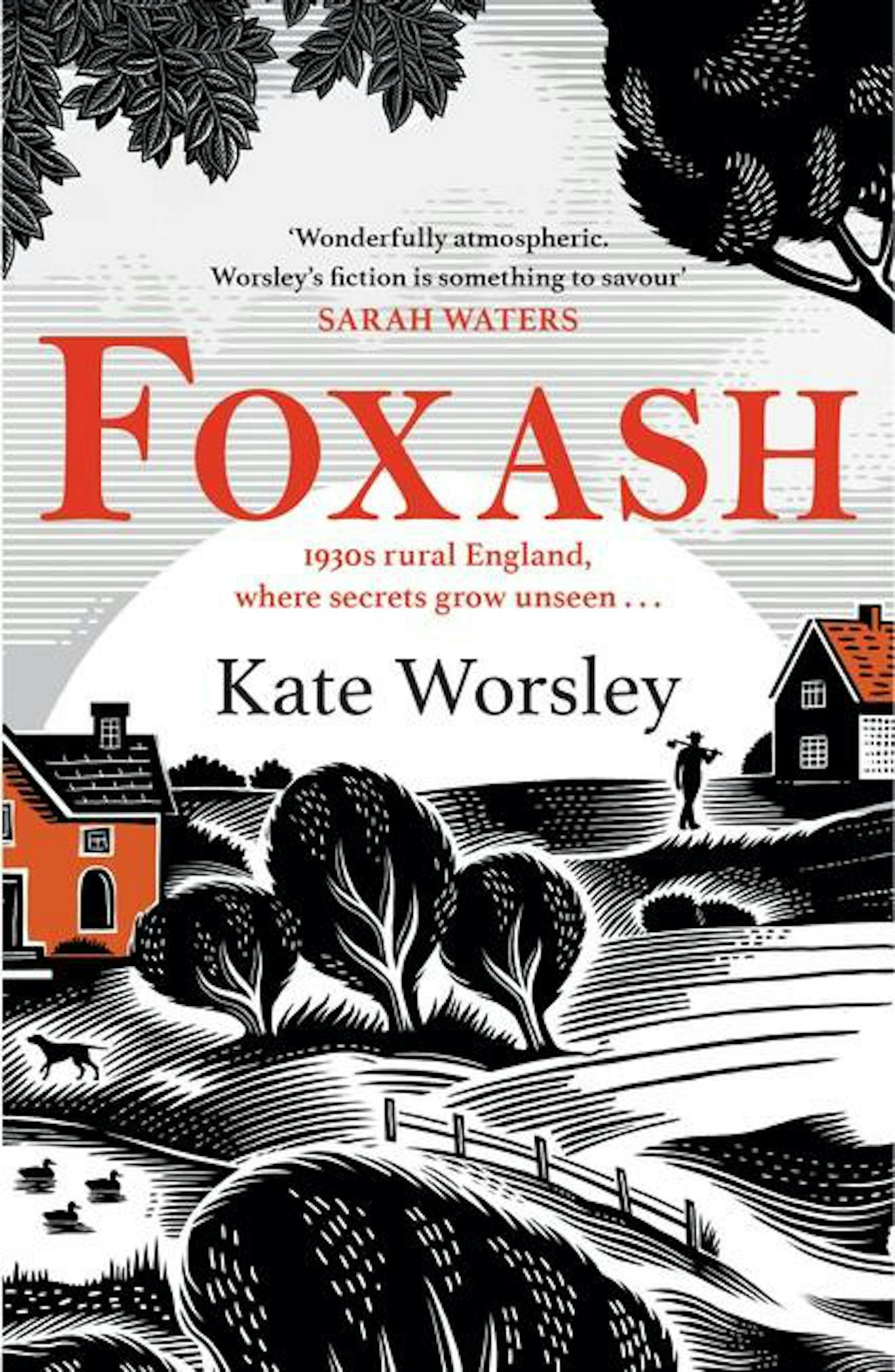
I also quite liked Kate Worsley’s Foxash, which I bought with similarly little advance knowledge and thus no clear expectations. It wasn’t fun, exactly, but it’s very atmospheric, and its attention to growth and renewal and life cycles nicely draws together its farm setting and its plot about pregnancy and birth. I am not sure how to characterize Foxash in terms of genre. Is there such a thing as “a novel of foreboding”? There is a mounting sense across the novel that things are not quite what they seem and are not going to turn out well (both of which are indeed the case) but Worsley avoids heavy-handed signals of suspense or threat. Like The Impossible Thing is is very detailed about its time and place, in this case the farms established by the British government’s Land Settlement Association during the depression. Its main characters have fallen on hard times with the closing of a mine and taken up the opportunity to resettle in the country. There’s a lot in the novel about lettuce, in case that piques your interest.
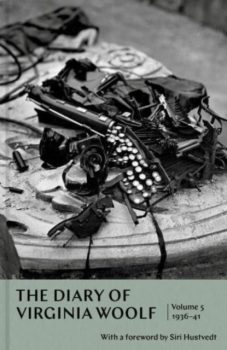
I already wrote about finishing Woolf’s diaries, and I have also written before about Peter Grainger’s mysteries (I have read more since then!). Thinking about Elizabeth George for that post inspired me to go back to one of her earlier ones so I reread With Noone As Witness–the one with the BIG plot twist, IYKYK. It’s pretty good, better (more focused and engaging) than the more recent ones I’ve struggled with. But then I tried Careless in Red and my interest ran out. Basically, she gives as much if not more attention to all the characters in the case as she does to the ‘main characters’–and they just aren’t the ones I care about, which is on me really, not on her. I have never enjoyed Louise Penny in print but I saw that the narrator of the audiobooks of her Gamache series has won prizes so I listened to Glass Houses and the narrator is indeed very good, though the book itself still seemed heavy-handed and portentous.
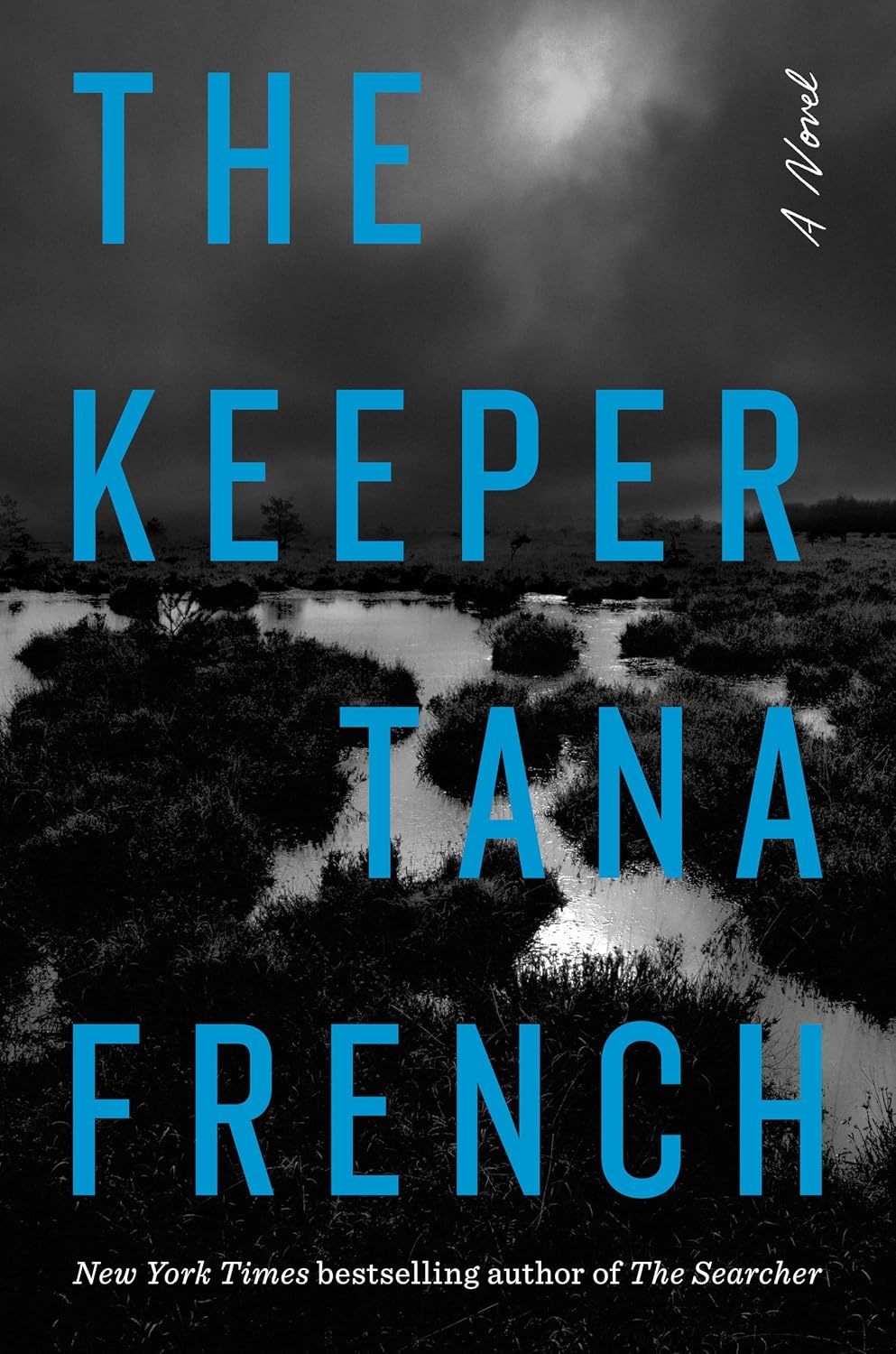
I also struggled with Tana French’s The Keeper–which as I noted on Bluesky clarified for me that this series is really not set up as crime fiction, or at least not as ‘mysteries,’ but as inquiries into Irish village life. I would have to reread the Dublin Murder Squad to be sure but I expect you could frame them the same way: that in them, she is using the structure of detective novels to explore and expose aspects of Irish culture, especially the way the country’s past weights on people in its present. I got through The Keeper by allowing myself to skim when I got too impatient with the lengthy reports of conversations: yes, I have defended the scenes at the Rainbow in Silas Marner on the grounds that (as GE herself argued) you can’t expect country rustics to be scintillating, but hey, I wasn’t reading this one for work! I will say, though, that the last 100 pages or so were quite gripping, and I know that the slow build-up and the attention to the community lading up to it contributed to that effect. Still, I have put my stack of Cal Hooper novels into my ‘donate’ pile as I can’t imagine rereading them.
I have tried to keep up my summer art (and other) adventures. I had an enjoyable trip to Fisherman’s Cove which turned out also to have a little gallery; I particularly liked the watercolours by Edward Wedler, whose work you can see at his own website. I bought a small print of his painting of the Margaree River in Cape Breton (which you can see on page 5, if you are scrolling through his web gallery). I also took the little boat out to Georges Island in Halifax harbor, something I really should have done years ago. It’s a nice 10-15 minute trip (they go once around the island on the way there, so you get a full circle view) and an interesting historical site.
I intend no introspection. I mark Henry James’s sentence: Observe perpetually. Observe the oncome [sic] of age. Observe greed. Observe my own despondency. By that means it becomes serviceable. Or so I hope. I insist upon spending this time to the best advantage. I will go down with my colours flying. (VW, Diaries, 8 March 1941)
When Woolf wrote those words in her diary, she had 20 days left to live. She didn’t know it yet, though perhaps (it is hard not to wonder) she suspected it wouldn’t be much longer. “Oh dear yes,” that entry concludes, “I shall conquer this mood,” but she didn’t. I resist saying that it conquered her; that seems to strip her of both courage and agency right when, arguably, she showed both qualities the most.
In any case, it is difficult reading the last volume of her diaries in that poignant condition of dramatic irony created by our inescapable knowledge of her suicide–both the fact of it and the specific date of it. “The end,” she wrote in June 1940, “gives its vividness, even its gaiety & recklessness to the random daily life.” At this point war had become a reality and she and Leonard had made their plans: for “suicide if Hitler lands. Jews beaten up. What point in waiting? Better shut the garage doors.” For her, the omnipresence of death seems to have given extra vividness especially to the landscape, which she writes about with particular attention over what would indeed be her final months. “Ought I not to look at the sunset rather than write this?” she wonders in October 1940;
A flush of red in the blue; the haystack in the marsh catches the glow; behind me, the apples are red in the trees. L. is gathering them. Now a plume of smoke goes from the train under Caburn. And all the air a solemn stillness holds till 8.30 when the cadaverous twanging in the sky begins; the planes going to London. Well it’s an hour still to that. Cows feeding. The elm tree sprinkling its little leaves against the sky. Our pear tree swagged with pears; & the weathercock above the triangular church tower above it.
“Why try again to make the familiar catalogue, from which something escapes,” she wraps up the passage; “Should I think of death?”
The last time I wrote about how it was going with my project of reading all the way through the diaries, I admitted to being a bit bored by their mundanity. Her approaching death gave that day to day reportage–the dinner parties, the endless rounds of visits and visitors, the fussing about servants and payments and deadlines, the stress about her dresses and her reviews–a different quality, both in the moment, for the final months’ entries, and in retrospect. Because what becomes clear and wonderful and terrible as March 28, 1941 approaches is that we, her unanticipated audience, have now been with her for twenty-six years, since 1915. Not her entire life, but a lot of it, probably the most important parts of it, for her as a person and especially for her as a writer. The diaries are as close as we can get to Woolf unfiltered. Of course we can’t really know her; she comments herself (as most diarists probably do once or twice!) that she tends to write in her diary in particular moods and about particular things, and even when she doesn’t expect any reader besides herself she is self-conscious in the way that a highly reflective, observant person is bound to be. After so much time in the company of this version of Woolf, to reach the end–of the diaries and of her life–feels like a strangely personal loss. We have been through some things with her! On a more personal level, since May of last year I have had a volume of the diaries on the table by my reading chair. I’m going to miss that!
A lot of specific things happen in this final volume, including the writing and publication of The Years and Three Guineas as well as her biography of Roger Fry; the Spanish Civil War and the death of her nephew Julian (which I wrote about before, not long after Owen’s death); and then the lead-up to and early stages of World War II. One striking feature of the 1940-41 entries is the juxtaposition of the Woolfs’ ongoing ordinary concerns and the anxieties and dangers of the war, which grows increasingly disconcerting during the Blitz. “I cant get the odd incongruity of feeling intensely & at the same time knowing that there’s no importance in that feeling,” Woolf notes in May 1940. And yet life, and the feelings it stirs up, always does go on. “Paris is in the hands of the Germans,” she records in June 1940, “Battle continues. We spent the day seeing Penshurst with Vita – picnicked in the park.” “I feel, if this is my last lap,” she writes a few days later, “oughtn’t I to read Shakespeare? . . . oughtn’t I to finish something, by way of an end?” (She did–Between the Acts, although she wasn’t satisfied with it.)
I’ve talked and written many times now about my admiration for Winifred Holtby’s Virginia Woolf: A Critical Memoir. Something I always comment on is how exuberant it is as Holtby looks ahead to what Woolf will do next and celebrates what she sees as Woolf’s most inspiring quality:
She is in love with life. It is this quality which lifts her beyond the despairs and fashions of her age, which gives to her vision of reality a radiance, a wonder, unshared by any other living writer. . . . It is this which places her work, meagre though its amount may hitherto have been, slight in texture and limited in scope, beside the work of the great masters.
Because Holtby died before Woolf, she was spared the shadow that has to come between us and that radiance. While there is plenty of struggle visible in the diaries, though, (and more suffering offstage, signalled only in the editorial notes that explain gaps in the chronology), I don’t think that overall they contradict Holtby’s joyful version of Woolf. I know there are many Woolf experts and aficionados who regret the extent to which her public image has become dominated by her depression. The diaries convey such a sense of energy, of vitality, of curiosity. If ultimately she decided that the examined life too might not be worth living, it was not without having given all she had to the effort.
I have been on two more small art adventures so far.
One was accidental! I was cutting through the lane that now runs between Birmingham and Queen (past the new Fluevog store, locals will know what I mean) to get to Weird Harbour (again, IYKYK) and happened across a small gallery that had just opened a few days earlier. It is called ARTport, and it features “local artists from the Halifax Regional Municipality.”
Once again, I was particularly drawn to the watercolours, especially those by Judith Orr. You can see an array of them on her Facebook page. I am wary about posting photographs of working artists’ originals, so I don’t have specific examples to show you, but it struck me again that the qualities I like include looseness, transparency, and simplicity.
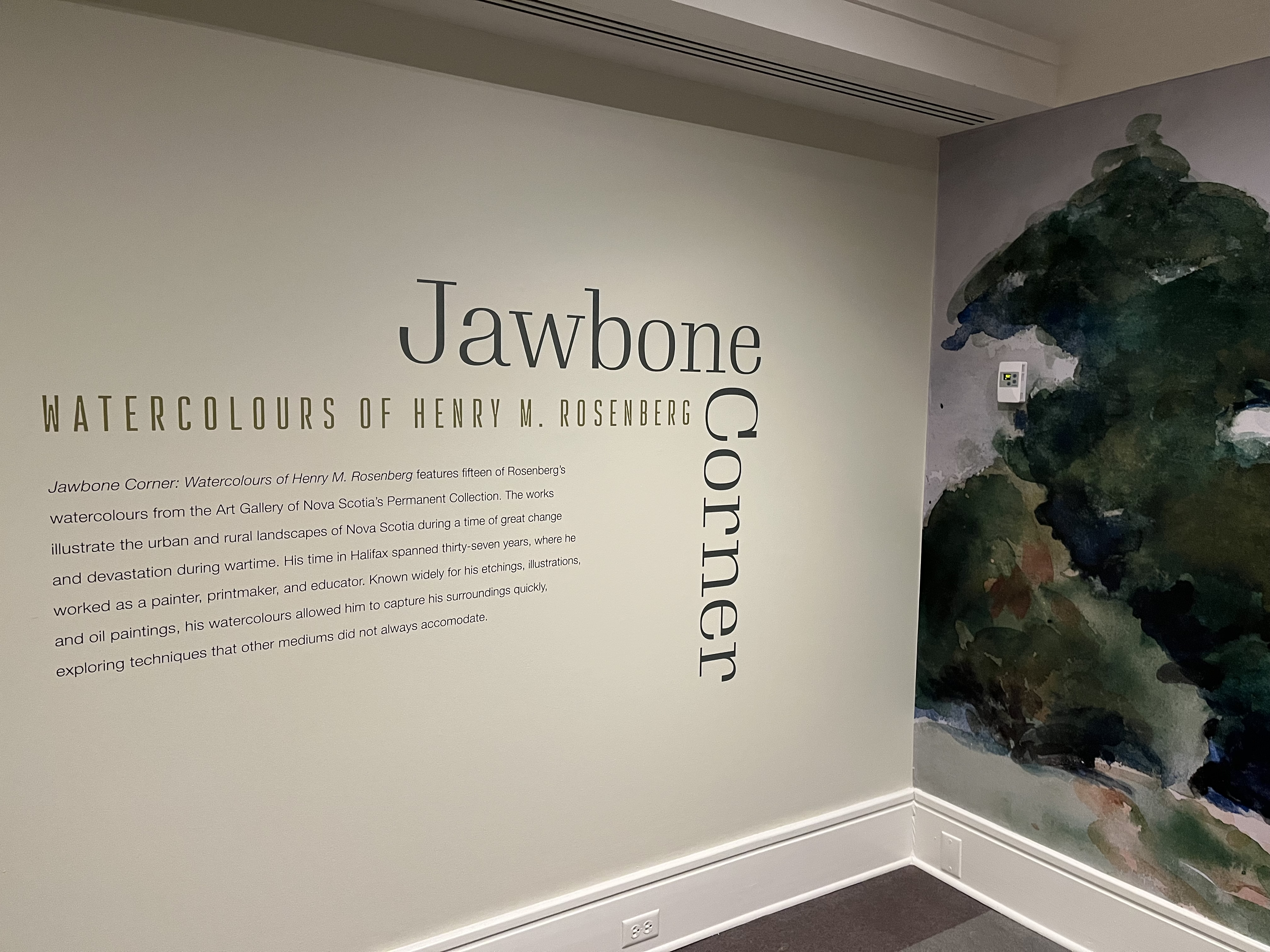
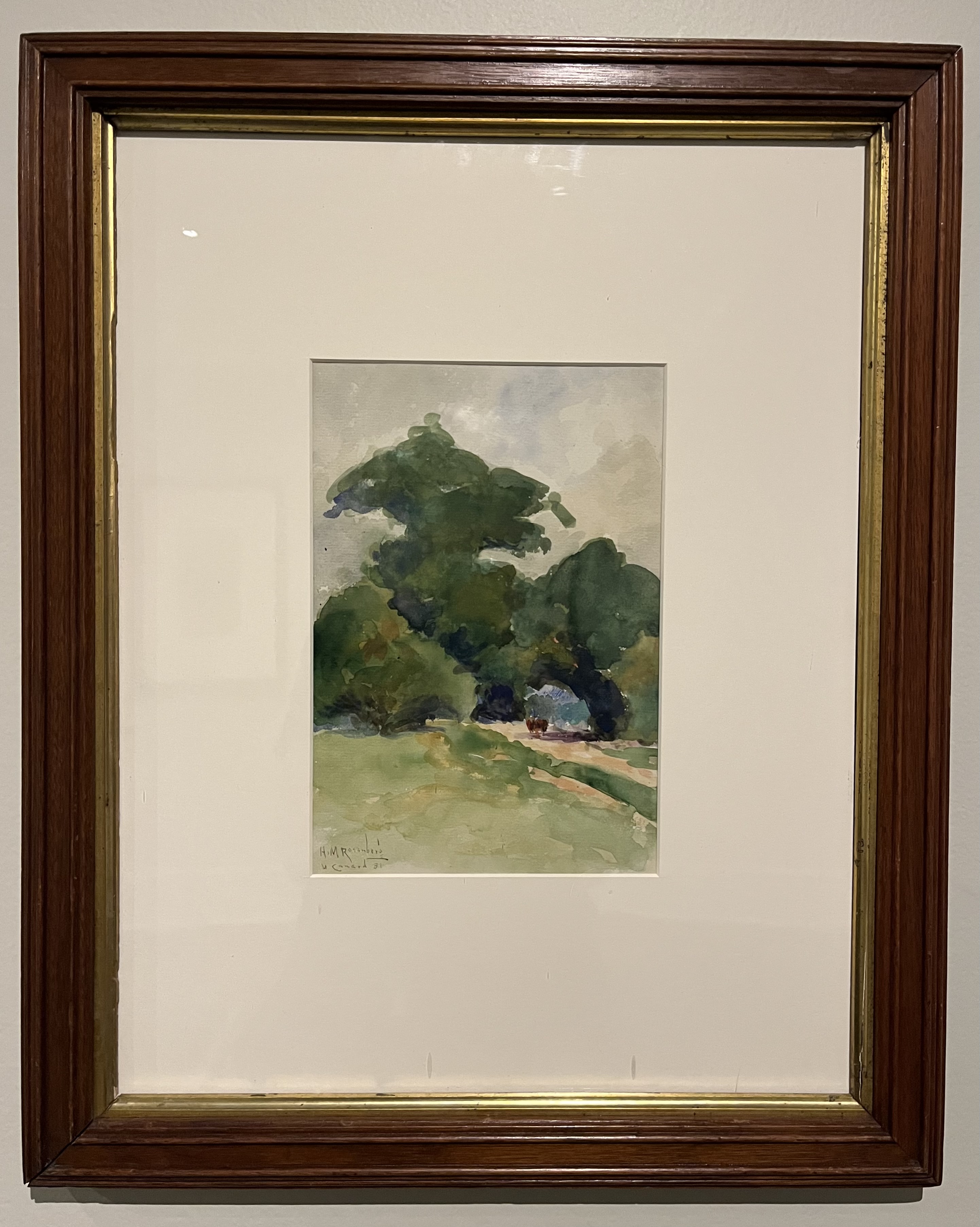
Then last night I took advantage of the AGNS’s free Thursday evening admission to go check out their exhibition of watercolours by the early 20th-century artist Henry Rosenberg before it closes in early August. I did take a photograph of one of these just as a sample; it is the same one that they reproduced on a much larger scale on the wall.
Visiting local galleries means, probably inevitably, seeing a lot of paintings of local scenes. In addition to whatever I might learn about art or art appreciation, it is possible that spending time with these works is going to enhance my appreciation of Nova Scotia’s landscape, with which I have long had an ambivalent relationship. It is just so not like the landscapes I grew up with in B.C., which are not only precious in that way our childhood landscapes are because they are so entwined with our earliest memories and oldest loves (see The Mill on the Floss for more eloquence about this) but just more grand, I might even say more sublime. Everything here has always seemed so flat, and for so many months of the year, so drab.
I have come to love specific nearby locations, especially Point Pleasant Park, which has reconciled me somewhat to those strong horizontal lines and the colours of the Atlantic, but I do not get excited about Nova Scotia landscapes in general. I realize that I have never been to some of the more spectacular parts of the province, including Cape Breton. Heck, I still haven’t even been to Peggy’s Cove! That’s also on my bingo card for this summer – but because I hate car travel so much, it’s just really difficult for me to get around and see what I might be missing. By showing me what they see and love, these artists are helping me see the province a bit differently, perhaps a bit more positively.
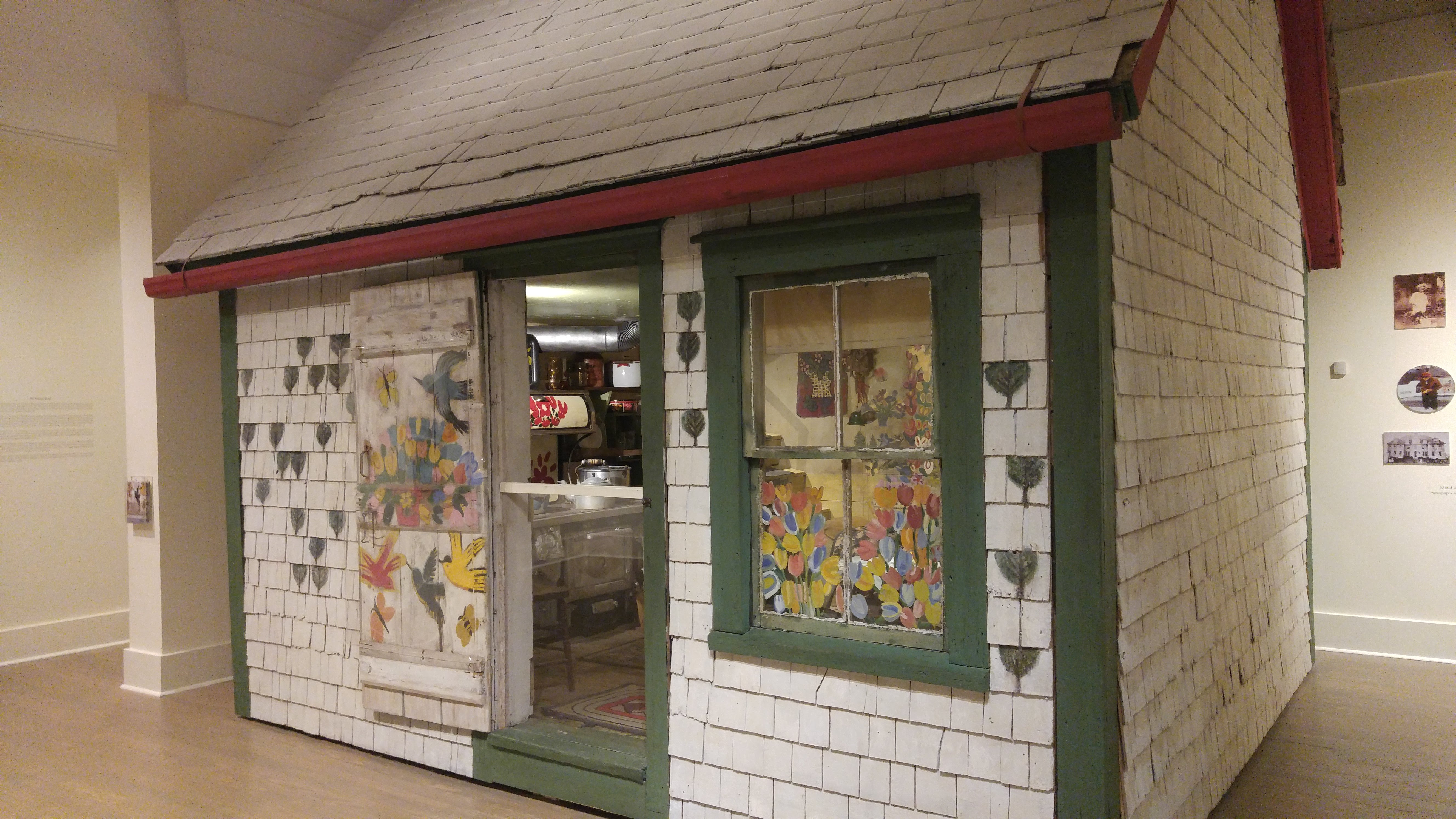
I popped in to look at Maud Lewis’s house again. It’s very sweet but I am not really sold on the artistic merits of her paintings. I get that they are “folk art,” not . . . whatever the alternative is. They are bright and cute, I guess. And I wandered for a minute in the Joan Jonas exhibit “We come from the sea” but it was not for me.
June was an odd reading month for me. I read six books by the same author, Peter Grainger, and two books about another single author, Daphne du Maurier. I didn’t read much else, partly because I went to Vancouver to see my family for a week. Sometimes I get in a good chunk of reading on the flights, but this time there was fairly constant turbulence in both directions, not enough to be truly frightening, but enough to keep this nervous flyer from concentrating. I spent a lot of time just listening to calming music (thanks for your help, Kasey Musgraves and Emmy Lou Harris!) and doing deep breathing exercises. What a miserable experience air travel has become, right? Overcrowding, seats that don’t recline, having to pay for every little thing as if it’s an “extra.”
I have read another two of Peter Grainger’s mysteries since I got back from Vancouver as well: I have now read all of the ones that are easily accessible from either my library or Kobo (for some reason, a whole bunch of them were very cheap at Kobo – the ones I haven’t read yet are the middle ones that remain full price there). I have been trying to put my finger on why they are so enjoyable. They were highly recommended to me by a couple of other readers, but that’s not always a guarantee, especially for mysteries, a genre I have been feeling a bit weary of in recent years. It’s especially notable to me that I started the series via audiobook: usually I find novels too slow on audiobook, compared to how fast I can read them to myself, so I prefer non-fiction, which also (for the books I choose, anyway) tends not to demand quite such minute attention, especially at the sentence level.
My enjoyment of the audiobooks is a clue to the general appeal of this series: Grainger (actually Robert Partridge) is a master of pacing. There are other strengths of the series, from the deft and engaging characterization (especially of DC Smith) and the wonderful evocations of the Norfolk setting to the equally deft way in which the cases often touch on broader social and political issues, without ever feeling gimmicky or heavy handed. But a lot of other mystery authors are good at these things too, including, just for example, Elizabeth George and Tana French. Both of these writers tend towards the prolix, however (IMHO etc.) whereas Grainger just gets on with it: there’s a crime, there’s an investigation, evidence and witnesses are pursued, the case is resolved. Even though the two most recent ones, The Late Lord Thorpe and Some Sort of Justice, are about the same case, they approach it differently enough that I still got none of that sense of bloat that I occasionally get from French and consistently now get from George, whose most recent was a DNF for me.
Bringing up French reminds me of Dorian’s recent post about her latest novel, The Keeper, which I haven’t read yet. I’m not quite as big a fan of French as he is, but I do agree with the widespread view that she is among the very best writers working in crime fiction today. In his post, Dorian says that The Keeper is “a terrific example of how crime fiction can chart its post-copaganda future.” Not least because I have so often taught a survey course on mystery & detective fiction, I have thought a lot about the “copaganda” charge, which is often levelled quite generally against crime fiction, and especially against the subgenre of police procedurals, as if to situate the story in a “cop shop” is enough to warrant the charge. (I am not saying that this is something Dorian does, to be clear, in this post or anywhere!) A more nuanced version would be that even if the novel exposes or critiques problems with the police as an institution or a manifestation of state power, the common trope of the heroic or anti-heroic officer counteracts or undermines that critique.
Both George’s Thomas Lynley and P. D. James’s Adam Dalgliesh are excellent examples of the ‘honourable man in a (sometimes, potentially) dishonourable system’ version of the procedural. Both are fine fictional creations (I am personally very fond of Dalgliesh, and was glad that when he finally fell in love, it was with an English professor!), and their novels often have plenty of moral complexity – but I would say that overall, their series, while not idealizing the police, tend to portray them as mostly serving the public good. (I haven’t reread George’s early books in a while, so I can’t back that up with examples off the top of my head. I wrote about James’s oeuvre here.) Ian Rankin’s Rebus series, I think, looks more skeptically at the police as an institution – and even more so (not unrelatedly) at the army, as is made particularly clear in the one I have frequently assigned, Knots and Crosses. I would actually really like to reread Rankin’s whole series and do a survey piece along the lines of the one I did on James for the TLS: rereading all of the Dalgliesh novels in a row really helped me see what James does and doesn’t do with them, and my sense of Rankin is that he is smarter about his choices in ways that keep his books from having the quality I described as “insular” for hers – or perhaps it is more simply that she is more conservative, politically, than he is, and that this shows up in how they think and write about the police.
Anyway! If I were to fault Grainger’s DC Smith series, it would be on the grounds that his coppers are all pretty much the good guys. The main institutional enemy is incompetence and political timidity. Perhaps there are counter-examples in the handful of titles I haven’t read yet from around the middle of the series, but in the ones I have read, there’s no corruption, no abuse of power, no violation of rights, no skulduggery to “get their man.” Half the time even the criminals aren’t really so bad! The worst we’ve met so far is a kind of Epstein-like figure; even the man who actually kills somebody in that case is a lot more sympathetically portrayed than he is. So maybe there is a bit of “copaganda” going on here: DC Smith is wily and funny and a moral touchstone. It’s true he’s considered difficult to work with by his superior officers and has a tendency to work out his own sense of what is right to do, but (again, in the ones I’ve read) this never veers into vigilantism, and is more about that incompetence and timidity at the top than about Rebus-style willingness to outright skirt the rules or play dirty. This is part of the appeal of the genre, of course: it’s fiction, after all, and I think it’s OK to show us what we think things should be like, not always to hammer away at the way they really are – I say this as, among other things, an unrepentant fan of The West Wing. A citizen’s mental reach must exceed their grasp, or what’s the imagination for, right? We need some sense of the “ought” as well as the “is,” as well as a bit of respite from how awful the is generally is these days. But I do understand why portrayals of the police as benign, or as heroic guardians of justice and protectors of the innocent, are problematic. Dorothy Hughes’s The Expendable Man is just one of many examples of how else to tell the story.
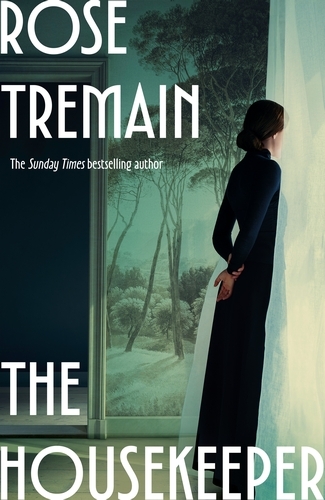
Much more briefly, the other things I read in June. I’m working on a review of Rose Tremain’s The Housekeeper, so I reread Rebecca earlier this summer and have now read Tremain’s novel twice and also read Margaret Forster’s fascinating biography of du Maurier. I’ve flipped back through Restoration and Music and Silence, and poked around in a couple of Tremain’s other novels, including The Colour (about the gold rush in New Zealand). She is a strange writer, I find, one that’s hard to categorize: I had thought of her primarily as a historical novelist because the one I heard most about was Restoration, but she tries a lot of different things. I am not convinced about The Housekeeper – why? You’ll have to wait for my review!
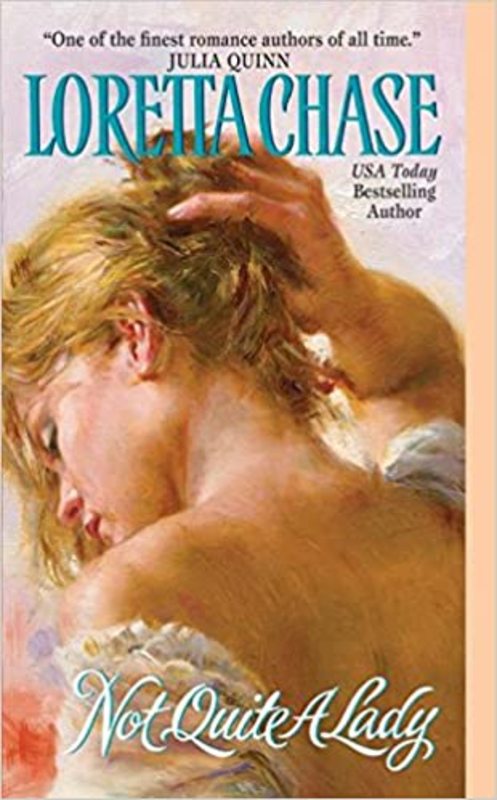
I read one romance novel in June, Loretta Chase’s Not Quite A Lady – this is one of the Carsington series, which also includes Lord Perfect, Miss Wonderful, and my favourite, Mr. Impossible. I think I had read Not Quite A Lady before, but I’m not sure. It is not, I didn’t think, as delightful as the other three I’ve named, but it’s still pretty good.
Finally, I read Darcey Steinke’s Flash Count Diary. It wasn’t really my thing. I am shocked at how quickly specifics about it have already faded from my memory! This is the hazard of posting only monthly, instead of when the books are still fresh in my mind.





 Novel Readings