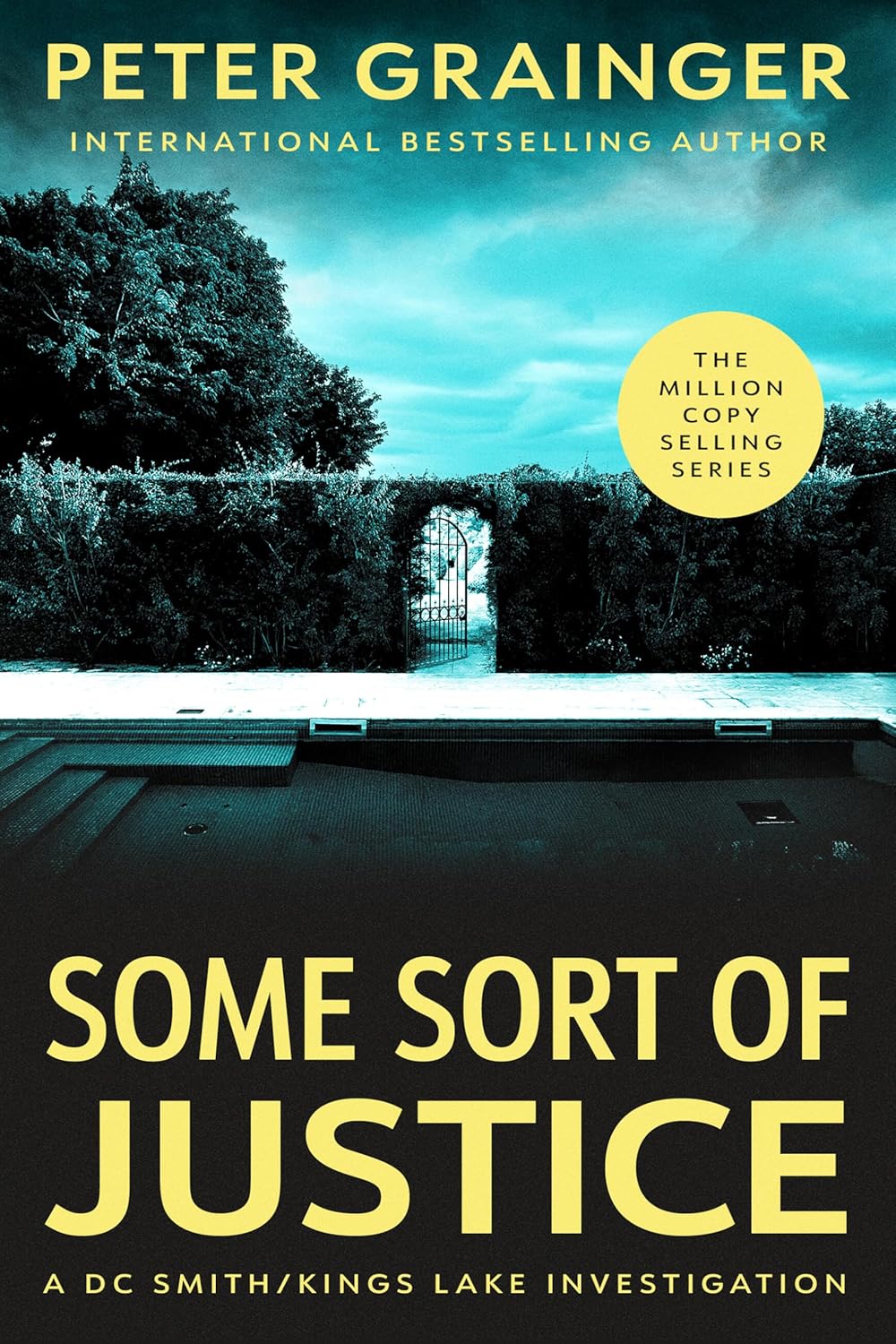
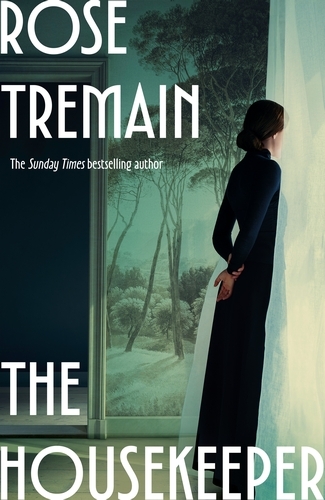
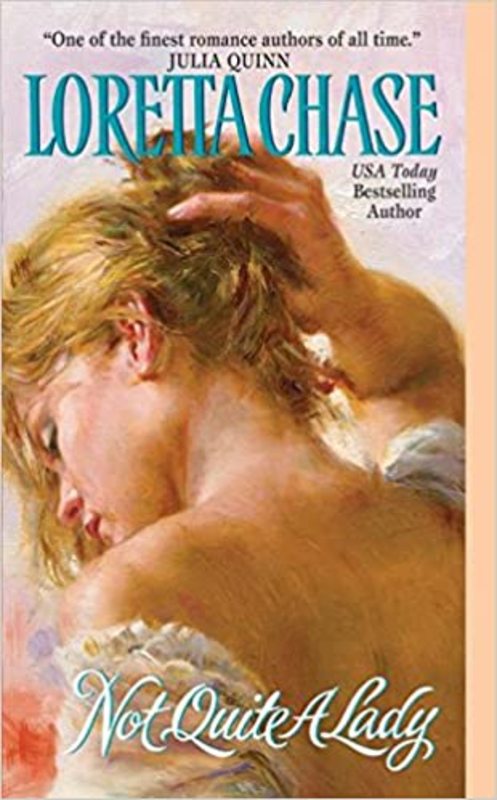
June was an odd reading month for me. I read six books by the same author, Peter Grainger, and two books about another single author, Daphne du Maurier. I didn’t read much else, partly because I went to Vancouver to see my family for a week. Sometimes I get in a good chunk of reading on the flights, but this time there was fairly constant turbulence in both directions, not enough to be truly frightening, but enough to keep this nervous flyer from concentrating. I spent a lot of time just listening to calming music (thanks for your help, Kasey Musgraves and Emmy Lou Harris!) and doing deep breathing exercises. What a miserable experience air travel has become, right? Overcrowding, seats that don’t recline, having to pay for every little thing as if it’s an “extra.”
I have read another two of Peter Grainger’s mysteries since I got back from Vancouver as well: I have now read all of the ones that are easily accessible from either my library or Kobo (for some reason, a whole bunch of them were very cheap at Kobo – the ones I haven’t read yet are the middle ones that remain full price there). I have been trying to put my finger on why they are so enjoyable. They were highly recommended to me by a couple of other readers, but that’s not always a guarantee, especially for mysteries, a genre I have been feeling a bit weary of in recent years. It’s especially notable to me that I started the series via audiobook: usually I find novels too slow on audiobook, compared to how fast I can read them to myself, so I prefer non-fiction, which also (for the books I choose, anyway) tends not to demand quite such minute attention, especially at the sentence level.
My enjoyment of the audiobooks is a clue to the general appeal of this series: Grainger (actually Robert Partridge) is a master of pacing. There are other strengths of the series, from the deft and engaging characterization (especially of DC Smith) and the wonderful evocations of the Norfolk setting to the equally deft way in which the cases often touch on broader social and political issues, without ever feeling gimmicky or heavy handed. But a lot of other mystery authors are good at these things too, including, just for example, Elizabeth George and Tana French. Both of these writers tend towards the prolix, however (IMHO etc.) whereas Grainger just gets on with it: there’s a crime, there’s an investigation, evidence and witnesses are pursued, the case is resolved. Even though the two most recent ones, The Late Lord Thorpe and Some Sort of Justice, are about the same case, they approach it differently enough that I still got none of that sense of bloat that I occasionally get from French and consistently now get from George, whose most recent was a DNF for me.
Bringing up French reminds me of Dorian’s recent post about her latest novel, The Keeper, which I haven’t read yet. I’m not quite as big a fan of French as he is, but I do agree with the widespread view that she is among the very best writers working in crime fiction today. In his post, Dorian says that The Keeper is “a terrific example of how crime fiction can chart its post-copaganda future.” Not least because I have so often taught a survey course on mystery & detective fiction, I have thought a lot about the “copaganda” charge, which is often levelled quite generally against crime fiction, and especially against the subgenre of police procedurals, as if to situate the story in a “cop shop” is enough to warrant the charge. (I am not saying that this is something Dorian does, to be clear, in this post or anywhere!) A more nuanced version would be that even if the novel exposes or critiques problems with the police as an institution or a manifestation of state power, the common trope of the heroic or anti-heroic officer counteracts or undermines that critique.
Both George’s Thomas Lynley and P. D. James’s Adam Dalgliesh are excellent examples of the ‘honourable man in a (sometimes, potentially) dishonourable system’ version of the procedural. Both are fine fictional creations (I am personally very fond of Dalgliesh, and was glad that when he finally fell in love, it was with an English professor!), and their novels often have plenty of moral complexity – but I would say that overall, their series, while not idealizing the police, tend to portray them as mostly serving the public good. (I haven’t reread George’s early books in a while, so I can’t back that up with examples off the top of my head. I wrote about James’s oeuvre here.) Ian Rankin’s Rebus series, I think, looks more skeptically at the police as an institution – and even more so (not unrelatedly) at the army, as is made particularly clear in the one I have frequently assigned, Knots and Crosses. I would actually really like to reread Rankin’s whole series and do a survey piece along the lines of the one I did on James for the TLS: rereading all of the Dalgliesh novels in a row really helped me see what James does and doesn’t do with them, and my sense of Rankin is that he is smarter about his choices in ways that keep his books from having the quality I described as “insular” for hers – or perhaps it is more simply that she is more conservative, politically, than he is, and that this shows up in how they think and write about the police.
Anyway! If I were to fault Grainger’s DC Smith series, it would be on the grounds that his coppers are all pretty much the good guys. The main institutional enemy is incompetence and political timidity. Perhaps there are counter-examples in the handful of titles I haven’t read yet from around the middle of the series, but in the ones I have read, there’s no corruption, no abuse of power, no violation of rights, no skulduggery to “get their man.” Half the time even the criminals aren’t really so bad! The worst we’ve met so far is a kind of Epstein-like figure; even the man who actually kills somebody in that case is a lot more sympathetically portrayed than he is. So maybe there is a bit of “copaganda” going on here: DC Smith is wily and funny and a moral touchstone. It’s true he’s considered difficult to work with by his superior officers and has a tendency to work out his own sense of what is right to do, but (again, in the ones I’ve read) this never veers into vigilantism, and is more about that incompetence and timidity at the top than about Rebus-style willingness to outright skirt the rules or play dirty. This is part of the appeal of the genre, of course: it’s fiction, after all, and I think it’s OK to show us what we think things should be like, not always to hammer away at the way they really are – I say this as, among other things, an unrepentant fan of The West Wing. A citizen’s mental reach must exceed their grasp, or what’s the imagination for, right? We need some sense of the “ought” as well as the “is,” as well as a bit of respite from how awful the is generally is these days. But I do understand why portrayals of the police as benign, or as heroic guardians of justice and protectors of the innocent, are problematic. Dorothy Hughes’s The Expendable Man is just one of many examples of how else to tell the story.
Much more briefly, the other things I read in June. I’m working on a review of Rose Tremain’s The Housekeeper, so I reread Rebecca earlier this summer and have now read Tremain’s novel twice and also read Margaret Forster’s fascinating biography of du Maurier. I’ve flipped back through Restoration and Music and Silence, and poked around in a couple of Tremain’s other novels, including The Colour (about the gold rush in New Zealand). She is a strange writer, I find, one that’s hard to categorize: I had thought of her primarily as a historical novelist because the one I heard most about was Restoration, but she tries a lot of different things. I am not convinced about The Housekeeper – why? You’ll have to wait for my review!
I read one romance novel in June, Loretta Chase’s Not Quite A Lady – this is one of the Carsington series, which also includes Lord Perfect, Miss Wonderful, and my favourite, Mr. Impossible. I think I had read Not Quite A Lady before, but I’m not sure. It is not, I didn’t think, as delightful as the other three I’ve named, but it’s still pretty good.
Finally, I read Darcey Steinke’s Flash Count Diary. It wasn’t really my thing. I am shocked at how quickly specifics about it have already faded from my memory! This is the hazard of posting only monthly, instead of when the books are still fresh in my mind.
 Novel Readings
You are right about Elizabeth George: the style got more verbose as the series proceeded. I was also annoyed at how she got little details of English life wrong, despite crediting her “research assistants” in each book. I have not come across Peter Grainger, and now I want to read him. Seventeen books in the Smith series, I see!
LikeLike
I think he has flown under the radar a bit because as I understand it, for a long time his books were self-published only, but he has recently been picked up by a publisher – I was going to say a “real” publisher but as someone who has also self-published, I recoil from making such a firm distinction!
LikeLike
I’m going to take your Grainger reading as a rec. I’m always looking for new crime fic. I loved Tremain’s Music and Silence and often gift it to friends, it hasn’t failed me yet. Also, I’m a big fan of Not Quite a Lady, I actually think it’s one of Chase’s finest. Mr. Impossible used to be my fave too, until I read Not Quite a Lady.
LikeLike
Another reader said the same about Not Quite a Lady, so maybe I will reread it and see if I was not giving it its due. I didn’t find it as funny as Mr. Impossible. 🙂
LikeLike
Interesting! It’s definitely not as witty, or funny as Mr. Impossible. I think it’s handling of the single mother was moving and had maybe more gravitas than Mr. Impossible. I also read it back to back with Gaskell’s Ruth: what a comparison that would make!
LikeLike
I’ve learned a new word: copaganda. I haven’t come across it before, and although I don’t read crime fiction, I can’t say I’ve seen much of it in the occasional British TV series I’ve seen. (I don’t watch American TV, too violent.) With the exception of ‘Vera’, most British and Australian crime shows consistently portray the police as corrupt, lazy, incompetent, racist, sexist etc and the public is wise not to cooperate with them. It must be soul-destroying for the ones who genuinely want to work for the public good.
LikeLike
I’ve watched quite a few British TV series and a lot of them do show their protagonists as pretty heroic or admirable, even if there is some background of corruption or incompetence – I’m thinking, say, of Blue Lights, which I watched several seasons of recently. It doesn’t idealize “the job” but it focuses our attention on people in the system persistently doing the right thing. I think some of the concern about the genre is that by doing this over and over again, it pushes the critique to being context and encourages viewers to think in terms of individuals rather than systems – but there is definitely a range. You are right about Vera, and I’d also point to Shetland (some original source, of course): it’s not that the system is shown as flawless by our focus is on these main characters. (I really like both shows!)
LikeLike
The question is, I suppose, why do we think that depicting ‘the dark side’ in whatever way = authenticity. Is it a case of generalising from the particular, or is there really systemic police corruption everywhere we look?
LikeLike
I’ve also enjoyed most of the Tremain fiction I’ve read, and agree she’s hard to categorise- her range is broad, and sometimes this overstretches her, perhaps.
LikeLiked by 1 person