Recent Reading: Spring (?) Edition

Spring in Halifax is always an equivocal season. Eventually the leaves do burst out and first the crocuses then the daffodils then the cherry and apple blossoms appear – but it is often grey and rainy, and it has even been cold enough a few times recently for us to get frost warnings overnight. Every year I eagerly anticipate the end of winter; every year I am surprised and disappointed (yes, even after more than three decades) at how reluctantly the weather actually changes. And in recent years, I also feel how fleeting the nice weather is before it turns too hot to be pleasant, or to sleep well!

However. With the onset of spring comes the end of the winter term and thus more time for reading! I have already written up the the books that really stood out to me: Daphne du Maurier’s Mary Anne, Jo Harkin’s The Pretender, Sally Carson’s Crooked Cross, Margaret Laurence’s The Stone Angel. That doesn’t mean none of my other reading in April and May was any good, or at least worth any comment, so here’s a sketch of the rest of it.

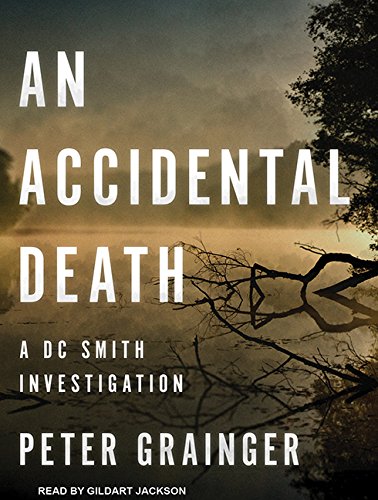
I’ll start by highlighting the oddity (for me) that I listened to three audiobooks in May by the same author: all mysteries by Peter Grainger, who was recommended to me by my sister as well as by my longtime online friend Janet Webb. I listened to the first three–An Accidental Death, But for the Grace, and Luck and Judgement–mostly while working on jigsaw puzzles, with the result that I made unusually rapid progress on them! The recommenders were right about the excellent narration by Gildart Jackson, who captures DC Smith’s character wonderfully. I don’t typically stick with fiction on audiobooks: I read to myself so much more quickly than they can be read aloud, for one thing, and often I feel I’m not keeping track as well as I do when I’m doing my own reading. This is why I more usually choose podcasts for my puzzle time. But these novels are not overly long–at 12 hours, the third one was quite a bit longer than the first two, 7 and 9 respectively–and the pace of the storytelling felt pretty brisk. The stories also engage with serious and sometimes difficult issues (such as assisted suicide, a key element of But for the Grace), but in a personal and humane way. As I understand it, Grainger has only recently been picked up by a mainstream publisher, which is why his books have been a bit under the radar. My library does not have nearly all of them; I found a couple of later ones on sale on Kobo the other day, so now I have to decide if I care about reading them out of sequence.

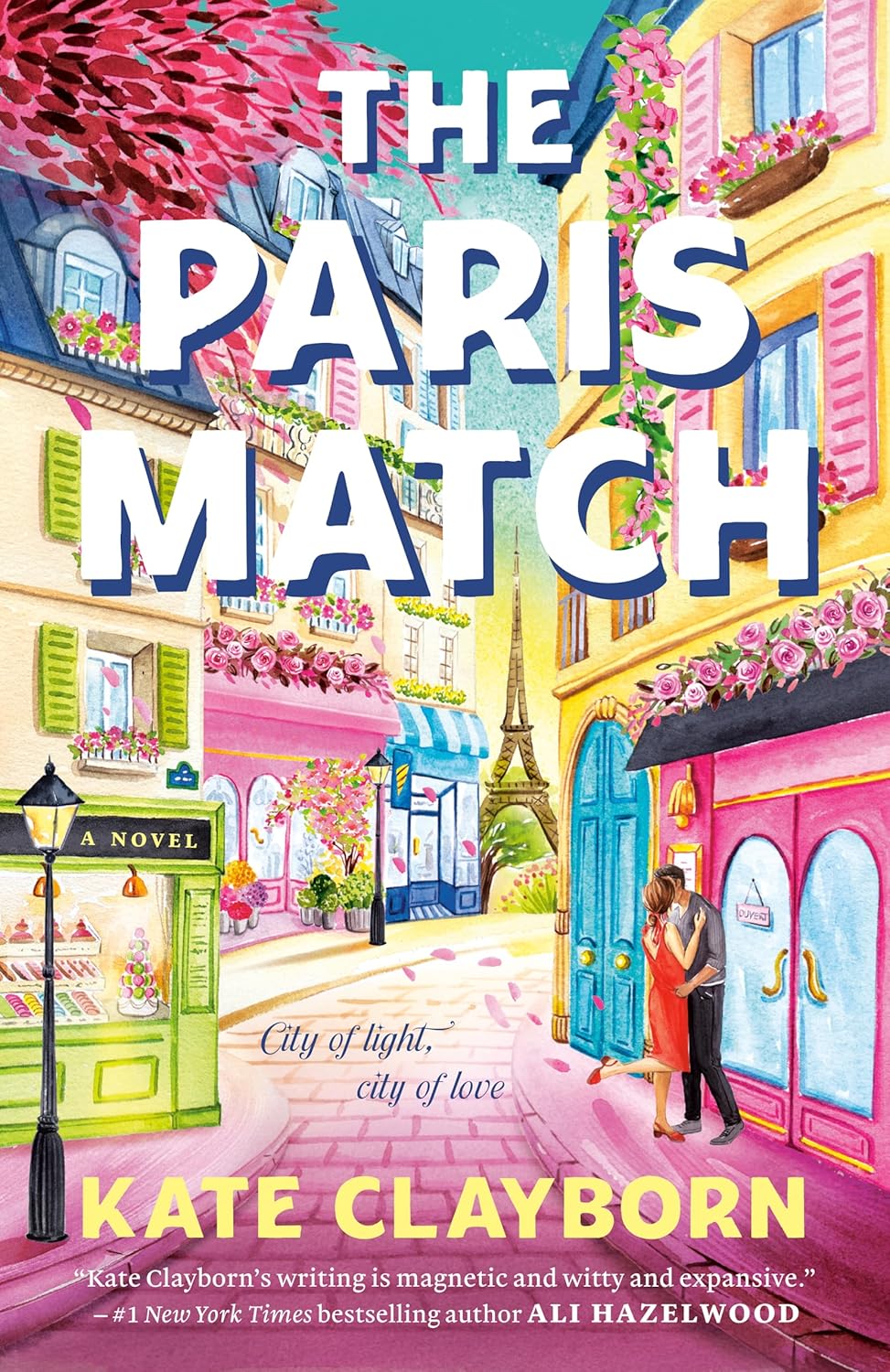
I read a few romance novels: Jody McAllister’s An Academic Affair (it was OK), Emily Henry’s Big Beautiful Life (it dragged), B. K. Borison’s First-Time Caller (cute, I enjoyed the Sleepless in Seattle homage, though it felt a bit too derivative at times), Curtis Sittenfeld, Romantic Comedy (meh), and Kate Clayborn’s The Paris Match. Clayborn’s ‘Chance of a Lifetime’ books (Beginner’s Luck, Luck of the Draw, and Best of Luck) are probably my favourite contemporary romance novels, with her Love Lettering also in my top few. I have not been as in love with the ones she has written since then, which sometimes seem to pack too much in, or to play the “past trauma” card too heavy-handedly or elaborately. I felt this way especially about The Other Side of Disappearing, which I reread recently to double-check my initial dislike. She’s a good writer, a better stylist (IMHO) than most current romance novelists I sample, but there’s an energy about those first three that I haven’t felt in any since, and the same was true of The Paris Match. It was fine. YMMV.

I read and didn’t much enjoy Terry Pratchett’s The Night Watch. I have read enough about Pratchett to really want to fall in love with his novels: imagine how many I would then be able to work my way through! I have had many recommendations over the years and never really followed up on them. When I saw the Modern Classics edition of The Night Watch I admit I fell for the marketing: this must be the best one, right? But since I reported on my “meh” experience, Pratchetters have corrected me: it’s late in the series, it relies a lot on our already being invested in the characters, it’s darker and less comic and joyful than [fill in preferred title here] etc. I didn’t hate it or anything. I’ll try Guards, Guards next, eventually.
It’s remarkable how quickly a few of the books on my list have faded from my recollection. This is the price of not making myself write up every one of them here, as I once did! Ben Markovit’s The Rest of Our Lives: what was that about? (Don’t tell me! I’m being hyperbolic – sort of. I do basically remember it.) Ron Currie’s The Savage, Noble Death of Babs Dionne: why did I even buy it? (I remember why: I’m always scouting for good and especially genre-bending or innovative crime fiction and this sounded like it might hit the mark.) Chris Bachelder and Jennifer Habel’s Dayswork: well, to be fair, it isn’t written to be remembered, right, with its fragmented and wandering and insubstantial quality? For people who like that sort of thing, Dayswork will be exactly what they like. I didn’t dislike it; it just wasn’t for me.

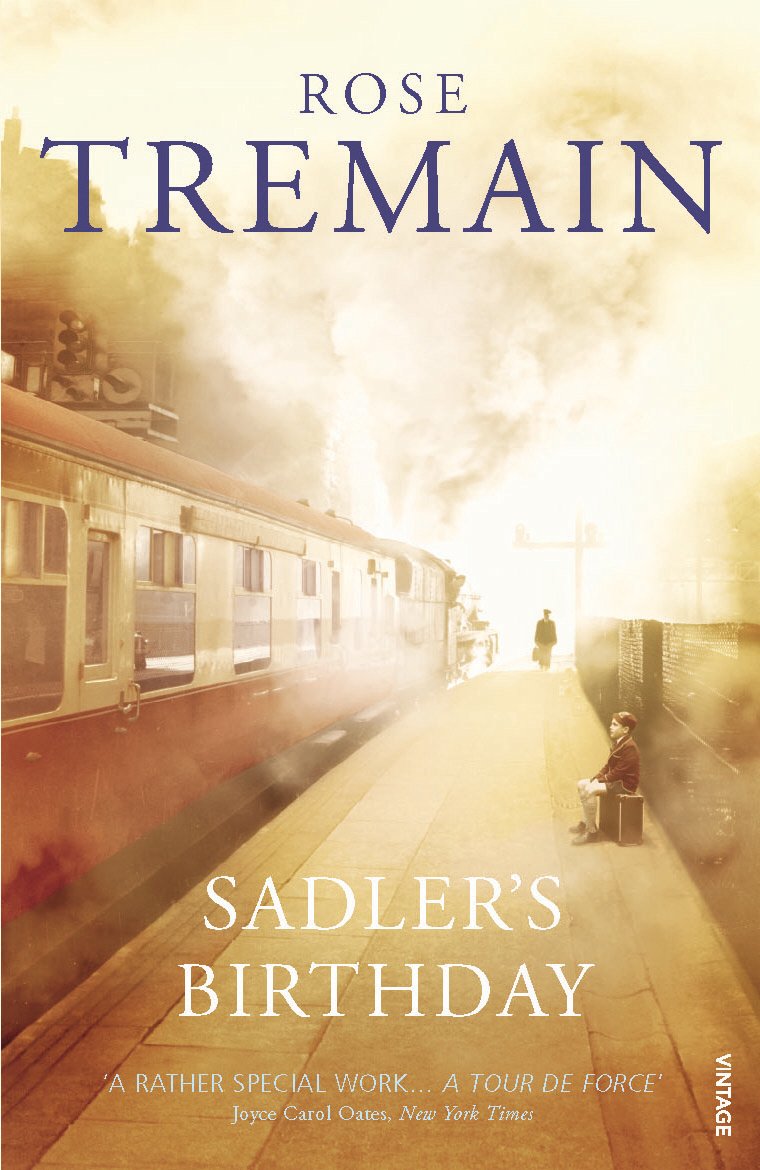
As preparation for reviewing Rose Tremain’s forthcoming novel The Housekeeper, I reread Rebecca (a damn near perfect book! definitely the best book I’ve read in the past two months and probably longer) and am also sampling Tremain’s back catalogue. I had previously read only Restoration and Music and Silence, both of which I really liked and neither of which prepared me for Sadler’s Birthday, her first novel, which is a day in the life of an aging former butler who inherited the estate and is now decaying along with it and remembering. Among his memories is a relationship with a young boy who came to stay on the estate during the war; I wasn’t sure Tremain saw this episode in quite the light we would today (the novel was published in 1976), but I found it hard to tell if it’s Sadler himself or Tremain who is a bit too forgiving. In spite of that, I thought it was a good novel: evocative but not nostalgic, sad but not sentimental.

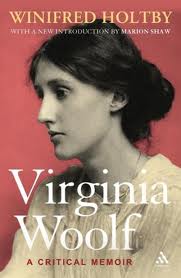
Finally, I made my way to the end of Volume 4 of Woolf’s diary. I commented back in March that I was flagging a bit in this project, and this continued to be true, even though some parts of Volume 4 were every bit as interesting as anything in the earlier volumes. During much of this volume Woolf is working on what became The Years; paradoxically, perhaps, because I have spent quite a bit of time in the last few years working up an argument about the composition, purposes, and (on the terms I set) failure of The Years, drawing on some material from the diary, that made this volume less interesting rather than more! So far the most exciting part of reading the diaries for me has been seeing Woolf become Woolf–discover what kind of fiction she wants to write, gathering her courage, making the experiment, being exhilarated by finding she can write it. Now that she’s more established, there’s less sense of daring, even though of course she continues to be concerned with trying new things and working out new ideas. She herself seems more excited towards the end of Volume 4 by her ideas for what would become Three Guineas, and I get it: Three Guineas is a better, more radical, more exciting book than The Years. Volume 5 is next–which means that the shadow of how it all ends feels closer and darker. Dramatic irony: we all live our own lives in that mode, unknowingly. That has always been one of my favourite things about Holtby’s book on Woolf, that she wrote it without knowing.
Two About Aging

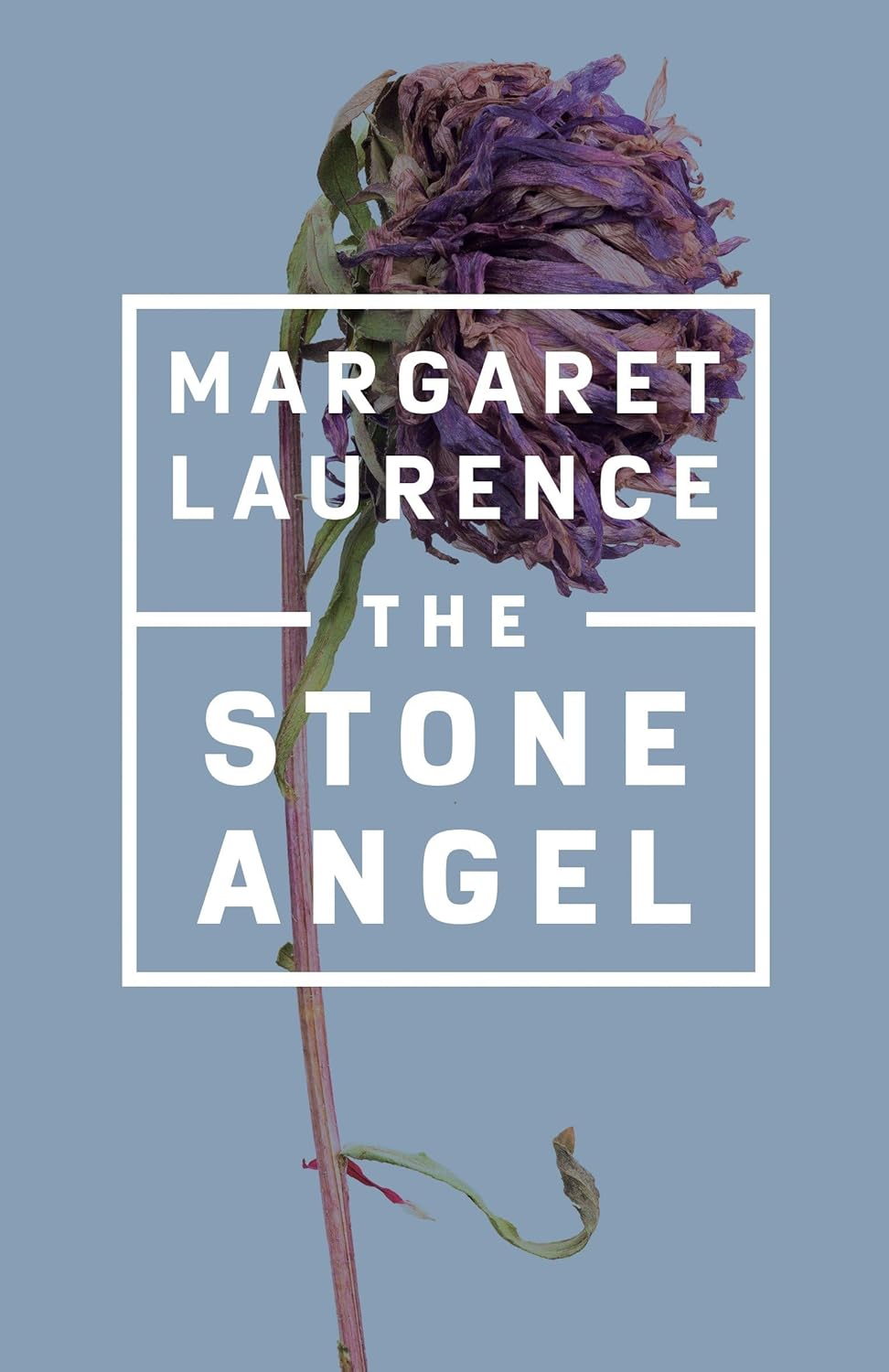
Inspired belatedly by the discussion of Margaret Laurence’s The Stone Angel on the One Bright Book podcast, I replaced my donated copy (see, this does sometimes happen, that I purge a book and then reconsider!) with the nice Penguin Modern Classics edition and reread it after–I don’t even know how many years. I am sure that whenever I last read it, at least 20 years ago, I would felt interest and reluctant sympathy for its protagonist, Hagar Shipley, rightly described by her son Marvin as a “holy Terror,” but my relationship with her would have been based on imagining getting old, not on my own experience of it. This time through, though given average life expectancies these days, at just-turned-59 I don’t really count as “old,” I felt her rage and horror and refusal at the indignities and compromises of old age to my core. Nobody every really knows what lies ahead–except that we all know that it’s coming for us in some form (unless it isn’t, which is no consolation).

There is a lot going on in The Stone Angel, through Hagar’s retrospective account her of childhood, her difficult marriage, her losses, her eventual, still difficult, independence. But this seemed to me where the novel’s fiercest care lies: in Hagar’s fierce, ruthless, but inevitable also both foolish and futile struggle to stay unequivocally herself to the very end. Laurence plays out this losing battle artfully through Hagar’s first-person narration, which gives us the immediacy of her voice and her experiences but also lets slip over and over how Hagar herself is slipping, even as she denies, even to herself, that she is.

“Here I am,” Hagar says at one point,

the same Hagar, in a different establishment once more, and waiting again. I try, a little, to pray, as one’s meant to do at evening, thinking perhaps the knack of it will come to me here. But it works no better than it ever did. I can’t change what’s happened to me in my life, or make what’s not occurred take place. But I can’t say I like it, or accept it, or believe it’s for the best. I don’t and never shall, not even if I’m damned for it. So I merely sit on the bed and look out the window until the dark comes and the trees have gone and the sea itself has been swallowed by the night.

“Even if I”m damned for it”: that’s the spirit of Hagar, and also, that’s the spirit, Hagar! She’s a quintessentially unlikeable character–rude and rough and proud and defiant–and yet there’s something inspiring as well as refreshing in her, and also in Laurence’s, refusal to pander to the notion that an old woman should be a harmless creature, gentle, pliant, no trouble to anyone. It’s not the dying of the light Hagar rages against: it’s life, with its injustices, its griefs, its disappointments. It’s odd that such a negative force should nonetheless be uplifting. Her intransigence is surely not exemplary, but the novel conveys with great power the imperative she fights to live up to: to be herself, Hagar, to the bitter end.

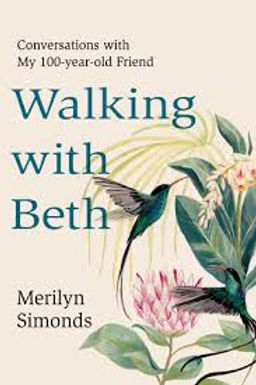
Merilyn Simond’s Walking With Beth could hardly be more different in tone or spirit, even though it too highlights truth to self as essential to aging. Walking With Beth recounts the many conversations Simonds had with her beloved friend Beth, mostly during the pandemic when regular walk-and-talk sessions helped them both cope with the stress and isolation of lockdown. They are 30 years apart: Simonds is in her early 70s when the walks begin and Beth is 101. “Now I am the old lady,” Simonds reflects; “Still, I am not so old that I can’t find a woman older than I am. Beth is my old lady now. My last guide into the future.” What wisdom does Beth have for her, from her position as, not just an elder, but one of the eldest? How can her choices, her way of being so old, help Merilyn imagine herself into an old age that is something other than a fading away?

I liked Walking With Beth but I did not find it a particularly revelatory or inspirational read. Beth is clearly an exceptional woman; like her past, her aged present is rich with creativity and generosity. She has no trouble filling her days, as far as her energy and health allow. “Many people reach retirement,” she tells Merilyn,

never having thought about what has given them pleasure or satisfaction in their life . . . What can take them into the next stage. They don’t realize they have no need of a boss or a job description. Any number of activities are self-initiated. I can’t believe how much has happened between 1988, when I officially retired from teaching art therapy at Concordia, and now–dance, embroidery, my collages–clusters of activity, each one different, yet in a way they are part of one long, continuous journey. Every day, at every age, you wake up, your eyes open, your whole being opens, and off you go!”

Is it because I have in fact been thinking a lot about retirement, and also reading books and listening to podcasts about it, that I found this banal? But Walking With Beth isn’t really a self-help or advice book, so maybe that’s unfair: it’s really a record of a friendship, and considered from that angle it is more satisfying. It is low key, episodic, digressive: sometimes that works (for me), sometimes it feels unfinished (to me). Partly because of Simonds’s own medical problems during this period, it highlights physical decline, often in a dispiriting way. “Younger birds,” Simonds observes,

may be more active and have more vibrant plumage, but birds, at least to the human eye, have been spared the equivalent of the white hair, slack, wrinkled skin, stooped back, clouded vision, and tangled mind that mark advanced age in our species.

“It is the terrors of the mind that frighten me the most,” she adds, but “we cannot avoid the endgame; we can’t even choose which one we’ll be forced to play. All we can do is choose where we cast our eyes,” and she and Beth, and her book, nudge us consistently to look towards the light:

Today, the sky is bright, the Sierra Madre mountains lift the horizon as they have done for thousands of years, the birds in the pepper tree outside my window are singing, and my heart, nudging aside my mind, sings too.

OK, that’s nice, but again, it shades into banality. Nice as the book is, lovely as the friendship it centres on is, deft as some of the writing is, it made little impression on me–much less than, say, Death of an Ordinary Man, which is a lot less nice but somehow a great deal more comforting, or at least more bracing. I actually know someone who walks every week with a friend of hers who is a couple of decades older: they both really look forward to their walks. Maybe as a vicarious experience, it’s bound to be less energizing. Simonds, who has had to clear out the belongings of many of her loved ones after their deaths, comments that photographs are rarely of great interest to those besides the photographers: I had something of the same feeling about this book, that it takes a lot to make a friendship of yours mean much to someone else, and Walking With Beth doesn’t quite deliver.

To be honest, I sometimes have the same feeling about podcasts: it’s a lot less fun listening to someone else’s discussion of a book than it is being in the discussion myself. It can make me feel like Frankenstein’s monster watching a happy family through the window. However! Now that I have finally reread The Stone Angel, I look forward to listening again to the One Bright Book episode. And I’ll be thinking about those walks and those talks. I love walking and talking (or sitting and talking) with my own friends, but it’s such an occasional pleasure, as we all seem to be so busy.

Another Term Over!

I have certainly not kept up diligently with posting about my teaching this year. I’ve posted just twice about it since January, and once was a re-run! I blame . . . well, pretty much everything, including how much of my energy was spent this term on administrative stuff that was at once important and kind of mind-numbing. But really it’s probably as simple as: a habit, once broken, is hard to repair, however much you miss it, or however guilty you feel about it (however irrationally). I was talking with a good friend recently who commented how helpful she’d found the comment “it’s OK to change your interests.” Has my interest in blogging about my teaching just declined? The proof, I guess, is in the posting.

And yet: I have missed it! I continue to believe, as well, that it is a habit that did me good. I became a better teacher because I took regular opportunities to reflect on what I was doing and how it was going. As I approach the end of my teaching career–I don’t know when that will be, yet, but I know it’s coming eventually!–I know I will be glad to have this record of so much of it, as well.

This felt like a difficult term, though mostly for reasons not directly to do with my own teaching. The string of snow days and cancellations didn’t help: I got pretty tired of gaming out revisions to our reading schedules and deadlines. Disruptions aside, I think my two classes actually went pretty well. I was anxious heading into the Brit Lit survey class, because it did not go well the last time I taught it–and that’s even without taking into account that mid way through it, the pandemic broke out and we were all sent home. The reading list this time was pretty much the same, but it all felt very different, in a good way. How much of that was me, doing things differently (better) and how much of that was the unpredictable chemistry of the group, the room, the moment? I loved working through Great Expectations with them, of course, but the biggest treat for me was The Remains of the Day, which was on the reading list for the course in 2020 but had to be cut when everything blew up. It remains a top 10 novel for me, and its insights and impact feel as urgent to me now as they did a decade ago–more, perhaps. And of course the final scene on the pier still makes me weep.

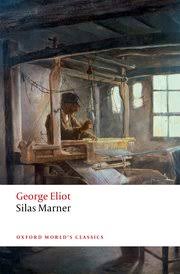
My other course this term was a combined Honours and graduate seminar on George Eliot. I have taught a grad-only version before but this was my first time being able to offer it to Honours students as well. Because many of the undergraduates in the class had read at least one George Eliot novel with me before (along with an array of other Victorian novels), and some of the graduate students had never read her–or much Victorian fiction at all–there really was no meaningful difference in level or preparation, and the discussion was smart and energetic and invested the entire term. Well, OK, it flagged a bit while we were making our way through Felix Holt, which was not a general favourite–but that was also during the worst of our winter weather, so I choose to think it’s not really, or not entirely, Felix’s fault. Silas Marner was a clear favourite, but to my delight and relief, so was Daniel Deronda, which I don’t think anyone in the class was really looking forward to. They were all very happily surprised at how (relatively) fast-paced and provocative and interesting it is. I would have loved to include Middlemarch, but you can only do so much in 12 weeks. (I have put it on the reading list for the Dickens to Hardy class in the fall, as compensation.)

The last time I taught the grad seminar version of the George Eliot class was 2015, and it was interesting to notice some shifts in the interests and questions students brought to our discussions. To some extent this was a function of the critical essays I assigned for the graduate students, which I refreshed to highlight recent developments in the scholarship. But it was still up to them what they specifically brought up in class, and the undergraduates were not doing those readings (or at least were not required to)–and across the board it was clear that disability studies, eco-criticism, and gender were key interests. It’s not that gender wasn’t a central topic of discussion in the past, but the terms of the discussion have evolved: we had as lively discussions about Gwendolen as a possibly “ace” character, for example, as about Maggie’s non-conformity with 19th-century norms of femininity. There didn’t seem to be much energy for talking about empire, even with Daniel Deronda, and my expectation that the novel’s conclusion would provoke controversy about Palestine and Zionism did not really play out.

The spectre haunting everyone’s pedagogy this year was AI. I really tried not to let concerns about it preoccupy me. By and large, I trust my students to want an authentic experience, to be bringing their real selves to the classroom and to the work they do for me. I never had the feeling with any of the work from the students in the George Eliot seminar that it wasn’t truly their own. Could I be wrong about this? Sure. But I got to know them all pretty well, and unless I have learned nothing in 31 years of teaching, there’s not much overlap between “students who want to take an entire seminar about George Eliot” and “students who want to take short-cuts.” I wasn’t always so sure with the online tests in the survey class: some of the answers did have that combination of vagueness and fluency, a kind of unnatural glibness with very little actual substance, that gives off the whiff of AI. Most of the time that meant they also didn’t meet the requirements for full credit, which typically included things like “give a specific example from the reading to support your answer, explaining clearly how it does so.” In those cases I could just give partial credit, noting how the answer fell short without getting tangled up in having to prove AI use. Other times I had to shrug and give credit for a “good enough” answer, even if I doubted its authenticity. Usually I noted that doubt in my feedback, explaining why the answer had made me wonder, in case knowing that was in any way useful to the student.

I’m not at all sanguine about the corrosive effects of AI on teaching and learning, and I don’t kid myself that there is any way to “AI-proof” my assignments. I remind myself, though, that one of my worst teaching experiences ever was the term–not that long ago!–when 1 in 5 of my first-year students was found guilty of an academic integrity offence for literally cutting and pasting material from sites on the internet. AI is worse: more insidious, and at least potentially more widely damaging to the trust I consider essential to my work. I have tried hard over the years to think about plagiarism as a symptom rather than a moral failing and to do what I can to create the conditions in which students neither need nor want to resort to it. The same is surely true of AI, but it’s impossible to ignore how much harder it keeps getting, not just to ward it off (I mean, Copilot is literally integrated in the software they are provided by the university!) but to manage those conditions. Classes are larger, everyone is busier and under more pressure, students’ preparation and expectations and needs vary widely. All I can really do is speak up for and model the value of the process and the work itself. I do feel pretty sure that, whatever complaints they no doubt have about me and my pedagogy, my students can tell I am there for it and for them, that I am genuinely committed and enthusiastic. I hope they appreciate that I continue to prioritize both trust and authenticity on both sides. When I can’t bring that positive energy to the room any more, it will definitely be time for me to retire.