 My last two reads of this summer were Yiyun Li’s The Book of Goose and Ann Patchett’s Tom Lake. For me, one was a hit, the other a miss.
I began The Book of Goose with enthusiasm; sadly, it dwindled as the book went on. It’s often hard to put my finger on exactly why I don’t like a novel (as opposed to why I don’t like a particular feature of a novel, as with the ghostly illogic that put me off Devotion). When it happens, I always wonder if more time and effort would turn things around—but when I’m reading just for myself, there’s no real incentive to go to that kind of trouble, and there are enough books that do work for me more or less immediately that I don’t worry too much that I’m somehow missing out. A lot of readers I respect think very highly of Yiyun Li (in response to my “meh” judgment on Twitter, Catherine Taylor, for one, commented that “She’s an amazing writer”—though the novel she highlighted was The Vagrants, which I haven’t read but she said is, in her opinion, “pretty much one of the best novels of the last 20 years”). I was very moved (both before and after Owen’s death) by Where Reasons End, but I have DNF’d Must I Go twice now. Perhaps that should have been a warning sign, but I heard part of a podcast interview with Li about The Book of Goose and it intrigued me, and the premise seemed promising.
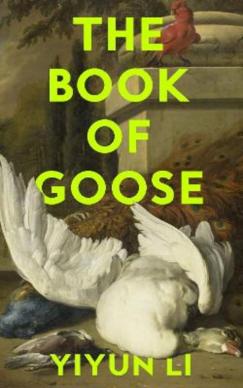 Another warning sign should have been how many reviews (including some quoted in the pages of “Praise for The Book of Goose” that lead off my paperback edition) compare it to Ferrante’s Neapolitan novels. I am cynical about these tendentious excerpts so I don’t pay very close attention to them when I’m making up my mind about what to read. Maybe I should change my habits! Because the Ferrante comparison occurred to me not too far into Li’s novel, and not for good reasons. (I’m not a fan.) Mostly it’s because of Fabienne, the strange, fierce, often cruel best friend of the narrator Agnès, who has the kind of willful wildness that Ferrante too seems to find, if not attractive, at least appealing, or compelling. I can’t imagine being friends with such a person in real life, and the recoil she caused made it equally hard to imagine why Agnès was so devoted to her in her world. Their friendship has a lot of the push-pull of Ferrante’s protagonists, and there are some similar themes about writing and identity and competition and contested narratives. (When people write about these books as if they reveal some essential truth about women’s friendships, I am baffled: is this really what their friendships are like?) For a while I was engaged enough in the graphic account of village life in post-war France, but the “game” of “let’s write a book” seemed forced to me, an awkward device to generate plot, conflict, and metafiction. Agnès’s time in England seemed similarly wooden to me; her correspondence with Fabienne and the fictional Jacques also seemed too much like a gimmick to stir up potential interpretation. Is The Book of Goose really a high concept novel, or is it trying (and failing) to be one? A lot of critics considered it the former, but I wasn’t convinced and (worst of all) before it was over I had lost interest in figuring it out.
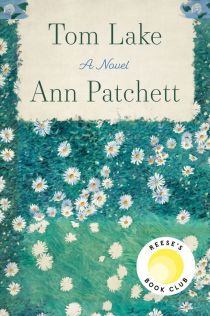 Tom Lake was a much more enjoyable read, although like the other Patchett novels I have read recently, it didn’t seem to me to go particularly deep. Still, there was something really satisfying about it: I liked it a lot more than either Commonwealth or The Dutch House (though not as much as I remember liking Bel Canto). It has in common with The Book of Goose an interest in how we look back at the past and use what we remember to give shape and meaning to the present. It’s also, I think, about the roles we play and how they can either trap or liberate us, a theme it literalizes through its theatrical contexts and plotlines. How do we know who we really are, or who we might be? How do we navigate a world in which people, looking at us but not really knowing us, cast us in their own ongoing dramas? Patchett has too light a touch to lean hard into these kinds of thematic or (at their deepest) existential questions: mostly, she just tells a story about people with interesting but also somehow very ordinary lives. A story like this one, about choosing family and farming over fame and fortune, might have been told as shadowed with complications, perhaps regret about the road not traveled, or yearning for lost love, but Patchett’s version is airy and confident: the path taken is unequivocally the right one, which makes the notes of nostalgia unthreatening to present happiness. For a pandemic novel, it’s actually remarkably sunny: there’s really no hint of danger, certainly no sign of illness. Is that escapism? If so, is there something wrong with it? Maybe it’s just one of the gifts fiction can offer us—a temporary respite, a refuge. It’s not that there isn’t trouble and heartache in the story Lara tells her daughters, but while they listen they are safe and loved. There’s definitely room for novels like that in my reading life.
 Novel Readings
Patchett does have a light touch, and I enjoyed that, too.
LikeLike
I’ve been looking forward to Tom Lake and was interested in your response. She doesn’t go deep, does she? Yet the books can be very absorbing. I read Bel Canto on a plane from Ottawa to Vancouver, delayed for several hours in the Ottawa airport while wings were (repeatedly) de-iced. So the conditions were right to read about confinement and how we survive it, or don’t. For that reason, and one or two others (I was taking voice lessons so loved that strand of the narrative), I found it very memorable. I did enjoy her essay collection, These Precious Days.
LikeLike