 After I finished Gwendoline Riley’s My Phantoms, I commented on Twitter that I was finding cold, meticulous novels wearing and asked for recommendations of good, recent warm-hearted fiction. Along with the understandable and spot-on nods to writers I already know well (such as Barbara Pym and Anne Tyler), I got a lot of good tips, which I am still working through. Here are the ones I have read so far. I have to say that while they have all been fine, none of them really got much traction with me: I don’t think it is necessarily the case that “warm-hearted” means lightweight, but that’s how these mostly felt. I don’t think I will remember much about them. The exception so far is Jessica Au’s Cold Enough for Snow, which I found very moving; that’s why it got its own post!
Elizabeth Strout, Olive, Again. I read Olive Kitteridge years ago – long enough that I didn’t write it up here, that I can find. I remember enjoying it, but it seemed dispensable, so after a while I put it in my “donate” pile. I didn’t like My Name is Lucy Barton much, and that seemed like the end of my relationship with Strout. Still, she’s much beloved, and so I picked up Olive, Again to see if I’d underestimated her. My conclusion is “not really.” I liked it fine, but it felt incidental, meandering. The ‘linked short story’ effect irritates the novel reader in me: it feels lazy, as if the author couldn’t be bothered to do the work of actually integrating the characters and events into one more substantial and meaningful whole. I’m a lover of Victorian multi-plot novels, which I consider, at their best, a high form of art. If the whole is supposed to be more than the sum of its parts, I’d like the author to be the one who does the work of building that up. Don’t just give us the pieces and assume we’ll believe there’s more to it than that.
Stewart O’Nan, Emily Alone. I read this right after Olive, Again, and I couldn’t shake the feeling that I was still reading the same book. There was nothing (to my ear, anyway) to distinguish the voice or tone or prose of one author from the other; Emily’s story could easily have been one of the chapters in Strout’s book (see, I’m reluctant to call it a “novel”!) – except, of course, for being book-length itself. I liked Emily herself just fine, and “older woman living alone” is one of my favorite tropes (see Plant Dreaming Deep, for a cherished example) but the novel recounted day to day events in tedious detail. I like exposition, but I like it to be more than an accumulation of (fictional) facts.
 Elizabeth McCracken, The Hero of This Book. I liked this one quite a lot except for the uneasiness it created in me about what kind of book it is, exactly. I realize that is one of the main points of the book, to destabilize assumptions about what constitutes a memoir or a novel or autofiction or whatever. I understood this because McCracken makes rather a lot of noise about it: “What’s the difference between a novel and a memoir?” she asks; “I couldn’t tell you. Permission to lie; permission to cast aside worries about plausibility.” “It’s not a made-up place,” she says about a trip she and her mother make to the theater (or do they?),
though this is a novel, and the theater might be fictional, and my insistence fictional, and my mother the only real thing, though this version of her is also fictional.
OK, whatever. I found these intrusions distracting. If I wanted to explore theoretical differences between genres in that kind of explicit way, I’d read critical writing; if you want to play with genre, you can do it without so much handwaving about it. And yet as a book about love and mourning, The Hero of This Book was sometimes quite powerful:
Was this grief? I could feel my mother’s joy on the London Eye, her love of heights and good views. That streak of daredevilry and thrill-seeking. I had once taken her on a helicopter tour of downtown Miami, after she’d seen somebody parasailing and had guessed aloud that she couldn’t do that. My mother laughed as the helicopter wove through skyscrapers; I believed that I would fall to the ground at any moment and thought, I’ve had nightmares like this. That was actual joy; the joy I could apprehend now had not occurred, was counterfeit, made of regret and set in regret. 
Richard Osman, The Thursday Murder Club. When Levi Stahl recommended this, he prefaced it by asking if I read or liked “cozies.” I don’t, much, but this one sounded really charming – which it is, or at least the cast of characters is. By about half way through, however, I had completely lost interest in the actual murder case. (I also got irritated at the repeated device of revealing some key bit of evidence to the characters but withholding it from us: I get that it’s a provocation for us to figure out what it might be on our own, but IMHO it’s a bit of a cheap trick.) This had some ripple effects on the quality of attention I paid to the rest of the novel: I read just closely enough to find out what happened to the people I liked, but overall I wasn’t very invested, and I don’t think I’ll read on in the series.
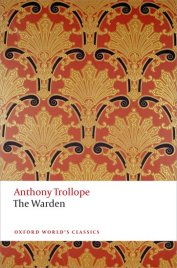 I’ve been ordering next year’s books — not because I’m that ahead of the game in general but because early ordering enables the bookstore to retain leftover copies from this year’s stock and students to get cash back at the end of term if they have books we’re using again. I’m teaching a couple of the same classes again in 2023-24 (my first-year writing class and Mystery & Detective Fiction) and so it isn’t too hard to get those orders sorted out. While I was at it, I thought I’d also make my mind up about which novels I’d assign for the Austen to Dickens course (this year I’m doing Dickens to Hardy — once upon a time I taught them both every year, but now I do them in alternate years) . . . and this has had me thinking about how my reading lists have changed over the past twenty years.
 When I came back to in-person teaching last term, I was wary about going back to pre-pandemic norms. Things in general didn’t really seem normal, after all. So once again I assigned just four novels. OK, one of them was Middlemarch! (But again, I used to assign Middlemarch routinely as one of five or even six.) My impression was that for many of the students, this reduced reading load was a lot — overwhelming, even, for some of them — and so I have ordered just four novels again for next year (although one of them is David Copperfield).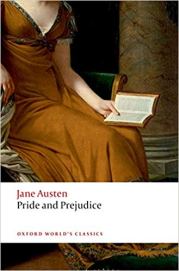
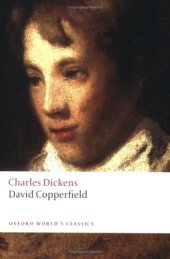 I could still add a fifth book to next year’s list if I want to. So far, I’m committed to Pride and Prejudice, Jane Eyre, David Copperfield, and The Warden. In 2017 I assigned Persuasion, Vanity Fair, Jane Eyre, North and South, and Great Expectations for the same course; in 2013 the list was Persuasion, Waverley, Jane Eyre, David Copperfield, and North and South (I remember that year distinctly, because it was the year of the
  The last train was in forty minutes. I pulled the sleeves of my jacket over my hands and wrapped my arms around myself as I sat on the bench to wait. Eventually, I got up and bought a bottle of sake from one of the vending machines. It was clear and cold, tasting at first of alcohol and something vaguely sweet, before evaporating into nothing. After a while, I was no longer cold, but only very tired. I had one vague, exhausted thought that perhaps it was all right not to understand all things, but simply to see and hold them.


 Novel Readings