 I read 8.5 new books this month and blogged about . . . none of them? Hmmm. I’m honestly not sure if the fault is mine or theirs. Not one of them lit me up, but that didn’t used to keep me from rambling on about a book! So maybe the problem is what I’m bringing to them as a reader these days—but if so, does that mean my reports on them are unreliable? Who knows? As always, all we can really talk about is our experience of a book.
Here, then, in brief: my January reading.
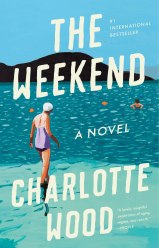
Charlotte Wood, The Weekend. I enjoyed this one quite a bit. It is a story of female friendship—but it is more probing and uncomfortable than that theme might make you expect. I appreciated its focus on older women. They have been through a lot, separately and together, and Wood does a good job exploring the kind of bond the sheer longevity of their relationships creates.
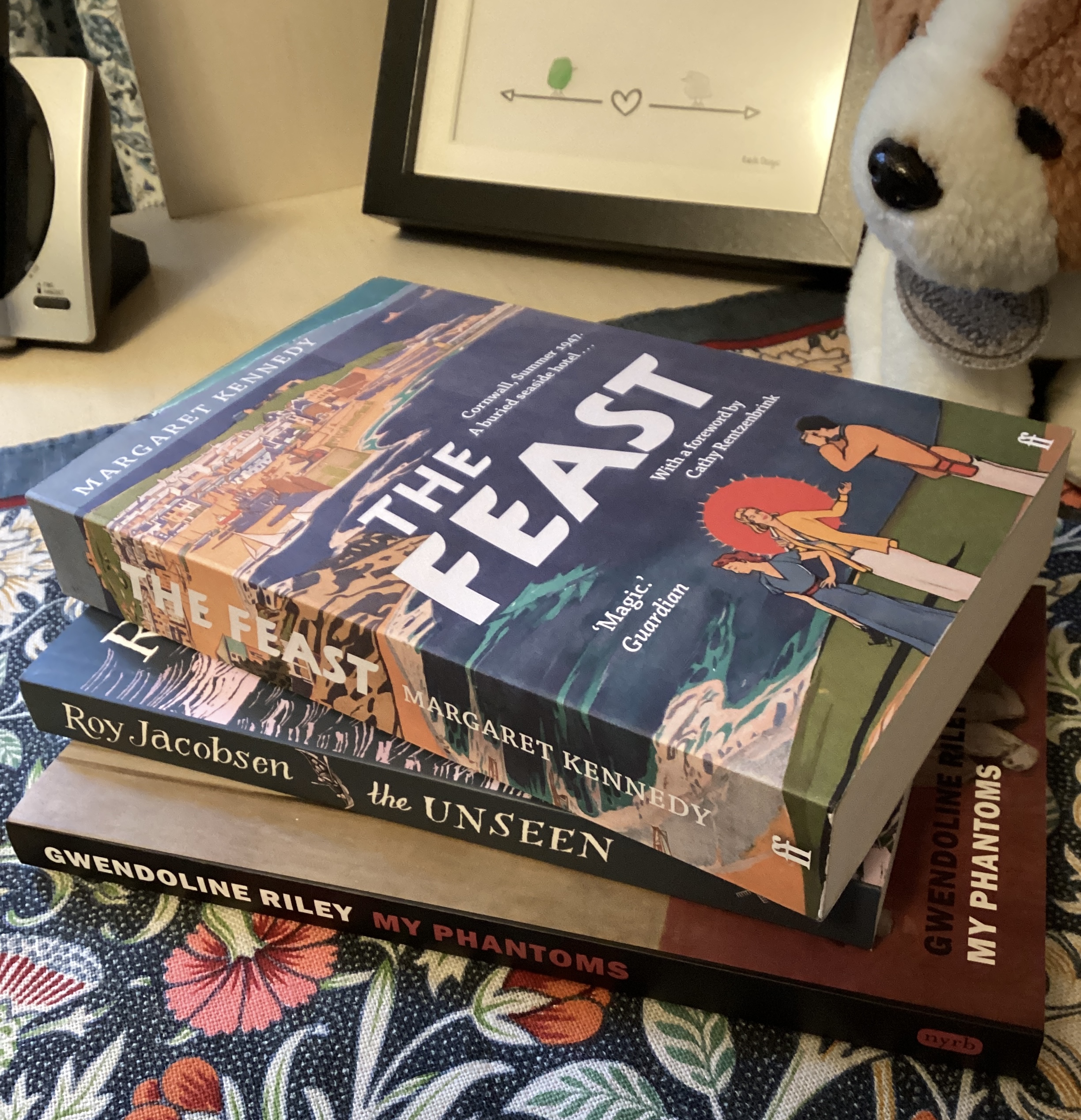
Roy Jacobsen, The Unseen. I was not enthralled by this; I definitely will not be searching out the others in the series. However, the prose has a starkness that suits the bleakness of the landscape and the hardships of the characters’ lives, and sometimes it achieved a resonance that elevated its otherwise rather laborious cadences (perhaps the fault of the translators?) to something almost stirring. 
Margaret Kennedy, The Feast. Fun! But not as delightful as I expected. I even started skimming after a while because many of the characters were so annoying that I got impatient for the cliffs to cave in on them. I think I should have been reading it differently to get more out of it—not just more slowly but less for plot and more for ideas about virtue and vice and the meaning of life. One day I’ll read it again and do better.
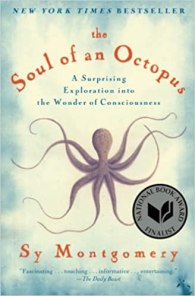
Sy Montgomery, The Soul of an Octopus. The octopus stuff is really cool (for example, did you know that because an octopus’s brains are spread through its arms, a severed octopus arm will just go about its business for a long time as if nothing has happened? even continuing to hunt?!), but after a while I felt as if Montgomery was trying too hard to make more of it than it could bear. Even the title goes a bit far! (I loved My Octopus Teacher, which is a captivating nature documentary and includes thoughtful but not overwrought reflections on how spending time with an octopus can change your perceptions, including of yourself.)
 Kate Clayborn, Georgie All Along. The long-awaited (well, for at least a year anyway) new romance novel from my favorite contemporary romance author—that is, my favorite author of contemporary romances. I enjoyed it fine but it seemed too much like her other novels and not as good as the earliest ones. They are packed full (almost too full) of details, especially of the kind I learned to call “neepery” (whether it’s metallurgy or home restoration or photography, Clayborn is good at conveying the texture and fascination of people’s interests); they are also quite emotionally intense. This one included some of the same kind of stuff but in a less engrossing way; the characters also seemed too conspicuously constructed, like concepts that didn’t 100% come to life. But I might change my mind on rereading: I had a similar reaction to her previous one, Love At First, but liked it quite a bit more when I went back to it more recently.
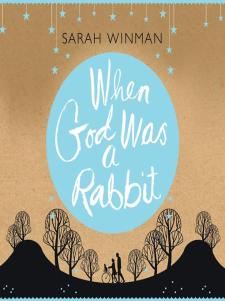 Sarah Winman, When God Was a Rabbit. I happened across this one at a thrift store and grabbed it because I liked Still Life so much. It is not as good as Still Life but it kept my interest from start to finish, which these days is saying something. The narrator’s voice in particular is effective, and I also appreciated the novel’s journey across key events in recent decades, landing on them as events in specific people’s lives. This includes 9/11; I learned from the author’s note that this was a controversial aspect of the novel, which didn’t really make any sense to me.
Elisa Gabbert, The Unreality of Memory. This was a hard one for me in ways that I probably should have expected, or would have, if I’d studied the table of contents more carefully beforehand. I know Elisa (in the internet sense of “know”) from collaborating with her husband John Cotter at Open Letters Monthly, where for a while Elisa wrote a column about perfume. Since then I have read some of her other public writing, but not, that I recall, any of the essays collected here. The hardship was that they are all fairly grim! They deal with hard, scary, or disheartening topics, from natural disasters to the disaster of American politics under Trump. Elisa writes wonderfully, with a poet’s eye for the telling detail at the right moment; as an essayist, she is more associative than argumentative. Sometimes this felt digressive and sometimes as a result I occasionally lost my own focus, but in fact she is always in excellent control; as I kept reading I learned to remind myself to trust her.
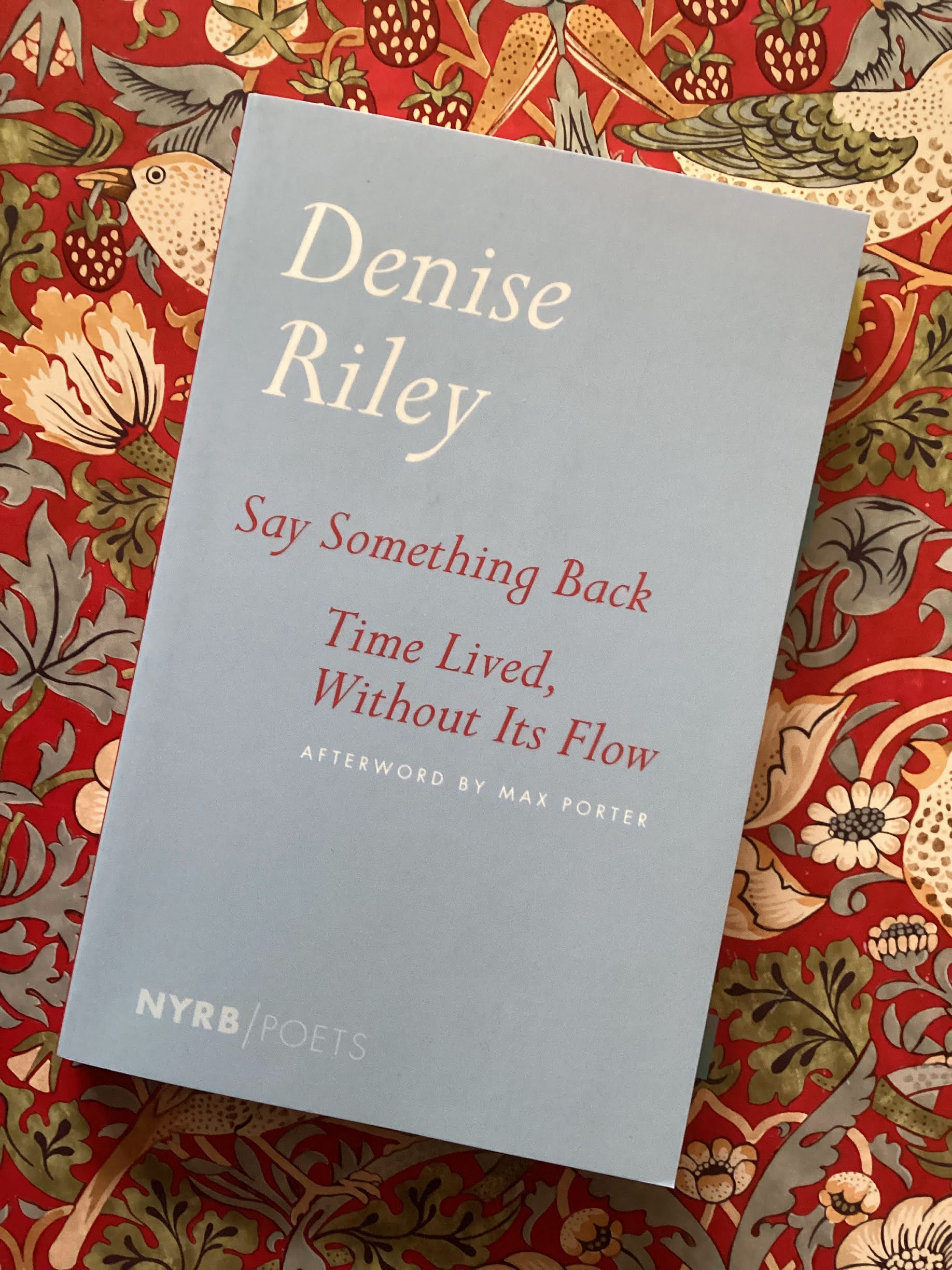
 Gwendoline Riley, My Phantoms. I didn’t enjoy this at all. I could tell it was “well written,” meaning it has crisp, often resonant sentences and is constructed with conspicuous care. The narrator is unpleasant; the relationship she has with her mother is worse than that. I wasn’t sure what the point of the exercise was supposed to be: it takes about 2 pages to get the gist of how uncomfortable it is all going to be and then it’s just discomfort and nastiness, with a bit of pathos thrown in, for another 150 pages. OK, I exaggerate slightly, but I want this post to serve as a cautionary tale for me: beware Twitter enthusiasm! I have learned not to rush off after whatever mid-century middle European novel from NYRB Classics is currently getting all the buzz, because it will probably just sit unread on my shelves along with Sybille Bedford’s A Legacy. For people who like these kinds of things, these kinds of things are great! (And it’s true that sometimes, a bit to my own surprise, I like them too.) But cold, clinical, forensically observant narrators are not my thing. Gorgeous cover on this edition, though!
Which brings me to the .5 in my 8.5 books this month: Barbara Kingsolver’s Demon Copperhead. Its narrator is definitely not cold and clinical, but he is also no David Copperfield, and (so far) the novel has none of the warmth or wit of Dickens’s novel. That’s fine! Kingsolver is perfectly free to write her own book. But it is so disorienting to “know” all the details, to recognize everybody as they arrive in their new outfits, ready to play their accustomed parts in David’s (sorry, Demon’s) oh-so-familiar story—but to hear only bitterness and cynicism. A good page of Demon Copperhead might have a bit of wistfulness, maybe even a trace of pathos, but David’s narrative is full of heart, and (again, so far) Kingsolver’s version has none of it, and no humor either. And it’s loooooooong. I’m not giving up: my book club chose it, and the others who have read it pretty much all report having really enjoyed it. It seems likely that knowing David Copperfield as well as I do has actually been a disadvantage for me.
I’ve also been reading for work (The Moonstone, The Hound of the Baskervilles, and selected stories and poems).
All in all, it actually hasn’t been a bad month for reading. Even My Phantoms at least interested me, plus it was too short for me to be really bothered by the things I didn’t like about it. Still, I hope February brings more books that genuinely excite me.
 “Start where you are and see where it takes you” is
  There’s so much emptiness in my life now. It’s not just Owen’s death, although every day I confront the ongoing ache and mystery of his absence. Some of it is the ongoing isolation of our COVID-cautious lifestyle: especially as most of the rest of the world seems to be moving on, it feels worse than it did when we were all in it together. Being back on campus and teaching in person helps with that, but it’s not the same as it was: I’m in my office a lot, but mostly with the door closed, because masks are required in classrooms but not hallways and I like to take my own mask off while I work. It’s winter, so the outdoor visits that sustained me through summer and fall are less appealing, as are my long solo walks in the park, when I was alone but, somehow, never lonely. (I often think of Marianne Moore’s line “the cure for loneliness is solitude.”) I could be busier at / with work than I am. I will be, soon, as assignments start coming in, but even so I don’t expect to be even as busy with teaching as I was last term, just because of the nature of my classes this term, the easy familiarity of one and the high degree of automation in the other. There is other work I could be doing, even a writing commitment I should be doing. I can’t seem to summon up much urgency or energy for it, though, or for the book idea I still sort of believe is worth pursuing. I’m not even reading much. I can’t seem to concentrate on most books I try; I don’t seem to like many of them, and it bothers me, worrying that it’s me, not them, that’s the problem.
 Two things I did recently:
 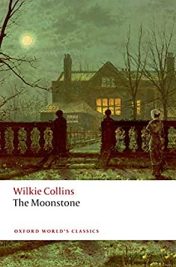 This is my first term teaching both online and in person – not in the same course, but with one of each. So far I like it, actually. My in-person course is an old favorite, Mystery & Detective Fiction. I haven’t taught it in the classroom since Fall 2018, which feels a lot more than four years ago. I taught it online more recently, with some success, measured at least by the number of students who showed up in my Fall 2022 classes at least in part because (according to them) they’d enjoyed it a lot. I’ve remarked here before about the oddity that this has become my most frequently taught course, because it’s such a popular elective. It’s full again this term, at 64. I am grateful for its familiarity: I hope to be able to relax into it. Usually it sparks some of the liveliest discussion of any of my classes, I think because everyone’s there out of interest (it doesn’t fulfill any requirements, so nobody has been coerced into taking it). We warmed up this week with “big picture” stuff about genre fiction, with an overview of the history of detective fiction, and then, today, with “The Murders in the Rue Morgue.” Monday we start The Moonstone, which I omitted, reluctantly, from the online version. I was rereading our first instalment this afternoon and it’s just such a lot of fun. I hope they think so too!



 Novel Readings