 In spite of everything, our academic term here is wrapping up on schedule: we are now in the middle of our exam period, final grades are due May 1, and a week or two after that my department will hold a remote version of our annual “May Marks Meeting.” For me specifically, this means that I have now submitted final grades for one of my classes and that starting tomorrow I will be marking the take-home final exams for the other (for those who opted to write it) and then calculating and submitting those grades. And after that, I will be done with this teaching term, which feels like a genuine accomplishment, under the circumstances, but also like an enormous anticlimax. I never had a chance to say goodbye to my students–none of us really understood what was happening on what turned out to be our last day of face-to-face meetings, not just in the classroom but of any kind–and I also didn’t have a chance to deliver my traditional concluding perorations about the value and rewards of the work we had been doing.

I did work some of these thoughts into the slide presentations I put together to cover the remaining course content and exam review, however. I wonder how many students actually went through those, after all the work I did on them! I guess one thing I’ll have to decide, as I work on my plans for approaching my fall teaching online, is whether I want to use more of the tracking features available in Brightspace–not so much because I think the students need surveillance but because it is (presumably) important to have some sense of what is or isn’t actually engaging the class. If the students aren’t looking at or completing the posted materials, that can’t be good.
At this point we don’t actually know for sure that the fall term will be all online, but we have been asked, quite rightly, to begin drawing up plans based on that strong possibility. In case any current or prospective students read this, I want you to know: your professors are going to dedicate themselves to making your fall term a good one, I promise. Most of us would absolutely rather see you in our classrooms as usual, but if we can’t, it won’t mean that we are any less committed to your education. We’re all inevitably going to fumble and struggle and screw up, at least those of us who are new to online teaching. But in my 25 years as a professor I have seen, so often and in so many ways, demonstrations of how deeply and personally–not just professionally–we all care about our students. There is bound to be a bit of grumbling from a lot of folks (including from me) about the mechanics of teaching online, and some lamentations (again including from me!) about how much we miss teaching you in person. But if this is how we have to carry on, well, okay then: we’ll do our best to rise to the occasion. It won’t be the same, but that doesn’t mean it won’t be any good.
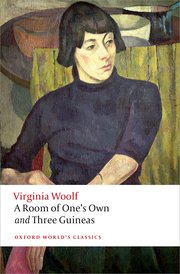 I guess that’s a sort of peroration, isn’t it? Apparently I’m working them in wherever I see an opportunity. Anyway, it’s odd and a bit sad to be wrapping up a term and feel so deflated about it. I think one reason it hits hard is that I spent so much time planning for this one, especially for the Brit Lit survey class–and I was so excited about Three Guineas and about moving from it to The Remains of the Day. Ordinarily at this point I would be throwing myself into choosing the readings for my first-year class in the fall, as instead of doing Pulp Fiction again I am taking on a section of “Literature: How It Works”; I’m finding that hard to focus on, though, both because there’s a lot I still don’t know about what kind or size of class it will be and because I have lost some enthusiasm for advance planning given how much I had to toss out this term. I did put in an order for the books for 19th-Century Fiction from Dickens to Hardy, but for whatever reason, for the first time I can remember it is not filling well (and it’s not, or not obviously, a coronavirus thing, as many of our other courses at that level seem to be filling up just fine) so that’s a bit deflating as well. But there’s time for all of this to get sorted.
In the meantime, I am getting a bit of my own reading done: I’m about 300 pages into The Mirror and the Light and loving it. There’s a gripping lucidity to Mantel’s prose that draws me right in. If I’m slow finishing the novel, that will be my fault, or the fault of my still floundering concentration, which has not been helped at all by the absolutely devastating events of this past weekend. When the last of my grades are filed, I think I’ll try to settle in and immerse myself in it, as a kind of mental vacation (if not a particularly sunny one!) before trying to come to grips with all the “what’s next” questions that would usually feel so energizing as we head into the spring and summer.

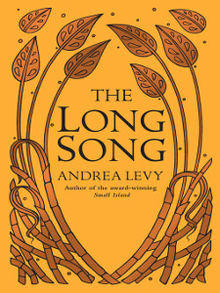 All of this is told in Miss July’s own voice. In some ways this is one of the most appealing features of The Long Song, because July is sharp, funny, and ruthless and because the interplay between her and her son Thomas (at whose prompting she is recounting her life story) draws attention in a clever way to the mediation required between the story she wants to tell and the story he wants her to tell — and also, more generally, to the layers of mediation that were part of how many actual slave narratives reached their audiences. (One of the works cited in Levy’s bibliography is The History of Mary Prince, which I read with my British Literature survey class this term.) I admit, though, that I really struggled with her narration: its cadences and idiom were hard for me to follow, which of course is a reflection on the limitations of my own reading ‘ear.’ The differences from ‘standard’ English are actually pretty subtle most of the time, but they tripped me up surprisingly often, frequently forcing me to go back and start a sentence again to be sure I caught its meaning properly.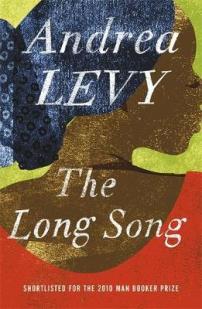
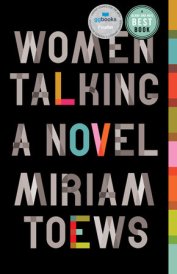
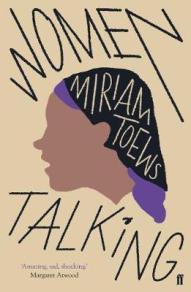 “We’re not members of Molotschna,” Salome bursts out at one point, challenged to consider whether the women owe the imprisoned men any loyalty because they belong to the same colony.
 Peters’s literal absence, and the absence of most of the other men of the colony, is what creates the space in which these women can talk, and that itself is one of the novel’s critical interventions. For most of their lives these women have not been in control of their own stories; their illiteracy has also prevented them from knowing first-hand the terms on which they have understood and lived their lives. “My point, says Salome,”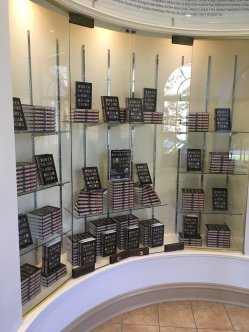
 I’m not sure whether I’m surprised that it has already been three weeks since we began extreme social distancing here or surprised that it hasn’t been even longer — normalcy itself seems so distant now! It seems remote in both directions, too: hard as it is to think back on the relative simplicity of ordinary life before, it is even harder to look ahead because there is so much uncertainty about when and how those conditions will return. That’s as good an argument as any for trying to take this massive disruption one day at a time, which is certainly what I have been trying to do. My success varies, as does my ability to get through each day with anything like the (again, relative) equanimity and focus I used to have.

 Novel Readings