Sjöwall and Wahlöö, The Terrorists

I’ve just finished reading three more of the Martin Beck books by Maj Sjöwall and Per Wahlöö: The Abominable Man, Cop Killer, and The Terrorists, which are, respectively, numbers 7, 9, and 10 in the series. There are now only two I haven’t read (The Man on the Balcony and The Locked Room)–not by design but because they haven’t turned up in the library or at any of the used bookstores I haunt. I think that the eight I’ve read have given me a very good idea of the series as a whole, and my interest in and respect for what Sjöwall and Wahlöö do in it has only increased as I’ve read along. By the end of the final book the scope and intensity of their critique of contemporary Swedish society has finally become explicit. It is even, finally, articulated at length, rather than gestured at through repeated jabs by the characters and in the narration or through the accumulating examples of incompetence, hypocrisy, and stupidity we got in book after book. It’s interesting that it’s a relatively peripheral character who finally voices the most sustained piece of social criticism in the series. It is carefully prepared for, in The Terrorists, by the juxtaposition of an “actual” terrorist cell that engineers two political assassinations (one of which is ultimately unsuccessful) with a very different kind of attack by someone who, as her lawyer argues, may have committed murder but is best understood as a victim. The terrorists’ attacks are not glorified: in fact, we get a rare close-up of brutality from one of the main characters when two of them are finally cornered (I’m trying to avoid really explicit spoilers, as it is quite a suspenseful story!):

He felt the hatred welling up inside him, a wild, uncontrollable hatred against these people who killed for money without caring who they killed and why. . . . [he] proceeded to smash his opponent’s face and chest repeatedly against the wall. On the last two occasions, [the man] was already unconscious, his clothes soaked with blood, but [he] kept his grip and raised the large limp body, ready to strike again.

“That’s enough now,” says Martin Beck, but there’s no sign that anyone, including Beck, is surprised or moved in any way by the violence shown. In contrast, the alt-assassin is treated sympathetically–during her initial interrogation (which even seems the wrong term to use) Beck offers her food, proposes that they resume after she’s had a rest, and generally gives her every consideration. There’s no question that her action is political, in the broadest sense of the word. She aims (pun intended!) at the head of a state that has shown her only indifference or hostility through its pervasive but ineffective bureaucracies. Nobody in particular has done her any harm: the problems and injustices she faces are systemic. What recourse does one individual have, in such a situation?  “She realized,” her lawyer explains, “that someone must bear the responsibility”–and so she has acted, with a slightly pathetic naïveté. ‘It does seem a bit pointless,” one policeman remarks; “They’ll find another one just like him inside half an hour.”  But her lawyer suggests, that “she is wiser and more right-thinking than most of us.” It’s almost a call to revolution, except that it’s so carefully embedded within the particularities of the case and of the wind-bag lawyer that its risk is contained. Still, it’s out there, as an idea, and the direction of our sympathies towards someone who has basically turned political terrorist because of the repeated small ways she has, in her own private life, been terrorized, is consistent with the overall message of the series that violence generates violence, and that we should not be too quick to equate legality with justice.

There is quite a lot of violence in The Terrorists, some of it quite gruesome. The tone is never sensational, though, only dispiritedly matter-of-fact, even when a head decapitated by an explosion strikes an officer in the chest. The grim potential of these moments is also leavened by Sjöwall and Wahlöö’s characteristic dry humor, which perfectly conveys the attitude of rueful stoicism shown by most of the police officers. The one who is struck in the chest, for instance, is immediately upset about his nice suit. Later the head of a decapitated dog is displayed as evidence and the annoyingly smarmy and incompetent Superintendent, Stig Malm, “at once threw up on the floor,” a moment which gave me more gratification than it probably should have because his bad police work has cost a lot of lives across the series. The cynicism that drives the series is also on full display, as when the proceedings against the apprehended terrorists are described as “among the most farcical that had even been enacted in any Stockholm courtroom.” If we had any lingering idealism about the system that has failed the first accused assassin, it’s dispelled here. After the case and the evidence against the men has been presented, we get this:

“I oppose the arraignment,” said the defense counsel.

“Why?” asked the judge, a flash of genuine surprise in his voice.

The defense counsel sat in silence for a moment, then said, “I don’t really know.”

With this brilliant remark, the proceedings collapsed…

We end the book, and the series, on an ambivalent note. On the one hand, we settle down for a pleasant evening with four of our main characters,

just the kind of evening everyone hopes for more of.  When everyone is relaxed and in tune with themselves and the world around them. When everyone has eaten and drunk well and knows they are free the next day, as long as nothing too special or horrible or unexpected happens.

If by “everyone” we mean a very small group of humankind.

Four people, to be exact.

The restoration of order and domestic harmony promised by the form of the detective novel is offered but promptly rejected or subverted. Even if that harmony is achieved, it is only for the fortunate few, and even they enjoy it only precariously, only until it is broken once again. In the Martin Beck books, such happy moments actually happen often, but it seems to be a law that the more comfortable you are with your aquavit and your book, or your lover, the more likely it is that the phone will ring and pull you back into the corrupt world. What hope does one individual have against all the wrongs, all the injustices, all the stupidity? The one person who has taken a stand in this book has been labelled insane and locked away, destroyed, not helped. Martin Beck’s long-time partner, Lennart Kollberg, offers his friend some consoling perspective: “Violence has rushed like an avalanche throughout the whole of the Western world over the last ten years. You can’t stop or steer that avalanche on your own. It just increases. That’s not your fault.” “Isn’t it?” asks Beck. “Kollberg … looked at Martin Beck and said, “The trouble with you, Martin, is just that you’ve got the wrong job. At the wrong time. In the wrong part of the world. In the wrong system.” “Is that all?” Becky drily responds.

The final word of the series goes to Kollberg, and, as has been widely noted, is “Marx.” Certainly there’s plenty of disgust expressed for capitalism, by characters but also through theplots of the  novels and their typical allocation of guilt and innocence. The Terrorists even has a long screed against Christmas, which “had changed from a fine traditional family festival into something that might be called economic cheapjackery or commercial insanity.” The defense lawyer’s statement explicitly condemns the way “large and powerful nations within the capitalist bloc have been ruled by people …  who from a lust for power and financial gain have led their peoples into an abyss of egoism, self-indulgence and a view of life based entirely on materialism and ruthlessness toward their fellow human beings.”

Clearly these are books with a political agenda, and moments like these are didactic, riskily so. I think they are dramatically effective, however, because they are rare, and because the series shows no crusading or utopian zeal. In its world, systems are necessary. Bureaucracies are imperfect but essential. Some good police work is better than none; trying to find a just outcome is better than not trying. Change is slow. Work is hard. Patience is a virtue. Life is bleak, but there are small pleasures, like dinner with friends. Martin Beck has no illusions, but he still shows up every day and does his job. It’s an unimpressive but ultimately quite moving form of moral heroism.

I think I may choose The Terrorists for my class in the fall. Usually when approaching a series I assign the first one, as it often makes most obvious what is going to be different, how this author will bend and reshape the conventions of the genre. That also gets me out of the awkward backstory problem (teaching Gaudy Night, I’m always tempted to [and often do] interject with context from the previous books). But here, though I think all the ones I’ve read are outstanding, and Roseanna would be a really interesting book to read right after studying hard-boiled detective fiction and then Ed McBain, I think this one makes the political work Sjöwall and Wahlöö are doing most evident, and that is something that really does make their series distinct. It shows a conviction (one often echoed by today’s practitioners of the genre, such as Ian Rankin) that the detective novel really be both artistically effective and ideologically significant, and not just as a means for celebrating and protecting the status quo. That doesn’t mean Sjöwall and Wahlöö are necessarily successful or persuasive in every aspect of their project, but I think it will give us a lot to talk about.
ö

Books vs. Textbooks

I have almost never assigned a “textbook” for any of my classes. Readers and anthologies of all kinds, of course, some including teaching apparatus of one kind or another (author biographies, glossaries, suggestions for further reading, sometimes discussion questions or a sample paper)–but usually I shy away from books that set out to do a lot of the teaching themselves. I figure that’s my job, for one thing, and I (rightly or wrongly) usually think I will do it better, or in ways better suited to my idiosyncratic goals and interests, than the authors of the textbook. Often I don’t like the exercises or examples provided very much, or I think the commentary is too intrusive, leaving students (and me!) insufficient space to think about and interpret the readings on our own. I also have an instinctive recoil from the textbook atmosphere, which seems to me more suited to high school than university. I don’t like to say to my students things like “For your homework, do exercises 1-5.” I realize that these prejudices are not universal: in other disciplines, textbooks are absolutely standard, and in English many people (including colleagues of mine) happily select textbooks that suit them just fine. But I’ve always felt that for me, all that stuff would just get in the way.

Here I am, though, to my surprise, seriously considering a textbook for adoption next year, and not even for an intro course (where I have always assumed that kind of support would be most appropriate). I’m scheduled to teach our 3000-level course on “Close Reading,” which is one of a suite of three courses on theory and methods of literary criticism, one of which must be completed by all of our majors and honours students. I taught it before, three times running (2003, 2004, 2005) but haven’t come back to it for a while. Of all the courses I’ve ever taught, this is the one that required the most thought and creativity to prepare, and it remains, in its old form, the course of which I am most proud. I framed our work in ways that I think were both interesting and important, I developed lectures but also course materials (handouts, worksheets, tutorial exercises, assignments) that were unlike any I’d used before but many of which I still look back on with pleasure, and I know the course had a big impact on a lot of students. I can (and no doubt will) reuse a lot of that material, but my experience has been that you can’t capture the energy of a course years later if you just recycle your previous approach. Lecture notes, for instance, can look much less coherent and vigorous when you look at them again after even a few months, never mind a few years: all the connections you used to fill in between what is written down have evaporated, the urgency you felt behind certain questions now eludes you, poems you couldn’t stop talking about stare blankly at you from the page. I’ve been open, therefore, to new ideas for the course, and in particular I’ve been looking for a different poetry reader to use.

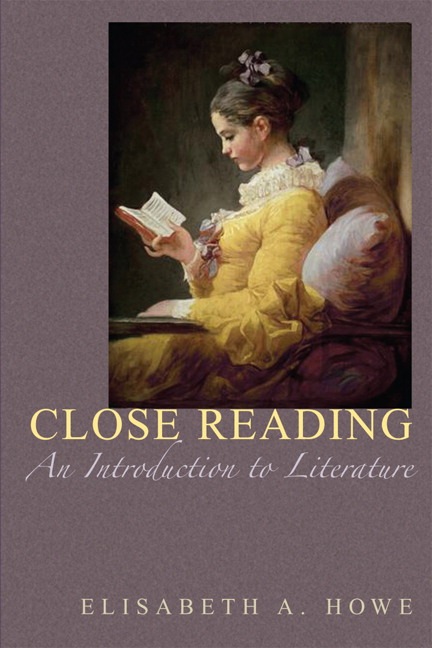
Browsing around for options, I came across a book at Pearson called Close Reading. Given my bias against textbooks, I doubted I would ultimately adopt it, but it sounded worth a closer look so I requested an exam copy, and darned if I don’t quite like it, for my purposes. For one thing, thanks to some of the Twitter folk I follow, I’ve been thinking a lot about modeling as a pedagogical strategy, and this book models a number of things I want my students to be able to do–not just extended close readings (though it’s good that there are a number of these included, which could serve both as models and as starting points for discussion, because they aren’t 100% what I’ll be asking for) but the preliminary steps as well: noting interesting details, asking patient and attentive questions, using the right specialized vocabulary to talk about literary forms and effects. The questions aren’t always exactly the ones I would ask, the details not necessarily the ones I find most interesting, but again, this can be a way to start discussion, and the author, Elisabeth Howe, does a good job insisting on the importance of that kind of persistent attention by showing how it illuminates both the craft and the meaning of a poem or story. So far (though I haven’t read every word) I find it clear without being simplistic. There are models of poems or passages with key elements circled or annotated; there are model questions, but there’s also the clear expectation built in that eventually the students will make up their own questions; there are sample analyses, and then prompts for doing your own. Yes, this is the kind of thing I do with my students in class (providing or modeling questions, working up ‘readings’ of our texts), but I think it might really reinforce our class efforts to have samples written out for them like this, and to be able to assign readings and questions from the book instead of just telling them how to do that kind of attentive reading as class preparation. My recent experiences with lower-level courses suggest that students now seem to prefer things to be very explicit, and I wonder if using a textbook (or at least this textbook) would actually improve the overall level of engagement, rather than diminish it as I’ve usually feared. It would be nice, too, not to have to generate all the bits and pieces myself, particularly for tutorials (it’s a large class, or may be, with weekly tutorial meetings).

On the other hand…I also wonder if I am giving in to the high-school-ization of higher ed. And I wonder if students in 2nd and 3rd year, as these would be, would respond badly to using a textbook (though I wouldn’t adopt it, in the end, if I don’t conclude after going through it really meticulously that it is at a high enough level for the course). Are my general prejudices against textbooks shared by any of you, from either a student’s or an instructor’s perspective? Is it infantilizing to assign upper-level students “exercises” for their “homework”? Or am I just projecting onto a new generation of students my own intense commitment to university as an adult endeavor? The other day in the main office I ran into a woman who said she was there to drop off a paper for her son. My first thought was not “What a nice mom!” but “What kind of student asks his mom to submit his university assignments?” (My reaction is even more negative when students blithely tell me they always get mom or dad to “proofread” their papers. No offense to my own much-loved mom and dad, but I didn’t want them having anything to do with my university work, and I’m also quite certain they would have been quite surprised to be asked for their input!) Times have changed, and students seem to see themselves as younger and less independent than I was determined to be when I was in their position. They are also used to a fairly different high school experience, I think, and they seem prone to a great deal of anxiety about what exactly they are supposed to do. Should I insist they discover some self-direction and take some initiative, or should I support them in the manner to which they have become accustomed? I think this particular book may actually help me find a middle ground, modeling what to do and then backing off–and I’d still be the teacher, so I can set all kinds of expectations beyond what’s there. Plus I do plan to assign Middlemarch, as I did when I taught the course before. There’s no way any textbook can reduce the challenge (and reward!) of that, but if it made them stronger going into that work, we’d all be happier.

Any thoughts about textbooks, particularly from any of you who teach or take English courses at the college or university level? Pros and cons? A lot depends, I know, on the particular book and the aims of a particular course.

Walter Mosley, Devil in a Blue Dress

I was a bit disappointed when I finished reading Devil in a Blue Dress last night. Easy Rawlins is a great character, no doubt, and there are some very interesting aspects of the book. One of them is its post-war context, specifically as felt and explained by Easy himself as a black man who fought in what some saw as a white man’s war, his experiences of tension but also solidarity in the army, his frustrations on returning to an America where despite being a veteran he found himself still an outsider, still vulnerable to the degradation of police harassment and abuse. Mosley manages to make Easy’s social commentary and criticism seem natural to his first-person narration, moments of articulated reflection rather than didactic exposition. Easy’s narration itself is also very interesting, particularly when juxtaposed against the speaking voice he uses in conversation–or speaking voices, I should say, as he shifts deftly between registers to suit his purposes, or to meet or surprise his audience.

What I found less interesting was the book’s take on its adopted genre. The deliberate throw-back to hard-boiled detection has its provocative features, as discussed, for instance, in Daylanne English’s essay “The Modern in the Postmodern: Walter Mosley, Barbara Neely, and the Politics of Contemporary African-American Detective Fiction,” which I read after finishing the book. English disputes other critics, who emphasize the difference it makes that Mosley’s hard-boiled private eye is black, and instead argues for the significance of the similarities between Mosley and his predecessors: “Mosley’s…return to a quintessentially modern and quintessentially cynical genre now is to argue that we have not yet earned the ‘post’ in postmodernity.” That is, if I follow her correctly, Mosley’s close imitation of a form with its origins in a particular moment in the American past, rooted in particular critiques of that moment, is his way of saying not much has changed:

He chooses to return in the 1990s and early 2000s to a genre born of 1930s discontent in order to write novels set in the 1940s-60s, thereby enacting a complex process of literary anachronism that describes and inscribes present-day injustice and discontent.

The familiarity of Easy Rawlins’s situation as a black man in America, even the ready-to-hand recent parallels between real events and things that happen in the series (such as the Rodney King beating) tell us that the past is not as past as we like to imagine–“at least some things are liable to stay the same, across time, for poor and working-class black men in Los Angeles.” I find this a plausible reading of the effect of this ‘literary anachronism,’ though at the same time that seems a potentially ineffective, because fairly oblique, way to offer social critique aimed at present problems. It has to occur to the reader to make the modern-day comparisons–not that they are terribly remote, but there are ways they could be made immediate in the novel itself (for instance, by placing Rawlins’s narrative specifically in the present so that he could incorporate some retrospective comparisons? he is speaking from the future, as he does make some ‘the way things were back then’ remarks, but I don’t think we know exactly when he is telling the story from). Still, this is one of the ways I would probably approach the novel if I taught it, asking not only what difference it makes to the genre of hard-boiled detection when the protagonist is black (as, with Paretsky’s Indemnity Only, we ask what difference it makes when the investigator is a woman), but what it means to recreate not just the style but the period, as Mosley does so well.

But it’s that very close imitation of an earlier form, good as it is, that leaves me reluctant to use the novel. For me, it didn’t seem different enough. It recreates the things that worry and weary me about hard-boiled detective fiction: it portrays a grim, violent world and the violence is quite sensationalized; the men are tough, callous even, and the women are peripheral, victims or (as in the case of the eponymous ‘devil’) vamps. The case itself turns primarily on money and power–and it’s every bit as tangled in its details as its hard-boiled models, meaning by the end I wasn’t even really trying to keep all the deals and double-crosses straight. It didn’t seem to me, either (though I haven’t thought this through all the way yet) that race played a key thematic, rather than contextual, role. Maybe there are other books later in the series that let go of, or interrogate more forcefully, the problematic features of this particular kind of detective novel. I have time to do some more reading and thinking, and I should, as I would like my reading list to represent better the diversity of voices working in the genre. English’s essay makes me think that in addition to more of Mosley’s, I should look up Neely’s books; I also have Gar Haywood and Grace Edwards on my list. Any other suggestions?

Weekend Miscellany: Books, Music, and Sunshine

There are crocuses up, the Public Gardens are opening Wednesday, and I bought fries and sat outside the public library to eat them this afternoon: it’s official, spring is here. What a relief. It wasn’t a particularly severe winter, by east coast standards, but it was still tough enough for this recovering Vancouverite. Being on sabbatical definitely made it less stressful than usual, though. If it were an option, I’d happily teach two of my five courses in the spring and summer sessions as a regular thing and use winters as my research terms. I could hibernate with my books, and then emerge, refreshed, into the sunshine and share that restored energy with my students! But this year, at any rate, I’ll just be sharing it with … well … you! And with my friends at OLM, when I trek down to Boston for our editorial summit and general festivities in May.

I have been doing some fairly miscellaneous reading in the last few days. After finishing Noah’s Compass, I picked out the first volume in Sigrid Undset’s Kristin Lavransdatter trilogy, The Wreath. I wasn’t swept up into it in quite the way I expected to be, but as I read on and also read a bit about the series, I realize that my expectations were not quite right (this seems to be happening to me a lot lately!). I thought it would be more sweeping, more melodramatic, maybe, or epic. Instead, it is quietly lyrical in its descriptive passages but otherwise more direct emphatic than poetic or emotional–except in some of the more heated dialogue, when characters are often described as “screaming,” which shocks me every time because that’s just not the register things have been proceeding in. Not that there’s not plenty of action in the novel, but it just happens in very direct, almost blunt, way, so that when something really shocking happens (like attempted rape, or someone being urged, successfully, to stab herself to death!)  it’s particularly shocking because it’s just there, happening. I’m not explaining this very well, am I? There’s something of the same flatness in the prose style that is striking in the Scandinavian crime fiction I’ve read recently, and again I wonder whether it’s the effect of translation, or an effect of a different set of literary traditions and conventions that affects the tone. It’s also winter a lot in this book, as in the Beck mysteries–but at least here spring does come! I was surprised at the sexual directness of the story. I’m going to move on to the second and third ones soon and then write them all up in a bit more detail.

I’ve also been working through Marjorie Garber’s The Use and Abuse of Literature. I was considering reviewing it for Open Letters, but the prospect of writing about this book in any detail makes me tired and irritable. I didn’t dislike it as much as William Deresiewicz did, but my marginal notes have a lot in common with the ones he rattles off in the first paragraph of his stinging review at Slate. It’s rambling, occasionally charming, occasionally extremely tedious, and always strangely evasive; its conclusions are vaporously insubstantial and wholly unrevelatory. I’m starting to think it’s a mistake for anyone to generalize about “literature.” The effusive blurbage on the volume also adds substantially to my cynicism about the publishing business (or at least its marketing side). I’m just not sure it’s worth my weighing in on it: I don’t think it really deserves much attention, well-intentioned and sincere as it clearly is, and I’m not sure what I in particular could add to it, or to discussion of it.

I realized that I have read shockingly little Victorian fiction since my sabbatical began, and one of my ambitions for some time has been to fill in some obvious gaps, so I’ve started Our Mutual Friend. (I did read this once before, but long ago–for my own undergraduate Victorian fiction course, in fact–and I barely remember it, despite having written my term paper on it. “Archipelagos of Meaning: Language in Our Mutual Friend.” Thanks for asking.) It’s interesting how strange and experimental Dickens’s language seems after reading a lot of contemporary novels. As book ordering deadlines for the fall term loom, I’m also wondering if I should shake up my reading list for my seminar on the Victorian ‘Woman Question,’ which I’ve done with the same reading list several times. The novel I’m thinking of mixing in is Rhoda Broughton’s Cometh Up as a Flower, but I’ve never read it (only about it), so I probably should do that before I go commiting myself! Any other suggestions?

I also need to make decisions about the detective fiction class, so now I’m reading Walter Mosley’s Devil in a Blue Dress, which so far I am really impressed with. If I do add it, I think I’d back off switching to The Big Sleep and stick with The Maltese Falcon, though, as I don’t think I want to be teaching three new books in the second half of the term. If I go through with my plan to assign one of the Martin Beck series, I still have to decide which one; I found the last two in at the library this afternoon, so I’ll read them and then make up my mind. I’ve been struggling to find an anthology for the class that includes all the short fiction I want. I’ve used the Longman anthology for a couple of years but it was not popular with students and included a fair amount of secondary reading which I don’t tend to assign. I thought I’d switch back to the Oxford Book of Detective Fiction, but I notice it does not include any Poe (??)–I guess I can link to online sources, but when you use an anthology, it would be nice if it had all the readings you wanted in it! There’s a cute little Everyman ‘pocket’ anthology that’s not a bad choice but why are the contents in reverse chronological order? Once upon a time I used a nice little Penguin book of classic crime fiction that suited perfectly, but of course it’s not available anymore. I think the Oxford is the winner, partly because it has a good selection of recent and international stories.

Finally, I just got Jill Barber’s new album, Mischievous Moon, on iTunes and I am thoroughly enjoying it. I also thoroughly enjoyed Chances. It’s not a sound for everyone (my husband doesn’t like her voice at all), but I love the retro vibe, the melodies, the husky voice, the whole sensibility. If you like a little something gently jazzy to go with your glass of wine after dinner, I highly recommend either one.

*headdesk*

As previously mentioned, I have begun a little project of catching up on recent (defined as ‘since I last really paid attention’) work in Victorian studies. In aid of this, I have browsed the TOC from a couple of the major academic journals in the field and downloaded a bunch of essays and book reviews (so far, about 75), which I am reading through to get a feel for what people have been doing, what I should know more about, books I should look up for further reading, and so on. I decided to go back about 5 years: it’s not as if I haven’t looked at any criticism published since 2006, but much of my searching has been quite targetted, whereas now I am just looking, not looking for anything in particular. It’s not a particularly inspiring task. I’ve looked at probably 30 or 40 files so far, and not one of them has given me any sense of urgency–nothing, so far, has made me think that I need to reconsider what I usually do in the classroom, for instance. But I’ve listed a few books already that I’d like to take a look, or another look, at, and I’ve filed some essays away where they will be accessible for more specialized work–research or graduate teaching. I have discovered that my iPad is really a wonderful tool for this kind of work. I’ve got the PDFs all tucked into the GoodReader app, which lets me easily highlight and annotate them, and then as I finish looking at each one I tap it away into the appropriate folder so I can find it again when I want to. Yes, I can do these things on my desktop with Adobe Pro, but how much more comfortable to do this in a more accomodating posture than sitting bolt upright staring straight ahead! And my right wrist is grateful to have a break from mousing around. I’ve still got the files saved into folders on the desktop if I want them, but I’m loving this system. It makes me think I might even get into a habit of reviewing recent criticism! Imagine.

Anyway, the real point of this post is not to rehearse my boring work routines for you but to publicly humiliate myself, in the hope that it will motivate me to do better from now on at actually following up on the notes I take. One of the reviews I read today was really the first one I enjoyed reading just for its own qualities, as well as for its subject, and I happily highlighted several passages in it, including this one:

Negative hermeneutics has never been Hardy’s mode, and her determination to take seriously what Eliot said said, without suspicion and cynicism as a premise of the reading, is one thing that might make this anti-biography suspect to modern critics. But that determination becomes a form of negative capability that is one of the most moving and satisfying aspects of the book. For Hardy, Eliot wrote as if she meant what she said and she said what she meant. In critical circles, this is an astonishingly fresh argument these days. (100)

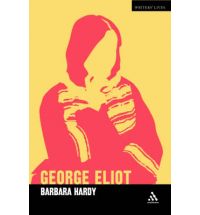
It’s a review by George Levine of Barbara Hardy’s George Eliot: A Critic’s Biography, a book I have but have not sat down and read attentively, though I have long been an admirer of Hardy, as is probably anyone who has studied George Eliot. As I filed the review away in my ‘George Eliot’ folder, I had a dim flash of recollection: didn’t I write something about Barbara Hardy as my critical model right here on Novel  Readings at some point? Sure enough, I did. Here’s the old post, in its entirety. Please note that I wrote it almost three years ago to the day.

April 8, 2008

Being Barbara Hardy

As a proud new member of NAVSA (better late than never!), I have just received a copy of the latest issue of Victorian Studies. Of the many interesting features in this issue (Volume 50 No. 1), I particularly enjoyed George Levine’s review of Barbara Hardy’s George Eliot: A Critic’s Biography, a book I own but haven’t yet read. One of my clearest recollections of my early days as a graduate student is being asked by one of my new faculty mentors to name a critic whose work on George Eliot I admired. “Barbara Hardy,” I promptly replied. The response was a tolerant smile and nod, and a bit of sage advice: “Of course, you can’t be Barbara Hardy any more.” True enough–unless, naturally, you actually are Barbara Hardy. Her steadiness in being herself is at the heart of Levine’s admiration of this new book:

Negative hermeneutics has never been Hardy’s mode, and her determination to take seriously what Eliot said said, without suspicion and cynicism as a premise of the reading, is one thing that might make this anti-biography suspect to modern critics. But that determination becomes a form of negative capability that is one of the most moving and satisfying aspects of the book. For Hardy, Eliot wrote as if she meant what she said and she said what she meant. In critical circles, this is an astonishingly fresh argument these days. (100)

I’ve put it at the top of my “t0 read” pile.

*headdesk*

Here’s a new resolution. I will not only read the book but I will write about it here when I have done so. And not any three years from now, either.

Anne Tyler, Noah’s Compass

I trust Anne Tyler’s novels to offer me a quietly bracing, gently satirical, mostly forgiving picture of ordinary people muddling along in their lives. By ‘ordinary’ I don’t mean dull or predictable, as all of us ordinary people have our quirks, eccentricities, and perversities, and these are exactly what Tyler seems to enjoy. Though there are a few of her books that I have reread a few times (Breathing Lessons, The Accidental Tourist, A Patchwork Planet, Back When We Were Grownups), my favorite, for whatever combination of sentiment and neurosis, is Ladder of Years. There’s just something satisfying to me about Delia’s decision to walk away, about the little room and the library books and the new job and the new love, but then also about the return home and the readjustment. That return home, which is typical (either literally or in spirit) of the endings Tyler doles out, has a conservative aspect to it, a chastening implication that you probably oughtn’t to have gone so far astray in the first place, or that where you already are is probably better than you think. Or in some cases, the acceptance comes not from staying put, but from letting someone else in, allowing your definition of home to expand or soften.

Noah’s Compass is vintage Tyler, in these respects, except that its ending strikes me as a bit less consoling than usual. It’s interesting, so soon after reading Eat, Pray, Love–which celebrates the quest for self-fulfilment and doesn’t wrestle with possibilities by which it comes at someone else’s expense–to read a book in which the right to happiness is raised but not, ultimately, endorsed as a guiding principle. Tyler raises our hopes (and her characters’ hopes!) about a happy ending, but complicates things by acknowledging another value that may compete with happiness–or that, if denied, may fatally undermine that happiness. “Don’t you think you deserve to spend [your life] with the person you love?” someone demands near the end. The question is deceptively simple but all too often made to seem sufficient to justify all manner of compromises, betrayals, and abandonments. Tyler doesn’t forget that you have to live with yourself after you answer it.

I enjoyed the book very much. Tyler writes with a clarity that was a relief, frankly, after The Transit of Venus, but while she’s more direct than elliptical (again, a relief!) she lets the significance of little moments linger in her readers’ mind rather than beating out the details. Here’s a little exchange between Liam, the divorced, recently burglarized-and-assaulted protagonist, who has just learned something unsettling about his new girlfriend, and his grandson Jonah, who has taken a dislike to his Bible stories coloring book because he’s mad at Noah for leaving so many animals to drown–“He only took two of things,” after all.

“Where’d he buy gas?” Jonah asked.

“Excuse me?”

“Where’d he buy gas for his boat if he was the only guy in the world?”

“He didn’t need gas,” Liam said. “It wasn’t that kind of boat.”

“Was it a sailboat, then?”

“Why, yes, I guess it was,” Liam said. Although he had never noticed sails in the pictures, come to think of it. “Actually,” he said, “I guess he didn’t need sails either, because he wasn’t going anywhere.”

“Not going anywhere?”

“There was nowhere to go. He was just trying to stay afloat. He was just bobbing up and down, so he didn’t need a compass, or a rudder, or a sextant . . . ”

“What’s a sextant?”

“I believe it’s something that figures out directions by the stars. But Noah didn’t need to figure out directions, because the whole world was underwater and so it made no difference.”

“Huh,” Jonah said. He seemed to have lost interest.

A lot of nice little questions lurk in that moment. Is Liam like Noah? Should Liam / Noah be just trying to say afloat, or ought he to be steering, and if so, where and by what guidance? Does it make a difference? Are thinks in life murky, opaque, underwater, or is it a question of looking below the surface? By the end of the novel, where has Liam gone, and what is his compass? It’s no surprise, in a Tyler novel, that it was right there all the time.

Noah’s Compass wins the prize for the worst included discussion questions I’ve seen in a while. Most of them are of the same painfully literal or solipsistic kind I’ve protested about here before (“Do you like Liam Pennywell as a character? Do you identify with him as a character?”; “Liam is comforted by this thought; do you feel this way, or do you find this viewpoint depressing?”). There is one about the compass bit I’ve just quoted (“How do you think this story relates to Liam’s own life?”), so fair enough, but this one is a doozy: “Did you like the ending of the novel? Did you feel that it satisfactorily answered everything?” Well, maybe not everything . . .

Shirley Hazzard, The Transit of Venus

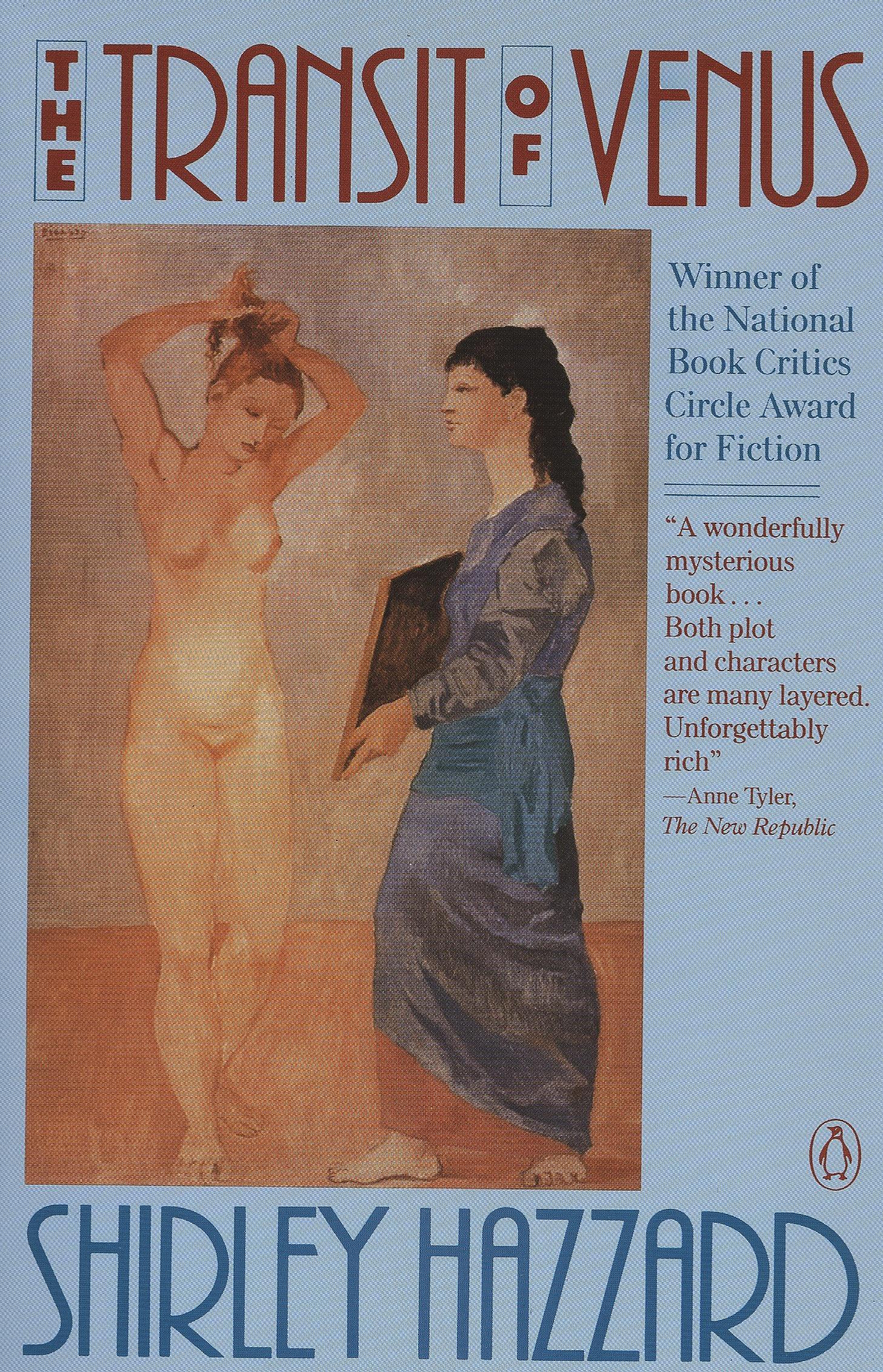
Litlove was first out of the gate at the Slaves of Golconda site, and her wonderful post about The Transit of Venus, ‘The Art of Being Difficult,’ goes right to the aspect of the novel that seems to me, also, most provoking: its language. Not that the story or characters or setting of The Transit of Venus aren’t interesting–on the contrary, I thought the people had a superb distinctness to them; the story was elegantly constructed, with its crossings and recrossings, its mirrors and inversions and misreadings and accidents; and the settings had a fascinatingly lucid particularity in the details Hazzard used to put them before us. How well this little set piece evokes, for instance, a mildly acerbic colonial bitterness (a tone not altogether unfamiliar to Canadians):

There was nothing mythic at Sydney: momentous objects, beings, and events all occurred abroad or in the elsewhere of books. Sydney could never take for granted, as did the very meanest town in Europe, that a poet might be born there or a great painter walk beneath its windows. The likelihood did not arise, they did not feel they had deserved it. That was the measure of resentful obscurity: they could not imagine a person who might expose or exalt it.

Or, more particular yet, here’s a London morning, damply unwelcoming: “At that hour all London was ashudder, waiting for the bus.” We feel, as well as see, the place. I thought a lot of Hazzard’s descriptions had this tactile quality.

That slightly estranging, too-poetic word “ashudder,” though, is a tiny example of just how stylized Hazzard’s prose is. It is, as litlove says, difficult, elliptical, opaque. There’s a lot of utilitarian prose, or worse, in mainstream and especially genre fiction. Writers whose work I like nonetheless bore me with their assumption that the writer’s job is to get the story told without the language getting in the way; they seem to aspire to prose that is as transparent or functional as possible. That is a safer option, no doubt, than venturing into the dangerous territory of overt artistry. It is not easy to tell a story directly and clearly, but it is far riskier to tease and play and experiment with language–riskier, because, for one thing, the measure of success becomes immediately more elusive. Hazzard is a risk-taker.

On the whole, for me, Hazzard’s style was successful. One measure that I use is whether the style of the book suits what I discern as the organizing ideas or interests of the book: do the author’s verbal tricks seem like sheer display, or does the aesthetic whole have integrity? The Transit of Venus is intensely interested in the degree to which people are opaque to each other, with the uncertainties of their external appearance as indicators of their thoughts and intentions. It sometimes seems that the more literally naked her characters are, the less that is revealed about them; their physical proximity exacerbates rather than overcomes their mental distances, their tendencies to misinterpret or to fill in blanks. So, a prose with gaps and omissions, precise about surfaces but constantly fraught with meaning that seems too weighty to be contained in the sentences that carry it–that seemed right. It’s not a realistic mode exactly (I agree with litlove that the dialogue often strains credulity): the novel proffers a heightened reality. Does it make sense to the rest of you if I say there seemed to be something cinematic about it, not because there’s a grand panoramic sweep, or a plot of secrets and revelations (though in a way, I suppose both of these things are true), but because there are a lot of effects in each scene and as they play out, you can so easily imagine the ebbing and receding of an emotional score? Music, in films, often brings out emotions that can’t be easily displayed through words or actions. I felt like Hazzard’s language sought to do the same, without making every thought or emotion explicit. “Everything had the threat and promise of meaing,” Hazzard says early on. That threat and promise permeate both the story and the language.

Another measure I use is the balance of pleasure and annoyance. I was sometimes annoyed, reading along. I found the missing word trick (more accurately, the omitted word trick) especially annoying, even though I have offered sort of an explanation for its thematic fitness. One example: “Caro might have asked, How old. But was silent . . .” It’s like a writing exercise, or an excercise in close reading: What difference does it make, to the sentence, to the rhythm, to the meaning, to our reading experience, to put “she” back in? “Caro might have asked, How old. But she was silent . . .” What is lost in that smoothing out of the syntax, that restoration to normalcy? Or, what is Hazzard doing to us by refusing us that smoother process? The immediate result for me, each time, was to force me to reread: had I just missed something? Had I not grasped the actual grammar of the sentence? These moments always made me stumble and have to gather myself up again. That’s not necessarily a bad thing. And annoying as it could be, the prickly sense of irritation at what seemed, sometimes, just a mannerism was outweighed by the number of times I sighed with appreciation over a sentence that seemed pure and satisfying in its precision. Every word seemed chosen and placed (or omitted!) with such care, which is not to say that the language becomes precious, just that it has a deliberate cerebral quality that is just what you don’t find in so much other fiction. And this is not to say that the book is ponderous: wit can be cerebral as well. I particularly liked this little bit, for example, on the changing fortunes of the perversely pastoral poet Rex Ivory, who keeps on writing poetry about the natural “glories of his native Derbyshire” even during and after his time as a POW:

[H]is story was soon one of the items of victory, for the newspapers took it up and he became “the poet Rex Ivory” in publications where an indefinite article had formerly done for him well, and rarely, enough. A Selected Poems went into print on coarse, flecked wartime paper, and there were no more witticisms about ivory towers. He read that he had been correct in spurning the First World War, and prescient in endorsing the Second; and he pondered the new idea that he had shown acumen. The BBC brought electrical equipment into the Dukeries in a van and a camera followed the well-known and prescient poet Rex Ivory as he walked between flowering borders with a pair of Sealyhams borrowed from a neighbour. Despite his unrehearsed analogy between the British mental asylum and the Japanese camp, the interview was a success; because, when people have made up their minds to admire, wild horses will not get them to admit boredom.

The otherwise quite dark conclusion of the novel is lit up with some fine satire on his posthumous academic prestige, marked by the publication of a “brilliant critical biography” with the spot-on title Abnegation as Statement: Symbol aand Sacrament in the Achievement of Rex Ivory: “Dr Wadding had suspended his groundbreaking work on the Lake Poets so that Rex Ivory might benfit from critical elucidation. . . . ‘My task, as I see it, is to adumbrate the sources of his entelechy.'” Perhaps, with that darting stab at an entirely different order of difficulty, Hazzard seeks to justify her own degree of elusivenss, which is, at least, in the service of human feeling.

A few of us exchanged some thoughts on Twitter as we worked our way to the end, and I think we were all equal parts startled and puzzled by the revelations about Paul Ivory’s past. I wonder if we were surprised on purpose, to make a point about the layers of deceit or performance that come between us and certain knowledge of each other. It works as a plot device, giving Caro a new perspective on her own choices and relationships, but still, why that particular backstory? It seemed discordant, somehow.

This Month in My Sabbatical: Marching On!

I feel as if March was a reasonably productive month, sabbatical-wise. Let’s see:

Graduate Supervision and Advising: This is one part of my ‘regular’ workload that doesn’t go on hold during a sabbatical (or during maternity leaves, just by the way). This month I received thesis installments from all three of my continuing PhD students. I also met with two of them, one in person, one by Skype, to discuss the progress of their thesis writing and do some long-term planning. I alsomet with a former PhD student who withdrew from the program about 18 months ago but has been wondering about returning. I find this part of my job a disconcerting mix of pleasure and pain. These are all wonderful young women–smart, accomplished, hard-w0rking, and just plain nice. So the pleasure comes from spending time with them, learning from them, and doing my best to support and improve their research projects. The pain, of course, comes from worrying about their professional situations. I have been, I think, very clear and direct with them, encouraging them to prepare to be competitive for academic jobs but also to consider other options–I’ve sent them links to a range of online discussions about graduate school in the humanities (including Thomas Benton’s infamous Chronicle columns as well as this one from Hook & Eye) and to some of the many sites addressing PhDs about non-academic options. In one case I think there is actually no intent to pursue a tenure-track academic position anyway; in another, options will be limited by geography, which makes the likelihood of a tenure-track option just that much smaller. But in that case, presumably if there was a local opening you’d still need to be competitive to have a shot, and in the case of the other continuing student, Lennard Davis’s advice is probably good to share–except what he doesn’t say but should is that it is perfectly possible to work insanely hard to do all the things he says, and you still might not win the job lottery. He also seems a bit sanguine about the pace of academic publishing: it’s all very well to submit things, but from submission to acceptance can take months or years. The hardest conversation, from my point of view, was the one with the student considering coming back. “You escaped!” was most of what I really wanted to say to her, along with what I more or less said, which is that a PhD in English is no kind of safety or default option. It seems attractive (if, and that’s a BIG if) you can get steady funding, because it’s a known world with clear expectations, work you’ve already trained for, and genuine intellectual rewards. But you could well end up, four or five years from now, right back in the difficult situation of trying to figure out what else to do–only by then you’ve invested heavily in your specialized training, including comprehensive exams and the huge chore of writing a thesis–not to mention trying to publish and otherwise pump up your c.v. (These are the features of the PhD program that make it difficult for me to accept the whole “it doesn’t have to be seen just as preparation for academic positions” argument. Sure, it doesn’t have to be, but if it’s not, what is the point of this intensive training in narrowly specialized fields and the hard, hard work of thesis-writing following stringently academic models? Unless we introduce streamed PhD programs, these will remain key components, and streaming is impossible as long as luck remains such a big factor in who actually gets a shot at the tenure-track when it’s all done.) In the end, as I told her, it’s her choice, and I understand it’s a difficult one. All of this (plus reading La Vendee, which is the subject of one of the thesis chapters now in progress) took up a fair amount of time but also, almost more significantly, a lot of mental energy this month. And the next pieces of chapters are already landing in my in-box, so on it goes! I’d be even more busy with graduate students if I hadn’t refused to take on any new MA supervisions: this is thesis proposal / first chapter season, and then the writing heats up heading into May and June. Usually I have at least one, and some years I have had as many as three. When my sabbatical ends, I’ll come in as second reader on a couple of theses, I expect, but it is a relief not to be juggling these meetings and drafts at this point.

Soueif Project: I did some relevant reading, reviewed my research notes, and drafted some new pages for the academic paper I’m trying to produce on Ahdaf Soueif. Then, prompted by reflections about how dissatisfying this work felt when Soueif’s current speaking and writing is all directed towards the Egyptian Revolution, I took the advice of some of my commenters and let myself address that new context in a separate piece, “A Novelist in Tahrir Square,” which appears in this month’s Open Letters. I wanted to use the time and thought I’ve given to her fiction, connecting its ideas to the sense of broader changes in perception and understanding that accompanied the Revolution. It was very challenging distilling the overflowing details of the novels and of my own notes and ideas, but I felt pretty good about it when I finally sent in the revised version (I appreciate very much the input I got from the other editors at Open Letters–though of course any lingering stupidities or infelicities are all my fault). I hope this will have settled me down so that I can appreciate the academic project for what it is: as some of you said, no one piece needs to do or be everything.

Filing and Stuff: I did quite a bit more of my electronic file sorting. I do think it will be helpful when I begin to put my course materials together for 2011-12 that I have eliminated a lot of redundancy and put lecture notes, handouts, quiz questions, exams, and assignments into a system that doesn’t require me to remember in which year, or in which course, I did that group exercise on Felix Holt or whatever. The problem turns out to be courses that aren’t themselves really focused on a particular genre, period, or author. My materials for Close Reading, for instance, will stay all together for now: the lectures and worksheets and assignments I devised on Middlemarch for that course are so different from the ones I use in my Victorian novel courses that I think it’s easiest just to leave that as its own category.

Reading: I have blogged about most of my reading for this month–except The Transit of Venus, which I will write up later today, as the discussion gets underway at Slaves of Golconda. The highlight has definitely been Vera Brittain’s Testament of Youth. Most of my reading was not strictly work-related (though, as I’ve often noted here, you never can tell–wouldn’t an honours seminar on the ‘Somerville Novelists’ be cool, for instance?). The coming month will be different, though, as I’m moving on to another of my sabbatical plans, which is catching up on criticism in my field. In January I took some recent monographs out of the library, but I think this is not actually the best way to proceed: many scholarly books now are just so specialized that the rest of us don’t really need to know that much about their subject. The case has been made a few times recently, I think, that many books in the humanities are artificially inflated essays–the introduction is crucial for making the argument, but then the chapters offer variations on the theme rather than essential development or elaboration. I really do think this is true, and I wouldn’t exempt my own book–though I suppose it hardly counts as recent (© 1998). There’s nothing wrong with the chapters, but there’s really no necessity to my choice of novels to discuss in the context I’d established–they were the ones I wanted to discuss, as much as anything. In any case, I’ve decided to try a different strategy and last night I downloaded a whole bunch of book reviews (and a few articles, but mostly reviews) from the past several years of Victorian Studies–71 PDFs, in total. Going through the reviews will alert me to books I may wish to read, or at least leaf through, in full, but it will also give me a sense of what people are up to, what is trending, and so forth. (I’m sure there are people who do this kind of upkeep on an ongoing basis. Obviously, I’m not one of them! But maybe I’ll find a good routine for it in future–this is something that my iPad will be very helpful for, for instance, as I can load the PDFs into GoodReader and page through them at my leisure.)

Paperwork: Finally, this month I confirmed my intent (or, I should probably say, my hope!) to participate in a panel at the British Association of Victorian Studies in Birmingham the very first weekend in September. I can’t be absolutely sure I can pull this off until I find out what level of funding I can get, especially at the rate air fares are going up. I do think it would be a really good professional opportunity for me, though, not just through my own participation but for what I expect will be the quality of the rest of the conference, so I’m going to give it a good try. I have had some pretty bad conference experiences in recent years, so I’d love to go to one that might help me feel excited about “my” field again.  In aid of that, I’ve begun assembling the necessary paperwork to apply for a travel grant.

And so, onward, with all of these tasks and also with some pedagogical planning, as book orders for the fall are due soon, which means I have to commit myself to my detective fiction list as well as my first round of 19th-century novels, for the Austen to Dickens course. . . .

Elizabeth Gilbert, Committed

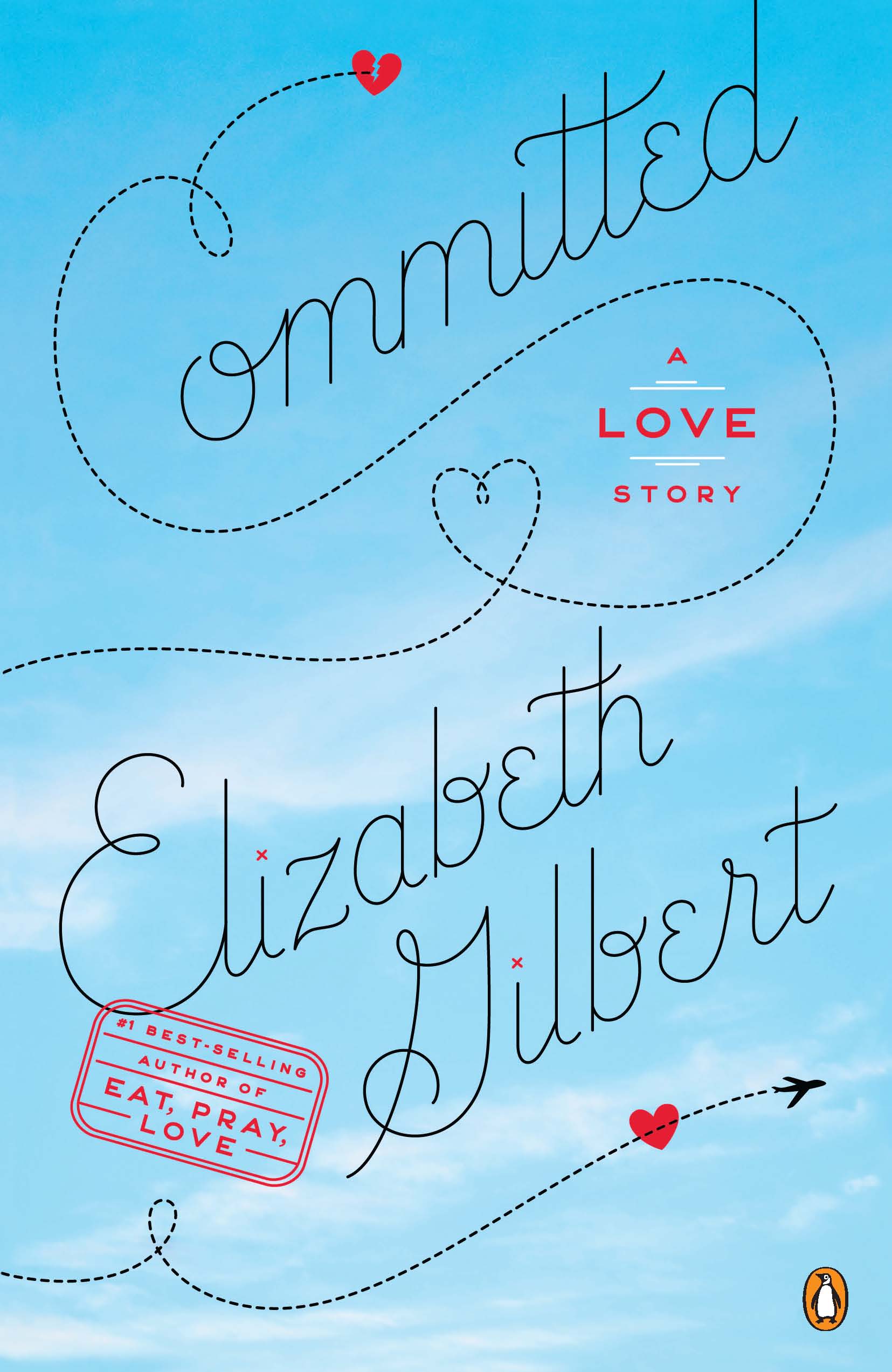
After the fun I had reading Eat, Pray, Love,* I was a bit disappointed in Committed, which is not nearly as funny and also not nearly as personal. I was curious to find out about Gilbert’s own experience of marriage, but instead Committed is mostly a meditation on marriage in general. As such, it is still interesting and sometimes surprising, but it struck me as sitting uneasily between genres: for a really thorough analysis of the historical, political, economic, and social aspects of marriage, you’d need to go to the scholarly sources Gilbert consulted and often refers to in her own commentary, but she brings nothing in particular of her own to their work, while in the context of the broader investigation Committed purports to be, her anecdotes about friends and family feel, well, anecdotal. I gave her a pass on the weaknesses of Eat, Pray, Love (at my book club meeting recently, a couple of my friends  expressed vague surprise that I went so “easy” on it–not that either of them showed up in the comments on the post to specify any particular disagreements! lurkers!) but even though I read Committed with genuine interest, in the end I thought Gilbert had set herself a harder task, one with less personal prequisites, and her bottom line–which in both books is something like “this is just who I am and what I think, so don’t take it too seriously”–didn’t suit as well. OK, so she eventually finds a theory of marriage that reassures her, that enables the choice she wants to make anyway. That’s not a particularly compelling general result. It probably didn’t help Gilbert that I came to her book right after finishing Testament of Youth, either. There are actually some strong similarities in the reservations Brittain and Gilbert both have about entering into an institution they see as fraught with hazards for women in general and for themselves in particular, accustomed as they both are to independence. But Brittain comes across as someone who persistently wrestles with and articulates principles for her life: she has a moral and intellectual seriousness that I don’t find in Gilbert, who continues to seem a little flighty and solipsistic to me.

Still, accepting Committed as something less substantial than a genuinely original treatise on modern marriage, more a popularization of the body of scholarship and the record of experience that’s available, it did manage to be engaging and thought-provoking. It covers a lot of ground, not all of it familiar, and Gilbert is a pleasantly fluent writer. As I said about Eat, Pray, Love, it’s the kind of book that inevitably acts as a mirror, and I found myself reflecting plenty, as I read along, on my own expectations of marriage and family life, on the models I had around me growing up and have around me now. These are not, however, the kinds of reflections I feel comfortable making explicit here. The people in my own life have not made the knowing sacrifice of their privacy that Felipe made when he married Liz, after all.

*I watched the film version of Eat, Pray, Love last night, just by the way, and found it quite dull compared to the book. It’s not the events, after all, that are particularly interesting–it’s Gilbert’s telling of them, and reflections on them. Without her voice, it all seemed flat. Nice scenery, though. Did anyone else find the whole “too tight jeans” sequence absurd? Both actresses look to be about size 4.

A New Month, A New Open Letters Monthly

The April issue of Open Letters Monthly went live yesterday, but it seemed, um, foolish to compete for attention with all the April Fool’s fun on the internet, so I saved the announcement for today! It’s another wide-ranging collection representing the different voices and interests we rally to our standard. Some highlights include:

  • a think-piece about the current state of poetry by Joseph Wood: “we have become unwitting slaves to the taxonomic tendencies of literary criticism and the institutional emphasis on publication and theoretical self-labeling. In the face of what we perceive as our “professional future”, many writers struggle to remember that poetry’s greatest gift is located in making intimate human connections, no matter how disfigured or disembodied.”
  • Steve Donoghue’s favorable review of a new addition to the seemingly inexhaustible genre of Tudor fiction, Suzannah Dunn’s The Confession of Katherine Howard: “Subtle vortices strengthen throughout Dunn’s beguiling book (this is her best novel yet, and the previous ones were no flimsy competition)”
  • the next instalment of Steve’s ‘Year with the Windsors’ with Prince Eddy–Queen Victoria’s grandson, a harmless fellow who somehow became the focus of conspiracy theories identifying him as none other than Jack the Ripper: “The Prince was laid to rest at Windsor Castle, and his younger brother George came reluctantly to the throne. The world moved on into the calamitous 20th century, and history seemed to forget Eddy for about half a century. Then all hell broke loose.”
  • Jeffrey Eaton’s incisive review of the third volume of Edmund Morris’s biography of Theodore Roosevelt: “covering Roosevelt’s final decade ensures that Colonel Roosevelt will never be quite as lovable as Morris’ first two volumes. Roosevelt has come a long ways from his days herding cattle in the Dakotas or charging up San Juan Hill, and many of the stories contained herein are tinged with Teddy’s inevitable physical decline.”
  • Daniel Green’s review of a new biography of Stanley Elkin, which “does its subject a disservice by being such a terrible book that it is hard to imagine it could either enhance appreciation of Elkin’s fiction for those already acquainted with it or persuade those unfamiliar with it that he is a writer worth their attention”
  • my own essay on Ahdaf Soueif, “A Novelist in Tahrir Square” (the result of my desire to turn my work on her fiction to some new purpose in light of the Egyptian revolution): “Both novels also not only invoke but create their own version of the Mezzaterra: a literary common ground, an optimistic, if endangered, space well served by the novelist’s tools. Ales Debeljak calls this space the “Republic of Letters,” “a place where the only condition required to obtain citizenship is a human capacity for empathy—that is, the capacity to put oneself in someone else’s shoes.” By creating such a space for her readers, Soueif held out an alternative to the limited and limiting narratives about her country that she saw around her. Sitting in the middle of Tahrir Square in January and February of this year, she was surrounded by millions of allies in this project.”

There’s more, too, of course, including more of our regular features–Irma Heldman’s regular “It’s a Mystery” column and Elisa Gabbert’s series on perfume, focusing this time on synthetic vs. natural ingredients–John Cotter on an intriguing new contemporary writer Alta Ifland, and poetry by J. R. Pearson. It’s perfect weekend reading: I hope you’ll come on over, and that you find something you like.