Every time we left our pianos the age gave us such assurances that there was to be a new and final establishment of pleasure upon earth. True that when we were at our pianos we knew that this was not true. There is something in the great music that we played which told us that promise will not be kept . . .
This Real Night is the sequel to Rebecca West’s The Fountain Overflows. It was published about thirty years later, and apparently there was to be a third volume completing the series. This Real Night was published posthumously, and the publisher’s note to my edition suggests she hadn’t entirely finished working on it when she died. That might explain the odd tempo of the novel, which is extraordinarily dense — almost tediously so at times — through the first two thirds or three quarters and then concludes with a rush of emotional intensity. It feels compressed more than incomplete, though, and perhaps that sensation of lopsidedness is not a defect but a strategy to make the ending strike the reader, as it does the characters, as a transition from a long, complex, but unified and meaningful past into a future tragically unmoored from it. “I am writing all this down,” Rose says at one point,
in full knowledge that it will not now seem important, for the reason that that is just what marks off that past from our present. Everything was then of importance. Everything was of equal value. In life we were not divided. Life itself was not divided.
This Real Night picks up the story of the Aubrey family, now without their mercurial burden of a father and relatively prosperous thanks to their mother’s cleverly having preserved some valuable paintings as insurance against his fecklessness. The musical daughters, Mary and Rose, have progressed to studying in musical academies in London; the unmusical daughter Cordelia, who had so distressed the rest of her family by her insistence on playing the violin, pursues conventionality with the same single-mindedness and self-assurance that they bring to their art. In this novel West continues her ruthless cultural elitism: there’s a particularly painful scene in which Cordelia’s former mentor Miss Beevor (“the poor, poor idot”) is accidentally shown how little the musical Aubreys think of her when their mother tries (tactfully) to get out of taking Miss Beevor to a concert that’s beyond her musical reach:
“If it is not to be the St Matthew Passion,” said Miss Beevor, implacably, “let it be this young woman you have been talking about.”
“No, no,” said Mamma, “do not think of her either. Let us leave such things to the young, we will go to the Queen’s Hall.”
“I do not want to go to the Queen’s Hall,” said Miss Beevor. “I have been to the Queen’s Hall. On several occasions. I know that I am not a gifted musician. Nor a highly trained one. But surely it need not be taken that I am quite without musical taste.”
That night Rose finds “Mamma sitting there among the shadows, the gas not lit,” in tears. “Why are you crying,” she asks. “I was awful to Miss Beevor,” is the reply. She is remorseful about Miss Beevor’s hurt feelings, but she has no second thoughts about her judgment of Miss Beevor as someone who is beneath a great performance of the St Matthew Passion or a performance by Wanda Landowska. Great art requires just such ruthlessness. Cordelia has already suffered for it, and in This Real Night Rose too has a brush with it, thanks to her new teacher Mr. Harper:
I was fairly certain that if I had played to Mamma and Mr Kirsch as I was playing to Mr Harper I would have rated the compliment of denunciation . . . Their scorn would have meant that I was walking with them in the procession that would gloriously never arrive at its destination; but Mr Harper’s embarrassed indifference implied that so far as he was concerned I had never joined it.
It turns out, though, that Mr. Harper just wants Rose to learn to play as herself, not as an imitation of her mother: “She’s taught you to play as if you were her, and you’re not , by a long chalk.” So Rose sets out to relearn how to play, and it’s hard, hard work: “it was animal warfare, such as a mongoose might wage against a snake.”
I find West’s treatment of the artistic life fascinating because it is at once so utterly committed and so unsentimental: no Aeolian harps here! There’s much more sweat and tears than inspiration. Mr. Harper gets particularly exercised over a picture showing people “woozy” over music: “and it was Beethoven, Beethoven, of all composers, who was supposed to have put them into that state. Music was something you had to do sober as a judge. Hard, you had to be.” But it turns out that this novel is not about Rose and Mary maturing into the musicians they are meant to be, or capable of being. Rather, it’s the story of the lesson the music teaches them: that the promise of pleasure on earth will not be kept. Because while they are practising and, eventually, performing, and becoming gold medallists, and playing at the Proms, and waltzing in the moonlight in this “age of success” — while all this rich living is going on, a cataclysm is in the making. When the novel begins, everyone knows “there were to be no more wars,” but when it ends it is 1914 and their golden age is over, though the extent of the catastrophe is not immediately apparent:
Our careers for some time continued. The First World War did not suddenly turn on civil life and strangle it as the Second did. Simply we saw a fungoid bloom of ruin slowly creep across the familiar objects among which we had been reared.
The greatest threat, inevitably, is to their cherished brother Richard Quin, who is caught on the very threshold of adulthood, who instead of going to Oxford goes to war, and to death. His leaving is protracted in the novel: it takes up many long pages of memory and anticipation and repressed dread. When they finally take him to the station, it’s music that provides a fantasy of evasion:
Under his breath he sang the aria from The Marriage of Figaro which Figaro sings when Cherubino is going to war, and weaved talk through it. There was no difference between the youth of Cherubino and the youth of Richard Quin, and it was delightful to pretend that we were in an opera, that Richard Quin would go to the war again and again for hundreds of years and never get there.
But the moment of real parting inexorably comes: “He said, “I want to swim. And lie in the sun.'” They are together for a few more moments and then “he was not there.” It seems as if everyone including Richard Quin knows he will not come back; it was only my own optimism that kept me hoping, even as I ran out of pages, that the book would end but Richard Quin would not. “I saw the life of those days as a flagon of grey glass, filled with salt water, with collected tears” Rose says;
The occasion of our grief was classically decorous, our brother had died for his country. But our grief was useless. Salt water, spilled on the ground, does not feed what grows there, but kills it.
There will be more tears, this time for their mother, whose death follows closely on Richard Quin’s. “We had known her to be ill for a long time, all people die,” Rose reflects, “yet we felt as if she were the first person to die, and we the first people to suffer a beloved’s death.” They tend her “with the extremest gentleness” to the painful end, as if to prove the truth of her own despairing cry: “Yet what is useful except love?”



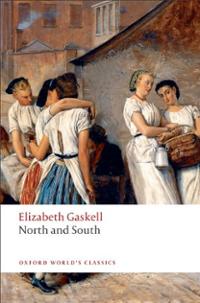


 Pejorative generalizations about the ‘traditional novel,’ like debates over the ‘death of the novel,’ often seem to me unduly preoccupied with form, as if broadening the range of human possibilities expressed through fiction isn’t also a literary innovation or revision. The Fountain Overflows is a good reminder that just because a novel is linear, has characters, and tells a story attached (however lightly) to life at all four corners, it isn’t necessarily derivative, tired, or predictable. All the way through it I was marveling how unfamiliar it was — even though to all appearances it is perfectly conventional. It is its own strange world, populated with utter conviction, and, best of all, told in West’s endlessly unexpected (and always, in unexpected ways, thrilling)


 I have little to say about Jess Walter’s Beautiful Ruins. I enjoyed it very much — but it didn’t provoke me to critical thought. A symptom: not once, while reading it, did I reach for a pencil to jot down a note or a page number, which I almost always do — partly because I anticipate writing posts or reviews on most books I read, and partly because writing things down helps me bring my reading into focus. If I’m reading and discover I don’t have a writing implement nearby, I usually get more and more fretful until finally I discombobulate myself from whatever comfy position I’ve nestled into and go get one — and often some post-it notes, to boot, just to be on the safe side! But my copy of Beautiful Ruins is pristine.
 Novel Readings