 From the Novel Readings archives, a post that addresses issues still very much on my mind: what we mean by the terms “research” and “scholarship,” and what we take to be the duties of professors and the work of the humanities.
A friend and colleague who read and sympathized with my previous post passed along to me an essay by the late C. Q. Drummond, a long-time member of the Department of English at the University of Alberta. The essay is called “On the Duties of Professors,” and it addresses many of the same issues as my post, particularly the competition for attention, resources, and rewards between research and teaching. As competitions go, all academics know, this is a distinctly unequal one these days: officially, university policies may stress the equal importance of both duties, but inadequacy or irresponsibility in teaching will never hold back someone’s tenure or promotion if they have a “strong” publication record, and while the administrative infrastructure for research is large and powerful, topping out at the Vice Presidential level, if the two factors are really equally important, where, Drummond rightly asks, is the “Vice President (Teaching)”? (Here at Dalhousie, our office of Research Services has 22 staff, including a VP and an Associate VP. Our Center for Learning and Teaching has 10, with a Director and Associate Director at the top.) Not that Drummond wants to see an expansion of teaching-related bureaucracy–though I quite like his idea for how a VP (Teaching) would go about his or her business: this VP “would move through all the Faculties, visiting classes, hearing lectures, attending seminars, drinking coffee, joining oral examinations, talking into the night.” Through qualitative engagement with teachers and students, this VP would become “another source of evidence, besides tabulated student assessments, for who teaches well and who poorly.”
Drummond’s remarks are directed specifically at his own situation: at the time of writing (around 1984), he had recently been “penalize[d] for insufficient publication during a year in which [his Faculty] received extraordinary evidence of his merit as a teacher.” There’s a polemical thrust to them, as a result, but Drummond uses the occasion to place his own professional experience into its larger context: the increasing dominance of precisely the kind of quantitative measures of research “output” about which I was complaining yesterday. Actually, there is one difference that signals the 30-year gap between us: I didn’t notice any mention of research grants in his piece. I expect he would have objected still more strenuously to measuring scholarly success by level of external funding. He directs his criticism at “forced publication,” and at the reductive equation of publication with research or scholarship:
The Salaries and Promotions Committee certainly does not ask for wisdom; it does not ask for erudition or for scholarship; it does not ask for learning, or even for research; it asks for output, something to be measured or counted. . . . What good does such output do anyone? If research in an Arts Faculty means humane learning, then we all hope our teachers are as much involved in research as they possibly can be. We want them to know better and better what they are talking about, so that they will have, and will continue to have, something intelligent and important to profess to their students. But if research means output or publication, as it so often does today, how do the students profit? And how does the scholarly world profit from the forced production of ephemera? Most professors in Arts Faculties would be better off reading more and publishing less, and their students would be better off too, and so would the world of scholarship.
The very term “research” is, he argues, part of the problem. He quotes George Whalley, who argued in an essay of his own that “research” suggests a goal-oriented activity, work carried out in pursuit of something in particular. “The functions of research,” Whalley writes, “are specialized and limited; … the word research is not a suitable term for referring to the central initiative and purpose of sustained inquiry in “the humanities” . . . “The humanities” is what “humanists” do; not only what they study, but how they study, and why . . . .”
 Drawing on the Handbook published by the CAUT (invoked by his Dean in response to Drummond’s appeal of the Committee’s decision), Drummond himself brings in the vocabulary of knowledge “dissemination” which is once again very current in discussions of our aims:
Research should result in teaching, and might result in publication, teaching and publication being the most important means of dissemination of knowledge. We may teach those near at hand in our lectures, discussions, tutorials, apprenticeships, and supervised practical training, or we may teach those distant through our published papers, articles, essays, and books. But in either case we will have to have found out and shown something worth lecturing about, discussing, or writing down. And where will we have our greatest effect in disseminating what we have found out and know? . . . Dissemination has to do with sowing seed; what we hope when we disseminate is that the seed will take root and grow. . . . So much of the seed one sows in publication falls by the wayside and is devoured by birds, or falls on stony ground, or among thorns and yields no fruit. What the good teacher sows in his class or tutorial is far more likely to find the good ground, spring up, increase, and itself bring forth.
He reiterates at intervals throughout the piece that he is not opposed to either research or publication, only to a mechanistic understanding of both, especially when it “drives out teaching”–which almost inevitably follows: institutional systems of measurement and incentives are set up not “to encourage the combination of knowing and teaching,” but to “encourage the production of printed pages,” and “because we live in a world in which time itself is scarce, the time taken for one must be taken from the other.” Again, it’s not that he wishes teaching, in its turn, to drive out research–teaching depends on research, broadly understood as inquiry.
It’s not, in my turn, that I wish to drive out either research or publication, both of which are essential (as Drummond too acknowledges) to learning, teaching, and knowledge dissemination. What bothers me is the incessant identification of “productive” scholarly activity with a narrow model of output, a cloistered, specialized, self-referential kind of publishing supported, ideally, by as large an external grant as possible. It’s a shame that the faux-scientific model Drummond objects to is now so firmly entrenched–so deeply entangled in the values, practices, and especially the finances of our universities–that it seems unimaginable that we could ever undo it. Some might argue that we have won more by it than we have lost–that without playing the game that way, we would have forfeited any place in the contemporary academy. Others might reply that, yes, we are playing the game, but on terms by which we can only, ultimately, lose: however vast our research output, will we ever win either the public or the institutional respect enjoyed by the sciences? Hasn’t our preoccupation with research actually isolated us and cost us public support? And in our effort to insist on the goal-oriented practicality of our fields, we may have flagged in our defense of their intrinsic value.
 Again, it’s not that I think we should not do research, or publish what it teaches us–but it’s a shame that the system is so rigged in favor of hurrying it along and rushing it into print–not to mention aiming it at a specific (and very narrow) audience. “I know for a fact,” Drummond observes, “that policies of forced publication never brought into being–nor could ever have brought into being–those critical books that have been to me most valuable.” That’s certainly true of my reading as well. The narrow concept of research and the pressure to publish also, when made the primary measures of professional success, marginalize undergraduate teaching. (The emphasis in grantsmanship on teaching and funding graduate students, or “HQP” [Highly Qualifed Personnel] is another whole area of trouble.) Finally, it seems to me paradoxically retrograde to be urging or following a model that measures productivity by grant size or output of peer-reviewed publications at a time when the entire landscape of scholarly communication is changing. We can circulate our ideas, enhance our and others’ understanding, pursue our inquiries and disseminate our knowledge in more, and often cheaper, ways than ever before. As long as we are all using our time in service of the university’s central mission–the advancement of knowledge, including through teaching–by the means best suited to the problems we think are most important and interesting to pursue, aren’t we doing our duty as professors?
But as the Associate Vice President who spoke to my Faculty on Thursday said repeatedly, there aren’t “metrics” for those other ways of doing (or discussing) research or measuring its impact: they do not yield data that can be counted, measured, and easily compared across departments, faculties, and campuses. Apparently, that means we have to set them aside–or, at any rate, that the VP (Research) will do so, when reporting to us on our “performance.”
The essay I discuss here is in the volume In Defence of Adam: Essays on Bunyan, Milton, and Others by C. Q. Drummond, edited by John Baxter and Gordon Harvey (Edgeways Books, 2004).
Originally posted January 29, 2012.
 My book club met last night for the first of two sessions on
  This dispersed effect no doubt stems from the book’s chaotic-seeming and inclusive structure, which has led critics to call it things like an “intellectual chowder” or a “magnificent mess” (that’s Nathan Philbrick, in Why Read Moby-Dick). It seems to be built on a premise of embracing capaciousness: it includes everything Melville finds interesting or significant to his subject, rather than pursuing an aesthetic of elegant perfection. This blotchiness could easily be seen as a fault. (I’d love to know what, if anything, Henry James said about Moby-Dick, given his dismissive view of Middlemarch‘s formal construction. No golden bowl here — more an ungainly pitcher!) It’s certainly risky: surely no self-respecting MFA instructor would dare encourage anyone to write such a book! But I think our group’s diverse responses point to one aspect of the book’s greatness: there was something in it for — and against — all of us. It’s not one thing: it’s all kinds of things (though it’s not everything, though Philbrick’s little book suggests he might think so). The challenge for a first-time reader is dealing with the bits that don’t immediately suit: we all admitted to having skimmed one part or another, but, again, not usually the same parts. Listening to people pointing out the aspects that most interested them made me want to reread: it made me aware, not just of the book’s mulititudinousness, but of my own limitations (which, in the context of Moby-Dick, are many). That can be off-putting, but it’s part of Melville’s magic to have made it inspiring instead.


 think that for me, The Turner House would actually have come closer to being a (if not the) “Great American Novel” if it had really embraced its potential capaciousness. How can a novel about a family with thirteen children (and assorted grandchildren and great-grandchildren) be under 35o pages? Imagine if every one of them — and Francis and Viola, too — had a separate section, full of contexts and choices and rich, textured details about their characters and their lives. This (missed) opportunity really struck me near the end of the novel, when we got a crisp précis of the account Lelah gives Brianne of her marriage to Vernon:
 The house I live in now will be the setting of my own children’s family memories, as we moved in when they were still too young to remember anything else. My most vivid memories of their infant years, though, are all from our first two Halifax homes. One was a traditional old house with bow windows up and down and lots of character inside — meaning, of course, lots of things that weren’t in very good condition. The walls, for example, were paint over wallpaper over aged plaster, and not altogether as solid as you’d like! That’s where we set up Owen’s nursery, where he took his first steps, where he used to astonish me with words, math, and music with his magnetic fridge letters, and where he played his first notes on the piano. I remember sitting up many, many nights that first hot summer after he was born, rocking and nursing and idly watching TV (usually Law & Order, which was always on somewhere) so I wouldn’t fall asleep and drop him — that’s where I was when the news broke of Princess Diana’s death.
 I decided against the highly- recommended Norton Critical edition because I wanted to approach this first reading not as a chore to be done diligently but as a reading experience to be, well, experienced! No doubt I will finish the novel without having plumbed its depths, and if I weren’t enjoying Melville’s prose so much first-hand, I might have changed my mind (and in fact I do have a copy of the Norton out from the library, ready to turn to if the need arises). I feel like Herman and I are doing pretty well so far, however.
 I know from experience that not every reader finds Carlylean prose exhilarating, but I do: I have ever since I read The French Revolution as an unsuspecting undergraduate. What I loved about The French Revolution then (before I knew anything at all about Carlyle) was that it exuded the conviction that its writing absolutely mattered — that it was about something hugely important and written in a style meant to convey and to reproduce that significance. It was daring and unconventional because it had to be. I get the same feeling from Moby-Dick. Even when it’s going along a bit more quietly than in the passage I quoted, it has the humming energy of a book with something (many things!) it really, really wants to say, and to say in a memorable way. It doesn’t feel artful, if that means constructed to create an aesthetic effect: it feels spiritual — meaning not religious in any doctrinal way but about the spirit, about what matters, what drives us, what scares us, what means something to us. It’s exciting! I’d really rather quote from it (or read it aloud) than write about it!
 Technically, this post should really be called “This Week For My Classes,” since of course I’m not actually teaching any right now. In between other projects, though (mostly finishing a small essayish review of Mary Balogh’s Only Beloved for the next issue of Open Letters — yes, that’s right, I am trying my hand at writing a little bit about romance, thoughtfully, I hope, yet while avoiding the pitfalls of the dreaded “romance think piece”) I am chipping away at preparations for next year’s offerings, particularly the one completely new class, which is
  Following on that simple (if somewhat shoulder-shrugging) conclusion, I have decided not to spend a lot more time shopping for possible main texts to assign but just to call it for the ones that are my top candidates at this point, so that I can think about how to frame and teach them in particular (and what shorter texts to use to supplement them). So that means (I think – I haven’t actually placed the order with the bookstore yet)
  I’ve been looking at the syllabi for two of my colleagues who’ve taught this class recently and one thing that struck me is how many more readings they included. My big three won’t be my entire reading list, of course, but apparently I just take things more slowly than they do — they both typically take one week per novel, for instance (not super-long novels, but including, for example, King Solomon’s Mines, which is 300+ pages in the Penguin edition, or Frankenstein, which is around 200 pages). Looking at their schedules, I wondered if I should try to fit more in, so I did up a version of the timetable with Lady Audley’s Secret added — but unless I sped everything up more than I’m comfortable with, that meant leaving out most of the short fiction I’d included. In the end I think I’d rather allow lots of time to talk about particulars (and also take up class time with writing instruction, editing workshops, and that kind of thing — which I’m sure my colleagues do too, but I’m not sure how they manage to get it all done and still have robust discussions of so many complex readings). Pacing is one of the many mysteries of pedagogy, of course: there is no right rhythm, and what works depends on your own style as well as the purposes of the class. I usually spend three weeks on Middlemarch when I teach it in the 19th-century fiction class, but we take five weeks on it in Close Reading — and it would certainly be possible to take an entire semester for it, if only there were such a course (or, if only I dared to offer such a course and anyone actually took it!). Anyway, I reverted to a schedule with just three full-length novels, with short stories interspersed, and for now I like the looks of it. I can always order a fourth book later on if I change my mind. In the meantime, with the main titles chosen, I can set some parameters for my preparatory research.
 I have done a few more small things for teaching prep too: I began adjusting the plans for my two fall courses — both of which I’ve taught a few times before — to fit the university’s revised fall schedule (which includes a week-long fall reading break for the first time), and I’ve started poking around on our new Learning Management System, Brightspace. So far I don’t like Brightspace at all, mostly because we seem to have chosen the version that doesn’t let us customize any of it, even the colours. That takes a lot of the fun out of it! Obviously the real purpose of these things is utilitarian, but the more you restrict what I can do with it, the more inclined I am to use it as a document dump and nothing else. People who’ve been using Brightspace for a while tell me they like it better than Blackboard, though, so I’m trying to stay optimistic that in ways I haven’t yet discovered, it’s actually an improvement and not just a change.
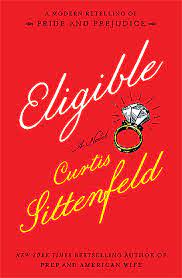 “In vain have I struggled. It will not do. My feelings will not be repressed. You must allow me to tell you how ardently I admire and love you.” – Fitzwilliam Darcy, in Pride and Prejudice
 Over the weekend I finally wrapped up my first ever run-through of Buffy the Vampire Slayer. When I started watching the series last summer, I actually came to it with remarkably little information and no preconceptions except that (and obviously I got over this one) it probably wasn’t going to be a hit with me, since vampires — and supernatural / fantasy stories generally — are just not something I gravitate towards. So why did I even bother giving it a try? Well, if enough people whose insights I have learned to trust and respect in other contexts find value in something, I’m usually willing to give it the benefit of the doubt, and often I’m won over. (
 The full series is a lot of episodes and I watched them over a period many months. I couldn’t begin, then, to write up any kind of comprehensive response. So far I’ve avoided what I know is an extensive body of commentary on it online and in print: I didn’t want my own impressions to get drowned out too fast! But if those of you who are longtime fans have any favorite essays, articles, or interviews, I’d be happy to be pointed in the right direction. (I know
  2. Next, and probably most important, there’s Buffy herself. I was initially annoyed with how insubstantial she seemed. I got that her total ordinariness (besides the whole Slayer thing, of course) was part of the point, and the conflict between her calling and her longing to live a normal life is still potent in S7 (though by then it’s more complex and interesting). Still, for quite a long time I found her anti-intellectualism and general vapidity tedious. Qua high school (and then college) student, she seemed too much the antithesis of my own values. Everyone who told me she grows up a lot over the series was right, though, and her development seemed very believable, because she doesn’t transform so much as fill in the outline we get in the early seasons. Mature Buffy is still more instinctive than reflective, but those instincts get deeper. Also, as her petulance fades, her courage, moral integrity, and resolution make her increasingly admirable, and the increasing complexity of the situations she confronts makes her decisions correspondingly more interesting as well. A game-changing moment for me was her decision to kill Angel at the end of S2. I fully expected the just-in-time return of his soul to give us a pat happy ending, but that choice was much more dramatically interesting, for the plot and also for the development of Buffy’s character. (It was also the first time the show made me cry!) That she has to put her mission first always sets her apart, and it guarantees the fundamental loneliness that gives her both pathos and dignity in the later seasons.
 4. …which brings me to the Scoobies. Sure, Buffy is the leader, and I warmed to her, but it’s the ensemble makes the show magic. I didn’t love every member of it equally (I didn’t miss Oz when he drove away, for instance, and I thought Tara was always a weak link — but Anya became a favorite, and I even got pretty fond of Andrew by the end) but the core friendships really mattered to me after a while: there’s something so absolute about their love and trust for each other, and so touching about the way they all, given the chance, can rescue each other. It isn’t always Buffy who saves the day, and it’s not Buffy alone who (over and over!) saves the world.

 6. … the Big Bad! For me, this aspect of the show was always its biggest weakness. I appreciate the value of a larger plot arc to give each season continuity, but the super-villains always just got so irritating by the end! Worst, I think, was Adam from S4, but S5’s Glory is a close second for sheer flamboyant tedium. I enjoyed the evil Mayor in S3, and I found the Trio pretty funny in S6, though I guess they did kind of trivialize the process. (There wasn’t anything trivial about Willow flaying Warren alive, though!) Bad Angel was really interesting, and Spike was a delightfully gleeful villain in the early years. In S7, I thought some interesting things went on with The First, especially the coming and going as different characters from the past. I was very annoyed, though, by the pendant-ex-machina that brought about The First’s climactic defeat. (And why is it Spike who becomes both hero and martyr — shouldn’t that final victory have belonged to Buffy, or to the newly-minted Slayers collectively? And why didn’t Spike — or Anya! — survive the final battle?!)

 Where does the time go? It seems like I only just finished reading
  I have also been reading, in dribs and drabs, the critical books I’ve collected about romance fiction and Westerns, taking some first steps towards prepping for next winter’s ‘Pulp Fiction’ class. I have been enjoying the new ideas and frameworks raised by these materials, and they have started a lot of things turning around in my head. But since I haven’t been working on them in a very concentrated way this week I haven’t felt I had anything in particular to say. I’m sure I will! And I have also been kicking around, in a very preliminary way, how I might organize the course, and especially the readings. I am puzzling, for instance, about whether it would work to assign only full-length novels in a first-year course. I have taught many different incarnations of our introductory classes, but every one has included some blend of short and long readings. Short ones, of course, have many advantages when you’re working with beginning students: they can get the whole thing read reasonably quickly and you can begin to practice the analytical skills you want them to learn with material they can easily manage. Then you can build up to longer texts. In some of the genres we’ll cover (detective fiction, for instance) it is easy enough to find good short options, but this seems harder to do with romance. (I found one that I think might work quite well — Liz Fielding’s “Secret Wedding,” which is cleverly metafictional about romance conventions — but it seems to be available only in a Kindle edition, and I’m currently stumped about whether that rules it out as a required reading.) I’ve also been thinking about starting with some Victorian ‘pulp,’ specifically Lady Audley’s Secret — but I’m worried that they might bog down in it, especially if it’s the first thing we read. You can look forward to (or dread, I guess) many more updates as my thinking about this course develops. And, as always, I will welcome input!
 Ebershoff ties Greta’s journey as a painter to Lili’s emergence: it’s Greta’s invitation to Einar to model for her in women’s stockings that precipitates Lili’s emergence, and it’s her paintings of Lili that propel Greta into prominence as an artist even as Einar, initially the more successful of the two, fades into artistic insigificance. Ebershoff’s prose is beautiful throughout — lyrical but precise, poignant but restrained — but it rises to something like exuberance when he writes about her painting:
 Novel Readings