This Month in My Sabbatical: Not a Bad Start

I’m sort of missing the routine of my weekly teaching posts–not just writing them, but the act of taking stock that they represent. So I thought I would have a go at a similar exercise reflecting on my  progress (if that’s what it is!) through my sabbatical term. It may be even more useful, in a way, to make sure I am self-conscious about the passage of time, because my days are much less structured and my goals are in some ways more diffuse! So here goes.

Ongoing Business: Despite what non-academics often think, being on sabbatical does not mean not being at work–it means shifting the focus of your work, particularly by re-allocating the time usually spent in class prep, teaching, marking, and administration to research and writing tasks. Most of that time, that is, because there are always teaching and administrative tasks that still need to get done. For instance, this month we were asked to turn in our course descriptions for next year, which means I have already spent some time thinking about reading lists. Book orders will be due later this spring, so at this point my choices are only tentative, but I did brood about how things went with specific books or courses the last time and make some changes accordingly; I also researched and then wrote away for exam copies of some alternative texts, particularly for the Mystery and Detective Fiction class. I set up and marked a make-up exam for a student who had a family crisis right before our December final. I worked through 100 pages of a draft thesis chapter from one of my Ph.D. students and about 40 pages from another (and I attended a colloquium paper presented by yet another whose committee I am on). I wrote a lot of reference letters (and have three more I plan to finish up today or tomorrow).

Housekeeping: During teaching terms, though I stay on top of the day-to-day business pretty well, I find there’s not a lot of time to spend thinking about how I organize things, or sorting through old materials to see what needs to stay and what can go. After 15 years in this job (and 10, now, in this particular office) stuff does rather pile up. One of the first things I did in the new year, then, was to begin going through my filing cabinets: so far I have three bags of paper ready for recycling, and much less duplicate or unnecessary material taking up space. I’ve also donated (or at least put out on our “help yourselves” shelf in the department lounge) an array of unwanted books. Equally important now that we do more and more of our work electronically, though, is electronic filing, and here I have begun a big project of reorganizing my files of course materials. Long ago I decided to keep my paper notes and handouts in files by author and text, rather than course, which has worked very well for me: if I’m teaching, say, Great Expectations, I pull out the DICKENS GREAT EXPECTATIONS folder and in it I find old lecture notes, discussion questions, overheads, essay topics, etc. But my computer files have always been by course and then by year. This worked well for a few years, but now I often find myself puzzling over which year it was that I taught The Tenant of Wildfell Hall or where the latest version of the exam questions on Jude the Obscure are filed. Of course, you can simply search for key terms, but inefficiencies still emerge if you’re trying to browse your materials for a particular text or topic–plus there’s redundancy here too, as I end up with many files of lecture notes revised, expanded, or improved on over the years but still stored in multiple versions. So I’m re-sorting all this stuff into the kinds of groupings that I think will help me quickly gather what I need when I’m prepping for class and deleting outdated or duplicate files. Once the teaching ones are better organized, I’d like to do the same for my research materials. Many of these files I might copy into OneNote, which is where I now organize my new notes and draft materials.

Research: My main research project for this sabbatical is getting a version of my essay on Ahdaf Soeuif ready for submission to a peer-reviewed journal–at least, I think that’s what I want to do with it, though I admit, the revolution still unfolding in Egypt has made me feel dissatisfied, somewhat, with what I’ve been doing. More about that later, perhaps. In any case, I have finished taking my fresh set of notes on The Map of Love (on January 25th, as it happens, I was just working through a scene of intense political discussion in the novel, a debate about the future of Egypt and the possibility of change). One of the challenges of academic writing is figuring out, not just what you want to say, but when you’re ready–or allowed–to say it, given the array of contextual and critical material that already exists. When can you stop reading, in other words, and feel entitled to contribute to the discussion? There is no right way to answer this, of course, and it is easy (at least for me) to get so overwhelmed by the vastness of the existing scholarship and the difficulty of drawing lines between what’s relevant and what’s peripheral that I can’t put two words of my own together. I find what helps me most, in this situation, is to go back to my primary text, allowing whatever else I’ve been reading to buzz around in the back of my mind and help me notice things and generate questions as I go. I make detailed notes, going page by page through the novel, and along the way I usually begin to see where the main questions are for me, and how I might begin to answer them. Then I am better able to see what I don’t have to read, and to position myself in the discussion I want to be a part of. In this case, because I am starting from my analysis of In the Eye of the Sun, I wanted to stay in roughly the same territory, thinking about the relationship between Soueif’s work and the English literary tradition she repeatedly invokes. But The Map of Love is a very different book, particularly in its form, and it seems much less confident about the idea of common ground (or ‘mezza terra’) that I argued is central to the earlier novel. Towards the end of last week I started roughing out the new section of the essay.

Other Reading and Writing: I’ve done quite a bit of reading this month. I began looking at some recent books in Victorian studies, in keeping with my goal of refreshing my own expertise for both teaching and criticism in “my” field. One was Patrick Brantlinger’s Victorian Literature and Postcolonial Studies, but it ended up not being of great interest, as it recapitulates texts and debates that I had already become reasonably familiar with. He’s a good writer and it’s a good overview, to be sure. I’ve begin Rachel Ablow’s The Marriage of Minds: Reading, Sympathy, and the Victorian Marriage Plot, and I have James Eli Adams’s A History of Victorian Literature out from the library–another overview, but given how specialized critical work has become, I thought I’d start big and zoom in. But, speaking of specialized, I saw Julie Fromer’s A Necessary Luxury: Tea in Victorian England in the library while I was browsing around and couldn’t resist checking it out as well. Necessary indeed! I’ve documented most of my other reading on this blog already, including the beginnings of my Margaret Kennedy project–I’m two books in and feeling, frankly, underwhelmed, but I will persist! And if the essay that results is along the lines of “Margaret Kennedy: As Well Known as She Deserves, Actually,” well, that will be as interesting in its own way as “Margaret Kennedy: Underappreciated!” Among the other books I’ve read and written up are Graham Greene’s The Power and the Glory and Tove Jansson’s The Summer Book, for the book clubs I now participate in, and I’m now reading Henning Mankell’s Faceless Killers, not really for fun (how could it be? too grim!) but with an eye to my mystery class in the fall.  In addition to the ‘other writing’ that I have done here on Novel Readings (including a long piece on Sex and the City 2), I also wrote a review of Sara Paretsky’s Body Work for Open Letters Monthly–though this is not an academic publication, it certainly draws on the work I’ve done preparing for my courses on detective fiction.

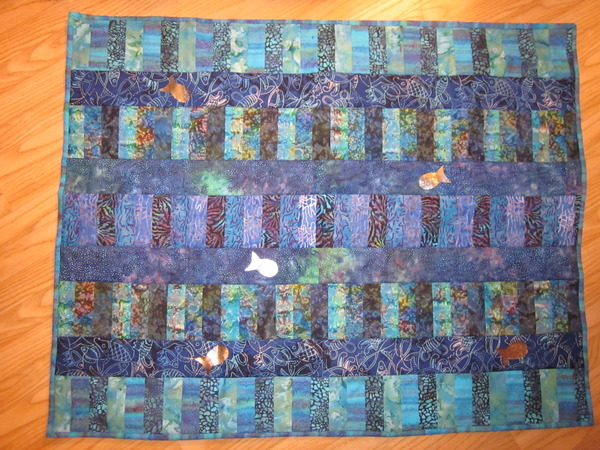
Overall, then, though I’d like to be a bit further along in the rough draft of the Soueif essay, and though I feel I have not, actually, done as much reading as I’d like, or (with the academic reading) as much as I probably should have, I think I have made a reasonable start on accomplishing my goals for this sabbatical. A lot of time I might have spent working on other things, I spent reading and watching coverage of events in Egypt–I’m not inclined, actually, to see that as in any way irresponsible. I’ve also been going fairly regularly to the gym, where I run around the dreary concrete track, and I’ve made good progress on my cross-stitch “Bookshelf” sampler, including changing the pattern to include more of the books and authors I like best! Maybe next weekend I’ll get the binding on the quilt that has been sitting unfinished on my sewing table for months, and then I’ll really feel I’m getting things done…

Slaves of Golconda: Voting Has Begun

I was tagged to put up the shortlist for the next book choice of the Slaves of Golconda (“mining literature for pure gems”): any of you who are already participants should head on over and indicate your preference. It’s a pretty miscellaneous list: Colm Toibin’s Brooklyn, Shirley Hazzard’s The Transit of Venus, Laurence Cossé’s A Novel Bookstore, Alaa Al-Aswany’s The Yacoubian Building, and Sigrid Undset’s Kristin Lavransdatter I: The Wreath. Right now the voting is Hazzard 2, Toibin 1. I figure I’m going to read all of these eventually anyway, so whichever one we settle on for the group will be fine, and the discussion is always varied and thoughtful. Anyone interested is welcome to join, or just to read along and comment, of course. Our last two books were Tove Jansson’s The Summer Book and May Sarton’s The Small Room.

Ariana Franklin, Mistress of the Art of Death

I’m coming belatedly to this series of medieval mysteries featuring Vesuvia Adelia Rachel Ortese Aguilar–mercifully, just ‘Adelia’ most of the time–who is the eponymous ‘mistress of the art of death,’ which was launched in 2008. I’m generally wary of historical mysteries. Actually, I’m wary of most mysteries, though people often assume (because I teach courses in mystery and detective fiction) that I must read them avidly. Too many of them are too formulaic for my taste (though the issue of how we value [or label] formulaic vs. ‘original’ fiction is an issue we discuss at some length in my classes), and I’m not particularly interested in solving puzzles as I read. So when I read mysteries for pleasure, I gravitate to authors who emphasize character development and social context (P. D. James, Elizabeth George, Peter Robinson, and Ian Rankin, for instance). I’m also a faithful fan of Robert B. Parker and Dick Francis (both of whom, sadly, died recently): their books are among my most frequent re-reads, actually. I’ve followed both Sara Paretsky and Sue Grafton for many years now and will keep doing so, though Grafton with far less enthusiasm. And there are other books and authors in this genre that I love (Gaudy Night, The Daughter of Time) or find consistently interesting (Amanda Cross). But outside this group, which is pretty small considering just how vast the possibilities are, I can’t seem to get very excited, despite having sampled quite a lot of suggestions each time I’ve put out a ‘bleg‘ for teaching ideas. (Of course, books I get excited about reading for myself are not necessarily the same as books I get excited about using in my classes–Paul Auster’s City of Glass being a perfect example.)

Anyway, though I could ramble on about other mystery writers I’ve tried and liked or not liked recently (Denise Mina–liked! Inger Ash Wolf–not liked!), this post is supposed to be about Mistress of the Art of Death…which I liked. And then didn’t like. And then liked again.  I have a personal distaste for crime novels focusing on murdered children: I find it troubling to treat such grim possibilities as entertainment. So I had some difficulties initially with the set up of the crimes, which seemed sensationalistic, even manipulative. This distaste receded for much of the novel as I saw how stylishly Franklin proceeded with her historical context as well as with establishing her main characters and relationships. I’m no kind of expert on the 12th century, but in the Q&A at the end Franklin discusses her research as well as her (very endearing) nerdish enthusiasm for the many period details she mastered to write the book. I have to take her expertise on trust, but I can say that she made it all seem very convincing, and in general she dealt with it very naturally, not weighing down her narrative unduly with exposition and certainly not falling into any of the annoying faux Olde-Englishe stuff that makes a lot of historical fiction seem so artificial. She’s frank, in fact, about introducing anachronisms (including calling Cambridge ‘Cambridge’ instead of its medieval names) to make the story ‘comprehensible,’ and her dialogue especially is for the most part briskly contemporary.  She succeeds in making her chosen historical moment seem fraught with interesting tensions and possibilities, especially because of the religious and racial tensions that she uses effectively to frame the killings. And Adelia is a good character: smart, prickly, intense.

But…with all that going for it, I wish the crime had not turned out to be a medieval version of a fairly conventional psycho-killer plot: I thought towards the end  it collapsed into lurid melodrama, turning away from a compelling forensic investigation into a violent thriller in which the suspense comes not from wondering our way through clues and personalities but from waiting for the villain to take off his mask (literally!). And the revelation is a surprise, yes–but not one that particularly satisfies any story arc we’ve been following. With so much going right in the book to that point, I was surprised that it got so cheap so fast. Then there’s the romance subplot, which I found the least convincing aspect of the novel.

But…just when I thought I had the measure of the book–good start, bad finish–she brought in Henry II and made everything interesting again. So I’ll definitely search out the next one in the series. Next up, though, is Henning Mankell’s Faceless Killers–long a front-runner to replace Ian Rankin’s Knots and Crosses as my example of the ‘grim contemporary’ police procedural in my class (not because I don’t like the Rankin, but because I would like a change, and also because the ‘internationalization’ of the crime novel in English seems to me the biggest recent development in the genre). I’ve tried Mankell before and gotten stumped by the bleakness of the atmosphere and what seemed a flatness in the style (or the translation). February seems the right month to try again, doesn’t it? I mean, who expects anything cheering in February?

February at Open Letters Monthly

Thanks to the insight, creativity, and just plain hard work of editors and contributors alike, the new issue of Open Letters Monthly went live yesterday, and it’s full of the usual fine array of essays and reviews (yes, I’m patting myself on the back along with everyone else!). Here’s a sampling of what you’ll find if you click on over:

  • Anne Fernald (who blogs at Fernham and has published in Open Letters before) offers a thought-provoking reminiscence of her grandmother, an uncommon variety of the ‘common reader.’
  • Victoria Best (better known to some of you as litlove), writes a fascinating account of the troubled but somehow mutually inspiring, or at least enabling, relationship between Margeurite Duras and her young acolyte (lover? muse?) Yann Andréa.
  • My Dalhousie colleague Alice Brittan reviews Michael Cunningham’s By Nightfall and finds it good–but not quite good enough for what she believes Cunningham to be capable of.
  • Joanna Scutts’s excellent commentary on the new BBC series Downton Abbey makes me wish I’d been recording it–I’ll be watching for the reruns.
  • The indefatigable Steve Donoghue (who blogs at stevereads) launches his new series, ‘A Year with the Windsors,’ with a review of Kate Williams’s Becoming Queen Victoria. At my urging, the remainder of the series will include far more references to Walter Bagehot.
  • I pitch in with a review of Sara Paretsky’s most recent V.I. Warshawski novel, Body Work, placing it in the context of some of the issues that come up when I teach my classes on detective fiction.

There’s lots more, too, so I hope you’ll take a look. We’ve also added a couple of sidebar features this month, one linking around to a few highlights elsewhere on the web, the other showcasing some of the great material from the OLM archives, which go back almost four years. The magazine is a labor of love for everyone involved–and I never really guessed just how much labor, or how much love, before I became part of the editorial team!

By the way, if you happen to be in Washington at the AWP Conference, look for our table, chat with our charming representatives, and buy a copy of our anthology!

Tove Jansson, The Summer Book

The Summer Book is this month’s selection for discussion at (by?) The Slaves of Golconda. I had never heard of it–or of its author, who turns out to be best known for her children’s series, the Moomin stories–before its nomination, so I was refreshingly free of preconceptions when I started it. Yet, somehow, it still managed to surprise me! I guess the whole idea of a book about a little girl spending summers on an island with her grandmother raised subconscious expectations that it would be precious or sentimental, or (worse) both. It is neither. Instead, it is tart and precise, occasionally very funny, and at moments unexpectedly moving. When I finished it, I had the (perhaps uncharitable) thought that if an American novelist had written it, it would have insisted too hard on an uplifting story line: the grandmother’s illness (treated only elliptically here) would have been more conspicuous, the quarrel with Sophia would have been harsher and more destructive, and then the end would have been a reconciliation scene putting out flowery tendrils towards nostalgia and some kind of feel-good lesson. Also, it would not have had a chapter called “The Enormous Plastic Sausage.” But of course this is only speculation. Perhaps there is an American novelist who could be as ironically restrained as Jansson, even on a subject like summer.

I realized it wasn’t going to be a cloying sort of book right at the beginning:

It was an early, very warm morning in July, and it had rained during the night. The bare granite steamed, the moss and crevices were drenched with moisture, and all the colours everywhere had deepened. Below the veranda, the vegetation in the morning shade was like a rainforest of lush, evil leaves and flowers, which she had to be careful not to break as she searched. She held one hand in front of her mouth and was constantly afraid of losing her balance.

‘What are you doing?’ asked little Sophia.

‘Nothing,’ her grandmother answered. ‘That is to say,’ she added angrily, ‘I’m looking for my false teeth.’

Gotcha! All that wonderfully tactile description, and the delicate placing of the grandmother and little Sophia in amongst it, and then false teeth! And when they find them, she puts them right back in, “with a smacking noise. They went in very easily,” we’re told. “It had really hardly been worth mentioning.” But aren’t you glad it was mentioned?

That little opening sequence sets us up well for what follows, which is a series of episodic reminsicences, each focusing on a particular moment, or theme, or problem, and each revealing (almost accidentally, it sometimes seems) some facet of the relationship between Sophia and her grandmother and their island. It’s not a book that really lends itself to deep analysis or broad thematic generalizations. Instead, it’s a book to be savored for the moments it gives you. One of my favorite chapters was “Playing Venice,” which (as I understood it, at least) tells us indirectly where Sophia’s mother has disappeared to (she’s never in the book).* After Sophia receives a postcard from Venice (“Her whole name was on the address side, with ‘Miss’ in front, and on the shiny side was the prettiest picture anyone in the family had ever seen”), she and her grandmother build their own Venice in the marsh pond out of bits of stone and marble and sticks; Grandmother even makes “a Doge’s palace out of balsa wood … [and] painted it with watercolours and gold.” They imagine themselves as a family that lives in their new Venice, a father, mother, and daughter–but beneath the playful surface, something unhappy lurks:

‘Look, Mama,’ [Sophia] called. ‘I’ve found a new palace.’

‘But my dear child, I’m only “Mama” to your father,’ Grandmother said. She was concerned.

‘Is that so!’ Sophia shouted. ‘Why is he the only one who gets to say “Mama”?’

She threw the palace in the water and stalked away.

Grandmother makes “a hotel and a trattoria and a campanile with a little lion on top. . . . One day, there was a green salamander in the Grand Canal and traffic had to make a long detour.” But then it starts to rain.

She could see right away that the whole shoreline was flooded, and then she saw Sophia running towards her across the rock.

‘It’s sunk,’ Sophia screamed. ‘She’s gone!’

Grandmother sends Sophia back to bed, promising to save the palace. We know, though Jansson doesn’t belabor us about it, that it’s not bits of balsa wood she’s worried about salvaging.

So there are moments of intensity, and like the Venice episode, they arise out of the disproportionate feelings of childhood, the lack of perspective that sometimes actually clarifies, rather than distorts, reality. There’s drama–as in the chapter “Sophia’s Storm”:

Sophia climbed up into the tower. The tower room was very small and had four windows, one for each point of the compass. She saw that the island had shurnk and grown terribly small, nothing but an insignificant patch of rocks and colourless earth. But the sea was immense: what and yellow and grey and horizonless. There was only this one island, surrounded by water, threatened and shelted by the storm, forgotten by everyone but God, who granted prayers…

…including, so Sophia is convinced, her own, which was “Dear God, let something happen … I’m bored to death. Amen.” “All the boats will be wrecked,” reflects Grandmother, “thoughtlessly.” “Sophia stared at her and screamed, ‘How can you talk like that when you know it’s my fault? I prayed for a storm, and it came!'” There’s suspense, as in the chapter “The Robe,” in which Sophia’s father takes the boat out for supplies and is late coming back:

There was a southwest wind when he set out, and in a couple of hours it had risen so that the wives were riding right across the point. Grandmother tried to get the weather report on the radio, but she couldn’t find the right button. She couldn’t keep from going back to the north window every few minutes to look for him, and she didn’t understand a word she read.

Then there’s Berenice, “a fairly new friend, whose hair [Sophia]admired.” Not only does Berenice have trouble making herself at home on the island, but Sophia isn’t altogether happy having her there either, and one day she ends up in the water.

‘Did she really dive?’ Grandmother asked.

‘Yes, really. I gave her a shove and she dived.’

‘Oh,’ Grandmother said. ‘And then what?’

‘Her hair can’t take salt water,’ explained Sophia sadly. ‘It looks awful. And it was her hair I liked.’

That complacently mournful remark perfectly captures the innocent egotism of childhood, doesn’t it? But Sophia’s not awful; she’s just six. And Grandmother knows that raising her right doesn’t always mean raising the tone. One day after a deep discussion about God and the devil (“‘You can see for yourself that life is bad enough without being punished for it afterwards. We get comfort when we die, that’s the whole idea.” “It’s not hard at all!” Sophia shouted. “And what are you going to do about the Devil, then? He lives in Hell'”), Grandmother restores harmony with a song that, joyfully, Sophia learns to sing “just as badly as her grandmother”:

Cowpats are free,

Tra-la-la

But don’t throw them at me.

Tra-la-la

For you too could get hit

Tra-la-la

With cow shit!

In spite of everything, and because of everything, and in the least saccharine way possible, it always turns out they’re a perfect pair.

Other reviews from this discussion:

Of Books and Bicycles
Tales from the Reading Room
So Many Books
Book Gazing
things mean a lot

*Update: DorothyW at Of and Bicycles caught a detail that I apparently missed, a passing reference to Sophia’s mother as dead. Given the somewhat elusive chronology of the book, I suppose it is possible that at some point she is just away, but I’m probably just fishing for excuses for my own slip!

(cross-posted here)

Margaret Kennedy, The Ladies of Lyndon

Despite being endlessly distracted by the continuing coverage of the Egyptian protests on Al Jazeera as well as by finishing up a review of Sara Paretsky’s Body Work for the February issue of Open Letters Monthly, I did manage to finish my second Margaret Kennedy novel (her first), The Ladies of Lyndon, in time for the end of Virago Reading Week. Perhaps because of those distractions–though I don’t rule out the possibility that the book itself is at fault–I don’t feel I have really grasped what ideas or interests are at the center of this novel. Like The Constant Nymph, it has left me perplexed, and I actually found The Constant Nymph (odd as it was) more emotionally involving, though both are written with the same flat affect or understatement. Nobody in The Ladies of Lyondon is developed very deeply, including the putative main character, Agatha Clewer, whose marriage frames the novel. As in The Constant Nymph, our attention is spread across a range of other characters and subplots, and my expectation in such a case is that (as would happen in a Trollope novel) these will turn out to be related like some kind of theme and variations–but I can’t seem to see through the miscellany of this novel to that central theme. Perhaps that is the wrong model, and the unity (assuming for now that the novel is unified) arises from contiguity rather than coherence, which I suppose is how most aspects of people’s real lives are in fact related. In any case, I admit to not finding it a very compelling novel on this initial read. Perhaps as I write a bit more about it I will find my way to something more interesting. Also, I expect to find my bearings as I read more by and about Kennedy–there is often a kind of disconnect between my expectations and a new flavor of novel, after all.

One aspect that I think deserves further consideration is Kennedy’s emphasis on art and her interest in artists. The value and integrity of art is a major concern of The Constant Nymph too, though in that novel music matters most, whereas in The Ladies of Lyndon the artist character is a painter. We never get a detailed account of what his work looks like, but we are repeatedly told that people don’t like to look at it. At one point someone wonders if he might be a cubist, I think. Yet it can’t be significantly experimental, or at least it is representational enough that one major plot sequence turns on his incorporating portraits of family members into a classically-themed mural he has done (a satirical gesture at the expense of the nouveau riche brother-in-law who commissioned it). The artist, James, is also “mentally deficient”–0r is he? He is introduced this way initially and treated this way by most of his family, but by the end it isn’t clear that there was ever anything really amiss with him beyond noncomformity and an inability (or a refusal) to meet social expectations (if the novel had been first published this year, he would probably be counted in the small but growing group of “Aspie” characters). In The Constant Nymph dedication to art stands as an honorable (if often uncomfortably idiosyncratic) alternative to social conventions and materialism. There’s something of that in The Ladies of Lyndon too. For one thing, James makes the only good marriage we see–and he does so by marrying ‘outside’ his class (he marries a servant) and establishing himself at his wife’s level rather than raising her to his: they both accept this as the more natural and comfortable plan, and the moral and social independence it gives them is refreshing compared to the posturing of most of the other characters. There’s no sign that they influence anyone or anything, though: they just go off and do their thing, and also (again unlike the other characters) they reproduce energetically, which I suppose is one way of endorsing their unassuming radicalism, or at least hinting that it is the way of the future.

The title to the novel, and the introduction in the Virago edition, both point to Lyndon as an important symbol in the novel. Here’s a bit from the introduction (by Nicola Beauman):

And it is Lyndon which is the symbol of the change which creeps over both Agatha and the world: after the war it represents the sloughed-off skin of England’s past. It can no longer be the greedy, devouring ‘shring of ease’ it had once been. It can either disintegrate, adjust to the ‘sensible’ values of post-war life or become a Braxhall. . . . The war is shown to have wrought enormous, totally unexpected changes. Lyndon has to change, Agatha changes, the Sir Thomas Bragges of this world are in the ascendant. . . .

OK, in retrospect that sounds plausible (I read the introduction after the novel) but to be honest, I didn’t pick up on the significance of the house at all. I would have put the emphasis on the other key word in the title, ‘Ladies’: the novel surveys the personalities and choices of a motley collection of women related, one way or another, to each other. But the survey strikes me as cursory, and though there is some talk of what makes a good marriage (really, the only substantial choice any of them makes is of a partner), none of the women, and none of the marriages, and not even the adulterous liaison that gives just a little scandalous momentum to the novel, was drawn out enough for me to care particularly. Flat, as I said, and just a little dull, except for the eccentricity of its bits and pieces.

One sign of my difficulties making The Ladies of Lyndon meaningful is that I couldn’t focus on any particular passages to flag: my trademark post-its are stuck in sort of perfunctorily, mostly at what I took to be key developments in the plot–to help me find them again!–whereas usually I use them to trace interesting patterns or themes that emerge.  I also can’t settle on any passage worth quoting, though as I flip through once more I don’t see anything specifically wrong with the book either. Is it possible that my Margaret Kennedy project will lead me to the conclusion that she is justly forgotten as a novelist? Well, that hardly seems a fair prediction based on just two of her sixteen books, and early ones at that. Tomorrow I’ll read the chapter on her in Susan Leonardi’s Dangerous By Degrees: Women at Oxford and the Somerville College Novelists, and maybe that will help me frame her writing in the way that brings out its significant qualities. I’ve also taken a later novel of hers, Together and Apart, off the shelf. If at first you don’t succeed…. In the meantime, if any of you out there have given any thought to Margaret Kennedy in general or The Ladies of Lyndon in particular, I’d be interested in hearing from you!

Cairo Time

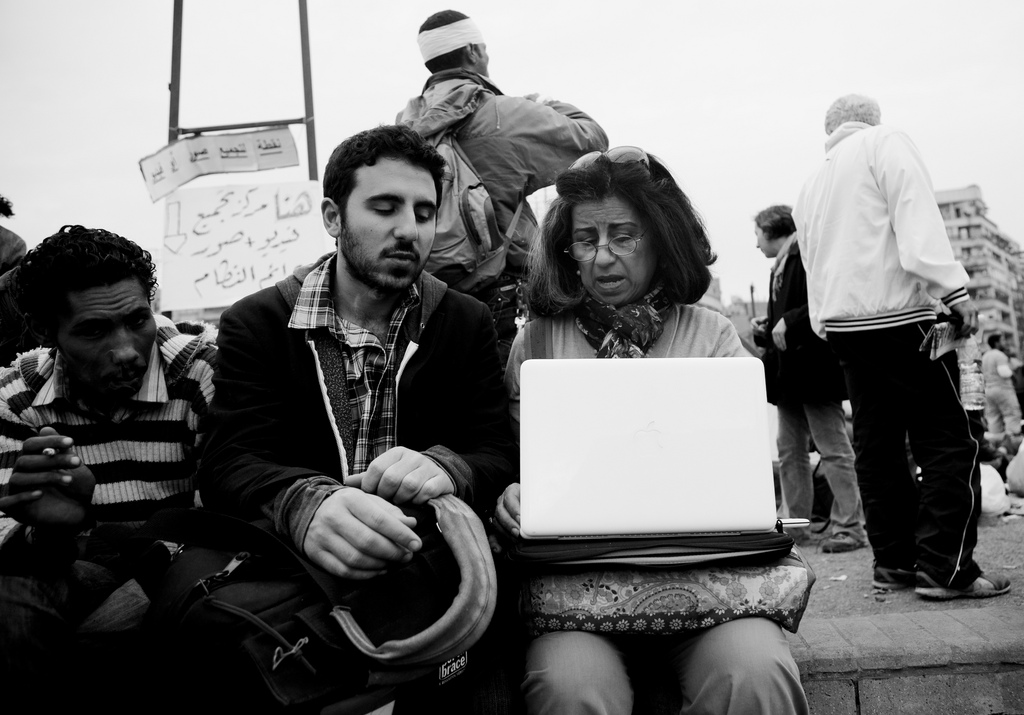
I’m finding it impossible not to be preoccupied by the drama unfolding in Egypt this week. Every news network is covering it in detail, of course; for a round-up with commentary, check out Aaron Bady’s recent post at zunguzungu. I’m not in a position to add anything original of my own, but I wanted to draw attention to two compelling pieces by Egyptian novelists (one of which Aaron also links to). Here’s Ahdaf Soueif, writing in the Guardian yesterday:

Patience is a virtue – maybe even the supreme one in Egypt‘s popular hierarchy of values, but patience also has its limits and, now, at last, it seems as if we’ve arrived at ours. And fittingly, it’s the young of the country who are leading us. They’ve had enough of unemployment, deteriorating education, corruption, police brutality and political impotence.

As is now well known, they organised Tuesday’s protests over Facebook and in closed virtual and actual meetings. Talk about grassroots! “They” is some 20 groups that have sprung up over the last five years. The question has always been how and when will they coalesce? They did on Tuesday; they fused, and with them multitudes of Egyptians young and old – inspired by what happened in Tunis.

They organised protests from Assiut in the south, to Sheikh Zuwayyid in Sinai, and Alexandria, Suez and other cities the length and breadth of Egypt. For Cairo they chose three locations: Shubra, Matariyya and Arab League Street. These were strategic choices: naturally crowded neighbourhoods, with lots of side streets off the main road. Young activists started their march in nearby areas, collected a following and by the time they reached, for example, Arab League Street, they were 20,000 marching.

The Central Security Forces were in chaos; when they formed cordons the people just broke through them. When they raised their riot shields and batons the young people walked right up to them with their hands up chanting “Silmiyyah! [Peaceable] Silmiyyah!”

In Tahrir Square, in the centre of Cairo, on Tuesday night Egypt refound and celebrated its diversity. The activists formed a minor part of the gathering, what was there was The People.

Young people of every background and social class marched and sang together. Older, respected figures went round with food and blankets. Cigarette-smoking women in jeans sat next to their niqab-wearing sisters on the pavement. Old comrades from the student movement of the 1970s met for the first time in decades. Young people went round collecting litter. People who stayed at home phoned nearby restaurants with orders to deliver food to the protesters. Not one religious or sectarian slogan was heard. The solidarity was palpable. And if this sounds romantic, well, it was and is.

Then, at1am, Central Security attacked. Ferociously.

(Here’s an earlier piece by Soueif, also, that almost anticipates this week’s events.)

Novelist Alaa Al Aswany was among the protestors:

I found myself in the midst of thousands of young Egyptians, whose only point of similarity was their dazzling bravery and their determination to do one thing – change the regime. Most of them are university students who find themselves with no hope for the future. They are unable to find work, and hence unable to marry. And they are motivated by an untameable anger and a profound sense of injustice.

I will always be in awe of these revolutionaries. Everything they have said shows a sharp political awareness and a death-defying desire for freedom. . . .

More ordinary citizens are now defying the police. A young demonstrator told me that, when running from the police on Tuesday, he entered a building and rang an apartment bell at random. It was 4am. A 60-year-old man opened the door, fear obvious on his face. The demonstrator asked the man to hide him from the police. The man asked to see his identity card and invited him in, waking one of his three daughters to prepare some food for the young man. They ate and drank tea together and chatted like lifelong friends.

In the morning, when the danger of arrest had receded, the man accompanied the young protester into the street, stopped a taxi for him and offered him some money. The young man refused and thanked them. As they embraced the older man said: “It is I who should be thanking you for defending me, my daughters and all Egyptians.”

That is how the Egyptian spring began. Tomorrow, we will see a real battle.

Update

More from Ahdaf Soueif today:

Now, as I write, the president has announced a curfew from an hour ago. And the army has started to deploy. If I were not writing this, I would still be out on the street. Every single person I know is out there; people who have never been on protests are wrapping scarves round their faces and learning that sniffing vinegar helps you get through teargas. Teargas! This is a gas that makes you feel the skin is peeling off your face. For several minutes I could not even open my eyes to see what was going on. And when I did, I saw that one of my nieces had stopped in the middle of the road, her eyes streaming. One of her shoes lost, she was holding out her arms: “I can’t, I can’t.”

“You have to. Run.” We all held arms and ran. This was on 6 October Bridge, just under the Rameses Hilton, and the air was thick with smoke. The thud of the guns was unceasing. We were trying to get to Tahrir Square, the main square of Cairo, the traditional destination of protests. But ahead of us was a wall of teargas. We ran down the slope of the bridge and straight into a line of central security soldiers. They were meant to block the way. We were three women, dishevelled, eyes streaming. We came right up to them and they made way. “Run,” they urged us, “Run!”

“How can you do this?” I reproached them, eye to eye.

“What can we do? We want to take off this uniform and join you!”

From the Archives: Elizabeth von Arnim’s The Enchanted April

As part of Virago Reading Week, Danielle at A Work in Progress has written a lovely post on Elizabeth von Arnim’s The Solitary Summer:

This is a book that could easily be devoured, but I’d rather take my time and savor it.  I was reading it at work in our break room, but it was so noisy I shut the book and set it aside preferring to take it somewhere quiet where I could escape into its pages.  I wish I could spend my summer this way.

May 2nd–Last night after dinner, when we were in the garden, I said, ‘I want to be alone for a whole summer, and get to the very dregs of life.  I want to be as idle as I can, so that my soul may have time to grow.  Nobody shall be invited to stay with me, and if any one calls they will be told I am out, or away, or sick.  I shall spend the months in the garden, and on the plain, and in the forests.  I shall watch the things that happen in my garden, and see where I have made mistakes.  On wet days I will go into the thickest parts of the forests, where the pine needles are everlastingly dry, and when the sun shines I’ll lie on the heath and see how the broom flares against the clouds.  I shall be perpetually happy, because there will be no one to worry me.  Out there on the plain there is silence, and where there is silence I have discovered there is peace”

There’s much to be said about silence, don’t you think?  I already think there is too much noise in the world and so much more than in von Arnim’s day.  But I especially like the idea of the sort of silence you would find in a garden–not a complete silence, but the sort of hum you would find in nature.  I’ll be taking my book to peaceful, quiet corners and imagining the solitude von Arnim writes about.

In another post Danielle mentions how much she enjoyed von Arnim’s The Enchanted April; I followed her link to her earlier review of that novel, which in turn sent me browsing through my own archives until I found my comments on it. It’s hard to believe it has been more than three years since I read it, as the pleasure it gave me is still very vivid in my reading memory. Here’s what I wrote then, reproduced not because what I think what I had to say was particularly eloquent or original, but because it’s nice to linger a little in thoughts of love and flowers on this cold day.

The Enchanted April is delightful. In many ways, it was exactly what I expected, light but touching, warm but poignant. Without extended explicit social commentary, it shows its women realizing, emotionally more than intellectually, how the constraints of their usual world confine them, but also how they contribute to their own diminishment. More than the movie version, the novel maintains some skepticism about the rapprochement of the women and their husbands (for instance, we always know, though Lotty doesn’t, that Mellersh is well-behaved mostly because he hopes to gain clients, and we also know the comedy of errors that nearly erupted because Frederick comes to see the wrong woman). But what I wasn’t expecting was the marvellously tactile quality of von Armin’s prose:

The cherry-trees and peach-trees were in blossom–lovely showers of white and deep rose-colour among the trembling delicacy of the olives; the fig-leaves were just big enough to smell of figs, the vine-buds were only beginning to show. And beneath these trees were groups of blue and purple irises, and bushes of lavendar, and grey, sharp cactuses, and the grass was thick with dandelions and daisies, and right down at the bottom was the sea. Colour seemed flung down anyhow, anywhere; every sort of colour, piled up in heaps, pouring along in rivers…

The obvious comparison is with A Room with a View (and I learned from the afterword in my edition that Forster tutored von Arnim’s children for a time). But this novel is about adults coming to terms with their lives and loves, and so it has more wistfulness, and more lurking pathos, than Forster’s. I loved Mrs Fisher’s gradual emergence from what Lotty calls her “cocoon” (even if it is, like Lucy’s awakening in A Room with a View, basically at the expense of the Victorians): “Her great dead friends [Ruskin, Arnold, Tennyson…] did not seem worth reading that night. . . . No doubt they were greater than any one was now, but they had this immense disadvantage, that they were dead. Nothing further was to be expected of them; while of the living, what might one not still expect?” The afterword remarks, rather unexpectedly, “The novel is the lightest of omelettes, in the making of which the least possible number of eggs gets broken. Only an incorrigible pedant would try to judge it at a deeper level.” Well, call me incorrigible, and a pedant (I’ve been called worse, goodness knows), but I enjoyed the novel so much it lit a little spark of scholar’s curiosity in me and made me curious to look up a former M.A. student of mine I haven’t heard from in a while whom I recall had proposed a Ph.D. project on von Arnim. It also (especially in combination with our first snow of the season) made me dream of going back to Italy!

(Danielle and I are both reading Tove Jansson’s The Summer Book for the Slaves of Golconda‘s January session. There really is something comforting about escaping into thoughts of summer when the view outside is all ice and slush!)

Virago Reading Week

A little while back, when I mentioned my plan to read through a bunch of Virago Modern Classics while on sabbatical, beginning with Margaret Kennedy’s The Constant Nymph, Carolyn of A Few of My Favourite Books (I love that you can tell she’s Canadian by the ‘u’ in ‘Favourite’) wrote to let me know that she was co-hosting a Virago Reading Week. It began Monday, and there’s all kinds of related activity and lots of links to follow up at Carolyn’s blog. Carolyn has also compiled a very helpful list of Virago authors, and through the links on her site I discovered that another blogger has compiled a list of Virago (and Persephone) titles that are available online, many for free. One of the earliest reviews to go up as part of this Virago venture is this nice piece on Antonia White’s Frost in May, itself the first Virago Modern Classic published (in 1978):

Since the entire book is narrated from Nanda’s point of view it’s a good thing she’s observant. She uses the sharp gaze of an outsider, for not only is she a convert, she is also middle-class. But “Lippington,” as the school is known, is the favored educational venue for a kind of borderless European aristocracy. The glamorous girls are Spanish, Irish, Franco-German, and feature cardinals and abbesses on their family trees. Nanda, though accepted as a friend, can never share their easy identification as members of the one True Church.

But as we might guess from the title, this is an education gone awry. White is sharp about the power the nuns exert over their charges, the surveillance and what we might call emotional blackmail. The founding principle of the school is the breaking of a child’s character so that it may be re-formed in a manner more pleasing to God. This is the “frost” of the title, of course.

But is there more to the tale than the humiliation and grief visited upon a young girl?  Nanda is well-drawn, but the secondary characters — those glamorous aristocratic Catholic girls — tend to be endowed with marvelous heads of hair and a few tics. The nuns are stock figures as well, remote and manipulative. (Rumer Godden does a much better job of seeing beyond the habit.) White’s hurt and outrage are fresh, but they are the only note she sounds. (read the whole post here, at Carol Wallace’s blog Book Group of One)

Quite a collection of other book bloggers have made plans to read and review Virago titles including E. M. Delafield’s Thank Heaven Fasting, Elizabeth von Arnim’s The Solitary Summer, Winifred Holtby’s South Riding, and Barbara Comyns’s The Vet’s Daughter–and so many more that it’s probably best, if you have other work or reading to do, not to spend too much time browsing the possibilities. I don’t notice much mention of Margaret Kennedy, though. My modest Virago Reading Week plan is to keep on with her first novel, The Ladies of Lyndon, which (obviously) she wrote before The Constant Nymph but which was not much of a success until after Nymph caught the public fancy. The introduction to The Ladies of Lyndon basically promises that the novel will live up to its underwhelming debut. I guess I’ll find out.

Philosophical Novels

In this week’s New York Times Sunday Book Review, James Ryerson wonders about the relationship between philosophy and literature:

Both disciplines seek to ask big questions, to locate and describe deeper truths, to shape some kind of order from the muddle of the world. But are they competitors — the imaginative intellect pitted against the logical mind — or teammates, tackling the same problems from different angles?

Interesting question! You could write a whole book about it–indeed, it could probably generate enough discussion to sustain an entire scholarly journal! Or, I guess, you could rattle off a few paragraphs in the Times.

Ryerson’s is a pretty typical piece in that it focuses on philosophy as a set of ideas and on literature as an aesthetic practice rather than considering the way form itself might have philosophical implications or be used to carry out or exemplify ideas. He also makes, but then fortunately backs away from, some of the silly broad generalizations that get bandied about when this topic comes up, such as “Philosophy is concerned with the general and abstract; literature with the specific and particular. Philosophy dispels illusions; literature creates them.” When people say things like this, I just want to mutter “Pope!” at them until they stop talking.

Ryerson touches on a number of the usual suspects for a discussion of this topic, including Aristotle, Sartre, Henry James, and Iris Murdoch, along with Rebecca Newberger Goldstein (author of the fairly tedious 36 Arguments for the Existence of God–a novel written by, for, and about philosophers if there ever was one!) but never mentions the one novelist to have been included in a dictionary of philosophers as well as to have been discussed in the eminent philosophy journal Mind–George Eliot. Martha Nussbaum’s indifference to Eliot in Love’s Knowledge prompted my own foray into this territory, “Martha Nussbaum and the Moral Life of Middlemarch.” This essay focused primarily on arguing with Nussbaum about her fixation on Henry James in general and The Golden Bowl in particular:

In this essay, I examine Martha Nussbaum’s fundamental claim about fiction, which I will call her “formal claim”: her argument that the philosophical significance of novels is to be found not in whatever theories or principles they might overtly discuss or dramatize but in their literary form and in their style.  Drawing on my analysis of this formal claim, I critique the Jamesian-Aristotelian model she develops as profoundly anti-philosophical in its commitment to indeterminacy, mystery, and complexity.  I argue that the Jamesian consciousness Nussbaum would have us emulate, far from being, as she believes, egalitarian, humane, and morally responsible, is elitist, exclusionary, and morally inert.[1] I propose, instead, George Eliot’s Middlemarch as exemplary of fiction’s potential as moral philosophy, for its approach and its answer to the question “How should one live?” and for its integration of novelistic perception and philosophic reflection.

[1] As Catherine Gardner describes it, the traditional philosophical approach or “philosophical model” is “the search for cogent and consistent arguments, the evaluation of the correctness of conclusions, and the construction of a systematic theory from these conclusions and arguments.”  Moral Philosophy and the Novels of George Eliot.  Unpublished Ph.D. Dissertation (Philosophy), University of Virginia, 1996, p. 3.  Gardner suggests that George Eliot’s novels are “too ‘philosophical’ (in the traditional sense)” to satisfy Nussbaum’s desire for fiction that, like James’s, emphasizes perception, inquiry, and uncertainty.

Nussbaum’s method, ironically, is philosophical insofar as she considers her textual examples ahistorically, investigating their arguments or theories as a contemporary analytic philosopher approaches Descartes or Aquinas—that is, with little regard for historical or contextual placing or significance.  Alisdair MacIntyre notes “the persistently unhistorical treatment of moral philosophy by contemporary philosophers . . . [who] all too often treat the moral philosophers of the past as contributors to a single debate with a relatively unvarying subject-matter, treating Plato and Hume and Mill as contemporaries both of ourselves and of each other.”  After Virtue: A Study in Moral Theory.  2nd edition.  (U Notre Dame P, 1984), p. 11.

Aren’t you glad I don’t write this way in my blog posts? In retrospect, I am very aware that I was actually trying to write ‘philosophically’ myself. I’m not actually a fan of ‘metadiscourse’–talking about the essay and its argument instead of just, you know, writing the essay and making the argument–but I was suffering a certain boundary-crossing anxiety. I had more fun later on in the essay when I got to turn away from Nussbuam (and The Golden Bowl–whew!) and write about Middlemarch:

Readers of Middlemarch will be well aware of how many passages in the novel insist on this need to replace the “flattering illusion” of our own centrality with the realization that others have an “equivalent centre of self, whence the lights and shadows must always fall with a certain difference” (135).  My own interest here is to point out how the narrative itself, in its form, adheres to this principle and thus becomes, as Nussbaum argues James’s novels become, not just an account of but an example of the moral imperative—the ethical approach—it advocates.  Catherine Gardner notes that most philosophical approaches to literature leave us wondering “why we would want to read [these theories] in a novel rather than a philosophical treatise,” while discussions of Eliot and philosophy leave it “unclear why Eliot would choose to express her ideas in the form of a novel.”[1] . . . Fictional form of the sort Eliot creates is essential to the adequate presentation of this philosophical outlook: while the novel’s morality can be summarized or paraphrased, such a reduced account cannot reproduce the movement from self to other.  George Eliot’s moral philosophy, to put it another way, requires fictional form precisely because its basis is that movement from our own limited perspectives to the point of view of others and an awareness of relationships and connections across a wide range of individual experiences—the intellectual and imaginative movement that is the basis of sympathy.  While Middlemarch often, through its characters and events, tells us the value of this movement, and dramatizes the need for it as well as its difficulties, costs, and rewards, its greatest contribution as philosophical fiction is that it moves its readers in just this way.  Unlike readers of The Golden Bowl, readers of Middlemarch participate while they are reading the novel in an active, engaged ethical program.

. . .

“One morning, some weeks after her arrival at Lowick, Dorothea—but why always Dorothea?  Was her point of view the only possible one with regard to this marriage?” (175).  Over and over . . . Middlemarch challenges the assumption that a single point of view suffices for understanding.  Just as individual characters learn by revisiting, rethinking, what they have seen or done, the novel and its implied author enact the moral obligation to see things from a different angle and disrupt our own desire—egotistical or readerly—to think, as [Geoffrey] Harpham puts it, “only through the ‘I.’”  And, as in the example from Chapter 29 just quoted, the overt artifice, the intrusiveness, of this method induces self-consciousness about it and so reflection on its implications: philosophical deliberation is both modeled and prompted by these novelistic techniques.  Not only does Eliot’s implied author demonstrate an ethos much more congenial to community as well as individual flourishing than James’s, but she also practices a form of fiction that works with her readers towards an answer to the question, not “How should one live?” but “How should we live?”

[1] Moral Philosophy and the Novels of George Eliot, p. 19.  Her chief example of such a conventional approach to philosophy in Eliot’s fiction is George Levine’s discussion of Eliot’s determinism.

OK, it’s not deathless prose, but it made it past the gatekeepers at Philosophy & Literature (home, of course, of the Bad Writing Contest). And I did make my best effort to get in the game Nussbaum proposed, which was to stop looking at literary texts as examples of philosophical problems or considering them philosophically significant only insofar as they overtly parrot or dramatize specific philosophical theorems, and instead to think about how their actual literary qualities get certain kinds of ethical work done. Much of the work I’ve read in this suposedly interdisciplinary zone moves very quickly towards plot summary, but if the important work of a novel is done at that reductive level, what an inefficient process!*

*My essay is behind a paywall, unfortunately, but if you’re actually interested in reading the whole thing and can’t get at it, let me know.