Novel Readings 2012

2012 seems to have been a particularly rich and rewarding reading year – also, a particularly maddening and occasionally stultifying one. I suppose what I’m saying is that it was a reading year like any other one! As always, some books stand out, though sometimes as much for the challenge and gratification I found in writing about them, or for the conversations that my posts generated, as for the reading experience in itself. As is traditional, here’s a look back at the highlights.

peacockBook of the Year:

Molly Peacock, The Paper Garden. This book drew me to it by its physical beauty and turned out to be the right book for me at the right moment. This is the kind of serendipitous discovery that seems unlikely to happen except in a real (and well-curated) bookstore: for reasons I explain in my original post, it’s unlikely I would have deliberately sought out a book like this. I’m so glad I succumbed to its charms. My review is one of my favorite pieces of my own writing from 2012.

Other books I’m particularly glad I read or wrote about:

Hilary Mantel, Bring Up the Bodies. Well, of course. But then, it’s no small feat to follow up the brilliant Wolf Hall with something equally brilliant. I did think, as I read it, that it would have been just a teensy bit more exciting if Mantel–who is a prose virtuoso–had decided to approach each novel in her Cromwell trilogy in a different way, a different voice. But the close third-person narration is just as compelling and even more morally complex here than in the first volume, and my expectations are now sky-high for the concluding one.

T. H. White, The Once and Future King. Another surprise: I don’t “do” fantasy any more than I “do” the 18th century, and yet from the first page I loved this novel. I can’t think of another novel I’ve read recently–not just in 2012 but in several years–that had this much emotional range. For once, the adjective “Dickensian” doesn’t seem out of place, as this really is fiction written to change how you think as well as to make you laugh and cry.

Gustave Flaubert, Madame Bovary. Along with St. Aubyn’s Patrick Melrose novels, Madame Bovary was the most thought-provoking read of 2012 for me as a critic, because it was the least congenial for me as a reader. Even while I couldn’t deny its mastery, I couldn’t help but decry its grim and limited worldview. Yes, we can all sometimes be Emma Bovary, but most of us will surely never be exclusively so self-absorbed or self-deceived. If we are, shame on us, and we need books that help us out of that moral rut even more.

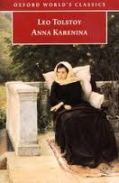
Leo Tolstoy, Anna Karenina. I’ve only just finished Anna Karenina so I’m still thinking about it. I wasn’t swept up in it, but then, limited as my experience with Tolstoy is, I guess that shouldn’t have surprised me: there’s a quality of ruthlessness in his fiction that I’d noticed before.

Edward St. Aubyn, The Patrick Melrose Novels. I abhorred and admired these novels in about equal measure. Actually, I think by the end of At Last admiration had won out, but it was a close thing.

Helen DeWitt, Lightning Rods. Another surprise. I don’t think any author except DeWitt could have pulled this off in a way I would, if not exactly enjoy, at least applaud.

Susan Messer, Grand River and Joy. I was completely absorbed by this novel set in Detroit around the time of the 1967 riot and focusing on tensions “between blacks and Jews but [also] between individual identities and group allegiances, between narrowly-defined protective self-interest and the desire to reach out and make connections.”

J. G. Farrell, The Siege of Krishnapur. I liked this as much as I liked the first in the trilogy, Troubles. If you want to read something truly substantial about Farrell, skip my post and read Dorian Stuber’s essay on him in Open Letters.

Erich Maria Remarque, All Quiet on the Western Front. The ultimate novel of the ‘lost generation’: “We are forlorn like children, and experienced like old men, we are crude and sorrowful and superficial–I believe we are lost.”

Books I didn’t much like:

Jean Rhys, Wide Sargasso Sea. Meh.

Ford Madox Ford, The Good Soldier. Hey, it’s my blog, isn’t it?

Low point of my reading year:

George Sand, Indiana. Don’t worry, George: it’s not you, it’s me! Or maybe not.

Books I’m especially looking forward to reading in 2013:

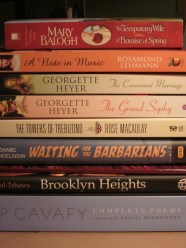
IMG_1442

All the ones in my Christmas loot pile, of course. But also:

Black Lamb and Grey Falcon. It has been fabulous so far, and my only (lame) excuses for not having persisted are not having committed deliberately enough (I proved to myself with Anna Karenina this month that being busy with other things is no reason not to get through a doorstopper) and its weight: there’s no way you can tuck this volume in your purse for reading at odd moments.

The Singapore Grip. One more in Farrell’s Empire Trilogy, and I’m sure it will be as strange and brilliant and darkly comic as the others.

The rest of the Raj Quartet. I found The Jewel in the Crown engrossing and complex and am keen to make my way through the next volumes.

War and Peace. This has featured in this “to read” list for several years now; maybe 2013 is the year I’ll finally get it done.

Patrick Leigh Fermor’s A Time of Gifts. This is another book I picked up on my spring trip to Boston and one of the few from that expedition that I haven’t read yet. Wallace Stegner’s Angle of Repose is another, and that’s high on my TBR pile too.

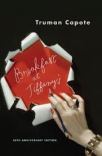
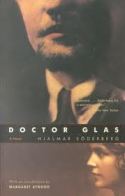
Up next, though, will be Breakfast at Tiffany’s, which is the January book for my local book club, and then Doctor Glas, which is the next read for the Slaves of Golconda.

Notable Posts of 2012:

Finally, it seems worth noting a couple of posts that weren’t exactly reviews but that generated more excitement than is usual in this quiet corner of the internet:

Your book club wants to read Middlemarch? Great idea! I have not forgotten or abandoned the idea of creating the “Middlemarch for Book Club” site I proclaimed so boldly here. In fact, it already exists in skeletal form. I wanted to do it well, though, and thus took my time over it at first, and then I put it on the back burner and then it was the new term. One of my resolutions for 2013 is to build more of it and then start making it available in a ‘beta’ version. It’s not going to be anything too fancy: I’m just using WordPress to set it up. But if people seem to like it and find it valuable, it’s the kind of thing I might eventually seek out some funding for and try to make really good.

How to Read a Victorian Novel. I put this together as part of Molly Templeton’s call for responses to the NYTBR “How-To” issue that seemed to think women didn’t know how to do much of interest beyond cook and raise children. How does that even happen, in 2012? Where are the editors? What are they thinking, when they see a cover graphic like that? Anyway, the resulting tumblr turned into something quite amazing, and it was really energizing to be a part of it. Thanks to a couple of high-profile links to it, this is my most-read post of all time.

Thanks to everyone who read and commented on Novel Readings in 2012. Happy New Year!

“And such is the meaning of all existence!” Levin and Anna Karenina

annakIf Anna represents the futility of material striving–of seeking lasting happiness through pursuing her own immediate needs–perhaps Levin represents spiritual striving. At any rate, that’s the best I’ve come up with so far as I ponder the relationship between the two major plots of Anna Karenina. In Levin’s epiphanic musings towards the end of the novel, he repeats the words of the peasant Theodore:
To live not for one’s needs but for God! For what God? What could be more senseless than what he said? He said we must not live for our needs–that is, we must not live for what we understand and what attracts us, what we wish for, but must live for something incomprehensible, for God whom nobody can understand or define. Well? And did I not understand those senseless words of Theodore’s? And having understood them, did I doubt their justice? Did I find them stupid, vague, or inexact?

No, I understand him just as he understands them: understood completely and more clearly than I understand anything in life. . . .

Levin’s agnosticism has been a constant up to about this point in the novel. Does he “find” God here, then? It sounds like it:

But now I say that I know the meaning of my life: it is to live for God, for the soul. And that meaning, in spite of its clearness, is mystic and wonderful. And such is the meaning of all existence.

At the end of the chapter, he rejects not just doubt but reason:

Reason has discovered the struggle for existence and the law that I must throttle all those who hinder the satisfaction of my desires. That is the deduction reason makes. But the law of loving others could not be discovered by reason, because it is unreasonable.

Anna, perhaps, lives more according to reason, opposing those who hinder the satisfaction of her desires. Levin, in contrast, embraces here an ethos of love, but a different kind of love than the gratification of vanity and ego that defines Anna and Vronsky’s love. Levin’s is an ethical love, a love of the soul, a love of others. By the light of his love, we judge the moral failure of Anna’s; through his embrace of life, we condemn Anna’s choice of death.

And yet I’m not satisfied with this way of reading the contrast between them. For one thing, I can’t figure out how we are positioned relative to Levin’s revelatory statements here. Though he has often meditated on the meaning of life and the significance of death, he has never proffered a religious interpretation before. More, the sentiments he expresses here are so vague and ecstatic I find it hard to take them seriously as a response to the complicated world we’ve been living in with him. He declares that the “knowledge” he has acquired is “given to me as to everybody,” but we have hardly seen other people motivated by “the law of loving others.” Is the idea that Society–the same Society that crushed Anna’s more earthly desires–also crushes spiritual idealism, so that Levin’s story doubles up on the social criticism of Anna’s, while also holding out (as her story does not) a standard by which a better world could be established? Or is it possible (because Levin seems kind of an erratic, ineffectual figure for a heroic protagonist) that he’s modelling another kind of folly, rather than an ideal? What kind of noble life is truly possible without reason, after all? His final assertions of revelation depend on a resolute setting aside of hard intellectual problems (such as “the relation to the Deity of all the different beliefs of mankind”). Is this supposed to be right–never mind the details, just feel the truth in your heart? Or is it supposed to seem, as it does to me, a feel-good cop-out?

I’m sure that some of my confusion about Levin is rooted in my historical ignorance: much more than Anna, he is involved with social, political, economic, and, especially, agricultural questions specific to his time and place, and I don’t know the context well enough to understand what his particular efforts in these areas mean about his values. I’m not a trained historian of Victorian Britain, but when Caleb Garth confronts the farmers who oppose the building of the railway, or when Mr Brooke attempts to run for the Reform parliament as an Independent, I have some ideas about what it all means as part of the politics of Middlemarch. Here, though, I have no general background to prepare me, and my one complaint about the Oxford edition I was reading is that it is not really an annotated edition and so the many political and other references go unexplained. There are a small number of notes at the bottoms of pages (mostly translations of French phrases) but I would have appreciated a thicker layer of supporting information to help make the various councils and voting schemes and farming experiments a bit more … well, interesting.

IMG_1440

John Bayley also says little about Levin in his introduction to my edition, but he does suggest one way in which Levin’s story is thematically related to Anna and Vronksy’s: “His apparently causeless depression … relates to something which is also present in the Anna-Vronsky ménage,some primal dissatisfaction with the fact that one has gone one’s own way and should be happy, and yet one is not.” In Levin’s case, he should be happy with Kitty, the tedious embodiment of ideal, nurturing, maternal femininity who is everything that Anna is not (“is Anna the pit and Kitty the pedestal?” reads one of my marginal jottings) — except that Kitty (for all her nesting) is not so perfect, and Levin, as Bayley says, does not subside into bliss on marrying her. As with Anna and Vronsky, we see with Kitty and Levin the close proximity of love and possessiveness, the neediness, the jealousy. When they are happy, they’re kind of boring, aren’t they? So it doesn’t seem as if they are the “ought’ to the other pair’s “is.” Maybe the most that can be said is that they are basically nicer people than Anna and Vronsky, more sincerely concerned with the well-being of others. Maybe Levin looks for transcendent meaning but we should not.

“I want to love and to live”: More Anna Karenina

anna2I finished Anna Karenina yesterday–or, I should say, I finished Anna Karenina for the first time: it’s so large and complicated, and also so alien, so unfamiliar, to me that I hardly feel I’ve really read it yet. It was an odd, engrossing, and somewhat frustrating experience working my way through it. Despite its sprawl and its episodic character, it felt well built to me, with the two major plots running sometimes in parallel, sometimes intersecting, and always provoking questions about the significance of their juxtaposition. But I felt morally and thematically adrift much of the time, partly (presumably) because I’m new to the novel and there’s a lot of it to take in, and partly (perhaps) because the novel doesn’t work quite the way the big novels I know best work, which is to say, it sets out its characters and its problems without also providing a readerly guide in the form of, say, an intrusive narrator. There’s no friendly companion, no wry moralist, no philosophical or historical commentator–in other words, this is not a novel by Trollope, or Thackeray, or George Eliot. The unifying perspective–the set of ideas that make all the different parts of the novel into a whole–emerges only implicitly, and to me, so far, remains somewhat elusive.

I know there’s lots of accessible expert commentary out there to help me. After my earlier post on the novel, for instance, maryb linked to this piece at the New Yorker, which I’ve since skimmed and will return to read more slowly soon. A lot of other bloggers have written about Anna Karenina, too. But before I get too caught up in what other people have said, I’ll try to sort out some of my own impressions and ideas. I thought that for today, I’d start with Anna herself. It is, after all, nominally her novel.

In my last post I said that “I don’t understand her infidelity and thus can’t sympathize with it.” That remained true for me to the end. If anything, I became less sympathetic, in fact, as far as the supposed love affair between Anna and Vronsky was concerned. There’s something so self-absorbed about it, so petulantly self-indulgent. “For you and me,” Anna exclaims, “only one thing is important: whether we love each other. No other considerations exist.” Far from being a grand passion for which they heroically pit themselves against society, though, it’s a commonplace enough affair, as Anna herself seems to realize near the end:

‘What did he look for in me? Not so much love as the satisfaction of his vanity. . . . Yes, there was in him the triumph of successful vanity. Of course there was love too; but the greater part was pride in his success. He boasted of me. Now that is past.’

She describes her own love as growing “more and more passionate and egotistic,” but it seems very much that way from the first. Even when wracked with grief about being separated from her son, it’s her own painful choice she is fixated on, not Serezha’s loss: “I love those two beings only,” she tells Dolly, “and the one excludes the other! I cannot unite them, yet that is the one thing I desire.” At no point does she attain a broader vision of her actions, seeking to understand their meaning for other people the way that (yes, the inevitable comparison) Dorothea does after her ‘white night’ near the end of Middlemarch. “Was she alone in that scene? Was it her event only?” thinks Dorothea. For Anna, the answer to this question is surely “yes”: she has little concept of other people having an “equivalent center of self,” and her suffering, the product of a thwarted quest for selfish gratification (“Count Vronsky and I have also been unable to find that pleasure from which we expected so much”) leads her only deeper into her own neediness.

The more I read, though, and the more I gave up on my initial expectation that Anna Karenina was a transcendent love story, the less it mattered that Anna and Vronsky hardly seemed to deserve happiness–or sympathy. The commonplace, almost tediously conventional, nature of their relationship, for one thing, started to make its extraordinary consequences seem particularly absurd. Anna herself has no intention of being either a heroine or a martyr. “I don’t want you think that I wish to prove anything,” she tells Dolly; “I don’t want to prove anything: simply I wish to live, not hurting anyone but myself. I have a right to do that, have I not?” That’s a narrow idea of rights, to be sure, but at the same time, from the first page of the novel we know that adultery is commonplace in her world, and that many people (including, obviously, Dolly) learn to live with it. Of course, Stiva is a man, and the contrast between his cheerfully trivial infidelity and Anna’s catastrophic affair painfully exposes the sexual double-standard that is surely part of the novel’s larger moral calibration. Anna pays, and pays, and pays for her adultery, but it is not any more morally grievous than her brother’s, is it? And once we start asking that question–if anyone in Anna’s world really asked that question–the arbitrary and artificial rules of Society can hardly bear their own weight.

It’s not just the double-standard that works against Anna, though, and leads her to be, in effect, a prisoner in her own home as well as her own ego. For all her claim not to want to prove anything, she does want to live openly with Vronsky, to treat their relationship as a socially legitimate one precisely because it is not a furtive dalliance. I think this is part of the quality of sincerity which many characters admire in her. “In addition to her intelligence, grace, and beauty, she also possessed sincerity,” reflects Levin; “She did not wish to hide from him the hardships of her position.” What seems unnatural to Anna is hiding her feelings, hiding the truth of her situation. If everyone knows anyway, after all, what’s the point? “She has done what everybody, except myself, does secretly,” says Princess Myagkaya, “and she would not deceive, and has acted splendidly.” But it’s this “splendid” honesty (is it naïve? defiant?) that brings the judgment of Society down on her, as during the painful scene at the opera. Vronsky is “vexed” with her determination to expose herself in this way:

“To appear dressed as you are at the theatre, accompanied by the Princess, whom everybody knows, means not only to acknowledge your position as a fallen woman, but to throw down a challenge to Society–which means, to renounce it forever.”

But he does not say these words out loud to her, partly because he too does not know why she is so determined: “But how can she fail to understand it? And what is happening to her?” he wonders. It’s this episode that shows Anna, I think, the folly of her own grandiose, romantic insistence that “no other considerations exist” besides their love: as she sits in her box pretending to be tranquil and composed, “she felt as though pilloried.” Vronsky hopes his sister-in-law, Varya, will help rehabilitate her, but Varya insists that she “cannot do it! I have daughters growing up, and I must move in Society, for my husband’s sake. . . . I am not able to raise her.” “I don’t consider that she has fallen lower than hundreds of people whom you do receive,” returns Vronsky, but by removing the veil of pretense, Anna has made it impossible for herself to move among those for whom the appearance of virtue is, if not everything, at least enough.* Anna loses both social and moral mobility, as a result, and her relationship with Vronsky becomes the totality of her options. Her jealousy, fretfulness, and eventual desperation arise from this, particularly as she is painfully aware that Vronsky’s situation is different: “He has the right to go when and where he pleases. Not only to go away, but to leave me. He has every right and I have none at all.”

Anna’s agony, under these pressures, might have had a different outcome if she herself had a different character–if she were heroic, noble, or aspirational. Dorothea is only able to turn her grief into sympathetic action, after all, because she is already a profoundly compassionate person. Suffering has no particularly benevolent effect on Rosamond, and our judgment of her damaging egotism is infinitely complicated by our awareness (cultivated across 800 pages) that she lacks the capacity to do or be otherwise. I ended up thinking that it’s the same qualities in Anna that made me find her an unsympathetic character that turn her, finally, into a tragic character. What else can she do, at the end, except put an end to her own problems? Solving other people’s problems is never what her life has been about.

*I was reminded, during these exchanges, less of George Eliot’s novels and more of George Eliot’s life, as she knew that her most radical choice was not getting sexually involved with a married man but doing so openly, as if she had a right to. “Light and easily broken ties are what I neither desire theoretically nor could live for practically,” she wrote to a close friend after her elopement with Lewes. “Women who are satisfied with such ties do not act as I have done–they obtain what they desire and are still invited to dinner.” She staked her future on Lewes’s steadfastness, and she (and not he) endured social ostracization on their return.

2012: My Year in Writing

cassatI began my annual look back at 2012 with my small contribution to the Open Letters year-end feature. I’ll follow up soon with my regular survey of highs and lows from my reading and blogging year. But this year I thought I’d also take a moment to review the writing I’ve done this year for venues besides Novel Readings.

Most of it was for Open Letters Monthly, of course, and I continue to be grateful for the opportunity to write about whatever interests me, as well as for the challenges to write about things I might not otherwise tackle. Also, as I always tell new or prospective contributors, the editing process at OLM is one to cherish: we bring different interests and sensibilities and styles to bear on every piece, but always in the interests of making it the strongest version of itself that we can collectively manage, and I know that my pieces always end up better than they began.

My first OLM piece in 2012 was “The Quiet One: Anne Brontë’s The Tenant of Wildfell Hall.” I think this is a wonderful novel – more artful, in many ways, than Jane Eyre, if without its visceral appeal. I teach it regularly and the more time I spend on it, the more I admire the unity and integrity of Anne Brontë’s accomplishment. It was a treat to write this up: it’s basically a much-elaborated version of the notes I use for lecture and class discussion.

The scariest piece I wrote in 2012 was “Abandonment, Richness, Surprise: The Criticism of Virginia Woolf,” which was my contribution to our special 5th anniversary issue. I was not initially enthusiastic about doing an entire issue on criticism, and I wasn’t at all sure I had what it took to say anything at all about Woolf as an essayist. On the first count, I was completely converted as the pieces came in. Sam Sacks on Frank Kermode, Greg Waldmann on Edmund Wilson, Steve Donoghue on Elizabeth Hardwick, John Cotter on Gore Vidal … the project brought out the best in our writers as they spoke from the heart about the people who showed them what criticism could be. As for my own piece, the faint edge of desperation I brought to the task unexpectedly gave me courage to get more outside my own head than I’m usually able to do and to write with a freedom I rarely feel. This is the 2012 publication I’m most proud of, precisely because it’s a bit riskier in voice and approach than any of the others.

The most fun piece to write, on the other hand, was definitely “All the World to Nothing: Richard III, Gender, and Genre.” As I confess in the essay, I’ve been a “Ricardian” for many years but I hadn’t found a place for that somewhat esoteric interest in my working or writing life before. Yet as I thought about the elements I wanted to include in the essay, I realized that a lot of the work I’ve done as an academic has grown out of my early passion for historical fiction, while a lot of my conceptual thinking about gender and historiography finds apt illustration in the tale of the last Yorkist king and his mostly female advocates. I have a feeling that not a lot of readers followed me down the slightly wandering path I took, but I hope those who did shared in my last gleeful “ha!” They will also understand the great excitement I have felt as this news story unfolds.

I wrote two essays on George Eliot this year, stages in a still somewhat indefinite longer project about her thought and her novels and what they might mean for us today. In the first of them, “Macaroni and Cheese: the Failure of George Eliot’s Romola”, I bypassed the essay I initially thought of writing, in which I made a case (as I did a couple of years ago for Felix Holt, the Radical) that the novel is better than is usually thought, and chose instead to think about the ways in which the novel is every bit as bad as it seems. I know that fear of failure holds me back: I find George Eliot’s failures inspiring because they teach me about reach and ambition and intellectual courage. That said, Romola actually is a fascinating and occasionally thrilling novel, so if you’ve already made your way through the others, don’t be put off by all this talk of failure!

Also for Open Letters, I reviewed The Life of George Eliot, by Nancy Henry (in our ‘annex,’ Open Letters Weekly) and Lynn Sharon Schwartz’s newest novel  Two-Part Inventions. Henry’s biography is smart, thorough, and yet somehow not as exhilarating as a life of George Eliot deserves to be, perhaps because it is that odd hybrid, a ‘critical biography.’ Still, it’s miles and miles better than Brenda Maddox’s abysmal George Eliot in Love. Schwartz is the author of two novels I admire enormously–Disturbances in the Field and Leaving Brooklyn–but I wasn’t inspired by Two-Part Inventions mostly because it seemed to me that Schwartz wasn’t either.

The second of my George Eliot essays this year, “‘Look No More Backward’: George Eliot’s Silas Marner and Atheism,” appeared in the Los Angeles Review of Books (and then, rather to my surprise, in Salon). As the essay was in progress, I had second thoughts about the ‘New Atheist’ hook I’d proposed for it when I pitched it, but that is how I’d pitched it and (understandably) that’s what they wanted me to stick with, so I did. It’s not that I don’t believe what I said, but as I’d feared, that set-up was a distraction for some readers, who seem (at least from the posted comments) not to have persisted as far as my reading of Silas Marner. I have argued before that we could do worse than look to George Eliot for ideas about how to be both godless and good and this was a good experiment in making that argument in more detail and taking it to a wider public, while still doing the kind of close reading that I hope might be seen as my trademark when (if) people think of me as a critic. I have yet to muster enough courage to write a sustained essay on Middlemarch, but when I do, it may well build on this foundation.

Finally, I published one essay in a conventional academic journal this year, though somewhat ironically (given that my non-academic publishing was almost all in my supposed areas of specialization) it’s about blogging: “Scholarship 2.0: Blogging and/as Academic Practice” appeared in the Journal of Victorian Culture. This paper grew out of the conference presentation I gave at the British Association of Victorian Studies conference last summer. It was supposed to be made open access but there seems to be a hitch with the publishers: anyone denied access who wants a copy can just let me know.

So: that’s six essays and two book reviews in 2012, which is not bad for someone who has been told her ‘publication record is spotty‘! And that’s not taking into account any of my writing here on the blog, much less any of the writing I do as a matter of course for work, from lecture notes to handouts to evaluations to memos to letters. Of course, none of the writing in those last five categories really feels like writing, though it’s easy to underestimate how much creativity and ingenuity it calls for. There were some definite highlights in my blogging year, and I’ll be looking back at those in my next post. I love the complete freedom of blogging–freedom from deadlines and other external requirements, and freedom to say what’s on my mind without second-guessing myself too much. However, one of my goals for 2013 is to keep up a good pace of essays and reviews outside Novel Readings, because I still find writing for other people intimidating (and yes, I know, other people read my blog, but it feels very much like my space, so it’s just different, however irrationally). In addition to writing for Open Letters, I might have another go at pitching a piece somewhere else, just to keep pushing my boundaries. But what, and where? (Ideas welcome….) I find I’m still quite clueless about this process, and I hardly know if I’m more nervous about a pitch being turned down or accepted, but that’s just the kind of anxiety I need to get past. Maybe 2013 will be the year I figure out how to just write, without so much agonizing. On the other hand, isn’t agonizing part of what defines writing?

This Week In My Classes: Wrapping Up

The last ten days or so have been all about evaluating the final assignments for my two fall-term classes, Mystery and Detective Fiction and The Somerville Novelists. The students in my Intro to Literature class wrote a last essay for the term too, but that came in earlier and so I was able to turn it around before the final exams and essays and projects came in from the other groups. That means, though, that basically, for about two weeks, I’ve been in what we refer to on Twitter with the hashtag “#gradingjail.”

I went to a teaching workshop a few years ago where the very helpful advice offered was not to assign any writing you won’t want to read when students turn it in. That’s a good idea, but it’s also a ridiculous idea, as any writing instructor knows: there is no assignment so meticulously conceived, there are no instructions so compellingly worded, that every student will be motivated to, much less able to, do a wonderful job. And it’s not the well-intentioned imperfections in assignments by motivated students that drag us down at this time of year: it’s the lame-ass ‘I’m only doing this because you’re making me’ ones, or the ‘everything else was a higher priority so I threw this together at the last minute’ ones, or the ‘I really have no idea how to do this but even though I never came class or to your office hours, I’m still turning something in to see if I can pass’ ones. It’s the ones in which even the authors’ names are misspelled, despite being right there on the book cover for easy reference, or the advice on three previous assignments was ignored, or that show beyond a reasonable doubt that the student never finished the book they are writing about. Though it would be fun (and fast!) to grade a batch of final essays or exams all of which deserved A+ grades, we don’t expect perfect work: these are students, after all, and they’re learning — that’s the point of their being in our classrooms in the first place. But learning really is a two-way street. Exciting as a truly great assignment by an already flourishing student can be, often it’s the students who have, by effort and persistence and caring, and also by consultation, just made their work better who give me the best feeling when I’m marking.

mosley

Happily, I did see some examples of that this term, and overall my sense of all three classes was that most students were doing their level best. One of the biggest surprises of my recent marking was that a significant majority of the answers to the essay question on the Mystery and Detective Fiction exam (on social justice in Devil in a Blue Dress and Indemnity Only, in case you wondered) were very good: smart, articulate, and supported with detailed discussion of examples. It was hard work going through the entire stack of exams, and it took a long time (between students who did the optional final paper and students who mysteriously vanished from the course over time, there were 74 exams in the end, which certainly felt like plenty) but it was a familiar experience, and I think it gave me a good sense of who was really on top of the course material and who really wasn’t, which after all is the point of the exercise.

south riding

Evaluating the wiki projects for the Somerville Seminar, on the other hand, was a new kind of effort. As my Twitter friends know, I felt a lot of stress about these projects while they were still in progress, mostly because despite my urging, not a lot of students put even draft material up early, thus making ‘gardening’ as well as some aspects of collaborating and conceptualizing difficult. But it was also stressful because of the difficulties I knew some groups were having organizing meetings and getting everyone to participate. As I said, rather defensively, to people who responded to my stress by wondering why I assigned group projects in the first place, I have included a group project of some kind in nearly every 4th-year seminar I’ve taught in my 17 years at Dalhousie, and they have always seemed to go very well! So what was different this time? A couple of things, I think. First of all, this time I had a backstage pass: the projects were going up on a shared PBWorks site, so not only could I see posted content, but I got daily reports of which users had been doing what – including, sometimes, discussions among group members about logistics and frustrations. If I had seen only the finished product, as in the past (not counting the mandatory ‘confer with me at least once about your plans’ sessions that are always part of the process), I might never have known it wasn’t a seamless, harmonious process.

Would it have been better for me to hide my eyes? More important, would it have been better for them? In both cases, I think the answer is no. Because the assignment was experimental, for one thing, I needed to know if clarification or intervention was required, which sometimes it was. Also, because one aspect of the assignment was precisely ‘good collaboration among group members,’ I needed to see if this was going on. Without watching the sausage get made, too, there would be no way for me to learn if I had done my part well, in terms of designing the assignment, laying out the instructions, and supporting the class in meeting the requirements. From their point of view, I think my surveillance, though no doubt occasionally felt as intrusive, was mostly a good thing: I did step in with suggestions when I felt they were heading in unhelpful directions, and when I realized how imbalanced the (visible) contributions were getting, I did some covert, as well as some overt, er, motivating.

All in all, then, I think it was not just useful but responsible of me to pay attention to how things were unfolding. Looking over the final projects, which range from good to outstanding, I’m not sorry, either, to have put everyone (myself included) through this difficult process. But I have certainly been thinking about whether I could have made it any less stressful, and this leads me to another way in which these projects differed from previous group assignments: instead of being staggered across the term, they all came due at once; and though there were multiple components, there was really only one explicit deadline. I thought that it would suffice to address the various components through in-class workshops aimed at developing concepts and getting people started, but clearly, though that was not wasted time, people didn’t (mostly) get started. Probably 75% of the final content on the wikis went up in the 2-3 days before the final deadline, and as far as I could tell, a pretty significant amount of the research was done during those days as well. I talked and talked about the importance of doing the projects in stages, and especially about putting content up early so that others could ‘garden’ it, but I think this advice was just too abstract, the required work too amorphous or theoretical. Also, I think most of them wildly underestimated how much work would actually be involved in building the different components (something earlier attempts would, of course, have alerted them to). As a result, these projects lost out in the day-to-day triage, as they did other work that felt more urgent because it had concrete deadlines coming right up. Lesson learned: when (indeed, if) I do anything similar again, I’ll build in more staged deadlines. To me that goes against the atmosphere of open creativity I was trying to foster: setting deadlines means spelling out exactly what has to be done by then, and that’s tricky if you want them to make decisions about what needs to be done in the first place. That’s why I didn’t have more interim deadlines this time–that, and because I thought they would be better at managing their own time. Some of them were, amazingly so, but that didn’t help them too much when they were dependent on others to do their parts. I’m of two minds, really, about how much responsibility to take for some students’ work habits, which is really what we’re talking about here. But ultimately what I want (what I wanted) is to see everyone involved and successful and excited: it made me sad to see, instead, people feeling frustrated, stymied, and harried. If there’s a next time, I’ll see what I can do to structure their time better for them.

Evaluating these projects was challenging for me. There was a lot of content (eventually!) and there were a lot of different aspects to take into account, from layout to research to clarity and focus to effective linking between sections: it made reading a traditional essay seem like a reductively linear process! But in many ways it was a much more interesting task than reading a stack of critical analyses. One reason is that a lot of students wrote about quite obscure books, so I learned a lot myself from the work they had done. Another is that several of the components were more reportage than literary criticism, which meant that the prose was crisper and more straightforward and didn’t need to be read with a painstaking eye to argument or interpretation. One of the hardest parts of commenting on literary essays is trying to grasp what thesis would have worked to unify the examples, or even just to understand what a conceptually garbled sentence or paragraph might have been intended to mean, in order to propose a better version of it. There wasn’t much of that involved here, and that was great! Freed from the obligation to write academic-ese, they proved perfectly capable of saying very insightful things and making all kinds of good connections between texts and contexts and concepts we worked on in the course. That was very satisfying to see, and it encourages me to keep looking for different kinds of writing to assign. Hardly anybody in my classes is going to become an academic critic, after all, so teaching them to write like one seems less and less like it should be my priority. As far as that goes, in fact, everything about these assignments still, in spite of everything, seems like a good idea.

And now my final grades are filed for the two courses that ended, and I’m going to take a break from fretting about teaching for a few days before I turn my attention to the final planning for the winter term. My Introduction to Literature class continues, and I start another round of The 19th-Century British Novel From Dickens to Hardy. As usual, I’ve tweaked the reading list by a book or two, and I have ideas for yet another twist on course requirements … but first, I’m looking forward to returning to Anna Karenina.

Holiday Concerts

img_1016

Every year we attend at least one school holiday concert, events which are as much a part of our family traditions at this time of year as seasonal music, books, and presents.

School concerts are not my favorite special events. I find noisy, chaotic environments very stressful, I find it frustrating to have performances disrupted by restless toddlers and to see adults blatantly disregarding the principal’s directions to keep the aisles clear and to wait until the end of each piece for pictures (really! what kind of example does that set?), and I struggle with the ‘everyone participates’ ethos for band and choir that means there’s no baseline skill demanded–which, for the school band especially, means the playing is typically dreadful but must be applauded nonetheless. (I’m all for kids participating in band, don’t get me wrong, but not every beginning effort deserves a captive audience.) And then between the need to be inclusive and inoffensive and the difficulty (or so I assume) in acquiring rights, the music itself is hopelessly tedious pablum. Add in the likelihood of icy roads and you have a perfect storm of reasons for me to grumble and whine every time one of these events draws near.

And yet for all my grumbling, I’m always won over by the events themselves–not by any specific performance, but by the spirit they embody, by the ideal they bring so naively to life. There in the shabby school gym, on the uncomfortable plastic chairs lined up in rows that are always too close for comfort, with terrible acoustics and (except for the lucky winners of the ‘front row seat’ lottery) pretty poor visibility too, we are brought together because we love our children. Different as we may be from each other in some respects, this is something we in the gym share. We love them, and we want them to flourish. We cherish their innocence and the wide-eyed delight with which they look out at a familiar space transformed for them by our presence. On these occasions we also get a glimpse of the life they lead without us: we see their trust for their teachers and their friendships with each other. Though they sing for us, they sing with each other, and there is no more beautiful, more hopeful sound.

I was busy with work and put off writing about the concert we went to last week. Then on Friday, like everyone else I was overwhelmed with the news of the shootings in Newtown, Connecticut. Since then it has been very hard to think about how or what to write – not just about the school concerts, but about anything. There’s a sense, of course, in which that terrible event has nothing to do with me. I wouldn’t presume to have anything special or useful or important to say about it. But I don’t know how to not say anything about it at all and just go back to writing about my life and my books and all the rest of it without at least acknowledging it. “Any man’s death diminishes me,” says Donne in his famous Meditation. The deaths of these beautiful, innocent children and the brave, dedicated women who loved and cared for them diminish us all.

More Anna Karenina: What About Love?

Well, that was abrupt. Here I thought that this novel told a great love story, and instead we seem to have stumbled into a love affair with no good reason. Not that Anna and Vronsky don’t have their reasons, but we hardly know what they are or why we should care when all of a sudden we hear that it “had come to pass.” I’ve read about a hundred pages past this development and I still feel disoriented by it. We hardly know anything about these people, and we’ve barely seen them flirting, much less falling in love. Immediately upon the consummation of their passion–which seems little more than an infatuation–it’s shame, not love, that dominates the atmosphere: even as Vronsky showers kisses on her face and shoulders, all Anna can think about is that “These kisses were what had been bought by their shame!”

Maybe it isn’t a love story, then, at least not for these two. Though Anna is now declaring her love for Vronsky to her husband:

‘You were not mistaken. I was, and cannot help being, in despair. I listen to you but I am thinking of him. I love him, I am his mistress, I cannot endure you. I am afraid of you, and I hate you. . . .’

“I love him, I am his mistress, I cannot endure you”: the juxtaposition of these declarations makes Anna’s feelings and motives more obscure to me rather than less. Maybe they are obscure to her too. Is she his mistress because her love was too great to resist, or because her distaste for her husband made her restless? Is there more to her love for Vronsky than being his mistress? How is their love different from desire, or gratification? Is it worth the shame? Is it worth the 550 remaining pages of the novel? This situation–their affair, but also Karenin’s knowledge of it–came much sooner than I expected. It turns out barely any of the novel is about the gathering storm of their passion, or a desperate struggle to hide it. It can only be a novel about love’s consequences, then, but I wonder how we will navigate those consequences when we understand so little about that love. Also, I wonder how I will feel about those consequences when so far I feel so little for either Anna or Vronsky. I think I am not reading the novel right.

I peered at John Bayley’s introduction to my edition for help with my confusion and found that I am making a weak echo of a complaint made by Percy Lubbock in The Craft of Fiction, and by Matthew Arnold in an early review, that “we do not know enough about Anna, as Tolstoy sets her before us.” We are making, Bayley proposes, the mistake of a reader of other kind of novels, of European novels such as Madame Bovary or Emma or Middlemarch. In these novels “the author seeks to understand [the heroine], and to convey understanding to his [sic] reader, by means of analysis and the careful establishment of a social and moral context. . . . Tolstoy’s method is very different.” That method, Bayley says, is to have Anna “soar above the book, and above all its family details and social events, as if she were the vehicle through which the force of passion declares itself. . . . This vivid insubstantiality of Anna is one of the most remarkable things about her.” Is the implication here that the love that really matters is mine for Anna? If so, I’m in trouble, since at this point I am only mildly interested in her, and that interest is not of a wholly positive  kind, as I don’t understand her infidelity and thus can’t sympathize with it. If she is going to be the animated “force of passion” my sympathies are likely to remain muted, steeped as I am in a tradition that values the moral struggle with passion over someone who lives like “a gale of wind or a roaring fire.” Did Anna struggle? How did Vronsky win her over? Or was the seed of her betrayal in her own weakness, rather than his strength? Did she fall because she loves him, or or does she love him because she was already fallen?

Maybe the love story is not Anna and Vronsky but Kitty and Levin. At this point they are quite far from their consummation, but I know where things will end up for them as well as I know how things end up for Anna. They seem to be learning about love, or about life, and there is more explanation in their sections about character and motives and circumstances. Overall, though, I’m finding the novel episodic and disjointed, organized into set pieces (the ball, the race, the religious experiment) without a supporting web of ideas or attitudes. Maybe Tolstoy is just making me work harder to figure out his novel’s morality than George Eliot does.

Getting Started with Anna Karenina

When I posted about Madame Bovary a few months ago, I remarked on the oddity of reading a very famous book for the first time–it is, I said, “intensely familiar and yet strange at the same time. . . it is no longer an idea of something but the thing itself.” My posts on Madame Bovary show me trying to come to terms with “the thing itself,” trying to see for myself just what kind of thing it is. What a foolish thing to attempt, after one reading. How presumptuous! And yet there it was, and there I was, reading it, and a blog post is not, after all, a pronouncement but an encounter. What a relief, for an academic, not to even pretend to be definitive! In that case, too, what a good conversation ensued. If one way to measure the worth of a book is by the quality of the conversations it inspires, Madame Bovary (for all that I didn’t actually like it) is way up there.

One of the many comments that stayed with me from those conversations is Tom’s observation that “I consider Anna Karenina to be a novel of comparable merit that works as a blend of the Eliot & Flaubert approaches, that wants to keep the meaning generated by the full, precise physical world while also finding ways to comment.” Anna Karenina is of course one of those novels I always meant to read, and yet, as with Madame Bovary, somehow I had always deferred actually reading it. You couldn’t make a better pitch for it than Tom did, though, and so I confessed my Anna-less state to my supplier and he set me up with the Louise and Aylmer Maude translation, which I am now about 100 pages into. But if it’s presumptuous to say anything on a first reading, what could I possibly dare to say after my first reading of just 100 pages?

Not much, actually. For one thing, I’m eager to read more tonight, so I don’t want to use up all my remaining energy here. For another, I hardly know what I think yet. I’m just observing a few things at this point, feeling my way along. My very first observation is that the novel is briskly paced — that surprises me. It is possible that only someone who reads a lot of 19th-century fiction, for work and for pleasure, would think this, but here’s a bit of very scientific evidence on my side. When I was trying to choose what book to read next, I took a stack of options in with me when I joined my daughter for our ritual reading time before her ‘lights out.’ I read her the first few sentences of each of them, and then she and I each scored them out of 10. Of all my options (and they included The MasterThe Line of BeautyA Time of Gifts, and Winter’s Tale), it was Anna Karenina that got the most points. (Mind you, the overall results were somewhat skewed by Maddie’s giving the opening of A Time of Gifts a scornful zero. She and I will take that up again another time!) With Anna Karenina, we knew right away what was happening and who was involved, and we were caught up in the buzz of activity and the stress of the domestic conflict. So far, at my modest 100 page distance, that first impression has held up. There is a light layer of exposition and commentary, but most of it is about the characters, rather than about context or abstractions, and the interpersonal complications just keep multiplying.

Of course, here too I can’t help but read knowing how it ends, and so the foreshadowing at every train station is a bit obvious (“She felt that there had been something in it relating personally to her that there should not have been”). But the other thing that’s obvious is that Anna is not Emma, and so I’m caught up in wondering how this very different woman will live out a plot that is in some ways so similar and yet that already feels so different. Keeping in mind that I don’t know Anna very well yet (we’ve only just had a few scenes told from her point of view, for instance), it’s striking that she enters the novel with a warmth and vitality that is totally missing from Emma – no nasty snaky tongue here! It’s true that she seems less benign and charming when she steals Vronsky’s attention away from Kitty (who then uses the unexpectedly harsh term “satanic” for her)–though it isn’t exactly her fault, she enjoys it all a bit too much. Still, the first active thing Anna does in the novel is to effect a reconciliation between Stiva and Dolly: she advocates forgiveness and love, and that seems like a good thing.

The other detail that stood out for me is that while we hear endlessly in Madame Bovary about Emma’s dangerous penchant for reading novels, Anna finds it “unpleasant to read, that is to say, to follow the reflection of other people’s lives. She was too eager to live herself.” As a devoted reader myself, I can hardly endorse or sympathize with her position … and yet, again, this seems like a sign of her vitality. When she does settle in to her reading, it prompts her to reflections on her own life: “‘What am I ashamed of?’ she asked herself with indignant surprise.” Imagine the doctor’s wife (actually, either doctors’ wife!) asking herself this question. Self-reflection — another good thing. Whether it will lead to self-understanding, or, more important, to moral understanding, remains to be seen.

This Week In My Classes: Finishing Touches

Today was the last day for my fall term classes, which means the last meeting altogether for two of them. One of them, Introduction to Literature, continues in January, when I will also be adding another round of The 19th-Century Novel from Dickens to Hardy–a very different round, just by the way, from the last one, since not one of the books will be the same and a couple of them are ones I’ve never, or very rarely, assigned before. But I can’t think about that now! That’s next term … and tempting as it is to wander away from the remaining obligations of this term, they do still have to take precedence.

In Intro it was our third editing workshop of the term: we’ve been doing one before each due date. The last two were peer editing, but today they did reverse outlines, using a worksheet I adapted (with acknowledgment) from this useful one prepared for the Writing Center at U of T Scarborough. The only real change I made, besides some tweaks to the explanations to fit our particular assignment, was to add a space between the block for each paragraph for them to put in a transition word or phrase indicating the logical relationship between the paragraphs. I think peer editing has its uses, but it often seems like the blind leading the blind, and I’ve seen papers turned in with crazy problems that peer editors apparently were fine with–so I wanted to focus on their ability to scrutinize their own writing and judge its strengths and weaknesses for themselves. I think it was an effective exercise for turning up problems: certainly they did not simply fill in the blanks and try to leave early! These essays are due in their final versions on Wednesday, so that will be my next big job this week.

In Mystery and Detective Fiction I gave a review lecture, a useful thing, I think, for reminding them about the specific material but also, and more important, for going once more through some of the framing ideas and unifying themes of the course. It was also our last chance to talk about Devil in a Blue Dress. I think it works reasonably well to incorporate comments on the novel into the review session, but I do feel we ended up giving it short shrift, so maybe next time around I’ll be sure to allow one more class on it. After my talk we used the review handout I’d prepared for some Q&A, so students could ask about the material they felt least certain about and get help from their classmates as well as from me. And that’s that, until we meet again for the final exam next week. A handful of students are doing the optional final essay instead, due the same day as the exam, so that’s a lot of what I’ll be doing next week.

In The Somerville Seminar, we had our last round of Pecha Kucha presentations today. Five in one class is too many–not because we ran out of time for the presentations, but because it didn’t leave us much time for discussion after each session. I had originally planned for four a day but we all felt the end of term crowding in on us so I proposed starting them a bit later and tightening up the schedule. Overall it was still probably the best choice, but next time I do them I will allow more space around the presentations. I do think I’d like to use them again as an assignment, though. They were really well done, and though the format does impose constraints that can seem artificial, the dynamic is very different than with standard PPT slides or with other kinds of student presentations. The brisk pace keeps everyone’s attention, and the emphasis on graphics to illustrate concepts or support ideas, rather than using slides as alternative versions of the same things being said aloud, made the experience much more entertaining. The strict time limit moderated by the impersonal settings on the computer also frees me from having to be the Presentation Police. It’s very stressful to see someone running over time and crowding out whoever comes next, and to have to choose between letting them go on and publicly calling attention to the problem by stopping them. The most anyone ran over this time was about 10 seconds. So at this point I’m a fan of this new style, and as for substance, well, it’s amazing how much information and insight you can fit into 6 minutes and 40 seconds if you really think about it.

I felt quite distressed last week as I felt the wiki projects for the seminar were not coming together–despite (she says defensively) my having warned them and warned them about not putting off collaborative work until the last minute, and my having stressed as much as I possibly could that this kind of project is best done in small increments rather than large doses, including regular ‘gardening.’ As I watched the daily reports come in from PB Works, I knew that many (though certainly not all) of the students had nonetheless been putting off their contributions. Facing that reality, and taking into account that the projects for the course were not familiar kinds–for them or for me–and that thus perhaps we had all underestimated how much time it would take to do them well, I took a very rare step for me and acted on the regulation that allows a change to course requirements with a strong vote in favor by the class. I put up a proposal for an alternative plan removing one of the course requirements, and it did get basically unanimous support. There were a few complications, and for a while I regretted having even raised it as a possibility, but we got it all sorted out, so now my only regret is having waited as long as I did to propose it. As I said to the class, I really do believe it was possible to complete all the originally planned components, but this way I hope that everyone will do better work and feel better about it too. There will be more weight, now, on the wiki projects–and reading and evaluating the final product will be my other significant work after the deadline passes next week.

So now I have a very short window between wrapping up the classroom work and getting in my first batch of assignments. I have reference letters to do and department minutes to write up, and a plagiarism hearing, and a dentist appointment! Not all fun and games, in other words. But maybe, just maybe, I’ll get in a little Christmas shopping too. Then I’ll be in what we on Twitter fondly (?) call #gradingjail. In the meantime, also, I have finally begun Anna Karenina, because I’ve been craving some really good reading.

The Stage Swarmed with Maggies: Helen Edmundson’s The Mill on the Floss

Last night I attended the Dalhousie Theatre production of The Mill on the Floss that I mentioned here: I was invited to give a short talk to the “Patrons” on opening night. As I explained to the attendees, I wasn’t there as an expert on Helen Edmundson’s adaptation, though I had read through most of it in preparation for the night. So, rather than pretending to explain things about the play, I tried to set up what I take to be some of the central problems of the novel so that we could all have them in mind as we watched — not to see if Edmundson “got it right” or anything as reductive as that, but to see what she did with the material, how she reworked or rethought it for a different form.

As I worked on my notes (and it isn’t easy deciding what you’ll use your precious 20 minutes on, when you love a novel as I love The Mill on the Floss), it was form that I kept thinking about. So many things about The Mill on the Floss make it seem such an unlikely choice for the theatre. There’s the ending, for one thing, but of course there are ways of evoking large-scale natural phenomena on stage: nobody expects torrents of actual water to sweep the scenery away. But what about the narrator? Though she does plot and dialogue with the best of them, so much of the wit and wisdom of George Eliot resides in her masterful exposition. What is The Mill on the Floss without my favourite chapter, “A Variety of Protestantism Unknown to Bossuet” (which contains not one line of dialogue, not one step forward for the plot) or without the great meditation on “the shifting relation between passion and duty” and the moral failure of the “man of maxims”? How will we understand Maggie’s dilemmas, her “labour of choice,” without the reminder that our striving for something better might lead us astray “if our affections had not a trick of twining round those old inferior things — if the loves and sanctities of our life had no deep immovable roots in memory”?

The narrator of The Mill on the Floss is someone special, to be sure, and the novel is inconceivable without her.  But the play is its own thing; it has its own structure and logic. It offers no substitute for the historical and philosophical commentary (for instance, it doesn’t, as far as I noticed, give any of the narrator’s best lines to characters, the way the famous opening line of Pride and Prejudice becomes Elizabeth Bennet’s line in the BBC adaptation). It does draw a lot of its dialogue directly from the novel, and noticing how much of the script is right out of the novel is a good reminder of just how great George Eliot is at voices (her characters, as I’ve talked about here before, have wonderful specificity: there’s no mistaking any one of them for any other one). It was particularly delightful seeing the Dodson sisters completely embodied (go, Mrs Glegg!). In a more general way, seeing not just familiar people but familiar objects (such as Mrs Tulliver’s tea pot) appear in front of me, in tangible form, was both disorienting and quite moving. For all the vividness and intensity of the novel, my engagement with it is often quite abstract, so that even its tragedies over time lose their visceral clutch. Though watching a play is not, for me, ever as immersive or total as watching a film can be (it’s just harder to lose the awareness that this is acting — which is not a criticism, just a difference in the experience), seeing the physical objects right there, hearing people actually say the words, makes the novel’s truths that much more real. And while we joked a bit in the introductory session about how the play is the Twitter version of the 500-page novel, its minimalism also made some aspects of the story particularly, affectingly, stark, especially Maggie’s suffering and isolation as an unconventional girl. She seemed so beleaguered, throughout the play: I wanted to jump out of my seat and go be on her side!

The most interesting feature of the adaptation is its use of multiple Maggies. It’s not that surprising a gimmick to have different actresses play Maggie as a child, a teenager, and then a woman. But Edmundson goes further: rather than replacing each other in chronological order, the Maggies coexist — not literally, in the action of the plot, but on the stage. This device allows Edmundson to dramatize the moral and emotional conflicts that Maggie faces as she grows up. Young Maggie retains her passionate impetuosity and her painful devotion to Tom; ascetic Maggie struggles between the yearning of her conscience towards an idealized right and the fellowship offered by Philip; grown-up Maggie responds to Stephen in spite of herself. The multiple Maggies literally push and pull each other according to their own loves and loyalties. What ending could possibly be right for any of them, never mind for all three of them? When the ending finally came, one of them lay with Tom, while the other two were flung aside. Again, the physicality of their bodies made the tragedy George Eliot imagined for us more real, even as their overtly symbolic roles neatly laid out the thematic lines of the conflict.

Overall, then, it was a thoroughly stimulating evening. The cast all played their parts with commitment, and they did an impressive job with what I imagine is a pretty challenging script. The three Maggies in particular were busy all the time. By the time the final trial by water came, I felt that everyone in the theatre was thoroughly engaged, and then shocked by the concluding catastrophe. (“It’s so sad! I feel like crying!” said my immediate neighbour.) My only disappointment was that we only got to give them all one round of applause: I thought they deserved at least one more curtain call, if only to let us catch our breath and remember that life goes on and “nature repairs her ravages.”