Richard III Redux

richard3

Anybody who has known me for more than, oh, twenty minutes has probably learned about my long-time fascination with Richard III. I wrote all about it for Open Letters last year. Little did I know that if I’d only held back my piece for a few months, I could have ridden the wave of Richard III-mania stimulated by the amazing archaeological project undertaken by the University of Leicester. As everybody knows by now, their work culminated in the announcement, just yesterday, that the skeleton in the car park is almost certainly Richard’s. The University has put together a fascinating, comprehensive site about the whole thing.

I know there are those who find this all distasteful: sensational, pandering to the media (and to the forces pressuring academics into proving their public “impact”), making a circus out of research … or just unfortunate because of the emphasis on a famous figure, as if archaeology and history are less interesting and important if they focus on ordinary people and ordinary lives. I have some sympathy for that last concern: there are many who “rest in unvisited tombs,” and there are lots of reasons to value and tell their stories: in the last century or so there’s been a transformation in historical priorities precisely in this direction, away from a focus on great men (and the occasional great woman).

Still, I can’t see raining on this parade. Aside from the intrinsic excitement of discovery, of adding some certainties to a centuries-old mystery (here’s a piece of the puzzle that has been missing for over five centuries, after all!), isn’t there something exhilarating about seeing a wider public get excited about something like this? Who knows what might be the wider effects–benefits, even–of sparking people’s imaginations in this way. Individual stories bring history into focus: they help us think about it as something that happens to real people. And this truly is a sensational story.

skeletonRiii

There’s something both thrilling and poignant about the spectacle of this broken body. It’s one thing to debate the theoretical value or responsibilities of historical fiction to the past. It’s another thing to see that past resurrected in all its tangible but enduring fragility. Difficult as our access to it may be, and impossible as it may be to reduce it to a single story, there is something that really happened. Now, here in front of our eyes, is, quite literally, the skeleton which has been fleshed out in so many memorable ways. I find it stunning: it gives me goose-bumps.

facial_reconstruction1
From the Richard III Society site, the facial reconstruction based on the discovered skull.


Updated: Thanks to my Open Letters essay on Richard III (linked above), I was contacted by Kate Taylor of the Globe and Mail to chat as part of her research for this piece on the continuing appeal and controversy of his story.

This Week In My Classes: Information and Education

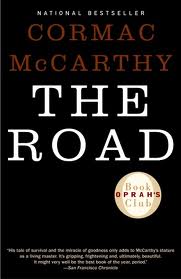
cranfordWe’re starting new books in both of my classes this week (well, weather permitting, we are, anyway!): The Road in Introduction to Literature and Cranford in 19th-Century Fiction. What makes this a particularly exciting but also daunting prospect for me is that they aren’t just the next books on our syllabus but they are also both novels that I have not taught before, in any course. So: no lecture notes, worksheets, handouts, discussion questions, slides, or other materials lurk in my archive of teaching materials. Also, I have no experience of, and therefore no expectations for, what ‘works’ or ‘doesn’t work’ about these books for students: what will be the sticking points? what will get them fired up? what will I discover, as we go along, that I need to know more about?

I’m not just going to show up, book in hand, of course. I’ve read them both before, and reread them both last week (and will reread them again in the assigned installments as we go along in class). For The Road, I’ve been collecting background information from books and scholarly articles as well as from online resources such as the website of the Cormac McCarthy Society or Oprah’s Book Club guide to The Road (which, just by the way, has some pretty good stuff, including these bits on ‘Fiction and Science’ in the novel and clips from McCarthy’s apparently very rare interview with Oprah). I’ve got some of my own materials on Gaskell, but they focus on Mary Barton and North and South, both of which I’ve taught fairly often, so though I don’t need to look up much general background, I’ve been surveying academic sources specific to Cranford (which are not nearly as abundant as for her social-problem fiction — something we’ll talk about in class, actually) and, again, peering around online for things to help get me thinking. One stimulating source is one of my long-time favorite bloggers, Amateur Reader, whose posts on Cranford at Wuthering Expectations are models of insightful brevity: here, for instance, on ‘Cranford and the Strong Female Character‘, or here on the trickier-than-she-seems narrator, Mary Smith.

This process of class preparation has had me thinking (not for the first time!) of the odd way our work as professors is often characterized. Recently, to give just one example, Melonie Fullick tweeted a link to an article proclaiming that recent developments in online education signal “the coming end of the monopoly of information held by professors in classrooms.” If it were true that professors believed they held some kind of monopoly on information, and that suddenly there was an unprecedented challenge to that monopoly because of the internet, a lot of the end-of-the-university-as-we-know-it rhetoric would ring true — but there have always been abundant sources of information outside of classrooms, and outside of universities altogether. It’s true that some of what I’ll be doing is passing along to my students information that they could get for themselves somewhere else — if they knew where to look, and, more important, if they knew what to choose from the flood of information out there. One of the things I’m doing is filtering information for them: for our purposes, here are the kinds of things we need to know, or know enough about that we can follow up in other venues. Another thing I’m doing is framing that information: what are our purposes, after all? what do we want to be able to do with these texts? And I’m synthesizing and shaping it for them, and looking for new directions it could send us in — and here’s where it gets more idiosyncratic, because the ways I will do this are not exactly the same as someone else would do it, because I am who I am — and because they are who they are, and so I’ll be responding to them as we go along. Information transfer is part of my job, but it’s silly and reductive to imagine that it’s a straightforward part of my job, or that students new to this material, and beginners in this discipline, could effectively (never mind efficiently) conduct the process of finding, sorting, and making meaning from available information without any guidance. Also, that transfer of information is only the beginning of what we will do together, because ultimately my goal is not for them to memorize facts about Elizabeth Gaskell or Cormac McCarthy but for them to become better readers and critics, which means they have to engage independently with the texts, framing their own questions and trying out their own answers. They can get a lot of information from Wikipedia (I get some of mine there, too), and if that was all our classroom time was about, then sure, that’s the beginning of the end. But that’s not education: not really. I strongly agree with Melonie’s characterization of education in her post “Can education be sold?“:

My friend Dr. Alex Sevigny has an analogy that I think works much better: education is like a fitness program. Yes, you can pay for access to a gym with top-of-the-line facilities. You can pay for a trainer to take you through the best possible individualized regimen. You can buy the shoes and expensive gym clothes. But ultimately if you don’t get yourself to the gym, multiple days a week, and push yourself to get fit–there’s no benefit in any of it.

Education works in much the same way: it is a process, one in which the student plays a necessary part, and an experience, in which the student plays a major role in the “outcome”. In fact every student actually receives a different “education”, with different outcomes, even if they’re all paying the same amount. What you pay for with tuition money is not “education”, but access to resources–libraries, expert staff, teaching and mentorship, even social contact–and access to a formal credential. Even the credential isn’t guaranteed, since students must complete academic requirements in addition to paying tuition and fees.

Another common way to dismiss what happens in ‘traditional’ classrooms is to scoff at the ‘sage on the stage’ model. I don’t agree that there’s never a good time, or a good way, to lecture. In addition to offering information, lecturing can model ways to argue, or, in my field, ways to build and support an interpretation. Even when transferring information, as I’ve said, there’s a process of filtering and framing that makes a thoughtful lecture something more than a list of facts or claims. Passivity in the face of information, though, is never the point, the process, or the purpose. It’s the interaction between a thinking person and information that really matters, and that we aim to promote, ultimately, in our students. Professors don’t have a monopoly on that process either, but it’s what we train for, it’s what we stand for, and it looks like it’s also what we’re going to have to fight for, as the pressure mounts for ways to automate, commodify, and depersonalize our classrooms. It’s frustrating to see how often the arguments for a revolution in higher education turn on reductive stereotypes of the work we actually do.

Georgette Heyer, The Grand Sophy

sophyI’ve tried Heyer before but without great success: I found Sylvester stilted and predictable when I read it a year or so ago, and more recently I finished The Convenient Marriage and though its madcap escapades amused me for a while, by the end the fun had gone out of it for me. Undaunted, I moved on to The Grand Sophy — and it completely won me over. I can’t remember another recent read that has made me laugh so often, and in such an uncomplicated way. Sophy herself is enormous fun, and Heyer manages the array of other characters and their mix-and-match relationships so deftly that there’s a wonderful air of inevitability as they arrive one after another for the dénoument. The only one I got a bit tired of was Eugenia (we get it — she’s no fun!), and Goldhanger the moneylender is an unfortunate lapse. But Charlbury and his “ill-judged” mumps (“‘I cannot conceive what can have possessed you, sir, to contract mumps at such a moment!'” “‘It was not done by design,’ said his lordship meekly.”), the hopelessly ineffectual poet Fawnhope (“I have abandoned the notion of hailing you as Vestal virgin: there is something awkward in those syllables”), the languid and well-fed Marquesa, dear sweet Cecilia, and of course, the upright, uptight, and inevitably seduced cousin Charles: it’s an irresistible ensemble.  And as if there’s not enough to enjoy in those last scenes, there are ducklings!

The Grand Sophy is not a particularly romantic romance. I’m starting to wonder if that’s the secret to success where my romance reading life is concerned. The minute things get too sincerely sentimental, I tend to disengage…which means I haven’t really read read the last 15 or so pages of most of the Mary Balogh novels I’ve gone through! I’m not so allergic to sappiness in other kinds of novels (I love Dickens, for crying out loud), so I wonder why the romances I’ve really liked so far have tended to be more comic than serious. Whatever the reason, I’m glad I kept trying with Heyer. I figured if so many smart readers have loved her for so long, there must be a door for me to go through. Now that I’ve found it, the only question is: which one should I read next?

Update: So far, the top recommendations coming through on Twitter are: Black SheepCotillionArabellaFriday’s Child, and Sprig Muslin. That sounds like enough to start with, but if any of your favorites are missing, let me know.

This Week in My Classes: Focus on Writing

I don’t seem to be posting my teaching updates with the regularity I used to: “this week” too often means “last week” or “these days.” I was wondering why I put off posting, and I think it’s because after doing this series for so long, I worry about repeating myself if I simply report on the week’s activities. It’s not that things don’t change in my teaching, but I think at this point I have blogged about every course in my repertoire at least once and sometimes two or three times. I mix up the readings every time (for instance, this term I’m teaching 19th-Century Fiction from Dickens to Hardy with a completely different book list than I used in this course last year) — but even so I’ve often assigned the books in other courses. And I change up the assignments regularly, for better or for worse (“I think Dr. Maitzen is trying too hard to make her assignments different,” says one of the evaluations for last term’s Somerville Novelists seminar). But after a while, how interesting is it to hear about this kind of thing?

Still, I stand by my reasons for launching the series, and I see no signs that misunderstandings or misrepresentations of academic work have abated (cough cough Forbes article cough cough). So, I’ll keep it up at least to the end of this term and then maybe reconsider. In the meantime, I’ll try to get back to more of a brief update than a long screed or meditation, just to reduce the psychological roadblocks I’ve been putting up!

nightIn English 1000 this week, we’re finishing our discussion of Wiesel’s Night. In our conferences at the beginning of term a lot of students said they still have difficulty coming up with a good thesis, soI’m going to use a fair amount of our class time on how to move from observations about Night to an interpretive argument of the right kind. One of my strategies for tomorrow is to show them the ‘suggested essay topics’ for Night that are posted at SparkNotes. None of them would lead to an essay that is really appropriate to the kind of work we’ve been doing in the course in general or on Night in particular: we’ve been talking mostly about the difficulties of representing the Holocaust, and thus on what strategies Wiesel uses both to show and to overcome the inadequacies of language.  I’m hoping that the SparkNotes topics will clarify by comparison the kind of thing we are trying to do. Then we’re going to walk through the thesis-building process again, starting from something they find worth noticing to collecting observations about it to asking questions about its significance and finally to stating a thesis about it.

In English 3032 the students are writing the first of their “mini-midterms” tomorrow — these are replacing the multiple-choice pop quizzes I used for many years to motivate reading and note-taking. Then on Wednesday, this class too will focus on essay writing. Though it’s a 3000-level course, it’s not limited to senior students and I find there’s always a range of levels. Even the more advanced students, too, in my experience, often benefit from some guidance on the difference between an essay that describes something in the novel to an essay that interprets something in the novel. So we’ll walk through a similar exercise to the one I’m doing in Intro. I’ll be interested to see what attendance is like for that session. I know I never would have missed an opportunity to hear more about expectations and standards for an assignment! But not one of my professors ever spent time on this kind of “how to” or “process” class. It’s up to the students which of our first four novels they write about for their first essay. I’m happy to say that two students did in fact resolve to write on Bleak House! I wonder what the breakdown will be over the other options (CranfordThe Mill on the Floss, and Lady Audley’s Secret).

With just two classes this term rather than last term’s three, I do feel more relaxed, especially about finding time to do marking. There’s lots else to do, though, from administrative meetings to reference letters to MA thesis proposals etc. etc. Plus it’s winter, and both kids have been sick off and on, so all the daily logistics are a bit harder than would be ideal. Thankfully, my husband is on sabbatical this term and working at home, so he’s coping with most of the fall-out from sick days and snow days. This month I also had five contributors working on pieces for Open Letters, which has been great, of course (thank you all!) but has rather hampered my work on my own piece. Well, if not this month, then next month for sure, especially as I’ll have the February reading week guaranteeing me some stretches of uninterrupted time.

Hjalmar Soderberg, Doctor Glas

doctorglasThe obvious comparison for Doctor Glas is probably Crime and Punishment, but as I haven’t read that (I know, I know) I was reminded of Poe’s tales of horror, specifically “The Tell-Tale Heart,” which is also a tale told by a murderer, full of logic and hatred and signifying … well, actually, that’s where the resemblances end, as Poe’s murderer is a sociopathic madman, while Doctor Glas is something else. That’s he’s not so clearly a lunatic makes his story both more creepy and more depressing. It’s easy to distance ourselves from Poe’s delightfully raving, palpably unreliable narrator. Doctor Glas (and Doctor Glas) elicits a more complicated, even ambivalent response.

Doctor Glas is told as a series of journal entries by the eponymous narrator, a lonely doctor prone to brooding and philosophizing. By any standard, but especially for a doctor, he’s disturbingly uncommitted to the value of human life. “Respect for human life–what is it in my mouth but low hypocrisy? What else can it ever be on the lips of anyone who has ever whiled away an idle hour in thought?” He’s an outspoken advocate of euthanasia:

The day will come,  must come, when the right to die is recognised as far more important and inalienable a human right than the right to drop a voting ticket into a ballot box. And when that time is ripe, every incurably sick person–and every ‘criminal’ also–shall have the right to the doctor’s help, if he wishes to be set free.

 He keeps cyanide pills handy — for his own exit plan, initially, but that bit of forethought turns out to be convenient when he resolves to end someone else’s life.

That someone else is the odious Rev. Gregorius, whose pretty wife Helga comes to the doctor seeking help because she finds her husband’s sexual demands repulsive…or does she? I wondered at a couple of points just how much of Dr. Glas’s version we should accept, given that his own interest in Mrs. Gregorius is fairly intense and he has his own sexual issues, as someone who “at past thirty years of age, [has] never been near a woman.” He wonders why that drive that “forces honest men to subject themselves to every sort of tribulation and sacrifice,” and women “to surmount those feelings of modesty which the education of generation upon generation of young girls has been designed to awaken and develop,” has so far “not driven [him] to anything.” Is it that urge or some more philanthropic motive that eventually drives him to murder?

Why would I even entertain the notion that there might be something principled about murder? That’s where Doctor Glas is most conspicuously different from Poe. The doctor is not simply a obsessive creep. In fact, I’m not even sure he’s creepy at all, though he certainly makes me uncomfortable. We know Poe’s narrator is a bad guy because his reasoning is so absurd:

He had never wronged me. He had never given me insult. For his gold I had no desire. I think it was his eye! yes, it was this! He had the eye of a vulture –a pale blue eye, with a film over it. Whenever it fell upon me, my blood ran cold; and so by degrees –very gradually –I made up my mind to take the life of the old man, and thus rid myself of the eye forever.

But Dr. Glas’s logic is pretty compelling, his murder arguably an extension of his duty to heal. First he tries to solve Mrs. Gregorius’s problem by telling her husband she has a medical condition and should be left alone. When she returns to him with the news that “he raped me. As good as raped me,” that “he was strong. Wouldn’t let her go,” he has to try a different strategy. This time he warns Rev. Gregorius that his own health is at risk and prescribes separate bedrooms. When that doesn’t work, his dreams of killing Gregorius become plans–though not until after he has an extended debate with himself:

I hear conflicting voices. I must interrogate them; I must know why the one says: I want to, and the other: I don’t want to.

You first, who say ‘I want to’: Why do you want to? Reply!

–I want to act. Life is action. When I see something that makes me indignant, I want to intervene. . . .

–But the unwritten law? Morality . . . ?

–My good friend, the law, you know as well as I do, is in a state of flux. . . . Morality, the proverbial line chalked around a hen, binds those who believe in it. Morality, that’s others’ views of what is right. But what was here in question was my view. . . . I’m a traveller in this world; I look at mankind’s customs and adopt those I find most useful. And morality is derived from ‘morales,’ custom; it reposes entirely on custom; habit; it knows no other ground. And I don’t need to be told that, by killing that parson, I’m committing an action which is not customary. Morality — you’re joking!

 Though excerpted like that it sounds kind of annoying, the doctor’s tendency to think and question adds a lot of depth and interest to the novel, and more importantly, to the character. For a murderer, he’s a pretty poignant figure, actually, as he reflects on his sad childhood, his abusive father, his lost dreams of love — and yet these too have their disturbing aspects, as, for instance, after the drowning death of a girl he once kissed he dreams of her “white body lying among weeds and slime, rising and falling on the water.” Love and lust seem hopelessly intermingled, in his thoughts and feelings and memories, with hatred and disgust.

soderbergWhat will linger with me most after finishing the novel is its atmosphere. It is eerily evocative, with a strong sense of place, and of spiritual isolation in that place:

 The moon is shining. All my windows are open. In my study the lamp burns. I have put it on my escritoire, in the lee of the night breeze which with its gentle hush fills the curtain like a sail. I walk to and fro in the room, stopping now and then at my writing desk and jotting down a line. For a long while I’ve been standing at one of the windows of the sitting-room, looking out and listening for all the strange sounds that belong to the night. But tonight silence reigns, down there beneath the dark trees. Only a solitary woman sits on a bench; she has been sitting there a long while. And the moon is shining.

 Though, following the dictates of the self that argued “life is action,” Dr. Glas does ultimately act, the much-anticipated action is anticlimactic, bringing little satisfaction and no resolution. “Life has passed me by,” he concludes, and we’re left with another image of emotional bereavement:

Autumn pillages my trees. Already the chestnut outside my window is naked and black. Clouds fly in thick droves over the rooftops, and I never see the sun.

Doctor Glas is this month’s selection for the Slaves of Golconda book group. Discussion is scheduled to begin on the weekend; I have to get my copy back to the library by tomorrow, which is why I’m jumping the gun a bit on this post.

Rebus is Back: Ian Rankin, Standing in Another Man’s Grave

rankingraveYes, Rebus is back, and it’s good to see him again, the sodden old crank. The Malcolm Fox novels have been fine, but I don’t find Fox as interesting a character as Rebus–though that could be because I’ve known Rebus for so long. Also, I had hoped that Rankin would take up Siobhan Clarke as his protagonist when Rebus retired. She has quite a prominent role in Standing in Another Man’s Grave, so my hope of that is renewed!

Rebus is back — and that seemed to me the major feature of this new novel. It’s a solid, well-constructed procedural on its own merits — Rankin is an experienced pro at this, after all — but it’s as a novel of character that Standing in Another Man’s Grave is most interesting. It doesn’t have the ambitious scale or political reach of the late books in the initial Rebus series, particularly Fleshmarket Close (which is described on the cover as a “state of the nation novel”–surely a variation on what I talk about in the 19thC context as a “condition of England novel”) or The Naming of the Dead. Both of these work their particular crimes up as symptoms of much wider social evils. By contrast, the case in Standing in Another Man’s Grave is mostly an occasion for Rebus to revisit and rethink his identity as a detective as he contemplates a move from the cold case unit he moved to on retirement back into active service (something made possible as a plot twist by changes in regulations). The case itself seemed a little perfunctory, except that in linking together old cases with new, it continues the preoccupation of all of the Rebus novels with the complex relationship between past and present.

Here, it’s Rebus himself who often seems like a relic of the past, something Rankin can make the most of because this novel is itself a kind of throwback. While Rebus was out of our sight, our world and his was changing, and his ways of doing things — always borderline inappropriate — are now conspicuously “old-school,” as Malcolm Fox’s colleague Tony Kaye points out. Rankin set Fox up to be in many ways Rebus’s antithesis, and here we see Fox determined to put an end to Rebus’s tainted career. “I know a cop gone bad when I see one,” he tells Siobhan, warning her to cut ties if she values her own career advancement:

Rebus has spent so many years crossing the line, he’s managed to rub it out altogether. As far as he’s concerned, his way’s the right way, no matter how wrong the rest of us might know it to be.

“You don’t know him,” Siobhan replies, and that’s what long-time Rebus readers would say as well: Fox’s summary is pretty accurate, except for his conclusion that Rebus’s disregard for rules, protocols, and lines proves him to have “gone bad.” Rebus’s methods may be unorthodox, but the law and the right do not always completely coincide, and Fox’s determination to put Rebus on one side or the other of that line shows his own moral limitations, or at least his own moral rigidity.

Standing in Another Man’s Grave is in some ways an affirmation of Rebus’s approach. As Kaye tells Fox,

Rebus got results the old way, without seeming to earn them. He did that because he got close to some nasty people in a way that you couldn’t. . . . Rebus specialises in something a bit different — doesn’t necessarily make him the enemy.

Rebus gets results here too, through “old-school” contacts, hunches, and the weary, dogged persistence that has seen him through so many cases before.

Standing in Another Man’s Grave is not quite a triumphant return to form for Rebus, though. Rebus proves himself still up to the job, but just barely — not so much because he’s bemused by new methods and new media, such as Twitter (a bit of an inside joke from Rankin, who is a frequent and adept user of social media — you can follow him at @beathhigh if you’re interested) but because he’s just barely hanging in there physically, and no wonder, considering he smokes and drinks incessantly. Even if his application to be reinstated is accepted, how long before he’s in his own grave? His ancient Saab, also on its last legs (wheels?), becomes a metaphor for his debilitated condition. “And the Saab didn’t break down?” asks Siobhan after one of Rebus’s long trips to check out leads. “Not ready for the knacker’s yard just yet,” replies Rebus, and the same seems to be true of him. Maybe there’s one more Rebus novel left in him before Siobhan gets her chance at the lead role.

This Week In My Classes: The Value of F2F

The Student (Dixon)Last week I cancelled two regular class meetings for my Introduction to Literature Class and instead set up individual conferences, 15 minutes per students. (If you want to do the math, of the 26 registered students 24 ended up meeting with me, so that was six actual contact hours in place of two, and since it wasn’t possible to run the meetings entirely consecutively, overall I had about eight hours of my schedule taken up with this exercise.)

In a previous post I wrote quite a bit about my motivations and goals for these conferences. It will be a while before I can tell if they made much difference in terms of how students respond in the classroom. Many of them set as one of their goals that they would like to participate more in discussion — yet on Monday things were not especially lively, even though I thought the readings (Randall’s “Ballad of Birmingham” and Hughes’s “A Dream Deferred”) were reasonably provocative. Whatever happens, I think the process had value for them, because it prompted them to reflect on their work for last term and to consider what role they might have in making this term successful. All of them seemed to take the exercise seriously, and some of them realized important things about their work habits or about relationships between different course requirements (such as reading journals) and outcomes (such as understanding of material or grades on papers). So that’s good!

And the process had value for me too, not least because meeting with them face to face renewed my conviction that teaching is a very personal activity. “Content delivery” is not nothing, but it’s far from everything; skills development is also something, but it too is not sufficient. Education is an internal process as much as anything: something has to change within, and while no avid reader is going to say face to face interaction is the only route to inner transformation, I really believe that there’s something special about speaking directly to another human being who takes a sincere interest in you. I was at a faculty meeting today where we were invited by our university’s president to imagine the program we would create if we could do anything we wanted, without constraints. It was an ironic suggestion, really, as the meeting was about dealing with a looming budget crisis–it was all about constraints! The problem is that what I imagine is a program in which that kind of personal interaction is routine–if not throughout a student’s entire degree, at least at key moments, and I’d consider their first year just such a moment. My “blue sky thinking” always brings me back to something like a “freshman seminar” model, with maybe 15 students around a table with a dedicated, experienced instructor with plenty of time and attention for them. But I can’t figure out how such a dream is compatible with our need to (as our Dean put it) “do less with less,” especially when the only recipe for financial flourishing appears to be more students and fewer faculty.

Anyway, I’m glad I worked these meetings into my plans for this term. If nothing else, they know there’s one person on campus who’s really paying attention to them! And it’s a rarity for me to have any class, much less an intro class, small enough to make this logistically feasible.

Now we’re back to our regularly scheduled programming, with another week of poetry before beginning Elie Wiesel’s Night next week. This week’s poem are something of a build-up to Night, in that they all deal with difficult realities, from Randall and Hughes yesterday to the horrors of trench warfare on Friday, with Owen’s “Dulce et decorum est.” One thing we’ll talk a lot about with Night is how (and even whether) to transform suffering into art, and how choices of literary form and representation are also choices about the meaning of real events. After that we’ll move on to The Road — so basically we’ll all be depressed for about the next month.

In 19thC Fiction I won’t be having conferences, but I am having the students write regular reading journals, and that gives me at least a little sense of them individually to add to what I can glean from class discussion. I’ve had just a few submitted so far but I like reading them: they seem to be just formal enough that the students have put some thought into them, but not so high stakes that they (or I) need to stress out over them. That said, I’m going to be reading a lot of them this term: if every student submits the three required entries for every novel, that’s 630 journal postings at approximately 150 words each, for a grand total of … eek, about 94,500 words. Will I end up regretting not just assigning more standard essays? But these have other purposes, and they come in small and so far quite tasty doses. And if any students in this class want to meet with me one on one (which I will emphatically encourage them to do when they are working on their longer papers), they’ll be welcome — and, in case they need any extra incentive, I’ll let them know that I have a stash of extraneous books in my office from which visiting students are always welcome to help themselves…

Magical Thinking: Truman Capote, Breakfast at Tiffany’s

tiffanyBreakfast at Tiffany’ s is the January read for my Halifax book group: we’re meeting next Saturday at Pipa to talk it over and celebrate the new year.

I more or less enjoyed reading Breakfast at Tiffany’s: more because the prose is so elegant, less because I found Holly Golightly tedious. She seems to me one of a type, though a particularly fey and charming example of it: it’s a type I think of as the intellectual man’s idea of a temptress, and other examples include Sue in Jude the Obscure and Julia in Brideshead Revisited. I believe I accused these two of representing “pseudo-philosophical eroticized flightiness.” Holly lacks their intellectual pretentiousness and shows no sign of haphazard piety, but she raises the same question for me as the other two: what’s so attractive about her? Is it that she’s so unstable her sexuality is not threatening? Is it that her intelligence is randomly dispersed rather than ambitious? Is it that for all her allure she seems fundamentally vulnerable?

Actually, even as I write I’m thinking of more ways Holly is different from my other examples. She is more endearing (at least to me), because for all her elaborate artifice, she seems warmhearted. Though she uses the men in her life to serve her selfish ends, she also enjoys giving pleasure, and she’s loyal . And she says some wise things, including “Anyone who ever gives you confidence, you owe them a lot.” And — and here’s where I think much of her charm probably does lie, for every reader — she’s a wistful dreamer, someone who, like all of us, is just wishing for a way to live her life that feels safe and happy, and maybe even a little bit dignified:

What I’ve found does the most good is just to get into a taxi and go to Tiffany’s. It calms me down right away, the quietness and the proud look of it; nothing very bad could happen to you there, not with those kind men in their nice suits, and that lovely smell of silver and alligator wallets. If I could find a real-life place that made me feel like Tiffany’s, then I’d buy some furniture and give the cat a name.

Do we all have a place that works its magic on us the way Tiffany’s calms and cheers Holly? I bet in this crowd a lot of us feel that way in a bookstore. I’ve been feeling kind of fretful lately, but this afternoon I treated myself to a browse and a coffee at Chapters, and though it’s not even my favourite bookstore to visit, I sure felt better after an hour or so roaming the shelves. While I was in there, I was wondering about one of the sources of my fretfulness–the surge of writerly confidence I felt after I got back from Boston last year, or rather the way that surge seems to have ebbed away. I spent a lot of my time in Boston in bookstores, and with other people who thrive on reading and writing and talking about books. I’m not looking for excuses to buy more books, really! But it occurred to me today that just spending my time in that way might have affected me at some subterranean level by affirming priorities, and even an identity, somewhat different from my day-to-day reality. My relationship with the wider book world is much more furtive in my ordinary life: I often (if irrationally) feel kind of guilty when I buy books, or when I steal away from work and family to browse them at my leisure; my bookish contacts and conversations are nearly all virtual; I have to fit in my non-academic reading and writing in between my “real” work tasks; my home office where I do my blogging and non-academic writing is even in the basement! I think there’s a way in which being in an actual bookstore summons up a fantasy life for me the way Tiffany’s does for Holly, though the precise things we want to feel and do are hardly the same.

From the Archives: The Last Time I Taught Bleak House…

bleakhouseoupFor some reason this phrase has been running through my head to the tune of “The Last Time I Saw Paris.” I don’t know why I would be feeling nostalgic about teaching Bleak House, though it was rather a while ago–it was Fall 2008, to be precise. Because we’ve started work on it in my 19th-century fiction class this week, I’ve been reviewing old notes and also old blog posts, which prove (among other things) to be a valuable archive. Because (so far at least) my ideas about the novel haven’t really changed in the meantime, and because a lot of people who might stop by and read this post almost certainly never read my earlier ones, I thought I’d repost a couple of them, starting with this one about the beginning of the novel and the beginning of my class discussions of it.


From the Novel Readings Archives: Fog. Mud. Smoke. Soot. Gas. Fog.

Bleak House Shadows (Phiz)

No, that’s not today’s prediction from Environment Canada (though there is something implacable about today’s weather, even if it’s not yet November). This week in one of my classes, it’s time for Bleak House–by comparison with which, nothing else I’m doing at work really matters. The introduction to our Oxford World’s Classics edition remarks that the opening ‘set piece’ is ‘too famous to need quotation.’ Well, I don’t know about that, especially because I consider it an aesthetic accomplishment self-sufficient enough to render critical commentary not just redundant, but irritating. Here are the first four paragraphs, then (three of them composed entirely, it’s worth noting, of sentence fragments).

London. Michaelmas term lately over, and the Lord Chancellor sitting in Lincoln’s Inn Hall. Implacable November weather. As much mud in the streets as if the waters had but newly retired from the face of the earth, and it would not be wonderful to meet a Megalosaurus, forty feet long or so, waddling like an elephantine lizard up Holborn Hill. Smoke lowering down from chimney-pots, making a soft black drizzle, with flakes of soot in it as big as full-grown snowflakes–gone into mourning, one might imagine, for the death of the sun. Dogs, undistinguishable in mire. Horses, scarcely better; splashed to their very blinkers. Foot passengers, jostling one another’s umbrellas in a general infection of ill temper, and losing their foot-hold at street-corners, where tens of thousands of other foot passengers have been slipping and sliding since the day broke (if this day ever broke), adding new deposits to the crust upon crust of mud, sticking at those points tenaciously to the pavement, and accumulating at compound interest.

Fog everywhere. Fog up the river, where it flows among green aits and meadows; fog down the river, where it rolls deified among the tiers of shipping and the waterside pollutions of a great (and dirty) city. Fog on the Essex marshes, fog on the Kentish heights. Fog creeping into the cabooses of collier-brigs; fog lying out on the yards and hovering in the rigging of great ships; fog drooping on the gunwales of barges and small boats. Fog in the eyes and throats of ancient Greenwich pensioners, wheezing by the firesides of their wards; fog in the stem and bowl of the afternoon pipe of the wrathful skipper, down in his close cabin; fog cruelly pinching the toes and fingers of his shivering little ‘prentice boy on deck. Chance people on the bridges peeping over the parapets into a nether sky of fog, with fog all round them, as if they were up in a balloon and hanging in the misty clouds.

Gas looming through the fog in divers places in the streets, much as the sun may, from the spongey fields, be seen to loom by husbandman and ploughboy. Most of the shops lighted two hours before their time–as the gas seems to know, for it has a haggard and unwilling look.

The raw afternoon is rawest, and the dense fog is densest, and the muddy streets are muddiest near that leaden-headed old obstruction, appropriate ornament for the threshold of a leaden-headed old corporation, Temple Bar. And hard by Temple Bar, in Lincoln’s Inn Hall, at the very heart of the fog, sits the Lord High Chancellor in his High Court of Chancery.

Sure, there’s plenty to be remarked about this passage, beginning with its literary virtuosity and metaphoric ingenuity. Dinosaurs and compound interest? Snowflakes in mourning? ‘Fog’ used 13 times in one paragraph? Gas that’s ‘haggard and unwilling’? I’m reduced to the exclamatory mode some critics objected to in James Wood’s How Fiction Works: “What a piece of writing that is!” It puts to shame other writers called ‘Dickensian’ for no apparent reason except that they write multiplot novels with quirky characters and lots of emotion. There’s also its extraordinary efficiency at launching both governing ideas and dominant images of the vast novel it introduces; fog, mud, and infection order the thinking of Bleak House as much as webs do the same for Middlemarch. But really, the point of this passage is just to read it, to experience it, and then to carry the impression of it with you as you read on. (Is this response ‘aesthetic’? I’m not sure, or at least I’m not sure I could separate my admiration for the literary features of this passage from my sense of its ethics–or, better, its ethos.)

Today I’ll give a brief introduction to Dickens and some context for the first publication of Bleak House. Then my chief concern is to help my students find some reading (and note-taking) strategies to make their experience of the novel rewarding, which means helping them organize the mass of material (and the array of characters) they will be rapidly confronted with. We’ll do some ‘getting to know you’ work first of all: who do we meet in each of the first few chapters, and how are they connected? I’ll encourage them to keep a list of characters in each plot or location and to draw lines between them as relationships are discovered. They will have a chaotic criss-cross of lines before too long, which of course is the point–everything and everyone is connected, as Dickens challenges us to realize with his disingenous questions in Chapter 16:

What connexion can there be, between the place in Lincolnshire, the house in town, the Mercury in powder, and the whereabout of Jo the outlaw with the broom, who had that distant ray of sunshine on him when he swept the churchyard-step? What connexion can there have been between many people in the innumerable histories of this world, who, from opposite sides of great gulfs, have, nevertheless, been very curiously brought together!

My other main strategy is to get them thinking in terms of themes and variations. Today, for instance, we’ll look at how many ways the idea of housekeeping is refracted across the different story lines. Finally (though this is certainly not my last priority) I will try to convey, and make contagious, my enthusiasm for Dickens’s language in the novel, and to get them thinking about how his literary strategies (including the kinds of wild metaphors we get in the first few paragraphs) are important to his conception of the ‘condition of England question,’ and to his answer to it.

[originally posted October 27, 2008]

Next Week in My Classes: Winter 2013 Term Begins!

ScreamThe past week has been all about getting organized: packing and cleaning up from Christmas, sorting the kids out to get back to school, and sorting myself out to be ready for the start of winter term classes tomorrow. I wasn’t starting from scratch, happily, but I made some adjustments to my plans for my Introduction to Literature class, which continues from last term, and finalized the plans for The 19th-Century British Novel from Dickens to Hardy, which is just beginning.

Reflecting on the first term’s work in Intro, what I decided was that this term I want to get the students more involved. They’ve been a good group: diligent, attentive, and basically cooperative for class discussion, group work, and peer editing. My sense is, though, that most of them did not sign up for the class because they were passionately interested in literature or in becoming literary critics. For most of them, English just seemed like the default option for their mandatory writing requirement. Dal’s writing courses are based on a ‘writing across the curriculum’ model, though, which means that our courses are not composition classes but are intended to introduce students to the methods of our discipline. Most of our upper-level courses have one or the other of these introductory classes as their prerequisites, with the program as a whole building up to increasingly specialized critical work. I’ve always taken this discipline-specific mission pretty seriously, not by working in literary theory or anything but by focusing on ways to talk precisely about things like poetic form or narration or characterization, and by working hard on how to develop and support an interpretive argument. Though this does vary by background and training, first-year students very often arrive having done little analytical work in English classes: their experience tends towards book reports or personal (or even creative) responses. So there’s lots to be learned, and that’s what we focused on in the fall.

Now I’d like things to — not loosen, so much as liven up. There is still a fair amount of uncertainty about literary terminology and about how to think your way through to a strong and interesting thesis, but the focus will be on practising, on doing, even more than before. So I want more class discussion, more partner and group work, more students talking in class, and maybe to the rest of the class. I want them to feel in their bones that class time when I’m not talking can be some of the most valuable, rather than least valuable, time: that trading ideas with each other and challenging each other is our version of doing labs, and, above all, that just staring at the words on the page is not enough to prepare for class. Finally, having spent a lot of the first term telling them what they need to learn and do, I want them to take over the task of motivating themselves: I want them to identify their strengths and weaknesses and consider these in relation to their goals for the course. One way to put it is that I have brought them to the water and now they need to decide if they will drink ! Another way to put it is that having, I hope, established a clear framework for their learning, I can gradually get out of their way.

I don’t think I’m talking about a drastic shift (it’s not as if I micromanaged every aspect of their work or our discussions last term) but it is something I want to be deliberate about. So what I decided to do this week is to work on personalizing the course for them by replacing a couple of our first class meetings with one-on-one conferences in which we’ll discuss their work in the course so far and their goals and expectations for the rest of it. I’m asking them to do a self-assessment for their first journal assignment, to bring along to the meeting with me: that way I know they will have given some thought to the purpose of our little chat. I think it will be useful for them to take stock, and asking them to so in writing that they submit will show them that I am interested in their ideas. My experience has also been that individual meetings help students get more comfortable with me, and help me understand better who exactly they are and how I might be useful to them. It’s relatively rare for me to have a small enough class that I can afford the time to require such conferences, but in this case not only is it the smallest intro section I’ve ever taught but it’s also a full-year course–a real luxury these days–so the logistics aren’t overwhelming. Here’s hoping the effects are beneficial.

Bleak House Shadows (Phiz)I taught the Dickens to Hardy class just last winter, but with a book list that was 100% different, so I won’t be just coasting along this time. This year’s reading list is thematically unified (sort of) around troublesome women, and it includes two novels I’ve never lectured on (Cranford and Tess), so I’ll be busy finding out what I have to say, and what I want us to discuss, about them. I’ve also tweaked the assignments again, introducing online reading journals and what I’m calling “mini-midterms” as ways of stimulating and measuring attention on a regular basis, and then assigning one short paper for everyone followed by the option of a longer research paper or a final exam. I found I just didn’t have the stomach for the letter exchange assignment I used for many years. While pedagogically I think having them write really frequently is very beneficial, I was exhausted by organizing all the bits and pieces and dealing with students who (sometimes for good reasons, sometimes for no reason at all) messed up the system. For the short papers this time, I’m allowing them to choose which of our first novels they write on and thus which deadline they meet. I almost decided against this because I was worried they’d all gravitate towards the latest deadline and thus (oh no!) nobody would write on Bleak House (which we’re reading first). But then it occurred to me that I don’t much want to read essays on Bleak House by students who don’t actually want to write on Bleak House, and the mini-midterms give them an incentive to read it on schedule, at least … and the same goes for the other books. Surely I can trust them to manage their time and follow their hearts. In the worst case scenario, I get 40 essays on Lady Audley’s Secret and they have to wait a while to get them back.