Pleasure, Guilt, and Pizza: Elizabeth Gilbert’s Eat, Pray, Love

One of the writing projects I’ll be turning to in the near future is a review of Elizabeth Gilbert’s new novel, The Signature of All Things. I thought that made this an appropriate time to revisit her earlier work. I also wrote a bit about Committed, which I ended up not liking as much as Eat, Pray, Love.

eat-pray-loveEat, Pray, Love was not one of the books I specifically had in mind to read this month. In fact, until recently it wasn’t a book I ever intended to read–but the positive reviews of Committed at Tales from the Reading Room and Of Books and Bicycles made me curious, so I put holds on the digital copies of both of Gilbert’s books at the public library and lo and behold, this weekend, just as I was despairing at the difficulty of reading Christina Stead’s The Man Who Loved Children, I got to the head of the queue for Eat, Pray, Love. Rescued! Because after all, I own The Man Who Loved Children, so there’s no rush there, whereas Eat, Pray, Love will expire on my Sony Reader in just a few (well, about 12) more days! So I simply had to put everything else aside and read it. Right?

And you know, the thing that surprised me (because of various prejudices I had going into this) is that once I’d started reading it, I really did want to put other things aside and keep going. One reason is that Gilbert makes the reading so easy: her prose is lively, conversational, personal, colloquial. It’s also full of vivid details, entertaining anecdotes, and genuinely funny quips–for some reason I didn’t expect the book to be quite so funny, but for the first time in a while (since Miss Pettigrew Lives for a Day, I think) I was chortling merrily through a book, which actually was a nice change after all the gloomy Catholics and grim police inspectors I’ve been hanging out with this term. La Vendée is no laughing matter either, and as for Agnes Grey, which I whisked through last week–why, the kid who likes to torture baby birds is delightfully cheering, really!

To be sure, there is some serious stuff in Eat, Pray, Love. Gilbert’s struggles with divorce and depression are not, in themselves, funny at all, and though I had trouble taking Gilbert’s spiritual quests and episodes of transcendence quite as seriously as she does, they too are not intrinsically comical. But Gilbert has a gift for finding the irony or just the plain old silliness in any situation, and she relates even her most profound spiritual experiences with enough self-deprecation and unpretentiousness that it didn’t matter much to me that much of what she said about religion was pretty much all feel-good evasions and platitudes.

It’s not altogether complimentary, of course, for me to say that I basically gave the book a pass on this because it was fun to read. Usually I’m more stringent than that! So why aren’t I railing at Gilbert for peddling comfortable truisms? I did do a little rueful head-shaking, but mostly I just moved on to the next “good” part, mainly because Gilbert is really just talking about herself, and she seems perfectly sincere. She comes across as someone who is smart but kind of flaky, and the book–which is a memoir, after all, not a a treatise, not even really a self-help book (since she’s too smart to insist that what worked for her will work for anyone else)–speaks in her voice and tells her story. She is who she is, so the book is what it is.

But that doesn’t quite do justice to the book: it sounds more condescending than I think is altogether fair. Though the book is not a deep intellectual or philosophical exploration of the meaning of life in general, I did find it unexpectedly thought-provoking about life more particularly. In her review of Committed, litlove remarked that the book “makes you consider your own life, and those of the friends and family around you. Her vivid emotional honesty encourages you to look clear-sightedly at yourself, and the range of information she provides, as well as the stories she tells, provide a rich tapestry of experiences against which to measure your own.” I haven’t read Committed yet (I’m still in the queue!) but this description really fits Eat, Pray, Love as well. For instance, Gilbert talks about her (first) marriage and her reasons for finally leaving it in terms that probe the nature of the demands and expectations of marriage and family (an encouraging sign for Committed, which obviously continues these themes). I doubt that anyone who is or has been married can read someone else’s frank analysis of their own relationship without holding the mirror up to themselves. But some of the more abstract issues that arise as Gilbert makes her own voyage of self-discovery and self-affirmation were ultimately the most interesting to me.

One thing she talks about a lot, for example, in the context of her four months in Italy, is pleasure or beauty. She learns Italian in the first place because she thinks the language is so beautiful, and her Italian experience (the “eat” part of the book!) is full of sensuality (but not, as she repeatedly reminds us, sexuality, or at least not shared sexuality, as she has committed to celibacy–no easy commitment to keep, as she also often reminds us, when surrounded by beautiful Italian men). A lot of this sensuality is expressed through food. I particularly relished her description of the pizza she and her Swedish friend eat in Naples, which may well be “the best pizza in the world” –because the pizzeria is the best in Naples, which has the best pizza in Italy, which has the best pizza in the world:

I love my pizza so much…that I have come to believe in my delirium that my pizza might actually love me, in return. I am having a relationship with this pizza, almost an affair. Meanwhile, Sofie is practically in tears over hers, she’s having a metaphysical crisis about it, she’s begging me, “Why do they even bother trying to make pizza in Stockholm? Why do we even bother eating food at all in Stockholm?”

…I always thought we only had two choices in our lives when it came to pizza crust–thin and crispy, or thick and doughy. How was I to have known there could be a crust in this world that was thin and doughy? Holy of holies! Thin, doughy, strong, gummy, yumy, chewy, salty, pizza paradise. On top, there is a sweet tomato sauce that foams up all bubbly and creamy when it melts the fresh buffalo mozzarella, and the one sprig of basil in the middle of the whole deal somehow infuses the entire pizza with herbal radiance, much the same way one shimmering movie star in the middle of a party brings a high contact of glamour to everyone around her. . . . really, the pizza is so good we can barely cope.

But pizza, even the best pizza in the world, is still pizza. Her most amazing meal is in a little trattoria in Sicily:

It’s pasta, but a shape of pasta I’ve never before seen–big, fresh, sheets of pasta folded ravioli-like into the shape…of the pope’s hat, stuffed with a hot, aromatic puree of crustaceans and octopus and squid, served tossed like a hot salad with fresh cockles and strips of julienned vegetables, all swimming in an olivey, oceany broth.

And the next night, in another “little restaurant with no name,” “the waiter brings me airy clouds of ricotta sprinkled with pistachio, bread chunks floating in aromatic oils, tiny plates of sliced meats and olives, a salad of chilled oranges tossed in a dressing of raw onion and parsley. This is before I even hear about the calamari house specialty.” (Mmm, calamari!)

Gilbert is in love, enraptured, with the sights and smells and flavours of Italy; her pleasure is palpable. But what is it worth? She’s perfectly aware that what she’s doing might seem–might actually be–sheer self-indulgence. “A major obstacle in my pursuit of pleasure,” she herself remarks, “was my ingrained sense of Puritan guilt. Do I really deserve this pleasure?” And in Sicily especially, where “you can still find yourself picking your steps through World War II rubble, … is it maybe a little shallow to be thinking only about your next wonderful meal?” The meditation on the human value of pleasure and beauty thus provoked was, to me, one of the most thoughtful and convincing parts of the book.  Gilbert understands how privileged she is to be able to seek pleasure deliberately, exclusively, as she is doing, but it still seems fair to propose that “the appreciation of pleasure can be an anchor of one’s humanity,” a reflection of “individual human dignity.” The juxtaposition of beauty and degradation does create a tension, one she is honest enough to admit, but to turn away from beauty out of guilt would be what Will Ladislaw calls, in Dorothea, “the fanaticism of sympathy.”*

zinnI was less convinced by her yogic experiences–or I guess I should say, since I can hardly dispute her experiences, by their underlying philosophy of acceptance. Gilbert talks a lot about her battle to overcome discontent and dissatisfaction, and she can be eloquent or, again, very funny about the damaging effects of these negative emotions on her life and her relationships. But there’s a fundamental passivity in all that embracing the wrongs and the injustices and the hurts and the insults and the failings–letting them into your heart and just living with them, or letting go of them. At a difficult time in my own life, someone recommended the book Full Catastrophe Living, which preaches a similar philosophy. But what if you don’t want to accept the things that are wrong, but rather to change them? to fight against them? I’ve long been a believer in the importance of dissatisfaction: it drives political change and social transformation, after all! Without people who refused to accept things the way they were–well, we can all put together a catalogue of the advances in social justice that would never have been made. Isn’t something similar true at a personal level? Acceptance may be the path to mental quiet, but it has always seemed to me the path, also, at least potentially, to self-suppression (which is, I suppose, actually the point), and also, again at least potentially, to unacceptable levels of self-sacrifice. It’s just not an ethos I can embrace. As a consequence, I have not found lasting mental quiet, and I continue to struggle against and complain about and be dissatisfied with some aspects of my life that I may ultimately never be able to change–or maybe I shouldn’t even aspire to change, who knows. Of course I’m always conscious that all things considered, I have it pretty good (I must say that seems especially true in a week full of overwhelmingly bad news from all corners of the globe). So I often feel guilty about my own mental chafing (meta-self-criticism!), and I wondered, as I read Gilbert’s rapturous accounts of learning meditation (and of the aftermath, in which she is both happier and, of course, much prettier) whether I should go down that road and seek contentment and inner peace through acceptance. I still have Full Catastrophe Living, after all. Gilbert isn’t really that specific, though, about the long-term benefits, or even about the real-world implications of her training. Maybe Committed will clarify for me what learning to just live with (or even embrace) life’s imperfections and disappointments means for her in practice. How do you find the balance between that acceptance and standing up for what you (or others) want, need, or deserve?

So that’s eating, and praying. The final part of the book is, of course, about loving–including her eventual abandoment of that vow of celibacy. Though I found her account of life in Bali as lively and entertaining as the rest of the book (at least, the rest of the travel and eating parts), the happy romantic conclusion seemed pretty pat to me. If it were a novel, I would have been disappointed at the descent into cliché, and at the way yet another story ostensibly about a woman’s self-discovery ends with her finding Mr Right. But I guess it really happened that way! And in the end, it doesn’t much change my overall response to the book. It made me laugh and it made me think. Both are good things in a book!

*For some interesting comments about Eat, Pray, Love as an example of “priv lit,” see these posts from zunguzungu and MillicentandCarlaFran about the film adaptation. I haven’t looked into the wider debate they reference–but I did follow up the link in the comments to Historiann’s post “Selfish! Selfish! Selfish!” which is well worth a read in this context.

Originally published March 16, 2011.

Georgette Heyer: Romantic but not Sexy?

heyer cotillionI’ve just finished Cotillion, which is one of my favorite Georgette Heyer novels so far. Like The Grand Sophy (which was the one that helped me finally “get” why people enjoy Heyer so much), it’s laugh-out-loud funny, but it’s also very sweet. I was so pleased with the resolution to the romance plot, which turns on its head the expectation that the dashing rake will settle down under the influence of a good woman — or just that the dashing rake is in any way the best marriage prospect. Sure, he’s the sexiest one . But this time sexy just means  trouble — and in fact, so far I haven’t read another Heyer that is as explicit about someone’s rakish behavior, including his intention to make a beautiful young innocent his mistress (or one that is as blunt that this young girl’s mother will happily prostitute her daughter if she can’t score a rich husband for her). In this one respect, Cotillion is not just one of the funniest Heyers I’ve read but also, in the interstices, one of the darkest.

It got me thinking, though, that while Jack’s sexiness is set up as a particular kind of problem in Cotillion, due as much to his particular character as to the behavior itself (he’s quite the smug amoral rascal, is Jack), I have found Heyer’s novels generally much more romantic than sexy: in the ones I’ve read (still a relatively small sample, I realize), there’s been really no perceptible acknowledgement of desire, little of the frisson of physical attraction. And I’m not thinking just in comparison to other more contemporary Regency romance novelists I’ve read (Mary Balogh, for instance, whose books are both much less funny and much more sexually explicit, or Cecilia Grant, whose books conspicuously up-end conventions), but in comparison to 19th-century novelists including Jane Austen (the obvious comparison) or George Eliot.

I’m thinking, for instance, of the intensity of the scenes between Anne and Wentworth in Persuasion. Remember when he helps get her naughty nephew literally off her back?

In another moment, however, she found herself in the state of being released from him; some one was taking him from her, though he had bent down her head so much, that his little sturdy hands were unfastened from around her neck, and he was resolutely borne away, before she knew that Captain Wentworth had done it.

Her sensations on the discovery made her perfectly speechless. She could not even thank him. She could only hang over little Charles, with most disordered feelings. . . .  neither Charles Hayter’s feelings, nor anybody’s feelings, could interest her, till she had a little better arranged her own. She was ashamed of herself, quite ashamed of being so nervous, so overcome by such a trifle; but so it was, and it required a long application of solitude and reflection to recover her.

Persuasion-coverAFOr, a bit later, when he assists her into Admiral Croft’s carriage:

Yes; he had done it. She was in the carriage, and felt that he had placed her there, that his will and his hands had done it, that she owed it to his perception of her fatigue, and his resolution to give her rest. She was very much affected by the view of his disposition towards her, which all these things made apparent. This little circumstance seemed the completion of all that had gone before. She understood him. He could not forgive her, but he could not be unfeeling. Though condemning her for the past, and considering it with high and unjust resentment, though perfectly careless of her, and though becoming attached to another, still he could not see her suffer, without the desire of giving her relief. It was a remainder of former sentiment; it was an impulse of pure, though unacknowledged friendship; it was a proof of his own warm and amiable heart, which she could not contemplate without emotions so compounded of pleasure and pain, that she knew not which prevailed.

She’s so overcome with her feelings that “Her answers to the kindness and the remarks of her companions were at first unconsciously given.”

Or the equally intense encounters between Elizabeth and Mr. Darcy in Pride and Prejudice, when for all their hostility they can hardly take their eyes off each other? Their deliciously awkward encounter at Pemberley is quite erotic enough without a wet shirt: “They were within twenty yards of each other, and so abrupt was his appearance, that it was impossible to avoid his sight. Their eyes instantly met, and the cheeks of each were overspread with the deepest blush.”

And speaking of blushing, what about Dinah, in Adam Bede? She can’t be in a room with Adam without becoming suffused with feeling: “It was as if Dinah had put her hands unawares on a vibrating chord. She was shaken with an intense thrill, and for the instant felt nothing else; then she knew her cheeks were glowing, and dared not look round.” The details of Arthur Donnithorne and Hetty’s affair may have been specified to what some contemporary readers found a shocking degree, but we know what they do (and what consequences it has), not what they feel in the moment.* It’s impossible to miss, though, that Dinah’s attraction  Adam is both physical and nearly irresistible.

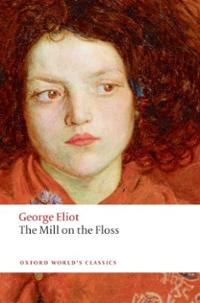
millflosspaperbackAnd speaking of physical attraction, what about Stephen and Maggie in The Mill on the Floss?

 Who has not felt the beauty of a woman’s arm? The unspeakable suggestions of tenderness that lie in the dimpled elbow, and all the varied gently lessening curves, down to the delicate wrist, with its tiniest, almost imperceptible nicks in the firm softness. A woman’s arm touched the soul of a great sculptor two thousand years ago, so that he wrought an image of it for the Parthenon which moves us still as it clasps lovingly the timeworn marble of a headless trunk. Maggie’s was such an arm as that, and it had the warm tints of life.

A mad impulse seized on Stephen; he darted toward the arm, and showered kisses on it, clasping the wrist.

Are there “mad impulses” in Heyer? There may be, but so far I have yet to detect any such erotic undercurrents. More, I have sometimes felt mildly uncomfortable at the romantic resolutions precisely because the relationship considered as a sexual relationship seems inappropriate given the heroine’s youth — not just in years, but in outlook and behavior. This was most conspicuous to me in The Corinthian, but I had a similar reaction, if milder, to Sylvester, and even to Cotillion — where things are not improved in that respect by Kitty’s openly thinking of Freddy as a big brother pretty much until they finally kiss. Even Esther squirreling away Alan Woodcourt’s flowers in Bleak House seems more like an adult awareness of sexuality than anything I’ve read in Heyer.

Not that there’s anything wrong with that! I’m not complaining: just observing, and then wondering what, if anything, the novels’ aura of innocent fun might have contributed to their enduring popularity. Unlike the 19th-century novels I’ve quoted, her novels surely would not “bring a blush to the cheek of a young person.”

I’ll be interested to hear from those of you who’ve been reading Heyer longer than I have. Do you think I’m right that her novels give us love but little or no desire? Might it be Heyer, not Austen, who fits G. H. Lewes’s remark that “there are worlds of passionate existence into which she has never set foot”? Or am I missing something (see fn below!), or have I just not read the sexy Heyers yet?


*This is arguably not true. It hadn’t occurred to me until I read the notes to the Broadview edition of Adam Bede, for instance, that in this scene after he kisses Hetty in the woods, we may be meant to understand that Arthur has an erection:

Arthur too was very uneasy, but his feelings were lit up for him by a more distinct consciousness. He hurried to the Hermitage, which stood in the heart of the wood, unlocked the door with a hasty wrench, slammed it after him, pitched Zeluco into the most distant corner, and thrusting his right hand into his pocket, first walked four or five times up and down the scanty length of the little room, and then seated himself on the ottoman in an uncomfortable stiff way, as we often do when we wish not to abandon ourselves to feeling.

I may just be being equally obtuse about the sexiness in Heyer — there may be signifiers I’m just not attuned to.

Why Do I Like George Eliot So Very Much? My Top Ten Reasons!

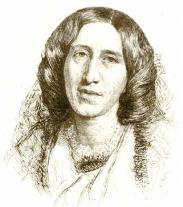
82780-eliotdrawingA wise man once told me that the introduction to my long-imagined book should represent “the passionate peroration you’d deliver verbally about ‘Why George Eliot?’ if it came up in intelligent company.” After drawing up my inventory of everything I’ve written about George Eliot over the years, I started to feel a bit overwhelmed by the particulars, and so I thought I’d get back to basics of that kind, without a lot of second guessing about what counts as a unifying idea or what I’d be able to make an appealing ‘pitch’ for.

For some reason, in my head the peroration is always in response to the question “Why do you like George Eliot so very much,” which is of course a modified version of Charlotte Brontë’s challenge to George Henry Lewes to explain his admiration of Jane Austen. Though I enjoy and admire Austen’s novels, this question still seems perfectly reasonable to me, though given the extraordinary heights of contemporary Austen-mania, it’s one that sounds more contrarian now than it would have in 1848! What I appreciate most about Brontë’s question is the interesting conversation it begins: the clarity of Brontë’s catalog of complaints about what she saw as Austen’s limitations, and Lewes’s intelligent acknowledgment of those limits even as he concluded that Austen was “the greatest artist that has ever written, using the term to signify the most perfect mastery over the means to her end.” Given her own very different experiences and sensibilities, it’s no wonder that Brontë could not see greatness in a writer who had, she thought, no poetry. And Lewes’s answer, and his more extensive commentary on Austen in his essay on “Lady Novelists” (included in this collection, if you’re interested!) both point us towards yet another standard of excellence — one realized in the novels of the woman who became Mrs. Lewes.

GE DuradeConversations about authors we love should not be approached in a competitive spirit. After all, there’s no need to rank writers, or to pit them against each other; happily, literary greatness is not a zero-sum game. As Henry James says in “The Art of Fiction” (included in that same collection),

There is no impression of life, no manner of seeing it and feeling it, to which the plan of the novelist may not offer a place; you have only to remember that talents so dissimilar as those of Alexandre Dumas and Jane Austen, Charles Dickens and Gustave Flaubert, have worked in this field with equal glory.

“Nothing, of course,” James also observes, “will ever take the place of the good old fashion of ‘liking’ a work of art or not liking it; the more improved criticism will not abolish that primitive, that ultimate, test.” But establishing the grounds of our admiration — clarifying them both for ourselves and for others — may contribute to appreciation, which is a more complex, or at least more self-conscious, response than that “primitive” liking. The process is inevitably self-revelatory, because our preferences convey, implicitly at least, something about the kinds of people we are — or aspire to be. But that, again, is no grounds for either discomfort or disagreement: if (James again) “the house of fiction has in short not one window, but a million,” so too the community of readers can, happily, contain multitudes — those who, say, admire Flaubert above all others, and those who … don’t.

OUPMm

This has become rather a long preamble! My reluctance to launch willy-nilly into simplistic lists is one of the many, many reasons I’ll never be a contributor to BuzzFeed or BookRiot. But enough is enough: time to get on with it.

Here’s what I’ve come up with: the top ten reasons I like George Eliot so very much. These are not the only qualities I value in a novelist — not a definitive list of what I think makes a great novelist. Nor are they qualities I think she has exclusively – coincidentally (!), other novelists I greatly admire share many of them. They are simply an outline of the qualities of this novelist that make this reader so appreciative. They are, in point form, my “passionate peroration”!

  1. Her intellectual richness and breadth. Her novels are full of complex ideas about many aspects of human experience and society. I always learn from them, and they always give me a lot to think about. This is not to say that I always agree with what I think she’s saying, but it always seems worth trying to follow her thinking.
  2. Her emphasis on sympathy for our imperfect fellow humans. I find her vision of how we can make life better for each other both beautiful and morally valuable.
  3. Her insistence on the moral significance of art — her understanding of fiction as both an artistic and a philosophical form.
  4. The importance she places on historical and social contexts for people’s behavior. We can’t understand people unless we understand their circumstances, and understanding is a crucial part of sympathy. Understanding and sympathizing are not the same as excusing and forgiving, though.
  5. Her use of literary form to support as well as convey her ideas. Her books are profoundly artful, not just ‘philosophy teaching by examples.’ Reading them is an entire experience.
  6. The sophistication and beauty of her language. All this talk of philosophy and ideas should not be taken as indicating that she isn’t worth reading just for the quality of her prose. It’s also striking to me how varied its cadences are, both within and across books. She has her leaden moments, to be sure, but she is capable of both poetry and inspiration as well.
  7. Her humor, which ranges from sly wit to deft irony to outright comedy.
  8. Her tenderness and pathos. Though at times there is a certain ruthlessness to her, or at least to her narrators, at others she can, with the utmost delicacy (and sometimes with sheer Dickensian sentimentality) rend your heart.
  9. Her people. Amos Barton, Mrs. Poyser, Maggie Tulliver, Tito Melema, Dorothea Brooke, Gwendolen Harleth, Grandcourt: they are distinctly, memorably, themselves, complete with their own histories and families and, my favorite thing, voices. Sure, Adam Bede is a bit too upright, and Felix Holt is wooden in his virtue, but the number of her amazingly good characters (and characterizations) completely overwhelms the weaker ones. Her dialogue is every bit as sharp as Austen’s (and less confined to drawing rooms), and her psychological insights are often astonishing.
  10. Her emphasis on people as members of families and communities. Both her stories and her morals urge us to see ourselves as connected to others — to turn away from egotism and selfishness and to ask, as Dorothea eventually does, “Was she alone in that scene? Was it her event only?” Though I sometimes think this principle has its dark side, I still find it truthful and inspiring.

Lists are artificial things, and 10 is an arbitrary number, but there’s actually a useful discipline in trying to isolate the things that really matter to me in this way. Some of these items certainly overlap, many of them are intricately connected, and there’s plenty more to be said about all of them, but looking over the list, I’m satisfied: imperfections of presentation aside, yes, these are the reasons I like her so very much. What do you think — did I miss any of your favorite things about her?

Most Seriously Displeased! Robert Hellenga’s The Sixteen Pleasures

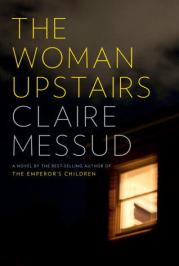
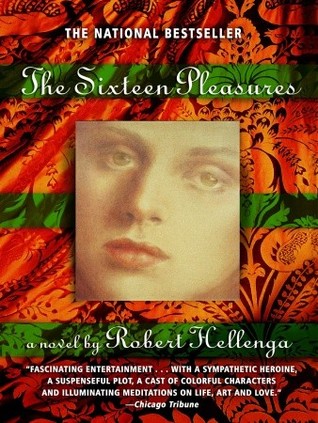
pleasuresI was very restrained in Hager Books on my recent trip to Vancouver: I picked out a modest two books there. One, Gift from the Sea, I chose because I’d heard so much about it. The other, Robert Hellenga’s The Sixteen Pleasures, I chose for the opposite reason: I’d never heard of it at all! That may seem like a risky strategy, and right now, when I reflect on my decision to put Rose Tremain’s Restoration back on the shelf and take The Sixteen Pleasures instead, I feel like an idiot. But I have felt betrayed by buzz often enough not to think that my having heard a lot about a book is any kind of guarantee that I’ll like it (cough cough The Woman Upstairs cough cough), and who doesn’t enjoy discovering a hidden gem? Also, there were four of Hellenga’s novels on the shelf, suggesting that somebody likes them, and not only does The Sixteen Pleasures sound interesting, but one of Hellenga’s other novels is a sequel to it — again, suggesting some kind of success.

Obviously, I’m leading up to some bad news here. I didn’t hate The Sixteen Pleasures, but it gave me very little pleasure. It was mildly interesting, especially the neepery about book binding and art restoration. But the main character’s story is a hodge-podge, her big romance is almost unbelievably dull, and the “sensual life-altering journey” the cover blurb announces that she’s on? I think I missed it.

There were some bits early on in a convent that seemed promising, and the premise — a quest begun by the discovery of a volume of erotic drawings from the Renaissance — also seems full of potential. But here’s what doesn’t happen: “Inspired to sample each of the ineffable sixteen pleasures, Margot embarks on the intrigue of a lifetime with a forbidden lover and the contraband volume.” Doesn’t that description make it sound like a kind of sexy, cerebral Eat, Pray, Love? But though that is the jacket copy, that does not describe the book at all. Margot does in fact experience some of the “pleasures” shown in the drawings. But there’s nothing like a quest to try them out, and they’re handled pretty perfunctorily. Then, nearly 300 pages into the book, Margot does decide that the book is “my handful of magic beans, it was my magic ring, my talisman” and that somehow it will help her figure out who she is and where she’s going. At that point there are 60 pages left and during them she does finally take charge and, I guess, decide who she is. She even has some kind of epiphany – a “mystical experience” – but it’s in the auction room at Sotheby’s and consists of her taking a big risk in order to drive up the price on the book. This is not the “sensual, life-altering journey of loss and rebirth” I was looking for.

If I sound uninspired about it, I really am, and I’m annoyed at having fallen for an unusual premise and some misleading if obviously effective marketing (who was it in the New Yorker that said “everything about the narrator and heroine of this novel is appealing,” anyway? and how dare Kirkus Reviews declare it “absolutely compelling”!). To think I could have been reading more Barbara Pym or Georgette Heyer instead.

Recent Reading Round-Up

likenessIt’s not that I haven’t read anything except Gift From the Sea recently, though you might think so from the dearth of book blogging going on over here. If you peer at the summer reading tally on the right, you’ll see a few more titles on either side  — but I haven’t written them up! Distraction, laziness, and humidity are to blame, along with Season I of Homeland, which we have just begun watching (so there go the evening hours in which I usually do my book blogging). If any of these books had mattered to me a lot, of course, I would have done better. But that’s not to say they aren’t good books and enjoyable reads, so I thought I could at least review them briefly here.

I finally followed up on recommendations (especially from Dorian) that I give Tana French a try, and I’m definitely glad I did. Without those recommendations, I might have stayed away, because the subgenre she writes in is less police procedural than psychological suspense / thriller, which is not usually my thing. Also, In the Woods begins with terrifying things happening to small children, and even in police procedurals that’s my least favorite trope. It’s hard enough being a parent without stocking my overactive imagination with vanishingly unlikely “what if” scenarios! But In the Woods is smart and well-told as is its sequel, The Likeness (which I wrote up briefly at GoodReads). I enjoyed these two well enough that I picked up Faithful Place and Broken Harbor the last time I was at the public library. I don’t think I’ll be adding French to the syllabus for either of my mystery courses, though: so far, her books are good examples of their kind but don’t strike me as otherwise ground-breaking or thematically resonant in any way that would support class discussion.

blacksheepNow that I’ve made friends with Georgette Heyer, I am gradually working my way through her catalogue. I’m trying not to binge, partly because I don’t think I could take all that much of her at once, but also because one binge per summer seems like quite enough. I read Arabella very happily on the flight home from Vancouver, and picked out Black Sheep as my next one based on the number of people who recommended it here and on Twitter. And it was thoroughly enjoyable! Liz was right about the “great hero.” It was also a bit sexier than the other Heyers I’ve read so far. My only quibble was the way the hero masterminded the “elopement” at the end — I prefer my heroines to make their own decisions more deliberately. But that’s a pretty small quibble, considering that Abby is perfectly happy about it all. Next up will probably be Cotillion, or maybe Sprig Muslin.

I just reread The Big Sleep because I finally swapped out The Maltese Falcon for Mystery & Detective Fiction, and with that behind me I turned my attention to seeking out possible new books for the Women & Detective Fiction seminar in the winter term (I have until October, I think, before I have to order the books). As previously mentioned, one of my goals is diversifying the reading list, which has so far always been pretty much WASP-Anglo-American-straight. One new title already ordered is Katherine V. Forrest’s Murder at the Nightwood Bar: there’s a strong tradition now of lesbian detective fiction and when I read this one a couple of years ago I thought it did a good job making sexual politics a significant part of the story and theme. I’ve been trying now to find a book that will put race on the table — but it’s turning out to be tricky to figure out what’s in print, and then, of what’s available, what will work well in class. As far as I can tell, for instance, none of Barbara Neely’s novels are currently available to order, and the same seems to be true of the early Eleanor Taylor Bland titles. I just took a look at a couple of Paula L. Woods’s Charlotte Justice novels and didn’t much like them — but that may not end up being a good enough argument against them. I As always, suggestions welcome: it’s very time-consuming sifting through bibliographies (on and off line) or lists of recommendations and trying to collate them with ordering information to rule out the unavailable ones. Walter Mosley has been a great addition to the general survey course, bringing into focus a lot of assumptions about justice and law in our other readings — and Devil in a Blue Dress is also sharp and stylistically interesting. I admit that in my frustration about finding something to do the same for the Women & Detective Fiction class, I started wondering about The No. 1 Ladies’ Detective Agency as an option … is that just a terrible idea? There are some pretty interesting critical articles about its (controversial) presentation of Africa in general and African women more particularly. But it does seem a cop-out (pun sort of intended).

I’m about half way through my reread of Adam Bede, which I will be writing about for Open Letters for the September issue. I had some idea of doing that essay for the August issue, but between work things, revisions on the Dick Francis essay, and a delightfully large number of submissions to me for the next OLM, there won’t be anything from me in it. I’m loving Adam Bede, though, and wondering why I haven’t ever assigned it for an undergraduate class. Maybe next year!

pleasuresI’m also about half way through Robert Hellenga’s The Sixteen Pleasures. I’m not in love with it at this point but it has many interesting aspects, not least among them the high degree of neepery about art and book restoration. More about this one when I’ve finished it.

And last but not least, I sent out an S.O.S. to Steve about my shocking lack of John D. MacDonald titles, and thanks to him I’m finally getting acquainted with Travis McGee. We’ll see how I get along with him. In the first book I’m trying, Darker than Amber, I’m a bit put off by his making love to an emotionally distraught friend despite her making sounds of “half sleepy objection.” It’s OK, though, really, because “when the sudden awareness that it was working for her brought her wide awake she was too far along to choke herself off with all those anxieties [her ex] had built” — and the therapeutic sex sends her happily off to sleep. Hmm. But not every friend makes a great first impression, right?

Update: A Twitter call for suggestions for the Women & Detective seminar has yielded some good ideas: Colson Whitehead’s The Intuitionist, Attica Locke’s The Cutting Season, Ivy Pochoda’s Visitation Street, Margaret Millar’s Tom Aragon series, Sara Paretsky’s Hardball … Ideally I’d like a book by a woman author about a woman detective — that helps us keep certain continuities in our class discussions and assignments. But I’d certainly consider other configurations if the book was the right one, so I’m going to follow up on all of these. I’m starting with The Cutting Season, though, as it sounds really interesting and  is by a black woman author and has a female protagonist.

Writing About George Eliot: An Inventory

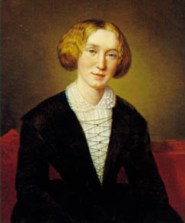
Durade GEA week or so ago I noted that among my remaining summer projects was thinking through “what kind of larger project could emerge from the essays I’ve been writing on George Eliot”: “Do they, could they, add up to something larger, perhaps some kind of cross-over book project?” is the question — and if so, of what kind?

I’ve begun doing the brainstorming and free writing that I hope will lead me to a more or less coherent, if inevitably preliminary, answer to these questions — enough of an answer that I can continue the conversations I’ve begun about preparing an actual book proposal. I figure a book project of this kind will have to have a theme: a unifying idea that motivates it, an organizing argument of some kind. I have some sense of what I don’t want to do (nothing narrowly didactic, nothing cloyingly trendy, nothing particularly personal). But what else is there? Across the top of many different documents now, in various fonts and highlighted in various colors, is some version of the question “What do I want to say about George Eliot?” Coming up with my answer to that question — one I’m excited about and committed to — will (I hope) do a lot to counteract my anxiety that hardly anybody will want to hear what I have to say. If I build it, they may not come, but whatever happens, I won’t be sorry to have put in the work if I am saying something I believe in. If I actually hope to pitch a book project, it would be foolish to be completely indifferent to potential audiences, but at the same time, surely nothing interferes more with good writing than obsessing on (imagined) reception.

As I try to sort out responses to the Big Question of what I want to say now and how I might ‘package’ it, I thought a good first step would be to take an inventory of what I’ve already said. I can’t figure out what it all adds up to, after all, unless I have a clear picture of what “it all” is. What are the recurring issues? What examples or approaches would I want to build on? What have I not done that I’d like to get to? And, equally important, what am I now dissatisfied with, and what have I lost interest in?

Here, then, in the spirit of a research notebook, is a list of nearly everything I’ve written about George Eliot since I read Middlemarch for the first time on the train across Europe in 1986, with some light annotations on the earlier stuff to get me thinking about it again. I’ve included book reviews and selected blog posts, on the theory that they, as much as (sometimes even more than) more self-contained pieces they might indicate trends, priorities, and/or problems. For almost any reader, this is sure to be TMI. Sorry! But I think the exercise will be very helpful for me, not least in setting up a one-stop-shopping site for future reference.

1. ‘Definition More Or Less Arbitrary’: Ideas of History and Fiction in Carlyle’s The French Revolution: A History and George Eliot’s Middlemarch: A Study of Provincial Life. (B. A. Honours thesis, English & History, U.B.C., 1990)

As far as I can recall, I wrote no undergraduate papers on George Eliot, though we did study Middlemarch in my 19th-Century Novels class with Ira Nadel. So this was my first attempt at writing about her fiction. My preoccupation then, and for some years after, was with questions of genre — more specifically, on blurring borders between history and fiction. There’s only incidental discussion of the novel’s morality, and more than in large-scale form, I was interested in small-scale issues, such as metaphorical language.

2. “‘Familiar rather than Heroic’: Historicity and Domesticity in Adam Bede and Jude the Obscure.” (Seminar paper, Cornell, 1990)

“Or, the Beginning of a Long Project,” is the additional subtitle Mary Jacobus scrawled on the front page of this anxiously ambitious paper for her class. Its focus was on ways these novels redefine what or who counts as historically significant.

3. Review of Rosemarie Bodenheimer’s The Real Life of Mary Ann Evans. Victorian Review (1995)

4. “Romola and the Victorian Discourse of History.” Conference paper (Victorian Studies Association of Western Canada, 1994)

An early version of a chapter from my Ph.D. thesis.

5. Reinventing History: George Eliot and the Victorian Discourses of Gender and Historiography. (Ph.D. thesis, Cornell, 1995)

Only two chapters of my dissertation were specifically about George Eliot: one on Romola and one on Middlemarch. For more about it, see below.

book6. Gender, Genre, and Victorian Historical Writing. (Garland, 1998)

This monograph is a revised and expanded version of my dissertation, with the same two chapters on Romola and Middlemarch.From the Introduction: “this study argues that during the nineteenth century a new category of facts entered the running for membership in history’s exclusive club: facts about women and the circumstances of their lives. . . . the ebb and flow of Victorian debates over gender, genre, and historical writing . . . gradually and unevenly altered the horizons of possibility for historical writing about women and, ultimately, made women’s history as we know it today conceptually possible.” What does this have to do with Romola and Middlemarch? Basically, I ‘read’ both novels as ‘interventions’ in these debates, interpreting them in the context of work by 19th-century women historians as well as other 19th-century historiography. I always felt there was something a bit strained about the set-up of these readings: there’s nothing really wrong with them, but at the same time there was never any intrinsic necessity to discuss George Eliot as part of this particular project, except that I wanted to write more about Middlemarch and couldn’t really avoid Romola in a work about historical writing. The other parts of the book added more to our collective wisdom — but the closest I’ve ever come to going back to these issues is (unexpectedly, perhaps) in the essay I wrote for Open Letters on Richard III. Whatever else I do about George Eliot, I don’t expect I’ll be picking up this thread again.

7. Review of Hao Li, Memory and History in George Eliot: Transfiguring the Past and Neil McCaw, George Eliot and Victorian Historiography,Victorian Studies 45:2 (Winter 2003).

8. “The Moral Life of Middlemarch: Martha Nussbaum and George Eliot’s Philosophical Fiction.” Philosophy and Literature 30:1 (2006).

Though this essay is not in anything like the style I’d choose for my book project, its focus on the philosophical significance of form in Eliot’s fiction is something I keep returning to as I try to answer my Big Question.

9. “George Eliot: Moralist for the 21st Century.” Conference paper, ACCUTE (Congress of the Humanities and Social Sciences, 2006)

10. “‘The Soul of Art’: Understanding Victorian Ethical Criticism.” English Studies in Canada 31:2-3 (2005 [published 2007]).

Adam Bede provides a central example for my commentary on Victorian theories of ethics in fiction, specifically that the single most important concept in these theories was that treatment matters more than subject. The morality of Adam Bede is not determined by its story of seduction and infanticide but by its treatment of that story, particularly its efforts to show us Hetty sympathetically.

11. “George Eliot: the Friendly Face of Unbelief.” Novel Readings (June 2007)

A praecursor to my LARB essay on Silas Marner, as is the conference paper on GE as “Moralist for the 21st Century.”

12. “George Eliot and Prayer.” Novel Readings (October 2007)

13. “Middlemarch in the 21st Century.” Novel Readings (April 2008)

14. “‘The Secular Laureate of Revelation’: Zadie Smith on George Eliot.” Novel Readings (May 2008)

I think about this essay a lot, both because it’s a very good essay and because I envy Smith the ability to just start talking about Middlemarch without having to justify (that is, pitch) a story. When you’re Zadie Smith, you can do this. When I write for Open Letters Monthly, I can do this too, which has been one of the great joys of writing for that venue!

15. Summer Reading Group on Adam Bede. The Valve (June-August 2008)

16. “But Why Always George Eliot? Ahdaf Soueif Rewrites Middlemarch.” Conference paper, ACCUTE ( Congress of the Humanities and Social Sciences, 2009)

Some central ideas of this paper became the core of my Open Letters essay on Soueif. There’s some continuity between this work and the Philosophy and Literature essay in my attempt to relate the form of novels to their ideas.

17. “Second Glance: The Radicalism of Felix Holt.Open Letters (January 2010)

18. Review of Brenda Maddox, George Eliot in Love (Palgrave Macmillan, 2010), Open Letters (November 2010)

19. “Philosophical Novels.” Novel Readings (January 2011)

Recaps some central arguments from my essay in Philosophy & Literature.

20. “George Eliot and Me.” Novel Readings (February 2011)

mapoflove

21. “Ahdaf Soueif: A Novelist in Tahrir Square.” Open Letters (April 2011)

A central issue in the essay is the comparison of Soueif’s fiction to George Eliot’s, particularly Middlemarch, which is evoked through the epigraph to In the Eye of the Sun.

22. “Your Book Club Wants to Read Middlemarch? Great Idea!” Novel Readings (May 2012)

23. “Madame Bovary II: The Doctors’ Wives.” Novel Readings (May 2012)

24. “Macaroni and Cheese: The Failure of George Eliot’s Romola.” Open Letters (June 2012)

25. Review of Nancy Henry, The Life of George Eliot. Open Letters (September 2012)

26. “‘Look No More Backward’: George Eliot and Atheism.” Los Angeles Review of Books (October 2012); rerun in Salon.Com (October 2012)

27. “The Stage Swarmed with Maggies: Helen Edmundson’s The Mill on the Floss.” Novel Readings (November 2012)

28. “Queen of the Gypsies: On Spoilers and the Ending of The Mill on the Floss.” Open Letters (February 2013)

29. “Her Hands Full of Sugar-Plums: The Miserable Morality of Middlemarch.” Open Letters (March 2013)

30. “‘Not Fitted to Stand Alone’: Deborah Weisgall, The World Before Her.” Novel Readings (May 2013)

31. Middlemarch for Book Clubs. Site launched June 2013.

32. Assorted teaching posts, e.g. Mrs. Tulliver’s Teraphim (November 2011); Middlemarch Everywhere (March 2012); Close Reading Middlemarch (February 2012); and Look Who’s Talking in Middlemarch: Quiz Show Edition! (November 2009).

Whew! Actually, an unexpected benefit of compiling this has been to remind me just how much I have written about George Eliot over the years. I have a lot to think about, but also a lot to work with.


A Few Shells: Anne Morrow Lindbergh, Gift from the Sea

Gift from the Sea is a book that enacts its own prescription … which is my attempt to sum up how this book about the difficulty, but also the inestimable value, of quiet meditation prompts its readers (or this reader, anyway) to just such inward contemplation.

lindbergh

It’s a little book, and an easy one to read: short chapters, each focused on a simple idea and using a single shell as an organizing metaphor, written in simple, satisfying sentences. It’s not, ultimately, a slight or insubstantial book, though, because its wide open spaces leave plenty of room for our own thoughts about our lives, relationships, and priorities. I think it would be impossible, in fact, to read it and not test its propositions against one’s own experiences — and not be tempted by its invitation to consider finding a new rhythm for one’s life, one that’s slower and more spacious. No doubt because of where I am in my own life, I was most interested in the chapter on the ‘oyster bed.’ An oyster shell, as she points out, “is untidy, spread out in all directions, heavily encrusted with accumulations”:

Yes, I believe the oyster shell is a good one to express the middle years of marriage. It suggests the struggle of life itself. The oyster has fought to have that place on the rock to which it has fitted itself perfectly and to which it clings tenaciously. So most couples in the growing years of marriage struggle to achieve a place in the world. It is a physical and material battle first of all, for a home, for children, for a place in their particular society. . . . Here one forms ties, roots, a firm base. . . . Here one makes oneself part of the community of men, of human society.

She doesn’t idealize this phase of marriage, recognizing that like the oyster shell’s, its excrescences are “not primarily beautiful but functional.” Yet “it is comfortable in its familiarity, its homeliness.” The early years of marriage – the “double-sunrise” phase – are, by contrast, “pure, simple, and unencumbered,” with a “self-enclosed perfection [that] wears the freshness of a summer morning.” To me, that does seem idealized (we can’t be the only couple whose marriage had its share of complexities early on) but in those years it’s true that there’s a mutuality and an exclusivity to the relationship that can’t be sustained in the changing circumstances of family life.

More than her specific characterizations of each phase of life, I was struck by her theme of accepting changes from one phase to the next, especially within marriage. “Duration,” as she says, “is not a test of true or false,” and perhaps the sagest advice she has is to not to yearn for things to stay the same, or to return to some earlier way of being. The crusty oyster shell is no more the symbol of eternal verities than the graceful double-sunrise: “the tide of life recedes. The house, with its bulging sleeping porches and sheds, begins little by little to empty.” Most of us, she suggests,

insist on permanency, on duration, on continuity; when the only continuity possible, in life as in love, is in growth, in fluidity, in freedom . . . The only real security is not in owning or possessing, not in demanding or expecting, not in hoping, even. Security in a relationship lies neither in looking back to what it was in nostalgia, nor forward to what it might be in dread or anticipation, but living in the present relationship and accepting it as it is now. For relationships too must be like islands. One must accept them for what they are here and now, within their limits . . .

Easier said then done, no doubt, though not so easily said so succinctly or gracefully. The very gentleness of Gift from the Sea, in fact, makes rather light of what could be quite stringent psychological, not to mention marital, renovations! And I personally am always a bit wary of advice to accept things they way they are now, even as I recognize that taking “to strive, to seek, to find, and not to yield” as one’s motto is likely not the route to contentment for us any more than for Ulysses. Still, finding the good in the present and not measuring it against either the real past or an imagined future does seem wise.

But it’s that same aphoristic wisdom that kept me from being absorbed in Gift from the Sea the way I was absorbed in, say, Plant Dreaming Deep — which touches on many of the same life challenges. In making her book so accessible, so broadly applicable, Lindbergh has made herself too generic, her voice and story too impersonal. Sometimes, Gift from the Sea seemed just a shade too close, for my taste, to a New Age self-help book, its eponymous shells dwindling into poetic talismans. The list of “island precepts” for instance — how little separates these from platitudes:

Simplicity of living, as much as possible, to retain a true awareness of life. Balance of physical, intellectual, and spiritual life. Work without pressure. Space for significance and beauty. Time for solitude and sharing. Closeness to nature to strengthen understanding and faith in the intermittency of life: life of the spirit, creative life and the life of human relationships. A few shells.

I don’t mean to deprecate the loveliness of the book, though, or to dismiss its truths. I’m actually surprised to find myself resisting it even as far as I do! After I finished it I thought of at least four people close to me I wanted to recommend it to, and I know I’ll reread it myself.

For a fuller account of the book and its place in its author’s own life, which was certainly “heavily encrusted with accumulations,” read Victoria Best’s wonderful essay about Lindbergh and Gift from the Sea at Open Letters Monthly.

Taking Stock: Summer Reading, Summer Plans

It was just about three months ago that I reported having filed the grades for my winter term courses. In addition to the clean-up work that remains at that point, and the unfolding list of administrative business that encroaches especially in May, I mentioned a number of projects that I was going to be working on. It’s gratifying to reflect that I have been working quite steadily through this list:

  1. Review Kate Atkinson’s Life After Life – done!
  2. Review Deirdre David’s Olivia Manning: A Woman at War – done!
  3. Reread all 40+ Dick Francis novels and write essay for Los Angeles Review of Books – full draft done and submitted, now undergoing final revisions!
  4. Complete “beta” version of Middlemarch for Book Clubs – done!

What remains from these original summer plans is what I described then as the “most ambitious but … most amorphous” one: figuring out what kind of larger project could emerge from the essays I’ve been writing on George Eliot. “Do they, could they, add up to something larger, perhaps some kind of cross-over book project?” I wondered. Now that those more immediate deadlines have been met, I’m going to be thinking a lot — and perhaps writing a lot! — about this question. Last week I actually had a very interesting conversation with a publishing professional in which we exchanged some preliminary thoughts about what such a book might look like, and now I’m pondering what she said about what kind of book she can imagine there might be a market for (and thus that might interest a publisher) and whether that’s the kind of book I had in mind. I’m not going to go into details at this point, not to be coy but because, as I said, these were early thoughts and it was our first conversation. But you can expect me to do at least some of my thinking about all this “out loud” here at Novel Readings, not least because here is, after all, where I already have some readers, and ones I respect very much. Trying to imagine, much less write for, some audience conceived of in the abstract seems both scarier and less useful than discussing possibilities with you folks!

While I’m pondering and free-writing and conceptualizing, I will also set some more concrete goals, the first one being an essay on Adam Bede to add to my collection. That will be my next Open Letters contribution, followed by a review of Elizabeth Gilbert’s new novel, The Signature of All Things, for October.

As the fall term approaches, I also have some preparatory work to do, even before I start focusing really intently on preparing syllabi and Blackboard sites. I’m teaching a couple of novels in the fall that I haven’t read in a long time or taught before. I try to introduce some novelty into every rotation of a course, to change up the conversation at least a bit. So in Mystery and Detective fiction this time, I’ve bumped The Maltese Falcon and replaced it with The Big Sleep.  I just reread The Big Sleep and though I don’t really care for Chandler’s rather florid style in it (did the guy ever meet a simile he didn’t like?) I think it will be fun to teach — perhaps a little more fun than The Maltese Falcon, if no less confusing. And in the 19th-C Novel (Austen to Dickens) I’ve chosen David Copperfield this year, which of course I’ve read more than once but which I have never lectured on. I plan to reread that in August. And one other teaching-related summer project is finalizing the reading list for my upcoming winter-term seminar on ‘Women & Detective Fiction.’ I’ve taught it several times before and asked here more than once for recommendations to shake up the reading list. I’m still working on that, particularly with the aim of making the book selection more diverse. I’ve had a lot of good leads but surprisingly often they dead-end because the titles I’m interested in are not in print (Barbara Neely’s Blanche on the Lam, for instance, does not seem to be orderable in Canada). Right now I’m trying out Paula L. Woods’s Inner City Blues.

emeraldstarNow that school is out, Maddie and I have also committed to another round of the summer reading club at our public library. Usually I keep a tally of our books in the side bar here: I’ll set that up soon, to motivate us both! We’ve felt sometimes that the emphasis on quantity becomes a disincentive for Maddie to embark on longer books, so this summer we’ve chosen a modest number for her (10) so that there’s no pressure to fall back on rereading Junie B. Jones or something! She’s read two so far, both by favorite authors: Jacqueline Wilson’s Emerald Star and Meg Tilly’s A Taste of Heaven. Now she’s working on The Diary of Anne Frank, and I think The Fault in Our Stars, which I gave her for her birthday, is next. She has the usual summer challenge of being in camp some of the time (including both of the last two weeks): as she’s pointed out, one thing they never seem to make time for at these things is reading! But she’ll have some quieter weeks soon.

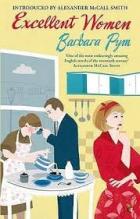
I haven’t done too badly myself since the end of June, when she registered: I think I get to count The Prime of Miss Jean Brodie, and then there’s Felicity & Barbara PymThe Sweet Dove DiedJane and PrudenceThe Woman Upstairs, Mrs. Palfrey at the ClaremontArabellaIn the Woods, and The Big Sleep. One of my next reads will be chosen by the vote at the Slaves of Golconda blog (it seems likely to be Pym’s Excellent Women, though Elizabeth Taylor’s Palladian is running a close second). Next from my own immediate pile, though, will be Gift from the Sea, which I picked up at Hager Books in Vancouver under the influence of Victoria Best’s wonderful essay on Anne Morrow Lindbergh in Open Letters a little while back.

Vancouver: By the Books!

I’m back from my trip to Vancouver. Including travel days, I was on vacation for 11 days, making this the longest trip I’ve taken in ages. It was wonderful to spend so much time with my family and to meet up with so many of my friends — among them the wonderful Liz of Something More, who is every bit as smart and witty and energetic in person as she is online. A special treat was getting to know my newest nephew, who made it to almost three  before coming face to face with his Aunt Rohan. There was lots of good food and drink and general conviviality; the weather was spectacular, and so, as always, was the scenery. A small sample will make you wonder why anyone bothers vacationing (or, for that matter, living) anywhere else:

IMG_1810
Sunset at Kits Beach


IMG_1868
Along the Seawall


IMG_1817
The Beach at Spanish Banks


IMG_1798
Along Kits Point


Plaza at Granville Island
My happy place:
the deck at Granville Island Market


But enough about all that! This is a book blog, so of course what you want to know about is whether I had any bookish adventures along with all that socializing and sightseeing. Well, of course I did. Here’s the stack of books I either read, bought, or borrowed on my trip:

Vancouver Books I

The Woman Upstairs and Jane and Prudence were the books I brought along to read on the plane. Barbara Pym was excellent company from Halifax to Toronto: I appreciated her much more after reading Harrison Solow’s Felicity & Barbara Pym, so I was happy to find when I arrived in Vancouver that my mother had helpfully picked Excellent Women and A Glass of Blessings from her collection and put them out for me. As you can see from the picture, I have “borrowed” them to read at my leisure! (I promise, I will give them back to her … next time she visits me here. See how cleverly I’m adding in incentives for her to come all this way?) The Magnificent Spinster is hers as well: one of the fun things about visiting my parents is exploring their incredibly well-stocked and various shelves, from the rows of vintage Penguin Classics in the living room to the mysteries shelved two deep in the study to my mother’s Bloomsbury nook:

Bloomsbury Corner

From Toronto to Vancouver I made good progress on The Woman Upstairs, which I had suggested for my F2F book club for August; I finished it up a day or two after I got there. I was pretty disappointed in it: it seemed heavy-handed and straining towards significance. Nora’s anger was particularly uninteresting to me, largely because it was so insistent. Though the overt allusion is to Jane Eyre, I found myself thinking more about Villette as I read it. Lucy Snowe is a much more layered and complex character — or perhaps I should say characterization: Brontë gives us mysteries, deception, and self-deception where I felt that Messud gives us mostly clichés and plot twists. And speaking of twists, the one at the end is painfully predictable, isn’t it? I ended up feeling that I had once again made the mistake of following the hype. But perhaps as I think it over more, and after we’ve discussed it in our group, I’ll realize how this preliminary reaction is inadequate.

Also in the pile is Arabella, which I bought myself as a treat at the big Chapters downtown. I ended up reading most of it on the flights home: it was sweet and cheerful and not too demanding, which is just about right for a stressful flying day. (Overall I was pleased with how well I handled the flying on this trip — there was a minimum of armrest clutching, for one thing, and my “self-talk” strategies were more effective than usual, even during turbulence. Still, even at its best it’s a crowded, uncomfortable, and disconcerting experience, isn’t it?)

My other purchases were from Hager Books, one of the very few independent stores left in Vancouver. From their carefully curated selection, I chose Gift from the Sea, which I was inspired to buy because of Litlove’s wonderful essay on Anne Morrow Lindbergh in the April issue of Open Letters Monthly. I had planned to read it on the plane home but didn’t feel well enough to concentrate on it, so now I have it to look forward too. And I chose Robert Hellenga’s The Sixteen Pleasures for the contrasting reason that I’d never heard of it (or him) before and was intrigued that Hager had several of his titles in stock, as if he’s a readerly favorite. Besides that, of course, I also thought it looked interesting! Has anyone read any of Hellenga’s novels? If you hated them, probably best not to tell me that I may have wasted my Hager’s opportunity on the wrong thing!

In the Woods is there because I ordered a book for a gift to be sent to Vancouver ahead of my arrival, and I wanted something to add it so I’d get free shipping! I chose it because Tana French is a name that keeps coming up when I ask for mystery recommendations. I’d been avoiding it because it begins with bad things happening to young children, but I need to refresh my mystery reading. (Pretty soon, in fact, I have to order books for another round of the ‘Women & Detective Fiction’ seminar, so you’ll be seeing more questions about that here later.)

palfreyThe book I liked best of the ones I read on my trip is actually not shown here because I finished it and decided I really shouldn’t kidnap yet another of my mother’s books. It was Elizabeth Taylor’s Mrs. Palfrey at the Claremont, and it is by far my favorite of the novels by Taylor that I’ve read. It’s got the same clear-eyed, almost ruthless perspective on people’s foibles and self-deceptions but is also both funny and poignant. It was on the shelf next to Mollie Panter-Downes’s One Fine Day, which I did make off with. Really, if I lived in Vancouver, I would hardly need bookstores or libraries at all!

And now, back to my regular life. . I’m pleased with how much I got done on different projects before I left, including the Middlemarch for Book Clubs site, the reviews for Open Letters, and the draft of the Dick Francis essay (now in the editor’s hands); it’s time to think about how I want to use the rest of the time I have before teaching once again becomes the #1 priority. First, though, I have to get over my jet lag …