 This was the last week of fall term classes for us, which means concluding remarks and exam review and conferences about term papers — and then, beginning Monday, an influx of papers and exams to be marked, final grades to be calculated, and everything to be filed away and tidied up. I have an exam from 7-10 p.m. on the very last day of the exam period, which means I won’t be all done for quite a while yet.
It’s always bittersweet when the term ends. I put a lot of time and thought into preparing for each class hour, and a lot of energy goes into each actual meeting, which means I spend most of the term in a strange blend of panic and euphoria. When we’re done, I genuinely miss the buzz of meeting my students face to face and seeing what we can do with our material: even when a session doesn’t go particularly well, the challenge of it is definitely stimulating, and this year my mystery class especially was just a whole lot of fun. When a lot of smart students are really engaged and keeping me on my toes, it’s amazing how fast 50 minutes can go by! But I don’t miss the relentless pace of it all. What a relief it is to be home on a Friday night and be relaxing without the haunting awareness that by Sunday at the latest I have to be turning towards work again: the work I have to do for the next couple of weeks really can be managed in something more like regular office-job hours — unless I want to do a little puttering here and there evenings and weekends. I’m hoping that means I’ll be able to get some momentum on some reading and writing projects I’ve been deferring over the term. Ideally, I’ll get enough done that I can keep going on them when the winter term begins. This may mean not writing for the January issue Open Letters: much as I like to contribute, my recent pieces have not been entirely in line with my other writing priorities (especially the book on George Eliot I’m trying to conceptualize).
But as a wise woman once said, every limit is a beginning as well as an ending, and even as this term is winding down, things are heating up for the winter term, which starts exactly one month from today. Inquiries have been coming in about the waiting list for my intro section and about the readings for my 4th-year seminar; I’ve started roughing out my syllabi and I’ve got blank course spaces set up on Blackboard, with the goal of having materials ready for students well before the end of the month (in the spirit of ‘hit the ground running’).
And as if that isn’t enough, we’ve already had to organize our slate of classes for next year, and it won’t be long before we are asked to send in preliminary course descriptions and book lists, for promotional purposes. It usually makes me kind of cranky to be asked about next academic year when this one is still very much a work in progress, but on the other hand, the future is such a hopeful place to be! Drafting and redrafting possible book lists for the next incarnation of the Dickens-t0-Hardy course is pretty fun, and frustrations with this year’s assignments sequences are easier to handle when I think about them as learning experiences for next year’s New and Improved versions. (You can look forward to more posts about how I’m going to do everything different and better, especially the reading journals for the 19thC novels class.)
Looking even further ahead, I’ve been thinking more about the question of whether or what our students read outside of class and the perfectly reasonable point that we assign so dang much reading (ahem) that at least during the term it’s pretty challenging for them to be engaged in the book world more widely, even if that’s something they want. Of course, one reason I started this blog was because I was trying to figure out how to build some kind of relationship between my own academic reading and writing and that wider culture — and it has occurred to me that an obvious way to translate this impulse into pedagogy is to dream up a course that does something of the same thing, perhaps by combining assigned readings with readings students choose ‘from the field’ (books and reviews), and then requiring both standard essay assignments and different kinds of reports and reviews. It could be called “Books in the World” or something. Would this be a good first-year class? Or are the actual demands of any good book writing such that it would be better as a more advanced class, so that students will already have practised their writing skills and acquired some useful literary terminology and history? In a recent interview, Daniel Mendelsohn proposes that students would be better off “reading Pauline Kael reviews in the New Yorker than Derrida” because when they begin “they literally have no idea, at first, what the point of being critical is.” I would be motivated by a somewhat similar impulse, I think: that they should have a sense of what (and where) the critical conversations are, because (as I do already say frequently in class) literature is not in fact written for the classroom but for the world.
This is still a very new idea for me, but maybe it’s actually a common approach and I’ve just been stuck (as we all so often are) in my own ‘how things are usually done’ rut. I’d be happy to know about any classes that are run along these lines, and also to know what anyone’s first impression is about this possibility.
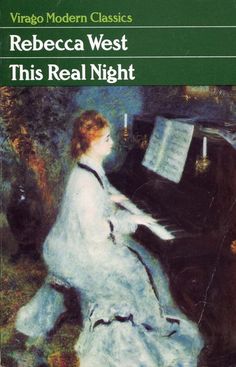 Every time we left our pianos the age gave us such assurances that there was to be a new and final establishment of pleasure upon earth. True that when we were at our pianos we knew that this was not true. There is something in the great music that we played which told us that promise will not be kept . . .





 Pejorative generalizations about the ‘traditional novel,’ like debates over the ‘death of the novel,’ often seem to me unduly preoccupied with form, as if broadening the range of human possibilities expressed through fiction isn’t also a literary innovation or revision. The Fountain Overflows is a good reminder that just because a novel is linear, has characters, and tells a story attached (however lightly) to life at all four corners, it isn’t necessarily derivative, tired, or predictable. All the way through it I was marveling how unfamiliar it was — even though to all appearances it is perfectly conventional. It is its own strange world, populated with utter conviction, and, best of all, told in West’s endlessly unexpected (and always, in unexpected ways, thrilling)