Weekend Watching: Foyle’s War

foyleIt has been very quiet around here, I know. It’s a combination of re-adjusting to the start of term and having been hard at work on my review of Rebecca Mead’s My Life in Middlemarch for the next issue of Open Letters Monthly, which has taken up the couple of hours each day when I have both time and energy for writing. I’ve been getting up pretty early (for me, anyway) a few days a week to get in some regular exercise, and that has meant I fade sooner at night, too.

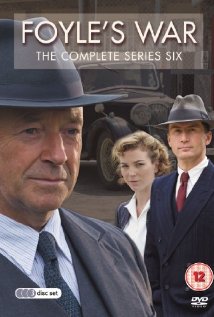
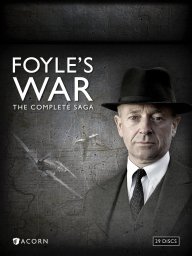
In that faded state, when I don’t feel I can be particularly articulate anymore, or attentive enough to do serious reading, I’ve been working my way through Foyle’s War (I’ve also been watching it during my workouts, which helps me look forward to them rather than dreading them!). Other shows I’ve watched recently include ER (I started it from the beginning a couple of years ago and bit by bit have made my way up to Season 11)  Homeland (we’ve seen through Season 2 – I’m not sure how much more I want to watch), and Hostages (which we started watching because Toni Collette — who really deserves better — we only stuck with it out of curiosity about how they were going to get everyone out of the implausible tangle they’d created).  Compared to these (or to MI-5, which I have now seen twice all the way through!) Foyle’s War is very slow-paced, and it took me a while to adjust to that. I have occasionally felt that they could have tightened up the plots and told the story in one hour rather than over their more leisurely 90 minutes, but most of the time I appreciate the care with which different strands are introduced and then woven together into the case. I also appreciate that the plot moves slowly enough that I can easily work on my crochet at the same time (when not on the treadmill, obviously!).

Image result for foyles war"

I’ve just started Season 6 (and Seasons 7 and 8 are not yet on Netflix), so I don’t know how everything develops now that the official war is over. One of my favourite things about the series to this point is its emphasis on the moral challenges of the home front, especially the need to fight for the values that the military campaign is ostensibly being waged in service of. (It’s hard not to wonder if the creators were deliberately hinting at similar challenges that have arisen our post-9/11 world.) It’s pretty clear that the show’s title is meant to mean something besides “how DCS Foyle spent his time during WWII” –his is a war against morally slipshod, self-serving, or opportunistic people who use the war as cover for their offenses or as a means to personal profit. “There’s a war on” never works as an excuse with Foyle, and that staunch clarity of judgment is clearly what makes him the hero of the series, surrounded as he is by greedy businessmen, dishonest politicians, power-hungry bureaucrats, and the many vexing shades of both incompetence and ruthlessness he runs into among those fighting the actual war. I think Michael Kitchen plays the part perfectly: he doesn’t parade his virtues, and indeed, in his own way he is also quite ruthless, but he conveys an attractive and endlessly reassuring combination of uncompromising principle, intelligence and humanity.

I think there’s quite a bit going on with the historical context: it would be interesting to work out more about just how the series is shaping its version of wartime England, something I don’t feel I have the right range of knowledge to comment on. It doesn’t strike me as a simplistically idealized portrayal of stoicism and valor, but the heroic music every time the RAF planes take off bespeaks a kind of ‘glory days’ nostalgia, and there’s plenty of talk about “the few.” Not that there shouldn’t be respect and admiration for their bravery or heroic stories about wartime sacrifice, but I’m curious about whether those who know more about this can see patterns or myths in the historiography of wartime Britain being used in significant ways in the series, whether subversive or conservative or predictable. The show seems particularly sensitive to the human costs of the victories that were won: I’m thinking of the S2 episode “Enemy Fire,” for instance, in which Foyle’s own son breaks under the strain of “combat fatigue.” I know there are shows about the making of the series and perhaps some of these issues are discussed — I’ve put off watching them until I’ve caught up on the series itself.

The one thing I don’t like about the show — and  in the spirit of this woman I’ve tried not to let it bother me too much — is Sam. Again, I haven’t seen the whole series, but by about half way through Season 4 I was at the point where if Foyle and Milner traded patronizing ‘isn’t she cute?’ glances one more time I was going to burst a blood vessel, not because she isn’t cute but because I wish so much that she had been written as a character with more gravitas. When I first met her on the show, I anticipated an arc of character development for her that would bring her (if probably unofficially) into the investigative team in a more serious way. Instead, though she has been involved in solving cases, her contributions have almost always been by accident or luck, and her personality has stayed perky and slightly silly, if good-hearted. It seemed both painfully predictable and wholly unlikely that a romance would break out between her and Andrew, who is a much more emotionally complex character. (His erratic comings and goings in the series keep the writers from having to deal with this in any serious way, at least to this point.) That it turns out Foyle never really needed a driver anyway was the final insult! There are more interesting (substantial, competent, deliberate) women in the show as secondary characters, but Sam is the only main female character, and I wish she’d been set up as one who carried her own weight, rather than as a figure of indulgent fun and chivalric or paternalistic concern.

foyleseason6I started S6 Episode 1 this morning so I’ve just entered the post-war world, though as the characters and stories emphasize, VE Day has not magically restored the world to idyllic happiness. The war Foyle was fighting continues unabated, returning soldiers struggle with how both they and their old lives have been transformed, and the realignment of the wider political world is creating new enmities. Also, Milner’s become a bit of a jerk. Wondering how this will go will be a good motivation to face another early morning session on the treadmill tomorrow!
I’d love to hear from other Foyle fans (or haters, for that matter) — but try not to tell me what happens in the seasons I haven’t seen yet! Am I underestimating Sam, do you think? What do you think the series is doing with the history of Britain in the war?

Weekend Miscellany: Good Reading and Common Pursuits

gaudyAlex in Leeds has started on a new relationship . . . with Peter Wimsey. We all know where this leads – to Gaudy Night, which means punting fantasies and a new appreciation for academic robes of the same size. It has actually been years since I’ve read any of the early Wimsey novels, because I like him so much better once Harriet gets involved. Steve wrote up The Unpleasantness at the Bellona Club recently too, but despite these encouraging posts I’m still not very tempted. Maybe I will reread The Nine Tailors soon, if only to make up for having recently given Edmund Wilson the benefit of the doubt on the larger issues.

Tom has started on the Palliser series at Wuthering Expectations and as usual he’s mixing it up, including pressing on the popular idea that Trollope is a “comfort” read:

It has taken me a while, but I am beginning to think of Trollope as a great satirist, mild compared to Jonathan Swift or Evelyn Waugh, but at times as fierce as his mentor William Thackeray.  Or Jane Austen, another writer with fangs and claws who is most frequently read for comfort, available by means of ignoring substantial portions of her writing.

 At The Little Professor, Miriam Burstein reviews Derby Day, a neo-Victorian novel I’d never heard of which is not “Dickensian” (for once) but “Thackerayan,” quite literally in that it reworks Vanity Fair:

this is a novel in which there is room both for Amelia and for Becky Sharp, in which the way of duty yields its successes but so, too, does the way of pure self-interest.

 At Tales from the Reading Room, litlove offers a persuasively positive report on Curtis Sittenfeld’s Sisterland:

In this brilliant portrait of uneasy motherhood, Sittenfeld never lets us forget that anxiety and vigilance go hand in hand, and that each magnifies and reinforces the other, a cultural curse on those who are responsible for the young.

 Sarah Emsley can’t wait any longer to get the anniversary celebrations for Mansfield Park underway:

I think the key to understanding Mansfield Park is that it’s a tragedy, rather than a comedy. I mentioned a couple of weeks ago that not many people choose it as a favourite from among Austen’s novels. (Natasha Duquette, who’s writing a guest post on part of Chapter 27 – in which Fanny “had all the heroism of principle” – is an exception. Is there anyone else out there whose favourite Austen novel is Mansfield Park? I would love to hear from you!)

JamaicaInnAt Slaves of Golconda you can read the collected posts on Daphne du Maurier’s Jamaica Inn, which inspired the most unanimity I’ve seen among readers for a while. I think the reason is the magical balance du Maurier finds between what we now often divide artificially into “literary” and “genre” fiction. The novel is a corker of a read (or at least I thought so – at least one GoodReads reviewer declared it “so so so so so boring,” and another called it a “rancid mess,” so really, what do I know?! YMMV!) but it has more than plot to offer. A lot of our interest went to the heroine, Mary Yellan, who is, as Teresa says in her post, “the kind of heroine many women want to see in novels.”

At A Commonplace Blog, D. G. Myers responds to comments on his earlier post “Academe Quits Me.” His key point there, which I think he’s right has been misinterpreted by some of his respondents, is that “where there is no common body of knowledge, no common disciplinary conceptions, there is nothing that is indispensable.” This is not a lament for the demise of a stable canon, as he explains more fully in the follow-up post, but an observation about one of the practical consequences of the way in which our ‘discipline’ has expanded and thus, inevitably, fragmented or dispersed. We do so many (interesting, worthwhile, intellectually challenging) things that it’s become nearly impossible to point to which ones are fundamental. In some ways this is very exciting (like our world, we are large and contain multitudes!), but in other ways, I think he’s right that (especially when resources are scarce) it has made us strangely vulnerable. As he says, “there is no shimmering and comprehensive surface of knowledge in which any gaps might appear” and as a result any particular area of expertise may be perceived as dispensable.

These comments resonated with me because in my own department, we have suffered (and seem poised to suffer further) losses to our full-time complement, and one of the grounds on which we can supposedly petition for replacements (if only there were some prospect of making any appointments) is ‘program integrity’ – but even internally we can’t agree on what that means any more. It may be that we are dealing with the messiness of a transition from one way of organizing our “common pursuit,” around ideas of coverage (literary historical, generic, regional), to another that thinks more about reading strategies, skills, and contexts — from what to read to how to read. We do a lot of both kinds of things in my department now, but the program (the requirements for the major, for instance) has for a long time been organized around the coverage model (ideas of what to cover have, of course, changed and expanded a great deal in recent decades). I’m not sure this is the right way to describe what’s going on, but I found his posts thought-provoking precisely because they articulated something of the confusion I’ve been feeling over our curriculum and have prompted me to keep thinking about how exactly we might — in principle or strategically — redefine that common pursuit.

This Week In My Classes: Settling In, Stocking Up, Asking Questions

broadviewlnfIs it possible that we’ve already finished two full weeks of classes? Well, that time just flew by!

I think one reason it seems as if the term is still only just beginning is that today is also the last day of the add-drop period, which is the bane of my teaching life ever single term. Why in my day you picked your classes before the semester began, you showed up for your classes when the semester began — and then you just kept on showing up until they were over! And it was up hill both ways! Harumph. But seriously, having two weeks out of a single term in which new students may show up at any point and supposedly current students may or may not . . . well, it’s a pain, because along with this “shopping period” often comes an attitude that nothing you might have missed during it should really count, which of course is impossible. I can’t let 1/6 of the term go by and do nothing that matters! And if I did, it would be an insult to the students who have shown up since Day 1. So, I start when the term starts, and if students want to shop around they have to be aware that there are consequences. This is a perennial complaint, and I am in fact starting to explore if there’s anything at all we can do to influence administrators so that the pedagogical insanity of the current system can be ameliorated. At the very least I dream of being able to remove registered students from the class if they fail to show up on the first day (or heck, in the first week) so that I can settle things one way or another for students on the waiting list. Attendance would go way up for the first week of classes, I bet, which would be good for everyone, and students would realize that their behaviour around registration isn’t just an annoyance for professors but can be a genuine headache for other students.

Anyway, enough grumbling. I have done my best to stay calm and just get on with teaching, and in my section of Intro that means we’ve actually almost finished our first unit, on essays. I’m using a new book this year, the literary non-fiction volume of Broadview’s new Introduction to Literature set, and I’m very happy with the selections in it. We started with Twain’s “Advice to Youth,” which I thought would be fun and thus help my campaign to be less intimidating. We’ve also read Swift, Orwell, Woolf, and, for today, Miriam Toew’s “A Father’s Faith,” which I like so much that I’ve added A Complicated Kindness to my TBR list.

I can’t know if the cause is my somewhat revised approach or the different group or both, but class participation in Intro is already more lively than it was most of the time last year, so I’m optimistic that as the term goes on and we get into longer and more challenging material, the atmosphere will stay engaged and collaborative. I use a lot of time early in the term for what I (unoriginally) call “stocking their critical toolboxes,” that is, building up a vocabulary of precise terms for discussing literature. This inevitably cuts into the time we have for talking in detail about the readings, but as we move along I can scale back on technical stuff, so today was mostly about Toews and Monday we should also be able to focus almost entirely on our grimly gripping excerpt from Philip Gourevitch’s We Wish to Inform You That Tomorrow We Will Be Killed With Our Families.

In Women and Detective Fiction we’ve also started with shorter works, and in a sense here too we began by stocking up on analytical tools, though of a different kind. What questions are illuminating and productive to ask of our readings? What contexts do we need – literary, historical, critical – to talk well about them? Because not everyone in the class has done any previous classes on detective fiction (though a majority have in fact taken the lower-level survey class) I lead off with a lecture on the history of the genre and reviewed some key critical concepts and conventions, and we read a handful of ‘classic’ texts (Poe, Conan Doyle, and Hammett). Then we looked at a couple of early women’s crime stories – Mary Wilkins Freeman’s “The Long Arm” and Susan Glaspell’s “A Jury of Her Peers.”

marpleFor the last two classes we’ve been reading a selection of Agatha Christie’s Miss Marple stories. This is a group of smart, keen upper-level students, and so it is interesting to me both intellectually and pedagogically that it was difficult to generate much discussion of Christie. It’s possible that two classes on these readings is one too many because honestly, the stories aren’t that interesting. Can I say that? There are certainly many interesting aspects of them, considered in our context – Miss Marple herself is an intriguing character; the stories frequently make little points about how women’s expertise can be overlooked, or how women themselves, if they aren’t young and sexy, are overlooked; there are some class issues; there’s the problem of treating violent death as a puzzle rather than a human tragedy. But there’s not much to be said about language, style, and form, or about other themes. The students remarked how hard it quickly became to tell the stories apart or remember what detail came from which one. The characters are quite 2-dimensional, and the mysteries unfold with a predictable rhythm, right down to Miss Marple’s charmingly self-deprecating and digressive version of the “reveal” scene.  My sense that we were already running out of steam in the first class led me to prepare an exercise for today that focused on precisely this problem (how well do these stories reward close reading?). I asked them to consider what other short fiction they’d studied and with what emphases, and then to consider Edmund Wilson’s infamous essay “Who Cares Who Killed Roger Ackroyd?” I explicitly and sincerely told them that I was not setting Wilson up as a straw man. I think he has a good point – several good points, in fact! But I also think a case can be made against his case for capital-L Literature. I thought this might generate some intense debate about literary merit as a concept, but it didn’t, quite. One reason was that it turned out many students had studied very little short fiction! I was surprised. I fully expected that they would all have read at least some of Dubliners, and/or some array of the usual suspects from Katherine Mansfield to Carver or Hemingway to Alice Munro. But no! So asking them what they “typically” focused on when discussing short stories went pretty much nowhere.

The other inhibition I thought I sensed, though I realize I may be misreading or over-reading (both hazards of my training!), was about the whole concept of literary merit: nobody who spoke up, at any rate, championed Wilson’s point of view or took the position that, clever as they are, Christie’s stories are, really and truly, just not as rich, interesting, or worth our time as “The Dead” (or, since most of them hadn’t read “The Dead,” some other work of Literature). I wonder if we have educated them into extreme caution about such value judgments (I do my part in that with my lecture on Christie vs. the Difficult Modernists in the mystery survey class – and, indeed, through the whole way in which I frame the class as a test of the oft-assumed hierarchy between literary and genre fiction). Or maybe they really do see no qualitative difference (which I admit would shock me), or if they are worried about criticizing the assigned course readings, or if they just in some way aren’t ready for that conversation, or if they really enjoyed Christie’s stories and don’t want to feel bad about it, or what. Well, as I remarked at the end of class, Nancy Drew (who we turn to next) is not going to make this question go away but in many respects will exacerbate it.

“Defying Man and Storm”: Daphne du Maurier, Jamaica Inn

jamaicaI’m no connoisseur of romantic suspense, but it’s hard to imagine it being done better than Jamaica Inn. Really, this book has it all: a grim, windswept, yet beautiful landscape; a grim, brooding, yet charismatic villain; a grim, twisted, yet convincing plot; Jamaica Inn itself, “a house that reeked of evil . . . a solitary landmark defying man and storm”; and, in Mary Yellan, a heroine bold and determined enough to survive them all. There’s also a deceptively colorless vicar, a dubiously trustworthy horse thief, and a whole supporting cast of rogues; there’s treachery, murder, and, of course, true love. If it sounds like the stuff of clichés, it is — and yet, amazingly, it really isn’t, because du Maurier is just that good.

The most terrifying part of the novel, for instance, is not a scene of rapidly unfolding action or immanent violence (though there are such scenes, and they are plenty suspenseful). Instead, it’s a story told over the kitchen table. “Did you never hear of wreckers before?” is the speaker’s chilling question, and the pictures his words paint haunt us as they will Mary, his unwilling audience:

‘When I’m drunk I see them in my dreams; I see their white-green faces staring at me, with their eyes eaten by fish; and some of them are torn, with the flesh hanging on their bones in ribbons, and some of them have seaweed in their hair. . . . Have you ever seen flies caught in a jar of treacle? I’ve seen men like that; stuck in the rigging like a swarm of flies. . . . Just like flies they are, spread out on the yards, little black dots of men. I’ve seen the ship break up beneath them, and the masts and the yards snap like thread, and there they’ll be flung into the sea, to swim for their lives. But when they reach the shore they’re dead men, Mary.’

He wiped his mouth on the back of his hand, and stared at her. ‘Dead men tell no tales, Mary,’ he said.

Mary can only hope that when she reaches the safety of her own bed, she can hide from what he has told her in the stark cold of the kitchen:

Here she could see the pale faces of drowned men, their arms above their heads; she could hear the scream of terror, and the cries; she could hear the mournful clamour of the bell-buoy as it swayed backwards and forwards in the sea.

It’s not just crime Mary comes face to face with that night, but evil. It’s embodied in Joss Merlyn, the landlord of Jamaica Inn, who is Mary’s uncle through his marriage to her Aunt Patience. Patience was a bright, happy young woman when she married Joss, but she is now a “poor, broken thing,” cowering and apologetic and fearful, but loyal, too, and loving, in her pathetic way. Joss is a wonderfully terrible figure of a man: huge, almost monstrous, but capable of an unexpected delicate grace that Mary finds more sinister than his overt cruelty. In her introduction, Sarah Dunant calls him “a Mr. Rochester without a Jane to redeem him,” which fits well enough, except that for all his faults, Mr. Rochester was never as bad as this! Patience must have married him “for his bright eyes,” Mary mockingly speculates, and it turns out that the power of sexual attraction to lure people off course is one of the novel’s central interests. Mary herself feels its pull (and understands Patience’s bad choice better) when she meets his younger brother Jem, who (to Mary’s dismay) almost charms away her suspicions:

He was too like his brother. His eyes, and his mouth, and his smile. That was the danger of it. She could see her uncle in his walk, in the turn of his head; and she knew why Aunt Patience had made a fool of herself ten years ago. It would be easy enough to fall in love with Jem Merlyn.

But Mary’s not looking for love. A farm girl, “bred to the soil,” she has no romantic ideas. At the same time, she understands the demands of the flesh:

Jem Merlyn was a man, and she was a woman, and whether it was his hands or his skin or his smile she did not know, but something inside her responded to him, and the very thought of him was an irritant and a stimulant at the same time. It nagged at her and would not let her be. She knew she would have to see him again.

I was fascinated by Mary’s frankness about her own desires: “Falling in love was a pretty name for it, that was all.” Her aunt’s abjection should be cautionary tale enough, you’d think, but even as Jem jokes “Beware of the dark stranger,” they kiss in the shadows.

Mary worries about giving “too much away,” about losing her independence and finding that her weakness for him makes “the four walls of Jamaica Inn more hateful than they were already.” The mixture of heady excitement and mistrust she feels for Jem adds, also, to the mysteries of the novel: how far is he involved in the murky activities of his brother? how much does he know about what happens at Jamaica Inn under cover of darkness? why does he ask Mary so many questions? Will her love for him save or destroy her? Du Maurier keeps her, and us, guessing as Mary struggles to figure out the answers and find her own way through the moral and physical dangers of her situation.

There are both predictable and implausible elements of the plot, but I forgave them both because they come with the territory and because du Maurier writes so well. When I wrote about Frenchman’s Creek I described her prose as “purple” (“royal purple, richest velvet,” to be precise). I expected more of the same here, despite having recently read The Scapegoat — which surprised me by being restrained and shadowy, not purple at all. I’m now adding du Maurier to my list of writers who impress by their versatility: she can clearly “do” the novel in different voices to suit her purposes. Jamaica Inn could easily have been full of cheap thrills, but for all its melodrama it never struck me as silly (whereas I called Frenchman’s Creek “ridiculous” — mind you, that was in 2010, so I may have been reading / judging differently). It’s not really a novel of character, and Joss especially borders on caricature, but (partly through Jem) he is humanized enough to be monstrous, but not a monster. I’m not so sure about the other chief villain, but at any rate he’s not a stock figure but has his own unique style of nastiness. For me, though, it was the scenery that made the novel truly memorable. The descriptions are vividly sensual without being florid, as here:

The drive was silent  then, for the most part, with no other sound but the steady clopping of the horse’s hoofs upon the road, and now and again an own hooted from the still trees. The rustle of hedgerow and the creeping country whispers were left behind when the trap came out upon the Bodmin road, and once again the dark moor stretched out on either side, lapping the road like a desert. The ribbon of the highway shone white under the moon. It wound and was lost in the fold of the further hill, bare and untrodden. There were no travellers but themselves upon the road tonight. On Christmas Eve, when Mary had ridden here, the wind had lashed venomously at the carriage wheels, and the rain hammered the windows: now the air was still cold and strangely still, and the moor itself lay placid and silver in the moonlight. The dark tors held their sleeping face to the sky, the granite features softened and smoothed by the light that bathed them. Theirs was a peaceful mood, and the old gods slept undisturbed.

Jamaica Inn is this month’s reading for the Slaves of Golconda book group. Come on over to read more posts and join in the discussion! It is also (fortuitously!) the book I’ll be discussing with my local book group in another week or so. I’m eager to find out what everyone else thought. If they had as much fun as I did, we might do My Cousin Rachel next, which was our second choice this time around. If not, I’ll certainly read it myself, if only to find out what else du Maurier can do.

“For the sake of the right”: Wilkie Collins, No Name

nonameThe first book I thought of when I read Ana’s announcement of Long-Awaited Reads Month was Wilkie Collins’s No Name, which has been sitting on my shelf at work for several years. I acquired it in a fit of professional diligence: I include examples of Victorian sensation fiction regularly in my 19th-century fiction classes and I have several times offered a seminar specifically on sensation fiction — yet (shh!) the list of sensation novels I’ve read (as opposed to read about) is actually very short: Lady Audley’s SecretAurora FloydThe Woman in WhiteEast LynneThe Moonstone … and that’s about it. I admit my enthusiasm for reading more sensation novels has been constrained by my finding that a couple of these most canonical titles in the genre are really quite bad, though they are also very interesting. Few of us have the courage of Miriam Burstein when it comes to powering through truly terrible fiction in the interests of scholarship.

I do thoroughly enjoy both The Woman and White and The Moonstone, though, and so while I do also intend someday to get around to Braddon’s The Doctor’s Wife (which, as her rewriting of Madame Bovary, was an attempt to break out of what we would today call “genre fiction” and into “literary fiction”), a higher priority has always been to get caught up on Collins’s remaining top two, Armadale and No Name. Finally, I am half way to that goal!

And with what result, I’m sure you are wondering! Well, the short version is that I’m not about to substitute No Name for either of the other Collins novels I routinely assign. I just don’t think it’s as good. As good at what? Fair question, especially since in some ways it may in fact be better than at least The Woman in White, which thematically it most resembles. Let me try to explain — but keep in mind that so far I’ve read No Name only once, so my ideas about it are still a work in progress. I think it is better than The Woman in White in that its protagonist Magdalen Vanstone is a more layered and conflicted character than either of the female protagonists in The Woman in White. Laura Fairlie is a hopeless case: that the hero falls in love with her is as inevitable as it is annoying. Her half-sister Marian Halcomb is a fabulous character (she is twice the man the hero is, and/or twice the woman Laura is) — but her path is a straight one that calls for no self-doubt and leads her into no regrettable actions. Magdalen, in contrast, is flawed in all kinds of ways, does all kinds of bad things knowing they are bad, and thus embodies moral struggle rather than moral heroism.

But that’s actually where my complaints begin: if Magdalen was going to be bad, I would rather she be very, very bad — even horrid. The hair-tearing and hand-wringing got wearisome, perhaps because it didn’t lead to any moral growth. There was also absolutely no necessity for her to do as she did: her own obstinate desire for revenge and for what she perceived as justice were the whole driving force, and so she has nobody to blame but herself for somehow, despite clearly knowing what would be right, not being able to just do it. It’s true that compared to her, the “good” sister Norah seemed dull (though she’s not as insufferable as Laura). In the end, too, though Norah’s more passive virtues seem to be hailed and rewarded, the good results could not have come about if it weren’t for Magdalen’s stratagems. She’s brought down before she can be restored to her rightful place, though: much more than The Woman in White, in which Marian’s variance from feminine norms is applauded, here such deviance is regretted in the moment and exorcised in the conclusion.

Compared to The Woman in White, I found No Name laborious in its set-up and long-winded in its execution. The elaborate plots and counterplots and the “she knows that he knows that she knows” machinations were entertaining but I felt could be skimmed through without risking the loss of either comprehension or pleasure (unlike, say, Count Fosco’s exuberant riffs – and speaking of Count Fosco, Wragge is an ingenious schemer, as is Mrs. Lecount, but between them they aren’t a fraction as evil or delicious as the count!). Both novels do a lot to explore how identity is defined, lost, and won, with special attention to problems of law and inheritance and the ways women in particular are vulnerable (“It is your law, not hers,” as Magdalen exclaims). No Name does effectively dramatize a gendered struggle for power in which the recovery of a stolen inheritance is actually about the restoration of a place in the world: it’s fought “not for the sake of the fortune,” Magdalen right declares, but “for the sake of the right.” In this way the novel is certainly provocative, and I can imagine that it would spark good class discussion. But The Woman in White is just a lot more fun: it is, in both the literary-historical and the everyday use of the word, more sensational. Sometimes a less famous novel seems to have greater, if less accessible, literary merits than the one that overshadows it (arguably, for instance, this is true of Villette and Jane Eyre), but in this case (usual caveat: so far!) I think the front-runner deserves the win.

One thing I did really appreciate in No Name, which is something that the more rapid plotting and shifting voices of The Woman in White does not show off as much, is Collins’s own prose. When he’s writing as himself and not ventriloquizing one of his colorful characters, he can be every bit as descriptive and evocative as his buddy Dickens. Here’s a good bit of grim social realism, for example:

The network of dismal streets stretching over the surrounding neighborhood contains a population for the most part of the poorer order. In the thoroughfares where shops abound, the sordid struggle with poverty shows itself unreservedly on the filthy pavement; gathers its forces through the week; and, strengthening to a tumult on Saturday night, sees the Sunday morning dawn in murky gaslight. Miserable women, whose faces never smile, haunt the butchers’ shops in such London localities as these, with relics of the men’s wages saved from the public-house clutched fast in their hands, with eyes that devour the meat they dare not buy, with eager fingers that touch it covetously, as the fingers of their richer sisters touch a precious stone. In this district, as in other districts remote from the wealthy quarters of the metropolis, the hideous London vagabond—with the filth of the street outmatched in his speech, with the mud of the street outdirtied in his clothes—lounges, lowering and brutal, at the street corner and the gin-shop door; the public disgrace of his country, the unheeded warning of social troubles that are yet to come. Here, the loud self-assertion of Modern Progress—which has reformed so much in manners, and altered so little in men—meets the flat contradiction that scatters its pretensions to the winds. Here, while the national prosperity feasts, like another Belshazzar, on the spectacle of its own magnificence, is the Writing on the Wall, which warns the monarch, Money, that his glory is weighed in the balance, and his power found wanting.

 And here’s a little bit of nice seaside scene-setting:

It was a dull, airless evening. Eastward, was the gray majesty of the sea, hushed in breathless calm; the horizon line invisibly melting into the monotonous, misty sky; the idle ships shadowy and still on the idle water. Southward, the high ridge of the sea dike, and the grim, massive circle of a martello tower reared high on its mound of grass, closed the view darkly on all that lay beyond. Westward, a lurid streak of sunset glowed red in the dreary heaven, blackened the fringing trees on the far borders of the great inland marsh, and turned its little gleaming water-pools to pools of blood. Nearer to the eye, the sullen flow of the tidal river Alde ebbed noiselessly from the muddy banks; and nearer still, lonely and unprosperous by the bleak water-side, lay the lost little port of Slaughden, with its forlorn wharfs and warehouses of decaying wood, and its few scattered coasting-vessels deserted on the oozy river-shore. No fall of waves was heard on the beach, no trickling of waters bubbled audibly from the idle stream. Now and then the cry of a sea-bird rose from the region of the marsh; and at intervals, from farmhouses far in the inland waste, the faint winding of horns to call the cattle home traveled mournfully through the evening calm.

I’ve put Armadale on my e-reader (somehow, I don’t actually own the Oxford edition of this one – how did that happen?), so stay tuned … though I probably won’t get to it for a while.

This Winter Term: Some Small Good Things

1005017_10152126924015803_2115018870_nI may have been in Nova Scotia almost 20 years, but it’s no secret that I have not adapted well to east coast winters. I complain about them a lot! It’s not even the cold and damp I hate so much as the stress of driving in snow and ice. If I could hibernate, or just opt out of work, school, appointments, and grocery shopping whenever the roads are bad, I might shut up about winter!

However, this particular winter (though the weather so far has been dreadful) I’m feeling grateful for a number of small things that are making my term easier. If I write them up here that will make it harder for me to forget them the next time there’s freezing drizzle on top of a foot of snow and everything starts looking bleak.

1. This is my first full term with a reserved parking spot. What a relief! Not only can I drop my kids at school without either forcing them to be uncomfortably early or fretting that I’ll arrive on campus too late and be stranded, but I can even leave and come back during the day if I want. Or make a morning appointment off campus and still come in to my office after. This flexibility would have been even nicer when the kids were smaller, but even now it sure feels liberating not to be worrying about this logistical issue every day.

2. This is my first term in many years without a 9:30 class. Happily, I have long managed to avoid 8:30 classes (by nature I’m a night owl, not a morning person), but even a 9:30 class means having very little prep time in the morning, which means knowing you have to arrive on campus basically ready to go, which means often doing prep in the evenings. I’m sure I’ll still do some reading or marking or making up handouts after dinner, but not as often, and at the very least I’ll know I have plenty of time to do things like finalize notes or print and copy materials on campus before I have to head into my first class.

3. And speaking of classrooms, for the first time that I can remember my classes are all meeting in the same building that my office is in. This is a huge break during the winter term! Not only will I save all kinds of time putting on winter gear and trekking across campus and back (and, of course, also miss the unpleasantness of going outside repeatedly in cold, wet, blustery weather), but I don’t have to teach in my winter boots in my usually overheated classrooms. Plus if I forget something, it’s literally right upstairs, so I don’t have to check and re-check the contents of my folders and bags quite so obsessively. Win! This is possible because …

4. I have a very modest number of students this term: only 2 classes, with 30 in one and 22 in the other. Classrooms in this building officially hold 36 students; my classes capped at 40 used to get scheduled in here regularly anyway but apparently the fire marshal has gotten serious and as a result (because they are pretty much always full) I’ve been exiled for them – and classes capped at 60 or 90 (like Mystery and Detective Fiction) of course always have to be elsewhere. So: more intimate groups, less marking, more discussion instead of lecturing, and all in one building. Hooray!

5. Finally, and not specifically teaching or work related, I just discovered Sun Butter. It really does taste just like peanut butter! I used to love peanut butter, but since my daughter was diagnosed with a severe peanut (and tree nut) allergy over a decade ago, we haven’t had any nut products in the house. Sun Butter is completely nut free! (It’s made of sesame seeds.) I always doubted the nut-free alternatives but a friend assured me she even preferred this to the real thing so I finally risked it … and it’s good! I’ve never resented going without nuts at home (it’s actually easier, too, than worrying about cross-contamination — we can all just relax and eat), but it’s nice to have an old favorite so nearly restored to me. And if I get more protein in the morning and that gives me extra energy, that may indeed be a plus for my teaching term.

You see? I said these were small good things*, but they add up! I’ve been surprised, actually, what a difference the first three especially are making to my frame of mind during what is usually such a stressful time. Do you have any small (or big!) changes this term that make your days a little better? Or any that you wish you could make?

*A small bad thing is that the fiction anthology I’m using doesn’t include “A Small, Good Thing,” which is one of my favorite short stories. But you can’t have everything!

“What was justice?”: Josephine Tey, Miss Pym Disposes

misspymBefore the madness of the new term quite overwhelms me, I wanted to put up a few words about Josephine Tey’s Miss Pym Disposes, which I finished a couple of days ago.

I ended up enjoying Miss Pym Disposes a lot. Not as much as Brat Farrar (so far, still my favourite Tey that’s not The Daughter of Time), and not as much as The Franchise Affair (which touched on deeper, darker problems)– but I still really liked it. I think that my reaction was affected by the very slow unfolding of the novel, so I might end up liking it even more on a reread. The crime itself doesn’t happen until about 180 pages in (and the novel is only 235 pages altogether): well before then, I was starting to get impatient with the book, wondering how Tey was ever going to fit in any kind of investigation if she ever actually got around to what I supposed would be the main business of the book. By the time I’d finished the novel, though, I had realized that the “crime itself” had actually happened much earlier, but was an act of injustice (at least, arguably so) rather than an overt offense against any rules or laws. That act precipitates the actual crime, and must be understood for the crime to be seen — as Miss Pym struggles to see it — in a way that answers the very difficult question of what to do about it. “What was justice” in this case? wonders Miss Pym. “Do the obvious right thing, Miss Pym,” advises another character blithely, “and let God dispose.” But it’s Miss Pym who disposes– and it’s only by thinking through the whole story, and thinking about all the people involved in it, that we can decide if she makes the right decision.

Like the other Tey novels I’ve read, Miss Pym Disposes made me wonder about the lines I draw when selecting readings for my survey class on detective fiction. All four of the novels of hers that I’ve read are really not “detective fiction” in any conventional way. They are hardly even “crime fiction,” though this more nebulous label works better for them. The same thing is true of The Talented Mr. Ripley: it includes a crime, and it’s about guilt and innocence and justice and a lot of the same themes my course turns on — but it doesn’t really have the structure of the classic detective story, organized around a single crime and then its investigation and, usually, its solution. It’s that unity of the novel’s elements around the central crime and investigation that typically distinguishes novels we identify specifically as detective fiction or mysteries from novels with crimes (or detectives) in them. (Thus Bleak House, for instance, is not itself a detective novel despite including a great detective plot.)

Genre definitions are notoriously imperfect, but they are also extremely useful, and at the 2nd-year level, it generally seems good enough to go with that basic “we know it when we see it” definition. From a pedagogical perspective, focusing on detective fiction rather than crime fiction more broadly understood helps (like all rules) to control the fun —  otherwise, the options for book orders proliferate disconcertingly, for instance. I also think some of the coherence of the course depends on sticking pretty close to the formula, which makes it easier to learn the conventions which the great practitioners of the genre both perfect and subvert. It’s not like there’s no variety, as we still go from Poe and Wilkie Collins through Christie and Hammett to Paretsky to Walter Mosley (and sometimes Paul Auster).

Still, Tey (or Highsmith, or du Maurier) would be fun to include. If only I could make it a year-long course! Because after all, book orders are a zero-sum game, more or less. I already assign what strikes many students as a lot of novels in the survey class, and most of them are clearly in the “classics of the genre” category — touchstone texts that trace out the development of the genre over time. The only one I suppose is tangential to that Greatest Hits approach is P. D. James’s An Unsuitable Job for a Woman — which is one of my favorites, but doesn’t really represent a specific subgenre. Maybe I could switch it out for one of these next time around. I suppose if I did, though, it wouldn’t be Miss Pym Disposes, which I think is too understated to be very popular. I bet The Talented Mr. Ripley would be a hit, though.

Next Week In My Classes: Who, Me? Intimidating?

Teaching evaluations (or “Student Ratings of Instruction” as we apparently call them these days) are a notoriously … imperfectguide for future conduct. Probably because we all spent many, many years being graded, professors nonetheless read them obsessively compulsively carefully and fret about freak out pay special attention to the most negative ones, because at the end of the day, or the term, we want everyone to like us want to get an A hope to improve our pedagogy.

I haven’t seen my evaluations from last term yet, though I’m sure they’ll arrive in my inbox any day now (we’ve recently switched to online evaluations, which has added a new layer of complications and made the results even less robust than before). I have seen last year’s, however, and they were the usual blend of enthusiasm and disdain, gratitude and offense. Also as usual the balance tipped in the right direction, assuming that it is preferable to have more happy than discontented students. And, again as usual, what I’ve tried to focus on in them is not the outliers (good or bad) but any pattern of feedback (I so hate to think of these as “ratings,” as if I’m one option in a giant Cineplex) that teaches me something about how I teach — or at least about how I taught last year.

I did find one, and it was something I hadn’t seen before: a number of comments from students in my section of our first-year “Introduction to Literature” class who felt I was “intimidating.” It wasn’t by any means a unanimous perspective, but enough students used that very word to give me food for thought.

Now, I should say that I don’t consider it an altogether bad thing that some of my students found me or my course intimidating. To a certain extent, that was the effect I was going for, at least at the start of term. This is because I have run into enough Intro students who are taking English only to meet a requirement and fully expect it to be their “bird” course, or at any rate who are strongly inclined to make it a lower priority than their “hard” courses or the ones they see as more important (often, their science courses). There are also a lot of students in first year, including some  who consider themselves prospective English majors, who are more used to “expressing themselves” in English classes than learning specialized vocabulary and using it for well-reasoned critical analysis — who are surprised, that is, to find themselves faced with intellectually strenuous tasks and high standards. There are also, of course, students whose previous preparation — or just whose attitude and expectations — make them quite prepared to work and think hard, but they are typically outnumbered.

As a result, I usually start out emphasizing the stringency of the course. The tone I aim for is cheerful but uncompromising, about the logistics of the course (requirements, deadlines, policies, etc.) but also, and more importantly, about the skills and content it aims to teach. The message I seek to convey is quite simple: It is possible to do a better or a worse job of literary analysis. The goal of this class is to help you do a better job, which means both reading better (a matter of both knowledge and skills) and writing better (again, a matter of both knowledge and skills). It’s hard work, but it’s also fun and creative and important work (because the classroom is far from the only place we read, or write). I take it seriously, and so should you. I am passionate and enthusiastic about it, and I hope you will be too, but at the end of the day it’s not about what you like, it’s about what you learn.

In other words, I want them to take the class seriously and understand that they will have to work to get good results. It’s meant to be aspirational: I hope they will be motivated to rise to the challenge. But it’s also meant to be cautionary: don’t think you can phone it in, don’t blow me off. I mix in some inspiration too (some discussion about the value and beauty of literature), but to open the term, it’s the perspiration I usually emphasize, so that they’ll be ready to put in the work that enables us to have good, serious discussions about literature and criticism as we move through the term.

My first question, then, is: since I have always run the class more or less the same way, why was last year the first time I’m aware of that the intimidation factor persisted and became inhibiting? I was aware that the group was not (collectively) very relaxed: I fretted quite a lot last year about the low level of participation, for instance. It wasn’t a disaster — it ebbed and flowed — but compared to other sections of intro that I’ve taught, this was far from the most lively. And my second question is, how much, if anything, should I change?

I have a theory about the first question, which is that last year was the smallest section of intro I’ve ever taught at Dalhousie. Until recently, all of our first-year sections were capped at 55 and taught with one instructor and one TA. Now we have a range of class sizes, including one giant section (360, with multiple TAs), some in the middle, and some “baby” sections at 30 with just the instructor (our Writing Requirement rules mandate a maximum ratio of 30:1). I had a baby section last year that settled down at around 27 students. You’d think that would mean rainbows and lollipops and all good things, and it certainly felt luxurious in some respects, but my standard strategies evolved for bigger rooms and bigger numbers. In a group of nearly 60, the critical mass of both unmotivated and talkative students is bigger, so more students need the chastening “listen up!” approach while more students are present who are willing to join in a class discussion. My professorial presence is also more diffuse (if that makes sense) in a bigger room: in our smaller room, I may have seemed to be more “in your face.” And while in some ways it can be harder to put your hand up with more people around, in other ways you don’t stand out as much, so it can feel like the stakes are lower. I may be way off in these speculations, of course, but my guess is that I need to approach the smaller section (which is what I have again this term) aware that it’s a more intimate group and setting and thus requires a somewhat softer touch. What I don’t want to change is the overall message: that this is not a course to be taken lightly; that it requires attention and studying and commitment, not just showing up; that grades in English are not just a matter of opinion but of expertise and judgment.

So! With all this turning around in my head, as you can imagine I am both excited and anxious about our first meeting on Monday. I have been revising my notes, and I’m making plans for an ice-breaker exercise, nothing too fancy but something to get them talking to each other a bit on the first day, rather than mostly just listening or talking to me. Something I tell all of my classes is that literary criticism is something you get better at by doing — which includes class discussion (at some point I usually explain the concept of “coduction“) as well as both informal and formal writing. I hope that if they all hear their own voices in the classroom on the first day, in a nonthreatening context, it will ease them into the more important conversations to come. And I hope that if I set myself up initially as both professor and facilitator, they will find me less (but not un-) intimidating.

Do you have thoughts or experiences about being either intimidating or intimidated in class? I certainly remember professors I found intimidating, but I didn’t see that as their failing but rather as mine. Often, they were the ones I most admired and hoped to impress. I find it hard to imagine myself as intimidating (I often think of that wonderful line in Middlemarch about our “poor little eyes” behind the “big mask and the speaking-trumpet”) … but I realize we don’t always know how we strike other people, and I have occasionally had other indications that I seem harder, or harsher, than I knew. (I remember one of my own professors saying to me – quite out of the blue, it seemed! – “I always wonder what you’re thinking when you look at me that way.” Perhaps the natural cast of my face is just judgmental?)

Novel Readings 2013

2013 has had fewer thrills for me than 2012, which was an especially exhilarating reading year. To be fair, though, it’s hard to follow up a year that included The Once and Future KingBring Up the BodiesAnna Karenina, and Madame Bovary, along with The Paper Garden – which still resonates with me as a particularly special book. 2013 has certainly been a varied year, though, and its reading pleasures sometimes came from unexpected sources. Here’s my traditional look back.

Orphan-Masters-Son-with-Pulitzer-BurstcopperfieldBook of the Year: It’s a tie this time between two very different books: David Copperfield and The Orphan Master’s Son. Of all the books I read in 2013, these are the only ones that proved irresistible, that absorbed me entirely and reminded me how exciting it is to lose track of reality because you are in the world of a great artist — one whose own commitment to the story he’s telling is equaled by the craft with which he tells it.

Other books I’m particularly glad I read and wrote about this year:

Georgette Heyer: The Grand Sophy Now that I’ve read more of Heyer’s novels, I wouldn’t actually point to The Grand Sophy as my favorite (right now I would probably name Devil’s CubVenetia, or Black Sheep – or would it be Cotillion?) but The Grand Sophy was a breakthrough for me: I had had trouble appreciating Heyer, but for some reason, with this one everything clicked into place and now I’m having all kinds of fun catching up on the others. I still find the openings of Heyer’s novels stilted, but now I trust that if I keep reading, I will enjoy wit, elegant plotting, and happy endings (even if they are more romantic than sexy).

Elizabeth Taylor, Angel. This is another one that I’m glad to have read not just for its own merits (though what a strange, compelling book it is) but for the introduction it gave me to its author. I’ve now read three more of Taylor’s novels: A Game of Hide and Seek, Palladian and Mrs. Palfrey at the Claremont (which, as I read it on vacation, I never wrote up “properly” even though it is my favorite Taylor so far).

L. M. Montgomery, The Blue Castle.  What a treat it was to return to this long-ago favorite, which may, as it turns out, have been the first romance I ever read.

May Sarton, Plant Dreaming Deep and Journal of a Solitude. I loved Sarton’s memoirs of her life alone — the first one especially, with its more tranquil spirit and embrace of introspection, but its gloomier counterpart as well.

Susan Kress, Feminist in a Tenured Position. For the first time, my Women & Detective Fiction seminar (starting next week!) won’t include Death in a Tenured Position; I’m especially sorry because this excellent biography of Carolyn Heilbrun added so much to my understanding of her life and work.

All of Dick Francis! That was fun, and not as repetitive as you might predict. My top 10.

Harrison Solow, Felicity and Barbara PymI had a much greater appreciation of Pym’s novels after reading this witty commentary on them, and on how and why we read today.

Rebecca West, The Fountain Overflows  and This Real Night. West’s novels are as intellectually demanding and epigrammatic as her non-fiction, but she also proved able to move me to tears.

pleasuresBooks I wasn’t especially enthusiastic about:

Robert Hellenga, The Sixteen PleasuresI didn’t even change my mind when the author quoted The New Yorker at me: imagine that.

Helen Fielding, Bridget Jones: Mad About the Boy.

Elizabeth Gilbert, The Signature of All Things.

Other notable literary / bookish posts:

Is Cormac McCarthy A Terrible Writer? It was a perfectly sincere question, and one that I believe is genuinely challenging to answer. The discussion that followed in the comments helped me keep thinking through how to ask and answer this kind of evaluative question, both generally and about McCarthy in particular. I went on to read No Country for Old Men; despite its getting high praise from readers I much admire, however, I haven’t yet had the courage to tackle Blood Meridian. Maybe I’ll do that as I prepare to teach The Road again this term.

Writing About George Eliot: An Inventory and Why Do I Like George Eliot So Very Much? These posts were both helpful ways for me to take stock of my work to date as I continue trying to conceptualize The Book that I swear is going to start taking a more concrete form in 2014. I did launch my Middlemarch for Book Clubs site, so that’s one definite thing accomplished!

HaulBooks I’m especially looking forward to reading in 2014:

Wilkie Collins, No Name and Armadale. I haven’t been reading much Victorian literature outside of work lately, but I’d like to get back into it, and I can’t believe that either of these will feel much like work! I’d also like to reread Gaskell’s Wives and Daughters, and it’s about time I took another look at Scenes of Clerical Life too.

Elias Khoury, Gate of the Sun. This is one of the books in my very enticing Christmas pile — which I’ve made a good start on already (I’ve finished both The Franchise Affair and Miss Pym Disposes).

Rebecca West, Black Lamb and Grey Falcon. I know, I know – but I actually am reading it now … again, or still.

John Galsworthy, The Forsyte Saga. I’ve had this on my shelf for some time; Jenny’s posts about it at Shelf Love have moved it up in my mental TBR pile.

The rest of the Raj Quartet. Like Black Lamb and Grey Falcon, this was on my list last year too, as is Time of Gifts. They got displaced by other books I wanted to read more, at least in the moment, but I haven’t forgotten them.

Next up, though, will be Daphne du Maurier’s Jamaica Inn, which by a remarkable coincidence is the January selection for both of my book clubs.

Thank you as always to everyone who has read and commented on Novel Readings over the past year, and thanks also to the many excellent bloggers and tweeters who do so much to keep my life with books interesting and fresh. Happy New Year!

Stepping into the Bog: Josephine Tey, The Franchise Affair

franchiseaffairTey’s Detective-Inspector Alan Grant has only a bit part in The Franchise Affair, but his response to the case gets at the heart of what’s at stake in this intriguing novel. It’s not a ‘whodunit’ so much as a study in character and community, and the most threatening aspect of the specific crime is its challenge to readability. What lies behind the faces we see, whether of people or of buildings or communities? Grant, as his subordinate points out, is “famous at the Yard for his good judgment of people” — The Daughter of Time turns entirely on his upset at having “mistaken one of the most notorious murderers of all time for a judge.” When things look bad for the Sharpes, the mother and daughter accused of having kidnapped and abused innocent-looking young Betty Kane, he’s annoyed to have his initial liking for them (and dislike for their accuser) seem misplaced: “Now he thinks the wool was pulled over his eyes, and he’s not taking it lightly.” That things, and people, are not as they seem is essential to the form of the crime novel, yet here that formulaic certainty is worse than the offense itself. “How is she to judge,” reflects Marion Sharpe about Betty’s mother when the whole story has come out, “if appearances can be so deceptive?”

It’s unexpected that Marion would have so much sympathy to spare, considering what she has suffered because of Betty’s accusations. After all, the hostile responses she’s dealt with have themselves been the results of people assuming the worst about her and her mother because they appear guilty — and like guilty types, living as they do in isolation, and being unconventional to the point of eccentric. That surfaces can be misleading should be the Sharpes’ first line of defense; getting to know them is precisely what wins over their handful of supporters, most notably solicitor Robert Blair, whose initial response to their appeal for his help is suspicion that they might well be up to no good:

The old woman had a fanatic’s face, if ever he saw one; and Marion Sharpe herself looked as if the stake would be her natural prop if stakes were not out of fashion.

Blair isn’t the only one to associate the Sharpes with witches: “Give these midland morons a good excuse,” cautions his fellow lawyer Ben Carley, “and they’ll witch-hunt with the best.” Suspicion does quickly turn to hostility and violence: as long as they are unable to prove their innocence, the Sharpes become victims of this predatory mentality.

To an extent, Tey is just continuing the paradoxical strategy of any Golden Age “cozy”: a seemingly peaceful English village like Miss Marple’s St. Mary Mead, or King’s Abbott in The Murder of Roger Ackroyd, turns out to be a festering pocket of greed, jealousy, spite, and malevolence. The pastoral tranquility of the setting is a façade; the story’s central crime is not an aberration but an eruption, and the restored calm can only ever feel precarious, so certain are we that we’ll be back again for the next installment. Tey cares so little for the puzzle aspects of the story, though, that this formulaic oddity of the setting moves from background to foreground. The charm of the classic English town is compromised by its revealed dark side. “Don’t worry, sir,” a police officer says to Robert, who’s worried about the Sharpes’ safety; “Nothing’s going to happen to them. This is England, after all.” It turns out that he’s right about that last point, just not about what it means. The overall effect is not at all the nostalgic one often associated with “cozies”: just as Robert feels a mixture of pleasure and despair at the tranquil continuities of his own life before the Franchise affair, we’re prompted, surely, to wonder if this is a world that should be preserved or destroyed, policed or subverted.

One of the most unnerving aspects of the novel for me was that Betty Kane’s mean-spirited deception made all our “good guys” so angry that they started sounding an awful lot like bad guys. “An attractive face, on the whole,” Robert says to his cousin as they contemplate Betty’s photo. “What do you make of it?” “What I should like to make of it,” is the reply, “with slow venom, ‘would be a very nasty mess.'” As Robert prepares to face her in court, he declares his intention to “undress her in public . . . to strip her of every rag of pretence, in open court, so that everyone will see her for what she is.” He’s outraged that she might get away with her scheme and “go on being the centre of an adoring family”: “the once easy-going Robert grew homicidal at the thought.” When the truth comes out, and it’s revealed that whatever her other lies, her bruises are real, the general attitude seems to be that a beating was no worse than she deserved, and nobody seems shocked at the remark that “it was a pity her mother hadn’t done the same thing ten years ago.” Nobody, for that matter, censures the grown — and married — man who makes this statement for having an affair with a fifteen-year-old girl.

Is she really so appalling? At what point does she, like the Sharpes, slip from accused to victim? What threat does she really represent that the jury can reach a unanimous verdict without even hearing the remainder of the case (or retiring to discuss the evidence) and it’s greeted as justice? She’s shunned so completely that we never even find out what happens to her. Guilty though she certainly is, is she also a scapegoat, a focal point for disruptive forces that the community abhors and wishes to banish? Is it she who is really the witch, or some kind of shape-shifter, someone who has the terrifying capacity to make guilt look like innocence? Is it her real crime to embody and thus expose the deceptive safety of the world they all live in, making explicit a truth they all prefer to deny? “She can never again take a step onto green grass,” Marion says sympathetically of Betty’s mother, “without wondering if it is a bog.” But it wasn’t Betty who set The Franchise on fire and watched, face “alive with gloating,” as it burned to the ground.