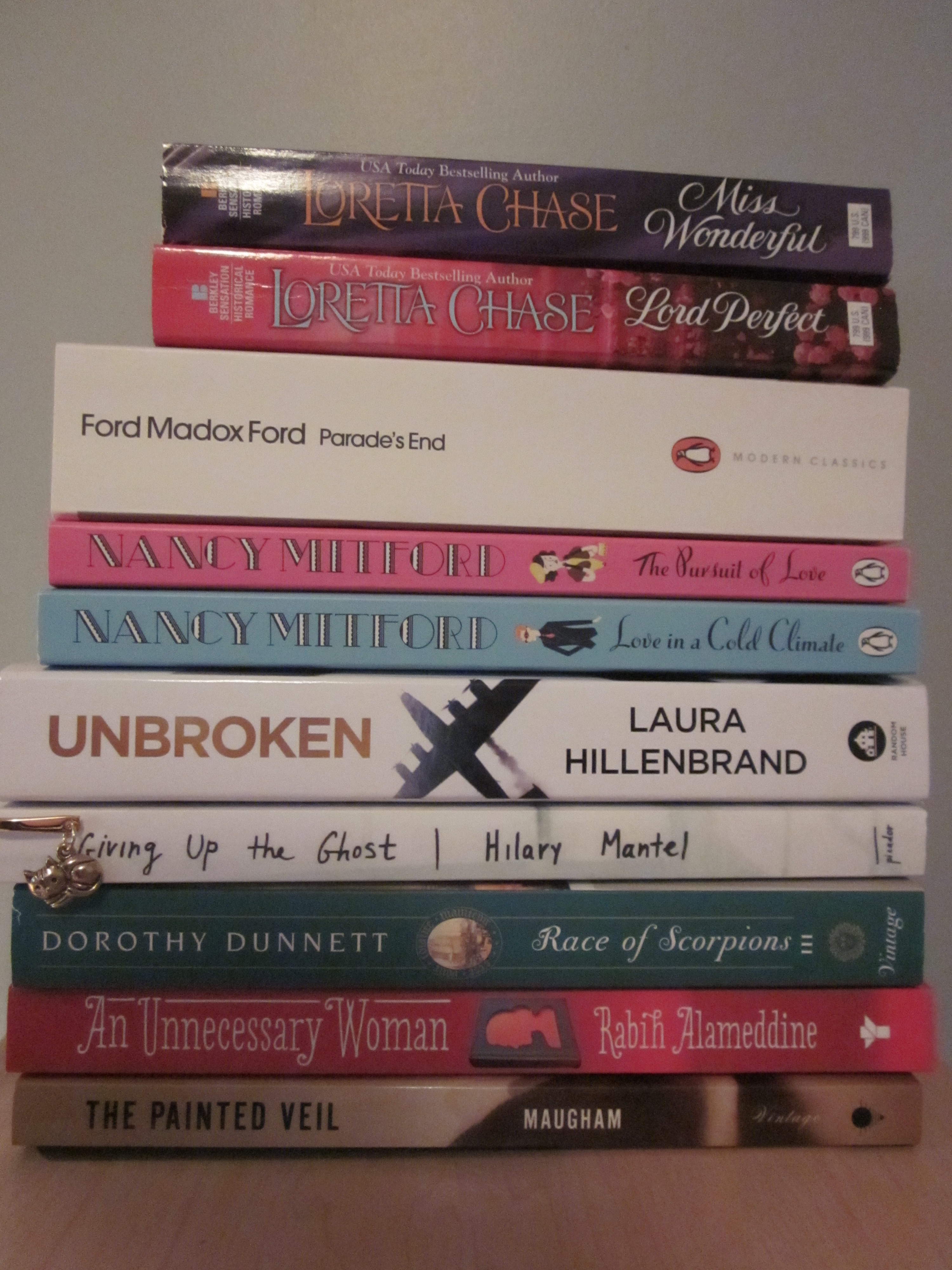
 I really enjoyed reading Rabih Alameddine’s An Unnecessary Woman. How could I not, being who I am? The novel is custom-made for its inevitable audience (readers!): not only is it about an avid reader but one of its central themes is the transporting exhilaration of reading itself. Its voice is wry and ironic, acerbic and occasionally even acidic — because these are the qualities of its heroine and narrator, Aaliya. It is also, as Aaliya is not (or, only very rarely), sympathetic: it prompts us, implicitly, to understand Aaliya and to be on her side, despite how prickly and anti-social she is. It’s hard to be this close to someone, to see things from her point of view, and not end up, if not her friend, at least her ally. And for a lot of readers, being prickly and anti-social is probably pretty familiar anyway: if we’re reading An Unnecessary Woman in the first place, there’s a better than zero chance that we too like being in a book better than being in most rooms, being with our favorite authors and characters better than being with many of the people we know in real life. So Aaliya, though she is not particularly nice or likable, is perversely “relatable.”
Is reading a way of engaging with the world, or a way of taking refuge from, or just avoiding, it? This seemed to me the novel’s fundamental question. Aaliya’s story actually reminded me (if in a considerably more highbrow register) of Kathleen Kelly’s line in You’ve Got Mail: “So much of what I see reminds me of something I read in a book; shouldn’t it be the other way around?” For most of the novel, and most of her life, Aaliya retreats to literature; it isolates her, but it also comforts her in her isolation. “I have adapted tamely,” she says, “but not conventionally, to this visible world so I can retreat without much inconvenience into my inner world of books.” She lives intensely but vicariously; despite her solitude, her books keep her from feeling solitary. Her translation projects giver her a purpose — but not a public or communal one, as she keeps her work to herself. The irony, of course, is that translations can open up or further conversations, making communication possible across boundaries. But that’s not what Aaliya wants from hers, and so they get boxed up and stored as she finishes them: unread, useless, unnecessary, except to Aaliya herself.
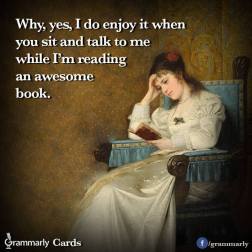 Up to a point, then, Aaliya’s tale is a celebration of the intrinsic pleasures and challenges of literature. Reading is, after all, a fundamentally individual activity: it’s your mind alone with the words on the page. From the outside it can look like a form of self-absorption. It is certainly a kind of self-sufficiency: as long as I have a good book, I don’t need anyone else. Someone reading intently projects (usually without meaning to) a tacit hostility — a wish to be left alone, to be uninterrupted. Every avid reader has probably, at one time or another, been teased or hassled about this, which may be one reason Aaliya is (for all her faults) such an appealing heroine to other readers: she’s a dedicated, unrepentant reader who relishes (and fights quite selfishly for) her lonely apartment with its stacks of books. Her life epitomizes a reader’s life (which is a loner’s life), perfected but not idealized.
But reading isn’t just a way of being apart from life: it can also be a way of understanding life, a way of finding or thinking through the narratives that make sense of our experience or help us give it meaning. “We live our lives through texts,” as Carolyn Heilbrun writes in Writing a Woman’s Life;
Lives do not serve as models; only stories do that. And it is a hard thing to make up stories to live by. We can only retell and live by the stories we have read or heard.
That’s another value Aaliya finds in her books: they help her sort through her life, indirectly, perhaps, but still with an outward, rather than an inward, glance.
Also, as bloggers well know, books don’t have to isolate: they can also build connections, provide impetus for conversation, bridge distances between people otherwise separated by the “unplumb’d, salt, estranging sea.” When, eventually, Aaliya is compelled out of her self-imposed exile from fellowship, it’s not necessarily the epiphany she claims to scorn (“There should be a new literary resolution: no more epiphanies”), but it is at least an opening up, like the unfolding of a reluctant rose, still thorny but touched by some warmth and light. It’s not a big transformation, just a sense of new possibilities. But we wouldn’t want Aaliya or her life to be changed utterly anyway, not if we have stood by her so far. She’ll still be a reader, above all — but maybe not such a lonely one.
She’s also a writer: she calls the novel her “tale” and refers to it every so often as a work in progress (“If this were a novel,” “What are these pages,” “As I write this”). The question of what exactly “these pages” are is never directly addressed, though, and I felt as if this was a lost opportunity. Not all first-person narrations explain their own textuality directly, of course, but Aaliya is such a self-consciously literary character that it would have been interesting to know why she is writing, and for whom. The form of her “tale” seems deliberately opposed to some kinds of fiction, for instance: it’s a relatively plotless book, and occasionally seemed almost too meandering to me, not quite stream of consciousness but not organized in a clear way, not building to any climax. It’s primarily a study in character, but it proceeds more through revelation than through self-reflection or analysis.
These strategies do seem appropriate for Aaliya — they suit her personality as well as her literary preferences. “Causation extraction makes Jack a dull reader,” as she says caustically; also, “One reason we desire explanations is that they separate us and make us feel safe.” So, no explanations; we have to infer her motivations, including for writing. But what about the question of language? I wondered for some time what language we were to think she was actually writing in, until a remark about her pen moving from right to left across the page gave it away. What we are reading, then, is actually an invisible, or imaginary, translation, and in a novel so much about translation — as the promise, or the possibility, or the buried hope, of connection — isn’t that another lost opportunity to make overt (to thematize) the narrative itself? Instead, the pretense is of perfect transparency. I realize that this is to take the words on the page literally in a rather stupid way, but I still ended up feeling very slightly dissatisfied with the book as a result of fretting about this question.
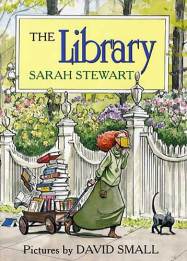 For all the enjoyment I took in the novel, I also ended up feeling that perhaps it’s too pat: that it plays too neatly into my hands and the hands of other readers who like nothing better than to have their passion for literature confirmed in an interesting and non-platitudinous way. For people who like this sort of thing, is An Unnecessary Woman too deliberately exactly what they like — is Aaliya too ready-made a literary heroine? She was certainly easy for me to side with, so cosmopolitan and secular and apolitical. A lot goes on around her while she reads and reads and reads (in this respect, An Unnecessary Woman reminded me of another irresistible fictional reader, Elizabeth Brown in Sarah Stewart’s The Library), but while she’s endlessly and intimately affected by it all, she also refuses to see herself as an engaged part of it:
I may be able to explain the difference between baroque and rococo, between South American magical realism and its counterparts in South Asia and sub-Saharan Africa, between Camus’s nihilism and Sartre’s existentialism, between modernism and its post, but don’t ask me to tell you the difference between the Nasserites and the Baathists. I do understand that this neighborhood can’t be Baathist; Sunnis are anti-Syria these days, and the need to belong to a party, any party, is greater than the fear of appearing stupid once again, hence Nasser is the hero du jour. However, I can’t figure out what the terms mean.
People are dying around her over these differences, but the only thing she fights for — the thing she actually acquires a gun to defend — is her apartment, her private space to read. Is this, in the end, the answer to the novel’s question about art and life? “The end of woman (or of man) is not a book,” concludes Aurora Leigh in Elizabeth Browning’s epic verse-novel, but for Aaliya, maybe it is. And why not? “Belief is murderous,” as she says. She writes with passion about the morals and politics and tragedies of others, and cares passionately how history is written, but by keeping her own eyes on the page, she avoids (and so we too avoid) having to confront any of this too directly.
And of course not all people, not all novels, have to be out on the front lines, and most of us live more or less like Aaliya, getting by as well as we can from day to day. At best, we find a way to live with integrity and dignity according to what we have decided really matters. An Unnecessary Woman is a sharp, touching, but unsentimental portrait of a woman who is “unnecessary” to any larger narrative about the world, but central, as she must and should be, to her own. That’s not necessarily an uplifting thought. “Giants of literature, philosophy, and the arts have influenced my life,” she reflects,
but what have I done with this life? I remain a speck in a tumultuous universe that has little concern for me. I am no more than dust, a mote — dust to dust. I am a blade of grass upon which the stormtrooper’s boot stomps.
I had dreams, and they were not about ending up a speck. I didn’t dream of becoming a star, but I thought I might have a small nonspeaking role in a grand epic, an epic with a touch of artistic credentials. I didn’t dream of becoming a giant — I wasn’t that delusional or arrogant — but I wanted to be more than a speck, maybe a midget.
There’s inevitably something melancholy in realizing how small a part you play in the drama of life. But if, like most of us, you are destined to rest in an unvisited tomb, there’s surely nothing wrong with its being one well-lined with books.
 I’m not sure when I last read George Eliot’s first published fiction, Scenes of Clerical Life. It might have been as much as 15 or 20 years ago that I read any of the stories right through, though I have certainly dipped into “Amos Barton” once or twice when thinking or writing about her realism and her intrusive narrator. I picked the book off my shelf again this week because I have been thinking (and will be writing) about scenes of visiting in Eliot’s novels. So many of her climactic moments are set up that way, with a sympathetic visitor bringing comfort or guidance to someone in crisis: Dinah visiting Hetty in prison in Adam Bede, for instance; Lucy visiting Maggie near the end of The Mill on the Floss; perhaps most notably, Dorothea visiting Rosamond in
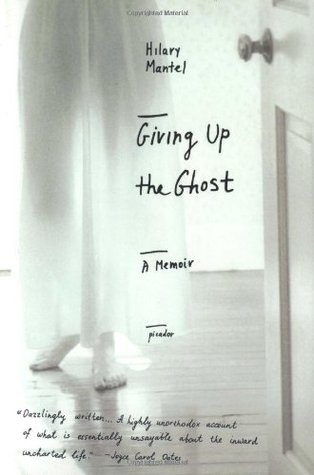
 Clearly Mantel did not consider Giving Up the Ghost the place to talk about her books — at least, not directly. Perhaps the most revealing thing she says about being a writer is a passing remark about Jane Eyre: “I remember the first time I read Jane Eyre: probably every woman writer does, because you recognize, when you have hardly begun it, that you are reading a story about yourself.” But again, she just moves on, so it’s not just her books she’s not talking about, it’s her whole experience of being a writer, a woman writer, a person writing, a person thinking about books, which — though we know they are integral to her life — seem oddly peripheral in her life story.



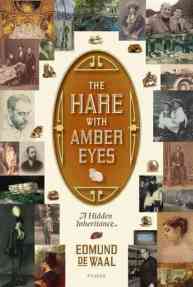
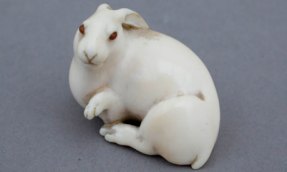 But the story he’s telling is a story of objects, and for all that we feel the impropriety of caring about the recovery of 264 tiny carvings when “65,459 Austrian Jews had been killed,” de Waal also emphasizes, across the book as a whole, that things routinely outlive their owners, are passed along, given away, inherited. Objects do last; art could perhaps be defined as objects that are meant to last. Every object that endures has a story longer than the story of any individual owners. That doesn’t make objects more important than people, but it creates an interesting counterpoint of caring, and raises many thought-provoking questions about how we understand what matters. It’s not as simple, de Waal’s book asserts, as choosing life over art, people over things — or, it seems simple until you try to explain why. The destruction of the beautiful desk, for instance, seems so gratuitous, until we recognize that the heave over the handrail is not really about gilt or marquetry but about power and anger and hatred: in its own way, that act is as disrespectful of life, of humanity, as any of the physical cruelties the Ephrussi family suffers — or it is, at any rate, part of the same spectrum of horror. To refuse to mourn that loss is to capitulate, at least a little, to the logic of the looters, who see around them only expensive “stuff” to which the watching family has no right. But the Nazis do value the art they loot, in a way: this chilling episode is followed by a very different, methodical pillaging that benefited museums all over the Reich. What they don’t care about is the kind of story de Waal is telling, the intertwining of objects and people. Or maybe they understand it only too well and know that by breaking up collections they are furthering their work of erasing identities, like the official stamps (“‘Israel’ for the men, ‘Sara’ for the women”) that finally make de Waal cry.
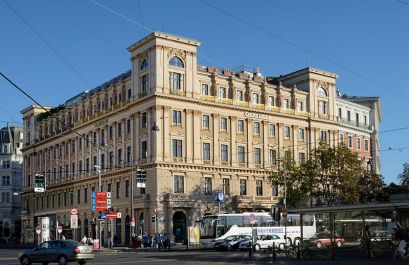 “For no good reason” — and then, a bit later, still marveling at the lavishness of decoration, he wonders, “What was Ignace trying to do? Smother his critics?” It’s too much for de Waal, this cold marble opulence: he finds it unpleasantly slippery, with “nothing to grip onto.” This kind of display seems decadent, overwrought, excessive. What is the use of such splendour, in a family home? Or anywhere? Should the splendor of the Palais impress us, make us envious, or spur us to revolutionary zeal? Can we be both repelled (“I run my hands along the walls,” de Waal says, “and they feel slightly clammy”) and delighted — because this kind of wealth has prompted, supported, or preserved so much beauty for the rest of us? I was reminded, as I puzzled over this, of Trollope’s The Warden:

 I didn’t love Jo Walton’s


