“After all, war is war”: All Quiet on the Western Front

remarqueAll Quiet on the Western Front is as bleak and compelling a version of the “lost generation” narrative of World War I as I’ve read. In fact, Paul Bäumer, the novel’s narrator, comments explicitly, repeatedly, and bitterly on the chasm between the generation fighting in the trenches and the older generation far away from the front lines. “We agree that it’s the same for everyone,” Paul and his comrades conclude;

not only for us here, but everywhere, for everyone who is of our age; to some more, and to others less. It is the common fate of our generation.

Albert expresses it: “The war has ruined us for everything.”

Though the novel is replete with vivid vignettes, from the tedium of training to the camaraderie of trench life and the horrific chaos of bombardments, the most poignant moments arise when the young men (and they are so very young, most of them, just the age of so many of the first-year students I’m about to meet) reflect on the war’s catastrophic effect on normalcy:

To-day we would pass through the scenes of our youth like travellers. We are burnt up by hard facts; like tradesmen we understand distinctions, and like butchers, necessities. We are no longer untroubled–we are indifferent. We might exist there; but should we really live there?

We are forlorn like children, and experienced like old men, we are crude and sorrowful and superficial–I believe we are lost.

They can’t even imagine what they will do when it ends: even if they are lucky enough to survive at all, much less intact, what’s the value of a life from which all meaning has been stripped? The physical violence ultimately comes across as peripheral–collateral, even–to the other damage they endure:

The first bomb, the first explosion, burst in our hearts. We are cut off from activity, from striving, from progress. We believe in such things no longer. We believe in the war.

Battle is terrible, but it allows no time for reflection; Paul (and the reader) hurtles along, transformed from a thinking being to a “wild beast”:

We do not fight, we defend ourselves against annihilation. It is not against men that we fling our bombs, what do we know of men in this moment when Death is hunting us down–now, for the first time in three days we can see his face, now for the first time in three days we can oppose him; we feel a mad anger. No longer do we lie helpless, waiting on the scaffold, we can destroy and kill, to save ourselves, to save ourselves and to be revenged. . . . [C]rouching like cats we run on, overwhelmed by this wave that bears us along, that fills us with ferocity, turns us into thugs, into murderers, into God knows what devils; this wave that multiplies our strength with fear and madness and greed of life, seeking and fighting for nothing but our deliverance. If your own father came over with them you would not hesitate to fling a bomb at him.

 It’s when you stop to think that the true madness of war overwhelms you, because of course it is against men that you fling your bombs, and only the decisions of other men far removed from the consequences have turned ordinary people into enemies. “Just you consider,” observes Paul’s mate Katczinsky,

“almost all of us are simple folk. And in France, too, the majority of men are just labourers, workmen, or poor clerks. Now why would a French blacksmith or a French shoemaker want to attack us? No, it is merely the rulers. I had never seen a Frenchman before I came here, and it will be just the same with the majority of Frenchman as regards us. They weren’t asked about it any more than we were.”

“Then what exactly is the war for?” asks Tjaden.

Kat shrugs his shoulders. “There must be some people to whom the war is useful.”

“Well, I’m not one of them,” grins Tjaden.

“Not you, nor anybody else here.”

But it is dangerous to think this way, or to think at all, as Paul discovers during a turn guarding a group of Russian prisoners. In the trenches, the enemy is abstract until he is upon you, and then your common humanity becomes irrelevant in the desperate struggle to survive. But face to face, what you perceive is “the suffering of the creature, the awful melancholy of life and the pitilessness of men”:

A word of command has made these silent figures our enemies; a word of command might transform them into our friends. At some table a document is signed by some persons whom non of us knows, and then for years together that very crime on which formerly the world’s condemnation and severest penalty fall, becomes our highest aim. But who can draw such a distinction when he looks at these quiet men with their childlike faces and apostles’ beards. Any non-commissioned officer is more of an enemy to a recruit, any schoolmaster to a pupil, than they are to us. And yet we would shoot at them again and they at us if they were free.

Paul pulls himself up short here: “I am frightened: I dare think this way no more. This way lies the abyss.” Yet he realizes, too, that he needs these thoughts: “I will not lose these thoughts, I will keep them, shut them away until the war is ended.” Though it is these thoughts that make the war unbearable, it is also these thoughts–these moments of recognition–that he hopes give him “the possibility of existence after this annihilation of all human feeling.”

Human feeling surfaces again when, hiding in a shell hole during an enemy attack (and how odd and salutary it is, just by the way, to be on the German side for once in my reading), Paul stabs a Frenchman who tumbles in on top of him. He had expected this moment, prepared for it (“If anyone jumps in here I will go for him … at once, stab him clean through the throat so that he cannot call out; that’s the only way”), but he is not, in fact, prepared (how could he be?) for this moment when killing becomes intimate. He strikes without thinking and feels “how the body suddenly convulses, then becomes limp, and collapses.” The man does not die, however–at least, not at once, and Paul is trapped in the shell hole with a man who now seems, not his enemy, but his victim. This way, indeed, lies the abyss:

These hours. . . . The gurgling starts again–but how slowly a man dies! For this I know–he cannot be saved, I have, indeed, tried to tell myself that he will be, but at noon this pretence breaks down and melts before his groans. . . . By noon I am groping on the outer limits of reason. . . . every gasp lays my heart bare. This dying man has time with him, he has an invisible dagger with which he stabs me: Time and my thoughts.

 At last he dies: what a relief! “I breathe freely again. But only for a short time.” At least his dying was a distraction: “My state is getting worse, I can no longer control my thoughts.” Insanely, pathetically, beautifully, he tells his dead companion what he is thinking:

“Comrade, I did not want to kill you. If you jumped in here again, I would not do it, if you would be sensible too. But you were only an idea to me before, an abstraction that lived in my mind and called forth its appropriate response. It was that abstraction I stabbed. But now, for the first time, I see you are a man like me. I thought of your hand grenades, of your bayonet, of your rifle; now I see your wife and your face and our fellowship. Forgive me, comrade. We always see it too late. Why do they not tell us that you are poor devils like us, that your mothers are just as anxious as ours, and that we have the same fear of death, and the same dying and the same agony–Forgive me, comrade; how could you be my enemy? If we threw away these rifles and this uniform you could be my brother just like Kat and Albert. Take twenty years of my life, comrade, and stand up–take more, for I do not know what I can even attempt to do with it now.”

After he finally brings himself to leave the shell hole, Paul is restored to reason (or what passes for it during war) by Kat showing him the snipers gleefully picking off enemies. “What else could you have done?” ask his friends. “That is what you are here for.” “It was only because I had to lie there with him so long,” Paul says; “After all, war is war.”

That simple tautology says everything that is to be said, and at the same time it says nothing, offers no meaning, no consolation. There is nothing to be said, Paul thinks, as, recovering from a wound, he looks at the wreckage of young lives passing in a ceaseless stream through the hospital:

And this is only one hospital, one single station; there are hundreds of thousands in Germany, hundreds of thousands in France, hundreds of thousands in Russia. How senseless is everything that can ever be written, done, or thought, when such things are possible. It must be all lies and of no account when the culture of a thousand years could not prevent this stream of blood being poured out, these torture-chambers in their hundreds of thousands. A hospital alone shows what war is.

 Paul’s testimony–Remarque’s novel–shows that too, with harrowing simplicity. For Paul (for Remarque) war is definitive. It is everything. Beyond it, for those who have experienced it, there is nothing:

And all men of my age, here and over there, throughout the whole world see these things; all my generation is experiencing these things with me. What would our fathers do if we suddenly stood up and came before them and proffered our account? What do they expect of us if a time ever comes when the war is over? Through the years our business has been killing;–it was our first calling in life. Our knowledge of life is limited to death. What will happen afterwards? And what shall come out of us?

I had been interested in reading All Quiet on the Western Front for many years; I finally read it as part of my preparation for my Somerville Novelists seminar. It is an example of what Testament of Youth is not: a soldier’s story, a first-hand (if fictionalized) account of fighting and survival and tactics and rations and brothers in arms. It is the masculine story of the war, and as many of the critics I’ve read point out, that’s the valorized story, the “authentic” one. Brittain knew these aspects of the war only second-hand, through the letters she received from the front and through her experience as a nurse. There are many points of convergence, though. Above all, both tell a story of lost innocence. And both focus almost exclusively on the personal, on individual disillusionment, devastation, and loss–but both lead us towards political conclusions by making it impossible to understand what cause could possibly be worth such a price. Outside their books, we might well feel there’s an argument to be had about that. Reading them, though, it’s hard to do anything but mourn.

poppies

From the Novel Readings archives (lightly updated). First published September 2, 2012.
Photo of field of poppies from Wikimedia Commons.

This Week In My Classes: Falling Back

We set our clocks back an hour on the weekend. Whle I concede that it’ss nice to have it lighter in the morning, I never feel that makes up for how dark it gets in the afternoon, which tends to be my low energy time anyway. In any case, this plus our first flurries of the season makes it impossible for me to keep pretending winter isn’t setting in. I can hardly express what a drag this is on my spirits. Winter increases my stress levels exponentially — mostly because I hate driving in snow and ice. In fact, if I could configure my life so that I never had to get behind the wheel of a car between December and April, I might not mind winter at all. Well, OK, I would still not be a fan of the freezing-rain-sleet-snow mix Halifax specializes in, but it would not fray my nerves or ruin my plans in the same way. On the bright side, I do have a sabbatical next term, which somewhat relieves the pressure, and at this point the worst still lies ahead. In the meantime, we’re not done with the fall term yet.

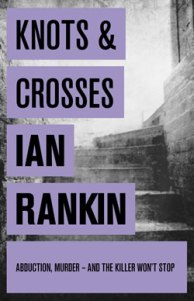
beckI think things are going reasonably well in both my classes right now. In Mystery and Detective Fiction we’ve just finished working through Sjöwall and Wahlöö’s The Terrorists, which provoked quite a lot of discussion this time around. As always, I’ve been meditating on how to change up the reading list for the course’s next incarnation; I think The Terrorists is a keeper, precisely because it gives us a lot to talk about. It is, arguably, somewhat tendentious — I’ve been wondering if I should hold the authors’ Marxism in reserve next time (rather than emphasizing it in my opening lecture) and let the novel’s politics reveal themselves inductively. I don’t find the novel too doctrinaire to be humanly interesting and dramatic, though: I think Sjöwall and Wahlöö successfully walk the line between the picture and the diagram, with Martin Beck himself especially standing between us and a narrow didacticism. Rhea may have a portrait of Mao on her wall, but Beck remains committed to (if ambivalent about) the flawed system he polices. Today we started Ian Rankin’s Knots and Crosses — time for my annual comment that I’d love to try one of his longer, richer novels, except that this one (like The Terrorists) is always really good for discussion, and always gets singled out in student evaluations as a general favorite.

In 19th-Century Fiction we’ve moved on to Jude the ObscureJude is usually the last novel I cover in the Dickens-to-Hardy class, so it feels odd that it isn’t this time: we’re following it up with The Odd Women. I made room for Gissing by skipping sensation fiction for the first time I can remember in this course. I kind of miss it, because it’s a lot of fun (I usually assign either Lady Audley’s Secret or The Woman in White), but I’m anticipating a good response to The Odd WomenJude seems to have perked people up, too, which might seem perverse, considering how grim it is, but depression has its own agonistic charms, and the novel also moves much more quickly, and is expressed much more bluntly, than Middlemarch (which, to my delight, thrilled a handful of students but also clearly daunted or deterred a fair number of them). One of the things we talked about today was Hardy’s emphasis on buildings and architecture. The novel is so intensely tactile and visual that I thought it might be nice to put some pictures in our minds’ eyes, so I put together a simple slide show, including these photos from my own one and only (so far) visit to Oxford.

pulpit

martyrs

The pulpit at St. Mary’s isn’t, strictly speaking, a Jude landmark, but Newman is one of the ghostly presences Jude communes with on his first night in the city, and I was surprised how moved I was to see where he had preached. The Martyrs’ Cross, of course, is where Sue and Jude first meet — or, more precisely, where Jude first suggests they meet, only to have Sue call out, as they approach it, “I am not going to meet you just there, for the first time in my life!” Jude is definitely not one of my favorite novels, but it is a favorite of mine to teach, because however heavy-handed I find it (and however annoying I find Sue), it is also passionate and occasionally profound, including in the challenge it issues to the more conventional morality of our other readings. Reading it right after Middlemarch also really brings out continuities: they share interests in aspiration and vocation, in hopes crushed, in loves that press against convention, in learning and religion and compassion for flawed, suffering humanity. Middlemarch may seem melancholy in its treatment of these themes, but put Jude up against it and suddenly Eliot’s meliorism seems downright buoyant!

Even though Jude is not our last book, it’s astonishing to realize how close we already are to the end of term: it seems to be rushing past. At the same time, it has felt like a particularly effortful term to me. I can’t remember ever feeling quite so tired after each class meeting: I come back to my office and have to just sit still for a while before I can gather up the energy for my next task. Am I getting old? Well, yes, of course I am … but I hope that the real culprit is the tendinitis that has kept me from my running routine for months now. I am just gradually getting back into a modified exercise program. One reason I have to sit down after class, though, is that standing and pacing (as I inevitably do during lecture and discussion) seems to be about the worst thing for my aches and pains! I’ve been very frustrated that even after diligently following all my physiotherapist’s instructions I am not significantly better and more mobile! I’m cautiously optimistic at this point. I never ran very far or very fast at the best of times, but I would like to get back at least to where I was. I miss the psychological benefits as much as the physical ones. Here’s hoping!

“What is Given, What Is Taken Away”: Jhumpa Lahiri, The Lowland

lowlandUdayan is beside him. They are walking together in Tollygunge, across the lowland, over the hyacinth leaves. They carry a putting iron, some golf balls in their hands.
In Ireland, too, the ground is drenched, uneven. He takes it in a final time, knowing he will never visit this place again. He walks toward another stone and stumbles, reaching out to it, steadying himself. A marker, toward the end of his journey, of what is given, what is taken away.

I finished Jhumpa Lahiri’s The Lowland last night, so I can move at least one book from my “currently reading” to my “recently read” pile. But how much did my response to the book change in the process? Not a lot, actually. Obviously, my understanding of its parts and its story is now fuller, but to the end it was a book that kept me at an emotional distance. It proceeds so quietly the effect is almost monotonous: love, grief, violence, rage are all offered in the same register, with nothing rising above the level of quiet declaration.

Tone isn’t everything, of course, and the understatement of Lahiri’s prose can have memorable effects: quiet touches of description or the affectionate touch of a hand make emotional ripples in the overriding calm; the explosion of gunfire or of anger startles all the more for the lack of exclamation points: “A sound like gushing water or a torrent of wind”; “How dare you set foot in this house.” Is it enough to always hint at depths, though? to suggest effects so delicately that we have to assume them, or read them into, rather than in, the language of the novel? There were times when Lahiri’s control felt excessive, even deceptive: why choose subjects — why tell stories — that invoke extremes, only to muffle them? The novel is governed by an overwhelming reserve: to what end, I found myself wondering? With a first-person narrator (Colm Toibin’s Eilis, for example) we might attribute the narrative caution to the character and find it psychologically illuminating, but here the spare elegance struck me almost as an affectation, a studied determination not to let the emotional force of the novel loose.

I wondered too about the structure of the novel. It spans great distances and stretches of time, but it moves across them like a skipped rock, skimming along the surface: the narrative touches down lightly and we find days, weeks, months, years have passed with only the slightest points of contact and no depth. There are hundreds of potential pages missing that would thicken our understanding of the people whose lives we’re following and the changing times they live in, as well as the points of contrast and comparison between the two worlds we alternate between — but these possibilities too are held in check, the outlines of the family saga shaded in rather than richly tinted. Lahiri’s strategy of interweaving past and present allows for the surprise of revelations about people’s motives and feelings – but why is that preferable to immersing us in those actions and consequences as they unfold, so that we can enter into the emotional lives of the characters? Gauri in particular, I thought, suffered from this strategy of delay: her behavior towards Subhash and Bela makes much more sense, in its cold equivocations, once we know how her love for Udayan was compromised (“she looked at him as she’d never looked before. It was a look of disillusion”). Lahiri holds us at bay, forcing a certain detachment, but why?

Why not? you might quite reasonably respond; clearly that is the kind of novel she wanted to write, one in which love or suffering is no less real for its understatement. And her prose can be lovely — delicate, precise, evocative. That it provoked me to wonder how we decide when “spare” writing crosses over into “superficial” is as much a reflection on me as a reader as on her as a writer.  The Lowland seemed to be putting style first. It’s edited to a nicety, but I don’t read novels primarily to admire the writing as writing: I want to feel that this writing is carrying me somewhere that only this novel can take me. For me, Lahiri’s restraint became a constraint: though I read it with some interest and some pleasure, both were limited by the limits she herself set on how far she would let herself go.

Current Reading: Karlinsky, Stout, Lahiri, with Bonus Sonnets

stonehengeIt would be nice to be able to call this post “Recent Reading,” as that would indicate I’d actually finished some (non-work related) books since The End of the Affair. However! I’m going to count it as a victory that in spite of work and other distractions, I am at least making my way through all of these:

1. Harry Karlinsky, The Stonehenge Letters. This was recommended to me by Steven W. Beattie, in response (if I remember correctly) to some Twitter discussion about recent Canadian fiction. His instinct was excellent: it’s just the right kind of book to suggest to someone with a long-standing interest in overlaps between history and fiction, for one thing, and for all the eccentricity of its premise, its style is decisively lucid, with no postmodern flourishes. It’s so prosaic, in fact, that I blame its very transparency for my difficulty getting through it (I’m about 150 pages in): honestly, if I didn’t know there was no secret codicil to Alfred Nobel’s will promising a prize to the Nobel Laureate who solved the mystery of Stonehenge, I would think I was reading a slick work of popular nonfiction. There are even footnotes! As of my current location in the book, what there isn’t is much of the old-fashioned kind of plot, and so I’ve been having a hard time falling into the novel in the way that keeps me coming back when I have lots of other calls on my time and attention. I will finish it, though, and I won’t be surprised if I end up retracting some of that objection once the people I have met as this eccentric pseudo-history unfolds play out their parts. The other comment I can make at this unfinished stage of my reading is that the book itself — meaning the physical object — is lovely, one of the nicest I’ve held in a long time. It has heft, the paper is smooth and feels rich to the fingers, the whole thing is just handsome in an unassuming way. Nice job, Coach House Press!

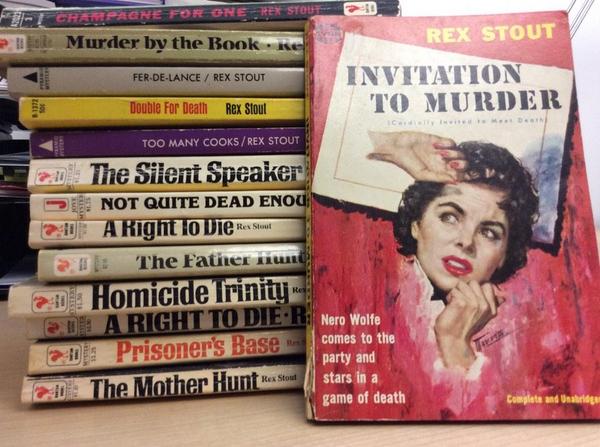
Stout2. Rex Stout, Fer-de-Lance. After my shocking recent confession that I’d never read any Nero Wolfe mysteries, I was delighted to receive a care package in the mail from my supplier. Being a by-the-rules kind of girl, I started at the beginning, with Fer-de-Lance (1934). The perverse charm of the Wolfe-Goodwin duo is obvious from the first page, with their Odd-Couple-like array of complentary strengths and their repartee — which is witty on Wolfe’s side, at least. The case has the absurdity of a Golden Age puzzle mystery (a poisoned dart shot out of a rigged golf club? really?) but the atmosphere of the book, while not hard-boiled, is not really cozy either: I find myself wondering how the series is usually fit into the various categories or subgenres of detective fiction. It doesn’t need a label, of course: maybe its chief virtue is its resistance to pigeon-holing! My appreciation of the main characters hasn’t been quite enough to carry me to the end yet, though, because I’m not really interested in the case they’re on. As I’ve often remarked here, I’m not really an avid reader of detective fiction qua detective fiction, so I need a little better incentive to read on than wondering whodunit. I’m sure my relationship with Archie and his strange beer-drinking orchid-growing boss will continue, though. The vintage copies Steve sent have their own peculiar charms, too. Fer-de-Lance does not have as lurid a cover as Invitation to Murder, but its blurb is pretty irresistible;

He likes his orchids rare, his beer cold, his food gourmet and plentiful. He’s Rex Stout’s brownstone-based, one-seventh-of-a-ton, super-sleuthing genius of detection . . . in Fer-de-Lance, a viper’s nest of deadly dilemmas!

lowland 3. Jhumpa Lahiri, The Lowland. Like The Stonehenge LettersThe Lowland is one of my Vancouver holiday purchases. I have really enjoyed the stories I’ve read from Lahiri’s Interpreter of Maladies, and I’ve read only good reviews of The Lowland (it even made the Stevereads “Best Books of 2013” list!), so I’ve been really looking forward to reading it, and I decided to start it now even though I had other books on the go, partly because I felt like my reading life needed an infusion of energy. It turns out The Lowland is not quite the novel for that: Steve describes its self-control as “almost arctic” in its coldness, and he’s not wrong about that! To say the novel is understated would itself be a profound understatement. But it does have an underlying drive, like a quiet steady beat, and at nearly half way through, I think I can detect a slight quickening of its pace.

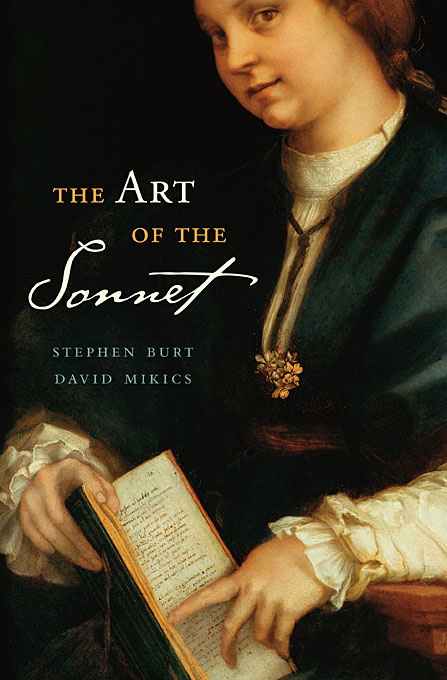
sonnet4. Out of the same impulse to speed up my reading pulse somehow, I picked up The Art of the Sonnet (edited by Stephen Burt and David Mikics). I sometimes feel adrift in seas of prose and long for the greater emotional and verbal density of verse, but I rarely — too rarely! — make time for it in my leisure reading. In the summer I spent a happy interlude reading Philip Larkin thanks to a prompt from Miriam Toews, and I have some other collections to hand that call to me intermittently. I have really liked the idea of The Art of the Sonnet since I heard about it — it’s a collection of sonnets (obviously) each accompanied by detailed commentaries by the editors — and I thought it would be a great dipping and browsing book. And so it is! I opened it at random at first, and found myself at Shelley’s “England in 1819,” and then I flipped around a bit and ended up at Christina Rossetti’s “Later Life 17.” I know the Shelley reasonably well, having assigned it more than once (it’s especially good for scansion practice), but the commentary brought out aspects I hadn’t fully appreciated. I had never read the Rossetti before, though, and it hit home uncannily when I read it on a recent somewhat dreary rainy evening:

Something this foggy day, a something which
Is neither of this fog nor of to-day,
Has set me dreaming of the winds that play
Past certain cliffs, along one certain beach,
And turn the topmost edge of waves to spray:
Ah pleasant pebbly strand so far away,
So out of reach while quite within my reach,
As out of reach as India or Cathay!
I am sick of where I am and where I am not,
I am sick of foresight and of memory,
I am sick of all I have and all I see,
I am sick of self, and there is nothing new;
Oh weary impatient patience of my lot! —
Thus with myself: how fares it, Friends, with you?

And thus it is with my reading: how fares it, friends, with yours?

“Ordinary corrupt human love”: Graham Greene, The End of the Affair

greene

I’m tired and I don’t want any more pain. I want Maurice. I want ordinary corrupt human love. Dear God, you know I want to want Your pain, but I don’t want it now. Take it away for a while and give it me another time.

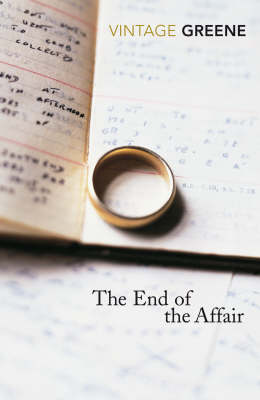
My local book club met Tuesday night to discuss Graham Greene’s The End of the Affair. We chose this novel as the follow-up to Lady Chatterley’s Lover: as I’ve explained here before, we pick a thread to follow from one book to the next, which in this case was adultery. (The last time we read Graham Greene we had followed a “depressing novels about priests” thread from Such Is My Beloved to The Power and the Glory.)

Quite by coincidence, because I had forgotten that they had often been compared, I started Christopher Beha’s What Happened to Sophie Wilder just before I had to turn to The End of the Affair. (Or was it a coincidence? Perhaps it was all part of some grand design by the great publisher in the sky!) The connection came back to me as I was reading and writing about Beha’s novel, though, thanks especially to Nicole’s comparative discussion at Book Riot, so inevitably I was thinking a lot about Sophie and and Charlie as I read about Sarah and Bendrix. As Nicole very adeptly explains, the two novels are indeed strikingly similar in structure, but reading them feels very different: Beha’s has a (somewhat deceptive) colloquial clarity to it, and (I thought) a lot more emotional detachment, especially, and paradoxically, where Sophie’s religious experiences are concerned, while Greene’s is more overtly written, more conspicuously literary, as well as emotionally intense — to the point of claustrophobia.

At the purely subjective level of taste, I preferred Greene’s: I enjoyed (if that’s the right word) Bendrix’s palpable bitterness, and the twisty self-justifying but also self-loathing ways he tells his story. I was fascinated to learn that Greene tried this experiment in first-person narration because he’d been reading Great Expectations: apparently he felt he hadn’t really pulled it off:

Dickens had somehow miraculously varied his tone, but when I tried to analyze his success, I felt like a colourblind man trying intellectually to distinguish one colour from another. For my book there were two shades of the same colour —  obsessive love and obsessive hate; Mr. Parkis, the private detective, and his boy were my attempt to introduce two more tones, the humorous and the pathetic.

I can’t think of a novel I would be less inclined to compare to The End of the Affair than Great Expectations if I were approaching it thematically, but it’s interesting to think of it, as Greene apparently did, as a technical problem he was unable to solve. One thing Dickens does that perhaps he didn’t adequately consider was use retrospective narration to add a layer of painful self-knowledge over top of Pip’s obsessive love. The End of the Affair is told retrospectively (except for Sarah’s diary), but all that does is infuse the love story with that “obsessive hate.” Imagine the novel told in a way that really reflects the religious conversion that the ending points us towards: wouldn’t that complete or perfect the narrative by returning Bendrix, and thus us, to love, by way of forgiveness? It’s impossible to imagine any Dickens novel, much less Great Expectations, stuck in hatred the way Bendrix is: even Miss Havisham is brought to repentance, after all. As for “the humorous and the pathetic,” well, I agree with Greene that he doesn’t quite achieve either (at all, never mind to Dickens’s level), but it’s hardly a fair contest.

Anyway, I liked reading Greene better for the style and the emotional intensity … but I also found myself thinking back on Sophie Wilder (and bringing it up during our discussion) because there were things about The End of the Affair that left me dissatisfied, too, in ways that Beha’s novel helped me understand. I was particularly frustrated by Sarah’s “conversion.” Having protested Beha’s failure to explain Sophie’s conversion in more depth, I found I objected to Sarah’s on different grounds: it didn’t seem religious at all! She has no epiphany, no spiritual revelation, no breakthrough. She just makes a deal with a deity she only kinda sorta believes in, and then feels coerced into keeping up her end of the bargain. It seemed so pragmatic — and hardly inspiring, as it boils down to “I’ll be good if you grant me my wish” — which rather neatly sums up negative clichés about Catholicism.

That moment is only the beginning of Sarah’s newly-defined life, of course: does her contract with God lead her into genuine faith? She spends a lot of time doubting and arguing, as in the bit I chose for my epigraph (which nicely captures the central conflict between human and divine love, fought in the novel over the territory of the human body). But she does seem to find something like peace eventually, and of course once she dies she’s apparently capable of working miracles. There’s little saintly about her during her life, as far as we know, or as far as Bendrix will admit (“She was a good woman,” says Father Crompton: “She was nothing of the sort,” retorts Bendrix irritably) but being a saint doesn’t necessarily require that: as Father Crompton replies in his turn, “There’s nothing we can do some of the saints haven’t done before us.” But it didn’t seem that Sarah was working towards doing good, not the way Sophie is when she cares for her dying father -in-law. Still, struggle and debate are compatible with belief, and Greene did well precisely at conveying faith as something to be achieved through effort, not simply succumbed to or carried along by.beha

That said, I certainly didn’t see why Bendrix came round (or is on the verge of coming round) to it in the end. Greene apparently said he wanted to box him into a corner so he couldn’t help but accept the religious explanations. Here too I end up giving Beha the edge: both novelists play metafictionally with novelist / God comparisons and make room for ambiguity about the ultimate source of structure and meaning, but in offering the resolution I thought I wanted (“all right, have it your way. I believe you live and that He exists”), Greene frustrated me in a different way, because his ending felt both manipulative and reluctant. If your conversion is really a reluctant concession, what’s the thrill in that, especially if you haven’t in fact earned it by winning the argument against coincidence or rationalism? Beha at least seems to be saying “make up your own mind.”

We had a pretty lively discussion of The End of the Affair over our book club dinner. There, of course, the immediate comparison was to Lady Chatterley’s Lover, since I was the only one who’d read Sophie Wilder, and plenty of interest came out of that, particularly around the affair itself and what it meant to the characters, as well as the overall treatment of sexuality and desire in the novel (we thought poor Henry seemed not altogether unlike Clifford, for instance). We were intrigued by the war setting, and by the possibility that the blast that leads to Sarah’s deal with God might itself be interpreted as some kind of divine intervention. By and large we thought the ending of the novel was unsatisfying because the crucial interventions that build up to the “Sarah is a miracle-working saint in Heaven” theory seemed ad hoc: there’s the mother ex machina, for instance, who appears on the scene just in time to save Bendrix from himself. We were all fond of Parkis, which made me think we should maybe try some Dickens one day (or some Trollope — isn’t Parkis a bit like Bozzle in He Knew He Was Right?). We were also intrigued by the discussions of the novelist’s craft, and from this we picked up on the mentions of Forster and decided that should be the thread to our next book. Though Maurice would have been a cute choice (because that’s Bendrix’s name), we settled on Howards End, which I am very pleased about as it has long been near the top of my Humiliation list.

This Week In My Classes – An Update: Middlemarch Unplugged

OUP MiddlemarchI’m sure you have all been wondering whether I have managed to get my control-freak tendencies under control for this week’s classes on Middlemarch. Well, the week isn’t over yet, but so far the answer is both not really (Monday) and more or less (today). I had all kinds of good intentions on Monday, but I also had quite a lot of notes in hand, and though I did use them to frame the questions I hoped we would discuss, I went on too long and in too much detail in what was supposed to be the set-up portion of the class. I left feeling quite dissatisfied with myself, but also with a better understanding of why things keep turning out that way — an insight that I confirmed by leafing through the rather sizable folder of Middlemarch materials I have accumulated over the years.

Here’s what I figured out: it’s my notes that are the problem! Once upon a time, they were looser and more open-ended. Over the years, in the well-meaning but ultimately mistaken belief that I was doing the right thing, I have filled them in more, elaborated on them, figured out ways to fill “gaps” in the topics and examples they cover. They are good notes, don’t get me wrong: the lectures they support are good ones, or at least I think so! In some settings, delivering them — not as a completely closed production, without any interaction, but as a more or less set “piece” with a clear structure — is a fine idea and goes over well enough. Sometimes, too, there really is content that needs to be passed along in an orderly way. But this is an upper-level class on the 19th-century novel and having wide-ranging discussion is a genuine goal of mine, especially now that I hope have laid the groundwork for it. And the thing is that while having detailed notes feels like it will help me lead a good discussion, what I realized on Monday is that I have come not just to rely on them but to feel controlled by them myself — moving in order through the topics and examples, and trying to include everything. Not 100%, not all the time — but enough that I need to take some self-conscious steps in the other direction.

For today, then, instead of revising and presenting my lecture on “reform in Middlemarch,” (which comes complete with a handout of excerpts from Arnold, Mill, Carlyle, and Felix Holt, as well as Middlemarch), I worked out a list of likely topics and collected the pages numbers of some key scenes under each heading — but nothing more! Before class, I reviewed that scanty page or two again and manually jotted some big ideas next to topic, to make sure I had some big ideas in my head to work towards. I also chose a short excerpt from the BBC adaptation to show, because my impression had been that we were a bit lost in the abstractions and the human drama of the novel was perhaps escaping them. It felt oddly like a leap of faith to go so “unprepared,” but I think it went fine. The film clip loosened everyone up, and we didn’t have any trouble finding things to talk about for the rest of the time — and I didn’t feel we were just drifting, even though we weren’t following a script.

I am emboldened, as well as reassured: for Friday I have selected two specific passages as launching points, and that will be (almost) everything I bring along. Maybe one day I can get (back) to the openness with Middlemarch that I find much easier to achieve and accept with other novels.

This Week In My Classes: Micromanaging Middlemarch

OxfordMaybe there should be a question mark in the title of this post. I hope there should be! But I’m not sure, and that makes me just a little anxious.

It is always hard to find a good balance between showing students what’s interesting and important in the novel we’re studying and letting them explore and discover things on their own. But it is particularly challenging with a novel as dense as Middlemarch, and I fear that — in recent years especially, as I’ve become more certain of my own ideas about the novel — I have become a little too controlling during our class time.

In my defense,  Middlemarch is long, our time is short, and an inductive or Socratic approach guarantees some serious inefficiency in arriving at anything like a thorough understanding of the novel. More than that, it’s flat-out unreasonable to expect anyone reading the novel for the first time to keep good enough track of the details (whether of plot or of narrative commentary) to put the pieces together confidently into an interpretation they feel ready to defend. It takes a lot of time and rereading to do that! And that’s not even taking into account the kinds of contextual information — historical, political, theoretical — that helps make sense of things that happen in the novel, or that enriches a reading that otherwise might focus (of necessity) quite superficially on the plot.

It’s true that, as Steve recently argued about Wuthering Heights, it is perfectly possibly to have a thrilling reading experience “without a speck of annotation,” or its in-class equivalent. My own first reading of Middlemarch was innocent in just that way. But in class, we come to study Middlemarch, not (just) to praise it, and I believe strongly that “expert guidance” can enhance that reading experience in myriad ways — else how would I show up for work every day? At the same time, it’s my job to train students to read well themselves, not just to show them how well I can read! With that in mind, I proceed in all of my classes through a blend of lecture and discussion, laying out facts and, where it seems appropriate, big-picture interpretive frameworks, but also asking open-ended but purposeful questions that begin with observations and then build towards interpretations by looking for connections and patterns. Even when I am outright lecturing, I’m not “just” transferring information (something I think is in fact easily undervalued) — I’m also modelling the process; class discussion is a collaborative way of doing the same thing. The further along we get in our discussions the less distance there is between observation and analysis, because (if all goes well) the early classes demonstrate the most fruitful lines of inquiry, or lay down tracks to pursue as we continue our reading.penguinmiddlemarch

But, again, open discussion has built-in inefficiencies, and with Middlemarch — both because I love it so and because I have worked hard myself to connect its ideas across its many parts — I am always tempted to minimize them by doing more demonstrations, more set pieces of explanation. For instance, over time I have developed a range of detailed of lecture notes that focus on particular themes or problems (interpretation and misinterpretation, say, or reform, or religion) and trace them through examples from across wide swathes of the novel. This is precisely the kind of thing that’s hard for students to do: by the time they get to Chapter 31, Chapter 15 is a long way behind them; by the time they get to Chapter 77, how much detail can they remember of Chapter 43? I also have a few favorite examples of the novel’s formal properties that I like to work through with some care so that they see how its structure reflects its central ideas. Again, these are hard things to notice on a first reading (the chronological shifts especially), so it seems right that I should steer the class pretty closely through all of this. But it’s not good if my well-meaning guidance precludes their — and my — finding out what they are interested in or letting them work out connections on their own, or if it means I am just using our class time to insist on my own way of reading the novel. That’s sort of what they are there for, but in some important ways it is not what they are there for at all!

Don’t get me wrong: I’m not talking at them without interruption for the whole class period! Last week, precisely because I’ve been worrying about this micromanaging tendency, I did not stick rigidly to my notes but consciously tried to throw out more open-ended questions and see where they took us. It’s pretty clear, though, that for many of them the novel is a lot to manage on their own (I’m not sure I want to know how many have fallen behind in the reading). When not a lot of answers are forthcoming, what’s a micromanager  control-freak  enthusiast responsible teacher to do but fill in the gaps herself?

But I’m hopeful that they are oriented reasonably well in the novel now. We’re heading into sections that lend themselves to genuine debate, too, and that should give the discussion some good momentum. Toomorrow, for instance, we’ll consider whether Dorothea should have promised Casaubon to “carry out my wishes . . . [and] avoid doing what I should deprecate, and apply yourself to do what I should desire.” His request prompts a painful inner struggle for her, so presumably there are genuine reasons on both sides. And we’re not far from Raffles’s death, which raises lots of interesting questions about culpability. Overt crises in the action typically help bring more abstract problems (here, about sympathy and morality) into focus and make them seem more urgent.

I do have more specific ideas I very much want us to “cover” about Middlemarch — points I think it is genuinely important to make, moments I believe we should pay particular attention to — before we reach the end of our allotted time for the novel. What I have to keep in mind is that it is impossible to actually cover everything we might conceivably address. Even my own “must-do” list is incredibly partial (Fred and Mary, for instance, always seem to get short shrift, which is all kinds of wrong). But that’s OK! “Every limit is a beginning as well as an ending”: the narrator says so! I just need to keep my inner Casaubon under control . . .  Still, it’s both funny and frustrating to realize that it is getting harder rather than easier to find that ideal balance with this, my favorite book of all to read and teach.

Write It Different: Christopher Beha, What Happened to Sophie Wilder

beha

“I wish things could be different.”

She leaned over the bed to kiss me.

“Then write it different.”

I read What Happened to Sophie Wilder in honor of D. G. Myers, who championed it with his usual hard-headed enthusiasm. “Like Charlie, I was immediately smitten,” Myers said of Sophie Wilder herself in his 2012 Commentary review, and in a longer essay this summer on religious fiction he went so far as to call Beha’s novel “the best American novel of 2012.”

Myers was not the only reader won over by Beha’s story of Charlie Blakeman (the aspiring writer who narrates the first-person portions of the novel) and Sophie Wilder, his one-time classmate and sometime lover (whose story, in third-person narration, is interwoven with Charlie’s). Mark Athitakis reviewed it very favorably in the Washington Post, for instance, calling it “beautiful and whip-smart,”  while Sarah Towers wrote admiringly about it in the New York Times (how Charlie — whose initials just happen to be the same as his author’s — would have relished such prestigious coverage!). Nicole wrote about it at Bibliographing, and again at Book Riot, and at Shelf Love Teresa sings its praises as well. Even closer to home, Sam Sacks wrote about it in Open Letters Monthly — but Sam expressed more ambivalence about it than seems to be typical: “It’s a testament to Beha’s talents as a dramatist,” he observes, “that What Happened to Sophie Wilder remains an intriguing and emotionally stirring book despite its palpable omissions. . . . in the end, the book is very gray.”

I have these links to other reviews close at hand because when I finished Beha’s novel last night I felt kind of let down by it and so I wanted to see what specifics lay behind what I had recalled (rightly, as it turned out) as the novel’s generally very favorable reception. A mismatch between other people’s reactions and my own is always thought-provoking, whether I liked a book more or less than they did — but especially when I liked it less, because, as Dorothea says to Will, “It is painful to be told that anything is very fine and not be able to feel that it is fine — something like being blind, while people talk of the sky.” I don’t typically second-guess my positive reactions, though when I write about a book that I found immediately and utterly captivating (The Once and Future King, say, or The Orphan Master’s Son, or The Paper Garden) I do try to articulate as much as I can about what the reading experience meant to me, rather than just gush. As Carl Wilson says (in his smart little book on Celine Dion, which I finally read!),

a more pluralistic criticism might put less stock in defending its choices and more in depicting its enjoyment, with all its messiness and private soul tremors — to show what it is like for me to like it, and invite you to compare.

“This kind of exchange takes place sometimes on the internet,” he goes on, “and it would be fascinating to have more dialogic criticism: here is my story, what is yours?” It’s in that spirit that I went back to revisit other people’s stories about What Happened to Sophie Wilder.

And I have to say that all these smart people are convincing, not just that they liked it, but about why and what it was like for them to like it. I didn’t dislike the novel myself, but now, thanks to them, I feel that I have a better appreciation, if only retrospectively, of the craft of the novel. I see more clearly, for example, how the division into different narratives reflects different — perhaps incompatible — ideas about authorship and about purpose in narrative. Here’s D. G. Myers’s explanation:

Beha writes his novel from alternating points of view; or, as Sophie herself would say, in alternating styles (“What was style, if not a point of view? A set of values?”). Every other chapter is narrated in first person by Charlie, who remains devoted to the principle of fiction (“[T]he story made the truth irrelevant,” he believes. “The telling was what mattered”). The even-numbered chapters are told in third person, from Sophie’s perspective — the perspective of a devotee to a different principle altogether. The difference in their values culminates in two different endings, two utterly different and incompatible versions of What Happened to Sophie Wilder. Outside the styles and values of his two main characters, Beha gives his readers no assistance in determining what really happened. Fiction is challenged by religion; religion is challenged by fiction; and readers are challenged on the grounds of their deepest values. 

Convincing, as I said (though the alternating narrators is not such a novel experience to a Victorianist: Dickens does it flamboyantly in Bleak House, after all). These other readings also reconciled me somewhat to the irresolution of the novel’s conclusion. As Teresa says,

The two threads–Charlie’s first-person story and Sophie’s third-person story–cannot exist seamlessly. The book is, after all, a story. The question is, who is in charge of that story? Who, indeed, is in charge of life and death? And how does our answer to that question drive the stories we write for ourselves?

 In his review in Volume I Brooklyn, Tobias Carroll also makes a strength of the open ending (or, rather, endings):

The final scene, offering an image of redemption in the face of contradictory evidence, achieves an impressive [balance?] between intellectual rigor and unadorned faith.

I agree with Greg Walklin in the Journal Star that the novel’s opening is a feint, a kind of sleight-of-hand, setting us up for what seems like a rather clichéd example of the “MFA novel” only to replace it with something more interesting and intellectually ambitious. “If “What Happened to Sophie Wilder” was what it appears to be on first glance,” as he says, “– a simple story about a lovesick writer and his mysterious on-again, off-again girlfriend,” it might be hardly worth writing about. “But,” as Walklin says, “there is far more to it than that.” Instead of offering (only) thinly-disguised autobiography and resultingly thin metafiction, Beha sets out to reinvent the conversion narrative for our skeptical age — a move reminiscent of George Eliot’s story of a “latter-day” Saint Theresa in Middlemarch.

Walklin goes on, though, to echo Myers’s rapturous evaluation of the novel as “the best fiction I’ve read all year,” and that’s where I part company with both of them, and with the other readers I’ve mentioned. I recognize the book I read in the book they are talking about, and as I said, I didn’t hate it. But I was never enthralled or moved by it, and while I believe my appreciation of it might grow on rereading, I have no desire to go through it again — it just wasn’t interesting enough to me. The writing seemed flat and, at times, forced, and the characters — Sophie especially — seemed insubstantial: concepts more than people. As for what actually happened to Sophie Wilder, well, my conclusion at the end was “not much,” or at least not much that the book made richly present to me. I agree with Sam that the conversion “episode” — on which so much depends — is a particularly “thoughtful, earnest, and unsatisfying passage,” and the crisis Sopohie goes through during her time with her dying father-in-law seemed equally hasty and unmotivated to me: it was not developed in anything like enough detail to thrill me with dread or sorrow at either its problem or its conclusion(s).

What did I want from the novel that I didn’t get? Some of the lack I felt is surely a matter of that ineffable thing, taste. Some of my dissatisfaction comes, I think, from the expectations I have developed through years of focusing on particular kinds of fiction — on fiction that offers (to put it simply) more — more to think about, more to work with. For instance, to me the account of Sophie’s religious experience was a reedy echo (at best) of Maggie Tulliver’s struggles with faith in The Mill on the Floss, where her passionate embrace of asceticism after reading Thomas à Kempis emerges from a rich narrative context including overt philosophical reflection on the needs religion meets for those who are suffering inexplicably. By comparison, What Happened to Sophie Wilder is briskly superficial about the social and historical contexts of both Charlie’s and Sophie’s stories. Perhaps that’s because George Eliot thinks religious belief needs explanation, while Beha is emphasizing its spontaneity and inexplicability. Yet I agree with Sam that religious conversion (at least if it’s going to be a central event) is “something that can be expressed in words because it’s real, just as any other experience can be evoked through language. It is hard to grasp, when you read this scene, why Beha would be so quick to concede failure in this respect.” Paradoxically, Eliot’s religion — that is, the religion of her characters — seems more solid than Beha’s, even though the tendency of her fiction is to replace sacred explanations with secular.

In doing so, she is of course making a decision about the fundamental split Beha’s dual narration leaves unresolved. Do I perhaps prefer Eliot because of that — because that is my own outlook? Was I impatient — bored, even — by Sophie’s religious struggles because they were left as religious struggles, not absorbed into other ways of thinking about the world? Wondering about this made me think about Silas Marner, which I have come to love, though it is certainly very much about religious faith. Does it satisfy me more because it offers (as Sophie Wilder does) a dual approach, religious and secular (or, sacred and literary) — but only in order to expose the religious as really human, the sacred as really literary? In doing so it conforms better to my own prejudices or preexisting beliefs: was my response to What Happened to Sophie Wilder a tacit form of resistance to Beha’s apparent openness not just to religion in general (or some kind of vaguely embraced spirituality) but to  Catholicism in particular? I have been trying to think of another contemporary novel with a genuinely religious protagonist that I did like — and Gilead comes to mind, so I don’t think it’s as simple as my unconsciously rejecting faith as a literary premise.

I don’t think I’m going to be able to do much better than this at analyzing my reading of What Happened to Sophie Wilder — not now, anyway. I don’t think I have to defend my tepid response, and I certainly don’t think the readers who liked the novel more than I did need to defend themselves either. “What would criticism be like,” as Wilson says, “if it were not foremost trying to persuade people to find the same things great? If it weren’t about making cases for or against things?” It would, I think, be the ongoing exchange of views that we bloggers are used to, out here where (Wilson again) “the strangeness of our strangeness to one another” can get the “airing” it needs. I know that if he were still around, D. G. Myers would welcome my dissenting view — though I’m sure he’d also engage with it vigorously and make the experience of his own liking palpable. And so, since he is not around to do so himself, I’ll give the last word to him:

A brazen attempt to revive the saint’s life as a literary genre in an age of unbelief, Beha’s novel also dramatizes the enigma of Christian humility when viewed from a secular perspective. After the experience of being “taken over” by the Holy Spirit during mass at a small church, Sophie Wilder renounces her past enthusiasms and devotes herself to the care of her dying father-in-law. She is gennathei anothen—”not ‘born again,’ exactly, but ‘born from above.'” What happens to her as a consequence is so foreign to postmodern sensibility that an alternative ending must be written. The result is a two-sided novel of unforgettable insight into the religious life.

Update: See Nicole’s really interesting response at Bibliographing:

It may be just that “religious struggles…left as religious struggles, not absorbed into other ways of thinking about the world” are the only ones I enjoy. . . . What she believes may make no sense to me, but her actions do, because they predictably follow from her beliefs—and I never have to walk through any attempts at nonmystical moral logicking with her that might rankle or irritate.

“Bored by Fear”: Sarah Waters, The Paying Guests

sarahwaters

Once, she never would have thought it possible for a person to be bored by fear. She recalled all the various terrors that had seized and shaken her since the thing had begun: the black panics, the dreads and uncertainties, the physical cavings-in. There hadn’t been a dull moment. But she was almost bored now, she realized. Bored to tears.

It’s not that I was bored by The Paying Guests, exactly — I found it as smoothly readable as all of Waters’s previous novels. Her sentences move with ease across the page, even when (as was certainly the case for long stretches here) the precise and abundant details seem in excess of what is really necessary to convey scene or mood, never mind plot or theme. Waters is a master of meticulous but imperceptible effort: her extensive historical research leads her neither to the dreaded awkward “info-dump” nor to the “fearless pedantry” I admire so much in A. S. Byatt’s ruthless stretches of exposition. How people lived, what they wore, what they ate, how they cleaned or decorated their houses, how they cut and styled their hair — it’s all there, but the artifice of her recreation is so artful it feels completely natural, even while you never forget you’re in 1922, not 2014.

Waters is a consummate story-teller, too, though her love of the long, slow burn was more conspicuous to me this time as a feature of her fiction, rather than a necessity of this fiction. She likes to take her time with her plots, and in The Paying Guests that means we’re 200 pages in before anything decisive happens and another 100 pages along before we reach any kind of crisis. The interest and momentum is sustained during this very gradual ascent to drama because Waters is so good at anticipation — creating it in her characters and also, because of her back catalogue, manipulating it in her readers. In a Sarah Waters novel, we know something more is happening than we can tell at first; we can be sure there is a twist, a surprise, to come, that will reveal what was really going on or how things were really working.

Or, I thought we could be sure of that! It turns out that the big reveal in The Paying Guests is that there is no big revelation. Events just keep on unfolding, until eventually we know what happens and it’s over. For a page-turner, then, it turns out that The Paying Guests actually is kind of boring, or at least anticlimactic. I enjoyed reading it until I realized there wasn’t more to it — that my expectations and speculation had exceeded what Waters was offering — and then I felt disappointed, and my critical curiosity deflated because I couldn’t see what, beyond its impeccable surface, the novel was actually about. Its plot is gripping as far as it goes, but what are its themes? What idea drives it? What does it do with its material, besides tell a story? (If I’m bored by simple suspense, it’s Waters’s own fault for setting the bar so high with Fingersmith.)

And then I read the author’s note, in which Waters lists some of her key sources, and then I felt my curiosity revive a bit. Maybe (no matter whose fault it was) I was reading for the wrong things. Just because it walks like a neo-Gothic or sensational duck and at times quacks like one too, that doesn’t mean The Paying Guests isn’t something else entirely — or a twist on a different form, one I also know a little about. The first book Waters cites, it turns out, is Nicola Humble’s The Feminine Middlebrow Novel, which is one of the sources I drew on myself when thinking and teaching about the Somerville novelists (among others, Humble discusses Dorothy Sayers, Winifred Holtby, and Margaret Kennedy). As Humble explains it, the feminine middle-brow novel “straddles the divide between the trashy romance or thriller on the one hand, and the philosophically or formally challenging novel on the other: offering narrative excitement without guilt, and intellectual stimulation without undue effort.” That sounds quite a bit like The Paying Guests.  The novels I’ve read from this category (such as Holtby’s The Crowded Street or Kennedy’s Together and Apart) also often challenged me by being flatter and more literal than is altogether helpful to the attentive critic. They are intensely domestic; they accept the limitations of personal experience rather than making those limits overt themes or formal problems. In Fingersmith Waters takes over the conventions of sensation fiction for her own purposes. I can see The Paying Guests as her doing something similar with the conventions of domestic realism that belong, themselves, to the period in which she’s set her story: taking them over, infusing them with the desires and frustrations and uncertainties of her characters in a way that modernizes them while still following their more pedestrian processes — the twisty endings I was imagining don’t belong in that genre.

But putting her aesthetic choices into that context didn’t end up making The Paying Guests itself more exciting to me. I don’t want to undersell it: it’s still a good novel (for elegant account of its strengths, see Alex’s post at Thinking in Fragments, all of which I agree with — except of course I think she missed a bet in not finishing the second half of Fingersmith — or Teresa’s at Shelf Love, which wisely and rightly notes that “The mysteries and tensions that drive the book are those of the human heart”). I just wish Waters had done more with her materials. Vera Brittain also figures in her sources — Testament of Youth as well as Chronicle of Youth — and, drawing on these, Waters develops a very believable picture of the grief and dislocation of families who have lost all their young men in the war; she also picks up on the double-edged gift of autonomy and ambition the war had made to women But since we can read Brittain, or other contemporary sources, for first-hand accounts of these moods and experiences, and since Waters has shown she can layer her novels in such thought-provoking ways, The Paying Guests seems a bit thin. There wasn’t a dull moment in it, but in the end I was almost bored by it.

This Week In My Classes: Lots of Reading

It’s not so much that we are doing a lot of reading this week in particular, but that cumulatively by now, in both classes, we have done a lot of reading. I like this middle phase of term: the logistical confusion of the first couple of weeks is behind us, the frameworks for our class discussions have been established, we have a body of completed work to lean on (bounce off?) as we move along — and the end of term is still far enough away that we aren’t distracted by planning for it.

greatexpectationsIn 19th-Century Fiction we’ve finished our first two novels, Villette and Great Expectations. Although Villette is a fascinating novel, I had more fun (rather to my surprise) rereading Great Expectations. I’ve read and taught it so often that my own expectations were kind of low as we started it up, but I fell right into it, especially the climactic confrontation between Pip, Estella, and Miss Havisham after Pip’s world has been up-ended:

‘You are part of my existence, part of myself. You have been in every line I have ever read, since I first came here, the rough common boy whose poor heart you wounded even then. You have been in every prospect I have ever seen since — on the river, on the sails of the ships, on the marshes, in the clouds, in the light, in the darkness, in the wind, in the woods, in the sea, in the streets. You have been the embodiment of every graceful fancy that my mind has ever become acquainted with. The stones of which the strongest London buildings are made, are not more real, or more impossible to be displaced by your hands, than your presence and influence have been to me, there and everywhere, and will be. Estella, to the last hour of my life, you cannot choose but remain part of my character, part of the little good in me, part of the evil. But, in this separation I associate you only with the good, and I will faithfully hold you to that always, for you must have done me far more good than harm, let me feel now what sharp distress I may. O God bless you, God forgive you!’

In what ecstasy of unhappiness I got these broken words out of myself, I don’t know. The rhapsody welled up within me, like blood from an inward wound, and gushed out. I held her hand to my lips some lingering moments, and so I left her. But ever afterwards, I remembered — and soon afterwards with stronger reason — that while Estella looked at me merely with incredulous wonder, the spectral figure of Miss Havisham, her hand still covering her heart, seemed all resolved into a ghastly stare of pity and remorse.

I know some people recoil from Dickens’s rhetorical excesses and emotional manipulation, and when my defenses are up I can feel the same impatience. But he’s also better than any other novelist I know at ripping the bandage off our wounded humanity and creating moments as morally thrilling as this one. There’s also something fantastic (in both senses of that word) about just how fearless his language and his stories are: his relish for both is practically tangible.

I’ve been thinking about Dickens a lot in the context of the ongoing discussions about YA fiction: why, for instance, should Henry James be the touchstone for grown-up reading? There’s a quality in Dickens that runs afoul of that rarefied, over-intellectualized ideal, but Christopher Beha’s description of the rewards of reading James (and other “adult” fiction) describes Great Expectations astonishingly well:

Much is taken from us as we pass out of childhood, but other human beings who have suffered these losses have created great works of art, works that can only be truly appreciated by those who have suffered the same losses in turn. These works are among the great recompenses that experience offers us.

One of the things we discussed in our last session on Great Expectations is whether it’s worth having made Pip’s mistakes, having suffered as he suffers, because in the end he is capable of narrating the novel — something Joe, for all his admirable qualities, could never do. Dickens, in other words, has built his own novel around just that trade-off between pleasures that can “easily be enjoyed by a child” and hard-won moral and literary maturity. I’m not necessarily disagreeing with Beha’s commentary on James (though I’m on record as not finding James that pleasurable to read — for me, he’s more on the mortgage-payment side of adulthood): I’ve just been thinking Dickens has a more interesting role to play in this conversation than he is usually given (in Beha’s essay, a passing reference to him as someone who wrote “inviting, event-packed novels”).Oxford

Next up for us in this class: Middlemarch. As you can imagine, I’m looking forward to this! I’ve spent a lot of time in the last couple of years thinking and talking about Middlemarch, but I haven’t actually reread it patiently for a while. I started on it this morning while the class was writing their short test on Great Expectations, and even as I winced watching Dorothea be so, so wrong, I was reminded all over again how funny the first few chapters are.

Houn-05_-_Hound_of_Baskervilles,_page_24In Mystery and Detective Fiction we’ve wrapped up not only The Moonstone but Sherlock Holmes and a sampler of other great detectives as well (we read one story each by G. K Chesterton, R. Austen Freeman, and Jacques Futrelle). Today we started our discussion of Agatha Christie’s The Murder of Roger Ackroyd.  I enjoy using Christie to spark discussion about canonicity: I point out that despite being possibly the best-selling novelist of all time, she has no literary standing compared to her contemporaries Henry James, Virginia Woolf or James Joyce, which gives me a chance to suggest that modernism set a lot of the terms for discussions of literary merit that we now often take for granted. This means talking about things like linguistic or syntactical difficulty, which on the face of it, Christie is having none of: her prose is remarkably lucid. Next time, though, when all is known, we’ll go over just how tricky she actually is — telling us everything while keeping everything from us. Is this its own kind of difficulty, or is it just trickery, and if so, is that somehow a lower order of skill? To some extent I am playing devil’s advocate in asking why she should be taken any less seriously than Woolf: for me, conversation about Christie flags pretty quickly once the game is played out, and for my money there are other mystery novelists who are a lot more interesting to think about. But she’s excellent of her kind, and I think it’s worth provoking a conversation about whether it makes sense to value some kinds more than others. This is the “genre fiction” version of the YA debates, of course.

Once we wrap up Ackroyd, it’s midterm time in this class, and then we turn to Hammett and Chandler.