 I’m always relieved at the end of the term, because the last phase is always quite stressful. But I’m also always aware that it’s really only the end of a term — another one immediately looms, and another, and another! Every limit is, indeed, a beginning as well as an ending, and so this in-between time inevitably prompts reflections. What went well — and what could I do better next time? What fell flat — and what might, nonetheless, be worth trying again? From class policies to book lists, from the layout of the syllabus to the assessment of final exams, teaching is always a work in progress, isn’t it?
I don’t think there’s really any way to judge if a course as a whole has been a success: what would that mean, especially for my first-year class, which was populated largely by people taking it, not out of interest, but as a requirement? Their success (in learning to write better, for example, or learning more about literature) is only partly in my hands, too: this term I was particularly struck by the difference it makes when a student really shows up for class — meaning, not just attending (though that is very important), but being truly present and engaged, following up on feedback, and so on. Another article complaining about a consumerist mindset among students recently made the rounds on Twitter, and again the gym membership analogy seemed apt to me: you literally cannot buy an education, but if you energetically use what you are paying for (expertise, guidance, support), you can get what you came for. Another measure of success, this one perhaps more dependent on my efforts, would be seeing students who arrived with low expectations discover how interested they get in our readings and discussions. That was me, once upon a time — an avid reader but one who didn’t really understand why or how to “study” books, who lit up at what I found in my own first-year class. So I try to keep in mind, as I work with my first-year students, that both they and I can’t predict what this required class will end up meaning to them.
 I was more or less happy with the reading list this year for intro, which wasn’t much changed from the course’s last iteration. Because, with a larger class size, we had regularly scheduled tutorial meetings, I did cut back the reading: our only two long texts were A Room of One’s Own and Unless. (Last time, we also did Night and The Road.) I didn’t make this choice because of the recent Dentistry scandal, but that context gave these readings new urgency, and (perhaps because of it?) this group seemed more receptive than usual to the discussions these books invite.
During our discussions of Woolf and Shields, I also felt very aware of ways that my years of reading and writing with an eye to the book world outside the academy enhanced our discussions. I brought in things like the VIDA counts and the recent kerfuffle over David Gilmour‘s narrow-minded braggadocio; I also provided a link to one of many stories about the way YA writers get segregated by gender. My point was to show that the literary history both Woolf and Shields talk about and intervene in is an ongoing one; that these are not just academic issues; that the problems that frustrated them as women writers aren’t solved, though they may have some new forms; and that the feminist critique Woolf made so eloquently is still necessary. One of my most important goals as a teacher is to help my students think about how and what they’ll read when they aren’t under orders: I hope that some of this discussion will stick with them and they will look out for these things, not just in their own reading but in their parenting, in their work as librarians or teachers or editors or journalists or programmers, or in any other context where books and reading and gender matter. Now that would be a success!
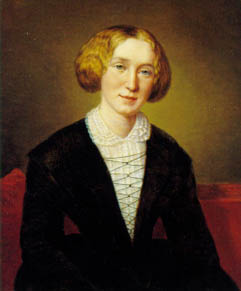
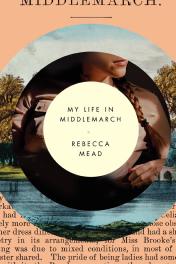 I enjoyed a lot about my graduate seminar on George Eliot, but it was a source of some pedagogical frustration for me. I felt all term that I was talking too much, for instance. But also I felt somewhat confused about the aims of the seminar now that we’ve all openly admitted that graduate school isn’t now (if it ever was) wholly populated by people aiming at academic careers. I couldn’t decide how much that could or should change the conversations we had in class, the research I asked the students to do, or the kind of writing I asked for. I don’t think it’s possible to turn a specialized seminar in a particular discipline into an all-purpose smorgasbord of skills and knowledge, so in the end I didn’t change much of what I’ve routinely done in graduate seminars. But I did (for the second time) include a blogging component aimed both at encouraging preparation for our once-a-week face-to-face sessions and at increasing the students’ comfort with the idea of writing more publicly. I also included as options seminar topics on George Eliot ‘outside’ the academic context, which led to three presentations on recent ‘popular’ versions of George Eliot: Diana Souhami’s Gwendolen, Rebecca Mead’s My Life in Middlemarch, and the BBC adaptation of Daniel Deronda. These examples all gave them real-life proof that people talk about, write about, and care about Victorian literature in non-academic contexts, and the presentations all raised good questions about how and why they do, especially in comparison to the kinds of reading and writing that are more typically academic.
For me, it didn’t feel like a great term, but I think overall it went smoothly — as surely it should, after all these years. I think one reason it felt rough at times is that I was mentally (and sometimes emotionally) preoccupied with my promotion case, which has been moving slowly along through its various stages. For obvious reasons, this is not something I can address in detail here, at least before it’s all over. I will say, though, that in general it has already been a learning experience, in some ways a very good one (thought-provoking, constructive, illuminating) and in other ways an unwelcome one — it’s one thing to anticipate what executive types call “pushback,” after all, and another to see what form it actually takes. Eventually (once I know the ending!) I may have a longer tale to tell.
Next term I hope to have a bit more straight-up fun in the classroom — even though it is winter. I’m teaching the mystery class again, which I still find really stimulating even after teaching it almost every year for a dozen years. One reason I think the atmosphere is generally so positive and the students so engaged in this class is that it’s an elective for everyone: this can have its down sides (sometimes it’s not a top priority for students, for example), but mostly it means hardly anyone is there who doesn’t want to be. Plus, of course, I do try to make it as lively, interesting, and thought-provoking as I can!
 My other course is yet another incarnation of “The 19th-Century Novel from Austen to Dickens,” for which as usual I have mixed up the reading list: instead of Persuasion, I’ve switched in Pride and Prejudice (which I haven’t done in 5 years); instead of Waverley, I’m bringing back Vanity Fair; instead of Jane Eyre, we’ll read The Tenant of Wildfell Hall*; and then I’m pairing Mary Barton and Hard Times at the end. Mary Barton is not as accomplished a novel as North and South, but its raw power always surprises me, and its importance as a social novel is perhaps greater. Hard Times is not everyone’s favorite Dickens novel, but I think it too is very powerful in its strange, excessive, fabular way. It’s a line-up I chose more for variety than continuity: the last time around, the novels were all variations on the Bildungsroman. I am most curious about how Vanity Fair will go over; I think the last time I assigned it was 2008. Will I need to stage an intervention, as I did last time with Waverley? Or will the inimitable Becky carry them all along with her, in her unscrupulous clamber up the social ladder?
*Update: So much for working from memory: I chose Jane Eyre again for this round, as I was reminded today when I went to check the stock in the bookstore! I was a bit disappointed to realize that at first, but actually it’s good, as 2016 is the 200th anniversary of Charlotte Brontë’s birth, so we really ought to be reading her most famous book. And I do love Jane Eyre.

 But it turned out that although I am the only person in my book club who doesn’t own (and love) dogs, most of the others also didn’t like the book much. One was offended by it because she loves dogs and thought the book showed Alexis doesn’t actually like them: his version of them is negatively selective, uncharitable, she proposed. The nobility of the dog who waits years for his owner to come back struck a chord with some of the others (though why this dog, in spite of his grasp of human language and motives, never figures out that she has died did bother us). We all agreed with the one who cried that the last dog’s death was very pathetic — but she recently lost her own dog, so she thought she might have also been emotionally vulnerable. I was the only one who had gotten both distracted and annoyed by the weirdly specific allusions to Victorian novels (if you were going to train your preternaturally talented dog to recite just one 19th-century novel, would you choose Vanity Fair? and what is it exactly that makes Mansfield Park the pooch’s preferred Austen?). In general, the complaint was simply that it wasn’t very engaging, though as is often the case, as we talked we found it getting more interesting, at least theoretically: why does the acquisition of language so immediately cause such a deep rift? what is it about poets that makes them both outcasts and – or so Alexis proposes – the only ones likely to find happiness? We had a little fun going through the poems, too, looking for the hidden dog names that we’d missed the first time.




 Years ago, when our children were very little, we decided we were not going to lie to them about the existence of Santa Claus. Though as I recall we did debate it a little, in the end it was not a difficult decision, and it is not one we have ever regretted. As far as possible, we always try to be honest with our children and didn’t like the idea of one day disillusioning them–not just about Santa, but about us (“Yes, Mommy and Daddy lied to you repeatedly, because we thought it was cute!”). Of course we understand that people who pretend Santa Claus is real do so in the cheerful spirit of fun, fantasy, and fairy tales, and overall it’s probably a harmless kind of thing, but we also have a general aversion to unreality when it comes to explaining how things work in the world. No astrology, no alchemy, no holistic medicine or faith healing, no supernatural beings, no Santa Claus.
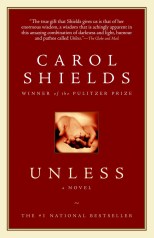 In a way, this post is also about “this week in my classes,” as it is prompted by the serendipitous convergence of my current reading around questions we’ve been discussing since we started working on Carol Shields’ Unless in my section of Intro to Lit. In our first session on the novel, I give some introductory remarks about Shields — a life and times overview, and then some suggestions about themes that interested her, especially in relation to Unless. One of the things I pointed out is that she also wrote a biography of Jane Austen; in an interview, Shields said “Jane Austen is important to me because she demonstrates how large narratives can occupy small spaces.” We come to Shields right after working through Woolf’s A Room of One’s Own, so I also bring up Woolf’s pointed remark: “This is an important book, the critic assumes, because it deals with war. This is an insignificant book because it deals with the feelings of women in a drawing room.” Both Shields and Woolf are thinking about the relationship between scale and significance, and both of them are drawing our attention to the ways assumptions about what matters — in literature, particularly, since that’s their primary context — have historically been gendered.
 Reta’s redrafting is disrupted by her editor, an officious American (of course! Unless is a Canadian novel, after all) named Arthur Springer who has even bigger plans for Thyme in Bloom, which (significantly) he proposes she retitle simply Bloom. His idea is that Alicia should fade into the background while Roman emerges as the “moral center” of the novel. This, he insists, is necessary for the novel to graduate from “popular fiction” to “quality fiction.” He also proposes that Reta retreat behind her initials: she will become R. R. Summers (“Winters” is her husband’s surname). This way her new (“quality”) book can’t possibly be associated with her, or with her earlier (“popular”) novel.
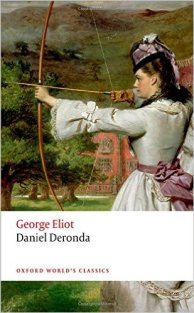 One of them is Daniel Deronda, which I’ve just finished reading with my graduate students. This novel is famously bifurcated between Gwendolen’s story (a highly personal, small-scale drama) — and Daniel’s (which starts out on a similarly domestic scale but opens out into a potentially epic, world-historical story). Is Gwendolen condemned to insignificance when she is left behind to suffer at home while Daniel goes off to (perhaps) found a nation? The literal scale of Eliot’s treatment of Gwendolen is not belittling: she gets at least half the huge novel to herself, after all. Perhaps this novel insists, formally, on an equivalence between two kinds of significance, one of which occupies a small space. Or perhaps what’s significant is Gwendolen’s discovery of her own insignificance. “Could there be a slenderer, more insignificant thread in human history,” asks the narrator,
 Neither of these novels, however, whatever their differences, feels in any way light, despite the intimacy of their core casts of characters. It’s the treatment, not the subject, that gives literary significance, isn’t it? Austen’s novels don’t feel trite even though viewed narrowly they are “just” about a handful of “ladies and gentlemen, in their elegant but confined houses” (in Charlotte Bronte’s words) — because her love stories are also stories about values and class structures and social changes with far-reaching effects. When Isabel Archer accepts Gilbert Osmond’s proposal, it feels large because James has imbued Isabel’s choices with philosophical consequence: her decision isn’t just to marry or not to marry, but about how to use her freedom, and about what to value and how to value herself. These are personal questions but also abstract ones, and so the small space of her individual life occupies a large narrative (by which I don’t mean, though I could, just a long book).
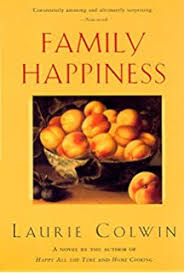 I have been thinking that this constellation of questions (not really any answers) is relevant to the discussions about why, say, Jonathan Franzen’s novels about family and private life get treated as more significant than some other books that are about similar topics. Gender may well be part of the explanation, but it would be disingenuous to pretend we don’t know that some books by both men and women simply do more with their material than others, and that that scale — the scale of meaning, of treatment — is ultimately where literary significance lies. But this post has gone on long enough without really arriving anywhere in particular, so that’s probably as good a place to stop as any.
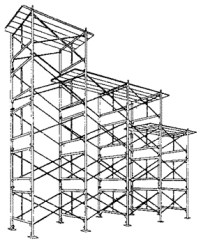 We are rapidly nearing the end of term, which means a lot of time and thought on all sides is going into final assignments. In my Intro to Lit class, I’m particularly conscious of this phase of the course as a time in which I pull back and see if the scaffolding I have tried to build for the students, starting on the first day of classes, supports them now that they have to do their biggest independent project. Last week I gave them a self-assessment exercise that, among other things, asked them to let me know what they thought the teaching staff could do to help them succeed — what else, I should say, since it’s not as if my TAs and I have been passive so far. It was useful to see what they identified as their own strengths and weaknesses. Their anxiety pretty clearly centers on building a viable and interesting argument out of the details they notice while reading. A number of students said that they wished we would “explain” the readings to them more clearly: as I discussed with the class, if this means “tell them the answer to the readings,” tell them what to argue about them, then they aren’t going to get their wish, since learning to develop and support their own interpretations is really the primary course objective. I’ve been stressing the process that leads to a good interpretation, which is what we model and practice in every class, but I’m not going to offer them a “nugget of pure truth to wrap up between the pages of [their] notebooks and keep on the mantel-piece forever,” even if (as Woolf ironically observes) this is “the first duty of a lecturer.”
 My graduate students too are facing end-of-term hurdles. Here my scaffolding has been somewhat less meticulous or overt, but I hope our directed conversations all term have given them lots of ideas to work with as well as a good sense of how to talk about them. They also wrote proposals for their final essays last week, which I have returned to them with comments and suggestions. For the next two weeks, our class time will be dedicated to their presentations. In previous years I’ve integrated presentations into the term’s work, but this year I wanted to use them to extend our class discussions beyond the assigned readings, so I have two students presenting on works by George Eliot that weren’t otherwise on our syllabus, and three presenting on contemporary interpretations of Eliot’s work — Diana Souhami’s Gwendolen, Rebecca Mead’s My Life in


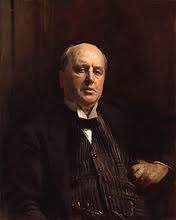 We interrupt our regular programming (specifically, a pending but dispensable installment of ‘This Week In My Classes,’ featuring more moping about how badly Woolf’s A Room of One’s Own always seems to go over with my first-year students, plus some rueful ruminations on my own inability to shut up and let the students in my graduate seminar talk more) for this important preliminary observation about rereading The Portrait of a Lady:
 So far (a mere 75 pages into this edition’s 490) the prose of Portrait itself is only occasionally as baroque as the Preface, but the sentences do often have a similar halting quality (“he was not romantically, he was much rather obscurely, handsome”). More frequently, they oblige me to start them over because I’ve lost track along the way of exactly what the subject and main verb are:
 I’m not irritated at Isabel, though. In the Preface James quotes a line from Daniel Deronda that captures the inspiration for his own novel: “In these frail vessels is borne onward through the ages the treasure of human affection.” “How absolutely, how inordinately,” he says, these frail vessels “insist on mattering”: what he wanted was to write a novel in which, despite that fragility, the “vessel” would bear the whole weight, without “having [her] inadequacy eked out with comic relief and underplots,” as he notes George Eliot did with Hetty and Maggie and Rosamond and Gwendolen. “Place the centre of the subject in the young woman’s own consciousness,” as he puts it, “and you get as interesting and as beautiful a difficulty as you could wish. . . . So far I reasoned,
