
In the long moment before the curtain fell, he had time to feel the whole tragedy of her life. It was as though her beauty, thus detached from all that cheapened and vulgarized it, had held out suppliant hands to him from the world in which he and she had once met for a moment, and where he felt an overmastering longing to be with her again.
The House of Mirth reminded me again and again of other novels. In Lily Bart I saw Gwendolen Harleth, proud and sure in her beauty and her certain good fortune until she learns she cannot in fact control her own fate; I saw Isabel Archer, similarly proud and sure and beautiful, then caught in traps set by people more subtle and more corrupt than she is; perhaps because I just read Vanity Fair, I also saw Becky Sharp, motherless, nearly friendless, determined to invest the capital of her wiles and charms where she will get the best return at the least risk. Lawrence Selden plays an off-center Deronda to Lily’s conscience, which like Gwendolen’s is capable of a saving (but paradoxically destructive) clarity about moral hazards and compromises; Mr. Rosedale is Sir Pitt without the peerage, or Grandcourt without the malice.
I don’t mean that The House of Mirth is derivative, only that these books all present us with variations on a theme: what is a young woman of high spirits to do in a world that limits her options so severely and judges her equally harshly for trying to make something of herself and for failing in the attempt? “It was a hateful fate,” reflects Lily, contemplating marriage with a rich man who will “do her the honour of boring her for life” — “but how escape from it? What choice had she?” Brought up to see marriage as their only means of survival (and perhaps of happiness), equipped to do little more than charm but convinced at first of the sufficiency of this necessary skill, all of these women learn hard lessons about their real lack of social, economic, and even personal power. Their novels are all, as a result, deeply depressing and openly condemnatory — not, ultimately, about their heroines (with the possible exception of Becky), but about the hypocrisy and vapidity of the worlds they portray. Lily “could not hold herself much to blame” for her failures to find a productive alternative to the role she has been raised to fill:
Inherited tendencies had combined with early training to make her the highly specialized product she was: an organism as helpless out of its narrow range as the sea-anemone torn from the rock. She had been fashioned to adorn and delight; to what other end does nature round the rose-leaf and paint the hummingbird’s breast?
“It was the life she had been made for,” she concludes:
every dawning tendency in her had been carefully directed toward it, all her interests and activities had been taught to centre around it. She was like some rare flower grown for exhibition, a flower from which every bud had been nipped except the crowning blossom of her beauty.
 It’s an image that is specific to Lily’s situation and history, but it’s also the familiar refrain of women seeing the myth of their influence, and the perfection of their weakness, exposed as lies that serve everyone but them. It’s not just Becky shamelessly marketing herself, but Amelia, trying to scrape together enough money to keep her son at home, and Gwendolen presenting herself to Klesmer in the vain belief that she can be a great singer just by wishing it so, and Isabel imagining she has not just the freedom but the wisdom to choose her future.
For all the similarities, what’s so interesting is how differently the story plays out in each case, not just in the plot but in the whole mood the authors establish, which becomes part of the moral vision they present. Wharton is the only one who takes us all the way to tragedy: she is the only one who risks despair, rather than offering remedies, which is perhaps a sign of her modernity. Even James leaves Isabel standing, and at least by the end of the novel she has become more knowing, which in James’s universe may be the equivalent of grace (to be saved is to be one of the people on whom nothing is lost). Lily and Selden have a final encounter that is very much in the spirit of Eliot’s moments of redemptive fellowship, and Lily’s meeting with Nettie Struther and her baby offers her (and thus us) a vision that transcends the relentless downward spiral of her life:
In whatever form a slowly-accumulated past lives in the blood — whether in the concrete image of the old house stored with the visual memories, or in the conception of the house not built with hands, but made up of inherited passions and loyalties — it has the same power of broadening and deepening the individual existence, of attaching it by mysterious links of kinship to all the mighty sum of human striving.
Such a vision of the solidarity of life had never before come to Lily.
In Eliot’s fiction that wider perspective is precisely what draws a suffering protagonist out of her own misery and into sympathy with the larger world. But though Lily’s “surprised sense of human fellowship took the mortal chill from her heart,” it does not help her but only fills her with a deeper horror at the isolation and futility of her own lonely existence. Perversely, the “height of her last moment” with Selden and the unexpected glimpse of something sweeter become moments too precious to survive: “If only life could end now — end on this tragic yet sweet vision of lost possibilities, which gave her a sense of kinship with all the loving and foregoing in the world!”
 Lily’s life does end on a “tragic yet sweet” note: tragic because she is hopeless and, she believes, loveless; sweet because she spares herself (or is spared — Wharton carefully avoids the specificity of suicide) the further — perhaps even worse — compromises she sees in her future, and also because at least in death she is loved for herself, not just for the market value of her beauty. I don’t think Wharton means to leave us in despair, despite Lily’s catastrophic decline: Selden’s belated arrival is one sign that something better is at least imaginable. As he thinks, kneeling by her death bed, “at least … if the moment had been fated to pass from them before they could seize it, he saw now that, for both, it had been saved whole out of the ruin of their lives.” That such a moment is even possible is a slim but real victory for optimism. That its promise is unfulfilled leaves us with the dissatisfaction that we also feel finishing Daniel Deronda and The Portrait of a Lady. Surely something better should be possible for these remarkable women: what a waste their worlds have made of them!
I read The Age of Innocence a few years ago but retained little specific impression of Wharton’s style, so I didn’t really know what to expect when I began The House of Mirth — something, I feared, closer to Henry James than to George Eliot. But while Wharton is nearly as minute in her attention as James, her prose is much more direct and energetic. She rarely reaches for the kind of broad philosophical perspective George Eliot always offers, but at times (and particularly in the bit I’ve quoted above about the “mysterious links of kinship to all the mighty sum of human striving”) she sounded a lot like Eliot, so much that I wondered if for her as for James, Daniel Deronda was a specific influence. Though the books are very different in structure and scale, Wharton also shares Eliot’s ruthlessness about the moral consequences of our actions, and her compassion for someone who has tried to be better and failed. Lily would have suffered much less (as would Gwendolen) if she were less self-aware and better insulated against her own conscience. The milieu in which Wharton’s characters move is as compressed in its own way as any of Austen’s country towns, and the social interactions have the same intensity of implication. In a way, I felt I was getting the best of all these worlds: a crisper, brisker narrative but one that is at least as incisive and certainly as pathetic as any of the others.
 I got a bit snippy with the tweeters from Oxford World’s Classics a couple of days ago. Poor things: they were just doing their job, spreading some news about great books and trying to get people to click through and read it. How could they know that I was already feeling grumpy, for reasons quite beyond their control, and that this particular gimmick pushes my buttons on a good day?
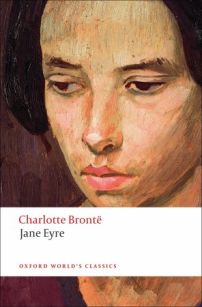 But (and you knew it was coming, right?) if for some absurd reason I absolutely had to choose, not which novelist is in any absolute sense “the greatest” but whose team to play on, it would be Brontë all the way — and I say that having only just enjoyed Pride and Prejudice entirely and absolutely for about the 50th time. We’ve just started working our way through Jane Eyre in the 19th-century fiction class and what a thrill it is. I know it’s a cliche to associate the Brontës with the moors, but it does feel as if a fresh, turbulent breeze is rushing through, stirring things up and bringing with it a longing for wide open spaces. The freedom and intensity of Jane’s voice, the urgency of her feelings, and of her demands — for love, for justice, for liberty — it’s exhilarating! I brought some excerpts from contemporary reviews to class today to demonstrate the shock and outrage with which some 19th-century critics received the novel: it’s striking how much the very qualities that enraged and terrified them are the same ones that make so many of us want to cheer Jane on. By the end we know that we should not have allied ourselves so readily with Jane’s violent rebellion, and we may even be equivocal about the conclusion to her story, but I think it’s impossible to read the novel and not be wholly caught up in her fight to define and then live on her own terms.
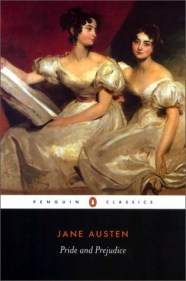 I started rereading Emma recently and had to put it aside. I appreciate that it is aesthetically and morally complex and infinitely nuanced, but I felt smothered by it: I found it claustrophobic. Brontë’s criticism of Austen is well known: she told G. H. Lewes that in Pride and Prejudice she found only “an accurate daguerrotyped portrait of a commonplace face; a carefully fenced, highly cultivated garden, with neat borders and delicate flowers; but no glance of a bright vivid physiognomy, no open country, no fresh air, no blue hill, no bonny beck. I should hardly like to live with her ladies and gentlemen,” she went on, “in their elegant but confined houses.” I think she underestimated the novel — a lot of people do, still, who see just the delightful characters moving on the surface and not the currents of social and historical change carrying them along. I’m also sure that my trouble with Emma is about me, not Austen. But I understand Brontë’s reaction, and it is just the one you would expect, too, from the author of such an entirely different book, one that opposes itself in every way to both literal and mental confinement. I think that’s why Jane Eyre refreshes my soul: it rushes with us out into the hills. Jane is so defiant, so passionate, so forthright: she speaks up so fearlessly, for herself and for the right! I wish I could always do the same: I admire her principles and envy her courage. So much as I would miss Elizabeth Bennet if for some reason I had to give her up, Jane’s the one I really couldn’t do without.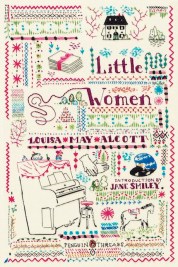
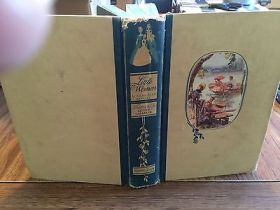 I used to read about them in my mother’s old, cherished copy: I discover, peering around online, that it was the “Illustrated Junior Library” edition from Grosset and Dunlap, with an original copyright date of 1947. The cover alone is immediately evocative of my childhood! I loved the novel and reread it often; I had been feeling mournful that I didn’t have a nice copy of my own, so I put the Penguin Threads edition on my Christmas wishlist this year and was thrilled to get it. It’s very satisfactory: not only is the cover delightful to an embroidery buff like me, but the whole volume is tactile in all the right ways, from the raised graphics on the artwork to the heavy, deckle edged pages. It feels the way a classic should.
 Like a lot of other early – to mid- 20th-century women’s fiction I’ve read (Elizabeth Taylor’s
  I ended up thinking that its lack of direction and energy was its governing idea. The narrator is stifled by her family life and by the social constraints on her behavior as well as her options: she would like to have a vocation, but she can’t really imagine what it might be. The visit that changes everything by showing her how other people live actually changes very little, at least about how she can live: its effects arise only through the new connections she makes, most of which turn out to be far less consequential than she expects. Even when they do lead to something significant (like a marriage proposal), the promised transformation ultimately has no appeal. The one big change that finally occurs at the novel’s end is so artificial, so unanticipated, that it doesn’t seem to solve or promise anything either, except perhaps that it is the beginning of the real bildungsroman, the real story of her life, which we don’t get because our novel is the story of the stuttering, inchoherent, mostly pathetic existence that preceded it. (Is it also factitious? There’s an odd moment when she frankly remarks her difficulty in figuring out how to end the autobiographical novel she’s writing / we’re reading.)
 That she is well-suited to be a writer is often asserted by people she meets, mostly because she is so observant. I suppose The Beautiful Visit does give us some evidence of that: mostly silent herself, the narrator watches those around her with a sharp, if often somewhat puzzled, eye. Her lack of experience limits her insights into others as well as herself, but what she sees, she describes. That her account is so episodic suggests her own lack of direction. Other people find her more interesting than I did: when the young man she met on the initial visit reappears and declares his passionate love for her, I wondered if he had mistaken her for someone else because she seemed such a shadow of an actual person. Is that the necessary quality of a writer, to be self-effacing enough that they elude our attention even as they claim it?
 Mantel makes the Cazalet Chronicles sound well worth reading. I’m not sure how convinced I am, however, by her broader argument that Howard is relatively unknown “because she’s a woman” writing what were perceived of as “woman’s books.” “Good books by women,” Mantel rightly notes, “fell out of print and vanished into obscurity: not just because, as in the case of male writers, fashion might turn, but because they had never been properly valued in the first place.” But I’d have to read more of Howard’s novels to see if I think they are as good as Mantel does. “Her virtues are immaculate construction,” she asserts, “impeccable observation, persuasive but inexorable technique.” I didn’t discern these qualities in The Beautiful Visit: nothing about it seems to justify falling into critical rhapsodies. I’m quite prepared to believe I am missing something about it, though — that I could learn to read it better. I’m looking forward to our discussion on the weekend.
 Thanks to Dalhousie benefactor
  In 19th-Century Fiction, we focused today on Chapter 53, “
 I got to do an extra class this morning, making a guest appearance in a colleague’s first-year seminar. I say “got to” because although it was extra work, it was of a particularly pleasing kind, as she asked me in to speak on the role of “Dover Beach” in Ian McEwan’s Saturday. I taught the novel myself an astonishing (to me) nearly 10 years ago, so I had some notes to draw on but, oddly, none specifically on the scene with “Dover Beach,” so that left me some work to do! I am
 Vera Brittain’s
 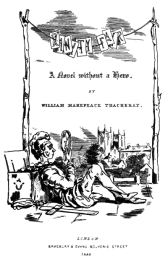 Teaching Vanity Fair is always a morally significant experience: it prompts so much reflection on what really matters, both in the world you actually live in, and in the world you wish you lived in.
 I can tell I sound peevish, and I suspect, too, that I’m not doing the novel justice — that I was reading it wrong, that I am hung up (as we can all get) in wondering why it isn’t a different kind of book, my kind of book, instead of the book it is. But I am also trying to put my finger on what about it turned me off, especially because it took a while for me to start chafing against it. Perhaps it is telling that my irritation began more or less when it switched from his story to hers, and she’s the one with the malignant capacity for deceit, she’s the angry one, she’s the one who may not, in spite of what Lotto thought, have “goodness at her core.” We’re supposed to be uncomfortable with her, I’m sure — but in her beautiful duplicity does she turn out to be just a sexist cliché, a kind of modern-day Duessa? Or is my vision of her as wrong as Lotto’s?
 Defining my terms, which in turn will define my boundaries, is clearly one of the first thing I have to do. It’s inevitably going to be a somewhat arbitrary exercise, and the stakes aren’t that high given that the course is one of our first-year writing requirement classes and, as the calendar description implies, its main purpose is just to begin students’ training in literary studies. It doesn’t have to be an in-depth, theoretically complex, or even particularly thorough exploration of pulp fiction, whatever that is. It differs from the first-year class I usually teach (Introduction to Prose and Fiction) only in having what we hope is a sexier hook — it promises readings that at least sound more fun than what you might get in a standard literature class. Students in recent incarnations of the course, then, might have been surprised to find themselves reading Pride & Prejudice, Jane Eyre, or Much Ado About Nothing, all of which I have seen in recent Pulp Fiction syllabi!
 I’m not actually 100% sure True Grit is “pulpy”: does it transcend its genre? I think maybe it is to the general run of Westerns what Hammett or Chandler might be to crime fiction: still definitely of its kind, but the best, or most intense, version of it. Its story is simple and its pacing is relentless, but it’s the narrator that makes it particularly interesting. Mattie bristles with paradoxical qualities: she’s prim, abstemious, and insistently righteous, even as she’s razor-sharp and ruthless. She won’t touch a drop of whisky (“I would not put a thief in my mouth to steal my brains”) but she doesn’t hesitate to pull the trigger when she finally comes face to face with her father’s killer (“I pointed the revolver at his belly and shot him down”). She doesn’t much like the sight of hangings, but when she has to, she pulls the arm off a corpse and uses the long bone to save herself from falling into a pit of rattlesnakes (“I was grateful to the poor man for being tall”). Is she hilarious or heroic? Both and more, I think, and it’s her combination of naiveté and grit that wins over her jaded allies, who don’t want her along but then won’t leave her to die. And we hear all about it in the voice of aged Mattie, who still has no patience for people who waste time on pointless talk:
 It always takes a couple of weeks for a term to rev up and really get going: we have to get through a certain amount of reading, for example, before much writing can be done and thus for much marking to be needed. We are passing that point now, though, and this week I have already returned some paper proposals, there’s a batch of tests waiting for my red pen, the pace of submissions has picked up on reading journals, and that won’t be the end of it — not just this week but really for the whole term, since I have built in so many ‘small’ assignments (as part of my attempt to emphasize
  I should say that I think our final sessions on Pride & Prejudice went well in the 19th-Century Fiction class last week: whatever
 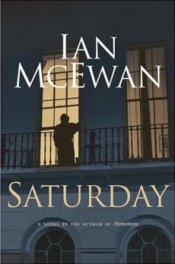 I’ve also got a guest lecture on Ian McEwan’s Saturday coming up for a colleague’s class that seemed remote when I agreed to it but is now (eek) just over two weeks away. Wouldn’t you know it: I have a whole folder of materials on Saturday from when I taught it myself in 2006, but somehow I have no lecture notes specifically on the significance of “Dover Beach” in the novel, which is what I proposed talking to her class about (what with my being a Victorianist and all). Since I haven’t actually read Saturday since 2006, I should probably add rereading it to my to-do list…
 Novel Readings