
The problem with the multiplicity of the self — an idea that appealed to minds as wide-ranging as Virginia Woolf’s and Lolo’s, not to mention Cher’s — was that you never knew which part of you anybody was talking about. The problem with the multiplicity of the self was that there could be enough of you to get spread all over town.
I knew I wanted to read Mitzi Bytes as soon as I saw that it was being pitched as “a grown-up Harriet the Spy for the digital age.” Harriet the Spy was one of my favorite books as a child — though I discovered today that, to my dismay, I apparently no longer have my well-worn copy. I loved the premise of Mitzi Bytes: a pseudonymous blogger who gets “outed,” just as Harriet does, and then must disentangle herself from the consequences. And I knew I could trust Kerry Clare to tell a good story, one with wit and tenderness, but also with some bite, because these qualities are all on display at her excellent blog Pickle Me This, as well as in her conversations on Twitter, where we are what Sarah Lundy, the protagonist of Mitzi Bytes, might call “virtual friends.”
Mitzi Bytes did not disappoint: I enjoyed it from start to finish. Even better, I was interested in it, particularly in the questions it raises about voice, identity, and perception, and about how (or whether) we really know ourselves or each other. [Warning: though I’m not going to walk through the many entertaining twists of the plot, I’m also not going to avoid spoilers.] When the novel begins, Sarah believes that her identity is divided between the person she is “IRL” and the persona she inhabits on her blog:
Was Sarah Lundy Mitzi Bytes? She said she owned her words, but did she really? Once upon a time, Sarah had aspired to be Mitzi. She’d needed a life, so she’d invented one, and for a while, the two led the very same existence, one whose adventures she’d turned into stories because the stories were all that she had. But somewhere along the line, her two selves had diverged.
Sarah feels safe in her online anonymity because she assumes nobody she knows would recognize her in herself. But when her secret life is exposed, this comforting belief proves naive. Though some of the people in Sarah’s life have indeed been ‘Mitzi Bytes’ readers without identifying her, it turns out, for instance, that no pseudonym could hide her from her mother, and though her husband had no idea ‘Mitzi Bytes’ existed, Mitzi herself is perfectly familiar to him:
She said, “Do you hate me now?”
He said, “Because you’ve just revealed that you have a vicious streak, no compunction, are socially clumsy, and talk far too much about everybody else’s business?”
She said, “I guess so.” She got out from under his arm and moved away so she could see his face. . . .
“I didn’t know about the blog,” he said, “But I know you.”
And really, how could Sarah have so blithely imagined that her own voice would not speak for her, at least to those who knew what to listen for? What is a blog, after all, if not a kind of dramatic monologue in which, as always, character relentlessly reveals itself? “It was a world I recognized,” says one of Sarah’s friends after the story breaks and she reads the blog for the first time; “It was so totally you.”
Mitzi Bytes also highlights the impossibility of telling the story, rather than a story. Sarah believes that when writing as Mitzi she has only ever been honest, but as she hears from the people who became, unsuspectingly, her subjects, she is forced to acknowledge that being honest doesn’t preclude being partial. “I only ever said what I meant,” she writes in a belated apology, but the stories she told “only ever stood for a single side, a tiny sliver of a single side of that many-sided thing: The Entire Story. Life itself.” Her pseudonym freed her to describe “life the way I see it,” but it also shielded her from the obligation to consider how other people saw it, to weigh her own first-person narration against competing points of view. It is a narrative failure, in other words, with moral consequences, which the structure of Mitzi Bytes itself highlights as it alternates between Sarah’s plot (in 3rd person) and cleverly apposite samples from the ‘Mitzi Bytes’ archives. The blog posts are brisker and funnier than the ‘novel’ portions, but especially as we get to know the characters Mitzi blogs about, their skewering wit becomes increasingly uncomfortable, and it’s hard not to agree that Sarah’s angry friends have a point when they rail against her betrayal of their trust.
 There’s a lot else that I appreciated about Mitzi Bytes, including its many deft literary allusions, from Harriet the Spy (the dumbwaiter!) to Unless (which I flatter myself I would have noticed even without a heads-up). I was also moved by its honest portrayal of Sarah’s struggle to retain her own sense of self after becoming a wife and mother. (For more about this topic, see the essay collection Kerry edited, The M Word.)
The aspect of Mitzi Bytes that I found most thought-provoking, though, was its treatment of blogging. “I just didn’t really see the point. Of blogs at all, basically,” Sarah’s husband Chris says to her as she’s making her confession to him about ‘Mitzi Bytes.’ Kerry wryly acknowledges that blogs are no longer the cutting edge medium they once were: “Blogs were for old people,” notes one of the teen-aged moms Sarah tutors, while her editor tells her bluntly that “Blogs aren’t big news anymore. Unless they’re dying.” Those of us who keep on blogging nonetheless do so for reasons that Kerry, via Sarah, does a good job explaining. Some of the anger directed at Sarah once she is outed as Mitzi comes from people not understanding the form or spirit of a blog and thus taking her posts as something more declarative than they are, or were ever intended to be. I think most bloggers would agree that a blog is always a work in progress, a place of intellectual exploration rather than definition. “To me,” Sarah-as-Mitzi writes,
this has always been the attraction of the blog, that it’s a place to record impressions of the innumerable atoms as they fall, to decipher the universe, assembling the chaos into a pattern of days, weeks, and years.
Blogging is open-ended in a way that allows for ongoing discovery: “the best posts,” as Sarah reflects,
began from a jumping-off point instead of with a careful route plotted on a map. Every time she posted, it was just a little bit an act of faith.
To me, that certainly sounds both familiar and true. I was thinking recently about why I’m not quite comfortable with calling my blog posts “reviews,” and that exploratory spirit is one reason. There are obligations in reviewing that, for me anyway, don’t exist for blogging, and while I craft and structure and revise reviews until they are just so, I usually start writing blog posts about books (including this one) with no specific plan except to reflect on my reading experience and see where it takes me. I relish that freedom, even though — or maybe because — it means the results are always a bit ragged or imperfect.
 The division (however unstable) between Sarah’s “real” life and her blogged experiences also resonated with me, but in this case because my own experience of that split in identities is the reverse of Sarah’s. Because I blog under my own name, I have mostly avoided discussion of my personal life, for instance, including writing only occasionally and very selectively about my family and almost never about my friends. I think of ‘Novel Readings’ as a personal but also a public space, not a private one. Though I have certainly addressed some fraught issues (especially around my professional life) and some emotional ones, I think (though like Sarah, I may be deluding myself!) that by and large my online persona is better (more positive, more generous, more temperate) than I sometimes am offline. It’s not that my blog doesn’t represent who am I, but like ‘Mitzi Bytes,’ ‘Novel Readings’ represents only parts of who I am — the better parts, I usually think, though over the years there have certainly been slips. Though I can see the appeal of a blog where I could really let loose, as Sarah does when writing as Mitzi (and as some anonymous academic bloggers once did – remember “BitchPhD”?), I have come to appreciate the pressure to rise to my own standards here.
I think in a way that is the lesson of Mitzi Bytes— though I am reluctant to boil it down to anything that sounds so didactic: that you have to both own and live up to the person you are capable of being. By the end of the novel, the plot complications are mostly resolved but their emotional aftermath remains. Having to confront and then try, as best she can, to reconcile the different pieces of her life finally prompts Sarah to “show her face to the world” — her best face, if she can. It will be a work in progress, but this time an aspirational one, and of course, she’ll still “put it down in words,” because that remains the best way to find out what she means.
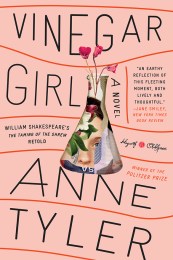 Vinegar Girl, Anne Tyler’s contribution to the Hogarth Shakespeare project, is basically a romantic comedy — the “indie” version, a bit quirky, a bit acidic, a bit sweet. In fact, it is both sweeter and more romantic than I expected: it has been decades since I read or saw The Taming of the Shrew, but at least in my memory, Shakespeare’s play is much more rambunctious and much harder to swallow, though that may be because the version I remember best is the Taylor / Burton one. I’ve also seen 10 Things I Hate About You more than once, and it too is harder-hitting than Vinegar Girl, though it is also more joyful.
 As this line suggests, there’s not much taming in Tyler’s version, which I appreciated. Kate’s prickly personality instead is part of her appeal. Katherina’s famous closing speech becomes a rant from Katherine, not about how wives should lovingly obey their husband’s, but about how hard it is to be a man who always has to hide his feelings, while women “have been studying people’s feelings since they were toddlers.” “It’s like men and women are in two different countries,” she explains to Bunny, who accuses her of subordinating herself to Pyotr;
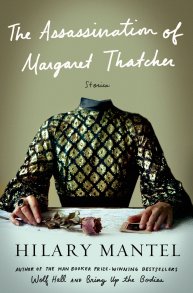 The adjectives in my post’s title all come from the nearly four pages of blurbs at the front of my paperback edition of The Assassination of Margaret Thatcher and Other Stories. Looking them over after finishing the book, I was struck by how consistent the clips are, and how accurate: “exhilarating if dark,” “brilliantly chilling,” “artfully controlled savagery,” “brutally dissecting,” “brusque and brutal,” “cruelty is made manifest,” “dark and judgmental,” “harsh and comic,” “satisfyingly chilling.” I agree that these are just the qualities of the stories in this collection. I’m just not as sure as either these reviewers or the publicity team at Harper Perennial seem to be that these are signs of its greatness — that they are, or should be, unqualified selling points.
 I found myself thinking, as I worked through the volume, about why I enjoyed the stories in Adam Johnson’s
  Anyway, the unusual silence here mostly reflects just how busy I’ve been, along with how tired I’ve been feeling when the work is done — too tired to do much good reading, too tired to do much extra writing. The reading I’ve done outside of work has mostly been light: I just finished both of
  I didn’t plan it this way, but it turns out that teaching Lord of Scoundrels at the end of a term that has also included Bleak House, Adam Bede, and Tess of the d’Urbervilles is a good way to bring home the truth of
  And yet, while the overt and (ultimately) happy sexiness of Lord of Scoundrels is indeed “awesomely excellent,” it’s not entirely fair to set up modern romance fiction as the positive alternative to punishing Victorian fiction, which I think can actually be quite “sex positive,” albeit usually in a much more subtle, and sometimes perverse, way. For one thing, the women who pay such a high price for breaking society’s rules are very often portrayed as victims: the novelists direct our disapprobation not against them but against the world that treats them so cruelly for something so understandable or natural. Lady Dedlock should not have died cold and alone reaching for her lover’s grave: all the moral and emotional force of Bleak House is directed against that outcome. It’s true that the implication may still be that she has sinned, but she deserves to be forgiven and brought back into the loving embrace of her long-lost daughter, our moral exemplar. Eliot and Hardy make it particularly clear that their “erring” heroines are participating (more or less willingly, of course) in a natural process made shameful and dangerous by social codes, not because it is intrinsically wrong. If only some reconciliation could be made between flesh and spirit, between nature and law — so much shame and fear and violence could be avoided!
 The March madness continues – indeed, I’ve been wondering how I managed not just to read but also to blog about actual books more than once last week. I felt quite on top of things for a bit, but two sets of papers have just come in, more paper proposals are incoming even as I write, and by Friday I’ll have another set of tests to mark … whew! The trick is just to take it one item at a time, and to take regular breaks for tea and treats. 🙂
 In 19th-Century Fiction we’ve been finishing up
 Only very gradually do the new realities of England at war make themselves felt. Food becomes scarcer, and extra preserves seem called for. Belgian refugees arrive, their suffering at first nearly overlooked in the villagers’ excitement at being part of “the great enterprise under way”:
 What interested and impressed me the most about The Summer Before the War as the inevitable catastrophe unleashes itself on our characters is that once the war is fully upon them, and us, it isn’t the contrast with the earlier, more innocent and bucolic, scenes that makes its horrors and losses so painful: rather, it’s the continuity. These are the same people, with the same dreams and values, the same attachments and affections — even the tone of the novel is very nearly the same in the trenches as it is when we’re in a sunny lane or a village shop. The Summer Before the War balances its attention between the battlefields and the home front, where loss leads too often to isolation. “On such a day as this,” thinks Beatrice, contemplating the bright morning of a planned festivity,
 I can’t believe Reading Week is already two weeks ago — but that’s what it’s always like when we come back. I don’t like to say that it’s all downhill from there, but it does always seem as if the term accelerates, even as the work accumulates. And there are just so many moving parts! All the routine business of class meetings continues, including doing the readings, preparing lecture notes or handouts or worksheets or slides, keeping attendance records, and just plain showing up and going through the whole song and dance number — which is the most fun part, but also the most tiring part. From now until after exams, there’s also a constant flow of assignments in and out, and that means getting topics and instructions up in plenty of time; there are tests to prepare — which has to be done earlier than it used to so copies can be dropped off for students with accommodations — and then to mark; there are forms for this and emails about that.
 One nice thing is that the readings for both classes provided rich fodder for discussion recently. In Pulp Fiction we’ve just wrapped up our time on The Maltese Falcon. For our last session we talked mostly about Sam’s choice between love and justice at the end of the novel. “If they hang you, I’ll always remember you” is hardly a conventionally romantic declaration, but coming from Sam, it seems like a lot! What I find so interesting is that it seems at least possible that he really does love Brigid (though he doesn’t seem quite sure, and neither were we, overall), but it just doesn’t matter to him that much: he’s not even torn over it. We’re so used to stories (and songs, and greeting cards) in which all you need is love, but Sam believes other things matter more (“when a man’s partner dies, he’s supposed to do something about it”), and why not, really? I’m reminded of the scene in The West Wing when Leo’s wife complains that to him, his job (as White House Chief of Staff) is more important than his marriage. “Right now, it is,” he says, and in context that doesn’t seem unreasonable. Sam is a pretty objectionable guy in other ways, so I would never hold him up as exemplary, but it’s refreshing to have someone take the position that “maybe I love you, and maybe you love me” might not be what matters the most. Plus, what a neat segue that sets up for our unit on romance fiction, which starts very soon.
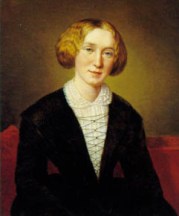 On a different note, I actually wrote most of an entirely different post on Wednesday in honor of International Women’s Day. I wanted to pay tribute in some way to the many women who have made a positive difference in my life: the women in my family, my dear friends, the women I work with, the women writers whose books enrich my life in so many ways, the amazing women characters they envisioned who have also served as my inspirations and role models. In the end, though, I decided not to post it, not because I didn’t mean it, but because I couldn’t seem to write it in a way that didn’t sound like vacuous gushing. Maybe that would have been fine, I don’t know, but it seemed shallow to me, when my intentions were just the opposite. Instead, then, you got this rather dull housekeeping post! I really do want to thank and celebrate these wonderful people: I’m just going to find a different way to do so.

 Tomorrow we start our work on Adam Bede in my 19th-Century Fiction class. As I was rereading the opening chapters last week, I tweeted, a bit facetiously, that you could probably “launch a successful attack on the whole foolish ‘show, don’t tell’ myth using excerpts from Adam Bede alone.” This was in part a delayed reaction to a comment on my post about Lillian Boxfish Takes A Walk: “it didn’t work for me at all as fiction,” Irene said; “A lot of telling, not showing.” To which I replied, “I’m a fan of telling. How could I not be, as a Victorianist?” Because when people invoke this supposed rule, what they usually seem to mean is that good writing should be dramatic, not descriptive, and that, above all, it should avoid extended passages of exposition — and what would Victorian fiction be without description and exposition? Frankly, I’ve also read a few too many
 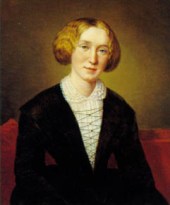 If your ideal fiction is not analytical in these ways, then showing might be enough for you. But that means your novels will never include anything like Chapter 15 of Middlemarch — in which almost nothing actually happens, but we, as readers, learn an enormous amount — or, to get back to Adam Bede, anything like its Chapter 15, “The Two Bed-Chambers,” which is a stunning set piece of characterization. It includes both showing and telling. The actions of both Hetty and Dinah, for instance, speak volumes about who they are: most obviously, Hetty stares into her mirror while Dinah gazes out the window. The narrator layers meaning onto their actions with pointed descriptions — Hetty’s “pigeon-like stateliness” as she paces back and forth in her shabby faux-finery, for instance, and Dinah’s tranquility as she feels “the presence of a Love and Sympathy deeper and more tender than was breathed from the earth and sky.” We are brought close into each character’s consciousness, and then drawn out again to a broader perception, which is the characteristic pulse of George Eliot’s fiction, and running through it all is her perspicacious commentary:
 I know that what some readers object to in Eliot’s style of telling is that she doesn’t seem to leave us to draw our own conclusions about her characters: her commentary usually steers us firmly in a particular direction. Her narrator is much less forgiving than Dinah, for example, about Hetty’s vanity, and so too is Mrs. Poyser, who sees Hetty’s “moral deficiencies” quite clearly. It’s not that she doesn’t leave us plenty to think about, though. Adam Bede dedicates much more than this one chapter to analyzing Hetty’s character and motives, for example, as well as to exploring the effect on them of her specific circumstances. A great deal of effort, in other words, goes into understanding Hetty — including the unarguable fact of her vanity, which means not just her pleasure in her own beauty but her inability to tell any story without herself at the center of it. Also, we know that “Hetty could have cast all her past life behind her and never cared to be reminded of it again” — which, in Eliot’s world, means she is morally unmoored. (“If the past is not to bind us,” as Maggie Tulliver will say in Eliot’s next novel, “where shall duty lie?”) What, though, is the relationship between this deep understanding (the kind required by Eliot’s theory of determinism) and forgiveness? If we can explain so thoroughly what someone does so, and if we are under a moral obligation to sympathize with them, what happens to accountability, to blame, to justice? If you know where Hetty’s journey takes her, and why, then you know how painfully these questions arise in Adam Bede.
 My point, I guess, is that this central problem of the novel is vivid to us — it matters to us — in part because of what we have been told. It is an intellectual problem, not (to borrow from Darwin’s post) a “scratch-and-sniff” one. Yet, having said that, it’s absolutely true that we feel its urgency in part because the narrator gets out of the way at crucial dramatic moments, such as during the novel’s second great set piece with Dinah and Hetty much, much later, in Hetty’s prison cell:
 Novel Readings