
We have all been broken in one way or another.
I probably wouldn’t label Katherena Vermette’s The Break as “crime fiction,” but it’s a good example of the difficulty and, at some level, the inutility or pointlessness of genre distinctions. It is certainly a novel organized around a single crime, and its plot includes an investigation into “whodunit” and why: its revelations involve social, political, and personal issues far more deep and complicated than we expect from, say, one of Agatha Christie’s puzzlers, but that just means if it is crime fiction it is in a different tradition than hers–there are a lot of genre writers, after all, whose plots are about social justice as much as individual cases.
I was thinking about this question of labels and categories because reading The Break I found myself wondering if it would be appropriate to assign it in the class I teach on “mystery and detective fiction.” I kept thinking how well it lends itself to the basic interpretive approach we often take: looking at the central crime as a symptom of whatever is wrong or broken in the world of the novel, and then at its investigation and (when it happens) its solution as the novel’s proposal for what it would take to fix things–to end up with what, on the novel’s terms, looks like justice. We often focus on who helps and who hinders the investigation, and about who is and who isn’t able to solve the crime: in a lot of the books we read, paying attention to these basic elements of the plot reveals patterns about who is or isn’t listened to, who does or doesn’t have authority or power–thematic patterns that usually turn out to reflect whatever moral rot or societal failure has led to the crime.
The crime at the heart of The Break can definitely be read in this “symptomatic” way. Though on one level it is a vicious act by a particular person, the novel sets it in a wider context of prejudice, hardship, and (sometimes worst of all) callous indifference that, while not mitigating at all the horror of the violence or removing the perpetrator’s specific culpability, still complicates our response, both to her individually and to the situation as a whole. It is easy enough, in the story Vermette has constructed, to lay the blame for the specific attack that sets the novel’s parts in motion. It is much harder, by the end of the book, to imagine that locking up one lost soul will actually do much to create a safer, happier, more just world for any of the people whose stories we’ve been following. So much is wrong: there is so much tragedy, some of it at the same level of explicit violence, but a lot of it more subtle, pervasive, and elusive. The Break is the only fiction listed as a resource on the website for the National Inquiry into Missing and Murdered Indigenous Women and Girls: as that suggests, it is about historic and systemic problems. But as it effectively dramatizes, these are always intractably personal problems as well.
Formally, The Break is well structured to show that reciprocity between systemic problems and individual lives. Its interlocking voices carry our attention outwards from the precipitating incident, but also always keep us connected to it, so that we don’t think about it by itself but as part of a web of relationships and circumstances. The only one of these voices that I found a bit strained was the one that actually opens the book, which recurs as a framing device: by the end of the novel I could appreciate better that it reflects a belief in continued presence where my own beliefs would allow only absence. This kind of spiritual continuity is one source of strength for the characters in The Break. Another is their strong family ties, and particularly, conspicuously, the ties between them as women: it is striking how peripheral the male characters seem, even when they are loved and cherished by the novel’s women–“all these women,” as one of the police officers observes, “holding each other up.”
The Break is both polished and gripping, and it avoids seeming like fiction written solely “with a purpose,” though at the same time it clearly has one and, I think, fulfills it: to put it in clichéd but apt terms, Vermette puts human faces on a problem that remains a remote abstraction for too many Canadians. I had actually hesitated to pick up The Break because it was a contender in Canada Reads this year. I find the rhetoric of Canada Reads off-putting: too often, the program seems to approach literature as medicine rather than art, urging us to read what is good for us (“one book is chosen as the title the whole country should read”). I’m glad I paid attention to what other readers I know were saying about it, though, and gave it a chance. It probably was good for me, and it’s also a good novel.
Update: Kerry Clare pointed me to this really interesting and useful review by Carleigh Baker. I didn’t realize (because I hadn’t previously read any other reviews of The Break) that the genre question has come up a lot already — though it obviously makes perfect sense to me that it has. I was surprised by this objection to considering the novel as crime fiction:
This brings up another issue with the critical treatment of The Break. It has already been considered by reviewers as a whodunit mystery and a police procedural, which unfortunately takes the work completely out of context. It is, in fact, a powerful indictment of the real-life police investigation of crimes involving indigenous victims in Winnipeg, both female and male.
This seems to presuppose that mysteries routinely take the side of the police, or at any rate that within the genre you won’t find a critique or even an “indictment” of official law enforcement. I would say that even within the subgenre of police procedurals you can find plenty of skepticism about how just and accountable the police are (think of The Terrorists, for instance, which pretty directly proposes that the police themselves deserve that label), but also many series feature amateur sleuths or private investigators working outside the state system precisely because they want to raise doubts about the capacity of of that system to address the real problems the books explore.
I wonder if the anxiety about (mis)labeling The Break as crime fiction is a self-perpetuating assumption that crime fiction isn’t taken seriously so the issues the novel focuses on won’t get the serious consideration they deserve if that’s what people think it is. A possible counter-argument is that (as mystery writers concerned with social justice issues are well aware) you can often reach a wider audience with your political concerns if you package them as genre fiction.
 Once again, you wouldn’t know it from this blog but I have been reading a lot! Quite a bit of it, though, has been for writing projects — including both reviews I know will be published elsewhere and essays I hope will find good homes. It’s not so much that I don’t want to “scoop” myself; it’s that I have some concerns about repeating myself, particularly if I say something here that I then wish I could put the exact same way somewhere else. Would it matter if I did? Probably not if it was just a phrase here and there, but it is still an inhibiting factor. If there’s just a bit of overlap, surely nobody would care, but it’s something that I do try to keep in mind.
 Today I finished reading Sarah Perry’s The Essex Serpent, which I will be writing up for the July issue of Open Letters Monthly. My initial impression is that it didn’t quite live up to my expectations, or to the hype, but I thought it had a lot of good ingredients — both stylistically and thematically — so my task over the next few days is to articulate what I think they added up to. Sometimes during this process my estimation of a book rises: it can take a little time to discover or understand the kind of whole the parts make. This was certainly my experience with Sarah Moss’s Signs for Lost Children, which I wrote about for
 Finally, last night, for no reason besides personal interest, I started reading Susan Bordo’s
  I’m trying to move on from
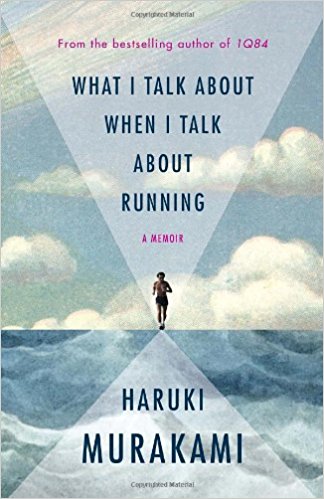 It turns out I wasn’t entirely wrong to have avoided Haruki Murakami’s
  In a similar way, he talks about both his running and his writing without flourish or posturing. There’s no false modesty, but also no braggadocio. Further, though he does talk a lot about training and personal bests, he never seems competitive against anyone but himself. He certainly has a different relationship to running than I do, an interest in pushing himself and seeing (literally but also metaphorically) how far he can go as a runner, but he does it because it suits him: for him, it’s a way of expressing himself, not proving anything. In fact, sometimes what he seeks and finds in running is humility: when he feels he has been “criticized unjustly,” for example, he runs “for a little longer than usual”:
 When he talks about writing more directly, he often emphasizes how difficult it is:
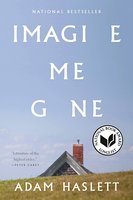 Adam Haslett’s Imagine Me Gone is painful, even tragic, and yet it is also just funny and acerbic enough to keep it (or its readers) from becoming unbearably sad. In fact, I thought there was something oddly bracing about it. That’s partly because I thought it was so well done, artistically and formally, but it’s also because the novel balances its devastating portrayal of depression and anxiety with its persistent faith in basic human kindness and, especially, family love. Haslett doesn’t oversimplify the challenge of severe mental illness — not just for the people living with it, but for the people living with them, whose lives are also inevitably changed by its presence. He also doesn’t romanticize it, or offer the faux consolation of silver linings: nobody is redeemed by it, it doesn’t bring anybody transcendence or special wisdom. It just is–for everyone involved.
 Michael’s illness cannot be willed away, stared down with stoicism, or held at bay by distractions or the pretense of normalcy — though even as he brings out the error, indeed the danger, of approaching it this way, Haslett is also very critical of medicalized approaches that consist largely of throwing more and more pills Michael’s way.
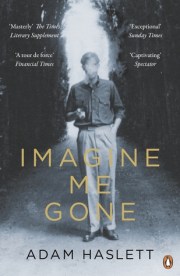 Another thought-provoking aspect of Imagine Me Gone was the kinship Michael identifies between the family history of mental illness that so shapes his own individual story and the blight of slavery as foundational to America’s history. Michael is preoccupied with reparations, which for him represent a political and moral necessity that is impossible for him to separate entirely from his own tormenting belief that he is to blame for his father’s suicide. How can you right the wrongs of the past? How can you endure and survive your inheritance of suffering?
 I had a minor epiphany this morning: I should try to approach writing in the same spirit I approach running.
 My version of “otherwise” has
 I have also appreciated the way reviewing has expanded my reading, particularly when the books are suggested by other editors rather than hand-picked by me to suit my own known tastes and sensibilities. I would point, for example, to the increase in Canadian titles I have read since taking on some commissions for Quill & Quire and, more recently, Canadian Notes and Queries, though the best example of a writer I would probably never have discovered on my own but loved would be
 I am back from my trip to Vancouver, where in spite of the rain (even, in some ways, because of it) I had a lovely time visiting with family and friends and drinking in the always inspiring sight of the mountains rising above the city and the sea. It was a a welcome interlude between the end of a challenging term and the beginning of a summer of reflection and writing.
 I did get some travel reading done. I’m nervous on planes, so light or fast-paced books are good as my concentration isn’t always great. En route to Vancouver, I found Miranda Neville’s The Amorous Education of Celia Seaton an excellent diversion, and on the way home I alternated between Georgette Heyer’s Black Sheep (reliably amusing) and Adam Sternbergh’s The Blinds, which I’m reviewing for Quill & Quire. I plucked several promising titles off my mother’s well-stocked shelves, but the only one I read cover to cover was
  Though I didn’t manage a lot of good reading while I was away, I did bring back a nice stack of books to read here at home. One ritual my mother and I have on my visits is an expedition to
  Including The Blinds, then, which had been mailed to Vancouver so I could get started on it sooner rather than later, I came home with 8 more books than I left with. And yet wouldn’t you know it: the book I most want to read next turned out to be waiting for me when I got back to Halifax. It’s Marina Benjamin’s The Middlepause: On Life After Youth, a 50th birthday gift which seems like just the right book to help me think about where my own life is now and what I want to make of it next. That is likely, then, to be the next book I write about here.
 I haven’t disappeared or given up blogging! It’s just that as soon as my final grades went in, I had to buckle down and finish two reviews that have been haunting me — not because I didn’t want to write them, but because though I have had the books for some time and had even started reading them, it just hadn’t been possible for me to get the hard work of writing thoughtfully about them done. The result was that even though neither of them was technically late, I felt guilty for weeks! But one went in last week and the other today, and while I now have to wait and find out what the editors think, including what revisions they want, I’m out from under that shadow and ready to contemplate the rest of my summer.
 However! Rain is perfectly good weather for taking stock and making plans, and that’s the stage I’m at now. I actually feel as if I need some dedicated time for that, because I’m not really sure right now what my top priorities are. I spent a lot of the last two summers doing work related to
  Some of that was due to my specific teaching assignments this year. My fall term courses were both ones I have taught before and really enjoy. Since I first designed my version of Close Reading, I have tried to infuse its more technical aspects with both critical and moral purpose, and the result is that it generates some of the most interesting discussions and assignments I get. It was also balm to my soul to spend five weeks on Middlemarch for this class: that is not enough time, of course–what would be?–but still feels comparatively luxurious (when I teach Middlemarch in my standard 19th-century fiction class, we get three weeks). Finishing with The Remains of the Day is always marvelous, but Ishiguro’s novel felt
  One thing I realized as the term went by is that the big questions that, in my mind, really motivated the course–questions about the difference between “pulp” or “genre” fiction and “literary” fiction, for instance–were not of great interest (at least, as far as I could tell) to most of the students: they did not seem to be invested in either the distinction or arguments against it. My guess is that most of them had never thought much about genre categories or literary prestige before; certainly I got no sign that they believed themselves to be victims of or participants in any kind of “culture war” by virtue of having been assigned Elmore Leonard and Loretta Chase instead of Shakespeare and Jane Austen. It’s possible that some of them are now more interested in how and why we might draw these kinds of lines, but it was at once disorienting and refreshing to realize that they were not nearly as exercised about them as people often are in the media or in the world of literary criticism and book reviewing. In the end it was just another thing I was trying to teach them about.
