 On the very first page of Celeste Ng’s Little Fires Everywhere, Elena Richardson’s house burns down. Everyone, including Elena, immediately and rightly identifies her renegade youngest daughter Izzy as the arsonist, but it’s not until three hundred pages later that we learn why she did it–that to her it was not act of destruction, but of renewal: “sometimes you need to scorch everything to the ground and start over.” But why would her family’s comfortable suburban home be the place to start such a revolution? What is wrong with the way the Richardsons live, or with Elena in particular, that could justify what Izzy has done? “Even she knows she’s gone too far this time,” observes Izzy’s older sister Lexie as she and her brothers watch their past lives reduced to ashes; “that’s why she ran off.” The question for us is whether, by the end of the novel, we agree with Lexie–or whether we understand, maybe even sympathize with, Izzy’s radical gesture.
Little Fires Everywhere is too smart and nuanced a novel to make this an easy question to answer. If “burn it all down” is the novel’s ultimate message, Ng has certainly presented it in the least incendiary way imaginable, because there’s nothing fiery at all in the novel’s tone. In many ways, Little Fires Everywhere is a small-scale domestic drama of a pretty familiar kind: a patient unfolding of the consequential intersections of the lives of a cast of fairly different but intricately connected people. In that respect Little Fires Everywhere reminded me of novels by other chroniclers of contemporary America–Anne Tyler, say. It doesn’t have Tyler’s ultimate benignity, though: even in their most friction-filled moments, Tyler’s novels never really posit any irremediable harm–even death often turns out to be something you can get over! Little Fires Everywhere, however, has an undercurrent of frustration, if not rage, not so much at Elena individually as at the impenetrable density of white liberal privilege she exemplifies.
Little Fires Everywhere begins, as stories so often do, with the arrival of an outsider, in this case Mia Warren, who moves with her daughter Pearl into the Cleveland suburb of Shaker Heights. It’s a planned community reminiscent of Columbia Maryland, where my husband grew up. Columbia is an attractive place, but I’ve also found it somewhat alienating in its tidy and high-maintenance conformity (you need, or at least once needed, special permission to paint your front door anything beyond a specific approved palette of colors). In Ng’s novel, Shaker Heights comes to represent something more than the stifling sameness of suburban life: it stands for an idea–for some of its residents, an ideal–of America more broadly, at once perfectly homogeneous and, in theory, perfectly welcoming. To Pearl, the Richardsons’ home, and their settled life there, is like a fantasy compared to her own itinerant life with her rootless artistic mother:
It wasn’t the size–true, it was large, but so was every house on the street, and in just three weeks in Shaker she’d seen larger. No: it was the greenness of the lawn, the sharp lines of white mortar between the bricks, the rustle of the maple leaves in the gentle breeze, the very breeze itself. It was the soft smells of detergent and cooking and grass that mingled in the entryway, the one corner of the throw rug that flipped up like a cowlick, as if someone had mussed it and forgotten to smooth it out. It was as if instead of entering a house she was entering the idea of a house, some archetype brought to life here before her. Something she’d only heard about but never seen.
Mia and Pearl get gradually more and more involved with the Richardsons: Pearl gets close to three of the Richardson children, and Mia accepts an uncomfortable but financially helpful housekeeping job from Elena, who is also her landlord. Mia also becomes something of a mentor to Izzy, giving her permission to be herself in a way Izzy feels Elena, constantly critical, never has.
Elena’s an interesting figure. It would have been easy to create her as a caricature, and there is something Stepford-Wive-ish about her:
Mrs. Richardson had, her entire existence, lived an orderly and regimented life. She weighed herself once per week, and although her weight did not fluctuate more than the three pounds her doctor assured her was normal, she took pains to maintain herself. Every morning she measured out exactly one half cup of Cheerios, the serving size indicated on the box . .. Three times weekly she took an aerobics class, checking her watch throughout to be sure her heart rate had exceeded one hundred and twenty beats per minute. She had been brought up to follow rules, to believe that the proper functioning of the world depending upon her compliance, and follow them–and believe–she did.
Though I didn’t think she was ultimately a very sympathetic figure, Elena comes across as someone stunted by these rules, which she thought would keep her safe:
All her life, she had learned that passion, like fire, was a dangerous thing. It so easily went out of control. It scaled walls and jumped over trenches. Sparks leapt like fleas and spread as rapidly; a breeze could carry embers for miles. Better to control that spark and pass it carefully from one generation to the next, like an Olympic torch. Or, perhaps, to tend it carefully like an eternal flame: a reminder of light and goodness that would never–could never–set anything ablaze. Carefully controlled. Domesticated. Happy in captivity. The key, she thought, was to avoid conflagration.
“Rules existed for a reason,” she believes: “if you followed them, you would succeed; if you didn’t, you might burn the world to the ground.”
The first third or so of Little Fires Everywhere requires a bit of patience while Ng builds up this world and these families, but she needs us to know them pretty well so that we understand the stakes of the novel’s central conflict once it is introduced. The novel’s crisis is precipitated by an adoption that pits different values and identities against each other, all of them tangled in ideas about motherhood and race and what it really means to flourish, or to live a good life. Elena’s old friend Linda McCullough and her husband adopt a baby who was abandoned at a fire station with only a note: “This baby name May Ling. Please take this baby and give her a better life.” The McCulloughs, who have been trying to have a child for years, are thrilled, and their friends, including the Richardsons, rejoice for them–but when Mia hears the story, she has a different reaction, because she knows May Ling’s birth mother Bebe, who is now “desperate to find her daughter again.” With one phone call, she changes everything: “There’s something I think you should know.”
It’s interesting that this conflict is in a sense peripheral to the novel’s main characters. We hardly know either the McCulloughs or Bebe, except through Elena and Mia, so as a result the adoption case–in which the McCulloughs’ legal rights are pitted against Bebe’s rights as her biological mother–ends up being primarily a device to expose things about the people observing it. Whose side people are on reveals how they answer the fundamental question the highly publicized custody battle raises: “It came, over and over, down to this: What made someone a mother?” What is really best for May Ling, or, as the McCulloughs call her, Mirabelle? The McCulloughs are devoted parents, loving and able to provide every comfort for their adopted daughter, to meet every need she has, except one. “She’s not just a baby,” one of Bebe’s supporters argues
when Channel 5 sent a reporter to Asia Plaza, Cleveland’s Chinese shopping center, in search of the Asian perspective. “She’s a Chinese baby. She’s going to grow up not knowing anything about her heritage. How is she going to know who she is?”
“You can tell,” says one of Linda’s supporters, in turn, “that when she looks down at that baby in her arms, she doesn’t see a Chinese baby. All she sees is a baby, plain and simple.”
There’s no doubt that Linda comes across as unbearably shallow–indeed, almost malignantly thoughtless–when she’s asked in court about what she and her husband have done “to connect [May Ling] with her Chinese culture.” “Well. . . . Pearl of the Orient is one of our very favorite restaurants,” she replies, and also when they chose her teddy bear they “decided on the panda. We thought perhaps she’d feel more of a connection to it.” Cringe-worthy as this is, though, and naive, too, as Elena’s argument that interractial adoptions might “solve racism once and for all” is, Linda’s not wrong (is she?) when she finally insists in their defense that “it’s not a requirement that we be experts in Chinese culture. The only requirement is that we love Mirabelle.” Culture isn’t something we’re born with, after all: we learn it. And though our family history is in one sense our heritage, there seemed something uncomfortably essentialist about the argument that May Ling / Mirabelle’s identity must be decided by her biology. I found myself wishing that the arguments within the book about these polarized views (“race should mean nothing”; “race means everything”) were more complicated–though perhaps what Ng wanted was for us to be dissatisfied with both answers, just as I think she leaves us feeling that there isn’t an obviously right answer about who should raise the baby.
Maybe a better way to put it is that the novel makes other factors seem at least as important to the case as race. The novel’s most persistent interest is in parent-child relationships, especially mother-daughter ones; it includes many variations on this theme, all of them fraught with difficulty, from the gradually uncovered story about Mia and Pearl to Elena’s struggle to come to terms with Izzy. Mia doesn’t call Bebe because she’s worried about preserving her baby’s heritage but because “the thought of someone else claiming her child was unbearable”: “how could these people take a child from its mother?” Is love–even (or especially) the kind of intensely possessive love that motivated Mia’s own decision to keep Pearl when she might not have–really all a child needs? But then again, Elena is an example of someone who has given her children everything and yet somehow left at least one of them feeling out of place in the world; while Mia’s seemingly rootless existence may have deprived Pearl of some vital kinds of continuity, of ongoing connection to a community, or to place, Mia’s artistic vision offers insights (including to Elena) that the insular smugness of suburban life obscure.
At the end of Little Fires Everywhere I felt as if we were left with more questions than answers about parenting, about race, about coexistence, about how to move forward collectively when we all see and experience the world in such different ways. When the novel opens, at the chronological end of the story it then tells, the characters are still arguing about whether the verdict in the McCullough case was right or wrong, and 300 pages later I still don’t know for sure which side I’m on, just as I don’t quite know how I feel about Mia’s long-ago decision about Pearl. In both cases I feel as if my emotional response is in some tension with other factors that also seem to matter. I suppose that could be why “burn it down and start over” is a reasonable response (ideally, shouldn’t desire and logic, love and justice align?) but I couldn’t tell what Ng thought we ought to be building or growing on the newly cleared ground. Still, she gave me a lot to think about, and on top of that Little Fires Everywhere is an engrossing and well-told story.
 Or maybe not. I hope not. I don’t mean that my students in the classes that started up today made a bad impression on me–far from it, in fact, as they seemed pretty attentive and ready to go, which is impressive considering the circumstances of my first class meeting this morning, at least. But their first impressions of me probably could have been better, and given the research that shows students make up their minds about professors pretty quickly (for better and for worse), it’s a bit discouraging to start the term off this way.
 My morning class was Close Reading. I don’t think it was a disaster–I did more or less get through my introductory lecture, in which I lay out the underlying concepts of the course as I’ve developed it–but it did not go well. One problem both was and wasn’t my fault. It was my idea to find us a new room when I saw that we’d been assigned to one of the dreary (and very dusty) rooms in our
  Well, I’m sure they’ve seen worse–right? I did at least cover what I’d meant to, and I think I made helpful noises when students asked questions, and now we are working on relocating the class again so none of us have to endure quite that level of discomfort again. Ironically, the only room that is currently available is the same one in Life Sciences that I worked so hard to get out of. If it’s big enough and not too hot, I guess I can put up with having a chalk board instead of a white board and needing to sign out cables any time I need to hook up my iPad for slides. (I won’t be using my laptop again, that’s for sure: I don’t need that extra layer of worry!)
 There was an undeniable nip in the air when I went on my run this morning–the overnight forecast even included the ominous words “risk of frost.” Though we are sure to have some more warm weather as September unfolds, it will be nice fall weather: the season is definitely changing. The other sure sign of that, of course, is that classes start this week. I’ll have more to say about that soon as I begin the 11th season of posts about ‘This Week In My Classes.’ Before summer has completely receded, though, I thought I’d take a look back at its reading highlights.
 Katherena Vermette’s
  It’s a bit misleading to call Rhoda Broughton’s
  Last but not least, I read Sylvia Townsend Warner’s grimly charming
  Of the books I read for reviews, the one I enjoyed the most was Gillian Best’s The Last Wave; my write-up will be in the next issue of Canadian Notes and Queries. Adam Sternbergh’s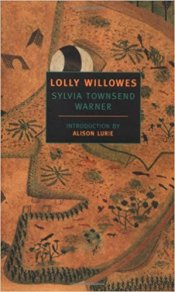
 Once Lolly has removed herself from the benevolent tyranny of her family, establishing herself in the wonderfully-named town of Great Mop, she reflects on their disapproval:
 Lolly’s final dialogue with Satan (winningly in the guise of a common gardener) is the pay-off for the somewhat slow burn of the first two thirds or so of the novel. In fact, it’s mostly a monologue, in which Lolly makes a compelling case for Satan’s intervention. “It’s like this,” she explains:
 Only two chapters of The Optician of Lampedusa are about the rescue. The rest of it is about the context of the event, both personal (in the lives of the Optician, his wife, and their friends) and moral. The first chapters focus on normalcy: the everyday business of the Optician’s life, the nice dinner out before the boating trip, the pleasure of the time away from land and work. The chapters after show the same life stripped of its protective layer of willed ignorance. Once the Optician hears the roar on the other side of silence, he cannot go back to his previous wadding of stupidity. He can’t understand how he could have been so impervious to so much nearby suffering. He can’t understand why the catastrophes have continued for so long, why the response of governments and aid agencies and local people hasn’t been better, or done better. He can’t bear the memories of the people they couldn’t save; the only saving grace, for him and all those on the boat that day is the connection they maintain with the people the could save–and that doesn’t seem like much when so many were lost.
 As usual, the unusual stretch of radio silence here means that I have been writing: the good news is a proposal I sent in some months ago was unexpectedly accepted last week, but the challenge was they wanted it by today and I hadn’t really thought about it once the initial proposal had gone unanswered for a while. I have been focusing pretty hard since then–which was nice in a way, as I’ve been writing on Daphne Marlatt’s Ana Historic, a book that I have thought about a lot since I first read it and loved it when it was just out. As I have also found with the essay I’ve been writing on Dorothy Dunnett, though, loving and having a long relationship with a book can if anything make it harder to say something you’re pleased with, especially under tight space constraints!
 There were certainly things I liked, admired, and was interested in with The Trespasser. French is great at jump-starting her books with a strong sense of the narrator’s individuality (if you haven’t read them, though the books do connect, each of them is told by a different member of the Dublin Murder Squad). The strongest element in The Trespasser was the gradual undoing of its narrator’s own perspective–not on the case, but on her place in the squad. The whole book is about interpreting events, about considering competing stories and weighing them against both the fixed point of fact and one’s own sense of the teller’s character and of what, more generally, makes a plausible or significant story. Our narrator here, Antoinette Conway, operates under assumptions about the people around her that turn out to be both largely mistaken and debilitating; that “reveal” is more important, ultimately, than the unraveling of the crime itself.
 In his introduction to the Oxford World’s Classics edition of The Forsyte Saga, Geoffrey Harvey explains that we owe the saga in its completed form to Galsworthy’s goddaughter, Dorothy Ivens. The Man of Property had been published in 1906 but Galsworthy’s attention had moved on. Then in 1918, he published Indian Summer of a Forsyte as part of a volume of stories; when Dorothy read it, she urged the author to “give us more Forsytes!” In Chancery followed, in 1920, then To Let in 1921.
 The relationship between these two forlorn souls is delicately drawn. It’s unusual but not improper: Jolyon wants nothing more than to be in Irene’s company, and she seems to understand and to take comfort herself in sharing what remains of the old man’s time, in making this interlude more beautiful for him:



 This is the world these “maidens” know, and also the one they are each, in their own ways, trying to leave, or perhaps (though they haven’t quite seen it this way yet) to change. Gardam limns their individual characters effectively, along with the other people in their lives: Una’s flighty hairdresser mother; Hetty’s kindly father, returned from the trenches “unscathed in body but shattered to bits in mind” and reduced to eking out a living as a gravedigger; Hetty’s pious, meddling mother; the kind and principled Quakers who took Lieselotte in but cannot wholly comprehend what it means to have her experience of the world. It is a differently eventful summer for each of the girls; little happens of immediately visible moment, but by the end of the novel you can feel them all settling into firmer forms, asserting more clearly who they are and will be.
 I didn’t like the crow. I understand that it is the central conceit of the novel; it’s an effective metaphor and clever, probably more than I appreciate, as a way of figuring grief as something that has a real presence, that plays tricks, that demands attention, that even, in its own way, connects you to your loss. I think I would have liked it in a poem. Here I found it a distraction–too clever, with its multiple modes of discourse and its allusiveness. Is grief really so literary? so metatextual?
