 There was an undeniable nip in the air when I went on my run this morning–the overnight forecast even included the ominous words “risk of frost.” Though we are sure to have some more warm weather as September unfolds, it will be nice fall weather: the season is definitely changing. The other sure sign of that, of course, is that classes start this week. I’ll have more to say about that soon as I begin the 11th season of posts about ‘This Week In My Classes.’ Before summer has completely receded, though, I thought I’d take a look back at its reading highlights.
I found Adam Haslett’s Imagine Me Gone funny, touching, and thought-provoking, particularly its merging of personal and historical traumas:
Through Michael, Haslett characterizes slavery as America’s inherited disease, one with symptoms every bit as complex and destructive in American life as John’s or Michael’s illnesses are for them and their family.
The obvious conclusion to this extended analogy is that the nation cannot heal unless it too can find some way to treat its transgenerational haunting.
 Katherena Vermette’s The Break effectively conveys the human drama and social complexity of the ongoing crisis of missing and murdered Indigenous women. When (if) I get to teach Mystery and Detective Fiction again, I would like to include it, though one thing we would certainly discuss is whether the novel is rightly categorized as “genre fiction.” (My feeling is that those who resist labeling it that way underestimate the political uses to which the form has been put by writers in a range of subgenres–I’ve often assigned The Terrorists, for instance, which is a great deal more than a “whodunnit,” and the same is true, albeit in different ways, of Devil in a Blue Dress and Indemnity Only.)
Dorothy B. Hughes’s In a Lonely Place is another genre novel that raises a lot of questions, in this case especially about the risks of narrating misogyny. I was a bit frustrated with The Maltese Falcon in my Pulp Fiction class last term and after I read In A Lonely Place I wondered about switching it in, but I think it’s too soon in my development of this class, which is still very new to me, to change the reading list, especially when the thematic arcs I tried to build across the course are served so well by The Maltese Falcon.
 It’s a bit misleading to call Rhoda Broughton’s Cometh Up As A Flower a “highlight” of my reading summer, but it has been growing on me in retrospect: I said in my original post that I had begun it with what were probably the wrong expectations. I’ve looked at a couple of other options for Victorian Sensations (I’m considering replacing Aurora Floyd on the reading list to avoid having two novels by the same author) and so far this is the front runner.
I read and really enjoyed two novels by Maggie O’Farrell: Instructions for a Heat Wave and The Vanishing Act of Esme Leonard. She is a novel who works in a fairly narrow sphere but brings a lot out of her investigation of its darker aspects. Viet Than Nguyen’s The Sympathizer, in contrast, is more expansive in every way: I described it as “a fairly high concept novel . . . but also a compelling read as a war novel and a spy novel [as well as” a stinging satire, of American hypocrisy and self-delusion in particular but also of pomp and corruption and ideological posturing on all sides.”
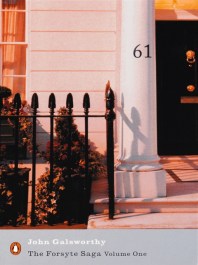
The Forsyte Saga remains a work in progress. I was really interested in The Man of Property and I thought Indian Summer of a Forsyte was wonderful. I’ve struggled to find the concentration to press on with In Chancery, but I’ve started. I’m a bit puzzled about what my intended relationship is to Soames at this point: as far as I can tell, we are not supposed to be that bothered that he’s a rapist, which I suppose is not that surprising–but I was surprised at how explicit Galsworthy was about it in the first place, so I expected it to be more of a blight on his role as a protagonist than it seems to be at this point.
 Last but not least, I read Sylvia Townsend Warner’s grimly charming Lolly Willowes for my book club; it was our follow-up to Shirley Jackson’s We Have Always Lived In the Castle, which I also really enjoyed for its weird, off-kilter pleasures. For our next book, we’ve chosen Ira Levin’s The Stepford Wives: I had been looking for other witchy books (and got a good list of ideas from friends on Twitter) but none of them really captured the group’s interest, and then we got talking about Lolly’s resistance to the life that was expected of her and that led us to thinking about the pressure on women to conform to certain plots and even personalities, and that led us to what may be the ultimate book about just this topic.
I have read quite a few other books since May, including Tana French’s The Trespasser, Jane Gardam’s The Flight of the Maidens, and the morally chastening The Optician of Lampedusa; if you want more about these you can call up the archives for each month and browse around. It was a somewhat slow summer for blogging for me, though, mostly because I was doing quite a bit of other writing and because it always seems redundant to write blog posts on books I’m also reviewing more formally.
 Of the books I read for reviews, the one I enjoyed the most was Gillian Best’s The Last Wave; my write-up will be in the next issue of Canadian Notes and Queries. Adam Sternbergh’s The Blinds was both conceptually interesting and a gripping read. I thought Sarah Moss’s Signs for Lost Children was by far the best–the most interesting, the most thoughtful, and the most artful–of the neo-Victorian novels I reviewed over the summer (the others were Lesley Krueger’s Mad Richard, Sarah Perry’s The Essex Serpent and Michele Roberts’s The Walworth Beauty).
It was not a bad reading summer overall, then, though there was no book that stood out quite the way Moby-Dick did last year. Some of the most satisfying reading I did, now that I think about it, was actually rereading: all of Dorothy Dunnett’s Lymond Chronicles, for instance, and Daphne Marlatt’s Ana Historic, both long-time favorites that I finally got to write about.
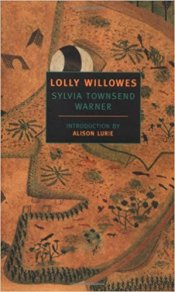
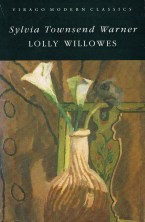 Once Lolly has removed herself from the benevolent tyranny of her family, establishing herself in the wonderfully-named town of Great Mop, she reflects on their disapproval:
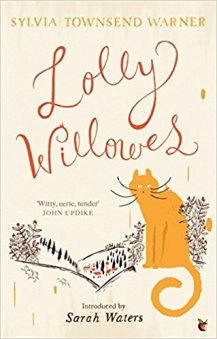 Lolly’s final dialogue with Satan (winningly in the guise of a common gardener) is the pay-off for the somewhat slow burn of the first two thirds or so of the novel. In fact, it’s mostly a monologue, in which Lolly makes a compelling case for Satan’s intervention. “It’s like this,” she explains:
 Only two chapters of The Optician of Lampedusa are about the rescue. The rest of it is about the context of the event, both personal (in the lives of the Optician, his wife, and their friends) and moral. The first chapters focus on normalcy: the everyday business of the Optician’s life, the nice dinner out before the boating trip, the pleasure of the time away from land and work. The chapters after show the same life stripped of its protective layer of willed ignorance. Once the Optician hears the roar on the other side of silence, he cannot go back to his previous wadding of stupidity. He can’t understand how he could have been so impervious to so much nearby suffering. He can’t understand why the catastrophes have continued for so long, why the response of governments and aid agencies and local people hasn’t been better, or done better. He can’t bear the memories of the people they couldn’t save; the only saving grace, for him and all those on the boat that day is the connection they maintain with the people the could save–and that doesn’t seem like much when so many were lost.
 As usual, the unusual stretch of radio silence here means that I have been writing: the good news is a proposal I sent in some months ago was unexpectedly accepted last week, but the challenge was they wanted it by today and I hadn’t really thought about it once the initial proposal had gone unanswered for a while. I have been focusing pretty hard since then–which was nice in a way, as I’ve been writing on Daphne Marlatt’s Ana Historic, a book that I have thought about a lot since I first read it and loved it when it was just out. As I have also found with the essay I’ve been writing on Dorothy Dunnett, though, loving and having a long relationship with a book can if anything make it harder to say something you’re pleased with, especially under tight space constraints!
 There were certainly things I liked, admired, and was interested in with The Trespasser. French is great at jump-starting her books with a strong sense of the narrator’s individuality (if you haven’t read them, though the books do connect, each of them is told by a different member of the Dublin Murder Squad). The strongest element in The Trespasser was the gradual undoing of its narrator’s own perspective–not on the case, but on her place in the squad. The whole book is about interpreting events, about considering competing stories and weighing them against both the fixed point of fact and one’s own sense of the teller’s character and of what, more generally, makes a plausible or significant story. Our narrator here, Antoinette Conway, operates under assumptions about the people around her that turn out to be both largely mistaken and debilitating; that “reveal” is more important, ultimately, than the unraveling of the crime itself.
 In his introduction to the Oxford World’s Classics edition of The Forsyte Saga, Geoffrey Harvey explains that we owe the saga in its completed form to Galsworthy’s goddaughter, Dorothy Ivens. The Man of Property had been published in 1906 but Galsworthy’s attention had moved on. Then in 1918, he published Indian Summer of a Forsyte as part of a volume of stories; when Dorothy read it, she urged the author to “give us more Forsytes!” In Chancery followed, in 1920, then To Let in 1921.
 The relationship between these two forlorn souls is delicately drawn. It’s unusual but not improper: Jolyon wants nothing more than to be in Irene’s company, and she seems to understand and to take comfort herself in sharing what remains of the old man’s time, in making this interlude more beautiful for him:


 This is the world these “maidens” know, and also the one they are each, in their own ways, trying to leave, or perhaps (though they haven’t quite seen it this way yet) to change. Gardam limns their individual characters effectively, along with the other people in their lives: Una’s flighty hairdresser mother; Hetty’s kindly father, returned from the trenches “unscathed in body but shattered to bits in mind” and reduced to eking out a living as a gravedigger; Hetty’s pious, meddling mother; the kind and principled Quakers who took Lieselotte in but cannot wholly comprehend what it means to have her experience of the world. It is a differently eventful summer for each of the girls; little happens of immediately visible moment, but by the end of the novel you can feel them all settling into firmer forms, asserting more clearly who they are and will be.
 I didn’t like the crow. I understand that it is the central conceit of the novel; it’s an effective metaphor and clever, probably more than I appreciate, as a way of figuring grief as something that has a real presence, that plays tricks, that demands attention, that even, in its own way, connects you to your loss. I think I would have liked it in a poem. Here I found it a distraction–too clever, with its multiple modes of discourse and its allusiveness. Is grief really so literary? so metatextual?
 My edition of The Sympathizer includes as appendices a New York Times opinion piece by Viet Thanh Nguyen called “Our Vietnam War Never Ended” and an interview with him by Paul Tran called “Anger in the Asian American Novel.” I read both of these through before I read the novel (cautiously at first, ready to turn away if there seemed to be significant spoilers). I did this because I thought I might not recognize important features of the novel given my own limited knowledge of the Vietnam War, or of other representations of it. I have never, for example, read Graham Greene’s The Quiet American or Denis Johnson’s Tree of Smoke (both discussed in these articles); I have never seen Apocalypse Now, and though I’ve seen Platoon, I have no particular memory of it. Growing up in Canada, the Vietnam War was never a big part of my historical mythology except insofar as it featured largely in American history, particularly (in my own intellectual experience, anyway) in the form of anti-war protests and draft dodgers.
 A friend recently mentioned that she’d been reading and enjoying Maggie O’Farrell’s novels, so the next time I was at the library I checked out two of them: Instructions for a Heat Wave and The Vanishing Act of Esme Lennox. Both are essentially family dramas; both turn on long-held secrets and their repercussions, though in Instructions for a Heat Wave the consequences are mostly moral and emotional, while by the end of Esme Lennox two people have paid (in very different ways) with their lives. Both are very good–well written, evocative, psychologically astute, and thematically layered — but it’s Esme Lennox (both the novel and the eponymous character) that’s really going to stick with me.
 Instructions for a Heat Wave ends on a faint note of optimism: the novel’s ultimate revelations may be initially devastating, but as people’s secrets come out, healing seems possible — no harm is ultimately irredeemable. The Vanishing Act of Esme Lennox, on the other hand, offers no such soothing hope: some wrongs, it suggests, can never be made right, at least not through forgiveness. The novel is a compelling blend of chilling and heartbreaking: as it takes us from Esme’s childhood to the present-day life of her grand-niece Iris, splicing in segments from the point of view of Esme’s sister Kitty, now suffering from Alzheimer’s, we gradually realize just how Esme came to spend 60 years confined to an asylum. One of O’Farrell’s sources is Elaine Showalter’s The Female Malady: Women, Madness and English Culture, 1830-1980; Esme’s story dramatizes the horrors of a society that conflates nonconformity with “hysteria” and madness, and punishes it accordingly. I was a bit disappointed in the novel’s ending, but it’s a haunting story, both poignant and gripping.
 Novel Readings