This Week In My Classes: Keeping Up

ScreamThe first couple of weeks of the new term are always deceptive: you anticipate them with so much anxiety after the slower pace of summer work, but then for a while, though the logistics are a bit hectic and there are more day-to-day deadlines, it doesn’t seem that bad. But then the first significant assignments come in, and you have to keep up the day-to-day stuff on top of marking them, and there are more meetings, and they both take time and generate things to do, and the next thing you know you are barely keeping track of it all. And that’s about where I am now!

Really, it’s not so bad. I am lucky this term to have a relatively light teaching load – not just because I’ve got only two courses but because one of them that was capped at 64 only filled to around 40, so between the two I’ve got just about 80 students instead of a possible 100, and instead of the much larger number involved when one of the classes is a big section of one of our introductory classes. When you reach those bigger sizes, you have the support of teaching assistants with the marking, but the other administrative aspects of teaching still increase dramatically. A colleague who was teaching our biggest intro class, at 360 students, had more than 30 plagiarism cases one year, for instance, all of which he had to handle himself. Even with our new admirably streamlined process, you can estimate that each one took at least 2 hours, including compiling and filing the documentation and then attending the hearing. Yikes!

I’ve also been thinking about how much harder it was for me to manage my teaching obligations when my children were small and needed (and wanted) a lot more attention from me than they do now. My teaching load was higher then, and I had less experience and fewer prepared materials to draw on. I regret, now, the number of times I shooed the kids away or freaked out because they were making it hard for me to work — but at the same time, I can’t really see how I could have kept on top of the work and given them more than I did. And now I have less work to do in some ways, or I’m better at it, or more efficient, but sometimes I feel just as tired, probably because now I’m not so young anymore! After class, it takes me a while to recuperate, just sitting quietly in my office — often, right now, in front of the fan I brought in, because we are having unseasonably warm and humid weather.

vanityfaircoverStill, I always like the energy both demanded and generated by the actual classroom time; regular readers will know how often I complain about summer doldrums, too, brought on by too vacant a schedule and too few opportunities for interaction and engagement with other people. As more and more of my colleagues head into retirement, I do sometimes fantasize about what that phase will be like for me, and how soon I might be able to enter into it. (Not that soon, since I’ve just turned 50!) I think when the time does come I will have to be careful that it isn’t like an endless summer, without any structure. For now what I have to do is make sure I can maintain my energy and enthusiasm — by, for instance, trying to bring less work home with me than I once had to, and making time as best I can for the reading and writing that I want to do.

As for what’s happening in my actual classes this week, it’s Vanity Fair in one and short fiction in the other, specifically, this week, “Young Goodman Brown,” “The Boarding House,” and then on Friday, “A Rose for Emily.” The short stories are for Close Reading, so our focus is on learning to identify specific elements of fiction (point of view, characterization, setting) and how they contribute to the meaning and effects of the fiction. In 19th-Century Fiction I am working on weaning myself from my lecture notes, something I did quite well with in last year’s seminar on the Victorian ‘Woman Question’ but still get a bit anxious about in a lecture-style class. I’m still bringing my notes in, and I do usually stick to the planned topics on them, but I don’t “follow” them carefully unless I have a very specific argument I want to lay out. With Vanity Fair, there’s not much risk of running out of things to talk about!

This Week In My Classes: Blather, Rinse, Repeat

I’ve put off writing this post, hoping that I’d get some bright idea about what to say in it. Is it possible that I’ve been reporting on my weekly class business for too long? Everything I have to say seems like something I’ve said before. Actually, that in itself might be worth considering, because I have also been feeling as if a couple of the topics and activities I’ve covered in my classes since the start of term have lost their interest or their urgency for me, and that as a result it has been harder for me to present them with as much conviction as usual. I don’t think (or at any rate, I hope) that my students are likely to have noticed, since they don’t have previous iterations of these courses to compare their own experience to. But if things are feeling a bit repetitive here, that is almost certainly a sign that I may be repeating myself a bit too much in the classroom, and that it’s time to shake things up, if only for my own sake.

In Close Reading, for instance, I am feeling impatient with the basically very good textbook I’m using. Its explanations of key terms and its models of close reading are as sound as before, but this is the third time I’ve used it, and it has quite a limited selection of poems and stories, many of which the author uses extensively in her own discussions, leaving me with even fewer to choose from for the students’ assignments. In our poetry unit, I do bring in “outside” texts sometimes for in-class exercises (tomorrow, for instance, we’ll be discussing Robert Graves’s “The Cool Web,” which as I’ve mentioned before here is not just one of my favorite poems but the one that transformed me into an English major). There are logistical, copyright, and other reasons, though, why this gets harder as we move into short fiction. I’m hoping not to teach this class again next year, partly because there are other courses I haven’t had a chance to teach in a while and partly because I’d like to look around again for different possible readers. The first couple of times I taught it, back in 2003 and 2004, I used a somewhat eccentric book from Broadview Press called Visions and Revisions: The Poet’s Process. Comparing different versions of the same poem is a great way to focus attention on the effects of particular words, forms, or rhythmic variations. I don’t know if I’d go back to it: the range of really usable options was not that great in it either, as I recall.

This is not to say that I’ve tired of enthusing over Donne’s “Death, be not proud,” even in the context of trying to teach scansion, and I am absolutely looking forward to teaching both Middlemarch and The Remains of the Day again. As the great Samuel Johnson said, “When a woman is tired of Middlemarch, she is tired of life!” OK, he didn’t exactly say that–but surely it is true. Similarly, I am enjoying working through Persuasion in 19th-Century Fiction from Austen to Dickens — which I haven’t actually done that recently, since last time around I made the mistake of assigning Pride and Prejudice. I mentioned last week that Persuasion might be losing its place as my favorite Austen novel; if that were true, Pride and Prejudice would certainly replace it. But Persuasion has the great advantage, in the classroom, of being not nearly so familiar, beloved, or frequently adapted. (It is familiar, beloved, and adapted plenty, as all things Austen are … but I will back slowly away from the rant this topic too easily provokes.) I do feel it’s time to rework my start-up material for this course, and for its alternate (19th-Century Fiction from Dickens to Hardy). I always give an overview of “the rise of the novel” and talk a bit about social contexts, publication methods (like serialization), and other background information that I can’t assume the students have learned about before: I think this is important, and I try to keep it up to date, and to tweak it, also, to reflect the particular novels we’ll be reading and any specific issues they raise. But I would like to find a catchy way to start off that doesn’t make the students so passive, because as I move out of lecture mode and into Socratic mode, it takes a while for participation to pick up. I’m pretty sure to be teaching the Dickens to Hardy class next fall, so this is something I will put on my to-do list for the summer.

We’ve just wrapped up work on Persuasion in that class and on Monday we start Vanity Fair. I’m excited, even if the one student in the class who read it ahead of time already told me she didn’t like it. I will convert her! Or maybe not, but I do believe, not least because I’ve so often found it to be the case with my own reading, that it is possible to learn to appreciate something, if not necessarily to like it. (Update: Another student who has just started it tells me she’s finding it “hilarious” so that’s encouraging!)

On a side note, the painting that is my first graphic here is Duncan Grant’s “Interior with the Artist’s Daughter”: it has no particular relevance to this post but I like paintings of readers and I can’t find any of teachers.

This Week In My Classes: Every Word Counts

We’re one week into the fall term and I’m starting to feel that I’ve got my sea legs back. Every new term seems a bit herky-jerky at first, but before long it smooths out, or at least becomes routine again.
In Close Reading, where my initial goal is to foster a habit of paying close attention (our mantra is “don’t take the words on the page for granted”), we have started working on scansion. It’s not an advanced poetry course so we don’t get too fancy about it: the point is just to learn how to pay attention to rhythm and versification. So in this class we are literally counting this week — not words, of course, but syllables, then feet, and then lines. I happen to think this kind of thing is both fun and interesting; I hope I conveyed some of that enthusiasm on Wednesday while I walked them through the basic elements, and that they show some of their own when we practice it together tomorrow. I always enjoy choosing examples to show the reason rhythm matters, the difference it makes. Consider these two excerpts, for instance:

Half a league, half a league,
Half a league onward,
All in the valley of Death
Rode the six hundred.

‘Forward, the Light Brigade!
Charge for the guns!’ he said:
Into the valley of Death
Rode the six hundred.

and

The woods decay, the woods decay and fall,
The vapours weep their burthen to the ground,
Man comes and tills the fields and lies beneath,
And after many a summer dies the swan.
Me only cruel immortality
Consumes…

Both Tennyson, of course, but what a contrast, and so much of that has to do with how he has arranged the stressed and unstressed syllables.

Here and in all the topics we cover in Close Reading, what I’m trying to do is turn a habit (reading) into a methodology, with the short term payoff being more detailed analysis of specifics and the longer term payoff being (I hope) more confidence in the interpretations they generate of whatever they read. Part of my pitch for the course is that these skills are supremely portable as well as enormously important–aesthetically, but also ethically and politically. It’s true that in this context scanning lines of verse remains somewhat niche skill, but appreciating poetry is also virtuous in its own right!

In 19th-Century Fiction, we’re reading Persuasion. For a long time I have identified Persuasion as my favorite Austen novel, but this time through, my allegiance is wavering: more than usual when reading it I am frustrated by Anne Elliot’s not speaking, when all it would take to bring about the consummation so devoutly to be wished is a few clear words at the right moment. I know, I know: her reticence and self-control are admirable, and just going for what you want makes you Louisa Musgrove, a literally fallen woman who clearly signals the dangers of undisciplined desire. When Anne finally does say something (“she speaks!” say my marginal notes at one point) it is also always significant: a breakthrough of feeling, an assertion of principle, a lesson in values. Still, one key to the novel’s happy ending is that she finds her voice, or figures out how to use it to win for herself the kind of happiness someone of her high character can accept: not simple pleasure or self-gratification, but a marriage of true minds.

Image: The Charge of the Light Brigade, by Richard Caton Woodville, Jr. (Wikimedia Commons)

Burning Down the House: Celeste Ng, Little Fires Everywhere

little-firesOn the very first page of Celeste Ng’s Little Fires Everywhere, Elena Richardson’s house burns down. Everyone, including Elena, immediately and rightly identifies her renegade youngest daughter Izzy as the arsonist, but it’s not until three hundred pages later that we learn why she did it–that to her it was not act of destruction, but of renewal: “sometimes you need to scorch everything to the ground and start over.” But why would her family’s comfortable suburban home be the place to start such a revolution? What is wrong with the way the Richardsons live, or with Elena in particular, that could justify what Izzy has done? “Even she knows she’s gone too far this time,” observes Izzy’s older sister Lexie as she and her brothers watch their past lives reduced to ashes; “that’s why she ran off.” The question for us is whether, by the end of the novel, we agree with Lexie–or whether we understand, maybe even sympathize with, Izzy’s radical gesture.

Little Fires Everywhere is too smart and nuanced a novel to make this an easy question to answer. If “burn it all down” is the novel’s ultimate message, Ng has certainly presented it in the least incendiary way imaginable, because there’s nothing fiery at all in the novel’s tone. In many ways, Little Fires Everywhere is a small-scale domestic drama of a pretty familiar kind: a patient unfolding of the consequential intersections of the lives of a cast of fairly different but intricately connected people. In that respect Little Fires Everywhere reminded me of novels by other chroniclers of contemporary America–Anne Tyler, say. It doesn’t have Tyler’s ultimate benignity, though: even in their most friction-filled moments, Tyler’s novels never really posit any irremediable harm–even death often turns out to be something you can get over! Little Fires Everywhere, however, has an undercurrent of frustration, if not rage, not so much at Elena individually as at the impenetrable density of white liberal privilege she exemplifies.

Little Fires Everywhere begins, as stories so often do, with the arrival of an outsider, in this case Mia Warren, who moves with her daughter Pearl into the Cleveland suburb of Shaker Heights. It’s a planned community reminiscent of Columbia Maryland, where my husband grew up. Columbia is an attractive place, but I’ve also found it somewhat alienating in its tidy and high-maintenance conformity (you need, or at least once needed, special permission to paint your front door anything beyond a specific approved palette of colors). In Ng’s novel, Shaker Heights comes to represent something more than the stifling sameness of suburban life: it stands for an idea–for some of its residents, an ideal–of America more broadly, at once perfectly homogeneous and, in theory, perfectly welcoming. To Pearl, the Richardsons’ home, and their settled life there, is like a fantasy compared to her own itinerant life with her rootless artistic mother:

It wasn’t the size–true, it was large, but so was every house on the street, and in just three weeks in Shaker she’d seen larger. No: it was the greenness of the lawn, the sharp lines of white mortar between the bricks, the rustle of the maple leaves in the gentle breeze, the very breeze itself. It was the soft smells of detergent and cooking and grass that mingled in the entryway, the one corner of the throw rug that flipped up like a cowlick, as if someone had mussed it and forgotten to smooth it out. It was as if instead of entering a house she was entering the idea of a house, some archetype brought to life here before her. Something she’d only heard about but never seen.

Mia and Pearl get gradually more and more involved with the Richardsons: Pearl gets close to three of the Richardson children, and Mia accepts an uncomfortable but financially helpful housekeeping job from Elena, who is also her landlord. Mia also becomes something of a mentor to Izzy, giving her permission to be herself in a way Izzy feels Elena, constantly critical, never has.

Elena’s an interesting figure. It would have been easy to create her as a caricature, and there is something Stepford-Wive-ish about her:

Mrs. Richardson had, her entire existence, lived an orderly and regimented life. She weighed herself once per week, and although her weight did not fluctuate more than the three pounds her doctor assured her was normal, she took pains to maintain herself. Every morning she measured out exactly one half cup of Cheerios, the serving size indicated on the box . .. Three times weekly she took an aerobics class, checking her watch throughout to be sure her heart rate had exceeded one hundred and twenty beats per minute. She had been brought up to follow rules, to believe that the proper functioning of the world depending upon her compliance, and follow them–and believe–she did. 

Though I didn’t think she was ultimately a very sympathetic figure, Elena comes across as someone stunted by these rules, which she thought would keep her safe:

All her life, she had learned that passion, like fire, was a dangerous thing. It so easily went out of control. It scaled walls and jumped over trenches. Sparks leapt like fleas and spread as rapidly; a breeze could carry embers for miles. Better to control that spark and pass it carefully from one generation to the next, like an Olympic torch. Or, perhaps, to tend it carefully like an eternal flame: a reminder of light and goodness that would never–could never–set anything ablaze. Carefully controlled. Domesticated. Happy in captivity. The key, she thought, was to avoid conflagration.

“Rules existed for a reason,” she believes: “if you followed them, you would succeed; if you didn’t, you might burn the world to the ground.”

The first third or so of Little Fires Everywhere requires a bit of patience while Ng builds up this world and these families, but she needs us to know them pretty well so that we understand the stakes of the novel’s central conflict once it is introduced. The novel’s crisis is precipitated by an adoption that pits different values and identities against each other, all of them tangled in ideas about motherhood and race and what it really means to flourish, or to live a good life. Elena’s old friend Linda McCullough and her husband adopt a baby who was abandoned at a fire station with only a note: “This baby name May Ling. Please take this baby and give her a better life.” The McCulloughs, who have been trying to have a child for years, are thrilled, and their friends, including the Richardsons, rejoice for them–but when Mia hears the story, she has a different reaction, because she knows May Ling’s birth mother Bebe, who is now “desperate to find her daughter again.” With one phone call, she changes everything: “There’s something I think you should know.”

It’s interesting that this conflict is in a sense peripheral to the novel’s main characters. We hardly know either the McCulloughs or Bebe, except through Elena and Mia, so as a result the adoption case–in which the McCulloughs’ legal rights are pitted against Bebe’s rights as her biological mother–ends up being primarily a device to expose things about the people observing it. Whose side people are on reveals how they answer the fundamental question the highly publicized custody battle raises: “It came, over and over, down to this: What made someone a mother?” What is really best for May Ling, or, as the McCulloughs call her, Mirabelle? The McCulloughs are devoted parents, loving and able to provide every comfort for their adopted daughter, to meet every need she has, except one. “She’s not just a baby,” one of Bebe’s supporters argues

when Channel 5 sent a reporter to Asia Plaza, Cleveland’s Chinese shopping center, in search of the Asian perspective. “She’s a Chinese baby. She’s going to grow up not knowing anything about her heritage. How is she going to know who she is?”

“You can tell,” says one of Linda’s supporters, in turn, “that when she looks down at that baby in her arms, she doesn’t see a Chinese baby. All she sees is a baby, plain and simple.”

There’s no doubt that Linda comes across as unbearably shallow–indeed, almost malignantly thoughtless–when she’s asked in court about what she and her husband have done “to connect [May Ling] with her Chinese culture.” “Well. . . . Pearl of the Orient is one of our very favorite restaurants,” she replies, and also when they chose her teddy bear they “decided on the panda. We thought perhaps she’d feel more of a connection to it.” Cringe-worthy as this is, though, and naive, too, as Elena’s argument that interractial adoptions might “solve racism once and for all” is, Linda’s not wrong (is she?) when she finally insists in their defense that “it’s not a requirement that we be experts in Chinese culture. The only requirement is that we love Mirabelle.” Culture isn’t something we’re born with, after all: we learn it. And though our family history is in one sense our heritage, there seemed something uncomfortably essentialist about the argument that May Ling / Mirabelle’s identity must be decided by her biology. I found myself wishing that the arguments within the book about these polarized views (“race should mean nothing”; “race means everything”) were more complicated–though perhaps what Ng wanted was for us to be dissatisfied with both answers, just as I think she leaves us feeling that there isn’t an obviously right answer about who should raise the baby.

Maybe a better way to put it is that the novel makes other factors seem at least as important to the case as race. The novel’s most persistent interest is in parent-child relationships, especially mother-daughter ones; it includes many variations on this theme, all of them fraught with difficulty, from the gradually uncovered story about Mia and Pearl to Elena’s struggle to come to terms with Izzy. Mia doesn’t call Bebe because she’s worried about preserving her baby’s heritage but because “the thought of someone else claiming her child was unbearable”: “how could these people take a child from its mother?” Is love–even (or especially) the kind of intensely possessive love that motivated Mia’s own decision to keep Pearl when she might not have–really all a child needs? But then again, Elena is an example of someone who has given her children everything and yet somehow left at least one of them feeling out of place in the world; while Mia’s seemingly rootless existence may have deprived Pearl of some vital kinds of continuity, of ongoing connection to a community, or to place, Mia’s artistic vision offers insights (including to Elena) that the insular smugness of suburban life obscure.

At the end of Little Fires Everywhere I felt as if we were left with more questions than answers about parenting, about race, about coexistence, about how to move forward collectively when we all see and experience the world in such different ways. When the novel opens, at the chronological end of the story it then tells, the characters are still arguing about whether the verdict in the McCullough case was right or wrong, and 300 pages later I still don’t know for sure which side I’m on, just as I don’t quite know how I feel about Mia’s long-ago decision about Pearl. In both cases I feel as if my emotional response is in some tension with other factors that also seem to matter. I suppose that could be why “burn it down and start over” is a reasonable response (ideally, shouldn’t desire and logic, love and justice align?) but I couldn’t tell what Ng thought we ought to be building or growing on the newly cleared ground. Still, she gave me a lot to think about, and on top of that Little Fires Everywhere is an engrossing and well-told story.

This Week In My Classes: (Bad) First Impressions

DALHOUSIE-UNIVERSITYOr maybe not. I hope not. I don’t mean that my students in the classes that started up today made a bad impression on me–far from it, in fact, as they seemed pretty attentive and ready to go, which is impressive considering the circumstances of my first class meeting this morning, at least. But their first impressions of me probably could have been better, and given the research that shows students make up their minds about professors pretty quickly (for better and for worse), it’s a bit discouraging to start the term off this way.
Actually, maybe it wasn’t so bad. My afternoon class seemed basically fine, though in an ironic contrast to the sweltering room my morning class was in, its room was so cold it gave me the sniffles! I was more comfortable in other ways, though: my afternoon class is 19th-Century Fiction (Austen to Dickens), and especially once I got to talking about our actual novels, I felt my own enthusiasm for the new term rising. I didn’t choose the reading list to follow any deliberate theme (not like last year’s Dickens to Hardy version, for instance, which focused on ‘troublesome’ women). It’s just a greatest hits list, starting with Persuasion then moving through Vanity FairJane EyreNorth and South, and Great Expectations. There are definitely some common threads, as I began pointing out today: one will be the Napoleonic Wars, another the ‘condition of England,’ another paths (and impediments) for women, and another versions of the Bildungsroman. Because students arrive in this class from so many different paths now, I typically begin (as I will on Friday) with a capsule history of the 19th-century novel. Then it’s on to Austen on Monday and away we go!

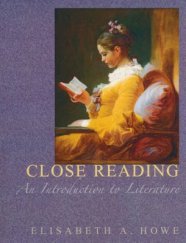
howe-close-readingMy morning class was Close Reading. I don’t think it was a disaster–I did more or less get through my introductory lecture, in which I lay out the underlying concepts of the course as I’ve developed it–but it did not go well. One problem both was and wasn’t my fault. It was my idea to find us a new room when I saw that we’d been assigned to one of the dreary (and very dusty) rooms in our Life Sciences Centre (which is where pedagogical dreams go to die, in my experience). Don’t let the picture fool you: there may be perfectly nice, bright, airy rooms somewhere up high, but the ones we’re typically stuck in are at ground level or below, and they are terrible. I taught Mystery and Detective Fiction once in a windowless concrete block that might as well have been in a prison–which I guess was thematically appropriate, but it was no fun, and neither was teaching Bleak House in a similar room another time. Anyway, with the help of my indefatigable colleague in our department office I was able to move out of LSC into what sounded like a much better room, upstairs in the library, with windows all around (to the library, not to the outside, but still!) and recently refitted technology. Unfortunately, though my class is sized for the room’s theoretical cap, there was barely room for everyone, and the poor students were crammed in cheek by jowl as the temperature rose steadily to a truly unhealthy level. Not good! Then, as I was sweating my way through my lecture, my laptop froze, which has been one of the regular perks of my recent “upgrade” to a Windows 10 machine. I managed to reboot it without too much trouble and more or less managed to carry on with my lecture–I think! But I was so overheated and flustered by that point that I can only hope I remained coherent.

Well, I’m sure they’ve seen worse–right? I did at least cover what I’d meant to, and I think I made helpful noises when students asked questions, and now we are working on relocating the class again so none of us have to endure quite that level of discomfort again. Ironically, the only room that is currently available is the same one in Life Sciences that I worked so hard to get out of. If it’s big enough and not too hot, I guess I can put up with having a chalk board instead of a white board and needing to sign out cables any time I need to hook up my iPad for slides. (I won’t be using my laptop again, that’s for sure: I don’t need that extra layer of worry!)

And so here we are: another year begun. To be honest, I hadn’t been feeling that excited for the start of term: I’ve been feeling tired and mopey for much of the summer, and the shadow of my promotion debacle still hangs over my relationship with some of my colleagues and with Dalhousie as a whole. Once upon a time I was ready and willing to put my work for the university ahead of almost everything; looking back, I actually regret the extent to which I made it a priority, and now when I’m asked to do things that aren’t necessarily in my job description I find myself reflecting on the sacrifices I made to be in this profession (which are never acknowledged as such by universities)–like settling far from my family–and thinking maybe that’s actually enough “extra” commitment for one lifetime! It really helped my attitude to see students again, though. My goal for the year is to do as well by them as I can. I feel pretty confident that if I put my energy where they are, it will have a good effect on other aspects of my life and work as well.

Summer Reading, 2017 Edition

There was an undeniable nip in the air when I went on my run this morning–the overnight forecast even included the ominous words “risk of frost.” Though we are sure to have some more warm weather as September unfolds, it will be nice fall weather: the season is definitely changing. The other sure sign of that, of course, is that classes start this week. I’ll have more to say about that soon as I begin the 11th season of posts about ‘This Week In My Classes.’ Before summer has completely receded, though, I thought I’d take a look back at its reading highlights.

I found Adam Haslett’s Imagine Me Gone funny, touching, and thought-provoking, particularly its merging of personal and historical traumas:

Through Michael, Haslett characterizes slavery as America’s inherited disease, one with symptoms every bit as complex and destructive in American life as John’s or Michael’s illnesses are for them and their family.

The obvious conclusion to this extended analogy is that the nation cannot heal unless it too can find some way to treat its transgenerational haunting.

Katherena Vermette’s The Break effectively conveys the human drama and social complexity of the ongoing crisis of missing and murdered Indigenous women. When (if) I get to teach Mystery and Detective Fiction again, I would like to include it, though one thing we would certainly discuss is whether the novel is rightly categorized as “genre fiction.” (My feeling is that those who resist labeling it that way underestimate the political uses to which the form has been put by writers in a range of subgenres–I’ve often assigned The Terrorists, for instance, which is a great deal more than a “whodunnit,” and the same is true, albeit in different ways, of Devil in a Blue Dress and Indemnity Only.)

Dorothy B. Hughes’s In a Lonely Place is another genre novel that raises a lot of questions, in this case especially about the risks of narrating misogyny. I was a bit frustrated with The Maltese Falcon in my Pulp Fiction class last term and after I read In A Lonely Place I wondered about switching it in, but I think it’s too soon in my development of this class, which is still very new to me, to change the reading list, especially when the thematic arcs I tried to build across the course are served so well by The Maltese Falcon.

It’s a bit misleading to call Rhoda Broughton’s Cometh Up As A Flower a “highlight” of my reading summer, but it has been growing on me in retrospect: I said in my original post that I had begun it with what were probably the wrong expectations. I’ve looked at a couple of other options for Victorian Sensations (I’m considering replacing Aurora Floyd on the reading list to avoid having two novels by the same author) and so far this is the front runner.

I read and really enjoyed two novels by Maggie O’FarrellInstructions for a Heat Wave and The Vanishing Act of Esme Leonard. She is a novel who works in a fairly narrow sphere but brings a lot out of her investigation of its darker aspects. Viet Than Nguyen’s The Sympathizer, in contrast, is more expansive in every way: I described it as “a fairly high concept novel . . . but also a compelling read as a war novel and a spy novel [as well as” a stinging satire, of American hypocrisy and self-delusion in particular but also of pomp and corruption and ideological posturing on all sides.”

The Forsyte Saga remains a work in progress. I was really interested in The Man of Property and I thought Indian Summer of a Forsyte was wonderful. I’ve struggled to find the concentration to press on with In Chancery, but I’ve started. I’m a bit puzzled about what my intended relationship is to Soames at this point: as far as I can tell, we are not supposed to be that bothered that he’s a rapist, which I suppose is not that surprising–but I was surprised at how explicit Galsworthy was about it in the first place, so I expected it to be more of a blight on his role as a protagonist than it seems to be at this point.

Last but not least, I read Sylvia Townsend Warner’s grimly charming Lolly Willowes for my book club; it was our follow-up to Shirley Jackson’s We Have Always Lived In the Castle, which I also really enjoyed for its weird, off-kilter pleasures. For our next book, we’ve chosen Ira Levin’s The Stepford Wives: I had been looking for other witchy books (and got a good list of ideas from friends on Twitter) but none of them really captured the group’s interest, and then we got talking about Lolly’s resistance to the life that was expected of her and that led us to thinking about the pressure on women to conform to certain plots and even personalities, and that led us to what may be the ultimate book about just this topic.

I have read quite a few other books since May, including Tana French’s The Trespasser, Jane Gardam’s The Flight of the Maidens, and the morally chastening The Optician of Lampedusa; if you want more about these you can call up the archives for each month and browse around. It was a somewhat slow summer for blogging for me, though, mostly because I was doing quite a bit of other writing and because it always seems redundant to write blog posts on books I’m also reviewing more formally.

Of the books I read for reviews, the one I enjoyed the most was Gillian Best’s The Last Wave; my write-up will be in the next issue of Canadian Notes and Queries. Adam Sternbergh’s The Blinds was both conceptually interesting and a gripping read. I thought Sarah Moss’s Signs for Lost Children was by far the best–the most interesting, the most thoughtful, and the most artful–of the neo-Victorian novels I reviewed over the summer (the others were Lesley Krueger’s Mad Richard, Sarah Perry’s The Essex Serpent and Michele Roberts’s The Walworth Beauty).

It was not a bad reading summer overall, then, though there was no book that stood out quite the way Moby-Dick did last year. Some of the most satisfying reading I did, now that I think about it, was actually rereading: all of Dorothy Dunnett’s Lymond Chronicles, for instance, and Daphne Marlatt’s Ana Historic, both long-time favorites that I finally got to write about.

“My Own Way”: Sylvia Townsend Warner, Lolly Willowes

lolly-willowes“Say you won’t leave us, Lolly.”

“I’m afraid I can’t do that.”

“But Lolly, what you want is absurd.”

“It’s only my own way, Henry.”

In many ways, Lolly Willowes is a familiar book. Like Villette or The Odd Women or The Crowded Street, it is the story of a woman whose life does not conform to the expected story of love, courtship, and marriage. Single women were both a social and a fictional (and thus a formal) problem from at least the mid-19th century on into the 20th. The statistical overabundance of women in the earlier period led to articles with titles like “Why Women are Redundant” and “What Shall We Do With Our Old Maids”; the terrible losses of World War I created a similar feeling of crisis, at least among those who saw marriage as the only natural and desirable aim for women’s lives. That was never everybody, of course, especially not all women, but it was an assumption that one way or another affected the horizon of expectation for most people.

Stylistically and tonally, Lolly Willowes is most like The Crowded Street, which makes sense, I suppose, as they are close together chronologically: Holtby’s novel was published in 1924, Townsend Warner’s in 1926. The world they depict is quite similar: for their heroines, it is one of stultifying limitations, well-meaning but hampering advice and attention, and near-debilitating mental suffocation. Lolly Willowes is brisker, though, and (for want of a better term) quirkier: Holtby plods along realistically with Muriel until finally she makes a little space for herself in the world — at last, most readers are likely to exclaim! — because the vicarious experience of her life is really very depressing.

Lolly Willowes feints in that realist direction. In fact, for most of the book you wouldn’t necessarily know it’s going to take a turn into the weird and wonderful unless you knew it already and so were watching (as I was) for signs — Lolly’s interest in herbs and potions, for instance, and the faintly uncanny way she has of not being altogether present in her immediate place and time. What’s so important and subversive about her story is that her cry for liberation — her demand to have her own way — arises from the most ordinary circumstances of her life. Nobody is intentionally cruel to her; she’s not abused or harassed or tormented … except by being an unmarried woman expected to find sufficient meaning for her life in being an accessory to other people’s plans and purposes. The complaint, in other words, is explicitly not personal but political, not individual but systemic: it’s an indictment of normalcy.

virago-lollyOnce Lolly has removed herself from the benevolent tyranny of her family, establishing herself in the wonderfully-named town of Great Mop, she reflects on their disapproval:

There was no question of forgiving them. She had not, in any case, a forgiving nature; and the injury they had done her was not done by them. If she were to start forgiving she must needs forgive Society, the Law, the Church, the History of Europe, the Old Testament, great-great-aunt Salome and her prayerbook, the Bank of England, Prostitution, the Architect of Apsley Terrace, and half a dozen other useful props of civilization. All she could do was to go on forgetting them.

Lolly does find contentment when she has thrown off and (mostly) forgotten these “props of civilization,” but it turns out to be harder to shake them off than she’d hoped. I loved that it was her nephew Titus who followed her to Great Mop: again, precisely because he’s the one she likes best, the one who seems least threatening, the threat he does represent turns out to be most revealing. “Where are you off to, Aunt Lolly?” he cries cheerfully as she passes him; ” Wait a minute, and I’ll come too.” But Lolly doesn’t want him to come along; she doesn’t want him anywhere near her new life:

She walked up and down in despair and rebellion. She walked slowly, for she felt the weight of her chains. Once more they had been fastened upon her. She had worn them for many years, acquiescently, scarcely feeling their weight. Now she felt it. And, with their weight, she felt all their familiarity, and the familiarity was worst of all.

Happily for her, that familiarity turns eventually into a familiar, and Lolly is able to draw on forces outside “civilization” to break those chains once and for all. The turn is sly and mischievous and almost disturbingly gratifying: things turn against Titus (milk curdles, bees swarm) until he’s driven safely away. Lolly never seems overtly in control of these events: even as she feels a new power, her disperses. She’s certainly not innocent, though, as she openly and unrepentantly allies herself with Satan.

lolly-waters-introLolly’s final dialogue with Satan (winningly in the guise of a common gardener) is the pay-off for the somewhat slow burn of the first two thirds or so of the novel. In fact, it’s mostly a monologue, in which Lolly makes a compelling case for Satan’s intervention. “It’s like this,” she explains:

When I think of witches, I seem to see all over England, all over Europe, women living and growing old, as common as blackberries, and as unregarded. . . . Well, there they were, there they are, child-rearing, house-keeping, hanging washed dishcloths on currant bushes; and for diversion each other’s silly conversation, and listening to men talking together in the way that men talk and women listen. Quite different to the way women talk, and men listen, if they listen at all. And all the time being thrust further down into dullness when the one thing all women hate is to be thought dull.

“Some may get religion,” she concedes, after more bitter musing about women’s wasted potential, “and then they’re all right, I expect. But for the others, for so many, what can there be but witchcraft?” It’s not about exercising malevolent power, or benevolent either, for that matter:

One doesn’t become a witch to run round being harmful, or to run round being helpful either, a district visitor on a broomstick. It’s to escape all that–to have a life of one’s own, not an existence doled out to you by others . . .

It’s the mordant genius of Lolly Willowes that this conclusion makes such perfect sense, in context–that Sylvia Townsend Warner has done such a good job bringing out the menace of the everyday that Lolly’s escape from it by such morally equivocal means is itself unequivocally something to celebrate, rather than fear or judge. She’s only trying to go her own way, after all: that should not be too much to ask.

“On the Sea”: The Optician of Lampedusa

I was on the sea that day. And I don’t rule out that it could be me on the sea again tomorrow. There will be another time, another boat. There will be more hands, more bodies thrashing, more voices begging. Every time I am on the sea now I’m searching for them, scouring, breathless.

The Optician of Lampedusa is written by journalist Emma Jane Kirby, but it is not her story: it is the story of Carmine Menna, an optician on the island of Lampedusa, off the coast of Sicily. Because of its proximity to Libya, Lampedusa has been a key destination for people crossing from Africa to Europe, often in overcrowded and ill-equipped boats run by unprincipled smugglers. Like many on Lampedusa, the Optician (as he is referred to throughout) was aware of the migrants and refugees mostly as an inconvenience, an occasional distraction from the ordinary business of his life:

His neighbors collected food and stuff for them; there was always someone rattling a tin. A woman, presumably from the parish, had called round that morning asking if he had any old clothes or shoes to donate but he’d been drowning in paperwork and hadn’t had time to stop. Apparently the migrant center was full to bursting again; maybe that’s why they preferred to wander the island like this.

Crazy, he thought, that they all turned up here when this country had precious little to offer them.

The Optician of Lampedusa is the story of Carmine’s awakening to the horrors–literal and moral–of the situation he’s been living in with such indifference for so long. He and his wife and some friends are on a boating holiday when they awaken to a sound he thinks at first is seagulls. As they steer the boat towards the disturbance, they realize that they are hearing the desperate screams of hundreds of people, drowning:

The ocean reverberated with their screaming, the terrible sound bouncing off of and coming from under the water, gargling and rupturing. The Optician recognized the screams as the music of the dying, the final dirges of the drowning. In the chorus of voices he could pick out each individual soloist. Everyone was begging to be noticed.

He and his friends manage to pull 47 people out of the water; exhausted but frantic to save more if they can, they are finally sent back to shore by the Coast Guard, their own boat dangerously overloaded.

Only two chapters of The Optician of Lampedusa are about the rescue. The rest of it is about the context of the event, both personal (in the lives of the Optician, his wife, and their friends) and moral. The first chapters focus on normalcy: the everyday business of the Optician’s life, the nice dinner out before the boating trip, the pleasure of the time away from land and work. The chapters after show the same life stripped of its protective layer of willed ignorance. Once the Optician hears the roar on the other side of silence, he cannot go back to his previous wadding of stupidity. He can’t understand how he could have been so impervious to so much nearby suffering. He can’t understand why the catastrophes have continued for so long, why the response of governments and aid agencies and local people hasn’t been better, or done better. He can’t bear the memories of the people they couldn’t save; the only saving grace, for him and all those on the boat that day is the connection they maintain with the people the could save–and that doesn’t seem like much when so many were lost.

The Optician of Lampedusa is as clear an example as we’re likely to get today of literature written with the kind of intense social purpose we associate with Dickens. “And dying thus around us every day,” Dickens says in Bleak House, both the switch into neat iambic pentameter and the first-person plural making the line instantly memorable and easily portable. The Optician is appalled at his own failing of conscience: as he went about his business, people were dying thus around him every day. He is deeply touched when the survivors present their rescuers with a gift:

a simple but beautifully executed drawing of a grasping hand coming out of the water being met by another hand which clasped it in a fierce grip.

Though this is a lovely representation, it is more comforting than The Optician of Lampedusa itself, which ends not with uplift or salvation but with a stark reminder, in the Optician’s own words, that there will be more boats, more deaths.

Kirby’s Foreword notes that she and her BBC colleagues met the Optician while looking for ways to keep their audience interested in the migrant crisis:

We were aware that our listeners were feeling saturated with the migration story and had begun to switch off from it, so we were keen to find a way to recall their attention to the enormity of this news story.

They are all, is the clear implication, in the same situation as the Optician: grown indifferent, not from cruelty or callousness but from familiarity and a sense that this is not really their problem. The Optician thus serves as a kind of Everyman (which is presumably why Kirby doesn’t use his name), a stand-in for all of us who have somehow allowed this human disaster to go on and on without trying to help.

It’s a powerful book with a morally inarguable message. It doesn’t offer any simple solutions, or really any solutions at all: it doesn’t delve into the reasons people are undertaking these appallingly dangerous journeys, or suggest any particular policies for the receiving countries that might ameliorate either their risks or their reception. The focus is entirely on the human aspect. Just as Dickens’s novels have been criticized since their first publication for failing to offer solutions, I suppose The Optician of Lampedusa could be met with reasonable questions about what exactly is the right thing to do, given finite resources and complicated domestic situations, economically and politically. There’s also the hard truth of competing demands on people’s attention and sympathy and personal resources: Eliot wasn’t wrong when she said we could die of the roar on the other side of silence. It’s only when you let people dissolve into abstractions, though, that these seem like adequate replies. The Optician knows he isn’t going to change the world, but what he’s learned is that he should pay attention to what’s nearby and do what he can. That response to suffering leaves a lot of big questions unanswered, but at least it isn’t doing nothing.

Recent Reading: Tana French, The Trespasser

As usual, the unusual stretch of radio silence here means that I have been writing: the good news is a proposal I sent in some months ago was unexpectedly accepted last week, but the challenge was they wanted it by today and I hadn’t really thought about it once the initial proposal had gone unanswered for a while. I have been focusing pretty hard since then–which was nice in a way, as I’ve been writing on Daphne Marlatt’s Ana Historic, a book that I have thought about a lot since I first read it and loved it when it was just out. As I have also found with the essay I’ve been writing on Dorothy Dunnett, though, loving and having a long relationship with a book can if anything make it harder to say something you’re pleased with, especially under tight space constraints!

Anyway, I sent in my best effort and now I wait to hear if the editor likes it. In the meantime, I didn’t really have the extra mental fortitude to keep up with the Forsytes, so in the reading time I had, I read Tana French’s The Trespasser. I wish I could say I loved it. I really admired French’s first few novels, but for me this one, like both The Secret Place and Broken Harbour, seemed a lot longer than it needed to be. Since I have also felt this way about all the more recent books by Elizabeth George, I wonder if the problem really is me, not them: have I just lost patience or interest in the kind of character-driven, detail-oriented crime fiction I typically like(d)?

There were certainly things I liked, admired, and was interested in with The Trespasser. French is great at jump-starting her books with a strong sense of the narrator’s individuality (if you haven’t read them, though the books do connect, each of them is told by a different member of the Dublin Murder Squad). The strongest element in The Trespasser was the gradual undoing of its narrator’s own perspective–not on the case, but on her place in the squad. The whole book is about interpreting events, about considering competing stories and weighing them against both the fixed point of fact and one’s own sense of the teller’s character and of what, more generally, makes a plausible or significant story. Our narrator here, Antoinette Conway, operates under assumptions about the people around her that turn out to be both largely mistaken and debilitating; that “reveal” is more important, ultimately, than the unraveling of the crime itself.

Where I got impatient was with the long (loooooong) sequences of witnesses’ accounts of what happened (or didn’t happen), and the constant spinning of alternative versions. Some of the Q&A sessions with witnesses felt like they were in real time! For characters we are meeting for the first and probably only time, I didn’t really see the value in spending so much time spinning out their world views and guessing or undermining their motivations. The investigation itself also could have taken a more gripping turn, I thought — but having said that, I sometimes dislike it when procedurals turn into thrillers, so props to French, I suppose, for staying true to her form.

I still think French is good enough that I’ll keep reading her books as they come out, but I’m glad that the pressure has lifted again and I can get back to Galsworthy. (In an odd coincidence, I see that in the post I linked to about The Secret Place I had just done the reverse, putting The Forsyte Saga back on the shelf so I could move on to other things!)

Interlude: Indian Summer of a Forsyte

In his introduction to the Oxford World’s Classics edition of The Forsyte Saga, Geoffrey Harvey explains that we owe the saga in its completed form to Galsworthy’s goddaughter, Dorothy Ivens. The Man of Property had been published in 1906 but Galsworthy’s attention had moved on. Then in 1918, he published Indian Summer of a Forsyte as part of a volume of stories; when Dorothy read it, she urged the author to “give us more Forsytes!” In Chancery followed, in 1920, then To Let in 1921.

Now I understand not just Dorothy’s enthusiasm but its timing. The Man of Property is very good, but it’s a bit cold; Galsworthy’s intermittently beautiful writing isn’t quite enough to compensate for the more ruthless aspects of life among the Forsytes. I ended it interested but not emotionally invested in anyone except old Jolyon. Even Irene, whose situation ought to be the most touching, is at too much of a distance to sympathize with except in the abstract.

Indian Summer of a Forsyte turns out to be the perfect antidote to this faint chilliness of affect. For one thing, the Forsyte in question is old Jolyon himself: the entire story is about him, and from his perspective. “There was in him that which transcended Forsytism,” the narrator remarks, and that quality is what the story delicately explores. It is probably most simply expressed as love of beauty, but as Jolyon feels and the story shows, it would be wrong to reduce it to an aesthetic response: it leads to love, and to sympathy, and (shades of Forster again) to a desire to connect and belong.

It’s Irene who precipitates the action again in Indian Summer, this time by appearing at the country house built by her lover Bosinney for her husband Soames, and now owned by Jolyon. He’s still a lonely old fellow, and now he’s also pressingly aware that his time is running out, which fills him with melancholy, and a little resentment:

The thought that some day–perhaps not ten years hence, perhaps not five–all this world would be taken from him, before he had exhausted his powers of loving it, seemed to him in the nature of an injustice, brooding over his horizon.

His chance encounter with Irene brings new interest to his life: she is beautiful, she has suffered, she is kind to him, she plays Chopin. Separated from Soames (who had never, Jolyon reflects with grim satisfaction, “been able to lay hands on her again”), Irene now lives on her own, giving music lessons and helping “women who have come to grief”–“the Magdalenes of London,” as Jolyon calls them.

The relationship between these two forlorn souls is delicately drawn. It’s unusual but not improper: Jolyon wants nothing more than to be in Irene’s company, and she seems to understand and to take comfort herself in sharing what remains of the old man’s time, in making this interlude more beautiful for him:

And so a month went by–a month of summer in the fields, and in his heart, with summer’s heat and the fatigue thereof. . . . There was such delicious freedom . . . about those weeks of lovely weather, and this new companionship with one who demanded nothing, and remained always a little unknown, retaining the fascination of mystery. It was like a draught of wine to him who has been drinking water so long that he has almost forgotten the stir wine brings to his blood, the narcotic to his brain. The flowers were coloured brighter, scents and music and the sunlight had a living value–were no longer mere reminders of past enjoyment.

These pleasures are all temporary, however, as the title reminds us: even the best of times still passes away. Alone again, Jolyon wonders if Irene was ever even there, “or was she but the emanation of all the beauty he had loved and must leave so soon?” The end of the story is inevitable, but that doesn’t make it any less poignant. Galsworthy handles it so beautifully, too, without melodrama or overt sentimentality, simply following Jolyon as he fades out into the waning beauty around him: “Summer–summer! So went the hum.”