 I had been feeling unnecessarily guilty (because after all, it’s not as if I’m answerable to anybody about this!) that I haven’t done much reading–and thus much book blogging–for some time. But then it occurred to me that in fact I have been reading pretty steadily; it’s just that it has mostly been what I think of as “interstitial” reading–reading that fills in the time between other more demanding tasks, reading that distracts and amuses rather than demands much in its turn, either because it’s already familiar or because its prose is light rather than dense.
I don’t in any way mean to belittle the books I read in this way: they are a vital part of my reading ecosystem! They used to be mostly mysteries, and Dick Francis and Robert B. Parker still make regular appearances in this role–for instance, not long ago I finished a reread of Francis’s 10-Lb. Penalty, which I decided in retrospect got short shrift in my round-up of Francis’s “Top Ten.” Since I belatedly learned to stop worrying and love romance too, now I also have a pool of reliable favorites in that genre that I reread, and I’m also alert to suggestions for new ones to try. In fact, these days I’m more likely to search up new romances than new mysteries: for whatever reason, right now I find it harder to accept the necessary machinery of detective novels unless I’m already friends with the protagonists – and even then it doesn’t necessarily go well for us.
So while I have been starting and then putting aside other books that demand more concentration than I seem able to apply right now outside of work and deadlines (including Elizabeth Taylor’s A View from the Harbour and Lynne Sharon Schwartz’s The Fatigue Artist, both of which I fully intend to finish eventually), I have read and reread a bunch of other titles. Some quick comments on the new ones (or the ones that were new to me):
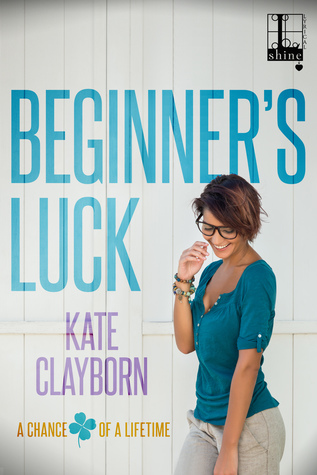 I really enjoyed Kate Clayborn’s Beginner’s Luck. Right away I liked that its leads had unusual jobs, meaning there was a fair amount of “neepery”: the heroine is a lab technician with the potential to be a research scientist of a different kind if she saw her life a bit differently, and the hero is a corporate recruiter but also hangs out in his family’s salvage yard, so on top of the science stuff there are also lots of details about things like old light fixtures. The title refers in part to the premise of what is presumably going to be a trilogy about three best friends who have won the lottery, but while Kit’s financial fortune is certainly part of the context for the story, I appreciated that it is a fraught part–it has not by any means solved all of her problems. The story is well told and the relationship (including its “big mis”) is believable.
I’ve also enjoyed the two I’ve read so far from Ruby Lang’s Practice Perfect series. I liked Hard Knocks better than Acute Reactions, and neither of them really delighted me; I think both of those reactions are about my own preferred angst-to-wit ratio–which is probably why I liked Jennifer Crusie’s Manhunting, which somehow I had missed before in my Crusie reading, better than either of them.
 Not all of my romance reading has been very successful. I’ve DNF’ed three historicals in the past couple of weeks: two by Eloisa James, including Wilde in Love, and Loretta Chase’s newest, A Duke in Shining Armor. They all felt perfunctory to me, from their starting premises to their characters, and I just didn’t care enough about how we were going to get to the inevitable HEA to keep going. I was trying to put my finger on why Chase’s Carsington novels interest me so much more (they are among my most frequent rereads). Part of it is because so much more is at stake in them than the feelings of the leads (the dispute over the planned canal in Miss Wonderful, for example), but there’s also something different in the quality of the characterization, and in the pace and wit of the dialogue–something that just seems to be missing in the new ones. As I set these three books aside (and remembered, too, how uninspired I was by recent books by Tessa Dare and Sarah MacLean, who have written other books that are among my favorites), I found myself thinking with renewed appreciation also of Cecilia Grant‘s excellent historical romances, not one of which has given me that sense of just going through the motions.
At least I know better now than to assume that a bad run (for me, of course – YMMV etc.) is not a reflection on the genre, which like all kinds of books will have hits and misses for any individual reader. I think I am a bit quicker to abandon genre fiction (including mysteries) if I’m not really enjoying it, whereas I tend to persist to the end of “literary” novels in case the payoff there just takes longer to emerge. Is that snobbery, or a reflection of the different reasons I read, and the different expectations I bring to, different kinds of books? I also read mysteries and romances quite differently when I’m reading them for other purposes, such as teaching. But sometimes I want to read without thinking all that hard–maybe the way to put it is that sometimes I want the book to do all the work, and to carry me along. I’m pretty sure some people do all their reading that way! At any rate, for me the books that serve this purpose for me when I need it are among those I treasure the most.
 Today is the last day of fall term classes. I’ve felt a bit confused all day because while it is a Tuesday really, we had Monday classes, thanks to a scheme some committee cooked up to “equalize” the exact number of days every class meets. (Next term the same geniuses have ordered that we have thee “Fridays” in a row, one actually on a Friday, then two more on the following Monday and Tuesday. You tell me how much sense that makes if your Friday meetings are usually tutorials…)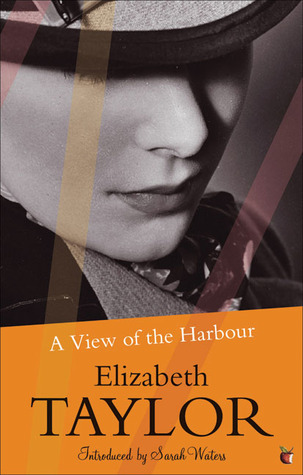
 I have often but not always marked the occasion of a new issue of
  On that note, I should add that I have no plans to give up Novel Readings, which actually predates my own association with Open Letters Monthly by a couple of years. I moved the blog from





 It’s still a slow and incremental process: I have more than once, in conversation, compared my efforts to build up my portfolio of work and thus my credibility in that role (for which my academic credentials mean relatively little) as being on a hamster wheel. I am very fortunate in that I do not need to depend on the results financially–but at the same time that also means I am doing this work alongside the other demands of my job. I’m increasingly happy with the results, though, especially now that they include a couple of pieces that reflect me more personally–that came out of my own strong interests and let me show a bit more of my own style and personality as a writer.
 In other words, a year after a fairly crushing blow to my career and (not incidentally) my self-esteem, I’m doing OK, even well. (Today was certainly an excellent day! There’s nothing like being included in
 That’s OK: it happens, especially around this time of term. It is startling to realize how far through the term we are, actually. We had an unusually warm October, and I think all the pleasant, sunny weather contributed to the sense that we were still in the opening phases. But here we are on November 1, and by the time we get back from our protracted study break (all of next week, plus the following Monday ‘in lieu of Remembrance Day’) we will be hurtling towards the end of it.
 So that class went better than expected, but then my afternoon class went a bit worse: participation was pretty minimal (though everything that was proffered was really useful) and there was a lot of that whole “look down intently at your book every time she asks a question” thing that clearly signals “don’t ask me! don’t even look at me!” Again, that’s fine–up to a point! Everyone’s busy and reading for my class can’t always be everyone’s top priority, even if it is North and South. I was disappointed, though, because usually it’s a class favorite and today’s was a good installment, taking us right through the strike to the remarkable scene on the steps of Marlborough Mill:
