Reading Elizabeth Bowen

I’m reading The Heat of the Day for my local book group, which meets tonight. I haven’t finished the book yet: that’s my main agenda item for today! This is my first experience reading Bowen and it is going a bit slowly, which is why I’m not done. I’ve had the book for a long time: my copy is inscribed to me from my mother on my birthday in 1987 (the same year she gave me Disturbances in the Field, which I have read probably 20 times). So not only is it going slowly now, but it has taken me a long time to get to this book. But then, it’s a book that goes slowly itself: so far, very little has happened, but always with infinite nuance and weight. Nobody walks across a room without the movement being freighted with significance. As I read, I have had in mind Lauren Elkin‘s comparison between Bowen and Winifred Holtby, that “Bowen seems more interested in the possibilities of form, whereas Holtby seems more interested in the possibilities of message.” This has helped me be patient with the book: when it seems to meander, regress, or just stall, I mutter “late modernism” to myself until I stop fretting. The reward for persisting (besides the accumulating sense that, indeed, the actions in the book are significant, and the characters and their story are going somewhere interesting) is that there are passages of sublimely wonderful writing. The opening pages of Chapter Five, in particular, offer a splendidly evocative, lyrical description of London in the autumn of 1940, “that heady autumn of the first London air raids.” A sample:

Out of the mists of morning charred by the smoke from ruins each day rose to a height of unmisty glitter; between the last of sunset and first note of the siren the darkening glassy tenseness of evening was drawn fine. . . . The diversion of traffic out of blocked main thoroughfares into byways, the unstopping phantasmagoric streaming of lorries, buses, vans, drays, taxis past modest windows and quiet doorways set up an overpowering sense of London’s organic power–somewhere here was a source from which heavy motion boiled, surged and, not to be damned up, forced itself new channels.

The very soil of the city at this time seemed to generate more strength: in parks the outsize dahlias, velvet and wine, and the trees on which each vein in each yellow leaf stretched out perfect against the sun blazoned out the idea of the finest hour. Parks suddenly closed bdcause of time-bombs–drifts of leaves in the empty deck chairs, birds afloat on the dazzlingly silent lakes–presented, between the railings which girt them, mirages of repose. All this was beheld each morning more light-headedly: sleeplessness disembodied the lookers-on.

In reality there were no holidays; few were free however light-headedly to wander. The night behind and the night to come met across every noon in an arch of strain. To work or think was to ache. In offices, factories, ministries, shops, kitchens the hot yellow sands of each afternoon ran out slowly; fatigue was the one reality. You dared not envisage sleep.

It goes on–the next bit about the traces of the dead mingling with the living is also wonderful, and the whole set piece compellingly backs up the claim that “that particular psychic London was to be gone for ever; more bombs would fall, but not on the same city.”

Here’s another passage, also intensely descriptive and also evocative of a mood and a perspective:

She was at the foot of the most advancing promontory of the Mount Morris woods, at the point where, borne forward on inside rock, they most nearly approached the river. A rapture of strength could be felt in the rising tree trunks rooted gripping the slope, and in the stretch of the boughs; and there travelled through the layered, lit, shaded, thinning and crossing foliage, and was deflected downward onto the laurels, a breathless glory. In the hush the dead could be imagined returning from all the wars; and, turning the eyes from arch to arch of boughs, from ray to ray of light, one knew some expectant sense to be tuned in to an unfinished symphony of love.

The seeming of this to be for ever was astonishing–until a leaf fell slowly, veering towards her eyes as though she had brought time with her into the wood.

I’m willing to forgive a novelist a fair amount of opacity and even the occasional bout of tedium if the reward is writing like this.

Decided! Books for ‘Mystery and Detective Fiction’

As you know, I’ve been tinkering for some time with the book list for this fall’s version of ‘Mystery and Detective Fiction.’ This course presents a special set of challenges for me because the range of options is so wide and because my patience for exploring the options runs out pretty fast.  I’ve also been asked to teach it so often since I first introduced it in 2003, and I’m always torn between the simplicity and efficiency of just using the same books as before and the desire for some change, not to mention the pricking of my conscience about trying to represent as many voices and styles in the genre as I can. After another round of suggestions, explorations, and cogitations, not to mention a very tedious search for a reader that included all of my ‘must have’ short fiction, here’s what I’ve settled on for Fall 2011. The order is in, so don’t you dare tell me what books would work better or what important writer I’m obviously missing. Actually, feel free to tell me. I’m sure I’ll be teaching the course again, probably as soon as 2012-13, and I might as well get the list started for the next round of ideas. Also, I emphasize in class that our list can’t even hope to be comprehensive even as a sampler: the stated goal of the course is to equip them with contexts, critical ideas, and reading strategies that will enhance their reading of any mysteries, so it doesn’t hurt to be able to mention other titles they should look at.

Classic Crime Stories: 13 Tales from Edgar Allan Poe to Lawrence Block, ed. James Daley

Wilkie Collins, The Moonstone (1868)

Arthur Conan Doyle, The Hound of the Baskervilles (1901-2)

Agatha Christie, The Murder of Roger Ackroyd (1926)

Dashiell Hammett, The Maltese Falcon (1930)

Ed McBain, Cop Hater (1956)

P. D. James, An Unsuitable Job for a Woman (1972)

Maj Sjowall and Per Wahloo, The Terrorists (1975)

Sara Paretsky, Indemnity Only (1982)

Walter Mosley,  Devil in a Blue Dress (1990)

McBain, Sjowall and Wahloo and Mosley will be brand new “preps” for me. I left An Unsuitable Job for a Woman off the list for this survey class last time, but it’s one of my own favorites and when I saw I could work the schedule to allow time for one more book, I decided to give it to myself as a treat as well as to the students as a striking contrast in theme and style to the greater minimalism (and testosterone) of McBain and the increase in hard-boiled tough stuff that comes with adding Mosley. This will be the first time I’ve offered the course without Ian Rankin’s Knots and Crosses, and I’ll miss that one for its blend of procedural conventions and literary material (it’s usually a student favorite, for the creepiness, too). And I’ve dropped Paul Auster’s City of Glass for now, with some regrets because it’s so darned clever–but that’s also the reason I won’t miss it. Looking at this list in chronological order I realize I’m not doing well at bringing it right up to date (1990 seems a lot more recent to me than it will to my students!). Oh well.

Weekend Miscellany: Other People’s Points of View

I was a bit snarky about both A Visit from the Goon Squad and The Professor. Other people have read them quite differently–or at least more favorably. Here, for instance, is an excerpt from Olivia Laing’s recent review of The Professor in the Guardian:

If the spleen only went one way this sort of thing would be vindictive, even nasty, but Castle is too self-aware a critic to carry out anything so brutish as a hatchet job. She persistently casts herself in ridiculous, demeaning roles (“I, her forty-something slave girl from San Francisco”), yelping at one point: “Caveat lector: Lilliputian on the rampage!” The self-belittling reaches its apotheosis in the most substantial essay here, “The Professor”, an extraordinarily gleeful account of Castle’s damaging relationship with a much older woman when she was a grad student in the midwest.

In this real-life retelling of Bluebeard, The Professor, complete with “the Very Weird Long Grey Braid; the Withered Leg, the Loaded Pistol in the Bedside Drawer; the Room in Her House One Was Never Allowed to Enter”, is pitted against the youthful “T-Ball”, a naive and horribly intellectually ambitious baby dyke. The result, predictably enough, is carnage, albeit of a kind that anyone who’s ever loved and lost might experience considerable cathartic pleasure to encounter. (read the rest here)

Laing concludes, “As Castle says of her period of academic specialisation, the 18th century, one can sense beyond the “rococo lightness and drollery… a deep moral seriousness humming away at the core”. That same hum is certainly audible in these pages, though you might be hard pressed to catch it over your own delighted cackles.” I was hard pressed to catch it, but because I was recoiling from the page, not cackling delightedly. I agree more with Elaine Showalter’s earlier Guardian review (here). Though Showalter too is more appreciative of Castle’s “vengeful side” than I am, she identifies aspects of the collection that I too thought were interesting and engaging:

Castle is not limited by the malicious muse. In other essays she writes stirringly about the first world war, and the feminine fascination with and envy of male heroism, as well as about 9/11 and its impact on popular culture. She contends frankly with her fear of “being swept back – annihilatingly – into the world of ‘my mother’s taste’.” In a wonderful sentence about her mother, Mavis, she sums up an entire feminist dilemma: “my whole life up to now . . . has from one angle been a fairly heartless repudiation of maternal sentimentality: all the bright, powerless, feminine things.”

In The New Republic, Ross Posnock celebrates Castle’s “turn to memoir”:

Castle partakes of the culture’s sense of entitled contempt of the “English professor,” while also complicating that entitlement. Her essays turn her painfully won capacity to see herself and the world “mock-heroically” into a source of bracing truth-telling that, in turn, becomes an unexpected source of insight into the power of literature, art, and music in shaping a life. . . .

Castle learned mock-heroism the hard way—above all, as the title essay recounts, by surviving a humiliating, scalding, passionate affair as a graduate student with a self-intoxicated, regal, promiscuous female professor—a “connoisseur, a sensualist, skilled in the arts of homosexual love,” a wounding eventually and partially healed by abundant reading in eighteenth-century satire. . . .

Getting dirtied and staying dirty encouraged Castle not only to take a “debunking attitude toward the self,” but also to become insouciant about seriousness and easy about “self-burlesque.” She can be absolutely hilarious. And this suppleness puts her on both sides of the public/academy conflict: she expresses the general public’s contempt for the academic literary intellectual and the genteel sense of superior refinement that the profession cultivates in its members. At MLA she bristles at a “drifting throng of rabbity academics”—an “unprepossessing” mass of “tweedy jackets, sensible shoes”—and also describes herself as an “effete little twit” full of “aristocratic disdain” not only toward her collegial brethren but particularly, in her youth, toward her earnest lesbian separatist sisters.

I think Posnock is right that the book’s appeal (for those who like it) lies at least partly in Castle’s participation in anti-academic satire. I’m not as comfortable with what he calls her “suppleness,” however: another word for that could be “inconsistency,” or even “hypocrisy”. And I honestly don’t see how it is the case that this book

understands more about the academic vocation, and the art of self-examination, than the shelf of grave and socially responsible studies of and by professors that have appeared in recent years. It is a superb weapon for tearing up that soul-destroying cardboard figure of fun its title names.

Nothing in it that spoke to my own experience of “academic vocation,” and if Posnock’s last comment about “that soul-destroying cardboard figure” refers to the English professor as a general identity rather than a specific English professor such as the one with whom Castle had her awful love affair–if he means all of us, in other words, then I resent the implication and Castle should too, except that I don’t see where in The Professor she has done anything to show English professors as soul-enhancing.

And the final offering in my sample of other people’s opinions of The Professor, is Sam Anderson in New York Magazine (here). Anderson pairs The Professor with Elif Batuman’s The Possessed (which I also read and didn’t much like–though for different reasons):

Part of the pleasure of these books is seeing a figure of genteel cultural authority—the literary scholar—comically reduced. Castle, in particular, is vulnerable and neurotic. She blows writing deadlines and suffers from “astronomical credit card debt.” She describes herself as “moody and mean-spirited”; “pale, criminal, a bit bloated”; a “japing, nay-saying, emotionally stunted creature”; and a “bullet-ridden blob.” She has a panic attack in a rental car and explosive diarrhea in the sea off Sicily. (“I am breaking every law of God and Man,” she thinks.) She decides, after a waiter calls her “sir,” that she is destined to “suffer the lonely death of the sexual pervert.” (In a recent interview with The Nation, Castle described her persona in these essays as “self-burlesque … a conscious casting off of a sort of authority or pedantry or certainty.”)

Both Batuman and Castle come across as supremely lovable dorks. As a grad student, Castle used to write some final papers during the first week of class, then brag about it to her classmates. (She seems less proud of this today.) Batuman once brought her bathroom scale to the library to weigh Tolstoy’s Collected Works, ten volumes at a time. (It weighs, apparently, as much as a newborn beluga whale.) Even their faults are lovably dorky.

Here we go again with the anti-academic thing: why exactly is it such a “pleasure” to comically reduce the literary scholar, I wonder? Is it just a grown-up manifestation of the typical childish rebellion against teachers? A kind of erudite adolescent angst? What does it really have to do with anything that the woman who Castle became so disastrously involved with was a professor?

None of these reviews makes me keen to reread The Professor. Similarly, none of the pieces I’ve looked up on A Visit to the Goon Squad will send me back to it–yet, anyway. I’ll hang on to it, of course. Maybe it’s moment will come for me. Maybe. Some prettty energetic discussions of it took place in the posts and comments at The Morning News’s Tournament of Books. Here’s a bit from Anthony Doerr’s judging round, in which Good Squad was thrown in the ring against another book world favorite, Skippy Dies (which would have got my vote):

Egan’s book is a terrific feat of ventriloquism, composed of 13 short stories that seesaw back and forth through time and interconnect multiple characters, particularly the lives of a music producer named Bennie and his assistant, Sasha.

But it’s so much more than my lame synopsis—and more than a sum of diverse narrators and characters. The structure of Goon Squad reminds me in many ways of Joan Silber’s Ideas of Heaven, a lovely collection of six stories in which a minor character in one story becomes the narrator of the next. In Goon Squad, Egan focuses on multiplicity as well as totality; her approach isn’t about eliminating everything that’s irrelevant to a central narrative in the way so many novels are. It’s more about dropping a giant, rotating, mirror ball into a pair of lives and watching it turn.

Silber called her book a “ring of stories” and that’s how I began to think of Goon Squad—as a ring. As you travel around the ring, you watch Bennie and Sasha be kids, compromise, grow up, fail, have kids, make strides, fail again. “Time’s a goon, right?” Bennie says at one point. “You gonna let that goon push you around?”

By the time I got through the book’s penultimate chapter, a breathtaking short story told entirely through PowerPoint slides, there were tears in my eyes.

Elif Batuman took on Goon Squad vs. The Finkler Question in the quarter-finals. At first she reacts a bit as I did, with skepticism about the power of the form of interlinked stories. But like many other reviewers I read, she was won over:

In the middle of Goon Squad’s fourth story, which involves a love triangle with a couple and their guide on a safari—a play on Hemingway’s “Short Happy Life of Francis Macomber”—I suddenly realized that I was reading a brilliant and wonderful book. The “goon” in the title, it turns out, is time—time that brutalizes, and ravages all things. Most of the recurring characters experience serious reversals and undulations of fortune—successes become spectacular failures and vice versa—in a way that somehow seems not artificial, but incredibly true. Egan makes you feel how time bends stories out of shape, gives them new, incongruous, beautiful, retrospectively inevitable endings. This is the kind of feeling you get from Proust or Tolstoy, but over hundreds, thousands of pages. I don’t think I’ve ever felt it from a short-story collection. “Virtuosity” is actually an apt word: You feel that Egan got so good at the form that she managed to get it to transcend itself—to make it historical, to make it do the work of the novel.

It’s also very much “a book of our times,” a book of our historical moment. I’m thinking less of the story told entirely in PowerPoint than of the character who predicts the coming of Facebook: “The days of losing touch are almost gone,” he says. “We’re going to meet again in a different place. Everyone we’ve lost, we’ll find. Or they’ll find us. I picture it like Judgment Day. We’ll rise up out of our bodies and find each other again in spirit form.” Goon Squad shows how, in a certain sense, we can’t lose track of people anymore—even as, in another, older sense, we eventually lose everything and everyone. It’s a beautiful, valuable achievement.

Huh. Then in the Zombie Round, Rahdika Jones says the PowerPoint chapter made her cry. Maybe I’m just not a reader of our historical moment? If it’s a “book of our times,” why does it have so little in common with anything I know or care about? Maybe the New Yorker story origins are a hint: there’s something almost cliquish about Goon Squad and its fans that relies on a knowingness and a taste for a certain flavor of fiction (clever, artful, self-conscious, and hip). I did appreciate C. Max Magee’s description of Goon Squad in his judging of the Championship Round (in which he ended up giving the nod to Freedom):

Calling Goon Squad a novel in stories, as it is sometimes billed, does it a disservice. The book is more like a scaffold. Each story is a platform connected by the structure Egan has erected, but, in the form of little bits of exposition within the stories, she also sends ladders shooting higher and ropes hanging lower, moving the characters decades into future where they may or may not meet again. The scaffold suggests the heft of a much larger design behind it. And, to extend this metaphor further, isn’t it true that an intricate, possibly hazardous scaffolding is sometimes more interesting to behold than the massive building to which it is affixed?

That’s nicely put, a persuasive way to describe the book’s structure. My answer to his final rhetorical question, though, is “no”–or at least, not unless the building is a failure, in which case our interest in the scaffolding is partly that of a pathologist. What I really want is the edifice, not the artifice.

Terry Castle, The Professor

Here’s a passage from Terry Castle’s “The Professor”–what genre  is it? essay? novella? screed?–that displays most of the qualities that made me dislike it so much:

So what to say about the Dear Lady herself, now that more than three decades have elapsed? True: one feels a bit like Sir Walter Scott putting the question so sententiously. One imagines a title: Dumped: Or, ‘Tis Thirty Years Since. Also true: that the matter evokes contradictory feelings in me. Having now described the fiasco with the Professor at length [she’s not kidding–the piece goes on for almost 200 pages], I confess, I feel on the one hand a bit embarrassed by its sheer triteness: my own sitting-duckness, my seducer’s casebook callousness. As I expected, revisiting Ye Olde Journals has indeed been lowering–not least because they tell such a dreary old-hat tale. Who hasn’t clawed at one’s pillow in anguish at a lover’s faithlessness? Had one jumped off a cliff that long-ago winter–Sappho of Lesbos-style–one would simply have ratified it: one’s lack of originality; one’s tedious by-the-bookness.

What don’t I like? First, the Capital Letters. This is a trick Castle uses frequently in this volume when she wants to use terms she knows are trite and so decides to code as ironic: “Core Emotional Truth Time,” Still Too Much Going On,” “Trial of Taste,” “The Worst Song Ever Written,” “Wild and Fun and Oh-So Grown-Up.” It’s self-mockery, sure, but also a parade of intellectual superiority (“don’t worry, I know better than this“). Then the pronoun: why, in such an intimate tale, switch to the pompous “one” when the subject is clearly, as in every essay here, Castle herself? Again, it’s self-mockery, but the sententiousness is not any less because of the off-hand and unjustifiably condescending reference to Scott. (Scott’s version of Dumped would have been far less obsessively whiny and self-absorbed: think how foolish Our Hero Edward Waverley looks as he mopes about after Flora MacIvor!) Then the faux-apologies for the triteness of the tale told–faux, because she takes 200 pages to tell her side of the story, and while the visceral energy of the piece is undeniable, she’s right that it’s not, or is not made into, something extraordinary: there’s no broader implication, no lesson learned (for her or for us), no strong attribution of cause and effect between the miserable affair and her understanding of relationships or her development as a person or an intellectual. “Ye Olde Journals”? OK, we get it: you are keen to distance yourself from the woman you were when you wrote them. There’s no need to be so arch about it. And the Sappho allusion is the pretentious cherry on this dreary sundae of self-pity and vengefulness. Though I’m not nearly as interested in Terry Castle as I would have to be to find these nearly 200 pages truly compelling, I would at least have preferred that she write them with less effortful self-conscious posturing and more sincerity. Perhaps it’s the Victorianist in me confronting the 18th-century satirist in her, but there’s no sense that she got anything intellectually or morally out of either the experience or the narration of it. Fair enough, but then it’s hard to see what we can get out of reading this, except sordid voyeuristic excitement.

I liked the first essay in the collection much better: that’s the one I quoted from before, that includes her thoughts on Vera Brittain. I was mildly to moderately engaged by the other ones, though “Desperately Seeking Susan” also struck me as self-absorbed and unpleasantly voyeuristic–I was left with the feeling that Castle is kind of a difficult person to know, and certainly a dangerous person to cross or disappoint. I really enjoyed parts of “Travels with My Mother,” but in the end I couldn’t forgive Castle her overt condescension–again, being self-conscious about it does not undo it. She’s just so pleased with herself for being able to like Georgia O’Keeffe in spite of herself:

But something odd is happening. The paintings, when I get to them, are not, I notice, as huge and blowsy as I was expecting. Several in fact are quite small. Not Vermeer small, but definitely smallish. And one or two, I have to admit, are pleasing, especially the pre-New Mexico ones from the 1910s and ’20s. Hmmm. Addled connoisseur-brain starts gently powering up again, trying to process the unanticipated subtleties of the situation. Okay, they’re all still flowers, but aren’t some of them at least as good as ones by those American Modernists you like so much? You know: Marsden Hartley, Arthur Dove, Charles Demuth? If you didn’t know they were hers, wouldn’t you be impressed? Aren’t you being hard on her–as is your perverted wont–because she’s a woman? I keep looking for more of the expected monstrosities–lewd river basins, vaginal canyons–but have only intermittent success. A few throbbing pink and yellow horrors float in and out of view in the distance, of course, but the worst offenders in the O’Keeffe Anatomical Fixation Department don’t seem to be here…

And she’s so pleasantly surprised to learn that her mother (who does crafts–the horror!) shares her enthusiasm for Agnes Martin, the “anti-O’Keeffe” who serves as her “ultimate Connoisseur’s Good Taste Vaccine”: “Yea, though I walk through the Valley of Southwestern Style, I will fear no evil.”

To my surprise … [my mother] is an Agnes Martin aficionada. . . . My snob-self is frankly stunned at this unexpected display of maternal hip: it’s as if Wally and Charlie, my dachshunds, were suddenly to begin discussing Hans-Georg Gadamer.

The flourishes of knowingness, the display of recondite expertise, the distancing irony, the snide self-mockery supplementing but never supplanting the self-absorption: the impression I get from this volume is that these qualities are not stages in Terry Castle’s life but define her personality. Judging from the effusive blurbage on the book, for people who like this sort of thing, this is really the sort of thing they like, but that turns out not to include me.

Robert B. Parker, The Godwulf Manuscript

It seemed appropriate to come back from Boston with a copy of Robert B. Parker’s first Spenser mystery, The Godwulf Manuscript. Though I’m sure I’ve read it before, it wasn’t in my own Spenser collection–which is actually pretty small, since I originally read them from my family’s copies back in Vancouver. The ones I own myself (and thus reread often) are all quite recent.

It was very interesting, therefore, to go right back to the beginning of the series. Right away, I was conscious of differences, particularly in the writing style. Over time Parker’s prose got more and more spare, especially his dialogue (I have joked that he seemed to be aiming for a book in which nobody actually has to talk at all, as they understand each other so well). The Godwulf Manuscript is downright verbose by comparison. There’s a lot more description of the setting and characters, with particular attention to what people are wearing:

Under one of the saplings a boy and girl sat close together. He was wearing black sneakers and brown socks, flared dungarees, a blue denim shirt and a fatigue jacket with staff sergeant’s stripes, a Seventh Division patch, and the name tag Gagliano. . . . The girl had on bib overalls and a quilted ski parka. On her feet were blue suede hiking boots with thick corrugated soles and silver lacing studs. . . .

A black kid in a Borsalino hat came out of the library across the quadrangle. He had on a red sleeveless jumpsuit, black shirt with bell sleeves, high-heeled black patent leather boots with black laces. A full-length black leather trench coat hung open.

There’s really no need for us to know any of this, unless it’s to establish how observant Spenser is. (Of course, for some of us, there’s a little nostalgic potential in this evocation of a college campus in the early 1970s–if it’s possible to feel nostalgic for flared jeans.) Spenser also talks to (and about) himself more, and he doesn’t act quite like the Spenser we know later on. He’s already a smartass and a good cook, but he’s more conventionally hard-boiled: a loner, a heavy drinker, and not too principled to sleep not only with the young student he’s supposed to be protecting but with her mother as well (to be fair, the mother comes on to him pretty aggressively, but the later Spenser would, I think, have resisted, and not just because of Susan). This is a bleaker Spenser, too, and now I’m curious about whether there’s any overt connection made between the ways he develops and his relationship with Susan–whom he meets in the second book, God Save the Child (which I now must find and reread as well).

Speaking of Susan, it was also interesting to note which of Spenser’s people are here right at the beginning: we meet Quirk and Belson right away, which I hadn’t remembered, but there’s no Hawk, for instance–is their meeting part of the plot of one of the early books, does anyone know, or is Hawk just there at some point? There’s no Rita Fiore yet, no Healy, no Farrell, no Vinnie. I think my favorite thing about the series is that it takes the lone cowboy model of its hardboiled predecessors and gives us instead a community of tough but righteous people who know by instinct what to do and are fearless about doing it. Spenser may go down the mean streets pretty much untarnished, but he’s not alone. Do you remember the original ads for ER, about these being the faces you’d want to see on the worst day of your life? That’s sort of what the Spenser group makes us feel, isn’t it, that if we were in some terrible, dangerous place, they are the ones we could trust to get us out alive, and then to see justice done? Their methods can be as ugly as their antagonists’ and there’s nothing particularly reassuring about a world in which this is the group you rely on, but they live by an unspoken code of honor that is always viscerally satisfying.

The Spenser-Susan relationship is my other favorite thing about the series. It’s as good an attempt as I know to imagine a fully adult relationship in which neither partner makes any compromises but instead each one consciously (if not always flawlessly) works to let the other be fully themselves, without apology. It’s true that it is, ultimately, Spenser’s series, and we follow Susan only in relation to him; there are also many occasions when she needs to be protected from physical harm by Spenser or, more often, by his associates (as he’s off solving the case, of course)–but then, there are also many occasions when her counsel is important to Spenser, and the strength of her psychological insight is often acknowledged and used. Their personal life is not the focus of the series (these are crime novels, after all), but Parker likes to mix it up a bit, as in Small Vices, which I recently reread, where Susan proposes that they have a child. Rather than using this as an opportunity for a dramatic change in either the characters or the basic commitments of the series, Parker makes it one more test of their commitment to letting each other be. That’s no small thing. In fact, in most relationships I know anything about, that’s one of the central challenges. I find it interesting that they keep their own homes. That means it is always a choice, an affirmation, when they are together; it also suggests that even romantic partnerships (and theirs is, undoubtedly, romantic!) need to have boundaries, and allow some time and space for complete autonomy.

I realize that it is possible, and not unjustified, to find this series repetitive. To some, its fidelity to its own formula even reaches the point of tedium–or worse. Recently at The Millions, for instance, Bill Morris gets pretty scathing:

the most rabid fans tend to insist that their favorite writers not only stick to their chosen genre but produce the same book over and over again.  That’s why we keep getting robotic, risk-averse re-writers like the late Robert B. Parker.

Predictably, as a fan (though not a rabid fan) I don’t think that’s entirely fair. The books are intensely similar but they are not the same, and the variations Parker plays on his themes show ingenuity and skill. Repetition also has its own significance: people do bad things for a narrow range of reasons, and setting things straight looks about the same every time. How could it not? One of the underlying points of all mystery series, too, is that a case may conclude, but crime never does. That said, I admit that one of the attractions of reading a new instalment in the series was always knowing basically what it would be like. It was like visiting old friends–and after all, do we expect our old friends to transform each time we meet them? One reason the late books could be so sparse and elliptical is precisely that we all knew each other so well: there was no need to explain. Why shouldn’t the successful establishment of that kind of trust and intimacy be counted a literary virtue as much as the ability of a writer to surprise us or subvert our expectations? Well, OK, I agree that it’s a greater achievement to do the latter, but it’s still no small achievement to do the former. No doubt it’s partly nostalgia that makes me defensive here: I’ve been reading the Spenser books for decades, after all–not quite since 1973, but since the 1980s for sure, and so it feels as if he and Hawk and Susan just belong in my life, somehow. But I wouldn’t have kept on reading and rereading the books if I didn’t think they were worth it, and I trust myself enough as a reader to believe that if they were no better than “robotic,” I would have noticed.

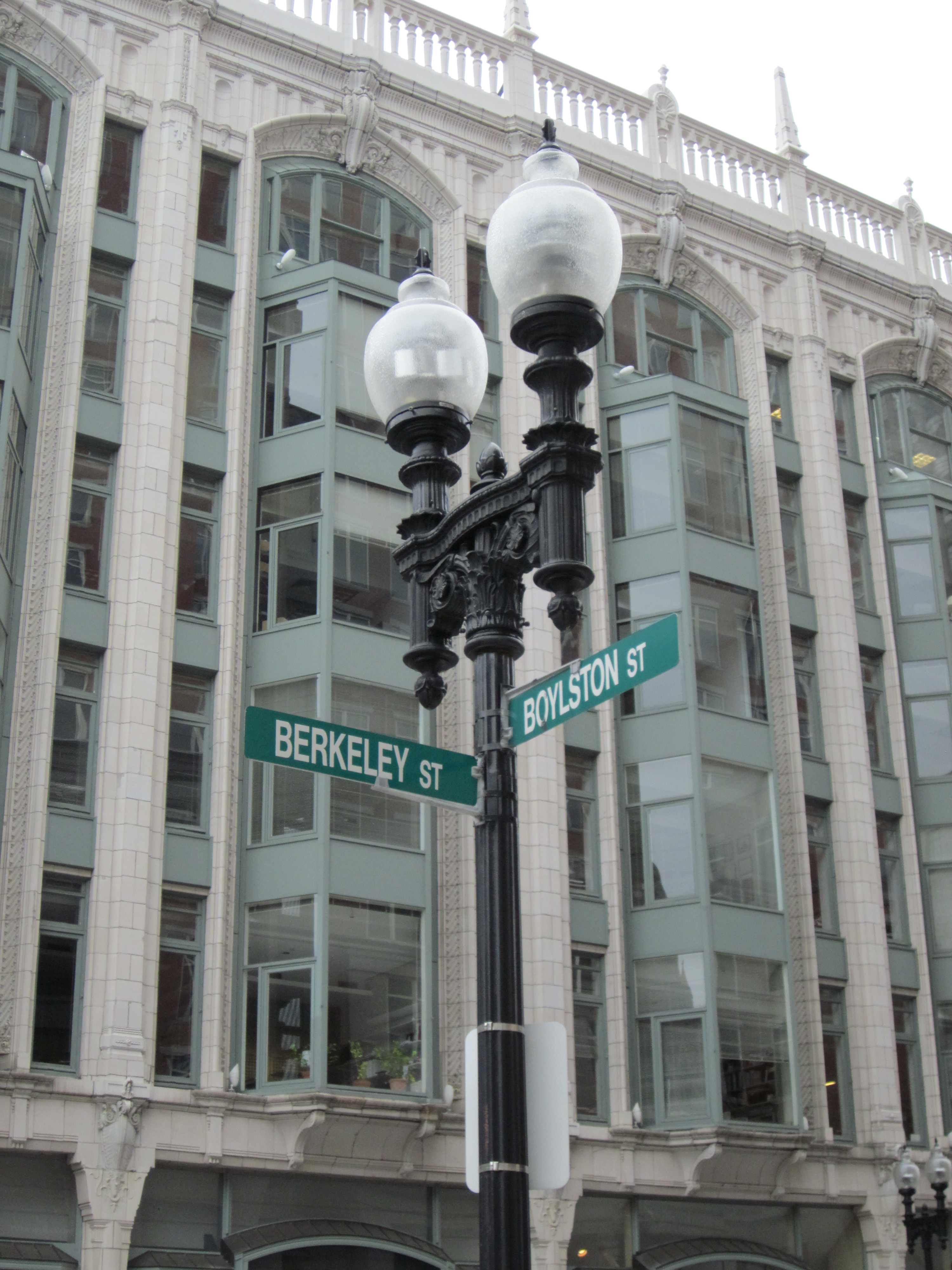
*Before some rabid fan points this out, let me say that I do know Spenser’s office is not at Berkeley and Boylston in The Godwulf Manuscript: he moves there later. I did not go so far as to tour all the Spenserian locations in Boston, though!

The Goon Squad visited; I was not at home.

goon_squadWhat to do when you read a critically acclaimed, award-winning, highly successful and popular novel and are unmoved?
That’s my problem on finishing Jennifer Egan’s A Visit from the Good Squad—finishing belatedly, because (and this is a symptom of my reading experience) I read the penultimate chapter (and I should say “read” the penultimate chapter, as it’s the one “written” [“composed” seems a better term, but Egan talks about “writing” it] in PowerPoint slides) several days ago and then the book sat around giving me no sense of urgency about getting to the endso tonight I whipped (a bit carelessly, I admit) through to the end so I could get back to Testament of Friendship and then move on to Cakes and Ale without guilt.

It’s not that I didn’t like the novel. Mostly, I enjoyed it. It’s written in polished, sometimes evocative, often witty prose. The characters are well drawn. The structure is ingenious. The shifts in point of view and the manipulation of chronology are technically skillful. The PowerPoint chapter is ingeniousbut the whole time I was going through it I kept thinking of my 7th-grade autobiography project. One required component was a character sketch, and (feeling ingenious) I inserted several line drawings (sketches!), outlines of a girl’s shape (I traced a paper doll, I think), on which I wrote key words that I thought described my character. In her evaluation, my teacher wrote: “Character sketches: original. However, you have the talent to write this interestingly in paragraph or story form.” So does Jennifer Egan.

So what am I missing, or what is the novel missing? Though it’s a reasonable 340 pages, Goon Squad felt insubstantial, to me, which is not an issue of length so much as an issue of ideas. What’s the idea of the novel? Where’s the depth? It reads like interlocking short storieswhich is fine (and kind of trendy, I guess, recalling Olive Kitteridge, which also, now I think about it, won the Pulitzer, and which I also found fine but not great)but it also bespeaks a certain disengagement from the form of the novel as something distinct, doesn’t it? Is this a hopelessly old-fashioned idea, that novels are at their best when most themselves? (I know–that’s a question that can only get me into trouble, considering how amorphous the definition of “the novel” is, and how many dissimilar forms the category happily embraces.) But consider A. S. Byatt’s The Children’s Book, for example. The heft of it! The fearless exposition! And the commitment to telling us what happens, what it means, how it feels, and to crafting all the profusion of details and characters into something artistically and intellectually solid. Novels don’t all have to be as heavy as The Children’s Book, but that feeling of repletion is something I appreciate in a novel. Leaving Brooklyn gave me that feeling too, in a completely different way, both aesthetically and formally. Goon Squad kept me interested moment to moment, but it felt more like the pleasures of a tapas bar than the satisfaction of a full meal. Its unities arise from the characters, whose stories persist and overlap, and from what I take to be the book’s central thematic interest in the relationship between our past and our present–and in the moments that crack them together, unsettling our sense of our own identities, releasing sparks of often poignant memory. (Yes, I saw the epigraphs from Proust.) That all works…and yet it didn’t really work for me at that visceral level where you say “this is a book for me, a book of my life.”

I’m open, as always, to the possibility that it’s my faultthat I’m not reading this particular book well, whether because it confounds or subverts my pre-existing expectations or preferences for fiction or for some other reason. I understand that Egan wasn’t trying to write like Byatt or Schwartz and failing at it, and indeed that kind of realism is probably something she avoided deliberately, though in many respects Goon Squad is a conventionally realist novel that just plays a little with chronology and point of view (first person! second person! third person!)and form or genre, what with the slides, and the magazine article (with footnotes!) and so on. One point of disconnection for me was certainly the general context of the stories: the punk music scene (and the musical allusions) are unfamiliar territory and hold little interest for me. Is it as simple as that? I couldn’t love the novel because I didn’t “relate” to it? I hope that’s not all that inhibited my appreciationI like to think I’m a better reader than that!

This post is very much a first response, too: I’ve only just put the book down, and though I’ve browsed back through it as I puttered away here to freshen and test my recollections of it, I know I haven’t given it the kind of attention I would give a book I were ‘officially’ reviewing. The bottom line, though, is that while I’m not sorry I read it, I have no urge to go back to it. There are books I’ve read once and become immediately, intimately bound up in them, and A Visit from the Goon Squad is just not one of them. Still, I’m curious enough about the mismatch between my experience and the buzz that I’ll probably go look up some reviews, and maybe the Tournament of Books posts about it: I feel the need for a little of what Wayne Booth calls “coduction.”

Have any of you read A Visit from the Goon Squad? What was your reaction? Are there any reviews or blog posts about it that you found particularly apt or provoking?

Some Boston Highlights

Why did I not know what a beautiful city Boston is? As I prepared for my trip, I realized that I had no particular mental picture of Boston. Not only had I never been there in person, but I know hardly any books set there, or movies or TV shows set (much less filmed) there : there’s Cheers, of course, but we almost never get any shots of the city, and there’s Robert B. Parker’s Spenser series, and The Bostonians, and Death in a Tenured Position for Harvard…and as far as my own reference points go, that’s about it. Of course, now that I’ve said that you’ll probably all be able to point out other obvious examples, including ones I do know but have forgotten! But compared to New York, Boston was unfamiliar territory for me, so I approached it with a real sense of discovery and enjoyed it thoroughly. This is not the place for a detailed travelogue (and I have no Eat, Pray, Love-style revelations to make!), but here are a few of the highlights.

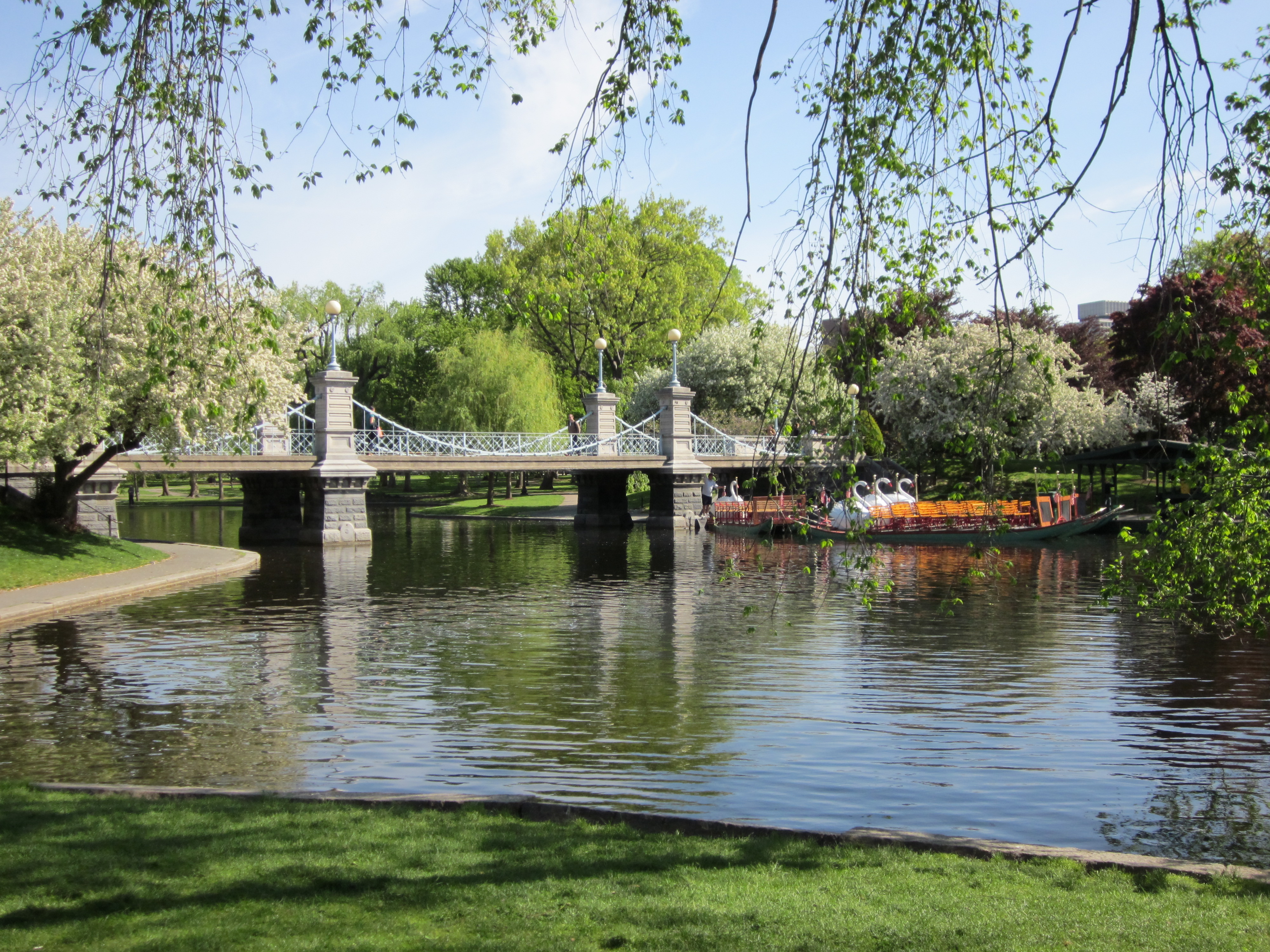
My favorite place was definitely the Public Garden. We have a Public Gardens here in Halifax, which is smaller but also more formal and ornate than Boston’s. Both are lovely oases in the middle of the city bustle. My B&B was just down Commonwealth Avenue from the gates, so I was able to visit the Garden often; if only the weather had been a bit less drizzly, I would have spent even more time roaming around enjoying green thoughts in the green shade. Of course, I had to pay my respects to my oldest Boston literary friends:

Another thoroughly delightful place, one that I might not have thought to visit if it weren’t for my host, is the Boston Public Library. Completed in 1895, it is a monument (as all public libraries should be) to the value of reading, with an elegant marble vestibule opening into this spectacular entrance hall:

The main staircase is “ivory gray Echaillon marble,” my flyer tells me, and the walls are “richly variegated yellow Siena”:

Here’s the beautiful reading room, Bates Hall:

Shouldn’t being in a library always be this much like being in a temple? The library also has a pretty courtyard with a fountain, a peaceful spot to enjoy your coffee and your book.

Of course, I had to visit Harvard. I kind of wished I had worn my Cornell sweatshirt, as a small gesture of resistance to the overwhelming, well, Harvardness of it. But Harvard Yard was very leafy and pretty in the sun:

Even prettier, though, was the Esplanade along the Charles River, the perfect place to spend the one really bright sunny afternoon I had on the trip:

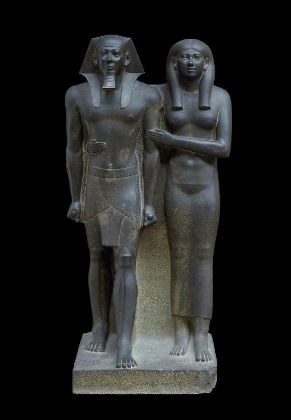
Other places I enjoyed (besides the bookstores mentioned in my previous post) included the Isabella Stewart Gardner Museum and the Museum of Fine Arts, two very different museum experiences, the first a glut of beautiful things, the second more orderly and managed but just as full of provocation and beauty. At the Gardner, the building itself is nearly as remarkable as what it houses. At the MFA, I was particularly compelled (and, in part, repelled) by Turner’s Slave Ship, which is grimly spectacular–and also smaller than I somehow imagined it would be. I enjoyed the Mary Cassatt paintings at the MFA but sadly Mrs Duffee Seated on a Striped Sofa, Reading (see blog banner, above), though in the collection, did not seem to be on display. I am always especially interested in any needlework on display; there was a spectacular example of needlepoint, as big as a tapestry, inthe Dutch room at the Gardner, which I would in fact have mistaken for a tapestry if I hadn’t mentioned my fondness for embroidery to one of the attendants, who then pointed it out to me. At the MFA, one of my favorite items was also pointed out to me by a helpful guide, who understandably identified this serene couple as two of his most cherished friends in the collection:

As many people told me before my trip, Boston is a very walkable city, and I had fun puttering around Back Bay and Beacon Hill, as well as taking a soul-soothing stroll through parts of Forest Hill Cemetery. Of course, I stopped at the corner of Boylston and Berkeley where Spenser has his office, and I took a classic tacky photo of the entrance to Cheers. Finally, on my last day, after a deliciously over-indulgent brunch at Amrheins and a quick tour of the North End, I played tourist at Quincy Market.  With all this and the important Open Letters Monthly summit meetings that were the occasion for the trip in the first place, it was a full five days, and though I certainly didn’t see or do everything, now I feel I know at least something about this lovely historic city.

One final trip-advisorish note for anyone who might be headed to Boston themselves any time soon. I stayed at the College Club of Boston, on Commonwealth Avenue. It’s a charming old building and the rooms are decorated to suit (if a little shabbier than they look in the photos–in my little quarters, I felt a bit like a Victorian gentlewoman fallen on hard times but keeping up appearances, like one of the older Madden sisters in The Odd Women). The location is amazing, and the prices are reasonable, especially if you’re willing to share a (nicely renovated) bathroom. However, I have never experienced such creaky floors in all my life, and every door stuck and therefore had to be tugged open and slammed shut. It’s not a good place to come back to if you’ve been out a bit late (say, drinking wine and talking books in Jamaica Plain, just hypothetically)–not, at least, if you’re the type to feel awkward about waking everyone else up. And it’s a terrible place to stay if it’s really important to you to sleep well–for the same reason. That said, I might well stay there next time. After all, sleep is hardly a top priority when travelling, right? And being a stone’s throw from the Public Garden and walking distance to the Brattle Book Shop is awfully nice.

Boston by the Books

I’m back from a wonderful five days in Boston and it seems only fitting to post first (as I did following last year’s jaunt to New York) about the books that came home with me. It was a great bookish trip, thanks to the guidance but also the company of my co-editors at Open Letters Monthly, who were all (but especially Steve Donoghue) attentive and entertaining hosts.

We made two trips to Steve’s beloved Brattle Book Shop. The first day it was drizzly so the carts were not out and our browsing was all inside–which is not a complaint, as you could browse for hours inside and still feel there were tempting treasures you hadn’t found yet. I realized only belatedly, for instance, that most of the shelves are filled two rows deep, which means I explored only one layer. That day I settled on two novels by Ivy Compton-Burnett: A House and Its Head, in the typically elegant NYRB edition, and a Penguin of A Family and a Fortune. I’ve never read any Compton-Burnett before; my interest was piqued because she is the first author chosen by Her Majesty in The Uncommon Reader. At first she’s not a hit, but after Her Majesty becomes a more experienced reader, “the novel she had once found slow now seemed refreshingly brisk, dry still, but astringently so”:

And it occurred to her … that reading was, among other things, a muscle, and one that she had seemingly developed.  She could read the novel with ease and pleasure, laughing at remarks, they were hardly jokes, that she had not even noticed before. And through it all she could hear the voice of Ivy Compton-Burnett, unsentimental, severe and wise.

On our second visit to the Brattle we browsed the dollar carts, which are filled quite miscellaneously so that you never know what might pop out at you and seem too good to resist for the price. I found Barbara Reynold’s biography of Dorothy L. Sayers (not pictured here, as it is following by steve-post). I also picked up John Updike’s collected golf writings for my husband, figuring he likes both Updike and golf so this might well be a winner! And inside again, I found The Godwulf Manuscript, which is the first of Parker’s Spenser series (I also made a pilgrimage to the corner of Boylston and Berkeley, where Spenser’s office is), and Woolf’s The Common Reader, which I owned but lent out many years ago and have never gotten back. I think I was pretty restrained, really: it’s just as well the Brattle is closed Sundays as I was right in the neighborhood and would certainly have found more. My only disappointment was that this seemed the kind of shop likely to have a copy of Testament of a Generation: The Collected Journalism of Vera Brittain and Winifred Holtby–but no luck.

We went en masse to the Harvard Book Store on Thursday night. Time was limited, so all my finds come from the used section downstairs. One I was particularly glad to find was W. Somerset Maugham’s Cakes and Ale, which is the next reading for the Slaves of Golconda book group. I also found Salley Vicker’s The Other Side of You, which some of you recommended after I wrote up Dancing Backwards. And a bit more impulsively I chose Jane Gardam’s The Queen of the Tambourine: I’ve been interested in Old Filth for a while but haven’t come across it anywhere, and this one, which I see won the Whitbread Prize, looked appealingly dark and funny.

I was back in Cambridge on Friday but did all my browsing at the Coop, mostly because I had worn myself out walking all down Newbury Street earlier that day and then all around Harvard Yard (and all over Boston the two days before!). I was trying to pick books that I haven’t been able to find on the shelf up here, and one on my most-wanted list was Laila Lalami’s Secret Son which I was happy to find there. I have followed Lalami’s blog and journalism for some time, and I got Hope and Other Dangerous Pursuits in New York last summer and was impressed and moved by it. I’m really interested to see what she does working on a larger canvas.

Finally, I had a pleasant browse in the big Barnes & Noble in the Prudential Center, which is an important landmark because most of the OLM team has worked there (or in another B&N location) at some time. Though it lacks the deep bookish personality of the Brattle or the Harvard Book Store, it’s still a lovely bright store for exploring. I thought since I’d been collecting so much fiction I would go a different way with my selection there; I came away with Terry Castle’s The Professor. In one of those moments that make you wonder if there isn’t a larger force organizing your “random” reading choices, I discovered that the very first essay includes a long discussion of Testament of Youth. On her first reading, Castle had not liked the book much, finding Brittain “abrasive and conceited.” She quotes Virginia Woolf’s diary entry, which she had “tended to agree with”:

I am reading with extreme greed a book by Vera Brittain. Not that I much like her. A stringy metallic mind, with I suppose, the sort of taste I should dislike in life. But her story, told in detail, without reserve, of the war, and how she lost lover and brother, and dabbled her hands in entrails, and was forever seeing the dead, and eating scraps, and stting five on one WC, runs rapidly, vividly, across my eyes.

As she then explains at some length, Castle found her rereading of Testament of Youth quite a different experience, coming to appreciate how “phobic and self-critical” Brittain is,and especially  how she struggles against her fears (which Castle too was doing, post-9/11). She finds in Brittain a rare model of a woman who fought against the way women are “imprinted” with cowardice:

By coddling and patronizing its female members, society enforced in them a kind of physical timidity; then, with infuriating circularity, defined such timidity as effeminate and despicable. Both practically and philosophically, Brittain rebelled against the linkage. . . . Had I resisted her for so long–cast her off as an important Not-Me–precisely because, deep down, I felt so much like her? I found out now, with a sudden embarrassed poignancy, precisely how much I sympathized, both with her anxiety and with the florid hope that the men she knew might infect her, so to speak, with physical courage. Not very butch of me, I know. Not very feminist. But I had to confess it: I admired and coveted–quite desperately at times–the insane, uncomplaining, relentless bravery of men.

That’s not where I expected her to take the discussion, but it’s interesting and certainly provocative, as I expect the rest of the book to be.

Also pictured above is a handy little book about the MFA collection. This comes from a particularly rich but obscure book source in leafy Jamaica Plain. It was a special privilege to scavenge in the collection there! More about my experience at the MFA itself, as well as other touristy impressions of Boston, when I’ve caught up on some of the work that has been waiting for my return.

Tuesday Miscellany & Links

That last post on my grandmother turned out to be a bigger project than I anticipated when it crossed my mind to do it–rounding up the scrapbook and letters, then scanning some of the old pictures. It was fun, though fun of the inevitably bittersweet kind that comes from remembering someone very dear. Once it was finally ready to post on Thursday, I had run myself out of time for that night, and then came a run of other distractions so that really all weekend I hardly got any reading done: Friday I spent doing some spring cleaning and cooking in preparation for having a few friends over, then I hauled myself out of bed on Saturday earlier than was entirely desirable (not that we’d been drinking wine or anything…) because Owen had to report by 8:30 for the Math Olympiad (where he and his partner handily came first in Grade 8). Saturday night my husband and Maddie arrived home from a week in Florida, so there was a lot of catching up to do–including the shows saved up on the DVR! More miscellaneous activity on Sunday, including various errands in preparation for my own trip this week, to Boston–so still not much reading. Not last night either, as Owen was performing in the Kiwanis Festival Gala Concert–where his newest piano composition, “Hypnotic Suggestion,” had its world premiere.

Yesterday I was back in the office for a few hours, though, and I finished up The Locked Room, which was the last of the Martin Beck books I hadn’t yet read. I’m working on a short piece about these books for another purpose, so I won’t go into detail about it here except to say that this one is particularly clever in its engagement with one of the classic mystery puzzles–you could do a whole paper, or at least a lengthy riff, on the significant differences between this particular locked room case and those in other kinds of detective stories. The other thing of particular note is that The Locked Room contains by far the funniest chapter in all 10 books, a unique combination of slapstick comedy and violent mayhem. Are there any laugh-out-loud funny chapters in Henning Mankell’s books? Not in the two I’ve read. I’ve set myself a perverse little challenge for the piece I’m writing on the Beck books, which is to see if I can write the whole piece without any references to either Mankell or Stieg Larsson–or, for that matter, to “Scandinavian” or Nordic crime fiction as a general category. Sure, there’s a bandwagon right there, but that doesn’t mean I have to jump on it! I want to see if I can talk about the books looking straight at them instead of treating them as antecedents or precedents. [That said, if you want  a great link round-up for recent reviews in or on this territory, check out the Scandinavian Crime Fiction blog.]

I’m about half way through Vera Brittain’s A Testament of Friendship and, primed by Carolyn Heilbrun’s introduction as well as a lot of Brittain’s own remarks, finding it really engaging as a portrait of women’s friendship that has no truck with the cliches about competition, cattiness, or jealousy that make up the usual tropes for such stories. I was interested to find Brittain opening it by invoking Gaskell’s biography of Charlotte Brontë. That relationship, and that biography, are now seen as more problematic than they clearly seemed to  Brittain: some have read Gaskell as (accidentally) revealing antagonism or rivalry towards Brontë, for instance, and even if you take her to be sincerely defending her friend, there are moments when you wonder if she’s really doing Charlotte any favours by contextualizing her ‘coarseness’ in order to excuse it, rather than rejecting that entire conversation as inappropriate. I wonder if anyone has reread Brittain’s account of Holtby as being not altogether friendly after all. After I finish the book, I will peer around. I don’t see any reason to bring a hermeneutics of suspicion to it, myself: so far, certainly the aspect of it that I like most is what appears to be a wholly sincere and generous spirit of admiration. Thinking about the rarity of representing female friendship has also prompted me to think more about my own friends and what they have meant to me, which is a lot.

The other book I have on the go is Jennifer Egan’s A Visit from the Goon Squad. I wasn’t sure I wanted to read it, despite all the positive press and awards and so forth, but I was peering at it in the store and had a gift card in my pocket, and you can predict the rest. A couple of chapters in, I’m liking it fine, though I have yet to discover why people think it is quite so special–but two chapters is hardly decisive. It will be my airplane reading en route to Boston. No point packing any more books, though, because one of the first places I’ve been promised by my cruise director for this trip is the Brattle Bookshop–which sounds like the sort of place I will be lucky to escape with fewer than five additions to my TBR pile. I believe we are also stopping in at the Barnes and Noble at the Prudential Center, and there may be an expedition to the Trident Booksellers and Cafe as well.

Clearly, I’m in a kind of limbo period here with my reading and writing. Luckily, there are others who can offer you more substance and provocation than I can right now. For instance, over at Wuthering Expectations, Amateur Reader finally got around to Gaskell’s North and South. There’s a little grumbling at first, but as always, he has astute and unexpected ideas about what makes the novel interesting and sometimes even excellent as well. At Tales from the Reading Room, litlove convinces me I should give Willa Cather a try, writes thoughtfully about what critics do all day, and responds to Stephanie Staal’s Reading Women:

I was sorry to see Staal’s tendency to dismiss the latter stages of her course because they were more theoretically demanding, less obviously relevant to her own experience. I’ve always found them some of the most compelling parts. And come on, girls! Are we really going to wimp out here just because something is hard? Absolutely not. If feminism is going to come good on all its hopes, there is still tough work to be done deep in the hearts and minds of women, where perfectionism, compulsive compliance, guilt, responsibility and self-esteem create some pretty toxic combinations. That’s a feminism course I’d love to teach myself. But in the meantime, to catch up on the history of feminism to this point, I thoroughly recommend Stephanie Staal’s book.

Teresa at Shelf Love writes about writing about books, including a number of links worth following up; Annie at Senior Common Room has a very interesting post on the Royal Shakespeare Company’s Macbeth; at the New Yorker’s Book Bench, the ‘Ask an Academic’ feature addresses boredom (the work under discussion as well as its author’s anticipated next project, on sentimentality, reflects a trend I have observed to do studies, not of things or substances, which were trendy for a while, but abstractions or concepts–I have a colleague working on a book about ‘grace,’ for instance).  There are lots more interesting posts out there but I have to get back to organizing for my trip! I don’t expect to be posting here while I’m away, but there may be the occasional Twitter update.

‘Baking Has Assumed a Sinister Character’: My Grandmother the Writer

My grandmother (right), c. 1929 (click to see full size)

My grandmother was a remarkable woman–energetic, vivacious, difficult, independent. Above all, she was what she called a “word person”: she loved to read, and nearly half way through her life she discovered that she also loved to write. In 1955, after staying home for years to raise my father (her only child), she launched a new career for herself by offering to do a gardening column for the local paper, the Lions Gate Times. As she tells it, the editor learned she had once trained as an accountant and asked her to help with the books. Eventually she was sent on her first assignment, to cover a municipal council meeting. She had no training as either a writer or a reporter.  She recalls,

I carefully wrote down every word, shaking with insecurity and fright, and filled the front page on press day. The mayor commented, “the best coverage we have ever had.” That was the beginning of my writing career. . . . The writing was easy. My drive came from an insatiable curiosity and an unquenchable urge to tell everyone what I found interesting.

Everyone who knew her would agree that she never lost either that curiosity or that urge to share her enthusiasms, which is one reason her letters were always such fun.

Editor, Lions Gate Times, c. 1965 (click to see full size)

In 1959, she became editor of the paper, which under her management was named “best community service paper” by the Canadian Weekly Newspaper Association,  and her features on local issues won awards–including the MacMillan-Bloedel journalism award in 1966. She also did travel features, including several pieces on a trip to Germany in 1964. This anecdote, sadly, was not in the published version, but she wrote it up for a scrapbook she made for me about her work. It gives a great sense of her indomitable spirit, headlong writing style, and sense of humor:

My first trip to Germany was done in style–six people on Air Canada’s biggest jet; champagne all the way; playing bridge with the crew and ending up with a police escort to our destination in Hamburg.

It was a heady experience. The reporter from Sports Illustrated, NY, Tom (the CBC engineer from Montreal) and myself stayed at the same hotel for the ten days we were there. Near the end, the New Yorker went off to Denmark and I wanted to see West Berlin so Tom crept along. Tom was about my age, very tall with a small moustache. He was not an outgoing person, sort of mentally huddled, but pleasant enough to drag around with. He was drawn to the beer halls and me to the opera. Neither of us could understand the other’s tastes.

We had a small crisis in Berlin. We sought out the efficient hotel advice expert at the airport when we landed to find the city crawling with conventions. Not a hotel room to be found. I cried out in despair. What would we do? More phoning brought up a room in a pension with a double bed.

Tom had been lounging at the door but at this good news he turned linen white and seemed about to faint. However, I had no urge to sleep on a bench in the park all night and briskly took the room, feeling we could cope with the facilities later that night. . . .

Tom was inside our room reading when I got back and I decided on strategy. I had no illusions that my elderly presence and pinched face would set his blood boiling, so I just said, “Tom, you put the paper over your head while I get undressed, then it will be your turn.” He uttered not a sound and promptly obeyed.

I got into bed, he mumbled he was going to read, and I lay, stiff and uncomfortable, on the edge of the mattress. But I had forgotten the toll on a body of an early flight, incessant sightseeing, the Mexican show, and the tension of one bed. The next thing I knew it was 8 a.m. and Tom was snoring merrily beside me. We had a big laugh, launched into the trip to East Berlin and then flew back to Hamburg.

The newspaper stories themselves are wonderful time capsule pieces. “West Berlin is one city in the world where a tourist will never see a ‘Yankee Go Home sign,'” one of them opens,

Why? Because this free city, in an unfree, Russian-occupied East German zone, owes its very life to the benevolent protection of the United States.

It is true that the three western allies are committed to defend Berlin. But a traveller quickly learns it is to strong and democratic America that Berliners have given their hearts.

The flight from Hamburg to Berlin–it only takes an hour–is an eerie one along the 20-mile-wide corridor paced off by the Russians. . . .The Wall, an unbelievable object, runs 30 miles through the heart of this beautiful city. A German businessman told me passionately that it was not a wall but a wound cut across the body of Berlin, with the flesh dying on either side of it.

She loved politics (“I found I was what is called ‘a political animal,'” she says), and in 1968 she took a position as Special Assistant to Jack Davis, the federal minister of Fisheries and Forestry. After her ‘retirement’ in 1974 she continued to do freelance writing and editing projects, the biggest of which was the 1980 West Vancouver Community Plan, a project which reflected her deep love for local history and for the community where she lived.

At my UBC graduation, 1990

I wish I had more of the letters she sent me over the years. We used to have long phone conversations too, but she always loved to rattle off her correspondence on her trusty manual typewriter, full of anecdotes and excerpts from her current reading. An ardent natural history enthusiast, she had a particular fondness for earthworms and often wrote about their contributions to our world (she would have loved George Levine’s podcast on ‘worm excrement,’ I know). In one of the letters I do have still in my box of family papers she has been reading a Carl Sagan book we’d sent her for Christmas–it was 1992, so I think the book may have been Shadows of Our Forgotten Ancestors–and after several paragraphs of excited summary there’s this:

I’ve come to the part where Sagan says, “It seems clear there is only one hereditary line leading to all life now on earth. Every organism is a relative, a distant cousin of every other. This is manifest when we compare how all organisms on earth do business, what genetic language they speak. All life is kin.”

I love that. Rohan, we are brethren of our worms that so fascinated us.

She was always so confident that her fascination would be contagious–and usually it was. She also could not resist making a story out of everything that happened, a trait that could sometimes be tiresome if you happened to be a character in one of them and weren’t sure her version represented your truth, never mind the truth. Here’s one that made me laugh and then cry a little bit, because it brings her back so vividly. It features her very best friend of many years and his long-suffering wife, who patiently tolerated their great closeness.

My news is all wrapped up with Stewart. He and Joan went to Hawaii for 2 weeks and arrived home Monday. It was the day I decided to make muffins. Baking has assumed a sinister character in my life. I hate it now and am glad my feelings parallel Dorothy’s so I know it is endemic with the elderly. Anything to put off even boiling an egg. But I decided to make bran muffins for health’s sake and my doctor’s orders and instead of getting dressed and clearing off the sink and lining up the ingredients like sensible people do I rushed into it in my usual sloppy fashion with my old dressing gown with its floppy sleeves in the act as well. I became depressed when I forgot if I had put 2 cups or 1 of brown sugar into what I was blending then hand beat up the eggs and when the handle got caught in my sleeve and whipped the eggs onto the carpet I was ready to throw everything into the garbage. But I pressed on which turned out to be a bad decision. I floundered along with the huge recipe — it makes 30 muffins — and flour and bran and chopped dates were all over the place as I got sick of the act and dumped everything in one huge bowl instead of folding and delicately coupling wet with dry as the recipe says. I then got the muffin cases in the pans, all 30 of them, and started to ladle out the sticky dough. By now it was over my fingers and I was wiping them on my dressing gown when the phone rang and I rushed to answer it. WHY? Don’t ask. Over the wire came the thrilling, sonorous voice — “greetings from Aloha!” It was Stewart, fresh off the plane and full of joy and good will. My eyes looked at the mess of dough and the 30 little beds awaiting it and decided it was not the time to have one of our long visits so cried that I was muffining and would call him back. He did not understand and waited 5 minutes with phone in hand for the sound of my voice. We finally got connected again and well into the news of Hawaii. . . . By this time my muffins were busy in the oven and a nice fragrance came into the office, followed by a darkening overtone. I searched my soul to cut my friend of 35 years short in his high-spirited saga of lotus land and felt the damn muffins were not worth such a long friendship. . . . We finished our talk on a high note and I drew the muffins out — burned thoroughly at the bottom and around the edges, and so well-cooked they fell apart when I tasted one. I stuffed the 29 in a plastic bag and threw them in the freezer and cleaned up the joint. Well, I had to, as Stewart was on his way, “with a gift,” he says.

Next time I’ll carry on with the story of Stewart and Joan and the silver spoons.