 This week in my section of Intro to Literature we’re starting a unit organized around women writers and feminism. We’re starting this week with some poetry — Adrienne Rich’s “Aunt Jennifer’s Tigers” and “Diving Into the Wreck,” Margaret Atwood’s “You fit into me,” Marge Piercy’s “The Secretary Chant,” and Sylvia Plath’s “Daddy.” Next we’re working through A Room of One’s Own, and then we close out the unit — and the term — with Carol Shields’s Unless.
I decided to lead off yesterday with some introductory comments: a bit about the history of feminism, and a bit more about feminism and literature, with a focus on ways feminist critics have challenged and revised the literary ‘canon’ as well as on some of the ways feminist critics taught us to read differently. Am I alone in feeling an uncomfortable blend of diffidence and defensiveness when introducing these kinds of questions? I have had just enough comments over the years, on course evaluations and in class, from students who are offended by what they feel is an unnecessary or unwelcome emphasis on gender issues that I know there will be some resistance (whether or not it’s spoken aloud) to the idea that this is something we ought to talk about. The attitude I’ve heard expressed most often is that the time for all that is over and so it’s quaint but annoying to read a writer such as, say, Sara Paretsky (whom I teach often in Mystery and Detective Fiction) drawing overt attention to inequality and making openly polemical statements. (A variation of this is approval of Paretsky’s detective, V. I. Warshawski, because she’s a feminist but doesn’t make a really big deal about it — which isn’t true, actually. And there’s always a minority that enjoys V.I.’s outspoken politics and unapologetic attitude.) Once a student complained in an evaluation for a course on the 18th and 19th-century novel that the class was biased towards feminism, a bias clearly revealed by the preponderance of women writers on the syllabus: as it happened, that year the reading list for the course in question was split 50/50 between women and men, so I could only conclude that the bias was perceived because our male writers also raised pressing questions about women’s roles. In Intro a couple of years ago, a student (again, anonymously in his or her evaluation) protested that “the prof was such a feminist” — which struck me as odd because that year I honestly couldn’t think of what would have been the trigger for this complaint. It doesn’t take very many such remarks, however ill-founded or oddly calculated they seem, to make one aware that teaching feminism (or as a feminist) is a tricky business.
I believe (though I may be wrong about this, of course) that I do not approach gender issues or feminist interpretations in an aggressive or polemical way. However, it’s rare for these topics not to come up in my classes because they are so fundamental to my own critical apparatus — and, of course, for courses in Victorian literature, they are central to the material itself. One thing I don’t feel is apologetic, then. My guess is that just talking openly about gender issues and feminism simply comes across as polemical to people who aren’t used to, or are resistant to, having that conversation. (That probably explains the intro student’s comment above, as well as my own obliviousness to what exactly I’d done “wrong.”) Basically, these students just need to get over it!
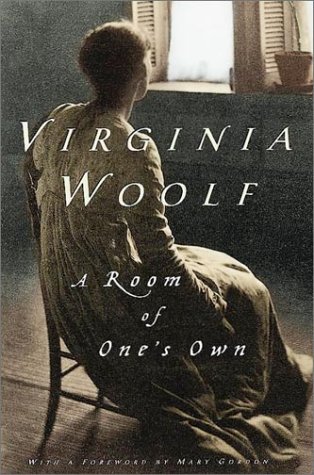 However, I do want to make our class discussions productive and inclusive, especially for this class of (mostly) first-year students, many of whom may not have had explicit discussions about feminism and literature before, so I fretted quite a bit about exactly what to say and what tone to take on Monday. One thing I pointed out is that politics broadly understood have been part of our discussions all year: we just haven’t identified what we’re doing as political criticism. And I noted that we’ve already talked about the challenge of literary evaluation, and about canonicity. We’ve also already worked on texts that are all about women’s position in society: “The Yellow Wallpaper,” for example, and “A Jury of Her Peers.” So we’re doing more of the same. Now that we’re doing a whole cluster of works with this focus, though, it makes sense to create a more explicit framework, both for what the authors are doing and for what we are doing. I hope I hit the right note in my introductory remarks. We’ll see how it goes. One of the particular challenges (something I’m going to address specifically tomorrow) is that a lot of the works we’ll be reading are angry ones — including A Room of One’s Own, though the anger there is very, very carefully managed (but is it entirely hidden?). I think anger can be off-putting: it makes the reader a bit squirmy, as if they are being blamed or attacked. It’s hard to like an angry person! The tendency (which I have been unable, despite my efforts, to quell completely) to prefer speakers or characters who are “relatable” makes anger a problem for a lot of students. My hope is that we can make it a useful problem — because after all, what does it mean to tell someone not to be angry, or not to listen to someone who is angry — especially if they have good reason for it? Angry women, of course, always get a particularly hard time.
I’d be interested in hearing from other people about their classroom experiences with feminism. Some of you probably teach (or have taken) courses much more completely and explicitly dedicated to the topic: classes on feminist theory, for instance, or feminist philosophy. I expect the population of such classes is more self-selecting so perhaps the awkwardness I sense (or am I just projecting?) does not arise.
In 19th-Century Fiction we are finishing up The Mill on the Floss this week. Tomorrow we’ll discuss the ending. I’ve collected a string of quotations from various critics onto a handout which I hope will provoke plenty of discussion…some of it about feminism! Reading “Diving Into the Wreck” over today for class, I found myself thinking that it resonates uncannily with the ending of The Mill on the Floss — not just in being watery but in being difficult to explain.

 In English 1000 this week, we’re finishing our discussion of Wiesel’s Night. In our conferences at the beginning of term a lot of students said they still have difficulty coming up with a good thesis, soI’m going to use a fair amount of our class time on how to move from observations about Night to an interpretive argument of the right kind. One of my strategies for tomorrow is to show them the ‘suggested essay topics’ for Night that are posted at
  Last week I cancelled two regular class meetings for my Introduction to Literature Class and instead set up individual conferences, 15 minutes per students. (If you want to do the math, of the 26 registered students 24 ended up meeting with me, so that was six actual contact hours in place of two, and since it wasn’t possible to run the meetings entirely consecutively, overall I had about eight hours of my schedule taken up with this exercise.)
 For some reason this phrase has been running through my head to the tune of “The Last Time I Saw Paris.” I don’t know why I would be feeling nostalgic about teaching Bleak House, though it was rather a while ago–it was Fall 2008, to be precise. Because we’ve started work on it in my 19th-century fiction class this week, I’ve been reviewing old notes and also old blog posts, which prove (among other things) to be a valuable archive. Because (so far at least) my ideas about the novel haven’t really changed in the meantime, and because a lot of people who might stop by and read this post almost certainly never read my earlier ones, I thought I’d repost a couple of them, starting with this one about the beginning of the novel and the beginning of my class discussions of it.
 The past week has been all about getting organized: packing and cleaning up from Christmas, sorting the kids out to get back to school, and sorting myself out to be ready for the start of winter term classes tomorrow. I wasn’t starting from scratch, happily, but I made some adjustments to my plans for my Introduction to Literature class, which continues from last term, and finalized the plans for The 19th-Century British Novel from Dickens to Hardy, which is just beginning.



 Novel Readings