 I’m not sure whether I’m surprised that it has already been three weeks since we began extreme social distancing here or surprised that it hasn’t been even longer — normalcy itself seems so distant now! It seems remote in both directions, too: hard as it is to think back on the relative simplicity of ordinary life before, it is even harder to look ahead because there is so much uncertainty about when and how those conditions will return. That’s as good an argument as any for trying to take this massive disruption one day at a time, which is certainly what I have been trying to do. My success varies, as does my ability to get through each day with anything like the (again, relative) equanimity and focus I used to have.
I have done a decent job (I think and hope) at sorting out my classes, at least. Over time it has gotten easier to let go of the plans and expectations that originally shaped them, which in itself is a necessary kind of progress, I guess! I chose the simplest way possible to deliver additional material: rather than recording lectures or trying to wrangle synchronous or interactive components at such a chaotic time, I’ve been making up PowerPoint slide sets in which I have tried to balance information and explanations of my own with questions, pointers, and suggestions for how to keep thinking about the class material. This has been primarily a finishing-up exercise, focused on texts we had already begun work on in class, which helps: the overall direction of our inquiries had been set. It has taken a lot of work, though, partly because I ordinarily use PowerPoint (when I use it at all) to supplement or illustrate or outline our classroom conversation, not as a stand-alone component: I’ve had to think very hard about how to use each slide, how to shape the overall presentation, and of course how exactly to say everything, as I’m not there to clarify, correct, or elaborate. Now I’m moving on to review materials for the students who have opted to write the take-home final exam, and of course I also have to make up the exams themselves — and I have papers to mark, too, an activity that seems a lot more attractive right now than it sometimes does because, unlike almost everything else, it is exactly the same process as ever.
One of the many ways I feel very fortunate right now is that neither of my classes this term is very large. If my teaching load were heavier (as was the case last term, and as is the case for some of my colleagues now), this would all be much harder. Although I am trying not to look too far ahead right now, it is impossible not to be conscious that there are no guarantees that our fall term, including my large first-year writing class, won’t be at least partly online as well. I would not want to teach any class, never mind a writing class, entirely through slide sets, of course! What we have been doing this term is handling an emergency situation as best we can, which (as many people have reiterated in online discussions) is not the same as a purposeful transition to online teaching with due diligence around best practices for learning, engagement, assessment, and accessibility. Everything I have read about online teaching tells me that it takes more time and more planning (and more resources) to do effectively than face to face teaching. Much as I hate the thought of it, because I love being in the classroom so much, it seems foolish to put off learning more about those best practices in the hope that I won’t need to, so I’ve signed up for a course we’ve just been offered through the university (itself asynchronous and online) on ‘online design and delivery.’ Part of the appeal (besides the professional obligation to keep doing my job as well as I can) is taking at least a bit of control over the situation: maybe I can approach the possibility of taking my classes online as a creative opportunity, albeit an unwelcome and unsought one!
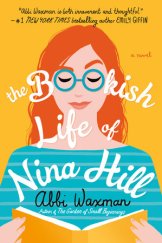
I haven’t been able to do much really attentive reading since I finished Threads of Life last week. There’s not really any good reason for this: it’s mostly lack of willpower as much as nervous distraction! But my sister thoughtfully sent me a selection of tempting lighter reads for my birthday (along with a lovely assortment of other treats!) so I’ve been making my way through these, including Grace Burrowes’ The Captive (she’s a new-to-me historical romance novelist, and I enjoyed this one enough to put some others in the series on hold at the library – ebooks, of course, since the physical library is closed!) and Abbi Waxman’s The Bookish Life of Nina Hill (which is charming, if almost too much so – its premise and plot are cute enough that I think the book would actually be better if Waxman didn’t try so hard to be funny–or ‘bookish,’ which inevitably means, among other things, lots of handwaving to obvious fan favorites like Pride and Prejudice – see also You’ve Got Mail, for example). I also read a short book I’ll be reviewing – Seishi Yokomizo’s The Honjin Murders – so that was not just distracting but also productive!

Like most avid readers, I always have a good selection of unread books on my shelves, but like Colleen I’ve been finding them somehow not quite what I want. In some ways this is a familiar problem for readers: sometimes you just have to wait for the right moment to read a particular book! I’ve had books on the shelf for literally decades that one day just suddenly leapt into my hand, or at least into my awareness, as if at last they were perfectly ripe for reading. But right now it may also represent the difference between choosing books just because they look interesting and choosing books to read when the world is in crisis. Thanks to the King’s Coop Bookstore, whose lovely manager is doing home deliveries by bicycle, I now have Miriam Toews’ Women Talking and Emily St. John Mandel’s Glass Hotel to hand, and I’ve also just sorted out my copy of The Mirror and the Light, which had been stranded in a closed Coles but is now en route to me by mail. I feel that familiar readerly tickle of excitement just naming them here, so hopefully I’ll be deep into one of them soon and that will help my one-day-at-a-time coping strategy feel less grim and more grounded. After all, reading has been the one constant through all the changes in my life, good and bad. It’s not going to let me down now.
So, that’s where I am: trying to keep my head in the moment and not let myself spiral into frantic ‘what if’ or ‘what next’ scenarios, and trying to appreciate the good fortune that means I still have my job, even if for now I can’t do it on the terms I’d like, and to focus on all that we have, rather than what we can’t do. I continue to be grateful for the community of readers I belong to through blogs and Twitter: as so many of our relationships have always been at a distance, in this at least I feel the comfort of continuity.
 It hasn’t been a good stretch for me in my romance reading. I haven’t read anything since Love Lettering that I expect to re-read, which for me is the real sign of success: since I found my groove as a romance reader (nearly a decade ago, now!), romance has filled a nice niche for me as my go-to genre for incidental reading, books that divert, distract, and cheer me when I don’t have the time or am not in the mood for heavier options. I don’t mean to belittle the genre at all with this characterization. I have always read and reread books in that spirit, but they used to be mostly ‘light’ mysteries (Dick Francis, for instance) or relatively undemanding but satisfying general fiction (Anne Tyler, Joanna Trollope). I still reread old favorites in those genres too, but now my interstitial reading (as I have come to call it) also includes Georgette Heyer and Loretta Chase, Courtney Milan and Kate Clayborn.
 What is it that makes rereading–sometimes frequent rereading–pleasurable? Why do some books invite and reward it and others not? I reread for a living, of course, and for the books I teach the answer usually has to do with complexity: with layers of meaning and intricacies of language or form. Books teach well that don’t reveal themselves completely on a first try–otherwise what is there to talk about, after all? The better you know a book like that, the more you appreciate on each reading: the pleasure itself gets more complicated and multidimensional. That’s not (or not quite, or not usually) the same with the mysteries or romances I reread, though–or with writers like
  But not every romance novel inspires rereading for me, even if I enjoyed it just fine the first time. Sometimes there’s an obvious problem–stilted prose, unconvincing characters, a plot that feels too utterly contrived, leaden dialogue–but others fall flat for no reason I can really put my finger on. The recent string of books that prompts this post included just one of the first kind (Tessa Dare’s The Wallflower Wager, which felt creaky from the get-go and then lumbered predictably along while trying to be spritely and witty, which is the worst effect for me) but mostly books of the second sort, where nothing was overtly wrong but they still didn’t do much for me. Get A Life, Chloe Brown was like that–it was perfectly fine, sometimes even charming, but when I was done, it went straight into the ‘donate’ pile. Ditto Mhairi McFarlane’s Don’t You Forget About Me, and Lucy Parker’s Headliners, and Alyssa Cole’s A Duke by Default. This morning I finished Linda Holmes’s Evvie Blake Starts Over and overall I enjoyed it the most of this recent batch–though I’m not 100% sure it qualifies as romance. (It sits on the fuzzy line between contemporary romance and “chick lit” or “women’s fiction,” especially as it doesn’t quite serve up the requisite HEA–its ending is a very nice happy-for-now one.) If I went back a couple of months, I could give a much longer list of titles–very few of them actually bad but also few of them particularly good. (In romance as in all reading, of course, YMMV, and these are all books others have enjoyed a lot. Love works in mysterious ways, I guess! As we say on Twitter, “don’t @ me.” 😉 )
 When I mentioned my discouraging string of “meh” romance reads on Twitter,
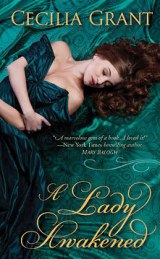
 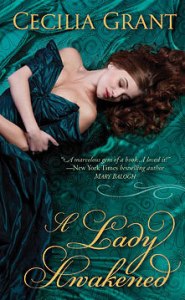 Although my relationship with romance has come a long way since my first skeptical and ill-informed attempts at reading in the genre, I do sometimes get fed up. As I mentioned in that Twitter conversation, I “DNF” romance novels far more often than books of any other kind, and while it’s possible that this result is mostly about me (as a reader or a person, who knows) it’s hard not to think it also says something about the genre, though what exactly that is, I’m not sure. But it’s also true that most romance novels are relatively fast reads, which is why I can get through so many of them in such a short time. Perhaps, proportionally, the hits and misses are not really that out of line with the rest of my reading–they just stack up more quickly! That also means that each romance novel on its own is a fairly low risk endeavor (certainly compared to, say, Ducks, Newburyport, which so far I dislike much more intensely than any of the romances I have picked up and put down without finishing, and which will require a vastly greater investment of time and effort to get the rest of the way through). Moreover, when I do find a romance novel I really like, the pay-off is disproportionately large because of how often I am likely to end up rereading it. I have now read all three of Kate Clayborn’s ‘Chance of a Lifetime’ trilogy three or four times each, for example, and will no doubt reread them again before too long; the same is true of Cecilia Grant’s ‘Blackshear Family’ series, the first one of which, A Lady Awakened, I recently reread with great pleasure. There are even some individual scenes that make the whole exercise worthwhile! Sometimes I pick up Heyer’s Devil’s Cub just to reread the chapter in which Mary, all unwitting, tells the Duke of Avon about her misadventures with his wayward son Vidal: it’s the perfect antidote for a fit of gloom, a reliable dose of “restorative pork jelly” (an allusion other Heyer readers will appreciate!).
 I have read a handful of books recently that I haven’t written up properly here; I thought I would say at least a little bit about them before my impressions fade away.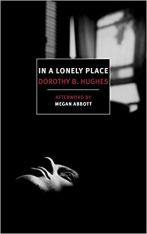
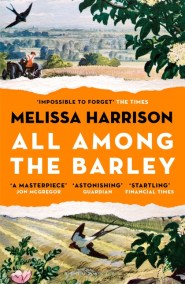
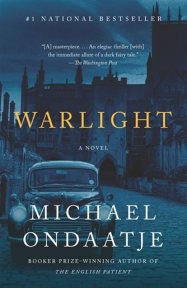 At a block party recently I mentioned to a neighbor that I was curious about Michael Ondaatje’s Warlight, so she kindly lent me her copy. I read it with interest at first but found my attention flagging. It too, in its own way, is a very atmospheric novel, but there didn’t seem to be much more to the novel than atmosphere: not much happens, even in the retrospective spy story that sounds as if it should be suspenseful and, if not action packed, at least eventful. There are events, but they always seemed strangely at a distance; I found Ondaatje’s style portentous, always promising but deferring some deeper meaning that I didn’t think was ever actually delivered. I read The English Patient years ago and I remember liking it, but that was in the dark days Before Blogging, so I can’t go back to an old post to see what I liked about it. A bit of Twitter discussion suggests Ondaatje is a divisive writer. I can see why, given how self-conscious his style is. I liked a lot of moments. One near the end suggested to me the principle the novel itself may be built on:
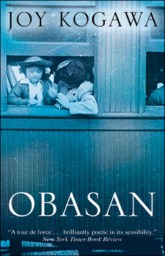 Finally, I just finished reading Joy Kogawa’s Obasan for my book club. This novel is, of course, a Canadian classic, and I think I must have read it before, though I did not have any specific memory of it. It is a very powerful novel, and a very artful one as well. It is also a depressingly timely one: so much of the racism and anger directed at Japanese Canadians, vilified and scapegoated in the 1940s, is echoed in current anti-immigrant rhetoric, especially but certainly not exclusively in the United States right now. “Which year should we choose for our healing?” Naomi asks, reading through her aunt’s archive of documents about “Canadians of Japanese origin who were expelled from British Columbia in 1941 and are still debarred from returning to their homes.” “Restrictions against us are removed on April Fool’s Day, 1949,” she notes,
 It certainly is easy to fall out of the habit of blogging–and this in spite of the fact that the most fun I’ve had in the last little while was writing my two previous posts. I enjoyed doing them so much! I felt more engaged and productive than I had in a long time, not because I was fulfilling any external obligation but because I was sorting out my ideas and putting them into words. To be honest, though, in both cases I was also a bit disappointed that the posts didn’t spark more discussion in the comments, and that set me back a bit, as it made me wonder what exactly I thought I was doing here–not a new question, and one every blogger comes back to at intervals, I’m sure. I appreciate the comments I did get, of course, and there was some Twitter discussion around the Odyssey post, which as I know has been remarked before is a common pattern now–though I can’t help but notice that there are other blogs that routinely do still get a steady flow of comments. Anyway, for a while I felt somewhat deflated about blogging and that sapped my motivation for posting. I know, I know: it’s about the intrinsic value of the writing itself, which my experience of actually writing the Woolf and Homer posts more than proved–except it isn’t quite, because if that was all, we’d write offline, right?
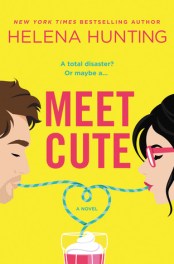 It hasn’t helped my blogging motivation that not much has been going on that seems very interesting. I certainly haven’t read anything since the Odyssey that was particularly memorable. I’ve puttered through some romance novels that proved entertaining enough but aren’t likely candidates for my “Frequent Rereads” club. Two were by Helena Hunting, a new-to-me author–Meet Cute and Lucky Charm, both of which were pretty good; one was Olivia Dade’s Teach Me, which had good ingredients but seemed just too careful to me, too self-consciously aware of hitting all the ‘right’ notes; and finally Christina Lauren’s Roomies, which was diverting enough until the heroine breaks out of her career funk by writing her first (ever!) feature essay, submitting it (not pitching it, submitting it) to the New Yorker, and learning in THREE WEEKS that it has been accepted. I’m not sure which struck me as more clearly a fantasy: the acceptance itself or the timeline.
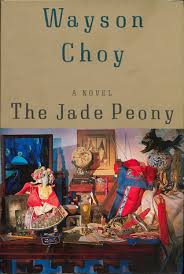 The other book I finished recently is Wayson Choy’s The Jade Peony, for my book club. I wanted to like this one more than I did. It certainly illuminates a lot about the Chinese community in Vancouver in the time it is set (the 1930s and 1940s): one thing our discussion made me appreciate more than I did at first is how deftly telling the story from the children’s perspectives lets Choy handle the historical and political contexts, as they often don’t quite understand what is happening and so our main focus is on the young characters’ emotional experiences in the midst of them. The book reads more like linked short stories than a novel, and for me it lacked both momentum and continuity as a result (that’s not my favorite genre), but many of the specific scenes have a lot of intensity and I think they will linger with me more than I initially thought.
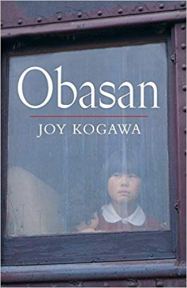 We chose Joy Kogawa’s Obasan for our next read. I’ve been trying to sort out why I’m not entirely happy about this. It makes perfect sense given our policy of following threads from one book to the next, and also Obasan is widely considered a CanLit classic, so it’s not that I don’t expect it to be a good book. I was mildly frustrated, though, that one of the arguments made in its favor was that The Jade Peony was very educational (about a time and place and culture not well-known to the group members) and Obasan would be more of the same. It will be, I’m sure, and in some ways this is an excellent reason for us to read and discuss it. But at the same time this “literature as beneficent medicine for well-intentioned consumers” approach is what turns me off
  My recent viewing has actually been more engrossing than my recent reading: we just finished watching Rectify, which I thought was superb–it is intense, thoughtful, and full of turns that surprise without seeming like cheap twists. It is very much character- rather than plot-driven, and it works because every performance is entirely believable. I hadn’t even heard of Rectify before I noticed it on a list of ‘best TV dramas’ and decided we should give it a try. It is not at all what I expected from the premise (a man is released after 19 years on death row): it is much more about how he and his family and community deal with this unthinkable change in circumstances then about the case and his guilt or innocence–though what they do with that question is also very interesting.


 When you don’t blog for a while, or at least when I don’t, one of the obstacles to getting back into a routine is the clutter of possible things to blog about, which becomes strangely unmotivating because it’s hard to pick one topic and just get started. This is an attempt to clear out some of that clutter!
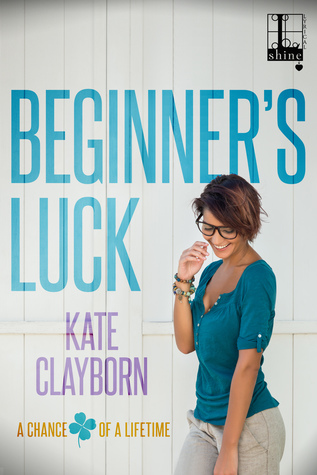
 The one stand-out experience in my recent romance reading was Kate Clayborn’s Best of Luck, which I did not pick up haphazardly at the library but had pre-ordered on the strength of the first two books in the series, Beginner’s Luck and Luck of the Draw. I liked the first one just fine and then really liked the second one a lot; both have also stood up well to rereading. Best of Luck is a good finale for the trilogy. Like the first two, its biggest strength is its characters, who have both distinct and plausibly complicated personalities and histories and genuinely interesting work to do–something Clayborn gives a lot of attention to. I like that: I have a documented fondness for ‘neepery’ and each of her books offers it in spades. The books are not particularly funny or witty, but they are not ponderous, and they earn their angst rather than piling it on (which is what I thought happened in my one excursion into Alisha Rai). The pacing is good and the alternating points of view for each chapter keeps things interesting as the conflicts develop and then resolve. I realize these comments are sort of generic! But that’s because reading and liking Best of Luck after reading and either not liking or not caring much about a handful of other books in the same genre got me thinking about what makes a romance work for me. Voice has a lot to do with it, and so does freshness, and for me the ‘Chance of a Lifetime’ books get high marks for both.
 The other book I was reading for a while (inspired by my not entirely successful experience with N. K. Jemison’s The Fifth Season) was The Hobbit. It turns out that The Hobbit (like Little Women) is a book I know so well from my childhood that it is almost impossible for me to really see the words on the page. It isn’t so much that I read it often as that my brother had the marvelous
 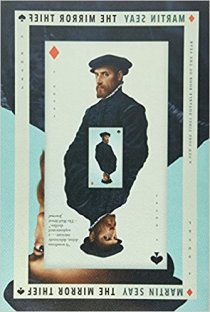 I’ve been in a bit of a reading slump lately, which has been reflected in the slow pace of my blogging. I’m not sure exactly what is behind it this time, but I think it happens to all of us occasionally, and it always passes eventually. Still, it’s a disheartening phase when it comes, to be picking up books and putting them down again without much caring!
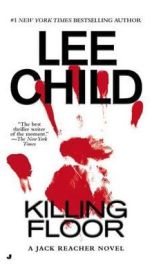 I also started Lee Child’s Killing Floor, the first of his hugely popular Jack Reacher thrillers. I admit it had never occurred to me to try this series until Stig Abell, the editor of the TLS, sang its praises. I had no particular assumptions about Lee Child, good or bad, it’s just that the books had never stood out to me until Abell said how much he’d enjoyed reading through them all last year–so I picked up a couple at a book sale. I got about half way through Killing Floor before I lost interest. I don’t think there’s anything really wrong with this book any more than there is anything wrong with The Mirror Thief: in fact, I thought Killing Floor seemed quite good of its kind. But for whatever reason I just wasn’t gripped–I wasn’t even slightly curious about how the knotty plot was going to turn out, and so I eventually stopped picking it up again after I put it down. When I started it, it reminded me of Robert B. Parker’s Spenser mysteries, which I love. It is much wordier, and it may be that I wouldn’t enjoy Parker’s books if it took a lot longer for things to happen in them–or if Parker spent as much more time on the really grim bits as Child does here. I also didn’t bond with Reacher. I was intrigued by Child’s introduction, in which he outlines his own motivations for the style of the series as a whole and for Reacher’s character in particular. Reacher is deliberately both arrogant and hard to like, which are not qualities I’m against in principle, in a main character–but again, I don’t imagine I would like Parker’s books if I didn’t find Spenser’s combination of strength and honor so appealing. Maybe I’ll appreciate Reacher more as a character if/when I get to know him better. For now, though, I’ve put him on hold.
 It’s not as if I haven’t read any books all the way through since classes ended. One thing that works is coercion! I’ve read two books for reviews, one an interesting study of Agatha Christie, the other a new novel by Canadian writer Merilyn Simonds. (My review of the former has been filed; my review of the latter is underway.) I’m also making good progress on Margaret Drabble’s The Radiant Way, which I need to finish for next weekend’s meeting of my book club. Deadlines are useful things. In the interstices of my days I’ve also reread all three of

 Over the past week I read three novels. Only one, Michele Roberts’s
 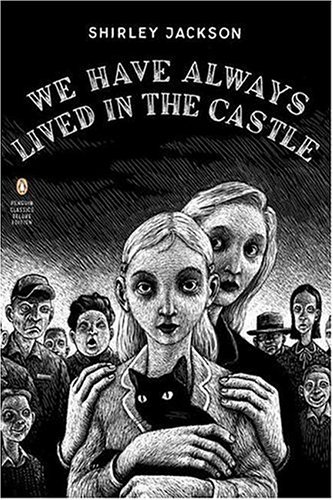 For my book club, I read Shirley Jackson’s We Have Always Lived in the Castle. What a treat that was. It’s like a perverse inside-out fairy tale. In our discussion of it, we got particularly interested in the way it destabilizes our sympathies. There’s the initial instinct to side with the narrator, which of course quickly turns out to be a mistake, except that she is being persecuted–though not unfairly, since after all, she is a murderer. Jackson evokes the horror of mob violence as well here as she does in “The Lottery”: the scene that begins with the fire chief throwing the first stone unfolds in an equally horrifying way–except that at least one of the targets is in no way an innocent victim, and later on, some of the villagers seem to be horrified, in their turn, at what they’ve done. We puzzled over Merricat’s motivation, or rather, over whether she has one, for killing her family. The suggestion seems to be that she didn’t much like being sent to her room without dinner, or in any way being thwarted or crossed. So the murders may be the act of a vengeful narcissist, a spoiled brat gone rogue. On the other hand, maybe there is no reason, which in its own way is even scarier. It’s a brilliantly written little book. I was hooked from the first paragraph, which is a perfect combination of whimsy and menace:
 I expected Sarah MacLean’s The Day of the Duchess to be a lot of fun too, but I really didn’t enjoy it and ended up skimming the last third or so of it just to get to the end. I have liked some of MacLean’s romances a lot, including The Rogue Not Taken, the first one in this series, but this book tilted too far towards the “feels” for me: it’s all angst and yearning, without any frolicking. I’m not necessarily saying it isn’t well done. It’s just that my own taste in romance tilts instead towards comedy. Also, more than I remember noticing in MacLean’s books before, The Day of the Duchess is full of the kind of writing that seems meant to force feelings on you, rather than allow you to arrive at your own reactions–lots of fragments, and lots of single line paragraphs, devices which to me almost always backfire: rather than increasing the impact of the line, they make it seem artificial, especially if the trick is used over and over again. I’ve been trying to think if there are any consistently serious romances that I really like. Laura Kinsale’s Flowers from the Storm is the only one I can come up with. Blame my inner cynic, which, as I’ve said before, makes me accept an HEA only if it doesn’t take itself too seriously.
