I was raised with the kind of faith that does not doubt. God had been as much a part of me as my own marrow, and when I discovered my bones to be empty, fluting music discordant to anything I had sung in church, my anguish was real . . . The understanding I have now, that the world spins on a deeper mystery than anything that might be set into language, was not with me then. Now I know that my mind is too small to hold the spirit. The spirit, I hope, holds me.
I had high hopes of Devotion. I really liked Hannah Kent’s moody historical mystery Burial Rites, and I also liked her next novel, The Good People, quite a lot (details here). Devotion has a lot of the strengths of Kent’s earlier books, especially in its evocation of a particular time and place and its imaginative entry into the lives and minds of people who live then and there, not here and now.
Devotion is about a community of 19th-century Lutherans who, marginalized and persecuted in Germany, emigrate to Australia. The first part of the novel introduces us to them and their village, and especially to our narrator, Hanne, and her family, and their new neighbors, Thea and her family. If I hadn’t lost patience so utterly with the novel (for reasons I’ll get to in a minute) I would go into more detail about this part, and then about the next part, when they are all crammed onto the ship making its arduous way to Australia. All of this is rendered in meticulous detail; Hanne, the first-person narrator, is an appealing protagonist, a bit of an outsider, yearning for things she can’t quite articulate; her relationship with Thea feels real, and meaningful, and precious. Kent is good at so many things! But.
OK, here’s the thing. I know you should not complain that a book is what it is, instead of what you wanted it to be or think it should have been. But. Devotion is (almost) a good historical novel and a compelling love story. But. It has this big twist—a twist which I am going to spoil and then complain about, so if you think you want to read the novel and want to keep an open mind, maybe go away and come back later if you want.
If you’re still reading, here’s the twist. About half way through the novel, Hanne dies. “But you said she’s the first-person narrator!” I imagine you exclaiming; “How can she keep narrating if she’s dead?” That’s it, exactly. She does keep narrating after her death: for the second half of the novel, she is an observer from the other side, except that she’s not really somewhere else, she is present (but she’s not present), she is in and of the actual world (but she’s dead). Nobody can see or hear or feel her (there are some sort of exceptions to this): she is non-corporeal, which is a crucial point because at one point she inhabits someone else’s body (remember Ghost? yes, exactly like this, and for exactly the same purpose). But. She also walks and sleeps and trips over things and falls down. She experiences rain and cold and heat (but she has no body). I could go on, but my point is really a simple one: it all makes no sense at all, if you take even a minute to think about it.
I don’t mind a twist or a ghost or even illogic, if I can tell what its purpose is. (Also, for the record, I really enjoyed Ghost, even though it too makes no sense.) I just couldn’t understand at all why this novel, this story, needed Hanne to be dead. The best explanation is offered by Hanne herself (and echoed in most of the rave reviews quoted on the cover): it’s a novel about how love is stronger than death. At the risk of sounding hard-hearted (and you know I’m a Victorianist, so that can’t be true—I mean, I even cry when Dora dies in David Copperfield and I abhor Dora), that’s trite and uninteresting, and it’s also not true. It’s true that love survives death in the living. But any claim about love keeping the dead alive in the kind of literal way that Hanne continues in the world is just magical thinking, or wishful thinking. If the novel means (as my epigraph suggests) to offer a rebuke to narrow religious ideas about the afterlife with some kind of spiritual idealism, it’s done (for me, anyway) in a pretty unconvincing and irritating way. The one other idea I had is that Kent was playing with the trope of the tragic queer romance—but killing off (as she eventually does) not just one but both of her lovers hardly seems subversive.
Kent can write so beautifully! But Devotion devolved for me into nonsense—heartfelt, even poetic, nonsense, but nonsense. I was so disappointed.
If you read it and can help me understand it in a more sympathetic way on its own terms, I’d be genuinely interested.
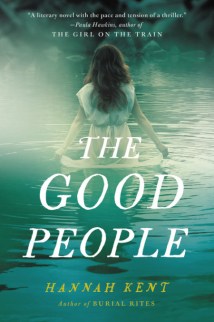
 Nance is a a healer and “handy woman” (midwife) who offers herbal cures and charms and other services to the local people. She believes (as do most of her neighbors) in the presence and power of the ‘Good People’ or fairies. Kent takes her time establishing how pervasive and powerful this belief is, distinguishing it from casual “superstition” and working to convey what the world looks and feels like to people imbued with convictions about threatening supernatural beings with designs on them–the effort they go to warding off misfortune and illness, the fear of missing a crucial sign or step that might have ominous consequences in their lives. “Sure, ’tis a dangerous time for a woman when she’s carrying,” Nance warns a man who comes seeking her help to protect his pregnant wife:
 My attention had been flagging a bit before the women’s efforts to cure Micheál picked up the pace of the novel; I wasn’t sure we needed quite so much time and detail spent on context, on evoking the place and time (Ireland in the 1820s) and people’s lives without much action. In retrospect, I understand better why Kent balanced the elements of her novel the way she did: we need to arrive at Micheál’s treatment / torture prepared to counter the visceral horror it evokes against the truth she has set up, which is that to the women involved it is not abuse or cruelty but a good faith attempt to save a child they genuinely believe has been stolen by the fairies. The novel is not set up (as, for instance, Emma Donoghue’s The Wonder is) as a contest between competing belief systems, much less an interpretive challenge to us about which version of events to believe, the ‘rational’ or the supernatural. We do end up at a trial in which both Nance and Nóra are held accountable in ways that run completely contrary to their version. Though it is hard not to agree with the prosecution that they have done a terrible thing, Kent has made sure we see their actions as reasonable and justifiable to them.
 Novel Readings