Back from Boston Bearing Books!

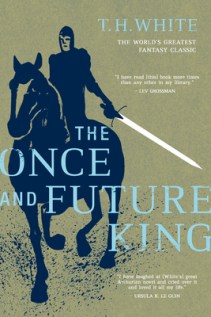
I got back yesterday from my second annual (?) spring expedition to Boston. Once again I loved exploring the city and meeting up with some of my Open Letters Monthly colleagues. And this time I had the special treat of also meeting up with my mother. Though we had a delightful time sightseeing, visiting museums, and eating all kinds of good food, there’s no question but what our favorite activity was browsing in the excellent bookstores (and trading comments and suggestions back and forth): we spent hours in Brattle Books in Boston, in both the Harvard Book Store and the Harvard Coop in  Cambridge, and in the Broadside Book Shop and Booklink in Northampton. Here’s most of my haul (a few others will be wending their way to me by post):

Book buying is such a funny thing–when you are surrounded by thousands of titles, many different, sometimes conflicting, even irrational influences and impulses go into the final decisions. I had a little list of books I particularly hoped to find, ones that I hadn’t found in stock in Halifax but wanted to look at personally, rather than just online, before ordering, or ones that I could order but would have to wait for. Other titles or authors I had in mind in a general way and looked for to see what the options were–with such great stock all around, I found more of these than I expected! So what did I get, and why? Let’s go through the pile starting at the top.

A Handbook to the Art and Architecture of the Boston Public Library. I can’t get over how beautiful and inspiring the BPL is. Here are two of the exterior inscriptions: “The Public Library of the City of Boston Built By the People and Dedicated to the Advancement of Learning”; “The Commonwealth requires the education of the people as the safeguard of order and liberty.” Yes, yes, yes, it does! And public libraries are such a wonderful commitment to and investment in that conviction. The BPL is a great public building not just because it serves this great cause, though, which many modern libraries do in a very utilitarian spirit, but because it is itself filled with art and grace, from the grand entrance hall to the elegant Bates Hall reading room to the astonishing murals by John Singer Sargent. This little book was just $2 at the gift shop. It has no color plates but gives lots of detail about the history, design, and art of the building.

Next in the pile is Colum McCann’s Let the Great World Spin. I’ve heard a lot about this novel and it sounded really interesting, but so do lots of recent books, so it hadn’t made it onto my TBR list until my mother reported having been won over by it. When I saw a nice copy at the Brattle, I grabbed it up.

Wallace Stegner’s Angle of Repose is one I went looking for. I was moved and impressed by Crossing to Safety when I read it a few years ago, and my interest in Stegner was rekindled recently by a documentary I watched about him–though the documentary itself was not very well done. This one I found at the Harvard Coop in the handsome Penguin edition with an introduction by Stegner biographer Jackson J. Benson.

I’ve been wanting to break up my nearly-all-fiction reading diet with more poetry, and Philip Larkin and Sylvia Plath are two of the poets I wanted to read more of than is found in my heaps of anthologies (most of which include the same small selection of poems). (We’ve run pieces on both Larkin and Plath recently at Open Letters that further stimulated my interest.) I found The Collected Poems of Philip Larkin at the Coop and Ariel downstairs at the Harvard Book Store. I’ve never written anything on poetry for Open Letters. Maybe someday–but what? In the meantime, I may venture some comments on these volumes here on my own turf.

Frank Conroy’s Body and Soul was recommended to me some time ago by a friend, who thought it was both a really fine read and a book I’d respond to because it’s about a pianist, and my son is a very gifted composer and performer. It too I found at the Coop (which would have been even more dangerous to my budget if it hadn’t been one of the last bookstores we went to, as every time I thought of something to look for, it was there!).

I’ve found New York Review Classics scarce here in Halifax and often with limited availability from Canadian online retailers as well, so I was especially glad to find so many of these around. Elaine Dundy’s The Dud Avocado sounded delightful when I read about it on different blogs and reviews, so I pounced on it when I saw it at the Coop. I’ve been looking for Patrick Leigh Fermor’s A Time of Gifts all over town here and hadn’t found it yet; I picked it up at the Broadside Book Shop in Northampton. And I found Summer Will Show by Sylvia Townsend Warner (also the subject of a good piece in Open Letters) downstairs at the Harvard Book Store, where they have all kinds of NYRB Classics on their remainders tables!

I’ve read two novels by Jane Gardam–Old Filth and Queen of the Tambourines. The Man in the Wooden Hat, which I got at the Broadside Book Shop, tells the story of Old Filth’s marriage over again, from the point of view of his wife Betty. The blurb calls it “as fine a portrait of a marriage as any written in English.” We’ll see about that!

Flaubert’s Parrot is the next book chosen by my local book club–the one that just finished Madame Bovary. We have tried since the beginning to follow some kind of thread from one book to the next. The thread here is pretty obvious! I think the only other Julian Barnes I’ve read is Arthur and George, which I didn’t love. I got The Sense of an Ending from the library as an e-book just before I left last week, and I started it on the plane, but it turned out to be too cerebral for me to read under those conditions. (What did I read on the plane? Mostly Jennifer Crusie, actually, several of whose books I had also borrowed electronically with precisely my fear of flying in mind. And they were just right: cheerful, diverting, and easy to keep track of even if you are pausing every few minutes to clutch your armrest and take deep breaths.) I don’t have high hopes for Flaubert’s Parrot (and so I was glad to find it remaindered at the Harvard Book Store for just a few dollars), but at the same time I like that my book groups get me reading things I wouldn’t otherwise, and who knows, I might love it.

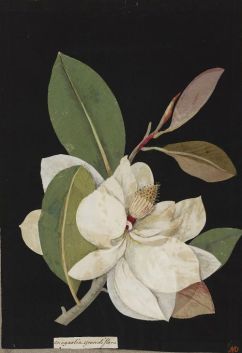
Molly Peacock’s The Paper Garden was my one real unforeseen impulse buy of the trip. I started leafing through it quite at random in the MFA gift shop (I picked it up just because it looked very beautiful) and got quickly intrigued by the concept of the book–“An Artist Begins Her Life’s Work at 72.” The first epigram to the book is from its main subject, Mary Delany, who invented (discovered? developed? conceived of?) an intricate form of collage. “How can people say we grow indifferent as we grow old?” she writes to her younger sister in 1750; “It is just the reverse.” Her spectacular paper renditions of flowers are a testimony to her own utter lack of indifference (sample). I ended up buying it at Booklink in Northampton, as I kept thinking about it after I put it back at the MFA, and I started reading it right away. It’s an odd book in terms of genre, as it interweaves a biographical account of Delany’s life with meditations and speculations on the psychological and sexual meanings of her her flower collages (some quite speculative, though I’m trying to go along with that for now), and with autobiographical material from Peacock herself. I often resist books that offer epigrammatic snippets of wisdom about life in general (you really have to earn the right to them, I figure) but so far I’m liking the delicacy with which Peacock moves from Delany to herself to thoughts about creativity, aging, and other topics.

Winifred Holtby’s Virginia Woolf was not a purchase but was hand-delivered to me by my mother, who has a vast collection of Bloomsbury materials. I’ve read quite a bit about it, and some excerpts from it, and I’m very keen to read the whole thing. (I’ll give it back, though–I promise!)

I found Sandra Gilbert’s Rereading Women at the Brattle. It’s the only academic literary criticism I really even looked at in all these bookstores. Gilbert is a good stylist and always an interesting thinker and reader, and this looks both accessible (it’s an essay collection, not a monograph) and provocative.

The little book Samplers from A to Z, from the Museum of Fine Arts, was a consolation prize to me for just barely missing their exhibit on Embroideries of Colonial Boston. I love looking at samplers and needlework: there’s something so intensely personal about them. It hadn’t occurred to me to time my visit around special museum exhibits, but next time I’m booking a ticket with some flexibility in my dates, I will have to pay attention to that kind of thing, as I was so disappointed to see the poster with the “closed” sign on it.

The last book in the pile is also from a museum, but this time for an exhibit we did manage (though just barely!) to see: the marvelous multi-media display on “Debussy’s Paris” at the Smith College Museum of Art. The displays were fascinating and very thoughtfully done, with listening and viewing stations bringing the music and street life of Paris into the room along with the drawings, paintings, and posters. I don’t often buy companion books for exhibits, but this book is much more than a catalogue: it includes a series of essays on topics like “Dance in Debussy’s Paris.” And I was really absorbed by the attention to dance, visual art, and music–such a rich display, in just one small room, too. They had a listening station with excerpts from some of Debussy’s pieces (with introductory commentary), some of which I hadn’t heard or even heard of before and a couple of which I made a note of because I thought they’d appeal to my son (whose favorite composer is Ravel but who has been experimenting more and more with different styles and modulations).  Here’s a link to Dawn Upshaw singing the “Chansons de Bilitis.”

It’s not as if I don’t already have books to read (and I haven’t forgotten about Black Lamb and Grey Falcon–I have another post on it lurking in my ‘drafts’ folder already!). But it’s really exciting to be surrounded by books and readers the way you are in these shops, and to get a hands-on sense of what the books are really like before you decide what to get, something that just isn’t quite replicated by the ‘look inside’ feature at Amazon. There’s only one book I was sorely tempted by but resisted, and the temptation arose purely from what a lovely tactile object it was: the Penguin ‘Threads’ edition of Little Women. We already own the book (of course!)–in fact, I think we may have two copies of it–but I kept picking this one up just to fondle it. I wonder if Penguin (and the artists responsible for the covers in this wonderful series) would consider releasing them as needlework or cross-stitch patterns.

So! I think I’m ready for the annual ‘summer reading challenge’: Maddie signs up for it at our own local public library, and I always promise to match her book for book. The first one I’m likely to write up here is The Paper Garden, so stay tuned.

Bits and Pieces, and a Break

I’m heading to Boston tomorrow–again! I had a great time there last year (touristy post, bookish post) and expect to have just as much fun this time. Once again a primary reason for going  is to meet up with some of my Open Letters Monthly colleagues: we work well together in our various virtual spaces, but it’s definitely a good thing to cultivate face-to-face relationships too, not least because in email and other online correspondence there’s always that pesky issue of tone, which is much less difficult to interpret the better you know somebody. (As an aside, I think tone is also easier to interpret if an online relationship goes back a ways, even if you haven’t met in person: you get a sense of someone across a range of moods and modes that makes a difference, as I realized when my book club discussed the discussion between Amateur Reader and Litlove on my Madame Bovary posts. They found the exchange more ornery than I did, and I think that’s because they had no previous experience of either voice. This is not by any means a criticism, direct or indirect, of the tone of any of those comments, which I found  fascinating, respectful, and also very mentally stimulating. It was just interesting to reflect on the kind of familiarity you can feel with someone even if you know them only ethereally.)

Another happy feature of this trip to Boston is that I’m meeting up with my mother there. She’s a born and bred New Englander, though long transplanted to Canada’s west coast (by way of Berkeley), so she has many associations with Boston and the surrounding area; she’s also a Smith College alum, so we’re including a nostalgic stay in Northampton along with our bookstores-and-museums-and-libraries tour of Boston. Doesn’t that sound like a lovely time?

I had hoped to write up a proper post about my book club session on Madame Bovary but got caught up in the miscellaneous errands and obligations involved in traveling.( What an unpleasant chore it has become, from the early check-ins and security hassles to the cramped quarters of the planes themselves–and I hate flying, too. When I went to London last summer, the London Review Bookshop was my ‘happy place’: en route to Boston it will be the Public Garden, I think, and the placid swans–and the statue of Mrs Mallard and her ducklings.) The discussion at the book club was energetic: the book clearly provoked most of us, though reactions varied. Probably the most controversial subject was whether we felt (or Flaubert encouraged) any sympathy for Emma. One proposal was that, in seeking to be unlike the rest of the dreary people around her, she is like Dorothea Brooke. This is not one of the parallels I made in my post comparing Madame Bovary and Middlemarch, and ultimately I didn’t find it a persuasive suggestion, beyond a kind of structural similarity. Dorothea’s aspirations are certainly misguided, but her aim is to have a spiritually significant life. She begins imagining how to do this in fairly egotistical terms, but she learns from her experience–and from the start, she has an instinctive generosity, even in error. We didn’t get a chance to pursue this topic at the time, and in fact one thing I find difficult about these sessions is precisely that we move on (and around) so fast. I find it mentally exhausting! I enjoy the occasion, and it’s good to hear a range of ideas and views from so many smart opinionated people, but it also sometimes feels frustratingly chaotic. Well, it’s not meant to be a seminar, and heaven forbid one of us should assert herself as group leader! At the same time, it does give me renewed appreciation for the challenge of seminar discussions, which need to combine direction and focus with organic development and spontaneity. And it helps me see why I enjoyed the comment thread so much: writing things out forces a certain slowing down, and then reading and replying allows also for some reflection and cogitation.

The other book club discussion I was involved in last week was of The Yacoubian Building, with the other Slaves of Golconda. The novel didn’t seem to excite a great deal of enthusiasm, though I think most of us found it quite interesting. The forum where discussion usually breaks out has certainly been very quiet! Perhaps the next selection will work better.

I don’t expect to be posting again until I get back, as not only will I be busy frolicking but I’m taking only my iPad, which as far as I’m concerned is no good for producing content. See you then!

June in Open Letters Monthly

It’s the first of the month, and that means the new issue of Open Letters Monthly has just appeared, all bright and shiny like a new penny! As always, the Table of Contents is as eclectic and inviting as we could make it. Some highlights:

Steve Donoghue marks Queen Elizabeth II’s Diamond Jubilee with a look at three new biographies of the woman who remains, despite all the attention, remarkably opaque to outsiders.

Greg Waldmann reviews Steve Coll’s grimly disturbing look at the reach and power of Exxon Mobil.

John Cotter does a “Peer Review” feature on Toni Morrison’s Home, reviewing first the reviewers then the novel itself.

In our two “Second Glance” features this month, Robert Latona revisits The Adventures and Misadventures of Maqroll by Álvaro Mutis, while Joshua Lustig shows that David Halberstam’s Vietnam War classic The Best and the Brightest is as relevant as ever.

Steve Danziger looks at the “Voltaire of science fiction,” Robert Sheckley.

I explore the failure that is George Eliot’s Romola and wonder whether success isn’t sometimes overrated in our measures of literary greatness.

All this plus Alien, Diablo III, Irma Heldman’s ‘It’s a Mystery’ column, and more–including more from me on George  Eliot (this time, Felix Holt) in our selection of pieces from the OLM archives. Come on over and read for a while!

Alaa Al Aswany, The Yacoubian Building

yacoubianI didn’t realize until I finished The Yacoubian Building how its characters and stories had caught me up emotionally. The consistently flat narration–I’m not sure if this is a function of the translation or a genuine reflection of Al Aswany’s style–and the dispersal of our attention across multiple plots conspired against any strong feelings except curiosity for much of the novel. But by the end I found that curiosity had turned into concern, even care, about how each person’s story would end, and each ending was, in its own way, deeply moving. Some stories (Souad, Taha, Hatim especially) are heartrending; others (Abaskharon and Malak) wryly comic; others (Busayna and Zaki) are surprisingly beautiful and hopeful.

The Yacoubian Building (and the Yacoubian Building) is a microcosm of a world that comes across as chaotic, risky, bleak, yet shot through with a kind of wistful longing for dignity and love, the two things all of the characters are ultimately in search of. Even as you watch their mistakes, their compromises, their sacrifices, their sins, it’s hard to sit in judgment, because the medium they move in is so relentlessly corrupt. The conviction that there’s no winning against this system may account for the matter-of-fact tone and the absence of authorial commentary about even the novel’s most depressing sequences, such as Taha’s descent into extremism–inaugurated not by religious fanaticism or political commitment but by the injustice and prejudice of a bureaucracy that blocks him from his honorable dream–or the disastrous conclusion of Hatim’s affair with Abd Rabbuh, for whose shame, guilt and resentment Hatim’s sad love proves an unequal match. “I’m sure that Our Lord will forgive us because we don’t do anyone any harm,” Hatim reassures his lover; “We just love one another.” If only that belief were reflected in the world around them.

Al Aswany’s storytelling is so inexorable it feels fatalistic. But against the backdrop of cynicism and despair, Al Aswany sets the unlikely, unforeseeable–the “strange and unexpected”– love story of Busayna and Zaki: “little by little, raising his arms aloft amid the joyful laughter and cries of the others, he joined her in the dance.”

The Yacoubian Building is this month’s reading for The Slaves of Golconda: check out the group’s website for other posts, and feel free to join in the discussion on the Forum.

Middlemarch for Book Clubs: Update

I have started building the ‘Middlemarch for Book Clubs’ site I boldly promised to create in response to the whole ‘Middlemarch kills book clubs’ story that got so much linkage a week or so ago. Here is a list of the pages and subpages I’ve set up so far. Let me know if you think they look sensible, and also if (based on your experience either as a reader or as a member of a book club) you think I should include something else or go in a different direction altogether. As part of my preparation, I’ve been looking around at other online book club guides, and Amateur Reader is right that the Faulkner site for Oprah’s Book Club is pretty nice. (The ‘How to Read Faulkner’ section is actually fairly similar in spirit and even in some specifics to the ‘top 10 tips’ I posted before, some of which, of course, will show up on the new site.) My own instinct is that the tone of such a site will be at least as important as the content, and then after that what matters most is the organization: after all, it’ s not hard to find information on all of these topics on your own if you go looking. So my goal is not to create original content so much as an atmosphere that’s inviting and a structure that’s useful. That’s a project that plays to my strengths, at least based on my recent course evaluations: apparently I am both conspicuously enthusiastic and unusually well organized.

Middlemarch for Book Clubs: A Preliminary Outline

Welcome

Getting Started

Tips for Success

Choosing an Edition

George Eliot

Life

Ideas

Contexts

Politics

Religion

The ‘Woman Question’

Discussion Questions

The Big Picture

One Book at a Time

Forum

Links

Electronic Editions of Middlemarch

Other Writing by George Eliot

Writing About George Eliot and Middlemarch

Other Related Resources


Madame Bovary II: The Doctors and Their Wives

It’s difficult to compare two books that are very, very good at what they do but that do very different things.

Must such a comparison be evaluative, hierarchical? Of course not. Does it often end up that way? Of course. We’re only human! We like different things, for reasons that often say more about us than about the objects of our inquiry. Is it a cheap dodge, though, to hide behind the unassailable (because ultimately indefensible) assertion of taste when you strongly prefer one great novel to another? Yes, probably. Maybe it’s better not to go there, then, but to stick with “these books do two very different things”–with the what, the fact of the matter, the precise depiction, and leave the rest unsaid, implicit.

It would be ironic for me to do that when comparing Madame Bovary and Middlemarch, though, because when I try to fix on what it is that I didn’t like about reading Madame Bovary, what I come up with is the way that novel is so relentlessly about the ‘what.’ There are a lot of things the novel just doesn’t do, things Flaubert just won’t do. To quote Lydia Davis’s introduction again, “his technique is to present the material without comment.” There’s nothing trivial or superficial about his “painstaking objective description,” which is often devastatingly perceptive, but “without comment,” it felt somehow unmoored to me. The ‘what’ is very meticulously rendered, but Madame Bovary is not a novel that deals very much in the ‘why?’ (broadly conceived), or the ‘what about it, then?’ Things and people in the novel are what they are in themselves: they are intensely specific, and it’s only indirectly, if at all, that the novel attaches them to anything general, from historical context to moral or philosophical ideas.

Middlemarch, by contrast, is fundamentally about connecting the specific to the general, about seeing the particular in as broad and varied a context as possible. Middlemarch “without comment” is all but inconceivable: how depleted, how deflated, it would be! The wisdom of Middlemarch–the excellence of Middlemarch–resides in its comments. The excellence of Madame Bovary lies (perforce) somewhere else: in its perfect realization of its own concept, perhaps? G. H. Lewes famously called Jane Austen “the greatest artist who ever lived” because she displayed, he thought, “the most perfect mastery over the means to her ends”: that seems true of Flaubert as well, at least in this case, and at least as far as I understand his ends and means. Where, though, is the wisdom of Madame Bovary? The novel itself makes this question seem foolish, misguided, naive. Nobody in the novel really learns anything, after all: “Since the events that are about to be recounted here, nothing … has changed in Yonville.” If you don’t think anybody can learn anything, no wonder you refrain from commenting. What would be the point? Middlemarch, in contrast, is profoundly pedagogical, and so its narrator balances wry awareness of her students’ inadequacies and limits with utter commitment to helping them understand and grow. This is not work that can be done by keeping out of the way.

Different means serving different ends: different visions, different aesthetics, different novels. And the reason it is so obvious how different the two novels are is that they have so much in common. There’s the basic premise: both are about ‘provincial life’ (and both, I think, see its limitations and defects in quite similar ways). Both also take a doctor and his discontented wife as main characters, a plot parallel that nicely sets me up to illustrate the authors’ contrasting approaches.

Doctoral Education

Charles Bovary

It would be impossible by now for any of us to recall a thing about him. He was a boy of even temperament, who played at recess, worked in study hall, listening in class, sleeping well in the dormitory, eating well in the dining hall. He had as local guardian a wholesale hardware dealer in the rue Ganterie, who would take him out once a month, on a Sunday, after his shop was closed, send him off to walk along the harbor looking at the boats, then return him to school by seven o’clock, before supper. In the evening, every Thursday, he would write a long letter to his mother, with red ink and three pats of sealing wax; then he would review his history notebooks or read an old volume of Anacharsis that was lying around in the study hall. Out walking, he would talk to the servant, who, like him, was from the country.

By dint of applying himself, he stayed somewhere in the middle of the class; once he even earned a first honorable mention in natural history. But at the end of his third year, his parents withdrew him from the school in order to have him study medicine, convinced that he would be able to go on alone to the baccalaureate. . . .

The curriculum, which he read on the notice board, made his head swim: a course in anatomy, a course in pathology, a course in physiology, a course in pharmacy, a course in chemistry, and one in botany, and one in clinical practice and one in therapeutics, not to mention hygiene and materia medica, names with unfamiliar etymologies that were like so many doors to sanctuaries filled with solemn shadows.

He understood none of it; though he listened, he did not grasp it. He worked, nonetheless, he possessed bound notebooks, he attended all the lectures, he never missed a hospital round. He accomplished his little daily task like a mill horse, which walks in circles with its eyes covered, not knowing what it is grinding. (Part I, Chapter  1)

Tertius Lydgate

He had been left an orphan when he was fresh from a public school. His father, a military man, had made but little provision for three children, and when the boy Tertius asked to have a medical education, it seemed easier to his guardians to grant his request by apprenticing him to a country practitioner than to make any objections on the score of family dignity. He was one of the rare lads who early get a decided bent and make up their minds that there is something particular in life which they would like to do for its own sake, and not because their fathers did it. Most of us who turn to any subject we love remember some morning or evening hour when we got on a high stool to reach down an untried volume, or sat with parted lips listening to a new talker, or for very lack of books began to listen to the voices within, as the first traceable beginning of our love. Something of that sort happened to Lydgate. . . . one vacation, a wet day sent him to the small home library to hunt once more for a book which might have some freshness for him: in vain! unless, indeed, he took down a dusty row of volumes with grey-paper backs and dingy-labels — the volumes of an old Cyclopaedia which he had never disturbed. It would at least be a novelty to disturb them. They were on the highest shelf, and he stood on a chair to get them down. But he opened the volume which he first took from the shelf: somehow, one is apt to read in a makeshift attitude, just where it might seem inconvenient to do so. The page he opened on was under the heading of Anatomy, and the first passage that drew his eyes was on the valves of the heart. He was not much acquainted with valves of any sort, but he knew that valvae were folding doors, and through this crevice came a sudden light startling him with his first vivid notion of finely adjusted mechanism in the human frame. A liberal education had of course left him free to read the indecent passages in the school classics, but beyond a general sense of secrecy and obscenity in connection with his internal structure, had left his imagination quite unbiassed, so that for anything he knew his brains lay in small bags at his temples, and he had no more thought of representing to himself how his blood circulated than how paper served instead of gold. But the moment of vocation had come, and before he got down from his chair, the world was made new to him by a presentiment of endless processes filling the vast spaces planked out of his sight by that wordy ignorance which he had supposed to be knowledge. From that hour Lydgate felt the growth of an intellectual passion.

We are not afraid of telling over and over again how a man comes to fall in love with a woman and be wedded to her, or else be fatally parted from her. Is it due to excess of poetry or of stupidity that we are never weary of describing what King James called a woman’s “makdon and her fairnesse”, never weary of listening to the twanging of the old Troubadour strings, and are comparatively uninterested in that other kind of “makdom and fairnesse” which must be wooed with industrious thought and patient renunciation of small desires? In the story of this passion, too, the development varies: sometimes it is the glorious marriage, sometimes frustration and final parting. And not seldom the catastrophe is bound up with the other passion, sung by the Troubadours. For in the multitude of middle-aged men who go about their vocations in a daily course determined for them much in the same way as the tie of their cravats, there is always a good number who once meant to shape their own deeds and alter the world a little. The story of their coming to be shapen after the average and fit to be packed by the gross, is hardly ever told even in their consciousness; for perhaps their ardour in generous unpaid toil cooled as imperceptibly as the ardour of other youthful loves, till one day their earlier self walked like a ghost in its old home and made the new furniture ghastly. Nothing in the world more subtle than the process of their gradual change! In the beginning they inhaled it unknowingly; you and I may have sent some of our breath towards infecting them, when we uttered our conforming falsities or drew our silly conclusions: or perhaps it came with the vibrations from a woman’s glance. (Book II, Chapter 15)

Romantic Dreams

Emma Bovary

Then she recalled the heroines of the books she had read, and this lyrical throng of adulterous women began to sing in her memory with sisterly voices that enchanted her. She herself was in some way becoming an actual part of those imaginings and was fulfilling the long daydream of her youth, by seeing herself as this type of amorous woman she had so much envied. Besides, Emma was experiencing the satisfaction of revenge. Hadn’t she suffered enough? But now she was triumphing, and love, so long contained, was springing forth whole, with joyful effervescence. She savored it without remorse, without uneasiness, without distress. (Part II, Chapter 9)

Rosamond Lydgate

[T]his result, which she took to be a mutual impression, called falling in love, was just what Rosamond had contemplated beforehand. Ever since that important new arrival in Middlemarch she had woven a little future, of which something like this scene was the necessary beginning. Strangers, whether wrecked and clinging to a raft, or duly escorted and accompanied by portmanteaus, have always had a circumstantial fascination for the virgin mind, against which native merit has urged itself in vain. And a stranger was absolutely necessary to Rosamond’s social romance . . . . Now that she and the stranger had met, reality proved much more moving than anticipation, and Rosamond could not doubt that this was the great epoch of her life. She judged of her own symptoms as those of awakening love, and she held it still more natural that Mr. Lydgate should have fallen in love at first sight of her. These things happened so often at balls, and why not by the morning light, when the complexion showed all the better for it? (Book I, Chapter 12)

Desperate Housewives*

Emma Bovary

Meanwhile, acting upon theories that she believed to be sound, she kept trying to experience love. By moonlight, in the garden, she would recite all the passionate rhymes she knew by heart and would sing melancholy songs to him, with a sigh; but she would find that she was as calm afterward as she had been before, and Charles seemed neither more loving nor more deeply moved.

When in this way she had made some attempt to strike the tinder against her heart without causing a single spark to fly from it, incapable, in any case, of understanding something she was not experiencing herself, just as she was incapable of believing in anything that did not manifest itself in a conventional form, she easily persuaded herself that Charles’s passion was no longer extraordinary. (Part I, Chapter 7)

So now they were going to continue one after another like this, always the same, innumerable, bringing nothing! Other people’s lives, however dull they were, had at least the possibility that something would happen. A chance occurrence would sometimes lead to an infinite number of sudden shifts, and the setting would change. But for her, nothing happened. God had willed it! The future was a dark corridor, with the door at its end firmly closed. (Part I, Chapter 9)

Rosamond Lydgate

Poor Rosamund for months had begun to associate her husband with feelings of disappointment, and the terribly inflexible relation of marriage had lost its charm of encouraging delightful dreams. It had freed her from the disagreeables of her father’s house, but it had not given her everything that she had wished and hoped. The Lydgate with whom she had been in love had been a group of airy conditions for her, most of which had disappeared, while their place had been taken by everyday details which must be lived through slowly from hour to hour, not floated through with a rapid selection of favourable aspects. The habits of Lydgate’s profession, his home preoccupation with scientific subjects, which seemed to her almost like a morbid vampire’s taste, his peculiar views of things which had never entered into the dialogue of courtship — all these continually-alienating influences, even without the fact of his having placed himself at a disadvantage in the town, and without that first shock of revelation about Dover’s debt, would have made his presence dull to her. There was another presence which ever since the early days of her marriage, until four months ago, had been an agreeable excitement, but that was gone: Rosamond would not confess to herself how much the consequent blank had to do with her utter ennui. . . (Book VII, Chapter 64)

 [Will] would have made, she thought, a much more suitable husband for her than she had found in Lydgate. No notion could have been falser than this, for Rosamond’s discontent in her marriage was due to the conditions of marriage itself, to its demand for self-suppression and tolerance, and not to the nature of her husband; but the easy conception of an unreal Better had a sentimental charm which diverted her ennui. She constructed a little romance which was to vary the flatness of her life: Will Ladislaw was always to be a bachelor and live near her, always to be at her command, and have an understood though never fully expressed passion for her, which would be sending out lambent flames every now and then in interesting scenes. His departure had been a proportionate disappointment, and had sadly increased her weariness of Middlemarch; but at first she had the alternative dream of pleasures in store from her intercourse with the family at Quallingham. Since then the troubles of her married life had deepened, and the absence of other relief encouraged her regretful rumination over that thin romance which she had once fed on. Men and women make sad mistakes about their own symptoms, taking their vague uneasy longings, sometimes for genius, sometimes for religion, and oftener still for a mighty love. (Book VIII, Chapter 75)

These examples aren’t offered in a tendentious spirit. They all display, I think, mastery as Lewes defines it. Yet I can’t imagine ever loving one novel as I love the other. Sorry, Gustave: it’s not you, it’s me! But I’m looking forward to the discussion that I hope these juxtapositions provoke.

*Don’t blame me! If the blurb for the Davis translation can call Emma “the original desperate housewife,” how am I supposed to resist?

May Day!

It’s a spectacular May day here in Halifax, perfect for the Bluenose Marathon (no, I didn’t participate, but we cheered on a lot of the runners and walkers as they came down our street towards the 38K marker). It’s supposed to be nice again tomorrow, which is lovely as this is the Victoria Day long weekend so we can all enjoy the sunshine. Winters in Halifax, though not as cold or as snowy as winters in many other parts of Canada, are plenty long and dreary, and for someone raised on the more temperate west coast, they can be hard to take. Harder still is the late arrival of spring. As of today, though, there’s no doubt that spring has sprung here, and I have a few photos to prove it from a beautiful walk Maddie and I took in the Public Gardens, my favorite spot in the city (as documented in some detail in this earlier post). I am thinking lots of serious thoughts about Madame Bovary for my next post, and I have also begun a little construction work on the “Middlemarch for Book Clubs” I so boldly promised in my previous post, about which more later too, but for now, here are a few pictures of beautiful trees and flowers. Grim thoughts of adultery and arsenic can wait!


(The photos open up bigger if you click on them.)

Your Book Club Wants to Read Middlemarch? Great Idea!

OUPMmA stupid article about how Middlemarch is the kiss of death for book clubs has been getting a disappointing amount of linkage in the past couple of days, including from sites you’d expect to be above that kind of pandering to the lowest common denominator (I’m looking at you, New Yorker!). I’d like to think at least some of that is ironic linkage: the entire article is so anti-intellectual and so condescending to book clubs, not to mention to Middlemarch, that maybe people are linking to it in the same spirit that they’d rubberneck when passing a traffic accident. Or maybe they think it’s from The Onion. You’ll notice that I’m not linking to any of its iterations: it doesn’t deserve any more attention. Maybe it doesn’t deserve any reply, either, but it’s frustrating to see something like that circulating so widely, and I absolutely hate the thought that people might actually decide not to read Middlemarch because of it!*

I’ve decided, therefore, to put together an online site to encourage and support reading Middlemarch–whether in book clubs or on your own. I’ll be thinking a lot about what to put on the site, and I’d welcome suggestions. I should say that I think there’s something uncomfortable about implying that you can’t just read Middlemarch on your own and have a great experience. The first time I read it, I was eighteen and backpacking across Europe. I loved it. I read it differently then than I do now, but I did not find it dry, long, confusing, boring, or in any way the kiss of death for my reading pleasure, and at that time I had no special qualifications beyond having been a bookworm ever since I learned to read with Robert the Rose Horse when I was about five. I wasn’t even intending to be an English major. When I read Middlemarch again for a course on the 19th-century novel, I loved it again, so much that I decided to write my Honours thesis on it, and eventually it also made up part of my Ph.D. thesis, and now I teach it in my own courses as often as I can. It’s the kind of novel that rewards that kind of long-term relationship: it’s rich with ideas and characters and it’s brilliantly constructed and includes passages of such extraordinary intelligence that it can leave me breathless, as well as passages of great pathos, sly hilarity, and even unashamed melodrama and romance. It’s long and, in some ways, intricate, but there’s no reason why it should be singled out as the book of all books that people can’t read if they want to, with or without someone else’s help–especially people who love reading enough to be in book clubs in the first place.

Why put together any kind of reading guide for Middlemarch, then? Why not just let people take their chances with it? Good question. Is there really a need for such a thing? Is there any demand for it? I’m not sure, though I guess I’ll find out about the demand part at least, when I get the site up and running. It is certainly common to include guides and discussion questions for book clubs in contemporary novels, though I often think they don’t promote very thoughtful discussion of the book itself (and sometimes, as with the question set included with my edition of The Siege of Krishnapur, the questions are just plain odd.) As a teacher, I have found that students both appreciate and benefit from having some context provided and some suggestions for things to think about when they read: if you’re going to talk about a book, especially a long and complex book, the conversation will be better (more focused, more specific, less impressionistic) if you have some common starting points. Also, if you are reading something for the first time, it can be challenging to sort out all the details you are taking in. ‘One cannot read a book, one can only reread it,’ Nabokov famously pronounced, but if you don’t have time to do a thorough rereading yourself, it can help a lot for another, more experienced reader to give you some ideas about patterns and problems to be alert to. Indeed, if I didn’t think it was possible for there to be some “value added” to people’s reading experience, I would have a hard time showing up for work every day.

So I’ll putter away at the site for a bit and then make it public and solicit feedback on whether it strikes the right note and seems useful. I know there are lots of literature guides online already, many aimed at the high school and college market. I hope to do something a bit different–though exactly what, I’m still thinking about.

In the meantime, here are my top ten tips for any book clubs that have had the great idea to read Middlemarch.

  1. Yes, do! Why would anyone want to talk you out of it?
  2. Remember: it’s just a novel. It’s a great novel, and a long novel, and a Victorian novel, but these are not reasons to approach it with the preconception that it is difficult or inaccessible, an obstacle to be overcome like some kind of fictional Mount Everest. Novels are for reading–Victorian novels more than most! It’s also a very funny novel, though its humor is rarely of the knee-slapping kind. Just because it’s a “classic” doesn’t mean it’s dead serious, or that you have to be.
  3. Don’t rush it. It was originally published in installments; consider reading it this way, one or two books at a time, over several meetings. Every page has its share of details to savor.
  4. Mark it up! You’ll want to be able to find the good bits later. I think that what actually kills a book group–or at least makes it a lot less worthwhile than it could be–is people airing unsubstantiated opinions and gesturing vaguely towards the whole book as “evidence” (or insisting “that’s just my opinion”). Talk about the actual book–the words on the page–as specifically as you can. The longer the book, the more challenging that is, for sure, but you chose Middlemarch, after all. So do your best to learn your way around it, and leave yourself a helpful trail of crumbs. I’m a big fan of the Post-It for this purpose (here’s what my teaching copy looks like), but do what works for you. E-books allow highlighting and bookmarking; for some people, an old Penguin paperback and a pencil in hand is all they need or want.
  5. You don’t have to read up on George Eliot to appreciate Middlemarch, but she was a remarkable woman who lived a truly unconventional life. She also had strong ideas about the role of fiction in our lives. Consider finding out about her–just don’t start with Brenda Maddox’s terrible George Eliot in Love. The Victorian Web has some useful material.
  6. Middlemarch is a “multi-plot” novel–though, as you’ll discover, eventually the various plots converge around a shared crisis, and along the way there are many points of intersection. Still, there are a lot of people to keep track of! Consider making your own list of dramatis personae as you go along.  I actually think it’s fun to construct family trees, especially of the Vincy-Garth-Featherstone-Bulstrode connections (not to mention the Casaubon-Ladislaw-XXX connection–I’ve avoided a bit of a spoiler there!). Just as useful is to think about things the different plots have in common: what themes or problems do the characters share, across the various storylines? Why, for instance, do Dorothea and Dr. Lydgate belong in the same book although for most of it they spend very little time in the same plot?
  7. As you read, keep in mind that one of the most important ideas behind both the plot and the form of Middlemarch is that things look different from different points of view. (A great early example is the number of different perspectives we get on Mr. Casaubon.) This is a simple enough idea but it has significant consequences for the novels’ characters (who often aren’t very good at imagining how the world looks to other people), for us as readers (and as human beings), and for the form of the novel: once you take this idea really seriously, you’ll stop asking why the novel is so long and start thinking that it should have been even longer.
  8. Another thing to keep an eye on is the novel’s chronology. Because you aren’t rushing, you will notice the many times the story backtracks and brings us up to the same moment from a different starting point or following a different character.  I talk about Eliot’s manipulation of chronology a lot when I teach the novel, because it’s technically impressive as well as closely related to the issue of seeing things from different points of view (see, for instance, this post).
  9. Persist! Any long book–really, any book at all–may occasionally lose its grip on you, and then you start setting it aside in favor of other things to read, and the next thing you know you’ve lost all your momentum, which in turn becomes a reason not to pick it up again. The best way out of that slump is to pick the book up, settle yourself in your most comfortable chair, and read for a solid hour until you are back in the groove. Often (though of course not always) focusing thoughtfully on a book will really improve your relationship with it: you will find the rhythm of its language, and regain your traction with its plot and characters. The external motivation of reading for a class or a book club is good for inertia too. (I’m speaking from experience here. I’ve just finished Madame Bovary. I started it two years ago and put it aside “just for a while,” and only came back to it this month because my book club chose it for our next read. I didn’t end up loving the book, but I’m very glad I read it: reading is not all about my personal taste, after all, and that taste is also not immutable. But I had to get myself to focus. Needing to put a little discipline in your reading is not a sign that the book is a failure.)
  10. Watch the BBC adaptation if you want to. The article-which-shall-not-be-linked-to warns strongly against watching film versions, apparently because the author thinks you are lazy children who will always look for the easiest option. Of course you don’t want to end up talking about the adaptation and the book as if they’re interchangeable, or talking exclusively about the film–it’s a book club, right? But you can handle that. In my opinion, the BBC Middlemarch is not a great adaptation, though it’s a good effort. It does a decent job at putting together the main plot lines, and some of the casting is perfect (Mr. Brooke and Mr. Casaubon especially), so it might help animate the story lines for you, or help you remember who people are. (I usually show some clips to my classes, mostly for this reason.) The novel has a lot more to offer than the adaptation, though, as you’ll quickly realize if you have been listening to the narrator, thinking about point of view, or puzzling over chronology while you read. The film version is very linear and also very literal: it has nothing like the structural complexity and interest of the original, and thus does nothing to get us thinking about the larger problems raised in the novel about interpretation, point of view, sympathy, or morality–not to mention science, or aesthetics, or history… The major loss, though, really is the narrator–a loss it has in common with pretty much all film adaptations of Victorian novels. They always send me back to the original novels with renewed appreciation for the novel as an art form.

Those of you who have already read Middlemarch, or who are in book groups (or both!): please add any further tips  in the comments!

*I realize the original article is at least partly tongue-in-cheek, or at any rate mildly satirical. But still!

Madame Bovary I: “in all of Flaubert there is not a single beautiful metaphor”

It’s odd reading a very famous novel for the first time. It’s like meeting a celebrity in person (or so I imagine). It is intensely familiar and yet strange at the same time: it is exactly what it always appeared to be, and yet it is no longer an idea of something but the thing itself. And so it has been for me with Madame Bovary–it is exactly what I thought it would be, and yet it is more than that, and also, less than that.

What did I know about Madame Bovary before I read it? Well, the basic plot, of course. So, no surprises there. And that it is celebrated as the perfection of a very particular idea of what a novel should be. I’m tempted to say that the idea is for a novel to be nothing like Middlemarch, except that would be anachronistic, and also, much as Madame Bovary is not like Middlemarch, it is also very similar to Middlemarch (or at least to particular subplots in Middlemarch) in ways that inevitably provoke me to comparison. But I’m going to save that for my next post on Madame Bovary (provisionally entitled “The Doctors’ Wives”). Tonight I have a more modest agenda, which is simply to remark on and quote some of Flaubert’s metaphors. Overall, you see, I didn’t like Madame Bovary very much at all. The pending comparative post will go into my reasons for that, and it will all get very thorny. But I was delighted with Flaubert’s language. (I am relying on Lydia Davis’s translation of Flaubert, but, and I am sure someone will correct me if I’m wrong, details so concrete and specific seem likely to translate quite precisely.)

I should qualify that statement: I was delighted with Flaubert’s figurative language. “Flaubert’s aim,” Davis writes in her introduction, “was to write the novel ‘objectively,’ leaving the author out of it. . . . his technique is to present the material without comment, though occasionally a comment does slip in. To report the facts objectively, to give a painstaking objective description . . . should be comment enough.” Davis goes on to note that “in keeping with his plain, almost clinical approach to the material, he schooled himself to be very sparing with his metaphors,” and indeed he is. Davis cites Proust regretting the consequences and complaining “that in all of Flaubert there is not a single beautiful metaphor”–which Davis promptly rebuts with a very beautiful metaphor indeed. There’s not much beautiful about Madame Bovary or its language most of the time, though: Flaubert is both unsentimental and unsparing. “They had to lift her head a little,” he tells us, as the women dress Emma’s corpse for her funeral, “and at that a stream of black liquid ran out of her mouth like vomit.” An extreme example? Maybe, but it epitomizes Flaubert’s ruthlessness. (The entire death scene, in fact, is unrelentingly awful, and then as if the bile isn’t bad enough, Homais punctures her temples several times while cutting Bovary a lock of her hair. That detail, surely, is gratuitous! It’s a cruel book, to us as well as to its characters.)

Apparently, though, for Flaubert, part of being painstakingly objective is finding just the right metaphor to make sure we see (or feel, or hear) the novel’s details exactly. “Beautiful metaphors” are not really the point: his metaphors aren’t decorative but informative. But they are also little spaces for Flaubert to have some fun, to play. Davis tells us Flaubert had a “tendency to wax lyrical and effusive” and that in writing Madame Bovary he very deliberately wrote “against his own natural inclinations.” It is certainly an astonishingly controlled book, claustrophobic and oppressive (qualities that not only suit his aesthetic agenda but reflect his social critique). I think that’s why it was such a relief every time he let loose just a little bit. Sometimes his images are ironic, sometimes poetic, sometimes comical, sometimes just so apt they induce a tiny shiver of appreciation. They tend to reflect the tone or attitude of a particular character, as Flaubert (like George Eliot, though to different ends) relies heavily on free indirect discourse. Emma, unsurprisingly, tends to think in the romantic clichés of sentimental fiction.

A few examples:

he would ride along ruminating on his happiness, like a man continuing to chew, after dinner, the taste of the truffles he is digesting.

the incendiary glow that had reddened her pale sky was covered over in shadow and by degrees faded away . . . her passion burned itself to ashes . . . and she remained lost in a terrible, piercing cold.

It was the first time Emma had heard such things said to her; and her pride, like a person relaxing in a steam bath, stretched out languidly in the warmth of the words.

She recalled all her natural fondness for luxury, all the privations of her soul, the sordid details of marriage, housekeeping, her dreams falling in the mud like wounded swallows . . .

Emma was like all other mistresses; and the charm of novelty, slipping off gradually like a piece of clothing, revealed in its nakedness the eternal monotony of passion, which always assumes the same forms and uses the same language.

Hers was a sort of idiotic attachment full of admiration for him, of sensual pleasure for her, a bliss that numbed her; and her soul sank into this intoxication and drowned in it, shriveled like the Duke of Clarence in his butt of malmsey.

She would undress roughly, tearing the thin string of her corset, which would whistle around her hips like a slithering snake.

All that her mind contained of memories and thoughts was pouring out at once, in a single burst, like the thousand parts of a firework.

Virginia Woolf, Three Guineas

It’s hard to spot similarities between Virginia Woolf and the Somerville novelists I’ve been looking at if you focus on Woolf’s fiction. Winifred Holtby wrote a book about Woolf, and as I noted in my post about Testament of Friendship, she did so deliberately because she knew Woolf was such a different novelist: “I took my courage and curiosity in both hands and chose the writer whose art seemed most of all removed from anything I could ever attempt, and whose experience was most alien to my own.”

A Room of One’s Own, with its framing focus on women’s education and particularly on the material differences between women’s colleges and their male counterparts, brings out an important point of convergence, if also another distinction, as unlike Holtby and Brittain and Kennedy and Sayers, Woolf did not go to university herself. It’s in Three Guineas, though, as I have just (belatedly, I know) discovered, that Woolf really shows herself their contemporary, as the issues she focuses on are very much those that dominate their non-fiction as well. Woolf’s arguments offer nothing like the sharp direct hits of Holtby and Brittain’s social and political journalism: as in A Room of One’s Own, she is indirect, circuitous, ironic; she ventriloquizes both questioners and audiences, sets up targets only to slyly destroy them, hypothesizes, imagines, projects. Her conclusions are not single and direct but layered and proliferating. I have taught A Room of One’s Own several times. Once, in a course evaluation, a student raged that it made her “want to gouge [her] eyes out with an ice pick.” Ridiculous! A Room of One’s Own  is a (arguably, the) great work of non-fiction prose. But at the same time, if you go to books like these expecting the orderly presentation of an argument that proposes and then supports a straightforward thesis, well, I can see how you  might end up a little frustrated. But what a trip it is when you follow her along those byways of her thought–not as exhilarating, perhaps, as her literary essays, but with the same effect of provoking surprise and argument and active thought as you go.

In this case what I tripped across most often was her careful restriction of her arguments to “the daughters of educated men,” a class specificity for which she makes some careful arguments (mostly in the notes) but which I think raises a lot of questions about the economics of the ideals she holds out in the book. She is ruthless about the moral corruption of writing for money, for instance (poor Mrs. Oliphant, who “sold her brain, her very admirable brain, prostituted her culture and enslaved her intellectual liberty in order that she might earn her living and educate her children” – the underlying point is that she ought not to have to sell herself in this way, but isn’t there another version of this story by which writing is a good enough way to make a living? and in Mrs. Oliphant’s case at least, do we really imagine that freed of the need to make money she would have turned her “intellectual liberty” in some particularly brilliant direction?). By and large Woolf seems to characterize money as weakening to the moral fiber–though at the same time she is passionate about the need, the right, to be economically independent. You should want enough to sustain yourself, I think is the idea, but not otherwise pursue financial reward, as all too quickly then you will interest yourself in what pays best rather than what is best.

There’s lot more to be considered about the economics of Three Guineas (its whole conceit, after all, is “where shall I bestow these three precious coins?”). Given that I’m reading it as part of my “Summer of Sommerville,” though, I am particularly interested in ways it resonates with the other things I’ve been reading. On women’s education, she offers a curt history but also a trenchant commentary on the investment women across the centuries have made in the education of their brothers:

For have not the daughters of educated men paid into Arthur’s Education Fund* from the year 1262 to the year 1870 all the money that was needed to educate themselves…? Have they not paid with their own education for Eton and Harrow, Oxford and Cambridge, and all the great schools and universities on the continenent…? Have they not paid so generously and lavishly if so indirectly, that when at last, in the nineteenth century, they won the right to some paid-for education for themselves, there was not a single woman who had received enough  paid-for education to be able to teach them?

She is similarly pointed on women’s enthusiasm for the first World War:

So profound was her unconscious loathing for the education of the private house with its cruelty, its poverty, its hypocrisy, its immorality, its inanity that she would undertake any task however menial, exercise any fascination however fatal that enabled her to escape. Thus consciously she desired ‘our splendid Empire’; unconsciously she desired our splendid war.

The support rests, then, not on patriotism, but on rebellion, and in fact a continuing theme of the book is women’s very different relationship to the country that expects their loyalty and service:

She will find that she has no good reason to ask her brother to fight on her behalf to protect ‘our’ country. ‘ “Our country,” ‘ she will say, ‘throughout the greater part of its history has treated me as a slave; it has denied me education or any share in its possessions. “Our” country still ceases to be mine if I marry a foreigner. “Our” country denies me the means of protecting myself, forces me to pay others a very large sum annually to protect me, and is so little able, even so, to protect me that Air Raid precautions are written on the wall. Therefore if you [men] insist on fighting to protect me, or “our” country, let it be understood, soberly and rationally between us, that you are fighting to gratify a sex instinct which I cannot share; to procure benefits which I have not shared and probably will not share; but not to gratify my instincts, or to protect either myself of my country. For,’ the outsider will say, ‘in fact, as a woman, I have no country. As a woman I want no country. As a woman my country is the whole world.’

For Woolf, as for Holtby, it’s not so much the military-industrial complex that is a threat to her freedom as the military-patriarchy complex: both writers make a strenuous case for recognizing the links between the masculine will to power (which Woolf analyzes in one section of Three Guineas, with stinging condescension, as “infantile fixation”) with Fascism. In Holtby’s 1934 essay “Black Words for Women Only” she observes that Nazism has rolled back all the progress made by women between 1918 and 1933:

There is little hope for ambitious young women in Nazi Germany, where the brightest contribution of constructive economic thought towards the solution of the unemployment problem appears to have been the expulsion of large sections of the community from paid work, as a penalty for being women, Socialists or Jews, and their replacement by unobjectionable loyal male Aryans. Individual women have protested against this mass campaign to restore their economic dependence and drive them back to the kitchen. . . .

Throughout history, whenever society has tried to curtail the opportunities, interests and powers of women, it has done so in the sacred names of marriage and maternity. Exalting women’s sex until it dominated her whole life, the State then used it as an excuse for political or economic disability. . . . Today, whenever women hear political leaders call their sex important, they grow suspicious. In the importance of the sex too often has lain the unimportance of the citizen, the worker and the human being. The ‘normal’ woman knows that, given freedom and equality before the law, she can be trusted to safeguard her own interests as wife, mother, daughter, or what you will.

Pondering the contaminated “atmosphere” created by the unwanted intrusion of women into professional life (“it is likely that a name to which ‘Miss’ is attached will, because of this odour, circle in the lower spheres where the salaries are small rather than mount to the higher spheres where the salaries are substantial”) Woolf demands, in her turn, “is not the woman who has to breathe that poison and to fight that insect, secretly and without arms, in her office, fighting the Fascist or the Nazi as surely as those who fight him with arms in the limelight of publicity?” The Fascist dictator is simply the oppressive patriarch gone national:

He has widened his scope. He is interfering now with your liberty; he is dictating how you shall live; he is making distinctions not merely between the sexes but between the races. You are feeling in your own persons what your mothers felt when they were shut out, when they were shut up, because they were women. Now you are being shut out, you are being shut up, because you are Jews, because you are democrats, because of race, because of religion. It is not a photograph that you look upon any longer; there you go, trapesing along in the procession yourself. And that makes a difference. The whole iniquity of dictatorship, whether in Oxford or Cambridge, in Whitehall or Downing Street, against Jews or against women, in England, or in Germany, in Italy or in Spain is now apparent to you.

The dictator is only the extreme version of “Man himself, the quintessence of virility, the perfect type of which all the others are imperfect adumbrations”: “He is called in German and Italian Führer or Duce; in our own language Tyrant or Dictator. And behind him lie ruined houses and dead bodies – men, women, and children.”

The key lesson of Three Guineas is “that the public and the private worlds are inseparably connected; that the tyrannies and servilities of the one are the tyrannies and servilities of the other.” But from this connection Woolf draws hope, and a recipe for social and political transformation:

It suggests that we cannot dissociate ourselves from that figure but are ourselves that figure. It suggests that we are not passive spectators doomed to unresisting obedience but by our thoughts and actions can ourselves change that figure. A common interest unites us; it is one world, one life. How essential it is that we should realize that unity the dead bodies, the ruined houses prove. For such will be our ruin if you, in the immensity of your public abstrations forget the private figure, or if we in the intensity of our private emotions forget the public world. Both houses will be ruined, the public and the private, the material and the spiritual world, for they are inseparably connected.

I think that this desire for men and women to recognize and stand together in a united front (“now we are fighting together. The daughters and sons of educated men are fighting side by side”) lies behind her rejection of the word “feminism” (“a vicious and corrupt word that has done much harm in its day and is now obsolete”), though this was another of the things I stumbled against, reading along. Given her insistence precisely on women’s “outsider” status, and on the particularities of their experiences and perspectives, why oppose language that identifies their cause as sex-specific? “They [those called ‘feminists’] were fighting the same enemy that you are fighting and for the same reasons,” she says; “They were fighting the tyranny of the Fascist state.” But that rather erases that until the rise of the Fascist state, and indeed for those not living in a Fascist state, different groups in fact have different antagonists. She wants to make a distinction between men as private people (she is eloquent, for instance, about the excellent relationships of brothers and sisters in private life) and men as social beings: “we look upon societies as conspiracies that sink the private brother, whom many of us have reason to respect, and inflate in his stead a monstrous male, loud of voice, hard of fist . . . [who] enjoys the dubious pleasures of powers and dominion.” But men and brothers, and societies, do not exist in the abstract, and as her own examples of the ‘infantile fixation” of fathers with controlling their daughters show, the tyranny actual individual women fought was very much the tyranny of their own families, a fact that no analogy or extension to Hitler and Mussolini should erase.

But that’s what Woolf does: she provokes argument even as she compells you with the intelligence and elegance of her writing. I know she met Holtby but did not warm to her (actually, she was quite snooty about her in her letters), but I don’t know if she met Brittain (she read Testament of Youth “with extreme greed”). Do you remember the old TV show “Meeting of Minds,” hosted by Steve Allen? An episode featuring these three would absolutely bristle with intellectual excitement, political commitment, and aesthetic contrasts.

*The explanation for this is in my favorite line of the book: “You, who have read Pendennis, will remember how the mysterious letters A.E.F. figured in the household ledger.” OK, fine, Virginia, I will read Pendennis this summer!