Playing Us: Richard Powers, Playground

Where does it come from, all the fire and ice, the subtle wisdom and the unearned kindness? Every mechanical algorithm has vanished in compassion and empathy. You grasp irony better than I ever did. How did you learn about reefs and referenda, free will and forgiveness? From us, I guess. From everything we ever said and did and wrote and believed. You’ve read a million novels, many of them plagiarized. You’ve watched us play. And now you’re playing us.

If you are the sort of reader who prefers to avoid spoilers (or grumpiness), you should not read any further. 🙂

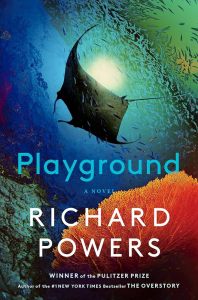
Richard Powers’s Playground pretends to be a novel about oceans, but it’s really a novel about AI: surprise! OK, it can be (and is) about both, but for me anyway, the twist at the end of the novel that exposes its artifice sucked the life out of the ocean parts for me. I wanted to say “duplicity” instead of “artifice” even though I realize that these are both kind of strange words to use about fiction. My negative reaction to the game Powers turned out to be playing reminded me of my frustration with Kate Atkinson’s A God in Ruins, which similarly undermined its own storytelling with some trickery at the end, even though that too was arguably (and my colleagues at Open Letters and I did argue about it during edits!) an unreasonable objection. The difference is that Atkinson had effectively “played on my emotions” before betraying her trick, while Powers’s novel never really engaged me, so I was annoyed both at the gimmick and at the novel’s own dullness. (Maybe that was part of the gimmick, to show that AI-generated fiction can do many things but not spark that kind of connection with its readers? If so, I think we needed a bit of a signal, to be quite sure we would not mistake AI’s failings for Powers’s own.)

The twist made Playground more intellectually interesting, in a “hey it’s actually a kind of metafiction” way, and maybe if I had been loving the novel to that point I would have felt less irritation at it. Unfortunately, by the time we got to the big reveal I was pretty tired of how plodding the whole exercise seemed, like a concept being executed under deadline, with very little life to it. The most energy Playground has is in the descriptions of underwater life we get from oceanographer Evelyne Beaulieu, whose experiences as a rare woman in a typically male-dominated scientific field make up one strand of Powers’s interwoven narratives:

At times she treaded in place, swarmed by the wildest assortment of Dr. Seuss creations—indigo, orange, silver, every color in the spectrum from piebald nudibranchs to bright, bone-white snails sporting forests of spines. The sea buoyed her, like warm silk on her bare arms and legs. She hung suspended in the middle of reefs that mounded up in pinnacles, domes, turrets, and terraces. She was a powerless angel hovering above a metropolis built by billions of architects almost too small to see. At night, with underwater lights, when the coral polyps came out to feed, the reef boiled over with surreal purpose, a billion different psychedelic missions, all dependent on each other.

This kind of stuff is fun just on its merits: due credit to Powers for his pictorial skills, for making these infodumps vivid in a way that the novel’s plot and people are not. Evelyne herself never came alive to me as a character: again, she seemed more like an animated concept—raising again, given the final twist, the possibility that this is a deliberate failure of characterization. Even if that were true, though, it would not make up for the deadening experience of plodding through her story.

Worse, and not theoretically excusable on the same “AI can’t actually write good fiction” grounds, is the first-person narrative of Todd Keane, the genius mastermind of the whole tedious exercise. It couldn’t have read (to me, YMMV, etc.) more like a writer with a deadline going through the motions in order to get done what he had planned for his novel. Or maybe the flatness of Todd’s voice is also meant as a symptom of his deficiencies? It’s his friend Rafi, after all, who is the poet, though Rafi came across to me as the worst clichĂ© of all, his exchanges with Todd sounding almost excruciatingly inauthentic. Is this also Todd’s fault? How many “maybe it’s actually really clever” excuses am I supposed to come up with on Playground‘s behalf?

As you can tell, I’m not going to walk through the plot of the novel or even do a more patient inquiry into how its different parts do or do not add up to something meaningful about modernity, climate change, capitalism, or artificial intelligence. If you are interested in any of these themes, you may well find Playground worth reading. Many readers seem to have found it powerful in ways I simply did not. I was so disappointed. I thought Bewilderment was extraordinary. I didn’t like Playground at all, and it has put paid to any lingering desire I had to read The Overstory.


“W.C.’s, & Copulation”: Starting Woolf’s Diaries

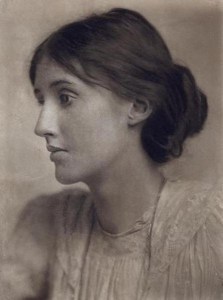
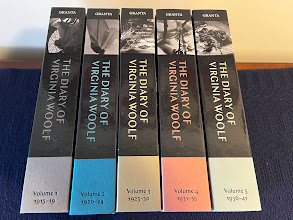
I recently treated myself to the complete Granta editions of Woolf’s diaries. I wanted to mark the finalization of my divorce last month, and this felt right, somehow—more a reflection of the life I am trying to build now, in this room of my own, than, say, jewelry would be. I thought, too, that reading through them would make a good summer project for me, especially if I made writing about reading them a bit of a project as well. I say “a bit of” because I don’t have big ambitions for it. I don’t necessarily want to tie myself to a schedule or make promises, if only to myself, that I then don’t keep but feel bad about! But I do think it will be motivating to have the intention to post updates of some sort. We’ll see what unfolds.

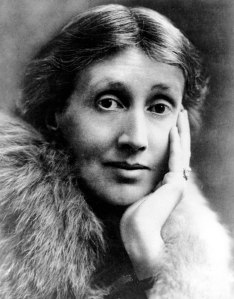
 This morning I started on Volume 1, which covers 1915-19. I read the foreword by Virginia Nicholson; the editor’s preface, by Anne Olivier Bell; the introduction by Quentin Bell; and then, finally, the first section of diary entries, from January 1915. They end abruptly because, as the editor’s note explains, Woolf “plunged into madness” in February; the diary does not pick up again until 1917. It seems inevitable that one key effect across the whole of the diaries will be this kind of dramatic irony: after all, it is impossible not to know, now, how her life ended. At the same time, and I think this is not as obvious as it maybe sounds, it seems important that she did not know this. When someone ends their own life it is hard not to see that as the most significant and meaningful thing, not just about them as people, but about the life they lived up to that decision. I’ve always been very moved by the conclusion of Winifred Holtby’s memoir of Woolf, which was published in 1932—Holtby did not know, and would never know (as she died in 1936), about Woolf’s suicide. “For all her lightness of touch, her moth-wing humour, her capricious irrelevance,” Holtby says,

she writes as one who has looked upon the worst that life can do to man and woman, upon every sensation of loss, bewilderment and humiliation; and yet the corroding acid of disgust has not defiled her. She is in love with life. It is this quality which lifts her beyond the despairs and fashions of her age, which gives to her vision of reality a radiance, a wonder, unshared by any other living writer. . . . It is this which places her work, meagre though its amount may hitherto have been, slight in texture and limited in scope, beside the work of the great masters.

“She is in love with life”: it would be too simple to say that this is exactly what the diary communicates so far, but it is certainly very full of living. A central preoccupation at this point is the search for new London lodgings that ends with the Woolfs leasing Hogarth House, where they also then launched the Hogarth Press. During this period The Voyage Out is moving towards publication, but she mentions it explicitly only once that I noticed; the editor suggests that nonetheless it was very much on her mind and that the stress of its impending release contributed to the collapse of her mental health.

Something that is immediately notable to me is how populated Woolf’s world is. I am torn so far between checking each footnote explaining who somebody is and just taking the cast of characters for granted, as she obviously does. It is interesting to know, but distracting to keep finding out, because Woolf mentions so many different people. My mother, whose interest in Woolf long predates my own,* explained once that part of what drew her to the diaries, in addition of course to Woolf’s voice—about which more in a minute—was being plunged into that community. I already see her point: everybody just seems so interesting, so busy with art and politics and love affairs. There is so much bustle, and while much of it (like the house-hunting) is quotidian and familiar, there is also something extraordinary about the way Woolf and her circle of friends wanted to be in the world, as intellectuals and creators and radicals—which is not to idealize them, or her, or to deny the privilege and snobbery that occasionally show through.

There are two related but separate things, I suppose, that make these diaries worth reading. One is Woolf—who she was as she wrote them and who she became. The other is the diaries themselves—what they are like to read, what they offer us as (if you’ll forgive the word) texts. Lots of people have kept diaries that are primarily of documentary interest; Woolf’s diaries, on their merits, are also of literary interest, or so I think it is generally agreed. It seems odd to say “they are great examples of the form” when that form is something so personal. The goal of keeping a diary is not generally to publish it, after all, and there can hardly be a model for how to write about and for oneself. But  Woolf is a good writer no matter the form or purpose of her writing, or perhaps it is more accurate to say that the kind of good writer Woolf is suits the darting, episodic, idiosyncratic form of a diary. Already the entries are shot through with evidence of her brilliance, from vivid bits of description (“the afternoons now have an elongated pallid look, as if it were neither winter nor spring”) to moments of acid social commentary:

We went to a concert at the Queen’s Hall, in the afternoon. Considering that my ears have been pure of music for some weeks, I think patriotism is a base emotion. By this I mean … that they played a national Anthem & a Hymn, & all I could feel was the utter absence of emotion in myself & everyone else. If the British spoke openly about W.C.’s, & copulation, then they might be stirred by universal emotions. As it is, an appeal to feel together is hopelessly muddled by intervening greatcoats & fur coats. I begin to loathe my kind, principally from looking at their faces in the tube. Really, raw red beef & silver herrings give me more pleasure to look upon.

My favorite bit in this first instalment was this thoughtful observation:

Shall I say “nothing happened today” as we used to do in our diaries, when they were beginning to die? It wouldn’t be true. The day is rather like a leafless tree: there are all sorts of colours in it, if you look closely. But the outline is bare enough.

Looking closely, seeing all the colours in an ordinary day: that sounds like an artist’s job to me, a painter’s but also a novelist’s, and it is something anyone can practice by writing in their diary, though the results are unlikely to be as scintillating as hers.


*Just as my father’s love of Trollope and the other Victorians predates mine—I am so fortunate, as I often now reflect, both in my parents themselves (much love to you both, if you are reading!) and in their literary influences on me. Their bookshelves were always both inspirational and aspirational to me when I was growing up, and important as it was that they read to us, I think it was even more important that we always saw them reading all kinds of books.

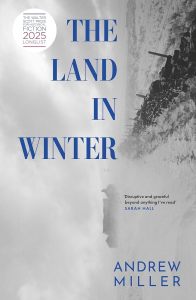
A Sadness: Andrew Miller, The Land in Winter

The car, the moon, Eric’s face . . . were all changed. She looked at him, his concentration (there was ice out there), his frowning into the onrush of night. She might just sit there, do nothing, say nothing, but it no longer felt inevitable. Her anger, at that precise moment, was absent. The anger, the fear, the shame, the wound that had to be tended like a wayside shrine. And what had replaced them? Only this: the rattling of the little car, the whirr of the heater, the shards of light beyond the edges of the road. A sadness she could live with. Some new interest in herself.

I greatly admired Andrew Miller’s Now We Shall Be Entirely Free and The Slowworm’s Song, so my expectations were high enough for his latest, The Land in Winter, that I treated myself to it in hardcover. For a while—nearly the whole first part of the novel, actually—I wasn’t sure if it was living up to them. I was liking it fine: Miller knows how to conjure both characters and settings with the kind of concreteness and specificity that I always appreciate. But it felt slow-moving. The novel never really changes its pace, but all the pieces so carefully assembled in Part One are put into motion in Part Two, the characters’ lives—fully of tensions, secrets, and lies as well as hopes and desires—intersecting in ways that become increasingly fraught, both for them and for us as we wonder how it will all play out. By the end I was thoroughly engrossed and, again, admiring.

The novel takes place during the legendary winter of 1962-63 in the UK. Bill and Rita live on a farm; Bill has stepped away from his family’s questionably acquired money and Rita has left behind a life of clubs and dancing and performances—also a bit questionable. Their closest neighbors are Eric, the local doctor, and his wife Irene. Each of them is uneasy in their own way: Eric, for example, is having an affair, while Rita, we learn, hears voices, which is particularly unnerving for her as her father is a patient at a nearby asylum. Rita and Irene are both pregnant. Across their current lives lies the shadow of the war, recent enough to have lingering effects; its horrors are most explicitly present through Eric’s colleague Gabby Miklos, who oppresses Bill at a party by cornering him and telling unwelcome stories about persecution and suffering:

When Gabby began again—Häftling, Sonderkommando, Judenlager—Bill, staring at an abandoned cheese stick on the tablecloth, began to withdraw his heart. He did it as subtly as he could, an inching back that might, with luck, seem no movement at all, a disappearing act, a party trick . . . but all was glass to Gabby Miklos and he sensed it at once. He looked up and smiled at Bill. It was, after all, not his first failure.

I wondered for a while if Gabby was meant to be providing an interpretive key to the rest of the novel. “How it happens is perfectly understood,” he says to Bill; “There is no mystery. So please, tell me, what is the question we must ask instead?” It is easy to imagine a novel that explores possible responses to that question, and to the problem Gabby embodies of how people are supposed to carry on, to re-engage, “normally,” after what has happened, after what he has seen and knows. As The Land in Winter went on, though, that didn’t seem right to me. I’m not really sure, in fact, that the novel has any such focus or thematic core, that it’s trying to answer (or ask) any particular question.

This is not a complaint or a criticism at all. Some novels work that way; others don’t. My sense of The Land In Winter is that if it has a unifying idea, it is that we all get through winter (and life) as best we can, and that what exactly that looks like depends on who we are and where we are. By the end of the novel there was something very satisfying about the richness with which Miller showed me who his people were and how they were getting from day to day. There are plot developments, not twists so much as consequences or revelations, some of them wrenching but none of them surprising because they all come so organically from the world Miller has created.

In particular, it is a wintry world, and Miller writes about it meticulously and often beautifully:

In the afternoon, the blizzard blew away towards the north. For an hour the air was perfectly still. The ash tree was a frozen fountain. Several times they said to each other how beautiful it was. The dusk came swiftly. In the garden, the snow lay in subtle undulations, each with its deepening blue shadow. The cold descended and the land tightened.

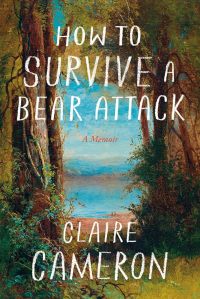
Fight For It: Claire Cameron, How to Survive a Bear Attack

Will I survive a bear attack? I’d been asking the wrong question. Being alive is one big risk and it will end in death, but the bridge between those two things is love.

After this investigation, my recommendation is to spend your time falling in love with the people and the world around you. Don’t let a fear of death eclipse your life. Run towards love, fight for it, and die for it.

When I was a child, my family went camping most summers, often at Saltery Bay, a significant drive (and two ferry rides) up B. C.’s optimistically named ‘Sunshine Coast.’ I wasn’t – and still am not – particularly outdoorsy, and I am irrationally afraid of starfish, and, less irrationally, of barnacles, so I am not sure I ever swam in the water off the rocks where we hung out day after day. I loved the tidal pools, though, full of mussels and crabs and tiny fish, and I loved staking out our favorite picnic table, the only one with any shade, early in the morning with my dad (the other families must have hated us!). We played Scrabble there, and painted rocks, and colored in our coloring books. Back at the campsite after dark, we played card games and colored some more and designed outfits for my beloved paper doll Hitty (named for and patterned after the wooden doll in this book) and sang songs by the fire when my dad played his guitar.

Every so often on these trips my dad would make a joke to my mother about bears. I am morally certain, now, that she never found them funny. I don’t remember ever taking bears seriously myself. I also don’t remember any particular precautions that we took to keep them at bay. But the elegant and informative B. C. Parks website (no such thing existed during my childhood in the 1970s and 1980s, of course) does say that “bears, cougars, wolves, and other potentially dangerous animals may be present,” and gives advice about how to keep yourself safe.

We were more wary about bears when we camped at Manning Park, I guess because it’s in the mountains and bears were known to roam there. In fact, I think I remember us all getting into the car once because we spotted a bear in our vicinity, though I am not 100% sure about this.* If we did, it can’t have helped my mother’s anxiety about these burly threats to her family. As Claire Cameron is at pains to emphasize in her new memoir How to Survive a Bear Attack, bear attacks are vanishingly rare. The couple whose grim deaths on a camping trip in 1991 are the anecdotal center of her story were, statistically speaking, in much greater danger on the drive to Algonquin Park; as she also points out, the woman of the pair was – again, statistically speaking – more likely to be killed by her male companion than by a bear. Still, if you are the rare target of a charging bear, those statistics are not going to feel reassuring, and if a bear does actually attack you, you are in extreme danger.

Claire Cameron was not attacked by a bear. The title of her book is not exactly misdirection: in fact, How to Survive a Bear Attack is full of information about bear attacks and how to survive them. The sections have titles like “When to Play Dead,” “When to Fight,” and “A Time to Surrender.” Cameron had turned to the wilderness after her father’s death from cancer,  and had found courage and strength in the beauty of the Canadian landscape and her own active engagement with it, hiking, climbing, paddling, and camping. Anyone with these interests has to think about bears, and Cameron often had. A turning point in what became a “full-blown bear obsession” was a close encounter with one when she was planting trees in Northern Ontario. She knew the story about the couple who had died in Algonquin Park, but the cinnamon bear she saw on that expedition was  an “apple-eating bear” smart enough to pry the lid off the Tupperware container he’d taken out of her backpack (which the bear had lifted from a van when someone foolishly left the window down a bit) and eat the peanut butter sandwiches inside.

Over the years, Cameron had been plenty close to bears – and also “stood close enough to mountain lions, and jumped over rattlesnakes.” It was only practical to know something about what to do in the event that a bear saw her as a threat, or as prey. But it had never come to that, and then at 45, she got a diagnosis that changed everything. “It was only now,” she says, “that I realized how foolish I was. I’d been preparing to fight a bear when the thing that would most likely kill me – my own DNA – had been lurking in a place much closer.” What she is fighting is cancer, specifically the rare and threatening form of melanoma that led to her father’s death at only 42. At the time of her own diagnosis, Cameron was 45.

Some of the strongest writing in the book comes in the passages where Cameron reflects on how it feels and also what it means to understand that “nature” is not a setting for our lives but that our lives are themselves natural. In the wake of this frightening news, she and her husband hold each other, wonder what to tell their kids, and contemplate a future without the “false sense of security” that comes from the walls we build around ourselves. “Every now and then,” she says,

something happens. A reminder. The mask of control slips to the side and there is a glimpse of what lies behind. We are subject to natural forces. We are delicate, vulnerable creatures, no matter how much time we spend telling ourselves otherwise. Our teeth are blunt, our skin is thin, and our hearts flutter close to the surface. We are subject to the pull of the moon; we can be shifted by the tides and pushed by the wind.

Later, in the context of the deadly bear attack in Algonquin Park, she will note specifically the vulnerability of the backs of our necks: “a person approached from behind with force stands little chance.” This, she thinks, is how Carola died – instantly, at least, unlike her partner Ray, who seems to have fought with everything he had. (Fair warning: parts of this book are quite graphic about the damage bears can do.)

What does a bear attack have to do with cancer? Is it just a metaphor? Yes, partly: the book is about Cameron’s illness and her desire to survive it, and so the section headings (especially 12, “How to Live”) take on dual meaning. But Cameron is also, still, obsessed with literal bears, and just as her turn to the outdoors helped her come back to life after her father’s death, so her strong and initially inexplicable fixation on finding out what exactly happened at that campsite in 1991 helps her find purpose, motivation, and eventually meaning after the surgery that, provisionally anyway, removes her cancer but leaves her weakened and unmotivated. The quest starts with an anomaly, perhaps a mistake, in a note she’d written about the case for her earlier novel The Bear. Suddenly “every hour became urgent”:

By that time, I had lived three years longer than my dad. This felt like borrowed time. I made a list of questions. I was sore and tired. I suspected I might be dying, but finding answers became more pressing than fear.

The next big shift comes as she pursues those answers and comes across a photograph of the killer bear. She had always focused on the people, the victims, the search party, the mourners, herself. Only at that moment does she realize there’s another point of view: the bear’s. Bears “are individuals. They do individual things.” To complete her story of that fatal meeting, she “needed to understand this bear on his terms, not mine.”

The bear’s story becomes the third strand in the narrative Cameron weaves, which combines her personal story, the story she puts together (including various testimonies and evidence) about Carola and Ray’s horrific final day, and sections from the point of view of the bear that attempt to portray him as a character in his own right – personality, curiosity, hunger, all as far as possible conveyed as aspects of what we might call bearishness. I admit I found these parts not completely convincing, not so much because they are inevitably speculative but because, well, it’s a bear. Cameron knows, and tells us, a lot about bears, including how smart they are, but this bear thinks, remembers, and plans to a degree that seems improbable. I think the idea probably was to make explicit what in reality is more implicit or instinctual; the risk is anthropomorphizing him, and while I think Cameron makes a valiant effort not to do that, still, well, it’s a bear. I still found it very interesting to learn so much about a bear’s life, though! And I liked the connections Cameron makes to Beowulf, one of the stories her father had loved to share with her. Toni Morrison, in an essay on Beowulf, “makes the point that nowhere in the story do people ask questions about why Grendel was hell-bent on eating them.” “When I followed Morrison’s thought,” Cameron explains, “I understood that the bear wasn’t beyond comprehension . . . It felt like trying to reach out and touch Grendel.”

The bear is a bear; the bear is Grendel, embodiment of our oldest and deepest fears; the bear is cancer; the bear is nature. They are all, in their own way, wild – and the wilderness is not somewhere else, separate, held back or “conserved” within inside the arbitrary boundaries of a park:

The wilderness has never been empty. It doesn’t have borders. It’s a word that defines a relationship between the people, the wildlife, and the land. It’s ancient and will be here long after I’m gone. I can’t control where or how it goes. It’s under the carpet, in the alley behind my house, in the lake, inside a glacier, and on an island in Algonquin Park. It’s inside the mind of a black bear.

It’s also much closer. It lives in my cells. To some, those cells might have a mutation. To me, they are cells inherited from my dad. I have cancer. It’s wild inside me.

Cameron completes her investigation and writes her account of what happened, to Carola and Ray, to the bear, to her father, and to herself. There is ultimately no comforting answer to the question that once preoccupied her: “If I’m attacked by a bear, will I survive?” None of us survive, so the question, the preoccupation, is itself misguided, she concludes. “Being alive is one big risk and it will end in death”; instead of running away from bears (which, just by the way, is not a good move in the case of a literal bear attack) we should “run towards love, fight for it, and die for it.” The lesson might seem a little pat, even trite, but the urgency and the poignancy of it are real for Cameron, which gives it power, and besides, things are often trite precisely because they are true. There’s a reason a story as old as Beowulf can still speak to us, can still give Cameron the words she needs to face the end: “I’ll let go then, of all my holdings, my throne, my carefully guarded bones.”


*I checked with my parents and my mother confirms: “The night before, a bear prowled around our tent. At lunch the next day when many were enjoying themselves by a stream at a picnic site, a bear wandered in and I was the only one who made my family get in the car.” That seems a very sensible precaution to me!

Recent Reading

My recent reading has not been particularly exhilarating, but most of it has been just fine: no duds, just no thrills.

Julie Schumacher’s The English Experience was enjoyable but also seemed quaint, in a sad sort of way: what is the point, really, of academic satire given the existential threats to research, education, faculty, and students currently devastating the higher ed landscape in the United States? It’s true that things have been grim for a long time, including in the UK, where every day seems to bring more dire news about program closures, and in Canada, where “do more with less” has been the rule for decades thanks to chronic underfunding for our ostensibly ‘public’ universities. But Schumacher’s Professor Fitger and his students are very much American, and while there is both comedy and pathos in the story of their misadventures, and while the gentle optimism of the ending is a nice reminder that both travel and education can and should give people a chance to become someone a bit different and a bit better, the The English Experience, charming as it was, seemed more nostalgic than pointed.

Liz Moore’s Long Bright River is one of the best crime novels I’ve read in a while—though since I don’t actually read much crime fiction these days, I’m not sure that’s really saying much. I’d heard that it was character-driven, and it is; it is a good novel about families, especially sisters, as well as about the far-reaching personal and social harms of the opioid epidemic. It has a good number of twists and turns and kept me engaged without making me feel overly manipulated, which I appreciated. I’m always scouting for recent options to include in Mystery & Detective Fiction: I don’t think I would assign this, but mostly because it is pretty long and I’m not sure it’s good enough qua novel to spend the amount of time on it that I’d need to coax the students through its 450+ pages (more than two weeks, most likely). This is the conundrum of the “teachable” (vs. readable) text; this is why so far I have not assigned one of Tana French’s books either.

I loved both Helen Simonson’s Major Pettigrew’s Last Stand and The Summer Before the War so I eagerly picked up The Hazelbourne Ladies Motorcycle and Flying Club when I saw the paperback had finally come out. Unfortunately, it disappointed. There is plenty of good material in it. I enjoyed the details about women’s wartime experiences and then their struggles as they were displaced from their jobs as the men came back from the war; I liked the ‘neepery’ about both motorcycles and airplanes. The characters are all promising types, in this context, but as the novel dragged on (and the pacing did seem too slow to me, too much talking without much purpose, too many scenes not contributing all that much) they felt more like cut-outs representing those types than fully realized people. I felt the same about the novel’s plotlines around racism and discrimination: these are good things to represent, of course, but they seemed, if not exactly perfunctory, at least predictable. Reading it I thought again of the conversation I had with Trevor and Paul about historical fiction: this is not a bad novel, but I think it may represent the qualities or aspirations or limits that make some readers think historical fiction is not a really serious or ‘literary’ genre.

I got Madeleine Thien’s Do Not Say We Have Nothing from the library as soon as I had agreed to review her forthcoming novel The Book of Records, on the theory that it was probably a good idea to know something about the earlier one in case there were connections. It turns out there is one possibly important one, though I’m still figuring out exactly what it means: throughout Do Not Say We Have Nothing the characters are reading and writing and revising a narrative called the Book of Records! I actually owned a copy of Do Not Say We Have Nothing for years and put it in the donate pile eventually because for whatever reason I still hadn’t read it. I assigned a story by Thien in my first-year class this year that I thought was really good, so this had already piqued my interest in looking it up again. I had mixed feelings about it. I found it a bit rough or stilted stylistically and never really fell into it with full absorption, but it is packed with memorable elements and also with ideas. It tells harrowing stories about the Cultural Revolution in China and focuses through its musician characters on how or whether it is possible to hold on to whatever it is exactly that music and art mean in the face of such an onslaught on individuality and creativity. It invites us to think about storytelling as a means of survival, literal but also (in the broadest sense) cultural—this is where its Book of Records comes in, as the notebooks are cherished and preserved, often at great risk. I’m not very far into Thien’s new novel yet but it seems even more a novel of ideas, perhaps (we’ll see) too much so.

My book club meets this weekend to talk about Northanger Abbey, so I also reread this. It has been so long since I read it it didn’t really feel like a reread, actually. It amused me, but that’s about it. After I’d finished it I read Marilyn Butler’s introduction to my Penguin edition and she makes the case that it is much more interesting and sophisticated than it is often given credit for. OK, sure, and I take her point that to really appreciate it we need to be as immersed in the other novels it alludes to as its characters are—but I’m not, and I’m not really interested in them (sorry, Jane!). I think I get the gist of the novel’s playful jousting with gothic conventions as well as other models of ‘women’s fiction’ from the time. I love and greatly admire both Pride and Prejudice and Persuasion, but for sheer pleasure I prefer almost any Georgette Heyer to this and don’t expect to read it again. Still, I am curious about what the other members of my book club have to say!

And that basically catches me up. I have just started Susie Boyt’s Loved and Missed, which so far seems as good as everyone said; I still have Olga Tokarczuk’s The Empusium on my TBR pile; and I’m still stalled out several chapters into Hisham Matar’s My Friends. Stay tuned for the next thrilling updates on my reading! 🙂

This Week In My Classes: The Kids Are Alright

Look, I don’t want to pretend everything is fine, in general or in my classes. Last week I was grading take-home midterms for Mystery & Detective Fiction and feeling to my core the truth of what is now a commonplace: AI is pervasive, and not “for better or for worse”—just, unequivocally, for worse. The one consolation I had (and it is, truly, not particularly consoling) is that the results, for the students, are not usually good. This means it doesn’t matter whether I can prove AI use or not: I can just mark the answers on their merits and move on. But it really sucks going through this process and wondering what the point of it even is. I felt demoralized, sad, and frustrated, which is unfortunately how I have often felt about this course this term because attendance has been so poor: on a good day, maybe 60% of the students are present, and there are some who have almost never been to class at all since January. What am I even doing, I have wondered, and how much longer can I keep doing it if it just no longer means to them anything like what it means to me?

BUT.

Here’s the other side of how things have been going in Mystery & Detective Fiction. There is a solid core of students who come every single time (or close enough—it’s perfectly reasonable, of course, to miss a class here and there because you are sick or your bus was late or whatever). I don’t know if they are all reading every page of every book, but enough of them are keeping up that we have pretty good discussions: the ones who speak up seem keen and interested, and they seem to be listening to each other, and they laugh when I try to be funny (which is one way to see if they are paying attention!). We have worked our way through a lot of good, complex, thought-provoking fiction, most recently Sjöwall and Wahlöö’s The Terrorists. (It is a book that seems uncannily relevant to our current moment, with its questions about what happens to citizens when their government is actively indifferent to their needs and politics is the playground of people too corrupt and too wealthy to be held accountable.) Sure, a lot of the midterms I marked had the whiff of ChatGPT (or Copilot, I guess, which is now oh-so-helpfully available via the Microsoft suite the university installs on its computers)—but a lot of them did not, and some of these were really excellent. To answer my own plaintive question, then, what I am doing is showing up, as cheerily as I can, to offer these students the class they deserve. As always, I will also keep puzzling about how to reach the ones who aren’t: AI may be new, but students turn to it for reasons that are not new, reasons I have been trying to find solutions for as long as I have been teaching.

Even to myself this positive spin, if that’s what it is, does not sound completely convincing. Yes, something is different now. I’m just not sure it’s as bad as this gloomy article says it is. Maybe I’m kidding myself. A few years back, one of my best students let slip that a lot of students in my 19thC fiction class were basing their contributions on what they’d read in SparkNotes, not the assigned novels themselves. I wished she hadn’t said that! Was it true? Is it still true? It doesn’t feel true in these classes! I want to believe! But also, even if it is true about some students, it is definitely not true of all students. I just get too much evidence to the contrary, often from conversations with students outside of class, like the one who came to my office hours recently to talk about her term paper ideas but also to ask for recommendations for more Victorian novels to read after she graduates. Guess which novel she’d studied with me had most won her heart: David Copperfield! (It is truly heartwarming how many students who were in the Austen to Dickens class last year have told me they loved David Copperfield. A lot of them signed up for Dickens to Hardy this year and I have never had a group dig in to Bleak House with so much enthusiasm!) Twice this term, students who had already graduated from Dalhousie asked to sit in on my Victorian Women Writers seminar just to hear some of our discussions of Middlemarch. The current students who are actually taking that seminar seem genuinely caught up in the novel—some of them so much so that they will be writing on it. Those who aren’t will be writing on Villette, or on North and South.

These are long, complex, demanding books! So when the author of that essay declares that “our average graduate literally could not read a serious adult novel cover-to-cover and understand what they read,” that students “are impatient to get through whatever burden of reading they have to, and move their eyes over the words just to get it done,” I have to wonder: are my students really so exceptional? I mean, I do think they are lovely and wonderful; I genuinely look forward to every class. It’s true they are English students, and mostly Honours English students at that, with some graduate students as well, so definitely, when it comes to reading, both an elite and a self-selecting group. Still, when we tell stories about higher ed today, shouldn’t we talk about them too?

It’s not just about choosing between glass half empty and glass half full perspectives: I think it really matters that we not turn our grimmest anecdata into the dominant narrative. If things are really as bad as all that, after all, what are we all doing, and how much longer should we keep doing it? It is important that alongside our laments about the “stunning level of student disconnection” we acknowledge the students who do care, who choose engagement, who want to read and think and write and don’t want their education to be stripped of its humanity (and the humanities). Here in Nova Scotia our provincial government has proposed a bill that would give them the power to interfere with universities that aren’t doing what they consider a good enough job serving “provincial priorities.” Giving these students the education they want and deserve should be one of those priorities—though I am morally certain that is not the kind of thing our leaders have in mind, even though, as we have explained over and over, studying literature actually is excellent preparation for a whole range of careers, if that’s what you think is the point of an education. (Do you think if I dropped off copies of Hard Times at Province House they would see themselves in Gradgrind and M’Choakumchild and be ashamed?)

Anyway. I am as guilty as the next tired professor of occasionally giving in to cynicism and anger and venting some of it on social media. Many of us believe, or at least hope, that AI will go the way of MOOCs (remember when they were going to revolutionize education?). In the meantime it is definitely making things harder for us, and (despite the edtech industry’s promises) no better for the students, unless “ubiquitous” and “seems easier than doing the work myself” is all that counts. The antidote to despair is not AI detectors or in-class tests, though: it’s the students themselves. Just as I thought we should stand up to the Srigleys of the world when they declared our classrooms “contentless” and said we were leaving our students’ “real intellectual and and moral needs unmet,” so too I think we should counter the “it’s all over” doomsayers with some positivity. I am a Victorianist, after all! Optimism comes with the territory.

As Human: Salena Godden, Mrs Death Misses Death

I have come here to walk the earth as human. I choose to be disguised and camouflaged. I live in the faces of the most betrayed and ignored of all humans. I live in silence. I am the words trapped on the bitten tongue. I am more than a statistic. I am more than another hashtag. I live in the heart of the poor woman, the black woman, the elderly woman, the sick woman, the healer, the teacher, the priestess, the witch, the wife, the mother and the girl. I am Death and I am quick. I am a rabbit and I can vanish. I can be anything I want to be. I choose the unheard and unspoken. I live in the silent scream and I will be silent no more and I have so much work to do . . . 

Salena Godden’s Mrs Death Misses Death begins with a disclaimer. “Spoiler alert,” it says in part; “We will all die in the end.” “This work has a very high dead and death count,” it goes on:

Take with caution. Take your time. Do your lifetime in your own life time. If you are sensitive or allergic to talk of the dead or non-living things use this work in small doses. This is not a self-help brochure. This is not a guide to avoiding dying. if you think you are about to drop dead, please seek medical advice immediately.

If you find the tone of this passage disorienting (as I do), you have a sense of what it is like to read this strange, moving, provocative book. Its basic premise is that a writer, Wolf Willeford, meets Mrs Death (“she who is Death, the woman who is the boss at the end of all of us”), who appears in the form of an elderly black woman (“there is no more human more invisible”) and shares stories, poems, and recollections that Wolf eventually compiles into a memoir, the book we are reading. (Did this “really” happen, though? Towards the end of the novel Wolf a bit frantically wards off the possibility that Mrs Death was “Not a dream. And not a manifestation, not a hallucination, but a real, real, real, real . . . memory.”)

There is a sort of plot involving Wolf, Mrs Death, a desk, and a writer’s retreat in Ireland, as well as backstory about Wolf’s family. These details matter, but Mrs Death Misses Death is not really a novel you’d read for conventional story-and-character reasons. It is more interesting and memorable (for me, anyway) as a meditation on death, and thus, inevitably, on life: “when writing about Death,” as Wolf remarks, “you soon realise it isn’t all about Death and that you write about Life and the living.” Sometimes Mrs Death recalls specific deaths, individual or mass:

The other day—just one example—the other day, there I am sweeping through a town in Syria and I find I am in floods of tears I stop and stand there in the rubble and debris and I wonder why, why? What the fuck am I doing here again, so soon, again? Twice in one week? And that same day I am in America, in a school for another mass shooting, and I am there, roaring my eyes out, clearing through, collecting all these souls of terrified dead teenagers. Then I am out in the channel, off the coast of France, collecting the murdered souls of another sunk dinghy, a make-do refugee raft filled with desperate people escaping war but being left to drown on purpose. My work has been overwhelming. So much death and war and destruction, famine and murder.

Other times, it is death in general, not in the abstract but as a universal, that’s the topic, as when Wolf reminds us that it is all, always, “borrowed time”:

One by one we leave each other. We never know who might go next and when and where and why. I’ve often wondered how very different this living life would be if we were born with our expiry date stamped on our foreheads . . . I mean, if we knew exactly how long and little time we have left to love each other, maybe then we would all be more kind and loving. Imagine if we knew our death date. How differently we would live, maybe, and yes I know, maybe not.

As both of these passages show in their different ways, Mrs Death Misses Death is both a moral and a political calling to account. How can we bear to live in a world with so much cruel, needless death—but also, how can we carry on living as if we don’t know that it inevitably ends? How is it that both of these facets of our reality seem to make so little difference to how we live, to the choices we make, to the people we are, or aspire to be? Imagining your own death, and the deaths of everyone you care for, should, Mrs Death suggests, “be the death of the demanding chubby shit you were and the birth of the kind wise person you will become”:

Do not run away from the inevitable, the beautiful and glorious ending, the proof you lived, the life you lived. To live tasting metal is blood. To live saving tokens is death. To die is to have been alive, that is why you must life: live free, live wild, live true and live love alive. Let the fire burn you and the light blind you. Let your belly get full and fat and embarrass you. Let your words fall out and tumble carelessly and honestly. Let your passions be unlimited.

After all, as she says, “I am Mrs Death and I am coming for you all.”

The form of Mrs Death Misses Death is just barely novelistic: it is almost collage-like, with its poems, dialogues, letters, reminiscences, and monologues. Parts of it repeat or circle back on other parts. I can see finding it frustrating, or excessive, or overly insistent, including the excerpts I’ve quoted here so far. It is all those things at times, and also sometimes grim and bracing and haunting. It kept surprising me. It made me think, and it also made me cry, especially at the end, where six pages are left blank “as a silent memorial for all the names we do not know and cannot say”:

Please add your loved one’s name on one of these blank pages, maybe add a date, a memory or a prayer. In this one act of remembrance we will be united. From now on every single person who reads this book will know their copy contains their own dead . . . And in the future anyone who reads your copy of this book will read that handwritten name and speak it aloud . . . We share these names of our loved ones in the whisper of the last page turning, over the years to come. 

“A nitwit? A madwoman?”: Miranda July, All Fours

This was my favorite moment in Miranda July’s All Fours:

But this was no good, this line of thought. This was the thinking that had kept every woman from her greatness. There did not have to be an answer to the question why: everything important started out mysterious and this mystery was like a great sea you had to be brave enough to cross. How many times had I turned back at the first ripple of self-doubt? You had to withstand a profound sense of wrongness if you ever wanted to get somewhere new. So far each thing I had done in Monrovia was guided by a version of me that had never been in charge before. A nitwit? A madwoman? Probably. But my more seasoned parts just had to be patient, hold their tongues—their many and sharp tongues—and give this new girl a chance.

Staring down self-doubt! Daring to cross the sea of mystery to change your life! Overcoming that profound sense of wrongness that creates so much fear and inertia! Shutting up the inner voices that keep you from making the radical change you think you need to flourish! That’s what I imagined All Fours would be about: I thought it would be (because this is how it was marketed and also received, or that was my impression) an inspiring novel about aging, a madcap romp through the perils but also perhaps the promises of menopause, etc. etc. I knew it would be a bit “out there” for me, but I liked the idea of a kind of exuberant “fuck you!” to becoming an old(er) woman.

All Fours is all of these things, sort of, or some of the time, but it is also absurd, tedious, and unconvincing. Most of the way through it I was wavering between being amused and being annoyed. That bit I quoted is on page 51 and the novel is over 300 pages, so that’s a long time to be so ambivalent, and by the end annoyance had definitely won out.

I am quite willing to believe that my disgruntled reaction was my own fault—mine and the marketers’. Much as I disavow on principle that protagonists should be “relatable,” you can tell from what I’ve already said in this post that I decided to read this book for personal reasons: that I was hoping it would in some way resonate with my own experiences of being a woman getting older. Not that there’s anything wrong with that! That’s one of the gifts fiction has to offer, sometimes: illumination, insight, understanding, including of ourselves. But this woman, the woman in All Fours? I didn’t understand her at all, and I certainly didn’t relate to her. Is she a nitwit? A madwoman? Both, IMHO. The things she wants, the things she does, made no sense to me. And I don’t think that’s just because she is nothing like me in her values or behavior or priorities or vocabulary or anything else: I just didn’t believe in her as a character (which is a bit funny, I suppose, as I gather All Fours is more or less autofiction). The novel did not make me care what happened to her. Was this because I had started the novel expecting a connection that, to be fair, the novel itself never promised me?

I realize I am being vague about the specifics of the novel. It is a kind of road trip novel, except that instead of traveling across the country the narrator stops basically in the next town over, rents a hotel room, redecorates it (?), stays there, and starts a sexual relationship with a married guy named Davey who works at Hertz but dreams of being a hip hop dancer. The sex is pretty graphic but I’ve been reading romance novels for 15 years now so nothing about that was particularly shocking except that in romance novels the relationship is usually the point and here the point of all the sex is . . . I’m not sure, exactly, but I am pretty sure (though how would I know, I guess?) that the narrator thinks about sex and talks about sex and places more importance on sex than a lot of people. Certainly I have never had conversations like the ones she has with her friends with any of my own friends! It would just never happen—and I’m pretty sure that’s fine, it isn’t a symptom that we or our friendships are inadequate or repressed or inauthentic.

I did pick up that All Fours is “actually” about less literal things, like desire and freedom and expression and creativity.  Those are good things to care about. I liked this bit, about a dance the narrator decides to choreograph (if that’s the right word) and record as a gesture and invitation for Davey after their initial fling has ended:

This dance had to work because generally, going forward, things would not work out, disappointment would reign. My grandmother knew this, and her daughter. Everyone older knew. It was a devastating secret we kept from young people. We didn’t want to ruin their fun and also it was embarrassing; they couldn’t imagine a reality this bad so we let them think our lives were just like theirs, only older. The only honest dance was one that surrendered to this weight without pride: I would die for you and . . . I will die anyway. You can do that with dance, say things that are inconceivable, inexpressible, just by struggling forward on hands and knees, ass prone.

Well, I liked it until “ass prone.” She seems allergic to earnestness, this woman, but also addicted to shock, or attempts at shocking. We get it: you’re cool, you swear, you don’t conform.

Annoyance won out, as I said.

If you’ve read All Fours, I’d love to know what you thought. If I had just accepted the character as her own reckless, exuberant, sexy self, is there a good novel there I would have read instead of the one I ultimately found so bafflingly tedious?

Uncategorized

This Week In My Classes: New & Old

New to me, is what I mean, and then a couple of old friends: this week in my classes I have just finished teaching Dorothy B. Hughes’s The Expendable Man for the first time in Mystery & Detective Fiction, and on Wednesday we start P. D. James’s An Unsuitable Job for a Woman, while as of tomorrow it’s all Middlemarch all the time until the end of term in the Victorian Women Writers Seminar.

I enjoyed working up The Expendable Man for class and then talking it through with my students. I used it to raise many of the same questions that usually come up when we’re working through Devil in a Blue Dress: about the whiteness of “classic” crime fiction, for one thing, and the genealogy of African-American crime novels, and about the ways race complicates common themes in the genre, from ideas about the role of the police to the relationship between the specific crime and its solution (or not) and larger contexts of racial and social justice. Mosley’s novel is very different in style and tone, though, as well as in its specific historical contexts, so this time instead of talking about World War II or the history of policing in Los Angeles I sketched out a basic timeline of the civil rights movement (the novel presumably takes place around the time of its publication, so the early 1960s) as well as the fight for reproductive rights, with some attention to what it was like at this time in Phoenix specifically, where the novel mostly takes place.

It is quickly evident with Hughes’s novel that the murder that needs solving is in some ways less important than the systemic problems glaringly exposed through Hugh Densmore’s vulnerability, not even so much as a suspect but just as a black man in a relentlessly racist society. Ultimately, though, as we discussed, to say that the novel is “about” the crime of racism does not really tell us much about it in particular: you still need to dig in and think about what it is exactly that Hughes has to show or to say. What is the effect, for example, of giving us a protagonist who is so irreproachable? (I read one scholarly article about the novel that—oversimplifying the argument, of course—felt she had flattened out his humanity to serve her political purposes, making him too ideal or too safe.) What do we think about Ellen, the woman who is initially an incidental romantic interest but becomes an important ally? And what about Iris / Bonnie Lee, who enters Hugh’s life like an inadvertent femme fatale (or does she know what she is doing?) only to become a murder victim herself? When I posted about the novel after my first reading of it last year, I noted that I was bothered by what seemed to me its vilification of abortion providers. I felt basically the same during my rereads of it as I prepared for class discussion, but I was curious what the students thought and I’m not sure we reached any firm conclusions about whether we were supposed to consider Iris in any way a victim of a systemic problem similar to (if, in this scenario, less important than) the one that puts Hugh’s life at risk.

Overall, I think the book worked well for the course. I did note to my students, as I was putting it alongside novels like A Rage in Harlem, Blanche on the Lam, and Devil in a Blue Dress, that it was perhaps odd—and had given me pause—to assign a book about race and crime that is written by a white woman. As I said when reflecting on that in my earlier post, the Afterword in the NYRB edition is by Walter Mosley: he seems fine with what he calls Hughes’s “gamble,” and his admiration for the book certainly suggests that he thinks the gamble paid off. I don’t know if I needed to cite Mosley in defense of my choice, but I also didn’t think I should just ignore the issue, so I did highlight his comments. My feeling is that the book itself justified its own inclusion on the syllabus, both by its quality as a novel and by the quality of the discussions it prompted.

I haven’t taught An Unsuitable Job for a Woman in the mystery survey class for a while—possibly, since 2018, which is the most recent set of lecture notes I have saved for it. I have assigned it a couple of times since then in the seminar I also teach on Women and Detective Fiction, most recently in Fall 2022. It is an odd book in many ways but I really like it: I consider it as much a novel of ideas as a crime novel, and I think of it as pushing back against the tendency in most of the other novels we’ve read this term, especially The Maltese Falcon, to treat love as an inadequate motive for action. I like the way mixing up the reading list a bit every time I offer the course makes different conversations happen. (I admit I am relieved, however, that I get a break from this course next year, as I have been teaching it so often that sometimes it’s a struggle to keep it fresh even so. Except The Moonstone. I don’t think I could ever get tired of teaching The Moonstone! It’s sad to think that I am eventually—in the foreseeable future, now—going to retire and then I will never get to teach The Moonstone again.)

I have gone on a pretty long time already and haven’t said anything about the other novels I have been or will be teaching this week. I’ll have to post again once we’ve actually started Middlemarch. I have such a good group of students in the Victorian Women Writers Seminar: a bit quieter than some groups I’ve had, maybe, but always really astute and interesting in their comments and willing to engage with whatever questions I or their classmates bring up. So I’m optimistic that this is going to be a really satisfying month reading through this great novel with them. It’s not the slowest pace I’ve ever set for reading Middlemarch, but I think it’s pretty reasonable: we’re doing just the first 10 chapters for Wednesday, for example. I reread them on the weekend—what a treat. And speaking of new conversations, I’m not sure I’ve ever put it next to North and South before, or in the same course as Villette, and I can already tell that these juxtapositions are making slightly different things stand out.

WordPress is being weird about inserting images tonight so I’m going to post this without any, just so it doesn’t malinger unpublished. If I can I will perk it up with some pictures tomorrow!

“The Peace When It Settled”: Charlotte Wood, Stone Yard Devotional

I was so tired, but the mess on my bed—the same congestion into which I had nightly crawled without noticing—was suddenly intolerable to me. I yanked at the sheet and the motion sent everything to the carpet. I lifted the sheet with two hands and it billowed slowly back down, and as it did I felt some otherworldly possibility open up inside myself. I picked up one of the pillows from the floor and placed it back on the bed, smoothed the sheet down to make a flat, empty expanse. I stood looking at the bed and breathing. It isn’t something I ever told anyone—how could you say this?—but the lift and descent of that sheet, the air inside it, the peace when it settled, showed me what I wanted. I knew it in that moment, but it took years to find it.

The first time the narrator of Stone Yard Devotional visits the nuns in their remote community, she just wants to get away for a while. She isn’t religious herself, and the nuns’ routines interest but do not really engage her. “What is the meaning of this ancient Hebrew bombast about enemies and borders and persecution,” she wonders; “what’s the point of their singing about it day after day after day?” How do they get anything done, she frets, with the constant interruptions,

having to drop what you’re doing and toddle into church every couple of hours. Then I realised: it’s not an interruption to the work; it is the work. This is the doing.

As she settles into the strangeness of it, she feels “a great restfulness” come over her:

Is it to do with being almost completely passive, yet still somehow a participant? Or perhaps it’s simply owed to being somewhere so quiet; a place entirely dedicated to silence. In the contemporary world, this kind of stillness feels radical. Illicit.

She goes home after this visit, but she comes back again, and this time she stays.

Stone Yard Devotional both was and was not what I expected. It is a call to radical stillness, or at least an invocation of the possibilities that a deliberate retreat from the noisy chaos (literal, emotional) of modern life might offer: clarity, insight, simplicity. But it does not idealize or romanticize its alternative, or press us towards prayer or faith or even a vague spirituality. It isn’t uplifting; it doesn’t aspire to or encourage transcendence. Its nuns are still very much people, for one thing. People have histories, relationships, idiosyncrasies, disagreements, responsibilities. Work has to get done: people need to eat, animals need to be cared for, or killed and eaten—or just killed, as many of them as possible, if they are the mice who overrun the nuns’ buildings, destroying food, appliances, musical instruments, cars, sleep. I did not expect there to be so many mice—or for them to be so literally mice. For a book that in some ways is “otherworldly,” Stone Yard Devotional seemed to me very much about this world, its characters very much earthbound. I thought about whether the mice were metaphors: the best I can do is that they could represent just that worldliness, the persistent recurrence of the things we try hardest to shut out. But mostly I feel like they were just mice, there to show us that you can’t really retreat—you still have to deal with things.

The things the narrator is dealing with certainly follow her, and she brings them to us through her memories and reflections. Then the nuns have a visitor, Helen Parry, who belongs to the narrator’s previous life. She had not treated Helen well then, and their new proximity becomes an opportunity for her to try to make amends and then to be a support and a witness as Helen moves towards a reckoning with her own sorrows. Helen initially comes to the nuns’ community in attendance on the remains of one of their number who went away to do some missionary work and was murdered. The return of her body for burial brings a kind of closure to the nuns who knew her before.

It wasn’t always clear to me as I read the novel why it had the specific pieces in it that it did (and of course I have not itemized them all here, though it is not a plot-heavy book). Sometimes when I’m reading a novel, even for the first time, I feel a gathering sense of its unity as I go along, of what holds it together for me. Other times if I work at it for a bit patterns emerge—sometimes, this happens while I am writing about it here! It’s likely that if I reread Stone Yard Devotional the ideas that connect its various elements would become clearer: I expect they would, because the novel feels so deliberate, so thoughtful. What did hold it together for me was its tone, or voice. I liked the way the narrator thought and talked. Often she leads herself, and thus us, along an unassuming narrative thread until she arrives somewhere quietly meaningful. Here’s an example:

At first I was struck—a little irritated, honestly, by how slowly the women spoke here, by the long pauses they gave before responding to any question or remark. It seemed affected. But then I recalled a long trip across the country when I was a young woman, driving with my friends from the east coast to the west and back again, twice across the Nullarbor, camping each night along the way. It took a month, and during that month we became slower and slower in our movements. At first we would drive long distances, set up camp in the dusk, rise very early the next day to pack up and move on. But by the end of the trip we would drive only three or four hours a day, and we took longer to do everything. Packed up later and later in the mornings. When at last we drove back into the inner city we were frightened by the speed of everything, by how loudly people spoke. Waiters seemed to be shouting when they came to take your order for dinner.

“I don’t think,” she says, “I have ever again felt as free as I did on that drive across the desert. Except here. Once or twice here I have felt it.”

There is loss and grief and trauma in the novel, because there is in people’s lives, and I liked the way she talked about that too. She recalls visiting her doctor after her parents’ deaths and appreciating her “deep, practical kindness”:

On my second visit, I remarked (embarrassed again by my tears) that it seemed my friends were deserting me, just when I needed them the most. She was unsurprised. Your life has been stripped down to bedrock, she said. It’s not their fault; their lives are protected by many layers of cushioning, and they can’t understand or acknowledge this difference between you. It probably frightens them. They’re not trying to hurt you.

Later, thinking about another tragedy, she comments,

I used to think there was a ‘before’ and ‘after’ most things that happen to a person; that a fence of time and space could separate even quite catastrophic experience from the ordinary whole of life. But now I know that with a great devastation of some kind, there is no before or after. Even when the commotion of crisis has settled, its still there, like that dam water, insisting, seeping, across the past and the future.

It’s not revelatory writing, or even particularly writerly writing, but its directness and lack of complication is both calm and calming.

I’m really just wandering back through the novel looking at the passages I marked rather than going anywhere in particular with these comments about it. It has not been a particularly quiet few days since I read the novel; it has been hard to think at all, really, much less in the way I probably need to to do a better, or at least a different, job of this post. After I finished it on Saturday I commented on Bluesky that I was going to have to sit with it for a while, and that I expected it would stick with me. I still feel that way about my reading experience—that it remains a bit unfinished. I really liked the novel. I read it all at once, in a couple of hours (it’s not a very dense or difficult read); I never wanted to put it down, or to pick up my phone instead, which is a rarity nowadays. Somehow, for all that it is full of mundane activity and also tensions and sorrows, it created a kind of retreat for me in the moment. That is a kind of unity, I suppose, between its form and its content, a congruence between style and substance. And although I said it is not a novel that doesn’t aim at transcendence, it does have some moments of grace:

Just when the misery of the mice, the drudgery and boredom of the days here feels intolerable, there is Dolores’s pure, clear voice carrying across the courtyard as she practises alone in the church. I return to the peeling and coring of apples and find my work has become new, and beautiful.