“I’ve taken the plunge,” she thought, “and there’s no returning. I’m out for what I can get, and I’ll see that I get it. I’ll pay back in kind, I won’t cheat, I won’t be dishonest. No one will claim I haven’t earned my money. Value given for value received. It’s one trade like another, the butcher, the baker, the candlestick maker. We’ve all got to live.”
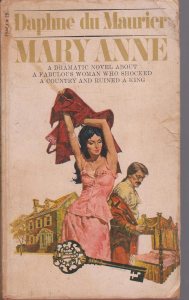
Mary Anne is the fictionalized story of Daphne du Maurier’s great-great-grandmother, Mary Anne Clarke. It is quite the rags to riches to (near) rags again saga. Mary Anne is born into poverty and clambers up the social ladder with the tenacity of Becky Sharp. She is conscious from an early age of the disparity of power between men and women and she uses charm, subterfuge, threats, manipulation, bribery, seduction—basically, every trick she has!—to get what she wants, which is not so much money as security, for herself and her family. She loves luxury, she loves power, but at every turn she learns how fast she can lose her grip on both. Like Becky, she never stops, and also stops at nothing, fighting to keep them. Many powerful men enlist her in their own schemes, but they usually betray the promises they make her; it’s hard to feel any pity for them when they find themselves, in turn, exposed or betrayed for Mary Anne’s own purposes.
The pinnacle of Becky’s career is her presentation to the Prince Regent. Mary Anne goes one better, becoming the mistress of his brother Frederick, Duke of York. The chief engine of the plot from this point on is her participation in a scheme to profit through his influence over military appointments and promotions. This eventually becomes a huge public scandal, with hearings in the House of Commons; Frederick eventually is driven to resign his position as Commander in Chief. By this time he has severed his connection with Mary Anne, who gets her revenge by being the chief witness against him; she goes on to publish pamphlets and memoirs, which I assume were key primary sources for du Maurier’s novel (I would like to know how many of the letters and speeches in them come directly from contemporary materials). 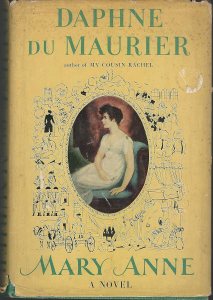
Mary Anne has little of the lush atmospheric writing of Jamaica Inn or Frenchman’s Creek, or the delicious suspense of My Cousin Rachel or Rebecca. It has its own energy, though: like its protagonist, it just keeps moving forward, restlessly, relentlessly, on to the next thing, and the next, and the next. Mary Anne’s father lets the family down; she picks up the work. Mary Anne’s husband turns out to be a weak drunken fool; she figures out how to support the family. When there seem to be no better options, she “takes the plunge” and becomes a courtesan; when the opportunity arises, she wins the Duke’s favour and works tirelessly to keep it, even though the allowance he gives her is not enough to meet his expectations and (again like Becky) she looks to be winning the game even as she is getting deeper and deeper into debt. When her royal “protector” cuts her off, she just keeps going. She is not particularly likeable and she’s certainly not admirable, but I couldn’t help rooting for her. All those men, for one thing: they just use her and lie to her and break their promises and go home to their wives and then sit in judgment on her.
Mary Anne isn’t just plot points, though: there are passages that definitely have that du Maurier flare. Here’s her description of the back streets of London where Mary Anne grows up, for example:
The streets were mentor and playground, teacher and companion. Rascals picked pockets on the streets, beggars were given alms, goods were bought, rubbish was sold, men laughed, men cursed, women whined, women smiled, children died under wheels. Some men and women wore fine clothes, some wore rags. The first ate well, and the others starved. The way to avoid rags and starvation was to watch, to wait, to pick up the coin dropped on the pavement before anyone else, to run swiftly, to conceal quickly, to smile at the right moment, to hide at the next, to keep what you had, to look after your own. The thing to remember was not to grow up like her mother, who was weak, who had no resistance, who was lost in this world of London that was alien to her, and whose only consolation was to talk of the past, when she had known better days.
Right there we can see the lessons Mary Anne remembered for the rest of her life and her determination to do whatever she can not to be weak, which means having money: “Not money to pinch,” as she later reflects, “but money to spend.”
 And here she is at the end of her own “better days,” bathed in the pathos of someone who has played and lost, but still too game to be pathetic:
I remember . . . Then she’d stop herself. The young are bored with reminiscences. Who minded whether dandies in Vauxhall had stood on tip-toe once to watch her pass? What did it matter if a gaping crowd had climbed her carriage-wheels in Palace Yard? Or that she’d queened it in the House of Commons, the only woman in that world of men? . . . But sometimes, in the night, and no one with her, a strange nostalgic yearning came for the past; and baffled by the silence, oddly lonely, a church clock in Boulogne chiming the hour, she thought, “There’s no one left who gives a damn. The world I knew has gone. This is tomorrow.”
That’s splendid stuff.
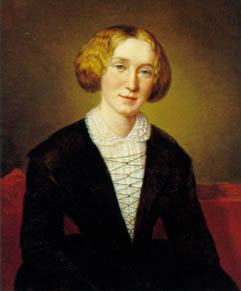
 For the first time ever, I have assigned Scenes of Clerical Life in one of my classes—more accurately, a scene of clerical life, “Janet’s Repentance.” My re-reading of it some years ago had lodged the possibility of assigning the story (novella?) in my mind, but I hadn’t found what felt like the right opportunity until this term’s all-George Eliot, all the time seminar. We are discussing “Janet’s Repentance” in the seminar this week, so I thought that was a good enough reason to lift this post out of the archives.
 “Do you wonder,” asks our narrator, as the sordid tale unfolds, “how it was that things had come to this pass — what offence Janet had committed in the early years of marriage to rouse the brutal hatred of this man? . . . But do not believe,” she goes on,
 Another January, another new term! I’ve got two classes this term of two quite different kinds. The first is our second-year survey course British Literature After 1800, so its aim is to cover a broad sweep of territory; the other is a combined Honours and graduate seminar on George Eliot, a rare opportunity to zoom in on a single writer—a privilege rarely accorded, in our program anyway, to anyone besides Shakespeare!
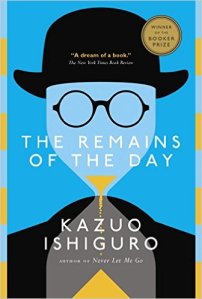 Something that was very much on my mind as I prepared for this particular class meeting was the last time I taught this course, which was the winter term of 2020. In early March of that term, we were all sent home; my notes leading up to what turned out to be our last day in person have a number of references to contingency plans, but none of them (none of us) anticipated the scale of disruption. It came on so quickly, too, as my notes remind me. We were part way through our work on Woolf’s Three Guineas on our final day; quite literally the last thing I wrote on the whiteboard was “burn it all down.” I got quite emotional many times while revising the course materials for this year’s version: that term stands out so vividly in my mind as “the before time,” before COVID, which is also, for me, before Owen died. We were still essentially in lockdown, after all, when he died in 2021; we had only just been able to start coming together as a family again. I don’t usually have a lot of emotional investment in my course materials, but it was unexpectedly difficult revisiting these and thinking of how much has changed. Tearing up over PowerPoint slides: it seemed absurd even as it happened, but it did. That said, because of COVID I ended up cutting The Remains of the Day from the syllabus in 2020, and given that it is in my personal top 10, that I rarely have the opportunity to assign relatively contemporary fiction, and that I am running out of years to assign anything at all, I am stoked about being able to read through it with my class this term. If only it didn’t feel so timely!
 I am also super stoked about getting to spend the whole term reading and talking about George Eliot with a cluster of our best students—not just our brightest but honestly, I know most of these students from other classes and they are some of the nicest and keenest and most engaged and curious people you could hope to work with. I felt so much good will from them today as we did our ice-breaker (nothing too “cringe,” just everyone’s names and anything they wanted to share about their previous experience, or lack of experience, with George Eliot). I hope their positive attitude survives Felix Holt, not to mention Daniel Deronda! Knowing that a number of them had read Adam Bede and/or Middlemarch with me in other recent courses, I left both of these off the reading list for this one. Middlemarch especially feels like a gap, but on the other hand, I don’t think I could have realistically asked them to read both Middlemarch and Daniel Deronda in the same term (unless I didn’t assign anything else), and Daniel Deronda is pretty great. I had quite a debate with myself about Felix Holt vs Romola: just for myself, I would have preferred to reread Romola, but I’ve taught Felix Holt in undergraduate courses before and it is actually pretty accessible. Sure, Felix is so wooden he makes Adam Bede look lively and nuanced, but, speaking of timely, a book about the pitfalls of democracy when the population is not (ahem) maybe sufficiently wise to make good choices seems on point. Along with those two, we will be reading “Janet’s Repentance,” The Mill on the Floss, and Silas Marner. I’m already a bit worried that it’s going to be too much reading . . .
 The last time I taught this class was 2015, and then it was a graduate seminar only. I had stepped back a bit from teaching in our graduate program: we get at most one seminar a year, and my favourite classes to teach have always been our 4th-year or honours seminars, so I made them my priority. OK, that’s not entirely truthful: I had also felt increasingly uncomfortable with graduate teaching, both because of my own loss of faith in aspects of academic research and publication (
 Believe it or not, I’ve been posting here about my teaching
 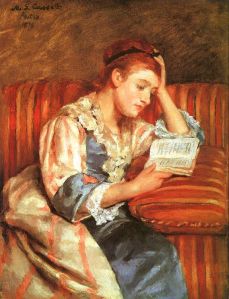 2025 was a less chaotic year for me—literally and psychologically—than 2024. I wish I could say that this meant I read more and better, but instead both my memory and my records show that it was a pretty uneven reading year, with a lot of slumps. The summer especially, which used to be a rich reading season for me, had almost no highlights: the best books I read in 2025 were at the very beginning and the very end of the year.
 Connie Willis’s
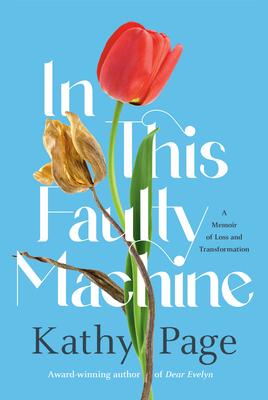
 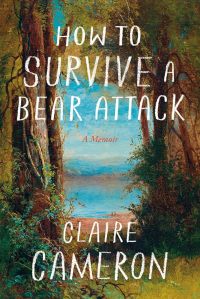 The best non-fiction I read was Claire Cameron’s memoir
 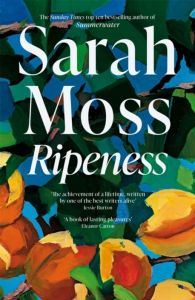 A near miss:
  And on that faintly elegiac note I will add that I reread
