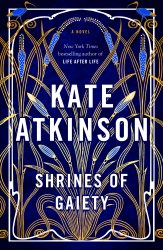
 October was a terrible reading month for me. I didn’t even start many books, much less finish them. A last minute push (and, I’ll admit, a bit of fed-up skimming) got me to the end of Kate Atkinson’s Shrines of Gaiety, which I had acquired precisely because I figured that, whatever gripes I have had in the past with her logic or narrative trickery, I could trust Atkinson to tell a story that would carry me along out of my slump. Unfortunately, that didn’t happen: Shrines just never clicked for me. Its overly elaborate plot is delivered piecemeal, with lots of chronological jumping around; although there are a lot of well-conceived characters, none of them came to life for me, at least not enough to provide any momentum; and the ending is beyond bad — the last several pages read as if Atkinson got tired of the whole project and just transcribed everything that was left in her notebooks. YMMV, of course: the novel has gotten a lot of glowing reviews, and many readers on Twitter replied to my grumpy report about it saying they’d enjoyed it just fine.
The only other (new) novel I finished in October was Flynn Berry’s Northern Spy. It’s a thriller, well paced and plotted and with a bit of intricate moral dancing around questions about how far it is right to go, for your family, for a cause, or for your conscience. I’m not rushing out to buy Berry’s other novels, but if I saw one at the library I’d definitely pick it up.
I’ve been reading steadily for my classes, of course. In Women and Detective Fiction we’ve finished Dorothy B. Hughes’s In A Lonely Place and now also P. D. James’s An Unsuitable Job for a Woman; tomorrow we have our first discussion of Sue Grafton’s A is for Alibi. Rereading Grafton today I appreciated the light-heartedness of it. I mean, obviously as it’s a murder mystery there’s a grim aspect to it, and at times it is very serious indeed, but Grafton has a sense of humor about the genre and is clearly having fun up-ending its tropes. My experience in previous years is that students find her revisions more dated than they do Sara Paretsky’s; there’s usually a certain impatience with Kinsey’s “I’m not a girly-girl” shtick. I admit, I relate to it, perhaps because my own early introduction to feminism was by way of Free to be You and Me and not being allowed to have Barbie dolls. I do think V. I. Warshawski is a more interesting character and Paretsky overall is more thoughtful about the politics of her novels. I also got pretty tired of Grafton’s series well before the end of the alphabet (she only got as far as Y). But A is for Alibi is brisk and smart and has plenty of unexpected twists, which I hope will help keep the students’ attention.
 In 19th-Century Fiction we have been working on Middlemarch for a couple of weeks. I wish I could say it is going well. I don’t think it’s going badly exactly, but honestly this term I don’t really know. Attendance is just appalling: most days, maybe 60% of the class shows up, which is unprecedented, in my fairly long experience. I don’t know what to make of this. I know it’s not personal, or at least I’m trying not to take it personally, but that doesn’t make it any less disheartening. The students who are present are pretty quiet; I think – I hope – they are engaged, but much of the time it’s hard to tell, and I worry that at this point I am mostly performing enthusiasm, not eliciting it. The ones who do speak up have good things to say, but I’m not used to having to work so hard to get anything out of the class, to get any energy back from them. I’m going to keep trying! The ones who are showing up deserve no less, and I remain hopeful that between us we can and will make the most of this opportunity to read this great novel together.
I was really looking forward to these classes on Middlemarch because I thought, or hoped, they would shore up my faltering faith in all the ways I have spent my “one wild and precious life.” Whatever else was going wrong in my life before all of this, I could count on my classroom hours to make me feel better, by taking me out of my own head for a while and also because of the joy of engaging with students about books in ways I really do value and cherish and believe in. I guess I shouldn’t be surprised that it isn’t so simple this term. The image I keep returning to lately is that it’s like I’m crossing a suspension bridge. It’s a bit unsteady underfoot, but as long as I look straight ahead it’s not too bad moving forward, just doing the next thing that’s in front of me, and the next, and the next. It’s when I look down and realize all over again what’s below it, or it’s shaken by a gust of wind (a memory, a place, a picture, or just a feeling) that the vertiginous sensations return — “O the mind, mind has mountains; cliffs of fall / Frightful, sheer, no-man-fathomed” — and I am overcome, unbalanced, beside myself, in spite of myself.



 Comparisons are foolish, I know, but often these days I recoil uncomfortably from cheerful exchanges among my many bookish ‘tweeps’ about what they’ve been reading because they seem to read so much and so enthusiastically—which is great, of course, but because I’m struggling to finish most of the books I pick up, the contrast can make me feel discouraged instead of interested and inspired. Social media has a way of making you feel inadequate or alienated, doesn’t it? And I say this as someone who has long championed Twitter (and would still do so, if challenged) on the grounds that it is very much what you make it. “My” Twitter is full of avid readers and I love that about it. It’s absolutely not their fault that lately it sometimes seems to hurt as much as it helps. I’m trying to think of it as aspirational: one day, I too will feel cheerfully bookish again!
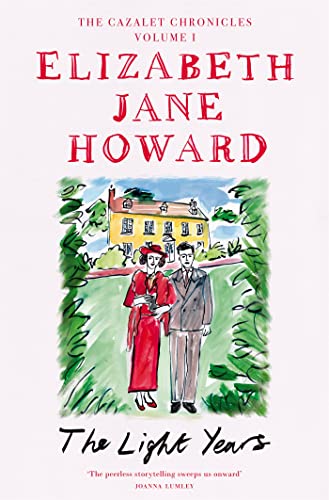 Earlier this month I read Elizabeth Jane Howard’s The Light Years, the first of her much-admired Cazalet Chronicles. I enjoyed it just fine but wasn’t swept up in it—or swept away by it! The aspect of it that surprised me the most was how much it read like a book written in the 1930s (or perhaps the 1950s) rather than in the 1990s: it felt very much of the time it depicts. As a result, in some ways it seemed like a missed opportunity, artistically speaking: it’s a smart, elegant, readable portrayal but it didn’t seem to have any layers of reflection, or to take advantage of being what it actually is, namely historical fiction. Maybe the idea was to give us the feeling of being transported back, rather than to encourage us to look back and consider gaps and differences. I already had a copy of the second book in the series, Marking Time, and I will probably read it eventually, but I’ve picked it up, read a few pages, and put it down again more than once: I just don’t feel compelled to persist. The last time I tried, I found myself thinking that (deliberately or not) it read like the novel I imagine Woolf was trying not to write when she wrote what ended up as The Years. The problem, she noted, was “how to give ordinary waking Arnold Bennett life the form of art.” Not (we might conclude, following her lead) by just recounting in meticulous detail everything that happens to a large number of people over a long period of time.
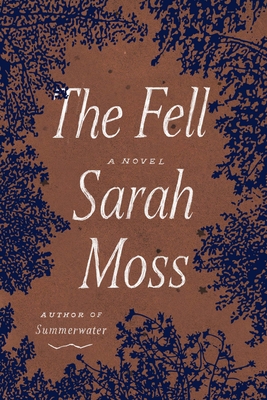 Also this month I finally got my hands on Sarah Moss’s The Fell. I’m a big admirer of Moss’s fiction (see
  My book club met in the middle of September to talk about Emily St. John Mandel’s
 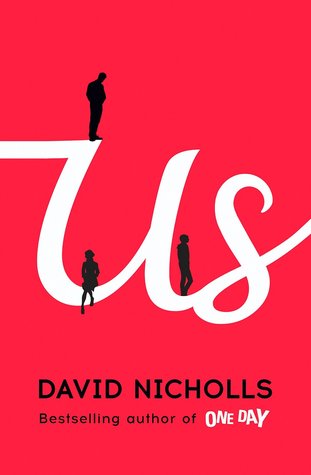 Then I read David Nicholls’s Us, which I happened to have recently downloaded, inspired by having enjoyed the TV adaptation starring Tom Hollander (which I thought was excellent). I wouldn’t say it’s a great novel, or even a particularly good one, at least in the prose: it’s a bit awkward and heavy-handed. I really empathized with its protagonist Douglas, though, and I appreciate that Nicholls refused the simplistic happy ending you might expect from a novel about a man hoping to save his marriage while going on a ‘grand tour’ with his wife and son.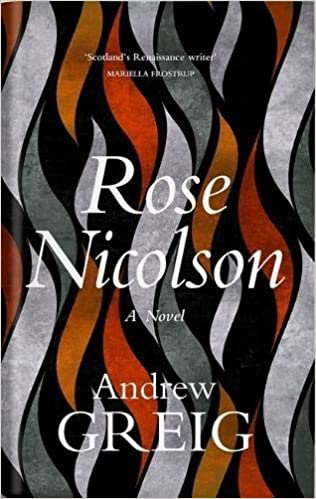
 It has been a somewhat chaotic time in my classes since I last posted—not in the classes themselves, really, which have gone on much as usual, when they have actually met. But there have been a couple of unanticipated disruptions to the term, as a result of which it feels as if we are struggling to build up any momentum.
 When I announced the schedule changes for the “day of mourning,” I commented “Let’s just hope we don’t also have a hurricane!” Well, what do you know: Hurricane Fiona headed straight for us this past weekend, and classes are cancelled again today, as crews clean up the debris and work on restoring power. The storm was not as severe in Halifax as in other parts of the region, where it did really
 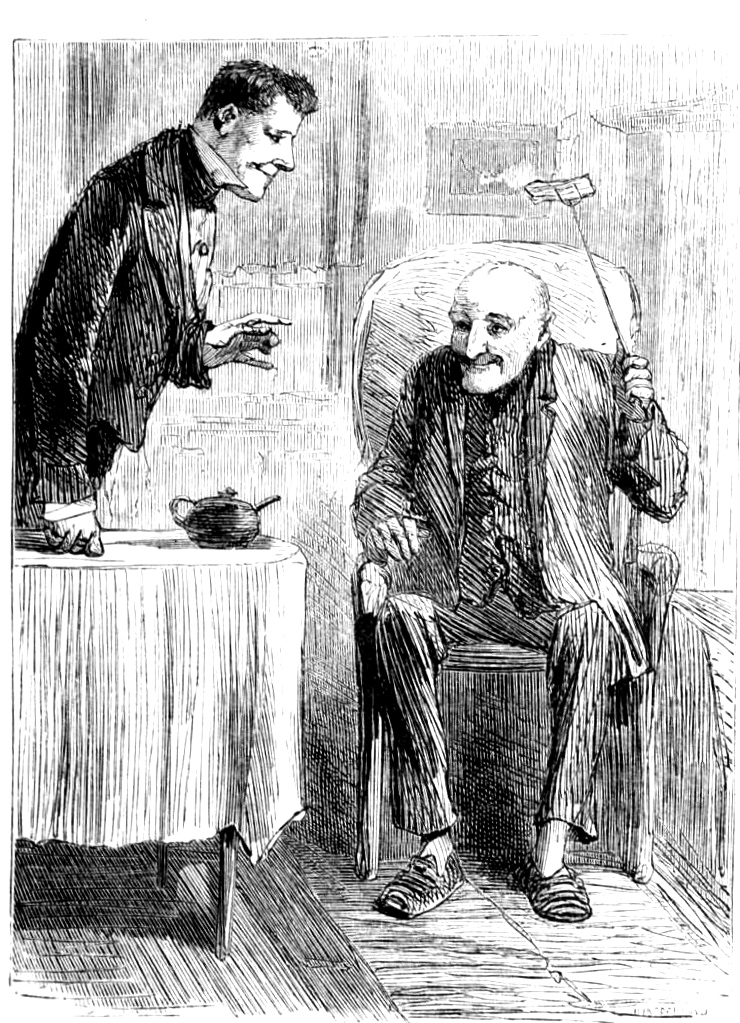 In between these disruptions, we have actually met a few times and I think it has gone basically fine. The energy seems a bit low to me in 19th-Century Fiction, although I blame it partly on our dreary windowless room, and it’s also possible that it seems that way to me because I can’t see students’ faces. I’ve been encouraging them to nod at me the way Wemmick nods at the Aged:
 We’ve finished with Agatha Christie already in Mystery & Detective Fiction. I used to allot two class hours to Miss Marple stories, but for all Christie’s significance to the genre, I honestly don’t find there’s all that much to say about them, so I don’t regret having trimmed away one of those hours this year. We had a good student presentation on her, which gave us a productive second round of discussion. On Friday we had our first hour on Nancy Drew; we’re losing an hour on her to Fiona but will get another chance on Wednesday, with another student presentation. I always enjoy these so much: the students are so smart and creative and engaged, and they come up with such good ideas for class activities. Overall the energy in this seminar started off pretty good and seems to be getting better: spirits were high on Friday, partly because Nancy always proves very provocative. She’s just so good, and so good at everything: it’s annoying, I agree!
 My classes have been meeting for a week now, and I said I was going to try to get back in the habit of reflecting on them, so here I am, although to be honest I find myself at something of a loss about what to say. Should I just focus on the classroom time, on what we’re reading and talking about, as if it’s just another year? Or should I try to explain how surreal it feels to be in the classroom, talking about our readings as if it’s just another year, and then, when the time is up, to be back in the strange disordered world of grief?
 In Women and Detective Fiction I also began with some broad overviews, of detective fiction as a genre and of some of the questions that organize the course and will frame our readings. For last class we read a handful of “classic” stories to serve as touchstones for the resisting or subversive versions to come: “The Purloined Letter,” “A Scandal in Bohemia,” and, as a sample of hard-boiled detection, Hammett’s “Death & Company,” which is one of his ‘Continental Op’ stories. These give us a good sense of the masculine milieu of so much classic detective fiction, of the habits and practices of their detectives, and of the reductive roles assigned to women, or assumed of the women, in them. Today, as a contrast, we discussed Baroness Orczy’s “The Woman in the Big Hat,” which is one of her stories about Lady Molly of Scotland Yard. It has a delightful “reveal”:
 We had already talked about Sherlock Holmes’s condescending remark, “You see, but you do not observe!” and now we could revisit it with observations about how gender affects what you see, or what you understand about what you see, and about kinds of expertise that are typically devalued because they are women’s and therefore considered trivial. This issue was also key to our other reading for today, Susan Glaspell’s “A Jury of Her Peers,” a wonderful story that highlights the way the law fails women, making justice something that can only be achieved by subverting it. We talked about the way Glaspell’s story, instead of offering up a big reveal at the end by the superior figure of the detective, instead allows the story to unfold gradually, the women’s dawning awareness drawing us along with them as our sympathies shift from the murdered man to the woman whose happiness he destroyed. Their solidarity grows partly in reaction to the men, who are lumbering around doing more typical (but, we easily see, entirely misguided) kinds of investigating. Every time they come in and make their jovially condescending remarks about “the ladies,” we too close ranks against them: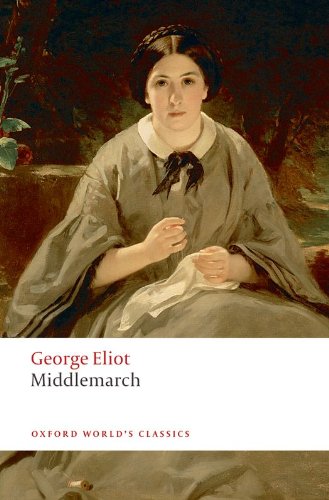

 Something else that’s different is how emotionally confusing and therefore exhausting I’m finding the present. The early days of grief are awful but absolute, almost simple, I realize now: there are no options, no expectations, for anything besides mourning. I have learned so much about grief since then, from experience but also from others, and from reading. One thing I’ve learned is that “it takes time” doesn’t mean that with time the grief lessens; it means something more like you get used to living with it, you learn to walk around with
  If my book club hadn’t settled on Sea of Tranquility for our next read, I don’t think I would have read it, not because I haven’t liked the other novels I’ve read by Emily St. John Mandel, because I’ve liked them just fine (
 There’s real cleverness to the novel’s time-travel plot (though I don’t think these can ever be completely convincing), and a poignancy to the human story threaded through it, and the ongoing theme of pandemics created both menace in the moment and resonance for our moment.
  My copy of Never Let Me Go is a 2006 edition, and it may well have been in 2006 that I read it for the first time. I’ve tried several times since then to reread it. The Remains of the Day is one of my personal top 10 novels: I consider it pretty much perfect. Many people I know admire Never Let Me Go even more, so it has always seemed that it would be worth going back to, both to experience it in that fuller way you usually can on a rereading and to see if I might like to assign it some day. And yet I have never read it again until now—at least, not all the way through. Why? Because every time I have tried, I have found it too dull, too slow, too (to put a more positive spin on it) subtle. Subtlety is one of Ishiguro’s great gifts, of course, but his characteristic understatement actually demands a lot of his readers en route to its rewards, and on every other attempt I just couldn’t keep it up.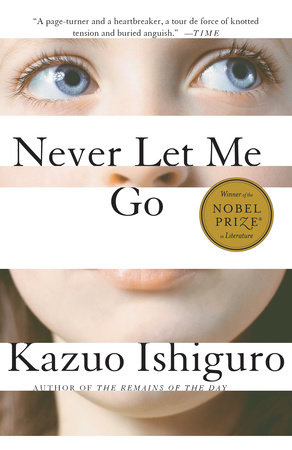
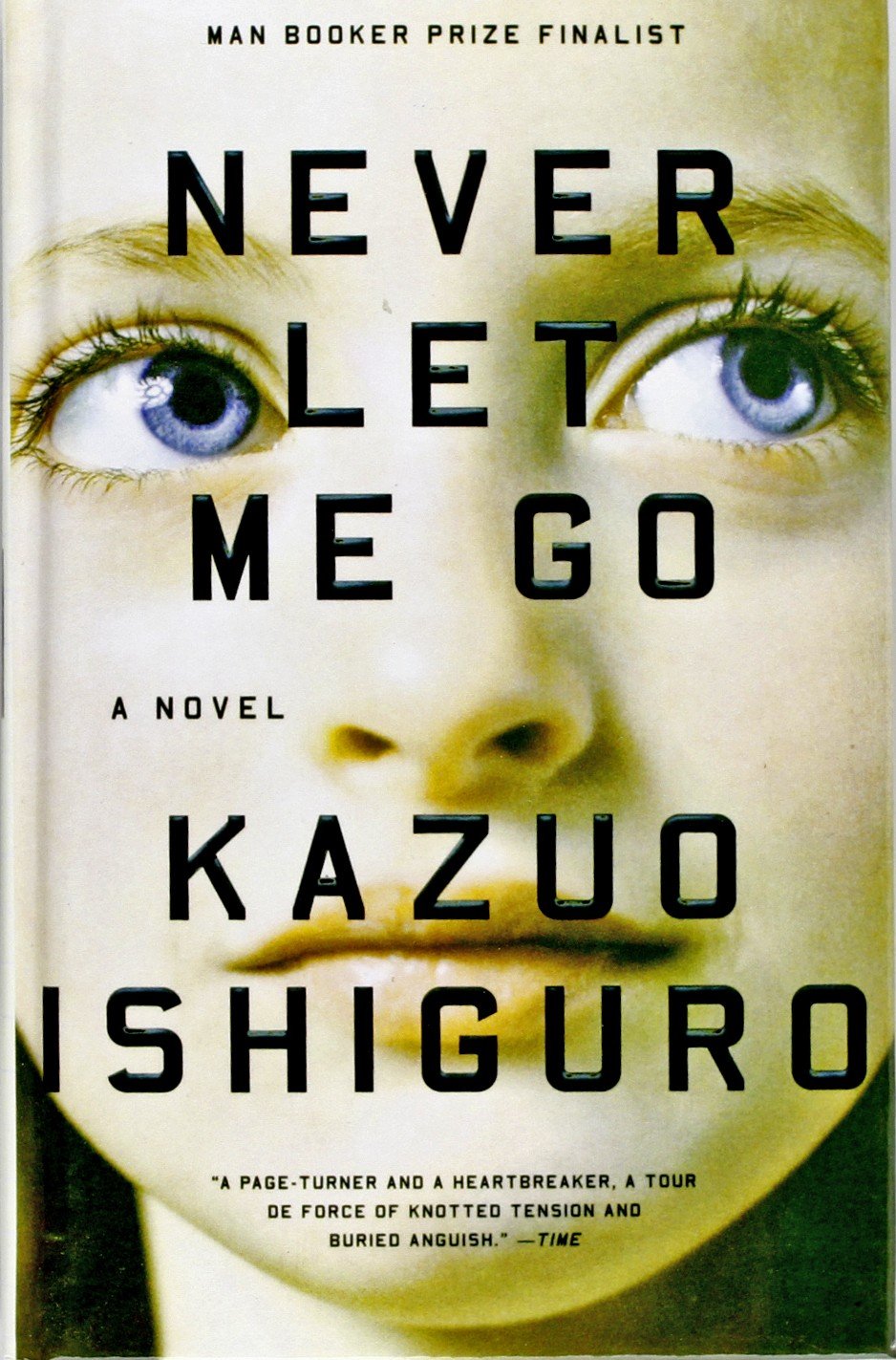 The novel’s thought experiment about cloning is chilling and provocative in the questions it raises about where scientific or medical “advances” might take us. I think it’s more powerful, though, as a commentary on meaning and value in our own lives, which also end in death sentences, if usually of a less calculated kind. Why would reading Daniel Deronda be pointless for Kathy and not for me? Why all these lessons, all these books and discussions? Why do we do all of this work? Some novels (I’m thinking of
 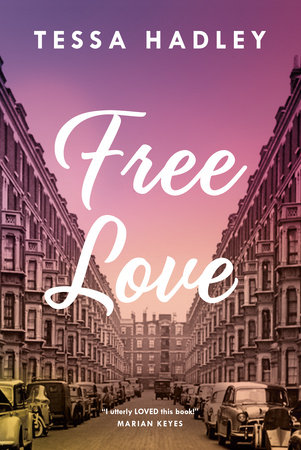 Phyllis felt after this meeting with Nicky that she had crossed a line, like being on board a ship where there were certain ceremonies for when you crossed the Equator. It wasn’t only that Nicky spoke as if they might go out together and she could meet his friends, gain entry to a whole new world of social relations. It was that she knew nothing about this world of his. Everything she’d ever known had been nothing: she might as well scrape away all the things she’d taken for granted all her life, to begin again. She seemed to watch herself undressing, in that room of Nicky’s with no accretions of furniture or domesticity, dropping the pieces of her clothing one by one onto the bare floorboards, leaving her old self behind, climbing into his bed, weightless and transparent as a naked soul in an old painting.
 The novel turns on a dramatic act of rebellion: suburban housewife Phyllis leaves her home, husband, and children to move in with her lover (who, spoiler alert, turns out—in what felt like a completely unnecessary plot wrinkle—to be her husband’s son by another woman). It’s a decision that should have felt weighty, dramatic, consequential, but it did not feel well motivated: it’s impulsive, and it’s only after the fact that Phyllis really begins to understand the social upheavals that she asserts interest in. If she has an epiphany, it’s an unconvincing one, and (maybe this is just my Victorian moralist showing up) yet Phyllis ups and walks away from people who love and need her, as if duty doesn’t mean anything in the face of desire. I found her both uninteresting and unsympathetic, a bad combination, and the novel just presents her, so I was never really sure whether I was supposed to feel differently.
 Novel Readings