Margarete has disappeared out of the Door.
I speed after her and find her heading along the side of the building. I must persuade her to desist. She is staring at something on the ground. The place where the rubbish is collected for the furnace. Here there are bags on the ground and several large carts which contain sheets for the laundry. I see now what has caught her magpie-like attention. A Matchbox on the ground which she wishes to give to me . . . I move closer to the sacks, look up at the Landry carts. See. See. A Thing sticking out. Nonono. I am mistaken. Not a child’s arm. Margarete is pushing the Matchbox at me. Small, grey, bent at the elbow, trapped under the lid of the cart . . .
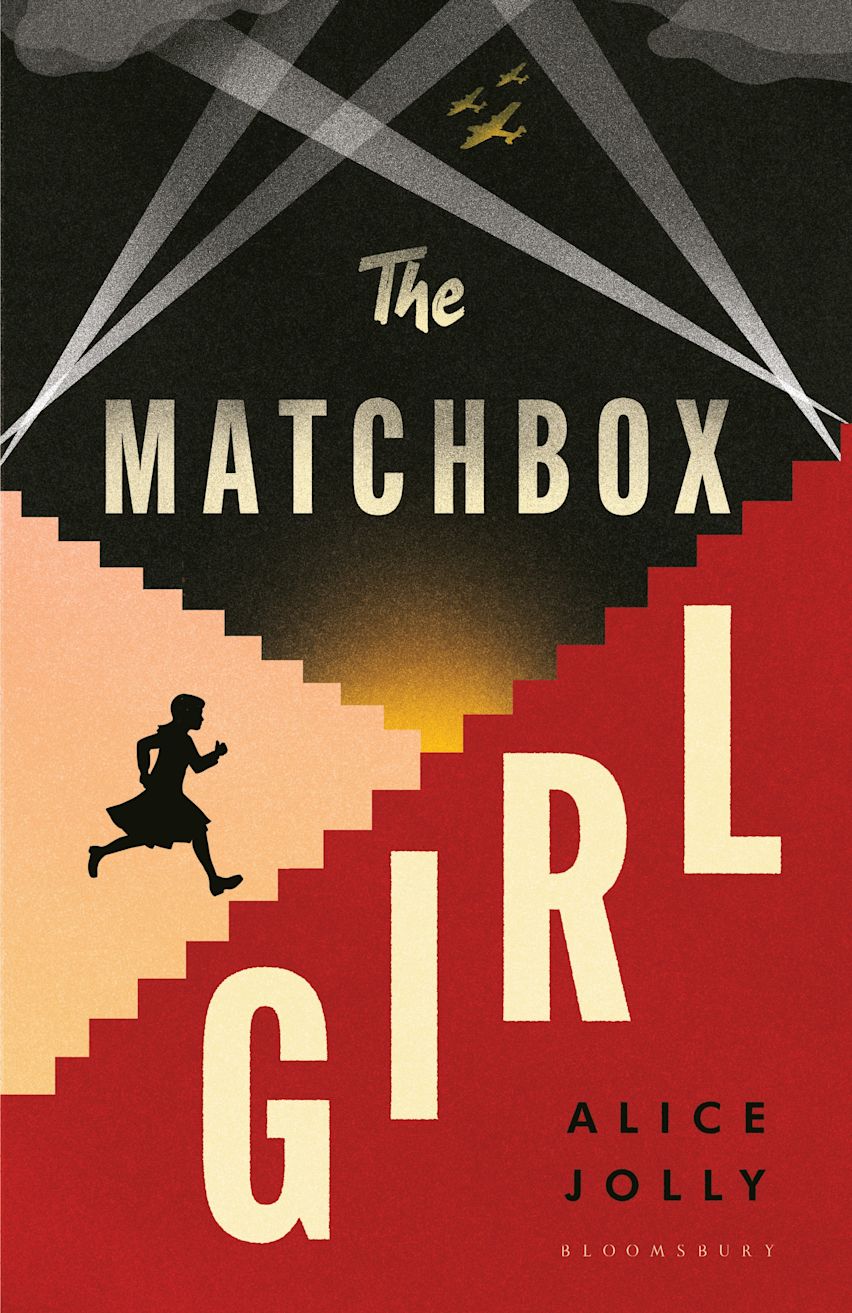
Alice Jolly’s The Matchbox Girl is a novel about Hans Asperger’s Vienna clinic and its clinicians’ resistance to but also complicity with the Nazi regime. It has in common with Sally Carson’s Crooked Cross that it is a novel that compellingly, chillingly, chronicles the insidious way in which ordinary life–and the desire to maintain it, and the difficulty in believing how completely it has in fact become unsustainable–shades into complicity, one small negotiation at a time. It has in common with Hans Fallada’s Every Man Dies Alone that it explores the possibilities of courage and defiance on a small scale against nearly overwhelming odds. Above all, on my reading anyway, it is a novel cautioning us against oversimplification, especially in our moral judgments. It is hard to be good at the best of times. It can be hard, at the worst of times, to know what the right thing really is to do. What if, for instance, you believe you can save the many by sacrificing the few? Such a calculation is appalling–but those who create the conditions in which you feel pressured to make it are surely the most at fault. Hindsight is inevitably clearer: understanding this is not excusing wrong choices so much as admitting we might have made them too.
The Matchbox Girl is also a novel about autism, including what became known as ‘Asperger’s Syndrome’ (though this is no longer a formal diagnosis). It is told in the voice of Adelheid, a smart, attentive, non-verbal girl with a passionate interest in matchboxes (collecting them, sorting them, dreaming up better ways to sort them) who becomes a patient at the paediatric clinic and eventually a worker there. That voice, as you can tell from the excerpt I chose for my epigraph, is conspicuously mannered and quirky, and at first I was not sure how well I would tolerate it for an entire novel. This quickly become a non-issue for me, especially as it became really interesting discerning through Adelheid’s narration the things she is observing but not really understanding–a gap that closes across the novel. One example: her grandmother offers her shoes that she knows belong to their upstairs neighbour, Frau Altmann, who has “vanished from the top floor”:
That lady has given me shoes before because I am the only Person with the same size feet. Always before they have been thoroughly worn, not smart and newly made like this fine pair. Oma and Frau Winkler would have taken the shoes themselves if they were the right size. They have already taken many things from that apartment, before it was sealed off.
Over the weeks that follow I also discern our Chef wearing Herr Altmann’s winter coat although it is much too small for him and creaks at the seams. Also, Oma with a new feathered hat and Frau Winkler with a shimmering fur coat. Yet still Oma complains about the disappointment of the shoes. Jews have such big feet . . .
The children in the clinic are vulnerable to a specific threat rooted in the Reich’s determination to “cleanse” and “purify” the population by removing those deemed “defective” (it is hard to even craft that repulsive sentence, even with scare quotes to insulate against it). As Jolly depicts them (and her research is extensive, though she acknowledges that these are controversial topics) most of the doctors at the clinic are well intentioned, looking out for the best interests of the children in their care while attempting new methods of education and treatment. Not everyone there is benign, though, and because their research is new and innovative, it is difficult for the ones who are to put up an authoritative and thus durable protective shield around the children. A key issue is whether the children’s behavioral problems–or just their different patterns of behaviour–are genetic, a question nobody can confidently answer and one which (we know much sooner than Adelheid) may determine if they live or die.
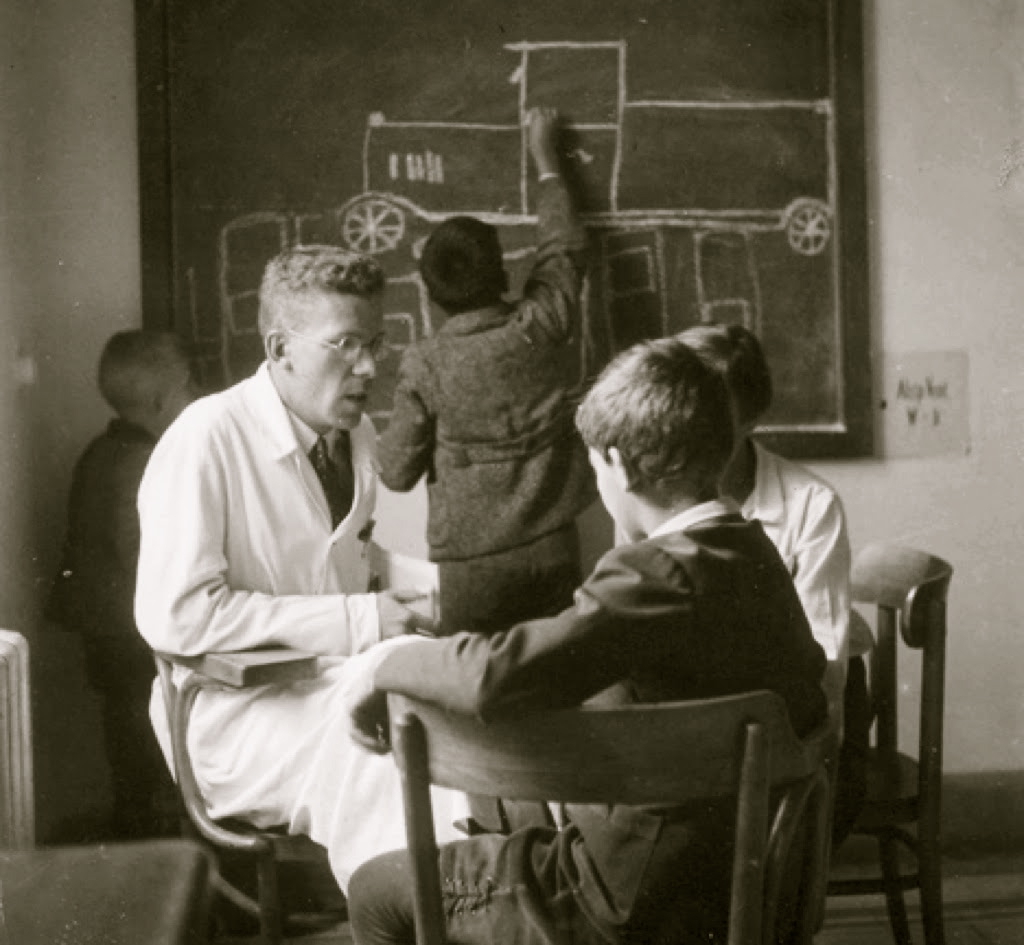
This historical drama is told, I thought, with remarkable nuance, its lurking (and sometimes all-too immediate) horrors filtered through Adelheid’s point of view, and her naïveté giving the novel space to really individualize the characters and bring out the chaos and poignancy of the clinic operations themselves: it’s not just about the Nazis. The novel’s other strand, told in third person, traces the history of autism as a concept and a diagnosis, initially by way of two Jewish clinicians who escape Vienna, taking their special expertise with them. At the heart of this story lie pressing questions about “normalcy” as a concept or a measure, about how (and why, or whether) to draw lines between idiosyncrasies and diagnostic conditions, about the risks of or reasons for pathologizing personality differences as symptoms. This story takes us from Vienna to Britain and America, from the 1930s well into the 20th century, from Hans Asperger to well-known figures in autism research and advocacy including Lorna Wing and Simon Baron-Cohen. Autism is a complex and still evolving area of study, and as Jolly’s book emphasizes, the widely varying interpretations of and approaches to the actual people involved have had significant consequences–those suffered by the victims of the Nazis at Am Spiegelgrund obviously the most horrific and heartbreaking. “The staff of the Children’s Hospital in Vienna had seen originality and spontaneity,” the narrator observes;
Kanner saw isolation and sameness. Vienna saw strands of both disability and genius in their patients’ family histories. America saw the Refrigerator Mother, an idea which caused thousands of Autistic Children to be taken from their families.
“You insist,” Adelheid says at the end of the book, “that the Man who hated labels must be neatly labelled. A brilliant Pioneer of Autism Research or a Murderer?” But she also acknowledges that complexity is a kind of evasion, or at least that it is not a sufficient excuse: “The Children of Am Spiegelgrund will never cease their screaming . . . No one has been Absolved, Redeemed, Healed.”
The Matchbox Girl won the Walter Scott Prize for historical fiction, which is what first brought it to my attention (I watch that prize more closely than the Booker, these days). I think it’s a worthy winner, not just because it evokes its more distant history so effectively and cleverly but because it pushes its questions forward to us. After all, every generation thinks it has got things figured out, but the Diagnostic and Statistical Manual of Mental Disorders, or DSM, is constantly being revised. Around 25 years ago, Owen was given a diagnosis of Asperger’s Syndrome; no such diagnosis exists today. A formal diagnosis is required to receive supports and services; but that formal diagnosis also shapes what supports and services are offered, with what attitudes and expectations. Professionals and non-professionals alike can, with the best intentions (or not), assume that labels tell you who someone is, what they are like, and what they need. This can be both exhausting and infuriating. What I appreciated most about The Matchbox Girl was its commitment to its characters’–and especially Adelheid’s–individuality. Jolly doesn’t characterize Adelheid’s strengths or abilities as silver linings or compensations to set against perceived deficiencies: she’s just herself, just Adelheid. Ultimately it’s that recognition of everyone as uniquely and irreplaceably themselves that makes each life precious and each loss tragic; that’s what we have to put up against the Nazi desire to sort people as Adelheid sorts her matchboxes but then to discard the ones that don’t fit their artificial categories.


I’m looking forward to reading this one:)
LikeLike