 March was a rough month. For one thing, I had more academic integrity hearings stemming from a single assignment than I’ve ever had in one term. It was an exceptionally disheartening experience, especially given the lengths I have gone to in my introductory class to reduce the risk for students of just trying to do the work for themselves: this is the class in which I’m using specifications grading, meaning there is really no risk involved. As I plaintively reminded the class as it became clear just how widespread the problem was, the class is designed to make it safe to be wrong, safe to be confused, safe to be learning. But if you don’t actually do your own writing, you strip the whole process of its meaning. Plus (as I pointed out to many students in the actual hearings), if your uncertainty leads you to copying other people’s writing, you will never build your own skills and your own confidence: you will never find out that you can in fact do the work, and get better at it.
I’ve written here before about plagiarism and my overall attitude remains the same. I’m just crushingly disappointed that things went so badly this term, despite my considerable efforts to educate and support students so that they would make better choices. It was incredibly demoralizing that so many students clearly saw the course as a means to an end, hoping to get the credit for it without engaging in the process. It has also been predictably destabilizing seeing or even just suspecting that students are using ChatGPT to do “their” work. (Literally the only good news about this is that the bots are pretty unreliable about any but the most widely familiar literary works, and even with them they can produce real howlers.) One consequence is that I am reconsidering specifications grading, even though I remain convinced that it is pedagogically sound and also ethically preferable to traditional approaches to writing assessment. At the very least, if I use it again next year, I’m going to have to rethink the kind and number of components I require: with as many moving parts as my current course design includes, it is just overwhelming trying to scrutinize submissions as closely as it turns out we need to. Next year the class will be in person rather than online, which may make a difference: for one thing, I can do some in-class writing that will both give me a baseline indication of how the students’ own voices sound and, maybe, give them the hands-on experience they need to believe they can actually do the work themselves. 
So that was a dreary part of the past month or so that took up an enormous amount of my time and energy. That’s one reason I didn’t get much good reading done: I was too tired and sad and distracted to concentrate. I did finish a few books, though, and a couple of them were excellent. An unexpected highlight was Stephen Marche’s On Writing and Failure, which I quoted from in my last post. Ruth Ozeki’s The Book of Form and Emptiness was not for me: it seemed to be aiming for some of the same effects as Anthony Doerr’s Cloud-Cuckoo Land, but I found Doerr’s novel much more engaging. Rumaan Alam’s Leave the World Behind was gripping and thought-provoking, if unpleasantly unsettling: I didn’t think much about its genre when I picked it up at the store, but it is as much horror as dystopian fiction. I appreciated the slow but steady increase in tension and the imaginative creepiness of details like the flamingos. I was disappointed in the ending, though. Like The Road, it never specifies its calamity, which frustrated me more in this case because it focuses so much more, at least initially, on the question of what happened: in The Road, we are always already in the aftermath, and it hardly matters any more how we got there. The author interview that follows Leave the World Behind clarifies that the novel’s open-endedness is deliberate, but given how strenuously Alam avoids telling us either what happened (the cause) or what happens after (the effects), I found the little proleptic teasers about the characters’ futures annoying. So, for me, it was good (I did appreciate reading a genuine page-turner, given my own general malaise) but not great.
 Easily the best novel I read in March was Claudia Piñeiro’s Elena Knows. This was recommended to me last year when I was (as I so often am) casting about for new ideas for my two mystery fiction courses. I started it then but had to abandon it, as a novel about suicide and a mother’s grief was not an experience I could bear. I kept it on my mental TBR, though, and I’m glad I tried again, because it really is exceptional: slight but fierce and complex, with its overlapping interests in disability, ageism, misogyny, and autonomy. I think it would be a really interesting book to read in my course on Women & Detective Fiction, even though in many ways it is not really a mystery. It is certainly about a crime – or, crimes, if you think socially and systemically – and there is an investigation, even if there isn’t a detective, or evidence, or any of the other conventional elements.
I also read Jo Baker’s The Midnight News and quite enjoyed it, but this one was for a review, so I will save more detailed comments for that purpose. I will say that I admire Baker’s versatility: like Sarah Moss, she clearly likes to try new things. There’s a snarky comment in Toby Litt’s A Writer’s Diary about Sarah Waters always writing the same book. I bristled, because Waters is one of my favorite novelists and that seems unfair and reductive! But there is a grain of truth in it: she is drawn to similar problems and scenarios in all of her books, and her recent novels do all have a fairly similar tone. I think that’s fine! She’s really good at what she does. But Longbourn and The Body Lies and A Country Road, A Tree are completely different books, as are Signs for Lost Children, Cold Earth, and Ghost Wall: I don’t think you would necessarily recognize them as being by the same authors. 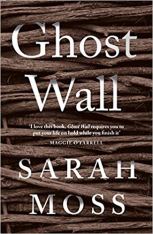
March was rough for me emotionally, and April has its challenges as well. There are some bright spots to look forward to, though, notably Maddie’s graduation recital. She began her music degree in 2019: it has been a strange and often very difficult four years of university for her, between COVID and online learning and the particularly disruptive effects of lockdowns for the performing arts. She has accomplished so much, in spite of all that and everything else. Her 3rd-year recital was a triumph, and it is an understatement to say that I am looking forward to this year’s longer program.
 Novel Readings
I agree with you about Ozeki’s Book of Form and Emptiness. Maddie has a beautiful voice!
LikeLike
I really wanted to like it! It had a charming quirkiness, but the charm wore off.
She does, doesn’t she? And it has matured even since then. She and her teachers also choose repertoire that lets her play some fun parts, which reflects her love of musical theater.
LikeLike
Chatbot and equivalents are no good for my Master of Wine students because these AIs do not provide specific and relevant real-world examples directly linked to the point being made in any single paragraph. One of the few (if any?) benefits of having to ‘hand-mark’ every single essay. I had a plagiarsm case a few years ago, where the candidate had simply lifted ‘its’ entire essay on vine nutrients from a Viticulture book I own. Silly error, because I even knew which book before looking for the specific chapter…
And there are some serious howlers from Chatbot related to Anthony Trollope’s novels, by the way. I thought it would be fun to ask?
I love detective fiction and mysteries, but not sure I could deal with Pineiro. Not into sadness, and definitely not into USA-style blood-and-gore. The ‘golden age’ of English detective fiction might be a source, but I’m supposing English country house murders won’t fit Halifax students?
On the other hand, Rohan, your musings are rather enjoyable. Thank you.
LikeLike
Halifax students can enjoy all kinds of books, but I have goals for my courses that narrow the parameters of these searches. I include one Agatha Christie in the survey class, but that’s enough of that period and style.
I’ll take “rather enjoyable”: thank you! 🙂
LikeLike
I find your comments very honest. I am so sorry plagiarism reared it’s ugly head. I do not know why students do not know you can spot it.
Your book review is interesting. I think I will get it. I had not heard of it before your post.
Thank you for your honest views.
LikeLiked by 1 person
Thanks for sharing your thoughts about students’ use of ChatGPT and other AI tools. Much like the students you describe, too many of my own students don’t seem to appreciate what Dr. Janet Emig termed “writing as a mode of learning.”
I’m retiring from higher ed later this month, and looking forward to focusing on my own writing and exploring new-to-me authors. Your mention of Claudia Piñeiro is one of those ; I’ll add “Elena Knows” to my TBR stack!
LikeLike
Best wishes for your retirement, Susan! I admit that the looming complications of teaching in a world with Chat GPT makes retirement look a lot more appealing. All I can do in the meantime is put my faith in the process: I will try everything I can think of to make actually doing the writing (and thus the thinking and learning) seem worth the effort – and also less risky than the alternative.
LikeLike