All those rotten branches, growing from the same black root. – Frannie Langton
There’s a lot going on in The Confessions of Frannie Langton. In it, Frannie Langton tells, in her own voice, the story of her life and how it has ended up where the novel begins: with her imprisoned in the Old Bailey, on trial for the murder of her employers George and Marguerite Benham. Born into slavery in Jamaica, Frannie works on the sugar plantation of John Langton, who is not just her owner but also, we learn without much surprise (though Frannie is shocked and horrified when she is told) her father. Langton’s passion is investigating the “science” of race. Frannie herself was an experiment, educated and trained on a whim of Langton and Benham to test the limits of her “mulatto” intelligence. She becomes Langton’s apprentice, and over the course of the novel we learn just what Langton had her doing in the old coach-house that served as his laboratory. “How guilt has run through me, all this time” says Frannie near the end,
keeping time with my blood. How, even now to think of it, to write of it, makes both leap in my chest. How sorry I am.
Her complicity in his horrors haunts her even though she understands that she was never really free to do otherwise: “That’s what slavery is,” as she later says; “their minds, our hands.” “They might see me as the savage,” she reflects, “but didn’t Benham and Langton pull me into their own dark corners? Wasn’t it them who tried to make an animal of me first?” When she reads Frankenstein, it is impossible not to make the obvious (and obviously intended) connection.
A lot intervenes, however, between her monstrous apprenticeship and her trial. After an upset on the plantation Langton moves to England, taking Frannie with him only to present her to Benham as a gift. Though as Benham’s servant she is in some sense now free, Frannie cannot imagine her way to real freedom: “I kept forgetting,” she explains, “that I was no longer owned.” And as she eventually finds out, a poor black woman on the streets of London in the 1820s is hardly liberated.
 Frannie’s early story has some elements of a slave narrative, though Frannie herself is somewhat disdainful of the form, “all sugared over with misery and despair”: “The anti-slavers are always asking me, what was done to you, Frances? How did you suffer?” She did suffer, and Collins does not spare the details, but the form Frannie wants for her story is the novel. “No one like me has ever written a novel in the history of the world,” she says, and the only hope she has as her end approaches is that her account of herself might “tempt a publisher.” All her life she loved only “all those books I read, and all the people who wrote them”:
Because life boils down to nothing, in spite of all the fuss, yet novels make it possible to believe it is something, after all.
Frankenstein isn’t the only literary touchstone in Collins’ narrative: pages of Candide are sewn into the skirts of the dress Frannie is wearing when she’s arrested; she cherishes Moll Flanders; she and her mistress, Marguerite Benham, both love Paradise Lost.
Frannie’s relationsip with Marguerite is at once the heart of her Confessions and, to me, the least interesting and convincing part of the novel. During her trial, Frannie insists over and over that what they had–that what she felt–was love: “I loved my mistress. I couldn’t have done what you say I’ve done because I loved her.” I think this part didn’t work well for me because Marguerite herself remains something of a cipher–defiantly unconventional but not clearly principled, elusive, slightly fey, and frequently manipulative, especially of Frannie. She treats her unhappy combination of boredom and oppression with laudanum, an addiction she eventually shares with Frannie. Haunting her, and her marriage, is her past relationship with Olaudah “Laddie” Cambridge, once a house servant, now a celebrity; one of the twists of the plot makes this connection a key point in Frannie’s final confession. Another plot twist puts Frannie out on the streets only to end up working in a “spanking parlour”:
Men like him were the ones who wanted scarring, always happier to let themselves loose under the whip hand of a black. That put the white girls’ noses out of joint. But we’d already been in the bondage business, no matter that it had been at the other end.
A lot going on, as I said–too much, I finally thought, and neither the “love” story putatively at the center or the framing murder plot is quite enough to hold it all together. Many of the novel’s individual components are very powerful, and the hideous moral contamination of slavery runs through all of the novel’s violence. Frannie’s love of fiction makes it seem as if she (and thus perhaps Collins as well) believes in the power of an individual narrative to counter the dehumanization so grotesquely literalized in Langton’s “research.” But this premise doesn’t really help me make sense of Marguerite’s role or some of the other particulars of this novel. To me The Confessions of Frannie Langton ultimately seemed miscellaneous, albeit in an ambitious way: it tries to include too much, to be too many things at once–slave narrative, Newgate novel, romance, murder mystery–and the result is not quite formally or aesthetically or thematically unified. There’s that famous line, though, about reach exceeding grasp: by and large, I’d rather read an ambitious but imperfect book than a perfectly but narrowly limned one.


 Naturally, my mixed and sometimes vexed response to Tenth of December got me thinking about what contemporary short fiction I have responded to more readily and positively. Because I don’t read a lot of short stories, I really don’t have a lot of other examples to draw on. I was very impressed with Adam Johnson’s

 This is the model of Dolly: “Charm, Jane, charm!” Jane, or the novel, acknowledges that Dolly’s way of life has been discredited by feminism, but the idea sometimes seems to be that those “older simpler longings” are natural, essential, defining, not just of Dolly but of what women need and want. “I now understand,” Jane explains, reflecting on her own reactions to Dolly’s choices,
 It has not felt like a very productive week, though it is hard for me to be sure right now as I am still in the
 My other reading has also felt relatively unproductive, though I suppose productivity is not really an appropriate measure for it (though I have long struggled with how or whether to make distinctions between
 This is how things go for Ettie and Iza once settled in Budapest as well. Iza does what she thinks is best, and Ettie’s attempts to participate are either thwarted or criticized. Ettie’s ways are not Iza’s; she does not belong in the modern world of the flat, the city, the trams, the markets, the technology. Her cooking, her shopping, her cleaning–none of it is right. She tries to make a friend and brings home the wrong sort of person. Eventually she realizes that she is an inconvenience, a burden, on both Iza and her housekeeper Teréz: “Teréz would get on better without her. Iza could never relax when she was around.” One of the strangest and saddest signs of Ettie’s growing isolation is the relationship she develops with Iza’s refrigerator, at once a symbol of the alien modern world and a stand-in for the old life from which she has been so completely cut off:
 Though it incorporates several people’s perspectives and stories besides Ettie’s, including Iza’s, Iza’s Ballad felt to me like Ettie’s book, which is why the novel’s title puzzled me at first. It’s Lidia, who looks at Iza and sees her clearly “for what she was,” who articulates why it is really Iza who is central, Iza whose “self-discipline” is also “a hardness of heart that dares not indulge itself by grieving over dead virgins.” Iza’s perfection is the result of a lack of imagination and empathy, a resolute clarity of purpose that obscures rather than illuminates. The things that made Ettie’s life vivid and meaningful to her are invisible or irrelevant to Iza. “The poor woman believes,” Lidia reflects,
 I don’t typically post about books I didn’t finish, and I don’t want to make a big contrarian to-do about my having given up on Conversations With Friends, but it is what I’ve been reading lately and I have given up on it, so I might as well at least comment briefly on it here.
 The start of a new month seems like a good time to take stock, once again, of how my plans and projects for this sabbatical term are progressing. May is actually the point in a winter term sabbatical when being on leave stops meaning that much, as the regular teaching term is now over for everyone anyway. May is often very busy with meetings, though (including our department’s traditional ‘May Marks Meeting’), so my time is still more my own than it would be otherwise.
 I have until the fall to settle on the book lists for my winter term courses, which are British Literature After 1800 and 19th-century British Fiction (the Austen to Dickens variation). I’ve spent quite a bit of time examining anthologies for the survey course and concluded that the most reasonable way to go is a slim custom text assembled from Broadview’s wide-ranging options. (Who is actually assigning these behemoth volumes? And how do they assign enough in one term to make it worth their students’ expense?) The down side is that for copyright reasons I can’t include much material past Joyce, but I think I can fill in a small number of contemporary poems and a story or two by other means. I have been playing around with a lot of different options for longer texts that I think would work well in combination, because the assignment sequence I am planning to use includes a final essay for which students would compare our last book with either of our previous ones. (One reason for this is that it means one way or another everyone has a stake in our final reading.) Right now the front runners are Great Expectations, Three Guineas, and The Remains of the Day: I can imagine a lot of interesting ways to connect Remains with the other two, including first-person narration, questions of class, dignity, money, and morality, and connections between personal and public politics. The 19th-century fiction book list is still uncertain: one of the big questions for me is whether Wuthering Heights will make it in or whether I’ll lose my nerve and fall back on old favorites.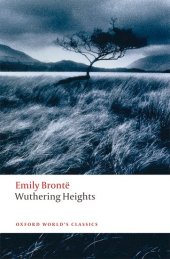
 Having said that, the more I read about Holtby and Woolf, and especially the harder I try to understand what’s going on with The Years, the more I’ve been identifying continuities between this material and longstanding interests of mine, including genre (
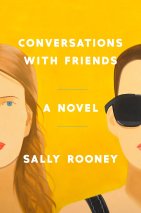 So that’s where I am now, at the two-thirds point in this six-month sabbatical. I have checked off a number of the concrete tasks I set myself, and I have made progress on the more amorphous but no less important task of refreshing my own intellectual engagement. There have been other things going on too, of course (including Maddie’s performance in Jesus Christ Superstar and, exciting in a different way, her acceptance of a place in Dalhousie’s Fountain School of Performing Arts for next year), and as always I’ve been doing other reading, most recently
  Novel Readings