 It happens so gradually at first: there’s a slight chill in the evening air, the sky is a little darker on my morning run, the leaves look just a little less green. Then a faint hum begins on campus: more people are in their offices, the sidewalks are a bit more crowded, signs of arrivals and departures — abandoned sofas and mattresses, extra trash bags, boxes for recycling — appear in the neighborhood. It’s at once depressing and enlivening: summer is over, and soon we’ll be back at school.
It’s odd to reflect that since I started kindergarten in 1972 there has been only one September that wasn’t a back-to-school season for me: that was the fall of 1985, during my “gap year,” when I was working full time in preparation for the 6-month trip to Europe I took with my sister. ‘Imagine,’ I sometimes say to my students now, ‘that this isn’t just a phase of your life, but your whole life.’ The routine has its comforts, especially because the more years you go through it, the more you’re aware of its cyclical rhythms: yes, it’s about to get very busy, and stay that way for four months, but then it will quiet down before starting up again, and so on, over and over. But it also starts to remind you, a bit painfully, of the passage of time, especially as the gap widens between you and the endlessly young students who surround you. (This is a phenomenon I call “reverse Peter Pan syndrome.”)
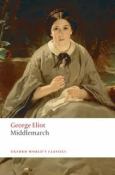 So, what will I be busy with this term? I have just two classes, both ones I usually enjoy teaching very much and both of which I haven’t taught since 2011-12. The first is English 3000, Close Reading, which is part of our suite of required classes for majors and honours students. They don’t have to take English 3000 in particular: they have to chose one of our ‘theory and methods’ courses, which also include The History of Criticism and Contemporary Critical Theory. The first time I taught English 3000, in 2003, that wasn’t the case: then, it was one of two classes we’d introduced that were to be core requirements for every student in our program (the other was a survey, Literary Landmarks). Then, it had an enrollment of 120; this year, it is capped at 60 and right now has 42 students in it — so, quite a different undertaking. Still, my approach to the class was shaped by thinking about it as something that should be as useful and as engaging as possible to every English student — to every reader, in fact. It is actually the most conceptually interesting class I’ve ever developed (for me, at least) because it isn’t organized around content, the way my classes usually are, but around a method, a habit, a practice.
 In addition to working on how to read attentively (including learning precise vocabulary for explaining what we read), I try to focus our attention on why it matters to read carefully, not just for class but for life. In working out my approach, I drew especially on Wayne Booth’s The Company We Keep and on the ways he links aesthetics to ethics. My hope is that this connection motivates students to see our work, not as an intellectual parlor game, but as something with vital implications for living an examined life. We’ll be reading a selection of poetry and short fiction, and then really digging into Middlemarch and The Remains of the Day. The juxtaposition of these two very different novels has proven extremely fruitful in past iterations of the course. There is always some grumbling about Middlemarch (“it’s TOO LONG to read in a one-term course,” a student once exclaimed in her course evaluation — which amuses me because of course I always teach it in one-term courses, which are all we offer now, and usually with four other fairly long books). My justification is that if we’re going to pay really close attention to a novel, it should be a novel that I am confident will reward that attention. And we take five whole weeks to read it, so we don’t exactly rush through it.
 My other fall class is an upper-level seminar, The Victorian ‘Woman Question.’ It has 23 students in it, which is actually pretty big for a seminar — it’s going to be a tight fit, for instance, getting in all the student presentations. But if past years are any indication, the discussion should be fairly robust. I’ve done this class with an exclusive focus on fiction, but this year I’m doing my more standard mix of genres. We’ll start with some non-fiction, including Mill’s The Subjection of Women and essays by Frances Power Cobbe and Margaret Oliphant (included in Susan Hamilton’s excellent Broadview anthology Criminals, Idiots, Women, and Minors), then we’ll read The Tenant of Wildfell Hall, The Mill on the Floss, Aurora Leigh (all of it, hooray!), The Odd Women, and an array of other short poems and stories. From the outset I emphasize that there wasn’t just one ‘question’ about women’s roles, and there certainly, too, wasn’t just one ‘answer.’ I provide some historical context at the outset, including information about women’s legal, economic, political, and educational realities, and then we approach each of our readings to see what terms it sets for the debate: how it poses and answers the ‘woman question.’
Because these are relatively small, relatively advanced classes that I’ve taught before, this isn’t going to be a particularly heavy teaching term for me. I realize how lucky I am in that respect. That said, we used to teach 5 courses a year instead of the current 4, and with all the retirements in the department (and no replacements), we may have to reconsider. I wasn’t in favor of the change when it happened — of course I appreciate the term being less hectic, with more time for other work, but I miss the greater variety we offered as well as the smaller classes, and I worry that we aren’t serving our students as well as we could. I expect, at the very least, that we’re going to have to have some hard conversations about curriculum and priorities this fall: you just can’t do the same things with a department of 14 that you can with one of 22. It’s good in some ways to reconsider curriculum, of course (though we’ve been doing it endlessly, really — I recently recycled a three-inch thick folder of old discussion papers dating back to 1995) but it would be nice to focus on pedagogical principles more and crisis management less.
 I had hoped that my promotion case would be settled before I went back to teaching. Last term was quite difficult for me, as I was often distracted and distressed by the way things were unfolding. I did find that classroom time helped a lot, though: not only did it force me out of my own head but it reminded me that I do like my work and that I am good at (at least some parts of) it. I’m sure the same will be true this term. The harder part is dealing with colleagues whose decisions or comments seemed to me unfair or inaccurate: the whole “it’s not personal” line only works when you’re the one saying it, and even then it’s usually just an attempt to deflect your own guilt. Well, I’m pretty sure I can manage polite now, so that’s progress. I hope that the process won’t take much longer, though according to the regulations it could conceivably be another four months before I know how the story ends — yikes. Uncertainty does not bring out the best in me (as my family could certainly confirm).
However things turn out institutionally, I have had a summer of reading and writing that was, by my own standards, very productive. More about that in my next post! And it’s really not quite fall yet. I plan to wander through the Public Gardens today, for example, and enjoy the dahlias. Their brilliant colors will inoculate me against despair at the thought that with fall on its way, winter is, inevitably, not that far behind.

 But to me that same art sometimes felt just a bit too conspicuous: I often thought about how well-crafted the novel was, structurally as well as at the sentence level. Is that even a fair thing to say, I wonder? That a a book is too clearly well-written, that a writer’s sentences are a little too good? Here’s the novel’s opening line, for example: “On the morning after the Feds burned down her house and took her father, Havaa woke from dreams of sea anemones.” I bet you didn’t see those sea anemones coming! That surprise is excellent: right away, I’m intrigued, and it turns out, too, that sea anemones aren’t an incidental choice. Here’s another sentence from quite a bit further along, though: “The silver Makarov pistol was all Ramzan thought about for the two weeks preceding Dokka’s disappearance, in which he failed to produce a single bowel movement.” Surprise again! And maybe now you see what I mean. This is an effect Marra likes. He is good at producing it, but it risks being gimmicky, and these lines, to me, smack of the journalistic imperative to have a good “lede.” There’s something a bit self-conscious about it: there’s a bit of self-display.
 Al Aswany avoids a simplistic “us vs. them” account: some of his English characters are intensely sympathetic to and involved in the nationalist movement, and some of the Egyptian staff at the Automobile Club collude in their own subjugation, partly through need and fear, but also partly through habits ingrained through a long cultural history of deference to authority. The cruelties of the Egyptian characters to each other is often more overt than the evils of colonialism, but it’s also always clear that the systemic injustice of occupation undermines all efforts for progress and moral improvement. Though the novel is pointedly political, it manages never to be didactic: instead, Al Aswany’s quietly persistent differentiation of his cast of characters just keeps undermining the insulting abstractions on which people’s prejudices depend.
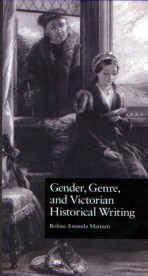 I mentioned in my last post that I had recently read a new academic book that I ultimately decided not to review, partly because I didn’t want to scapegoat the author for my alienation from the genre it belongs to. I’m still not going to name it (and that’s my own book pictured at left, just so there’s no confusion), not just because I’ve made that ungenerous mistake before but because I have had the same question about a lot of academic books lately. This is just the most recent one to leave me wondering: what is this book worth?
 If there were such an expectation and people routinely met it or else paid a professional price,
  It has been a while since I’ve posted, and also a while since I posted a reading roundup! The two things are related: because I haven’t been posting often, it might seem as if I haven’t been reading much, but I have — it’s just that much of my recent reading has been for reviews, which means it feels redundant to post about it, or else it has been light reading I don’t have much to say about. Or, in a couple of cases, it has been books that deserve more to say than I’ve got in me, or that I hoped to have a lot to say about but that came up short. These are the rare converging conditions that are just right for a roundup post!
 My light reading has included some good contemporary romances: Ruthie Knox’s Truly, which I really enjoyed, and two of Molly O’Keefe’s ‘Boys of Bishop’ novels — Between the Sheets and Never Been Kissed. O’Keefe’s are just a tiny bit too angst-ridden to become real favorites of mine: I like my romance with a bit more comedy and a lot less suffering. But both of these authors write well and create convincing characters, and Truly had some really excellent “neepery” about urban bee-keeping. I’ve started several historical romances but tired of them all before the half-way point — including Julia Quinn’s Because of Miss Bridgerton and a forthcoming Mary Balogh, Someone to Love. Not too long ago I read Sarah MacLean’s The Rogue Not Taken, and I did really like that; I think it’s just that for me right now, I’ve had enough of that particular flavor and none of the ones I tried seemed novel enough. I also just finished Sue Grafton’s X, which some of you may have seen me griping about on Twitter. When I say “finished” I mean that once I realized it wasn’t going to pick up, I skipped along hastily until I finally reached its big climactic scene, about 5 pages before the last of its nearly 500. Grafton assembles her pieces competently, and Kinsey’s still a pretty good character, but that book was way too long to be so completely lacking in interest or suspense.
 A book that deserves better than I can give it is
 Of course, I’m not sure I would like that much solitude in practice (any more than Sarton’s friend
 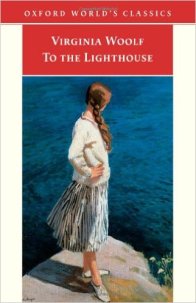 I’m reading To the Lighthouse for the first time. I know, I know. I also know that I should love it, because it is beautiful and moving and brilliant and original — and I sort of do, so far, except when I don’t. I am not a particularly good reader of Woolf’s fiction: it was only a few years ago that I finally read
  “Time passes.” It’s such a neutral-sounding phrase, almost like a stage direction, one that requires all the director’s ingenuity to show us its truth without taking us through the whole chronology. It’s an obvious truth, one we’re all perfectly well aware of, but we feel it deeply only during what George Eliot calls “one of those rare moments of experience when we feel the truth of a commonplace,”
 You see, I’ve been working on these off and on since 1993. I was newly married then and still not quite accustomed to the amount of golf my husband likes to watch on TV every weekend. Since it was hard to get away from the TV in our small apartment, and it didn’t seem very friendly (or very practical) to absent myself from home altogether, I decided to take up some hobbies that would keep my hands busy and give me a sense of accomplishment while I watched golf with him. A long-time reader of Tudor fiction, I was also working on a dissertation about Victorian historical writing, including Agnes Strickland’s Lives of the Queens of England— one way or another, Henry VIII and his wives had been in my life a long time. My thesis also included a chapter on the symbolic significance of needlework in Victorian historiography! So I was pretty excited when I chanced on a pattern in New Stitches magazine for Katherine Howard (wife #5, beheaded, in case you can’t keep them all straight). and even more excited when I realized it was part of a series and I could order the back issues, which I did. Over the next few years I completed four of the queens (Katherine Howard, Anne of Cleves, Katherine of Aragon, and Anne Boleyn). Just two wives were left, plus Henry himself.
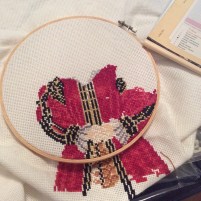 What inspired me to take her out? Mostly that I’ve been experimenting with

 Novel Readings