It’s time again to look back over my year in books and blogging. It was a good reading year overall, I think, with a number of real stand-outs and hardly any duds. Interestingly, it doesn’t look as if my sabbatical led to a great deal more reading than usual — for which I blame our mind-numbing, soul-destroying winter and our kitchen renovation, which (in their different ways) ate up a lot of whatever energy I had left after putting in my time on my research and writing projects. But reading “about as much as usual” isn’t too shabby, especially when so much of it is so good.
 Book of the Year
I already identified Nicola Griffith’s Hild as my best reading experience of 2015 in our “Year in Reading” feature at Open Letters Monthly; I wrote about it at more length here. What lingers with me the most about this extraordinary novel is not its historical world-building (though given that I compared Griffith’s achievement in this respect to Dorothy Dunnett’s, you know how impressed I was!) but Hild herself: her characterization struck me as profoundly feminist, though nothing about her or her novel could ever be pointed to as didactic or even overtly political.
Other recent fiction I’m especially glad to have read
I read two other excellent novels featuring memorably complex, questing female protagonists — novels that were otherwise very different in both voice and context: Rabih Alameddine’s An Unnecessary Woman, and Miral al-Tahawy’s Brooklyn Heights. Much as I liked An Unnecessary Woman, it’s the quieter, but also more quietly moving, Brooklyn Heights that I find I still think about: it is particularly evocative about the wintry bleakness of loneliness, and about the ways exploring physical space can also be a way of exploring and maybe even expressing who we are.
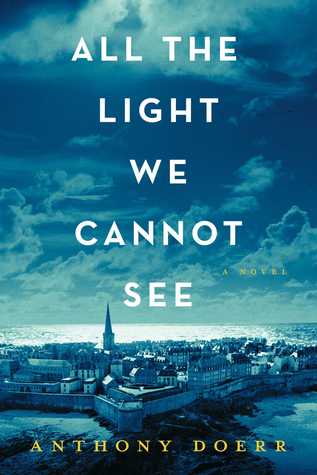 Like many other readers (though certainly not all), I loved Anthony Doerr’s elegant, fairy-tale-like World War II novel All the Light We Cannot See. And, a bit to my own surprise, I really liked Emily St. John Mandel’s Station Eleven, another critical favorite. I found the melodramatic conclusion somewhat over-plotted, but among all the new books I read this year it’s the one I keep thinking about teaching: I think it might go over very well in an intro class, perhaps juxtaposed with The Road. Students would find it engaging, and it would give us plenty to think and talk about.
“Enjoy” isn’t quite the right word for the experience of reading Adam Johnson’s Fortune Smiles, but I thought The Orphan Master’s Son was so extraordinary that I was eager to try it, and I’m glad I did: the stories in the collection are strange and bleak and funny and full of surprises — all without being flashy or overtly experimental.
Not strictly speaking “recent” but out recently in new editions are the two novels I read by Barbara Comyns: The Vet’s Daughter, and Our Spoons Came From Woolworths. There’s something a bit off about both of them, but in a good way: I always enjoy puzzling over fiction that doesn’t fit any of my own preconceived notions, and I’m looking forward to reading her equally odd-looking Who Was Changed and Who Was Dead.
Critical darlings that disappointed
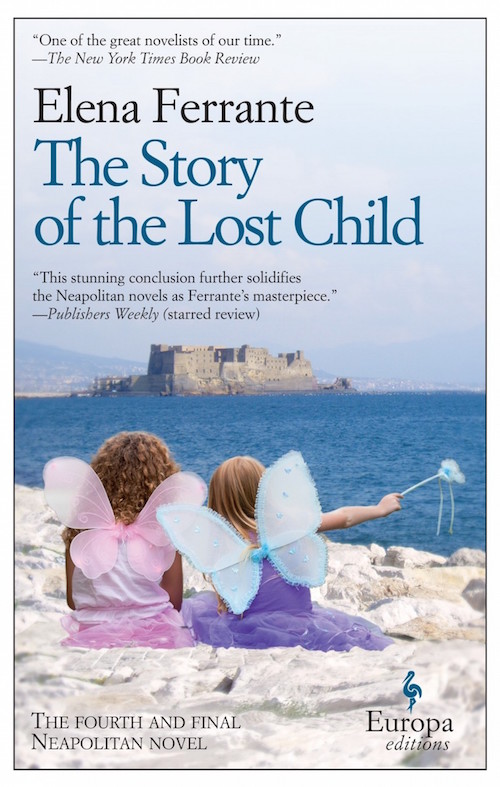 Donna Tartt’s The Goldfinch is definitely in this category: it left me thoroughly underwhelmed. I was moderately more whelmed with the final volume in Elena Ferrante’s Neapolitan novels — but I never caught “Ferrante Fever,” and frankly, by the time I’d finished with The Story of the Lost Child, I had had quite enough of the whole phenomenon, which I have long suspected is as much about what (a certain population of) readers and critics are looking for from women writers as it does with the books themselves. (All reading, of course, is a complex interplay of text and context, including the reader’s personal complexes and desires, but sometimes things seem to tip particularly sharply in one direction or the other.) I was unmoved by Andre Alexis’s Giller Prize winner Fifteen Dogs, and I abhorred The Girl on the Train, which I wrote about for OLM’s always- entertaining “bestsellers” feature.
Classics and old favorites I happily revisited
The Victorian novel I had the most fun rereading this year was Elizabeth Gaskell’s Wives and Daughters, which has more artful restraint but also more breadth than North and South (which is the novel of hers I know and like the best). I also really enjoyed rereading George Eliot’s “Janet’s Repentance,” which contributed a lot to my thinking about her treatment of religion and religious characters.
Some of the most fun I had blogging all year was with my two posts on Busman’s Honeymoon, one laying out the reasons I have always loved it, the other laying out all the reasons to be wary of it. It’s so important, I think, to acknowledge that these two kinds of responses can co-exist, that we can learn to critique without having to discard. Head and heart, as Sayers might say, must work together. Sometimes, of course, our perception of a book’s flaws may become so acute that our love cannot survive (I think that has happened to me with Gone with the Wind) — but I think it would be worse if we allowed our love to blind us to a work’s problems, or to drive us to deny them.
Another old favorite I greatly enjoyed both rereading and writing about was Margaret Campbell Barnes’s My Lady of Cleves – this is not historical fiction the way Hilary Mantel achieves it (or Nicola Griffith or Dorothy Dunnett either) but personal drama lovingly furnished with tapestries and eel pies.
Novel kinds of reading
 I made my first self-conscious foray into graphic fiction this year, reading both Maus and Persepolis, and also Scott McCloud’s Understanding Comics — which taught me a lot about how to read this kind of book better. I don’t feel I quite “got” it, but it felt like progress to see what “it” might be like if I did. And I started listening to more books, which I enjoyed when I could find the right match between book, narrator, and opportunity.
Mysteries
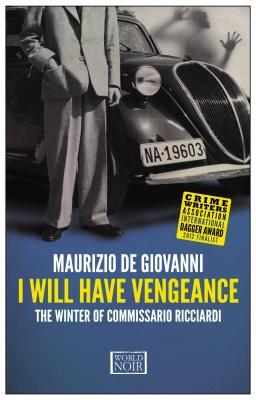
This year I tried (again) and failed (again) to fall in love with Louise Penny’s Inspector Gamache series. It makes me feel like such a bad Canadian that I can’t get past her stilted writing! But I’m going to stop trying, because I read enough series as it is, and I started at least three this year that I’d like to continue with: Maurizio de Giovanni’s Commissario Ricciardi series, Arnaldur Indridason’s outstanding Inspector Erlendur novels, and Steve Burrows’s birding mysteries.
Romances
 Although I didn’t usually blog about them, I read — or at least started — quite a lot of romance novels this year. (As I have mentioned before, I tend to feel less committed to finishing these if I don’t like them right away, partly because I get most of them from the library, but also because I don’t have high expectations that persistence will pay off, as romances tend to be more consistent than transformative — which is a good thing if you like what you’re getting, of course). Among them, only new one really stood out, and that was Julie James’s Suddenly One Summer. I have quite enjoyed most of James’s other novels, particularly Practice Makes Perfect (which would make an excellent Hollywood rom-com, if anyone’s interested in doing the screenplay): her characters are smart, her dialogue is snappy, and things get pretty sexy with her heroes and heroines (who are always, annoyingly, extraordinarily good-looking). I’ve heard her books described as “brittle,” though, and I can see why; also, some of them tend towards “romantic suspense,” and I don’t particularly love “woman in jeopardy” plots. I liked Suddenly One Summer a lot, though. It’s quieter than her other ones, and rather than turning on fast plotting and sparks flying, it is about two people patiently building trust and finding love. The heroine is a divorce lawyer who suffers from debilitating anxiety attacks; she is always at work splitting families up, but bringing a family together for once helps her find new courage herself. For me, this one’s a keeper!
Memorable non-fiction
 Two works of non-fiction that I read this year resonated powerfully with me for personal reasons: Atul Gawande’s Being Mortal (which is the present we should all probably have given someone we love this Christmas, but also probably shouldn’t, because it’s not very comfortable reading) and Emily White’s Lonely. Somewhat less anxiety-inducing, often sad, sometimes funny, and always thought-provoking was Kerry Clare’s wonderful collection The ‘M’ Word, which explores many facets of motherhood, most of them quite unlike the more sentimental cliches our culture surrounds us with.
Unfinished business
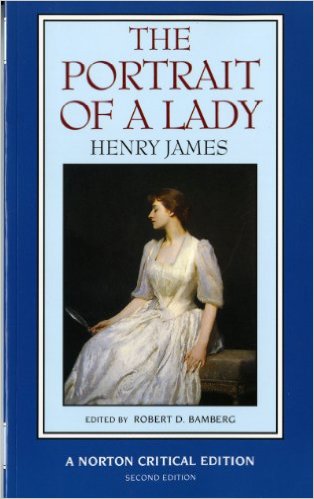
I’m still working my way through The Portrait of a Lady, which is not a book I can concentrate on easily with the hum of family activity in the background. The two posts I’ve written on it so far do show that I’m making progress, though, not just on moving through the pages but on coming to terms with James’s style, which initially irritated me but now (mostly) just interests me.
The inevitable meta-blogging
My interest in blogging about blogging has gone down over time, but I did pause to reflect on how things were looking for “intelligent bloggy bookchat by scholars,” as John Holbo once optimistically championed, and then to add some afterthoughts based on my own further reflections and the responses I got.
Blogging my teaching
I kept up my series ‘This Week In My Classes,” which now (after so many years in which I often teach the same classes, albeit in different variations) has become less a chronicle of what we read or talked about and more an occasion to reflect on broader issues about pedagogy, such as what it’s like to be a beginner or how, as teachers, we can learn to let go. I still find this exercise useful, and I’m always gratified when other people tell me that they appreciate it too. I’m reasonably certain that there is no one right way to do any of the things that professors do in or out of the classroom: this is at once the best and the worst thing about this part of our job! It’s impossible to be complacent: we can only get more confident about trying things and seeing how they go, knowing that we can always tweak them next time.
Appearing elsewhere
 Most of my published writing appeared, as usual, here and at Open Letters Monthly — where, in addition to the pieces already mentioned, I reviewed Kate Atkinson’s very good but also very annoying A God in Ruins, Diana Souhami’s 100% annoying Gwendolen, and Elizabeth Gilbert’s initially empowering but ultimately (you guessed it) profoundly annoying Big Magic. But an essay I wrote on faith and fellowship in Middlemarch appeared in Berfrois, and my review of Samantha Walton’s Guilty But Insane appeared in the TLS: these are both publications I was very happy about.
Books I’m especially looking forward to reading in 2016
So many! But near the top of the pile is Emma (not just because everyone’s reading it for its 200th birthday, but partly because all the interesting things they are saying about it are inspiring), along with Edith Wharton’s The House of Mirth. My Christmas books include Gillian Rose’s Love’s Work, Jane Smiley’s Some Luck, and Lauren Groff’s Fates and Furies, all very tempting. I’ve got Alaa Al Aswany’s The Automobile Club of Egypt waiting as well, and somehow I’m certain more titles will accumulate as the year goes on.
Thank you to everyone who read and commented at Novel Readings this year!

 I’m always relieved at the end of the term, because the last phase is always quite stressful. But I’m also always aware that it’s really only the end of a term — another one immediately looms, and another, and another! Every limit is, indeed, a beginning as well as an ending, and so this in-between time inevitably prompts reflections. What went well — and what could I do better next time? What fell flat — and what might, nonetheless, be worth trying again? From class policies to book lists, from the layout of the syllabus to the assessment of final exams, teaching is always a work in progress, isn’t it?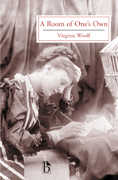
 I enjoyed a lot about my graduate seminar on George Eliot, but it was a source of some pedagogical frustration for me. I felt all term that I was talking too much, for instance. But also I felt somewhat confused about the aims of the seminar now that we’ve all openly admitted that
  My other course is yet another incarnation of “The 19th-Century Novel from Austen to Dickens,” for which as usual I have mixed up the reading list: instead of Persuasion, I’ve switched in Pride and Prejudice (which I haven’t done in 5 years); instead of Waverley, I’m bringing back
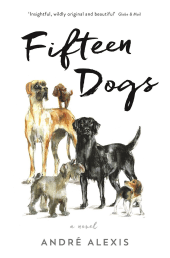 But it turned out that although I am the only person in my book club who doesn’t own (and love) dogs, most of the others also didn’t like the book much. One was offended by it because she loves dogs and thought the book showed Alexis doesn’t actually like them: his version of them is negatively selective, uncharitable, she proposed. The nobility of the dog who waits years for his owner to come back struck a chord with some of the others (though why this dog, in spite of his grasp of human language and motives, never figures out that she has died did bother us). We all agreed with the one who cried that the last dog’s death was very pathetic — but she recently lost her own dog, so she thought she might have also been emotionally vulnerable. I was the only one who had gotten both distracted and annoyed by the weirdly specific allusions to Victorian novels (if you were going to train your preternaturally talented dog to recite just one 19th-century novel, would you choose Vanity Fair? and what is it exactly that makes Mansfield Park the pooch’s preferred Austen?). In general, the complaint was simply that it wasn’t very engaging, though as is often the case, as we talked we found it getting more interesting, at least theoretically: why does the acquisition of language so immediately cause such a deep rift? what is it about poets that makes them both outcasts and – or so Alexis proposes – the only ones likely to find happiness? We had a little fun going through the poems, too, looking for the hidden dog names that we’d missed the first time.


 Years ago, when our children were very little, we decided we were not going to lie to them about the existence of Santa Claus. Though as I recall we did debate it a little, in the end it was not a difficult decision, and it is not one we have ever regretted. As far as possible, we always try to be honest with our children and didn’t like the idea of one day disillusioning them–not just about Santa, but about us (“Yes, Mommy and Daddy lied to you repeatedly, because we thought it was cute!”). Of course we understand that people who pretend Santa Claus is real do so in the cheerful spirit of fun, fantasy, and fairy tales, and overall it’s probably a harmless kind of thing, but we also have a general aversion to unreality when it comes to explaining how things work in the world. No astrology, no alchemy, no holistic medicine or faith healing, no supernatural beings, no Santa Claus.
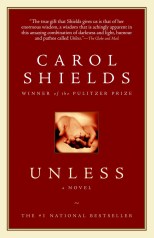 In a way, this post is also about “this week in my classes,” as it is prompted by the serendipitous convergence of my current reading around questions we’ve been discussing since we started working on Carol Shields’ Unless in my section of Intro to Lit. In our first session on the novel, I give some introductory remarks about Shields — a life and times overview, and then some suggestions about themes that interested her, especially in relation to Unless. One of the things I pointed out is that she also wrote a biography of Jane Austen; in an interview, Shields said “Jane Austen is important to me because she demonstrates how large narratives can occupy small spaces.” We come to Shields right after working through Woolf’s A Room of One’s Own, so I also bring up Woolf’s pointed remark: “This is an important book, the critic assumes, because it deals with war. This is an insignificant book because it deals with the feelings of women in a drawing room.” Both Shields and Woolf are thinking about the relationship between scale and significance, and both of them are drawing our attention to the ways assumptions about what matters — in literature, particularly, since that’s their primary context — have historically been gendered.
 Reta’s redrafting is disrupted by her editor, an officious American (of course! Unless is a Canadian novel, after all) named Arthur Springer who has even bigger plans for Thyme in Bloom, which (significantly) he proposes she retitle simply Bloom. His idea is that Alicia should fade into the background while Roman emerges as the “moral center” of the novel. This, he insists, is necessary for the novel to graduate from “popular fiction” to “quality fiction.” He also proposes that Reta retreat behind her initials: she will become R. R. Summers (“Winters” is her husband’s surname). This way her new (“quality”) book can’t possibly be associated with her, or with her earlier (“popular”) novel.
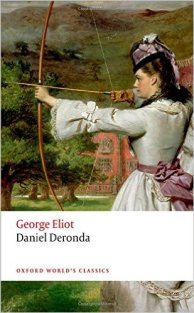 One of them is Daniel Deronda, which I’ve just finished reading with my graduate students. This novel is famously bifurcated between Gwendolen’s story (a highly personal, small-scale drama) — and Daniel’s (which starts out on a similarly domestic scale but opens out into a potentially epic, world-historical story). Is Gwendolen condemned to insignificance when she is left behind to suffer at home while Daniel goes off to (perhaps) found a nation? The literal scale of Eliot’s treatment of Gwendolen is not belittling: she gets at least half the huge novel to herself, after all. Perhaps this novel insists, formally, on an equivalence between two kinds of significance, one of which occupies a small space. Or perhaps what’s significant is Gwendolen’s discovery of her own insignificance. “Could there be a slenderer, more insignificant thread in human history,” asks the narrator,
 Neither of these novels, however, whatever their differences, feels in any way light, despite the intimacy of their core casts of characters. It’s the treatment, not the subject, that gives literary significance, isn’t it? Austen’s novels don’t feel trite even though viewed narrowly they are “just” about a handful of “ladies and gentlemen, in their elegant but confined houses” (in Charlotte Bronte’s words) — because her love stories are also stories about values and class structures and social changes with far-reaching effects. When Isabel Archer accepts Gilbert Osmond’s proposal, it feels large because James has imbued Isabel’s choices with philosophical consequence: her decision isn’t just to marry or not to marry, but about how to use her freedom, and about what to value and how to value herself. These are personal questions but also abstract ones, and so the small space of her individual life occupies a large narrative (by which I don’t mean, though I could, just a long book).
 I have been thinking that this constellation of questions (not really any answers) is relevant to the discussions about why, say, Jonathan Franzen’s novels about family and private life get treated as more significant than some other books that are about similar topics. Gender may well be part of the explanation, but it would be disingenuous to pretend we don’t know that some books by both men and women simply do more with their material than others, and that that scale — the scale of meaning, of treatment — is ultimately where literary significance lies. But this post has gone on long enough without really arriving anywhere in particular, so that’s probably as good a place to stop as any.
 Novel Readings