Teaching Art: “Let me describe it to you”

I mentioned a couple of posts ago that we’ve been watching one of The Learning Company’s ‘Great Courses,’ The History of European Art. In the comments thread, I noted that the lecturer’s favorite move is to “describe” an artwork to us. At first glance (so to speak!) that seems an odd strategy: we’re looking right at the art, after all. There are many things we can’t do (interrupt him with questions chief among them) but we can see what’s right in front of our own eyes.

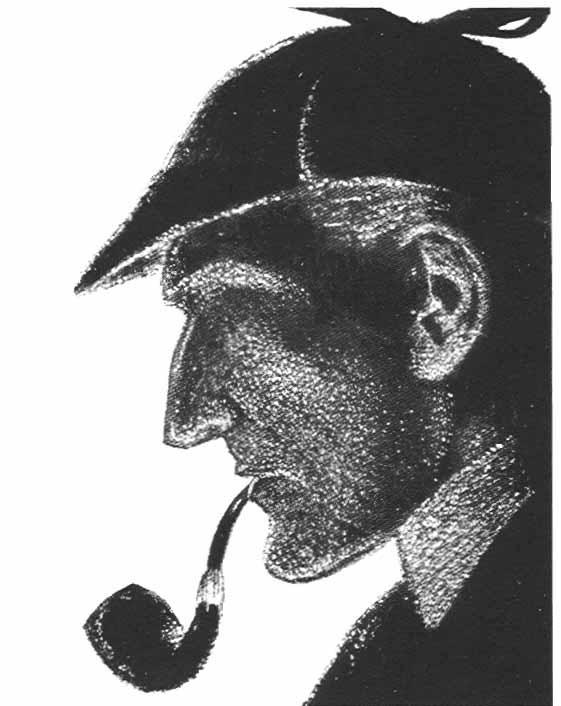
holmes

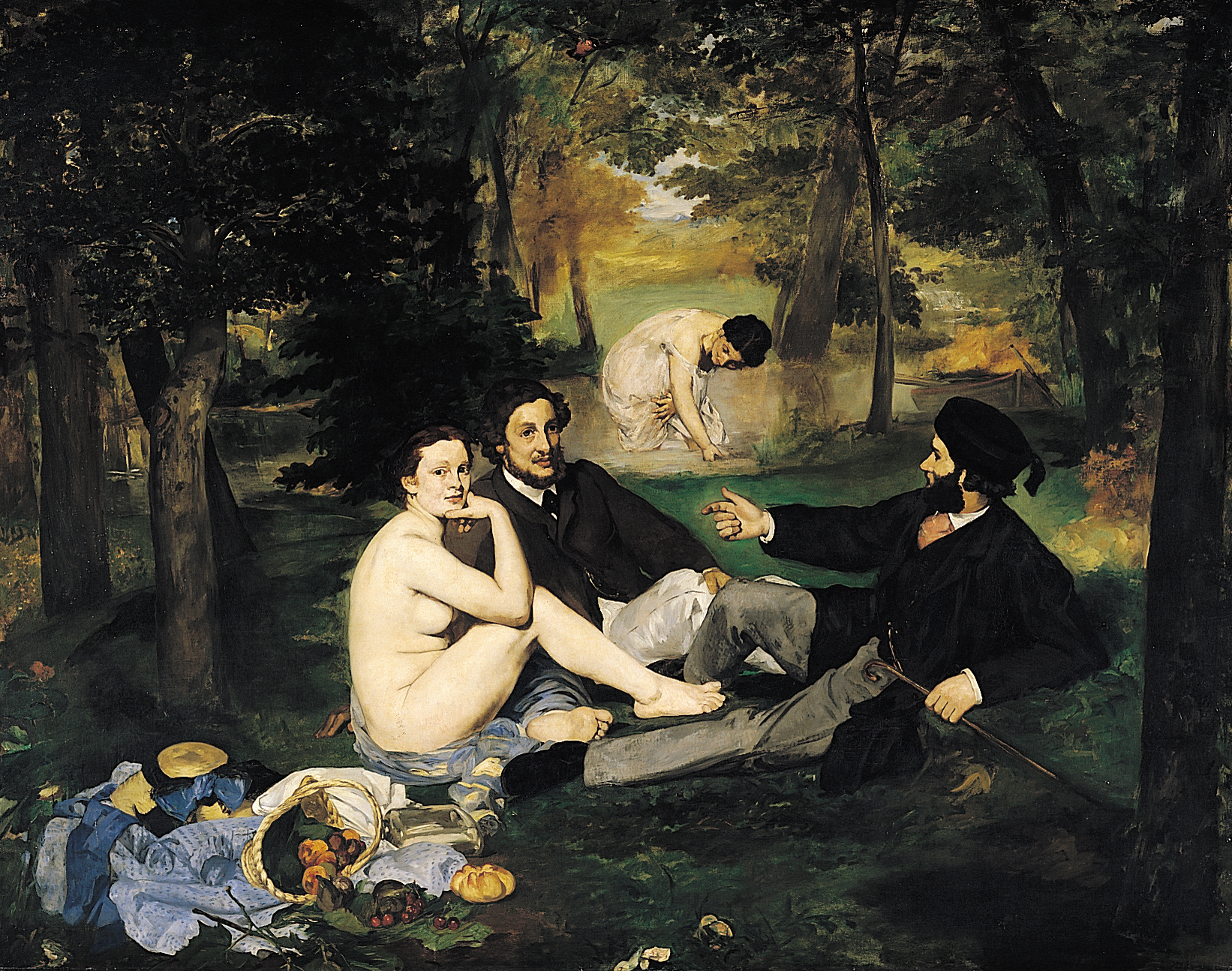
Or can we? That, of course, is the trick, the gimmick, the magic, even, of the process. We see it, but, as Sherlock Holmes so often says to poor Watson, “You see, but you do not observe.” The untrained eye does not really know what it’s looking at. Professor Kloss may begin by stating what seems self-evident (“there’s a woman in the center of the painting,” “the man on the left side is wearing a wonderful blue robe”) but this is only a preliminary stock-taking, prior to pointing out what requires more expertise to really see: who the woman is, perhaps, and how this version of her differs from other ones; how the blue robe makes other blue bits stand out and maybe form a design across the canvas; why that particular shade of blue is rare in frescoes; how the artist’s brush strokes create a light effect on the woman’s body; what the striking whiteness of her skin suggests about not just the design but the larger meaning of the painting. Even the stock-taking is sometimes a good prompt: perhaps I wasn’t looking at the man on the left at first, because my eye was more immediately drawn to something else.

It’s not a perfect process, especially pedagogically. Not only does Professor Kloss often not describe something we’re curious about, but he never invites us to look first and see what we notice. Realizing this is salutary, as I’ve been thinking that his method is close to one kind of thing I do all the time in my classes: focus on a scene or a passage and try to bring out what’s interesting about it. There too we typically start with a description: “what’s going on here?” Then we move to the more open-ended process of noticing: “what’s interesting about it?” Early in a course, I am likely to do sample analyses, to model what we’re trying to do. Throughout, I also provide relevant contexts, including historical, biographical, literary, or theoretical. But as we go along, the burden of noticing shifts more and more to my students: knowing what they’re looking at — being able to “describe” it with expertise — could be considered our ultimate “course objective.” When I lecture, but also when we discuss and analyze and debate in class, what we’re doing is accumulating the knowledge and skills to make their descriptions more than just statements of the obvious — in my classes, which are fiction-intensive, the crucial distinction is to make them more than just plot summary.

Watching Professor Kloss describe sculptures, lithographs, wood cuts, paintings, frescoes and everything else makes me very aware of how little I have in my own head that helps me with his task: he knows all kinds of things that I don’t, and as a result he sees all kinds of things that I wouldn’t. Sometimes I’d swear he sees things that aren’t there — and now I wonder how often my own students feel the same way. I’m also very aware of how passive it makes me knowing he’s going to do all of his own noticing, and how little room the video lecture format leaves for me to have any ideas of my own. Well, I could have speculative ideas: heck, I can pause the video and say anything I want! But what I really want is to test my tentative observations against his expertise. I feel confident in my own taste (many times I have thought, as he rhapsodized about whatever’s on his current slide, “I hate that!” or “That’s beautiful!”), but I know that visceral reaction is irrelevant to the important process of really seeing and understanding what I’m seeing. That lack of interaction with an informed point of view is the biggest obstacle to my becoming anything of an expert myself.

Édouard_Manet_-_Le_Déjeuner_sur_l'herbe

Of course, I’m never going to become an expert art historian, but my job is all about developing expertise in my students. Stocking their heads full of information is one thing, but it’s not the only thing, and it’s not the most important thing. In some ways, it’s also something they can do on their own, if they’re motivated, though as I’ve written about before, it’s easy to overestimate the ease and efficiency of finding good information, much less knowing how to make it useful. Watching Professor Kloss describe great works of art is very interesting, but it’s also very passive. It reinforces for me the pedagogical necessity of going back and forth. Sure, let me describe it to you — but now, tell me what you see. Then we’ll talk about it.

One question I would definitely ask Professor Kloss, if only I could: we’ve reached Monet and so far pretty much the only women in the series have been Madonnas, Magdalenes, saints, or nudes. In the history of European art to 1860, there’s not one woman artist worth including?

Middlemarch for Book Clubs: Preview #1 – Choosing an Edition

I’ve been working industriously on my Middlemarch for Book Clubs website. I hope to have a “beta” version of the whole site ready to make public by the end of June, but I thought it would be helpful for me to get some feedback on a couple of pages sooner rather than later. One reason is that I’m especially concerned about finding the right tone (not too didactic, but clear and practical; enthusiastic but not gushing), as well as the right balance between too much and not enough information. But also — and this is particularly important for a page like this one on choosing an edition — I can’t be sure if I’m providing the right information. I’d be glad to know if you think I’m on the right track, or, if not, what changes or corrections or additions you’d suggest.

Middlemarch for Book Clubs: Choosing an Edition

GENERAL CONSIDERATIONS

The first thing to consider is whether you want everyone in your group to use the same edition of Middlemarch. Even if you think that this would be a good thing, it may prove impractical, as people may already own copies, or may prefer one version over another for their own reasons. My classroom experience (as well as experience in my own book club) has taught me that it can be frustrating trying to talk about a long book when people quite literally can’t get on the same page. This is one reason to encourage people to use some system of navigational aids, like post-it notes! However, because Middlemarch is divided into Books and then into chapters, it’s not that hard to find common reference points.

The next question is whether you want to use a ‘popular’ or a scholarly edition. With a novel like Middlemarch, I think it’s a good idea to have a reliable, well-edited text with thorough annotations–not because you must consult them, but because you may want to. Scholarly editions not only include thoughtful introductions and explanatory footnotes (helpful for everything from literary allusions to historical contexts) but also point out changes made to the novel over its publishing history. One of the most interesting of these in Middlemarch is a tweak to its Finale that might spark some debate among the members of your book club, especially if you’ve talked along the way about how far Dorothea is responsible for her own bad choices.

RECOMMENDED EDITIONS OF MIDDLEMARCH

Oxford

Oxford World’s Classics: This is the edition I usually assign in my classes. It’s readily available, Felicia Bonaparte’s introduction is illuminating, the notes are good but not overwhelming, and the layout is readable and leaves enough room for annotations. In the current printing, there are two paragraphs out of order: bonus points for the person in your group who spots them! (I’ve notified the press and subsequent printings may be corrected.)


penguinPenguin Classics
: This is another fine, reliable edition, with a good introduction by Rosemary Ashton; it has the benefit of also being available as an e-book, which may be an advantage if some of your members use e-readers.


nortonNorton Critical Edition:
This edition is the most scholarly of the options, in that it conveniently packages a scrupulous edition of the novel with a selection of critical essays about it. If that’s the kind of thing your book club likes, this is the edition for you. If you doubt you’ll want to read the criticism, however, I recommend an edition with larger type!


broadviewBroadview Press Edition:
This handsome edition of Middlemarch is supplemented by contemporary reviews and documents (rather than the mostly 20th-century critical materials included in the Norton). It is annotated in great detail, with special attention paid to the role of the visual arts in the novel; it is the only one of these editions that includes illustrations. The footnotes do occasionally almost overwhelm the novel itself. This edition is also available as an e-book.

There are [will be] links to some free electronic full-text editions of Middlemarch on the ‘Links’ page. I don’t particularly recommend these for reading the whole novel, though of course you may find them fine for your purposes. The searchable e-texts are great, however, for finding lines you remember but forgot to mark with post-its!

Writing Carolyn Heilbrun’s Life: Susan Kress, Feminist in a Tenured Position

kressIt’s appropriate for a biography of Carolyn Heilbrun to be self-conscious about the challenges of writing about a woman’s life: Heilbrun literally wrote the book on this, in her slim but influential Writing a Woman’s Life. I’ve written here before about the influence of that little book on my own thinking and writing — and I’ve written about Heilbrun often, including as recently as my post on May Sarton’s Plant Dreaming Deep. Heilbrun always seems to be a step ahead of wherever my interests take me, or perhaps, without my really being conscious of it, she’s been leading me along — to a richer appreciation of Dorothy L. Sayers, to an active interest in Winifred Holtby and Vera Brittain, and to engagement with Sarton. I should add that she also helped me see my way to my current project on Dick Francis (she’s a fan and her comments about him helped shape my pitch).

But of course Heilbrun’s real significance is not in her influence on me, however much that matters personally: as a critic, a feminist, a theorist, an academic (including President of the MLA), and a novelist, she played a substantial role in the intellectual history of the last 50 years. Susan Kress’s biography (the title of which plays on Heilbrun’s Death in a Tenured Position) explores that role, contextualizing Heilbrun’s individual efforts in an account of the history of feminism, especially academic feminism, in the second half of the 20th century. It’s a smart, thought-provoking read: not just a biography, not quite a critical biography, but rather a reading of Heilbrun’s life and works both as manifestations of the political and theoretical problems with which Heilbrun herself was most concerned: split selves, androgyny, inclusion and exclusion, sexism and feminism, and especially stories — stories about women and how to tell them, where to look for (or how to create) models, what shape to give them, how to take strength from them.

Kress shows that Writing a Woman’s Life is the culmination of Heilbrun’s work on all of these questions. It’s also, she notes, a book that embraces the risk of writing not just across disciplines but across audiences: “If this is Heilbrun’s most popular critical book, it is also her most theoretically sophisticated, although she always presents the theory in clear, accessible terms.” The rhetorical simplicity of the book is deceptive, as its influence (including on me!) shows, but that simplicity is also part of an idea of feminist discourse that isn’t satisfied with separating theory from practice. Kress quotes Cynthia Ozick on “the good citizen and the wild writer,” the separation between her essays and her fiction. Heilbrun, in contrast, expresses her feminist ideas through every form of her writing.

carolynHeilbrun

It strikes me as interesting and also as deliberate that Kress spends a lot more time on Heilbrun’s intellectual life than on the events of her personal life: her marriage and children are mentioned but primarily as reflections of or influences on her thinking (for instance, how “the experience of motherhood [shaped] her literary point of view”). Lionel Trilling has a much greater presence in the book than Heilbrun’s husband: he’s her unwitting mentor, the vexed inspirational antagonist who “taught [her] how to approach literature” but, to her lasting bitterness, barely acknowledged her at all. A telling early incident: Heilbrun’s first published essay was “The Character of Hamlet’s Mother,” a reassessment of critical views of Gertrude. “Delighted with her first publication,” Kress reports, “Heilbrun sent a copy to Lionel Trilling; he did respond, on a postcard, saying that he did not realize that Gertrude’s character had been in dispute.” Ouch. Kress reads much of Heilbrun’s critical work (and some of her Amanda Cross novels too) as responses to Trilling: “Toward a Recognition of Androgyny … was conceived as an argument against Trilling’s view of women and … Reinventing Womanhood reconceives and reinvents the Trillingesque self for women.”

Kress also (rightly) pays a lot of attention to Heilbrun’s overall — and equally vexed — relationship with Columbia University, where she got her Ph.D. and then taught until her resignation in 1992. It’s easy to dismiss her complaints against this prestigious institution where, after all, she held a tenured position, one of significant privilege (Kress cites several critical or outright hostile responses including that of Christina Hoff Sommers in Who Stole Feminism?). “In 1992,” Kress notes, “to any casual observer, Heilbrun seemed anything but marginal.” Much of Kress’s book, though, has helped set the terms for an alternative understanding of Heilbrun’s position as someone who “valued acceptance and inclusion, not disruption and revolution.” Yet, as she also points out, “the seeds of struggle are there from the beginning”: Heilbrun was always an outsider as much as an insider (this is one aspect of her “split selves”). And there’es plenty of evidence of a “historical pattern of Columbia’s neglect of women.” Kress suggests that by 1992, Heilbrun “had written herself into a position where she had to act, to take risks,” and departing so publicly was a way of “[taking] charge of her story” and make sure that “she would not simply disappear without a trace.”

I appreciated the time Kress took talking about Heilbrun’s teaching career. “The pedagogical impulse is strong in her,” she says, and Heilbrun’s idea that “the classroom walls are permeable” is congruent with the kinds of books she wrote and the style she wrote them in. Her interest in team-teaching is especially interesting: she seems to have been genuinely eager to learn herself, to expose herself to new challenges and approaches. She taught a course called “The Heroine’s Text” with Nancy K. Miller, for instance: “If Miller was impressed by Heilbrun’s inside-out knowledge of literature and literary figures, Heilbrun was introduced to the arcane maneuvers of high theory and to a more intense focus on women’s literary traditions.” “Teaching was a primary aspect of her professional identity,” but she also experienced “a certain discouragement”: “Teaching as a feminist is not easy.” That hasn’t really changed.

Kress’s book ends with a section called “A Rhetoric of Risk” that is, itself, riskily unstructured — or, maybe better, structured unconventionally around different talking points. Kress is wary, I think, about coming to “a conclusion,” not just because Heilbrun’s life was not over at the time of writing but because Heilbrun had taught her that self-consciousness. In her final paragraph, she quotes Heilbrun in Writing a Woman’s Life: “We women have lived too much with closure; this is the delusion of a passive life.” It’s impossible to read the biography overall and this paragraph in particular without thinking about another major step Heilbrun took in refusing “a passive life.” How different is ending your own life on your own terms from ending your career — or your books — the same way? I expect Kress saw this last decisive act as continuous, as part of Heilbrun’s ongoing and indomitable effort to be the one who would tell her own story.

“There solitude became my task”: May Sarton, Plant Dreaming Deep

I’ve owned Plant Dreaming Deep for a couple of years at least. It’s always funny, isn’t it, when a book that has just been sitting on the shelf suddenly catches your attention, as if its moment to be read has finally arrived? I sometimes think of it as a ripening process — though whether it’s me or the book that needs to mature, I’m not always sure. I picked Plant Dreaming Deep from the shelf almost at random on Monday morning, to look at as I enjoyed a leisurely cup of tea in honor of Victoria Day — and then I stayed at the kitchen table for two hours straight until I’d read the whole thing. I fell right into it, which isn’t an experience I’ve had with a book for a while.

sartonplantPlant Dreaming Deep is one of May Sarton’s memoirs. When she was 46, Sarton bought an 18th-century farmhouse in Nelson, New Hampshire. Her parents had recently died, and part of their legacy to her was furniture – big solid pieces that traveled with them from Belgium (where they had survived the First World War), and then moved with them from place to place until they settled in their own house. Sarton, who to that point had never owned her own home, had to store the furniture in the cellar (“my mother’s desk with its many pigeonholes and secret drawers, the bahut, the long refectory table that matched it, and two eighteenth-century chests of drawers”), and she found she could not bear having these “great pieces of our lives” stashed away:

After a year they began to haunt me as if they were animals kept underground and dying of neglect. How long would they stay alive? And how long would the life in me stay alive if it did not find new roots?

And so she went on a quest — one which took the form of finding, renovating, and then living in her farmhouse, but which is really about integrating all the parts of her life and history and finally being, not just settled in her house, but at home in her self. Plant Dreaming Deep is the story of that adventure, including both its literal, external parts and its internal adjustments and revelations.

A central conceit of the book is that the house she moves into doesn’t just have character, as we often say of buildings, but is a character. It has needs and pleasures, and makes demands:

I found out very soon that the house demanded certain things of me. Because the very shape of the windows has such good proportions, because the builder cared about form, because of all I brought with me, the house demands that everywhere the eye falls it fall on order and beauty. So, for instance, I discovered in the first days that it would be necessary to keep the kitchen counter free of dirty dishes, and that means washing up after each meal; that the big room is so glorious, and anyone in the house is so apt to go to the kitchen windows to look out at the garden or into the sunset, that it would be a shame to leave it cluttered up.

She has moved there to write, which is difficult work: “the writer, at his desk alone, must create his own momentum, draw the enthusiasm up out of his own substance . . . the writer faces a daily battle with self-questioning, self-doubt, and conflict about his own work.” Music helps Sarton “through the barrier,” but also, she finds, “the house itself helps”:

From where I sit at my desk I look through the front hall, with just a glimpse of staircase and white newel post, and through the warm colors of an Oriental rug on the floor of the cosy room, to the long window at the end that frames distant trees and sky from under the porch roof where I have hung a feeder for woodpeckers and nut-hatches. This sequence pleases my eye and draws it out in a kind of geometric progression to open space.

 Thus she finds reflected in it, supported by it, the “clarity and structure” she seeks for her poetry and prose.

The book is full of things to savor, from lyrical descriptions of her garden, to her fond but unsentimental stories of her neighbors, to her meditative (but not always tranquil) reflections on community, family, aging, and writing. “I am happy when I am writing,” she tells us, but “the demons come as soon as I stop and consider what I have done, as the critic takes over from the creator”:

These demons, which might be called the demons of reputation, have two masks, and I do not know which is more distressing. There is the demon who wears the mask of rage: Why have I not been recognized? A young writer may be able to turn that demon away by taking refuge in the delusion of his genius, by thinking as a child does, “They’ll be sorry when I am dead!” For the middle-aged professional writer there is no such consolation. He has, willy-nilly, become a realist. He has to face the other demon, who wears the mask of self-doubt: Why have I failed? Where have I been self-indulgent, lazy, not honest enough? Or is my failure written into my very bones?

Though she finds some reassurance in her success with readers, still “the only real way to keep [the demons] out is to shut the world out,” which she finds easier to do in Nelson than anywhere else. But even Nelson cannot shelter her completely from the demon of guilt that demands she weigh her solitary creative life against “teaching underprivileged children” or some other more socially sanctioned set of responsibilities: “For a single woman the question is acute.” The house contains but cannot overrule her anxiety.

Soldiers'_Monument_&_Church,_Nelson,_NH

Her comments on aging are less fraught but no less thought-provoking:

It is only past the meridian of fifty that one can believe that the universal sentence of death applies to oneself. At twenty we are immortal; at fifty we are too caught up in life to think much about the end, but from about fifty-five on the inmost quality of life changes because of this knowledge. Time is suddenly telescoped. Life in and for itself becomes more precious than it ever could have been earlier . . . it is imperative to taste it, to savor it, every day and every hour, and that means to cut out waste, to be acutely aware of the relevant and the irrelevant. There are late joys just as there are early joys. Young, who has time to look at the light shine through a shirley poppy? The outer world is only an immense resonance for one’s own feelings. But in middle age, afternoon light marbling a white wall may take on the quality of revelation.

 Middle age is “time to lay ambition and the world aside,” she tells us, and again the house has a role to play: “Nelson has been my way of learning to do just that.”

Probably the most important thing about the house is that Sarton lives there alone. This is what Carolyn Heilbrun focuses on in her essay on Sarton’s memoirs: “what makes Plant Dreaming Deep unique and uniquely important is that Sarton has written a memoir of the possibilities of the solitary female life.” The chapter in which Sarton settles into the house — once the rebuilding is done, the furniture moved in, the mementos placed — is called “With Solitude for My Domain”: “I was, as I wished to be, alone.” But only after her first house guests depart does it seem that she realizes fully the experience she has sought and found:

It was my first experience of the transition back to solitude, the moment of loneliness, the shadowy moment before I can resume my real life here. The metaphor that comes to mind is that of a sea anemone that has been wide open to the tide, and then slowly closes up again as the tide ebbs. For alone here, I must first give up the world and all its dear, tantalizing human questions, first close myself away, and then, and only then, open to that other tide, the inner life, the life of solitude, which rises very slowly until, like the anemone, I am open to receive whatever it may bring.

I think it was when I realized that the book was less about a house than about being alone in a house that I lost myself to it. I am fascinated by solitude. Often I enjoy it; sometimes I crave it — but I’m also well aware that, as Sarton says, “at any moment solitude may put on the face of loneliness.” I’ve only lived alone (that is, truly in my own quarters, without roommates or family) for two of my 46 years, in the basement suite I rented as an undergraduate. I am chatty and enjoy being in company both intimate and lively, but I also feel a certain exhilaration when I’m alone. It’s not just being freed for a while of the endless negotiations that life with other people inevitably entails, though that’s certainly part of it; it’s also as if some kind of psychological space opens up  — if that makes sense. I hardly know how to put it, but I’m sure I’m not the only bookish person with a preference for quiet and difficulty separating herself emotionally from whatever other lives are going on around her (in fact, I’m related to at least one other person just like that!). People sometimes interpret a desire to have some “alone time” as rejection of them, but I find it can be crucially restorative and can send you back to them with renewed pleasure.

Really living alone, though, rather than just spending some time alone, takes courage, as well as inner resources. Sarton’s story here is not of uninhibited bliss: there’s guilt and anxiety, as already mentioned, but also fear, hard work, and constant demands on her self-reliance. Heilbrun notes that a few years after Plant Dreaming Deep was published, Sarton moved again. Heilbrun sees the move to Nelson, the “first, hard assertion of selfhood,” as a necessary step for Sarton in generating a narrative of her own life: “What Sarton did was to write a new plot for women, a new script.” Just knowing such a life is possible, knowing what it might feel like or mean, she suggests, is something other women needed. I’ll never live alone in a farmhouse in rural New Hampshire — I wouldn’t want to! But maybe at this point in my own life it was important for me to imagine the life that Sarton lived in hers. You can be alone even without solitude, after all. We all need to find the resources we need to be at home with ourselves wherever we are. Maybe that’s why I couldn’t stop reading until I’d seen how it turned out.

Before Coursera, There Were the ‘Great Courses’

arenachapelHave any of you watched any of the videos produced for The Great Courses series? We’re pretty big fans of these in our house as sources of enrichment and edutainment. My mathematically-inclined son has watched  a number of them (along with his dad), including The Joy of Mathematics, Zero to Infinity: A History of Numbers, An Introduction to Number Theory, and Discrete Mathematics — as well as some music ones, including (aptly, for him) How Music and Mathematics Relate. My husband and I are currently watching A History of European Art, which I chose as a birthday gift because I’ve strolled through too many museums feeling I don’t really know enough about what I’m looking at.

I’m enjoying the course a lot. The lecturer, William Kloss, is not only erudite but endearingly enamored of his subject: he seems to stay pretty much on script, but every so often he gets this little extra glimmer in his eye or urgency in his voice and you know he just can’t help himself — he has to share how he feels about something. He has a lot of ground to cover in just 48 lectures and as a result has to skip along quite briskly (we got to peer closely at only three works by Michelangelo, for instance) — but that said, I think both members of this Teeny-tiny Open Offline Course would have been happy with a little less attention to medieval altarpieces, however revealing the distinctions between their various reworkings of the identical scriptural scenes.

It’s been impossible to sit through these lectures without thinking about their much larger cousins, the MOOCs. MOOCs, after all, are built around recorded lectures by eminent specialists. I discovered that the booklets accompanying our DVD set include some review questions, so if we were so inclined, we could take that extra step or two to help with comprehension and retention. Of course, we can’t ask Professor Kloss to check our answers (but then, that can’t happen in MOOCs either) — but we’d have each other, and I feel confident our ‘peer evaluation’ would be pretty rigorous. We’re not doing the fairly dull provided questions, though: we’re just watching the videos.

Piero-della-Francesca-The-Nativity

And yet we do have a lot of questions about what we’re seeing. They aren’t usually of the “reiterate the main distinction between Romanesque and Gothic architecture” kind but are, more typically, challenges to Professor Kloss’s conclusions or effusions. For one thing, we find the vocabulary of art criticism — or, perhaps more justly, his vocabulary — kind of impressionistic, if you’ll forgive the pun, and sometimes his rhapsodies about the wondrous unforgettable quality of one piece or another strike us as special pleading more than reasoned analysis. It would be nice to be able to  press him on just what he means, now and then. We often wonder about details of the paintings that he doesn’t choose to comment on, but of course he carries on quite impervious to our curiosity. Sometimes there are technical issues we’d like to understand better, or additional materials we’d love to see. In a MOOC, we’d have forums where I suppose we could crowd-source these questions, and even now if we really cared we could do some research of our own to see if they’re addressed anywhere. But there are at least two advantages to having a real live instructor: one would be our trust in the answers we got, and the other would be the efficiency of talking to someone who can filter the noise for us, rather than trying to create our own expertise on the fly. Here’s a third, actually: that real live instructor can help us reframe our questions too, which itself, in an unfamiliar field, is not easy (as anyone who has ever had students create discussion questions for class can attest), and in that back-and-forth too there is learning.

I do feel I am learning from my Great Course. I would be learning even more if I were doing more than watching it fairly passively, and I would be learning more still if I were actually taking the course in person, face to face. I don’t think there’s anyone who is claiming that MOOCs are as pedagogically effective (never mind as socially engaging) as actual classroom instruction. What’s odd is how much hype there is around them as if we haven’t already, for decades, had similar options. Our TOOC* lacks the online infrastructure, but otherwise, in its essentials, it’s about the same: you watch and listen, and then you decide how involved you want to be. That’s OK for us, because our only stake in this experience is personal, our only goal some extra enlightenment. It’s not OK if you imagine this activity as part of a deliberate process of intellectual and academic development.

And now, if you’ll excuse me, I have a date with Hieronymous Bosch: tonight it’s Lecture 25: Netherlandish Art in the 16th Century.

Hieronymus_Bosch,_Garden_of_Earthly_Delights_tryptich,_centre_panel_-_detail_6

*Technically it’s not entirely “open” since the DVDs aren’t free (but if you keep an eye out for sales, as we do, they aren’t expensive either) — but they could be borrowed from libraries, I expect.

Communities of the Wounded: Olivia Manning’s The Fortunes of War

I’m reviewing Deirdre David’s Olivia Manning: A Woman At War for the June issue of Open Letters Monthly; inevitably, that has me thinking again about Manning’s best-known novels, which I read and wrote about a few years ago. Here, from the Novel Readings archives, is that original post. David’s excellent critical biography has prompted me to look up some of Manning’s other fiction, so stay tuned not only for the review but for posts on more novels by Manning as I get around to them!

nyrbbalkan

Olivia Manning’s The Fortunes of War

This two-volume set is actually a sextet of shorter novels, the first three comprising The Balkan Trilogy, the second The Levant Trilogy. According to my Penguin editions, Anthony Burgess described this series as “the finest fictional record of the war produced by a British writer.” The war in question is, of course, the second World War, but if Burgess’s remark leads you to expect a sweeping war-time saga full of action, heroism, drama and suspense, you’ll be surprised–as I was. In the first volume, set first in Romania and then in Greece, our protagonists are at the periphery of the conflict, which is spreading through Europe and gradually encroaches on their lives without ever directly reaching it, as they leave both Bucharest and then Athens on the eve of German occupation. All of the motley array of characters are versions of Rosencrantz and Guildenstern, bit players with no important part to play in the real story, except that theirs is the story, and it’s not comic–or tragic, either. (Some textual evidence that Manning herself conceived of her characters in this way comes in the Coda to The Levant Trilogy, in which she compares them to “the stray figures left on the stage at the end of a great tragedy”). The novels unfold in a strangely muted register that matches the characters’ global insignificance even as the interest, and pathos of their circumstances and their endearing and irritating individual characteristics eventually win us over to believing in and caring about them.

I was fascinated with the picture Manning offers of the British abroad in this particular historical moment; the novels are highly autobiographical, or at any rate follow closely the historical and geographical situations she and her husband experienced, and Manning was clearly an astute observer of the both the local and the expatriat cultures she participated in. She is particularly understated and yet pointed (if that’s not too paradoxical a description) about the anti-Semitism in Romania, illustrating its character and effects while keeping its worst realities just off-stage. The horrible truths are shown most explicitly through the story of the banker Drucker, whose son Sasha the Pringles eventually shelter in their flat. Imprisoned by the Romanians ostensibly for trading in currency on the black market but really, it is clear, for the crime of being a rich Jew, he is eventually released for trial, and Harriet Pringle goes on Sasha’s behalf to get a look at how he has fared:

Harriet, who had seen Drucker only once, ten months before, remembered him as a man in fresh middle age, tall, weighty, elegant, handsome, who had welcomed her with a warm gaze of admiration.

What appeared was an elderly stooping skeleton, a cripple who descended the steps by dropping the same foot each time and dragging the other after. The murmurs of ‘Drucker’ told her that, whether she could believe it or not, this was he. Then she recognised the suit of English tweed he had been wearing when he had entertained the Pringles to luncheon. The suit was scarcely a suit at all now….

From the bottom step he half-smiled, as if in apology, at his audience, then, seeing Harriet, the only woman present, he looked puzzled. He paused and one of the warders gave him a kick that sent him sprawling over the narrow pavement. As he picked himself up, there came from him a stench like the stench of a carrion bird. The warder kicked at him again and he fell forward, clutching at the van steps and murmuring “Da, da,” in zealous obedience.

Harriet’s specific emotional response is not elaborated on, and why should it be? We have, presumably, shared it, and we understand her decision, arriving home, to “deceive Sasha. He was never likely to see his father again.” She reports only “‘Your father looked very well,'” and that kind, protective lie speaks eloquently of the destructive inhumanity of the truth. Key moments of high suspense or emotion are treated in this cool, matter-of-fact way throughout, as when the Pringles arrive home to find that Sasha has been taken in a raid:

The bed-covers were on the floor, and as Harriet piled them back on to the bed, the mouth-organ fell from among them. She handed it to Guy as proof that he had been taken, and forcibly. Under the bed-covers was the forged passport, torn in half – derisively, it seemed.

Remembering her childhood pets whose deaths had broken her heart, she said: “They’ll murder him, of course.”

The next day, “Harriet [is] surprised that she felt nothing.” The risk, in both her consciousness and the narrative, seems to be that, in such circumstances, the only options are feeling nothing or being overwhelmed with feeling. Cumulatively, though, for this reader anyway, the effect of the persistent resistance to melodrama is a story nearly stripped of its human essentials and thus of a sense of what the novels stand for in the face of totalitarianism. Towards the end of their stay in Athens, for example, a major character whose quirks and (mis)fortunes we have followed since the first pages is unexpectedly and unnecessarily shot, more or less accidentally and at random. Is it because destruction and death are always at the margins of their lives, because the war has taken normalcy from them, that his companions feel more inconvenienced than anything else?

The manager agreed to let the body rest for the night in one of the hotel bathrooms. The four friends followed as it was carried away from the terrace and placed on a bathroom floor. As the door was locked upon it, the all clear sounded. The manager, offering his commiserations, shook hands all round and the English party left the hotel. Alan, hourly expecting an evacuation order, had decided to spend the night in his office. Ben Phipps, on his way to Psychico, dropped the Pringles off at the academy.

Pop psychology terms like “coping strategies” come to mind: these non-combatants are struggling for survival themselves, but their enemies are not the Nazis so much as the moral and social rootlessness they experience, with military victory, and thus the survival of their ‘home’ countries and values, uncertain, and with reminders of their own mortality and insignificance nearly constant.

In this context, Guy Pringle is a fascinating figure (though I don’t see why he’s the one Burgess highlights as “one of the major characters in modern fiction,” given the much greater priority given to the experience and perspective of his wife). Guy is a lecturer in English literature notable for his expansive energy, which in The Balkan Trilogy he invests in two major theatrical productions. The one treated in most detail is an amateur production of Shakespeare’s Troilus and Cressida, a project for which he recruits many of the other major characters–but, tellingly, not Harriet, with whom he declares he cannot work, because she will not take him or his effort seriously enough. His goals include raising the morale of the British residents and their friends in Bucharest as well as asserting the importance of British culture and history in the face of the military setbacks that have eroded the nation’s stature abroad–they are, after all, on the losing side at this point. The German Propaganda Bureau keeps a map in its window indicating German advances across France with “broad arrows.” “For Bucharest,” we are told, “the fall of France was the fall of civilization….With France lost, there would be no stay or force against savagery….the victory of Nazi Germany would be the victory of darkness.” In this context, Guy’s preoccupation with his play is suggestive of fiddling while Rome burns, and yet at the same time it seems defiant, an assertion of the value of art and beauty and imagination. Emerging from the theatre, the audience learns that Paris has fallen: “Chastened, they emerged into the summer night and met reality, avoiding each others’ eyes, guilty because they had escaped the last calamitous hours.” They have been experiencing freedom of the mind, the kind of freedom that these novels make you feel is the most to be cherished in wartime. And yet where is the heroism in going to the theatre while around you suffer millions unable to escape in the most literal way?

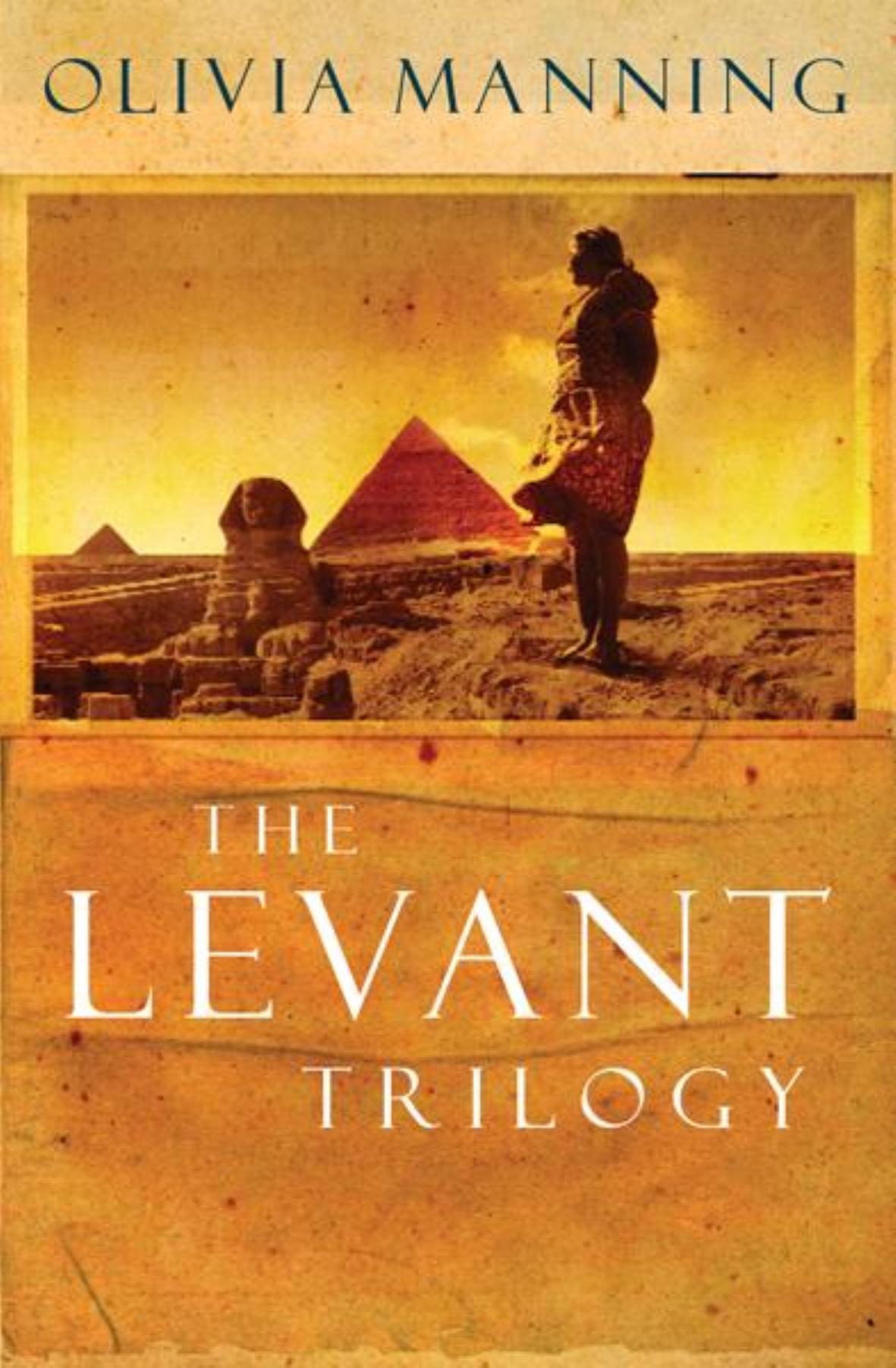
levantAmbivalence to Guy’s cultural projects, and indeed to Guy more generally, intensifies in The Levant Trilogy, written more than a decade after The Balkan Trilogy but picking up the story of most of the same characters as they move through another phase of displacement, this time in Egypt. Harriet’s relationship with Guy has always been strained by his inability to put her needs even on the same level as the demands placed on him by everyone else he knows, as well as by his own obsession with his work. Harriet’s discontent takes concrete form occasionally, as in a near-romance that evolves in Athens in the third novel of The Balkan Trilogy. In The Levant Trilogy, we see more of Harriet’s efforts to develop an independent identity in the face of Guy’s physical and emotional absence. In this series, though the war is brought much closer, through the character of Simon Boulderstone (is the redundancy of his surname significant?), with whom we travel to the front at last. Simon comes literally face to face with the horrors of the desert campaign:

Before him was a flat expanse of desert where the light was rolling out like a wave across the sand. Two tanks stood in the middle distance and imagining they had stopped for a morning brew-up, he decided to cross to them and ask if they had seen anything of the patrol or the batman’s truck. It was too far to walk so he went by car, following the track till he was level with the tanks, then walking across the mardam. A man was standing in one of the turrets, motionless, as if unaware of Simon’s approach. Simon stopped at a few yards’ distance to observe the figure, then saw it was not a man. It was a man-shaped cinder that faced him with white and perfect teeth set in a charred black skull. He could make out the eye-sockets and the triangle that had once supported a nose then, returning at a run, he swung the car round and drove back between the batteries, so stunned that for a little while his own private anxiety was forgotten.

We see, too, that the violence of war has the capacity to reach ‘civilians’ with no easing of its horrors. Very early in this volume, for instance, a child is brought in who has been killed by the explosion of a hand grenade he picked up while playing in the desert. In what may be the most surrealistically gruesome and disturbing scene I’ve ever read, his distraught parents refuse to interpret the signs that he has been fatally wounded and attempt to revive him by pouring gruel into a hole blown into his cheek: “The gruel poured out again. This happened three times before Sir Desmond gave up and, gathering the child into his arms, said, ‘He wants to sleep. I’ll take him to his room.'” His death prompts Harriet to think of “all the other boys who were dying in the desert before they had had a chance to live. And yet, though there was so much death at hand, she felt the boy’s death was a death apart.” Suffering was nearby throughout The Balkan Trilogy, but here we live in a community of the physically and spiritually wounded.

Yet even as the action and emotion of this trilogy had an intensity not often displayed in the earlier volume, it also seemed to me more directed at the unfolding of interior dramas for the characters, many of whom are struggling to define themselves against the expectations of others, or in the absence of well-defined or well-understood roles for themselves in the war-time conditions and foreign locations they are negotiating: Simon himself, for example, who has come to Egypt in part to follow in his brother’s footsteps, or Harriet, who eventually hitches a lift into Syria in an attempt to claim some meaning for herself beyond being Guy’s wife. Guy’s obtuseness about Harriet’s independent needs is highlighted more specifically here and his incessant busyness seems more irresponsible than it did in the first volume, perhaps because it’s not seen as serving any greater purpose. The one major cultural event ends…unexpectedly…without any of the triumphant possibilities of Troilus and Cressida, though perhaps it has as much symbolic significance of its own, maybe even marking a rejection of the idealism that Guy represented.

I haven’t really reached many interpretive conclusions about these books, but I have a lot of lingering questions. How far, for instance, do these books seek simply to chronicle how people lived through the exile from home and from normalcy imposed by the war, and how far do they prompt us to think about the global conflict as a reflection, an externalization, of abstract forces and values playing out on a personal scale as well? Is Manning’s understated style itself some kind of statement about the limitations of aesthetic responses to catastrophe, or about the necessity we are under of living life on our own small scale, however grand the larger narrative? Is Guy offered up as the embodiment of some essentially British quality, and if so, how far is it critiqued and how far accepted or encouraged?

Originally posted May 10, 2008
“Not Fitted to Stand Alone”: Deborah Weisgall, The World Before Her

weisgallI had a deeply and perhaps irrationally ambivalent response to Debora Weisgall’s The World Before Her. I think that on its own terms, it’s quite a good novel. It’s atmospheric, interesting, and thought-provoking, especially about the pressure marriage puts on identity: like so many characters in Middlemarch, Weisgall’s protagonists are struggling in relationships with partners who don’t want them to be themselves — and of whom they too had what turns out to be imperfect knowledge and thus wrong expectations. How much do you owe such a partner? How far should you bend, contort, or submit in order to make the marriage a “success”? How do you balance duty to yourself against duty to others, or to promises, or to principles you revere in theory even as, in practice, they exact a price you can hardly bear to pay? These are central questions of Middlemarch.

The comparison to Middlemarch is not just apt but crucial, because one of Weisgall’s protagonists is George Eliot herself: the novel opens in Venice during her honeymoon with John Cross. I should really say that one of her characters is “Marian Evans,” or “Mrs. John Cross,” because Weisgall focuses on the inner life and personal feelings of the woman, not on the mind, ideas, or literary accomplishments of the writer. Not that this bifurcation is absolute, or even intelligible, of course: Marian Evans was George Eliot, and Weisgall actually does a good job weaving in references to her writing life as well as allusions to her novels. By setting the novel at the end of Eliot’s career, though, she has put that writing life in the background. The novel moves often, through flashbacks, out of 1880 into memories of Eliot’s earlier life, but these are primarily personal episodes, from her “Holy War” to her failed romance with Herbert Spencer and then her liaison with George Henry Lewes.

The World Before Her makes the relationship with Lewes the central feature of Eliot’s life, and this is where my ambivalence came in. Weisgall effectively summons up both the risks and the joys of their elopement: the fulfillment, both intellectual and sexual, that it brought Marian, the anxiety of their return to England, the struggle of their early isolation, the loving support that prompted and then protected her as she became a novelist. Against this is juxtaposed her marriage to Johnnie, who shows her reverential tenderness but suffers again and again by comparison to George’s bright, beloved presence. Marian’s mourning suffuses the novel as well as her second marriage, and Weisgall emphasizes the internal conflict for Marian as she struggles to reconcile her desires (again, both intellectual and sexual) with the reality of the man she’s now with. Johnnie, in his turn, is only too aware that in ways he can only partially comprehend, he is a disappointment to the woman he idealizes — and yet he can do no more than apologize for his failures. He isn’t interested in the fossils or the art, and he isn’t interested in her, either. On Weisgall’s telling, his jump into the canal is his attempt to free her: “Marian, I did this for you.” He married her to bring her comfort and peace, only to find her full of “dangerous energy”:

He had imagined her ardor would be spiritual, quiet, a concentrated stillness, but instead she had displayed a physical eagerness and appetite that troubled him and left him confused and even frightened. She was, as she said, indefatigable.

Weisgall gives us a Johnnie who is not (just) unresponsive to his wife’s ardor but more generally lacking in sexual drive. The physical incompatibility, however, is not played up pruriently but is part of a more complete mismatch between them: her “eagerness” is for art, knowledge, music, debate — for a life of the mind complemented by love of the body. She and George achieved this ideal, but with kind, pragmatic,conventional,  boyish Johnnie she realizes she will have to dissemble in order to be the woman he thought he married. Though Weisgall does not overtly play this card, it’s tempting to see Marian’s death so soon after their return to the life and house Johnnie prepares for her (“she felt imposed upon; an edifice was being constructed around her”) as her own jump towards a desired liberation, but of course, as she says peevishly to Johnnie, “My life — any life — is not a plot.”

The telling of these stories is smart and often affecting; though (and does this really need saying?) Weisgall does not write with the historical or philosophical richness of her subject, there’s art in the construction and grace in the style of The World Before. The counterpoint of Eliot’s story with the contemporary one is also thought-provoking (though you’ll notice I’m not engaged enough in the other plot to discuss it in any detail). So what is there to be ambivalent about, I hear you asking?

Well, here it is, and I’m sure you’ll tell me if you think I’m being unreasonable: I didn’t like the Marian Evans I met here. The problem may be that I wanted George Eliot instead: this woman — grief-stricken, irascible, compromising — may be true to the letters and journals, true, as far as we can infer, to the biography — but she isn’t true to the novels. She has no wit, no spark. She reminded me of the Virginia Woolf of The Hours: so melancholic you wonder how such a woman could have written with such verve, such iridiscent irony. Presumably these qualities too are sacrificed to Weisgall’s decision to focus on this final stage of Eliot’s life: she was in mourning, she was aging and tiring, she was struggling with a new role — that of “married woman.” But there are other decisions here too, including the emphasis on personal feelings, on the motif that Marian is “not fitted to stand alone” (reinforced here by Marian’s own manifest emotional neediness), and on the artistically enabling power of love: “she had had great good luck in love. It had permitted her to look outward — and see her stories.”

Maybe what I’m reacting negatively to, in other words, is simply the difference between Marian Evans and the voice she created in her novels. As a matter of principle, of course, I always insist on the gap between author and speaker, but in her case the narrative persona has such presence and personality it confuses this theoretical rule. It has always been the novels that I love: though I have read a number of biographies, I have never been as interested in the minutiae of Eliot’s actual life as I have been in her writing; I have never been drawn to any kind of biographical project (an impediment as I try to imagine my own version of a “cross-over” book); it’s her intellectual fearlessness and, again, her novels that inspire me — I’ve never been “fannish” about her (though it was moving to stand outside her house on Cheyne Walk). Maybe what I don’t like is that this novel imagined a way into her head, while the head I’ve aspired to get inside has always been her narrator’s. I think, though, that I also don’t like the emphasis on her weakness rather than her strength, or on the costs of her ambitions rather than their triumphant realization. Though The World Before Her is nowhere near as belittling as Brenda Maddox’s horrifying biography, it isn’t as different as I would wish, especially in its preoccupation with Marian’s (lack of) beauty. That said, I appreciated Weisgall’s (fictional) encounters between Marian and Whistler, who is struck by her combination of ugliness and grace when he sees her from a distance in Venice. The sketch he makes of her becomes a symbol of her paradoxical character. Johnny finds it improperly “intimate,” and, finding it among Marian’s papers after her death, crumples it up and burns it. The unifying thread in the novel — not just in the Eliot parts but in the modern story too — is the difference between an artist’s eye and everyone else’s. I only wish Weisgall had written a novel that made the most of George Eliot as an artist, rather than showing her to us as a woman barely able to go on, and certainly unable to write — even if that is the truth of her final days.

The May Marks Meeting: That’s What It’s All About

Today we held one of our department’s most cherished and loathed rituals: the “May Marks Meeting.” It’s called that because one of its key elements is the annual review of students’ marks in aid of awarding our departmental scholarships and prizes, and also because we go over the standing of all of our current graduate students. Other fun features include receiving year-end reports from all the department committees.

title_english

In the old days, this meeting used to run all day and leave everyone bitter and exhausted. One reason was that before so much of the university’s business was computerized, things like calculating credit hours and grades often had to be done manually, while many other questions could be settled only by phone calls to the Registrar’s Office. Many of the awards we administer also have very particular terms set by well-intentioned but ill-advised donors that leave too much open to interpretation (word to the wise: if you want to leave a bequest to set up an academic award, please confer with some academics about wording): does “woman student who leads her class in English” mean “woman student majoring in English who has the highest grades”? or, our long-time favorite, what exactly is “an inquiring and original mind”? Oh, the hours, quite literally, that sometimes went into impassioned debate, or frantic recalculations, or reassignment of prize money on the discovery that for some reason the chosen candidate was ineligible!

Over the years we have refined our processes, and not just because we can now call up student records instantly online: wherever possible, we have clarified or set precedents for vague award terms, and we have essentially banned nominations from the floor and shifted the burden of decision making from the department as a whole to our undergraduate committee. Today, only about half an hour was spent on this business. In so many ways, this is a huge improvement — not just because it’s more efficient but because the results are less arbitrary. I would not want any of my colleagues who happened to read this post to imagine that I am in any way nostalgic for the old days! (Well, OK, sometimes I miss the old department lounge, which was a friendlier place to spend a day.)

What I have been thinking since today’s meeting ended, though, is that the half hour we spent talking about the nominees and recipients of our prizes and scholarships was by far the best half hour of the meeting (which, today, actually ran less than 5 hours, including our lunch break). Almost everything else on the table, you see, was bad news: budget woes, declining enrollments, graduate recruiting challenges, disappointing graduate fellowship results. So much of this seems beyond our control (as one colleague finally exclaimed, “Look, I don’t know how to change the Zeitgeist!”), and so much of it seems to reflect not just a broad cultural disengagement from the humanities but the failure of our more immediate leaders to stand up and fight for us — even though, as another colleague pointed out, we teach a lot of students and we do it, on the whole, very cheaply compared to other faculties. When you go to a VP’s office seeking support for something of national significance and get turned down coldly even as all around you are the signs of administrative expansion (not to mention office renovations) … when you’re aware that there is always money for something but that we are constantly told we need to cut and cut  … well, over time it’s pretty demoralizing, and as I’ve written about here before, our work turns nearly as much on our energy and creativity as it does on our expertise and professional training.

Despite the atmosphere of generalized gloom in which we have all been working for some time, though, most of us still find ourselves excited about and renewed by our classroom time and our students. And finally, during that last half hour, that’s what we got to focus on. Listening to people speak with such obvious delight about their students’ merits and successes — from admission to Oxford to clever revisions of 18th-century poems — did a lot to counterbalance the cynicism and pessimism brought on by the earlier items on our agenda. Our collective appreciation of our students as interesting, promising individuals also confirmed (as if I needed it) how much more our teaching is about than “content delivery.” It’s not, ultimately, the marks the students earn that matter the most, after all: it’s the mark they will make in the world. Our role in making that future possible may be difficult to measure, but it’s still important to remember, and to value.

Binge Reading vs. Close Reading

dickfrancisI’ve undertaken to write an essay on Dick Francis this summer, in preparation for which I am reading through all of his 40+ novels. His first, Dead Cert, was published in 1962, and he basically published one a year until his death in 2010 (the last few in partnership with his son Felix, who has now taken over the franchise). That’s a lot! I’ve been reading them off and on at least since the 1980s; I own about a dozen (which used to seem like quite a few, until I really took stock) and when things are busy at work I often pick a favorite to reread, as they are both brisk and smart enough to be a nice diversion without requiring a lot of attention.

It’s always interesting approaching as critical projects books or authors I have previously taken for granted or read “just” for pleasure. When I started teaching the Mystery & Detective Fiction course, I went through that with P. D. James, Ian Rankin, Sue Grafton, and Sara Paretsky (many of the other authors on the reading list are not ones I had read before, including Agatha Christie and Dashiell Hammett, so the effort there was always more academic). But what’s really different about this particular project is that I don’t typically read in bulk this way. Sure, when I find an author I like, I tend to follow up, but outside of genre fiction authors with 40 or more titles to their credit are rare, and I usually get restless after reading a few books in a genre series in a row. A good example would be Mary Balogh: when I discovered I could enjoy her books, I got a whole bunch from the library, but after racing through several, I just really wanted to read something different, and now I think of her as I had Francis, that is, as a safe option when I need some filler in my reading life. (A notable exception would be the Martin Beck novels: once I got hooked on them, I pretty much just kept reading. But there are only 10 of them anyway!)

What strikes me about binge reading is the different kind of attention it requires compared to the intense close reading I’ve done for most of my recent writing — any of my George Eliot essays, for instance, or for reviews including my most recent one of Kate Atkinson’s Life After Life — or, for that matter, the reading I do for my teaching. For all of these purposes, poring over details is the essence. It’s not that I’m not reading each of these novels  carefully and trying to hang on to the key details that differentiate one from another. There are plenty of these, and they matter, often substantially. But the novels do have a lot in common, and inevitably they blur together or form, in my mind, one larger whole. Since the essay I’m working on is intended as a kind of overview (though with a particular angle on women and gender roles), that’s appropriate: I’m reading all of them at once because I want to be able to generalize about them, to discuss patterns, or themes and variations, connecting threads, tropes, motifs, whatever. The individual novel is less important than the collection of novels. The more I read, the more each one I pick up reads like part of that collection, if that makes sense: the deeper into the catalog I go, the more rapidly I subordinate the particular to the general. My major challenge is not so much interpreting as keeping track: this is the first time I’ve ever used a spreadsheet as a writing tool!

And yet every novel is different. (I joked on Twitter that so far my lede is “The novels of Dick Francis are both alike and different” –ah, the bane of the undergraduate compare-and-contrast essay!) You could say that this oscillation between similarity and difference is the essence of genre fiction: its predictability is as much the appeal as the ability of a talented practitioner to surprise. I’m reminded of Josephine Tey’s sly, self-reflexive jab at formula fiction in The Daughter of Time:

Even in that, you knew what to expect on the next page. Did no one, any more, no one in all this wide world, change their record now and then? Was everyone nowadays thirled to a formula? Authors today wrote so much to a pattern that their public expected it. The public talked about “a new Silas Weekly” or “a new Lavinia Finch” exactly as they talked about “a new brick” or “a new hairbrush.” They never said “a new book by” whoever it might be. Their interest was not in the book but in its newness. They knew quite well what the book would be like.

I do notice that interchangeable widget quality as I read these books in relentless succession — and yet I always welcomed the appearance of “a new Dick Francis” precisely because I knew what it would be like but also knew that he was smart enough to mix it up, to really make it new.

New Reviews and “Right” Reviewers

timthumb

Launch day never comes but what I am surprised at what we’ve pulled off, thanks to the talent, perseverance, and generosity of our contributors and the diligence, enthusiasm, and contributions of our editors! Our May issue seems to me to exemplify what we want Open Letters to be. It covers a wide range of material — I think there’s greater variety in the titles we cover than in most other literary magazines, online or otherwise — and in a range of voices. Have you ever looked at our “About” page? Here’s what the wise heads that set up Open Letters in the first place came up with as our “mission statement”:

We’ve all had the experience of reading a review that sparkled—one that combined an informed, accessible examination of its quarry with gamesome, intelligent, and even funny commentary. These are the pieces we tell our friends about and then vigorously debate.

That’s the kind of writing you’ll find in this month’s issue, so hop on over and take a look! Among its goodies you’ll find a thoughtful exploration of Yoko Ogawa’s Revenge by friend-of-Novel-Readings Colleen Shea (a.k.a. the esteemed proprietress of Jam and Idleness); an exuberantly insightful commentary on a new edition of Birds of America by the inimitable Steve Donoghue; a provocative critique of Tea Obreht’s critically-acclaimed The Tiger’s Wife; and much more.

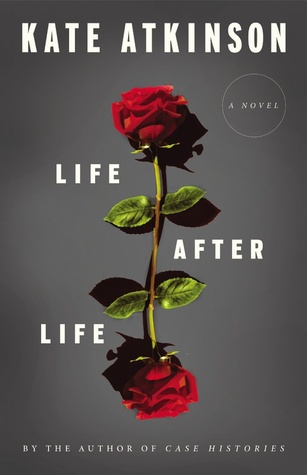
atkinson1My own contribution this month is a review of Kate Atkinson’s Life After Life, which has also been receiving  a fair share of critical acclaim. You’ll have to read my review to find out if I’m joining in the chorus. I will say that the book is extremely readable, and that writing the review was good mental exercise, especially once I decided on how I wanted to structure it.

While I was working on it, a conversation broke out on Twitter about the question of what makes someone a good fit to review a particular book. OK, I started it — well, technically Mark Sarvas started it by noting he thought a particular reviewer was a “terrible choice” for a particular assignment. Happily, I pretty much “assign” my own books to review, but I puzzle over how to make good choices for myself, so I asked what he thought the parameters were. He proposed avoiding cases of “outright conflict,” cases where there’s a specific “axe to grind.” I proposed someone who could be expected to have a good conversation with the book . Gregory Cowles of the NYTBR chimed in (Twitter is fun that way) to suggest “open engagement” as the key.

As I said in that exchange, I seek out books to review that I expect to like, by which I mean books by writers I have some reason to trust, and/or on topics and/or in genres that are within my usual range of interests. This is not to say that my default plan is a good review (in fact, I try not to think in terms of “good” or “bad” reviews). I just figure that way I have the best shot of appreciating what the book does well but also recognizing what, according to my reading experience, it doesn’t do well. To keep going with the conversational metaphor, there’s no point trying to have a lengthy discussion with someone whose language you don’t speak at all. If I were a full-time professional book reviewer, such discrimination would presumably be a luxury. Sometimes when I’m paging through catalogs not finding any “likely candidates” for my next review, I hope I’m not being some kind of prima donna, or  (worse?) that I’m not being intellectually unadventurous. But who would want to read my attempt to review something like Revenge? Or, to go even further outside my normal literary habitat, Richard Hell’s autobiography, reviewed with great panache in this issue by Steve Danziger? Much better to leave these books to readers who get them.

Besides, in a way all contemporary fiction is an adventure for me, since my official expertise is entirely elsewhere. I’ve certainly found plenty to grapple with in the recent books I have reviewed, from The Marriage Plot to Two-Part Inventions. (Whether I’ve acquired expertise, or at least relevant experience, by writing about contemporary fiction on my blog is another question, not entirely unrelated, I suppose!) Mark’s question was timely in part because I was wondering if I was a good choice to review Life After Life. Reviews were coming out all around me as I worked (I managed not to actually read any of them until I had a complete, committed draft of my own!) — Francine Prose’s came out in the New York Times just this past weekend, too. Clearly someone there thought she was a good fit, and I can see why. Every reviewer who acts in “good faith,” though (to call on another of Mark’s Twitter comments) brings something fresh to the conversation. It’s possible, too, especially reading the major literary reviews, to feel as if there’s all too much insider trading (have you heard the joke about the New York Review of Books — that its real name is The New York Review of Each Other’s Books?). I think my review stands up well to Prose’s. (Mind you, she, poor woman, was probably given a word limit.)

What do you think makes someone a good fit for a particular review? Proximity or distance? Expertise or an unexpected angle? Or will you take any of these provided the conversation itself is good enough? These questions are relevant to me not just as a writer but as an editor, after all.

Also, in case you wondered, the next book I’m reviewing is Deirdre David’s biography of Olivia Manning. I think I’m a good fit: I know David’s work as a Victorianist, of course, and I’ve read both trilogies in Manning’s The Fortunes of War, and I know a lot more about early 20th-century women writers than I used to because of my reading in the ‘Somerville’ set. So far it’s entirely fascinating.