

Taking the Plunge: Daphne du Maurier, Mary Anne

“I’ve taken the plunge,” she thought, “and there’s no returning. I’m out for what I can get, and I’ll see that I get it. I’ll pay back in kind, I won’t cheat, I won’t be dishonest. No one will claim I haven’t earned my money. Value given for value received. It’s one trade like another, the butcher, the baker, the candlestick maker. We’ve all got to live.”

Mary Anne is the fictionalized story of Daphne du Maurier’s great-great-grandmother, Mary Anne Clarke. It is quite the rags to riches to (near) rags again saga. Mary Anne is born into poverty and clambers up the social ladder with the tenacity of Becky Sharp. She is conscious from an early age of the disparity of power between men and women and she uses charm, subterfuge, threats, manipulation, bribery, seduction—basically, every trick she has!—to get what she wants, which is not so much money as security, for herself and her family. She loves luxury, she loves power, but at every turn she learns how fast she can lose her grip on both. Like Becky, she never stops, and also stops at nothing, fighting to keep them. Many powerful men enlist her in their own schemes, but they usually betray the promises they make her; it’s hard to feel any pity for them when they find themselves, in turn, exposed or betrayed for Mary Anne’s own purposes.

The pinnacle of Becky’s career is her presentation to the Prince Regent. Mary Anne goes one better, becoming the mistress of his brother Frederick, Duke of York. The chief engine of the plot from this point on is her participation in a scheme to profit through his influence over military appointments and promotions. This eventually becomes a huge public scandal, with hearings in the House of Commons; Frederick eventually is driven to resign his position as Commander in Chief. By this time he has severed his connection with Mary Anne, who gets her revenge by being the chief witness against him; she goes on to publish pamphlets and memoirs, which I assume were key primary sources for du Maurier’s novel (I would like to know how many of the letters and speeches in them come directly from contemporary materials).

Mary Anne has little of the lush atmospheric writing of Jamaica Inn or Frenchman’s Creek, or the delicious suspense of My Cousin Rachel or Rebecca. It has its own energy, though: like its protagonist, it just keeps moving forward, restlessly, relentlessly, on to the next thing, and the next, and the next. Mary Anne’s father lets the family down; she picks up the work. Mary Anne’s husband turns out to be a weak drunken fool; she figures out how to support the family. When there seem to be no better options, she “takes the plunge” and becomes a courtesan; when the opportunity arises, she wins the Duke’s favour and works tirelessly to keep it, even though the allowance he gives her is not enough to meet his expectations and (again like Becky) she looks to be winning the game even as she is getting deeper and deeper into debt. When her royal “protector” cuts her off, she just keeps going. She is not particularly likeable and she’s certainly not admirable, but I couldn’t help rooting for her. All those men, for one thing: they just use her and lie to her and break their promises and go home to their wives and then sit in judgment on her.

Mary Anne isn’t just plot points, though: there are passages that definitely have that du Maurier flare. Here’s her description of the back streets of London where Mary Anne grows up, for example:

The streets were mentor and playground, teacher and companion. Rascals picked pockets on the streets, beggars were given alms, goods were bought, rubbish was sold, men laughed, men cursed, women whined, women smiled, children died under wheels. Some men and women wore fine clothes, some wore rags. The first ate well, and the others starved. The way to avoid rags and starvation was to watch, to wait, to pick up the coin dropped on the pavement before anyone else, to run swiftly, to conceal quickly, to smile at the right moment, to hide at the next, to keep what you had, to look after your own. The thing to remember was not to grow up like her mother, who was weak, who had no resistance, who was lost in this world of London that was alien to her, and whose only consolation was to talk of the past, when she had known better days.

Right there we can see the lessons Mary Anne remembered for the rest of her life and her determination to do whatever she can not to be weak, which means having money: “Not money to pinch,” as she later reflects, “but money to spend.”

And here she is at the end of her own “better days,” bathed in the pathos of someone who has played and lost, but still too game to be pathetic:

I remember . . . Then she’d stop herself. The young are bored with reminiscences. Who minded whether dandies in Vauxhall had stood on tip-toe once to watch her pass? What did it matter if a gaping crowd had climbed her carriage-wheels in Palace Yard? Or that she’d queened it in the House of Commons, the only woman in that world of men? . . . But sometimes, in the night, and no one with her, a strange nostalgic yearning came for the past; and baffled by the silence, oddly lonely, a church clock in Boulogne chiming the hour, she thought, “There’s no one left who gives a damn. The world I knew has gone. This is tomorrow.”

That’s splendid stuff.

“The Rest is Chaff”: Jo Harkin, ‘The Pretender’

Has his kindness gone? Maybe. Each of his selves took something from him as it fell away. He left his confidence on the farm with John Collan. His innocence drowned on the floor of the house in Oxford, as Lambert Simons covered his eyes. His happiness is still locked in Edward, Earl of Warwick’s bedchamber in Dublin. When Simnel quits here, his goodness and his faith will be left in one of Henry’s strongboxes.

What has he got now? His hatred, and his love. That’s all he needs. The rest is chaff. Like Joan said, he’s better off without it. He should have brushed it off sooner.

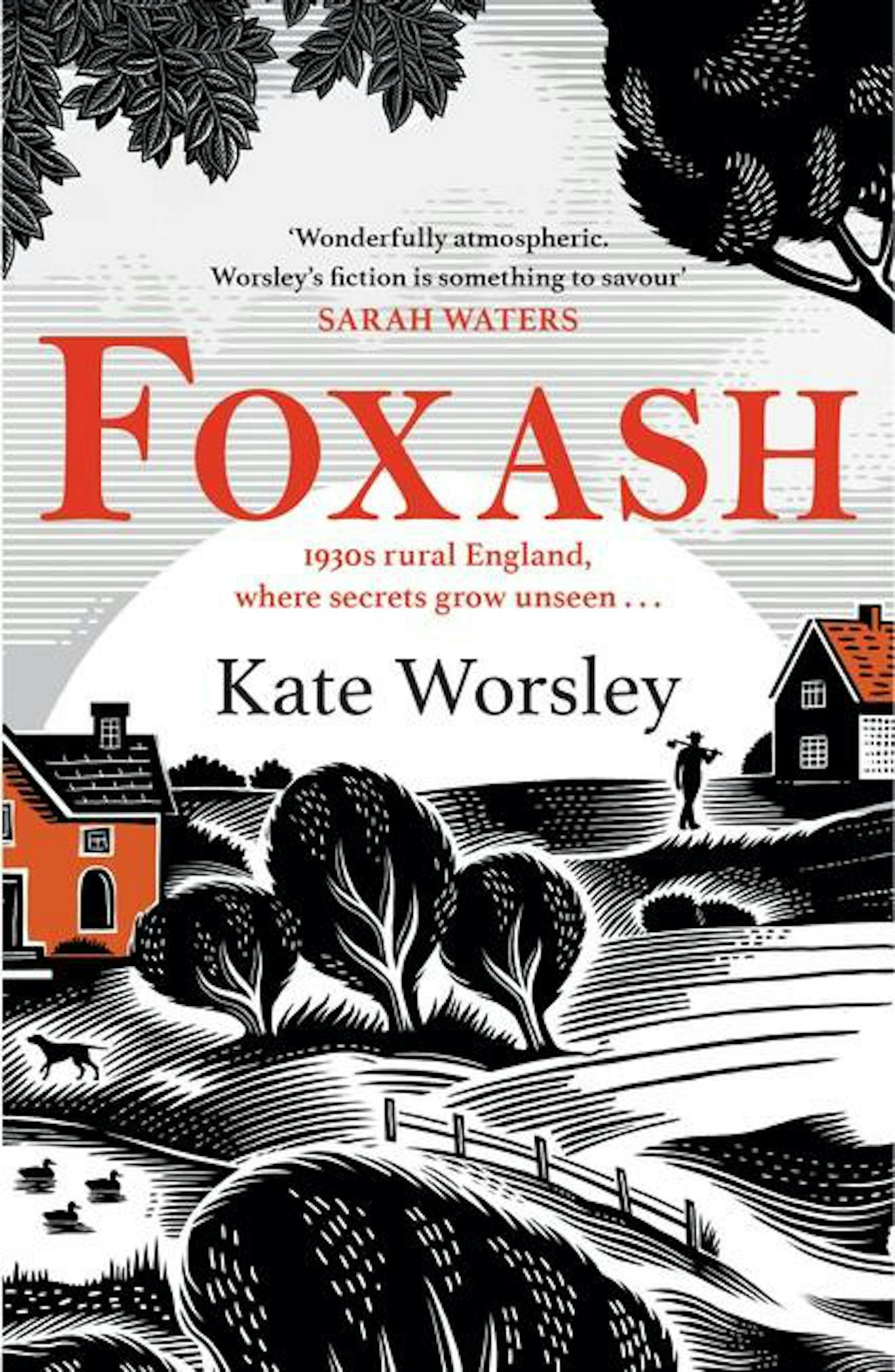
I’ve never read a Ricardian novel quite like The Pretender. That’s saying a lot, considering I’ve read quite a number of them: there was a time when any Richard III-related fiction was irresistible to me. (I wrote about this preoccupation of mine long ago in Open Letters Monthly and had just so much fun revisiting and rethinking some of my favourites.)

The Pretender isn’t exactly ‘Ricardian’: it’s more accurate to call it ‘Ricardian-adjacent.’ It includes the York and Lancaster family trees I used to be able to reproduce handily on my own without looking them up, but its protagonist is at most a peripheral character in the story of Richard himself. Harkin has chosen Lambert Simnel as her focus, one of the young fellows put forward after Richard’s death claiming to be a lost Yorkist heir: Perkin Warbeck, for instance, purported to be Richard, Duke of York, younger son of Edward IV and one of the two famously vanished ‘Princes in the Tower.’ Lambert Simnel claimed to be Edward, son of George, Duke of Clarence (the ‘drowned in a vat of malmsey’ one)–nephew to Edward IV and Richard III. Both were figureheads for rebellions against Henry VII; Perkin Warbeck was executed, but Lambert Simnel was pardoned and put into service in Henry’s household. Wikipedia helpfully notes “almost no information about his later life is known.”

I’m not sure if it is a spoiler to say that Harkin leaves the question of whether Simnel was or was not actually Clarence’s son unresolved. She opens when the boy who would end up a claimant to the English throne is living an unremarkable life as John Collan, the son of an inexplicably prosperous farmer whose wealth turns out to be due to the service he is doing for the mysterious nobles who show up one day to turn John into ‘Lambert Simons.’ This temporary alias is to shield him from notice or scrutiny while the tutor they have appointed, Richard Simons, polishes him up, a process the boy enjoys only because it broadens the scope of books he can read.

Each section of the book follows him through a new phase as he is groomed and trained and readied for the ultimately unsuccessful rebellion in his name, and then becomes (in Harkin’s version of his life story) not just a servant but a spy for Henry, sussing out treasonous activity, including among those who at least claim to still be working for his own ultimate victory. Why, you might wonder, would a Yorkist serve Henry’s interests in this way? Since much of the fun of The Pretender lies in the convolutions of the plot, including lies, deceptions, betrayals, and revelations, all I’ll say is that like Arya in Game of Thrones, by the time this is John / Edward / Lambert / Simnel’s life, he has a long list of people on whom he would like to take his revenge.

When I say I have not read a book quite like this one before, it’s the style I mean more than the story. Harkin might not appreciate this characterization but one way I found myself thinking about her style, or at least her style here, is ‘Wolf Hall Lite.’ It is in present tense and also in close third person, much like Mantel’s brilliant series. It also adopts an archaic style, especially in the dialogue, though never to the point that Mantel herself warned writers away from–or at any rate it did not put me off, or seem overly mannered. Here’s a small sample from near the beginning that shows how she uses medieval (or pseudo-medieval) words or idioms:

The future, though bright, is also a little frightening. It’s an inquieting thing to pass out of the bounds of the farm, out of sight of the waving Emma and his father. The men beside him terrify him. Even his horse is intimidating, as beautiful as it is. Its hooves are oiled; its mane traps the light in tiny pieces. The only reason it hasn’t bucked John’s grubby body off its elegant back is because it’s too gentil.

One word she uses a lot is “maugre,” meaning something like “ill will” or “quarrel,” as in “he had no maugre with Philip” (looking it up, I see dictionaries trace it to “Old French” and define it as “bad pleasure”). I was able to enjoy this strategy for evoking a long-ago idiom because there is also a lot of crisp, effective, highly evocative writing and the novel as a whole moves briskly along. It’s a violent time and death is often both sudden and arbitrary (as Simnel learns, grimly, early on). Here’s another small sample, from when the army raised in his name is marching towards battle:

The atmosphere is different with no women around. The boozing is harder and wilder. The japes are crueler. Edward sometimes sees common women leaving tents at dawn. Sometimes the women are weeping. When the men aren’t singing ballads and playing dice games, they’re arguing, or fighting. He passes an affray: shouting, pushing, then–unexpectedly–one man sticking his halberd into the other man’s throat. The body is carried away. Then the men go back to the dice, and Edward to let out his shocked tears in his tent.

There’s a metallic tang in the air; he can feel it. Like swords being sharpened.

Like coming war.

That note about his “shocked tears” reminds us that he is still only a boy (he’s fourteen at this point), and also that he was not raised to be a soldier, that he is–initially at least–loving, imaginative, vulnerable. Until late in the novel, none of what is happening to him is by his own choice, or under his control, even when he thinks it is (something else he keeps grimly learning). The family he thought was his turns out (or so he’s told) not to be; his new caretakers are ruthless; his partisans are manipulative and self-interested; those he fears and those he loves prove equally untrustworthy. So there’s an underlying poignancy to this adventure tale. History tells us he fails, labels him a “pretender,” lets him vanish into obscurity, but Harkin makes us root for him, not least because he is himself self-conscious about his likely narrative fate:

[L]ater, when Simnel’s with Beatrice, he returns to his maugre against history.

We might know the truth,’ he says. ‘But in a few hundred years, Richard will be a hunchback and I’ll be a scoundrel. Those people won’t know anything else.’

‘Write your own history, then,’ she says.

‘I’d be writing my own head onto the block.’

It is sad but not surprising that he becomes hard, cynical, even murderous himself: so many people “have lied to him, goaded him, gulled him, terrified him, confused him,” and also taken away “anyone ever loved or might have loved–and left him alone, more alone than anyone, because they even parted him from his own self.”

It sounds great, right? So why did I call it “Wolf Hall Lite”? I don’t mean that The Pretender is a cheap imitation or a knock-off, just that Mantel’s books have a darkness to them that The Pretender does not, while Harkin’s has more humour than Mantel’s. The Pretender is perhaps more easily entertaining, but it’s also less engrossing. Nothing in The Pretender thrilled me the way parts of Bring Up the Bodies did. That said, like Wolf Hall when I first read it, The Pretender surprised me, in a good way. It is nothing like the pedestrian or formulaic historical fiction that can give the genre a bad name. It felt adventurous to me as writing, and it tells a lively and complex story. Would it be too complex for someone who had never heard of the Duke of Clarence or the Duke of Buckingham or Stanley or Lovell or Elizabeth Woodville before? Impossible for me to know!

Sarah Perry, Death of an Ordinary Man

But now I understand there are no ordinary lives–that every death is the end of a single event in time’s history: an event so improbable it represents a miracle, and irreplaceable in every particular. So here I am, counting out the particulars of my father-in-law’s life, and trying to preserve them in ink–it’s precious that he drank weak Yorkshire tea in footed mugs printed with blue flowers, and artificially sweetened with tables he called ‘depth charges’ as he jettisoned them in, laughing at his own joke. It’s precious that he disliked dogs, but could calm a feral cat; precious that he kept sugar-free mints in his pocket, and would thumb them free from the tube and into his mouth without looking; precious that each summer he grew rather tough green beans and froze them to be eaten at Christmas, and had a weakness for ice cream, but could never tolerate broccoli . . . all of this remarkable only because it can never be repeated or retrieved.

Sarah Perry’s Death of an Ordinary Man is simple in its premise, unsparing in its execution, and almost unbearably poignant in its tenderness. In it, Perry recounts–in meticulous detail–her much-loved father-in-law David’s death from oesophageal cancer. From diagnosis to death, it took a scant nine days; in that short space, she and her husband Robert and especially, of course, David himself went together through one of the most commonplace human experiences. That in general we know so little about it–that we avoid thinking about it, until forced to, and so are rarely ready for it–is one of the reasons Perry wrote this book. “It isn’t wisdom I have,” she says near the end, “it’s only experience; and experience of only one death.” Nonetheless,

I am still standing by the gate, and I keep it open, because there are things I want to tell you. I want to tell you that even a good and easeful death may have its indignities and pains, but to know this–to have seen it–is to fear death less, not more.

Above all she wants to share the realization she came to, as she traveled with David along his road to death and then was left behind, that “dying is a part of living, and like living it has its events, both difficult and marvellous.” She doesn’t expect her account to make living less fearful, but to “bring the act of dying into the scope of living,” just one more part of what we all, one way or another, go through, of our events and struggles.

She is conscious even as David is dying that she is attending him not just with love and patience and grief but with the eye of a writer, “with the assessing acquisitive eye of a magpie.” It is to her credit, or a credit to her intelligence and craft, that the result feels authentic and immediate, not artificial or mannered. That she quotes poetry and philosophers seemed unsurprising precisely because she is a writer, and thus also a reader and a thinker, about meaning and about life. Her Gothic novel Melmoth is, I thought, a genuine novel of ideas; her novel Enlightenment, which she has just finished when David begins to die, is about science and philosophy and our place in the universe. All of us who live our lives in part through others’ words find that those words come to us in our own most intense moments (as I found, and still find, that thinking of Owen brings lines of poetry, long familiar, now hauntingly so, echoing in my mind).

Most of the book, though, is not literary, or philosophical, in any conspicuous way. (The absence of that kind of conspicuous literariness is itself exceptionally careful, artful: I don’t mean that the book is at all haphazard.) It is, mostly, very literal: Perry seems to have realized that there is enough power in the simple facts of David’s death–his physical decline, unthinkably rapid; his shifts in mood; his brief returns to energy and lucidity; his graceful submission (Perry’s word)–that just to describe them will also be enough.

That said, the other task of the book is to tell us about David’s life. Some of this is done neatly, efficiently, in the first short section of the book–aptly called “Life.” But Part Two, “Death,” fills in more details, partly through the simple device of Perry noting what she sees when she looks around David’s home–photos, slippers, dishes, his favourite magazine (the Antiques Gazette), his stamp collection, all the paraphernalia of an ordinary life. Something Death of an Ordinary Man captures with great vividness is the sudden diminution of these things when the person whose life they seemed to constitute steps away from them. How quickly they become just clutter, even as they also serve as tangible reminders and connections. David’s illness progresses so quickly that he has no way of knowing, in the moment, that he is putting his slippers on for the last time, drinking his last tea, sleeping for the last time in his own bed.

There’s a lot of medical detail in the book, not the specialist kind the doctors and nurses know, but the kind family members learn perforce when they become caregivers: artificial saliva, commodes, “WendyLett sheets,” which are “fitted with handles and woven in a particular way which allowed us to move David without hurting his body, or ours.” All of this is gripping reading in a way I wouldn’t have expected. There aren’t villains or heroes in the story, but a visiting doctor fills Perry with anger at what she perceives as unfeeling briskness, while the night nurse who comes so they can sleep brings them, and David, calm ease; an oncologist friend offers honesty that comes as a different kind of relief.

I realize that little about this may sound uplifting, and I can imagine people who have gone through the illness and death of a loved one might not at all want to read Perry’s account, though I can also imagine that for some there might be (as there has been for me with some things I have read about depression and suicide) some–what? not consolation, but companionship, in any recognition it offers, and that strange pleasure in finding that someone has found words to express what we perhaps have struggled to ourselves. The TLS review praises the book for being “unsentimental”: I am a fan of sentiment, and I am not sure that Death of an Ordinary Man isn’t a bit sentimental. There is immense pathos in it, at any rate, and raw grief. There is some comedy, too, and anger, and frank admissions of failures of empathy and possible errors of judgment.

Above all, and perhaps this is the most important and surprising thing about Death of an Ordinary Man, even though it is focused on how David died, it gives a really rich sense of him as a man who lived. Death is universal, but there will never be another life exactly like his, or another man exactly like him. That, as Perry observes, is anything but ordinary.

A Bit Sheepish About Woolf

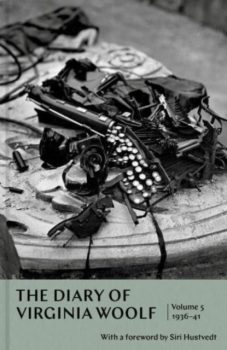
I have not stopped reading through Woolf’s diaries. I finished Volume 3 some time ago and have begin Volume 4. I have not stopped finding memorable or thought-provoking or delightful moments in them: Volume 3 is festooned with post-it flags, and Volume 4 is on a similar track.

And yet.

I have not been posting about it as much because the truth is, in between the post-it flags are often long stretches I’m not very interested in.

There, I admitted it! But I do feel sheepish about it, which is perhaps foolish. Why, after all, would I have expected to be fascinated by every page of someone’s actual diary? Nobody’s life, not even the life of a genius, is 100% fascinating; even Woolf, a genius, cannot make (and to be fair is not even trying to make) every moment fascinating.

She does a lot of socializing. People come over, she goes to their place, they hang out, they chat, they dine out, they gossip. I can’t always be bothered to read all the notes telling me who everybody is. Sometimes I even have to remind myself who “Roger” is. A lot of her reporting on this stuff is just not very interesting to me. I start to skim during accounts of conversations that seem like even in real time they were a bit tedious for her. She frets quite a bit about servants; by and large these are not her best moments.

She keeps at the diary as writing practice, as a routine, as a record, sometimes as a chore. It was never meant to be her masterpiece, or her legacy.

The best parts of Volume 3, for me, were her comments on the composition of The Waves. At the beginning of Volume 4, she is just finishing it: “Here in the few minutes that remain, I must record, heaven be praised,” she writes on February 7 1931, “the end of The Waves”:

I wrote the words O Death fifteen minutes ago, having reeled across the lasdt ten pages with some moments of such intensity and intoxication that I seemed only to stumble after my own voice . . . Anyhow it is done . . . How physical the sense of triumph & relief is! Whether good or bad, its done; & as I certainly felt at the end, not merely finished, but rounded off, completed, the thing stated–how hastily, how fragmentarily I know; but I mean that I have netted that fin in the waste of waters which appeared to me over the marshes out of my window at Rodmell when I was coming to an end of To the Lighthouse.

It is vicariously thrilling to share in that sense of “triumph & relief,” and humbling to imagine the mind and the craft and the courage it took to realize that vision in words and in such daring form. In November, when the novel has been published, the exhilaration continues:

Oh yes, between 50 & 60 I think I shall write out some very singular books, if I live. I mean I think I am about to embody, at last, the exact shapes my brain holds. What a long toil to reach this beginning–if The Waves is my first work in my own style!

If only it were all like that!

It can’t be, of course, and if it were it would be exhausting, unsustainable for her as well as for us. It’s true that there’s always the option of reading only her ‘Writer’s Diary,’ as “curated” by Leonard. But that would mean no chance of discovering the other delights and oddities and poignancies of the day to day records, which are not (and of course they are not) all dull. I loved reading about her “astonishing hat”! And many of my post-it flags bring me back to moments of personal reflection, some of them vivid and moving in the moment and more so, painfully so, knowing what we know, what she did not yet know, about the story of her life:

The thing is now [she writes in May 1930] to live with energy & mastery, desperately. To despatch each day high handedly. To make much shorter work of the day than one used. To feel each like a wave slapping up against one. So not to dawdle & dwindle, contemplating this & that. To do what ever comes along with decision; going to the Hawthornden prize giving rapidly & lightheartedly; to buy a coat; to Long Barn; to Angelica’s School; thrusting through the mornings work (Hazlitt now) then adventuring. And when one has cleared a way, then to go directly to a shop & buy a desk, a book case. No more regrets & indecisions. That is the right way to deal with life now that I am 48: & to make it more & more important and vivid as one grows old.

That seems like the right way to deal with life now that I am 58 as well.

So I will press on, allowing her to be boring sometimes and trying not to feel that my boredom is a sign of my own inadequacy! In Volume 4 she has begun work on what becomes first The Pargiters, then Three Guineas and The Years. One of my first post-its: “I’m quivering & itching to write my–whats it to be called?–‘Men are like that?'”

Three by Elizabeth Strout

As I’m going to be reviewing Elizabeth Strout’s new novel, I thought it would be a good idea to revisit some of her earlier fiction, so I went to the library and signed out a stack. I remembered not having altogether liked My Name is Lucy Barton when I read it before, but you never know: it might have just been the wrong time. I honestly could not remember if I’d read Oh William! or Lucy by the Sea–and in fact I am still not sure. They did both seem familiar in spots, but I have no record of reading them here on the blog. That is not as definitive, as there have been gaps in both my posting and my memory over the past few years! Maybe I started and abandoned them, or read them in such a desultory spirit that they didn’t stick.

I still didn’t love My Name is Lucy Barton. There are things about it I liked the first time and still liked, but the flatly intrusive narrative voice irritated me, and this continued to be my reaction through both Oh William! and Lucy By the Sea. Our response to this series relies heavily on our reactions to Lucy herself, I expect, and for me her character remained too elusive, too remote, despite being the one doing all the talking. After three novels, I feel I know a lot of details about her life and about her verbal (narrative) tics, but I still have little sense of her as a person. At one point her ex-husband William describes her as “joyful” and I was surprised: I had no such impression of her. How can a first-person narrator be so vaporous? It is surely deliberate (Olive Kitteredge, by comparison, is a conspicuously forceful presence), but to what end?

Lucy By the Sea made both the best and the worst impression on me this time. I appreciated (though I didn’t really enjoy) its evocation of the surreal qualities of lockdown, its reminders of the distancing protocols and other precautions we adopted and adapted and (mostly) eventually have abandoned. (Many stores here still have markers on their floors asking people to keep 6 feet apart; they are worn and faded and, of course, completely ignored now.) I remember very well the overwhelming proximity of two people always together in the same house, the development of new routines to vary the monotonous days, the wariness of having or being visitors, the anxieties of getting groceries–it all feels so close and so far away at the same time. But Lucy’s narrative interruptions–not quite metafictional, never at all revelatory–kept pulling me away. Then the novel’s conclusion–that “we are all in lockdown, all the time. We just don’t know it, that’s all”–felt forced to me. Let us get there on our own, was my reaction. I think we would have, just as I think I would have liked all three novels a lot more if Strout had made Lucy less self-conscious.

I have Tell Me Everything out as well now and I’m not really that motivated to read it, although it does bring Lucy together with Olive, which might give it more energy than the others. Strout’s new book is a stand-alone novel, so my ambivalence about the Lucy books doesn’t (necessarily) foretell my reaction to it!

Two By Alison Espach

I had been in what felt like a reading slump until Virginia Evans’s The Correspondent perked me up. Then a friend lent me Alison Espach’s The Wedding People, and it too was a book that drew me back to it each chance I got, instead of malingering on my side table while I watched yet more TV.

I don’t know exactly what it was exactly about The Wedding People that worked so well for me. My friend cautioned me that the plot turns on someone who begins the novel planning her own death: her situation and also the whole tone of the novel set that so far apart from my own experiences that while it was certainly dark, it wasn’t off-putting or personally upsetting. In fact one thing I appreciated throughout The Wedding People was that Espach manages to sustain the novel’s comedy without losing trivializing her protagonist’s feelings, her sense of having had enough, of being ready. The way she is drawn back into life through accidentally crashing an elaborate ‘destination wedding’ was equal parts farcical and poignant. Somehow, she just can’t seem to extricate herself, and as she gets more and more involved with the wedding people she finds herself less and less tired of living.

I read The Wedding People pretty briskly and was enjoying the momentum so much that I didn’t pause to put in any post-its flagging key scenes or quotable moments–plus its appeal (for me, anyway) lay more in the accumulation of incidents and the gradual elaboration of its characters and their entanglements. So I won’t lay out more details here! But more evidence of how much I enjoyed it is that when I was done, I promptly went looking for Espach’s other novels, and her earlier Notes on Your Sudden Disappearance turned out to be on the shelf at the Central Library.

This one turned out to be harder and sadder–imagine, harder and sadder than one that opens with a suicide attempt! It centers on Sally, whose older sister Kathy is killed in an accident while her boyfriend Billy is driving with the two sisters in the car. Sally’s family is of course devastated; her mother especially is utterly grief stricken and broken. Meanwhile Billy has to live with his guilt and Sally with her trauma; the two of them have a bond born of their terrible experience, and the novel follows the ways their lives overlap over the years following Kathy’s death.

Sally, who narrates, has a sharp eye and a wry voice: though unlike The Wedding People this novel is never comic, it is certainly funny at times. I think I am getting too old to feel terribly invested in ‘coming of age’ novels unless they are Jane Eyre (or, I guess, Great Expectations, which I am currently rereading for class and loving as always). I liked Notes on Your Sudden Disappearance and was often moved by it, but I actually found Espach’s acknowledgments, which suggest that she lost a brother, the most touching part: “Thank you to my parents,” she says, “for always encouraging me to write about the hard things and for never shying away from the reality of our grief.”

January Reading

January was an OK reading month overall—not great, but with some highlights.

I started with two of the books I picked up at Bookmark’s Boxing Day sale: Vincent van Gogh’s For Life and For Art, which is one of those sweet little Penguin Archive editions. It fell a bit flat for me. I chose it because I was curious to get some insights into van Gogh’s creative process, and there are certainly some interesting passages. One example:

The work is going fairly well. I’m struggling with a canvas I started a few days before my illness—a reaper. The study is all yellow, extremely thickly painted, but the subject was beautiful and simple. For I see in this reaper—a vague figure toiling for all he’s worth in the midst of the heat to finish his task—I see in him the image of death, in the sense that humanity might be the wheat he is reaping. So it is, if you like, the opposite of the sower which I tried to do before. But there is no sadness in this death, this one takes place in broad daylight with a sun flooding everything with a light of pure gold.

In other places he talks quite a bit about how he uses paint, something to which (to be honest) I have paid a lot more attention since I started doing jigsaw puzzles, which often require minute scrutiny to colour and texture. Much of the book, though, which is all letters (mostly to his brother Theo) are about pretty mundane stuff, like art supplies. Not that there’s anything wrong with that! But van Gogh’s paintings are so strange and extraordinary that I expected the same here.

Then I read Kathy Page’s In This Faulty Machine, which is a memoir about her diagnosis with Parkinson’s disease. Again it fell a bit flat, which feels like a terrible thing to say about a book that is so personal and also recounts such a profoundly difficult experience. In this case too there are passages that made me pause with appreciation, such as this one about find words for what she is going through:

In times of great loss, meaning flows back into apt but outworn expressions and they seem true again. So it’s possible, even likely, that as my difficulties become more acute, I will find that plain ordinary words; roughly fitting, well-used phrases; and even squirm-inducing metaphors are good enough—perhaps at times better—than nuanced and original phrasings that draw attention to themselves. After all, sweating, terrified, I’m unlikely to waste my time gazing at the approaching forest fire while I struggle for alternatives to ‘wall of flames’ or choose an original way to convey the ghastly, devouring sound it makes. Since I want to communicate, somehow, anyhow, whatever it takes, I may perhaps be glad of whatever first comes to mind.

Perhaps. Maybe. Meanwhile, I have good reasons for being very passionate about words, and I am not on any kind of journey.

A lot of this book is about Parkinson’s – the symptoms, the treatments, the challenges. Near the end Page says that she wants “my account of these five years to be of use to others,” and I think that intention may be why there’s a fair amount in it that is quite literal, not a how-to guide or instruction manual but, in spirit, a bit of an ‘introduction to.’ Page is a good writer: I was interested in the book in the first place because I really admired her novel Dear Evelyn, which I reviewed for Quill & Quire when it came out. And This Faulty Machine is fine, especially when she meditates on illness and its effects on self and identity and creativity. I’ve just read some memoirs recently that really lit me up—I’m thinking of both Sarah Moss’s My Good Bright Wolfand Claire Cameron’s How to Survive a Bear Attack—and I just did not feel the same about this one.

I bought one more book at that sale, Maria Reva’s Endling, which I had been excited about reading ever since hearing her interviewed about it on Bookends. I am sorry to say that at this point this one is a DNF for me, though I hope I will try it again some day. The metafictional turn it took (which I knew was coming, so I did go into this with my eyes open) quenched my already faltering engagement. YMMV.

I followed up on a recommendation on Bluesky and read Joseph O’Connor’s My Father’s House. This one was high on the “readability” scale and also felt unhappily topical, as all books about resisting fascism do at this point. I didn’t feel compelled to read it at all closely, though, and in fact at times I skimmed along because I was more driven by curiosity about what would happen than I was taking pleasure in its language. It has already gone back to the library, so I can’t quote from it.

A friend leant me Antonia White’s Frost in May, which I have had on my mental TBR for probably decades, given its status as the first-ever Virago Classic. I quite enjoyed this one (although again it has been returned, so I can’t quote from it—such are the hazards of not blogging each book properly as I finish reading it!). My friend commented, and I agree, that it is perhaps a bit too detailed about the religious aspects, but Nanda is a very appealing protagonist to follow along with during her ‘coming of age,’ and I liked White’s prose a lot.

Ned Beauman’s Venomous Lumpsucker would have been a DNF if I hadn’t been reading it for my book club, and as it was I petulantly turned every page after about the first 150, rather than diligently reading it all. As with Endling I have mostly myself to blame for getting into this one: we read Ian McEwan’s What We Can Know last, and decided we’d like something with some similar themes (e.g. environmentalism, climate change, investigation) but with a more plotty plot, a bit more excitement. Venomous Lumpsucker was one of the books I put on a menu of options and it sure sounded like it would be all kinds of madcap fun. Nope. For me, anyway, Beauman just spent waaaaay too much time filling in all the details required by his concept. It dragged soooooo much. I’ll be quite curious to know how my book club friends got on with it.

I finished Volume 3 of Woolf’s diaries: this is a case in which I have too many passages flagged to do this reading experience justice in this quick recap. She’s working on The Waves for much of the last part of this volume and it is really fascinating watching her think it through. One thing that really comes through in the diaries is that she was never content to sit in one place as a novelist: she was always asking what else she could do, or how better she could create fiction that reflected the ideas and experiences she wanted to convey. I have started Volume 4 and fully intend to do better at posting about it regularly (she says boldly).

Finally, I had heard good things about Virginia Evans’s The Correspondent so I grabbed it up when I happened upon it on the ‘rapid reads’ shelf at the library. It is also very readable, and also smart and subtle and touching. Its epistolary approach made me think of Jane Gardam’s Queen of the Tambourine, although it has been so long since I read that one that I don’t know how much beyond their form they have in common. I pulled the Gardam off myself and added it to my actual TBR pile: I enjoyed it a lot when I read it back in (checks blog archive) 2011. 2011! That’s a long time ago.

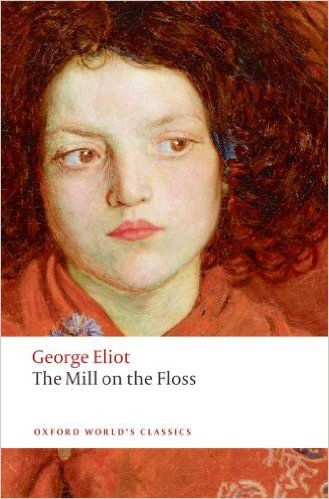
And now it’s February, a new month, a short month, a (probably) pretty busy month. One reason I haven’t been posting is that I’ve been so tired after the work stuff is done: it has been a dreary time at work administratively, with budget cuts and internecine wrangling and lots of doom and gloom ‘what if’ conversations, fiscal as well as curricular. Honestly I’m surprised I even read this much (which isn’t that much, by some standards) in January. I’m enjoying my actual classes, though, and I hope the students are too—although if the current forecast holds we may have our third Monday in a row cancelled for snow. Did I mention I’ve been tired?! Still, we are working through the final part of The Mill on the Floss in the George Eliot seminar and that, of course, is genuinely great reading, and Friday’s class in the Brit Lit survey was on “Goblin Market”—what larks! (We start Great Expectations soon, too!)

This post is a re-done version of my previous January 2026 update to correct a number of odd things that happened when I tried to use the latest incarnation of the ‘classic’ editor. Time to learn how to use blocks, I guess–which is what I did here.

From the Archives: “Janet’s Repentance”

For the first time ever, I have assigned Scenes of Clerical Life in one of my classes—more accurately, scene of clerical life, “Janet’s Repentance.” My re-reading of it some years ago had lodged the possibility of assigning the story (novella?) in my mind, but I hadn’t found what felt like the right opportunity until this term’s all-George Eliot, all the time seminar. We are discussing “Janet’s Repentance” in the seminar this week, so I thought that was a good enough reason to lift this post out of the archives.


I’m not sure when I last read George Eliot’s first published fiction, Scenes of Clerical Life. It might have been as much as 15 or 20 years ago that I read any of the stories right through, though I have certainly dipped into “Amos Barton” once or twice when thinking or writing about her realism and her intrusive narrator. I picked the book off my shelf again this week because I have been thinking (and will be writing) about scenes of visiting in Eliot’s novels. So many of her climactic moments are set up that way, with a sympathetic visitor bringing comfort or guidance to someone in crisis: Dinah visiting Hetty in prison in Adam Bede, for instance; Lucy visiting Maggie near the end of The Mill on the Floss; perhaps most notably, Dorothea visiting Rosamond in Chapter 81 of Middlemarch. The key thing, of course, is that these are human, rather than divine, “visitations” and thus neatly encapsulate her ongoing translation of religious beliefs into secular practices. As I was collecting examples, I had a vague memory of Edgar Tryan visiting Janet in “Janet’s Repentance,” so I thought I’d go back to the story and see what it adds to the pattern I’m exploring.

“Janet’s Repentance” is interesting for lots of reasons, including its grim account of Janet’s abusive marriage, which has driven her, in her misery and shame, to drink:

‘I’ll teach you to keep me waiting in the dark, you pale, staring fool!’ he said, advancing with his slow, drunken step. ‘What, you’ve been drinking again, have you? I’ll beat you into your senses.’

He laid his hand with a firm grip on her shoulder, turned, her round, and pushed her slowly before him along the passage and through the dining-room door, which stood open on their left hand.

There was a portrait of Janet’s mother, a grey-haired, dark-eyed old woman, in a neatly fluted cap, hanging over the mantelpiece. Surely the aged eyes take on a look of anguish as they see Janet — not trembling, no! it would be better if she trembled — standing stupidly unmoved in her great beauty while the heavy arm is lifted to strike her. The blow falls — another — and another. Surely the mother hears that cry — ‘O Robert! pity! pity!’

“Do you wonder,” asks our narrator, as the sordid tale unfolds, “how it was that things had come to this pass — what offence Janet had committed in the early years of marriage to rouse the brutal hatred of this man? . . . But do not believe,” she goes on,

that it was anything either present or wanting in poor Janet that formed the motive of her husband’s cruelty. Cruelty, like every other vice, requires no motive outside itself — it only requires opportunity. . . . And an unloving, tyrannous, brutal man needs no motive to prompt his cruelty; he needs only the perpetual presence of a woman he can call his own.

“A woman he can call his own”: that remark is strongly reminiscent of Frances Power Cobbe’s powerful 1878 essay “Wife-Torture in England,” in which Cobbe emphasizes the corrupting effect of presumed “ownership”:

The general depreciation of women as a sex is bad enough, but in the matter we are considering [spousal abuse], the special depreciation of wives is more directly responsible for the outrages they endure. The notion that a man’s wife is his PROPERTY, in the sense in which a horse is his property . . . is the fatal root of incalculable evil and misery. Every brutal-minded man, and many a man who in other relations of his life is not brutal, entertains more or less vaguely the notion that his wife is his thing, and is ready to ask with indignation (as we read again and again in the police reports), of any one who interferes with his treatment of her, “May I not do what I will with my own?”

 (If you’re interested in reading more on this aspect of Victorian marriage and its treatment in Victorian fiction — try Lisa Surridge’s Bleak Houses and Kate Lawson’s The Marked Body, both of which discuss “Janet’s Repentance.”)

millIt’s also interesting how recognizable George Eliot is here. Many of the things she does better (or at least more fully, or with greater finesse) in her later novels are here already, such as the patient unfolding of social context — the “thick description” within which her plots acquire so much more meaning than their simple actions might indicate — and the pulsation between individual moments and philosophical ideas, facilitated by the narrator’s commentary on the action. Just as, despite her protective camouflage, Eliot’s friends “IRL” knew her when they read her earliest fiction, any readers of The Mill on the Floss know they are in familiar company when they see this anticipation of the famous “men of maxims” passage:

Yet surely, surely the only true knowledge of our fellow-man is that which enables us to feel with him – which gives us a fine ear for the heart-pulses that are beating under the mere clothes of circumstance and opinion. Our subtlest analysis of schools and sects must miss the essential truth, unless it be lit up by the love that sees in all forms of human thought and work, the life and death struggles of separate human beings.

And Janet’s appeal to Mr. Tryan — “It is very difficult to know what to do: what ought I to do?” — is one that has echoes across Eliot’s oeuvre, including in a passage in Middlemarch that has long been central to my thinking about the broader question of religion in Eliot’s fiction: “Help me, pray,” says an overwrought Dorothea to Dr. Lydgate; “Tell me what I can do.”

The big difference, though, is that in Middlemarch the appeal may have the same impulse as a prayer (“an impulse which if she had been alone would have turned into a prayer”) but it is directed at a doctor, and it’s not even really his medical advice she wants but something more fundamentally human, some guidance about how to be in the circumstances. The transformation from sacred to secular is even more distinct in the climactic encounter between Dorothea and Rosamond much later in the novel. But in “Janet’s Repentance” not only is Janet asking a clergyman (and an Evangelical one, at that) for help, but his advice is religious advice — and it is not undercut, or translated into humanistic terms, by the narrator. David Lodge notes in his introduction to my Penguin edition that “Janet’s Repentance” is “a completely non-ironical account of a conversion from sinfulness to righteousness through the selfless endeavours of an Evangelical clergyman.” He goes on to suggest that Eliot’s “religion of Humanity” is just below the surface, but it’s certainly not visible the way it is in her later works. It’s true that Tryan’s kindly fellowship is essential to his success as a religious ambassador: “Blessed influence of one true loving human soul on another!” says the narrator. But it’s trust in God that Tryan recommends, and that brings Janet peace.

Durade GEThe ending of the story is a bit of a disappointment: like Anne Brontë’s Helen Huntingdon, Janet feels obliged to stand by her man as he pays the final price for his cruel and self-destructive behavior. I think that in both cases this affirmation of ‘proper’ wifely devotion is important to direct our attention to the sins of the husbands. Brontë has a more political point to make, though, about the structural as well as ideological failures of marriage, while Eliot’s story focuses us more on the internal moral life and on the redemptive value of compassion and faith. Janet also does not get the hard-earned Happily Ever After that Helen enjoys, at least, not in this life: as Lodge points out, Eliot “even compromised with her belief in immortality to the extent of allowing her hero and heroine a ‘sacred kiss of promise’ at the end.” Disappointing, as I said, and surprising, from an author who wrote so stringently about the immorality of acting on the basis of future expectations rather than immediate consequences:

The notion that duty looks stern, but all the while has her hand full of sugar-plums, with which she will reward us by and by, is the favourite cant of optimists, who try to make out that this tangled wilderness of life has a plan as easy to trace as that of a Dutch garden; but it really undermines all true moral development by perpetually substituting something extrinsic as a motive to action, instead of the immediate impulse of love or justice, which alone makes an action truly moral.

Was she catering to her as-yet unconverted audience, do you suppose, in setting Janet up as a memorial to “one whose heart beat with true compassion, and whose lips were moved by fervent faith”? Or practicing what she herself preached by inhabiting, as fully as possible, a point of view different from her own?

Originally published January 7, 2015. The writing I was doing on visitations in George Eliot became (more or less) the essay “Middlemarch and the ‘Cry From Soul to Soul,'” published in Berfrois in August 2015. Sadly, Berfrois is no more, but the essay can also be found in my collection Widening the Skirts of Light, available as an e-book from Amazon & Kobo for the lowest price I was allowed to set.

This Term In My Classes: Breadth, Depth, & Reflections

Another January, another new term! I’ve got two classes this term of two quite different kinds. The first is our second-year survey course British Literature After 1800, so its aim is to cover a broad sweep of territory; the other is a combined Honours and graduate seminar on George Eliot, a rare opportunity to zoom in on a single writer—a privilege rarely accorded, in our program anyway, to anyone besides Shakespeare!

I led off the survey class today with what I called “explanations and excuses”: I talked in general terms about the traditional model of the historical survey in literature programs; I gave a potted overview of what the standard story of “British Literature After 1800” would have been, moving from the Romantics through the Victorians to the Modernists and beyond; then I raised some questions about oversimplification, inclusion, periodization, and ‘the canon’; and then I made some arguments in favour of nonetheless looking at things in chronological order, at least some of the time. (Showing my age, I used the example provided by David Lodge in Small World of the student who claims he is doing his thesis on the influence of T. S. Eliot on Shakespeare, much to the delight of the hip deconstructionists around him.) Because, if only for my own sake, I like to have some sense of unifying themes beyond chronology, I explained that one thing we would be talking about across the course was what our various authors thought literature was for or should or could do, and I quoted some statements they had made about this, from Shelley’s “poets are the unacknowledged legislators of the world” to Ishiguro saying “I like to highlight some aspect of being human. I’m not really trying to say, so don’t do this, or do that. I’m saying, this is how it feels to me.” And that, besides a bit of logistical stuff about requirements and schedules and getting the books, was that! Friday we get going more specifically with Wordsworth.

Something that was very much on my mind as I prepared for this particular class meeting was the last time I taught this course, which was the winter term of 2020. In early March of that term, we were all sent home; my notes leading up to what turned out to be our last day in person have a number of references to contingency plans, but none of them (none of us) anticipated the scale of disruption. It came on so quickly, too, as my notes remind me. We were part way through our work on Woolf’s Three Guineas on our final day; quite literally the last thing I wrote on the whiteboard was “burn it all down.” I got quite emotional many times while revising the course materials for this year’s version: that term stands out so vividly in my mind as “the before time,” before COVID, which is also, for me, before Owen died. We were still essentially in lockdown, after all, when he died in 2021; we had only just been able to start coming together as a family again. I don’t usually have a lot of emotional investment in my course materials, but it was unexpectedly difficult revisiting these and thinking of how much has changed. Tearing up over PowerPoint slides: it seemed absurd even as it happened, but it did. That said, because of COVID I ended up cutting The Remains of the Day from the syllabus in 2020, and given that it is in my personal top 10, that I rarely have the opportunity to assign relatively contemporary fiction, and that I am running out of years to assign anything at all, I am stoked about being able to read through it with my class this term. If only it didn’t feel so timely!

I am also super stoked about getting to spend the whole term reading and talking about George Eliot with a cluster of our best students—not just our brightest but honestly, I know most of these students from other classes and they are some of the nicest and keenest and most engaged and curious people you could hope to work with. I felt so much good will from them today as we did our ice-breaker (nothing too “cringe,” just everyone’s names and anything they wanted to share about their previous experience, or lack of experience, with George Eliot). I hope their positive attitude survives Felix Holt, not to mention Daniel Deronda! Knowing that a number of them had read Adam Bede and/or Middlemarch with me in other recent courses, I left both of these off the reading list for this one. Middlemarch especially feels like a gap, but on the other hand, I don’t think I could have realistically asked them to read both Middlemarch and Daniel Deronda in the same term (unless I didn’t assign anything else), and Daniel Deronda is pretty great. I had quite a debate with myself about Felix Holt vs Romola: just for myself, I would have preferred to reread Romola, but I’ve taught Felix Holt in undergraduate courses before and it is actually pretty accessible. Sure, Felix is so wooden he makes Adam Bede look lively and nuanced, but, speaking of timely, a book about the pitfalls of democracy when the population is not (ahem) maybe sufficiently wise to make good choices seems on point. Along with those two, we will be reading “Janet’s Repentance,” The Mill on the Floss, and Silas Marner. I’m already a bit worried that it’s going to be too much reading . . .

The last time I taught this class was 2015, and then it was a graduate seminar only. I had stepped back a bit from teaching in our graduate program: we get at most one seminar a year, and my favourite classes to teach have always been our 4th-year or honours seminars, so I made them my priority. OK, that’s not entirely truthful: I had also felt increasingly uncomfortable with graduate teaching, both because of my own loss of faith in aspects of academic research and publication (amply documented here over the years) and because it seemed so clear that an academic path was not a viable option for our graduate students and I wasn’t sure what else we were really doing. These reservations made me much happier focusing on undergraduate teaching, though I missed graduate students themselves: we get such lovely ones! Now we mingle undergraduate and graduate students in some of our seminars, which was the model for last year’s Victorian Women Writers seminar—which I thought went really well. (There was at least one student who disagreed, judging from the evaluations, but you can’t please everyone!) I have high hopes for this seminar as a result, which includes a number of the same students, at both levels.

It is a crazy time in the world and has been a pretty difficult time at work as well, with budget cuts and government interference and all kinds of discouraging internal administrative moves. I have never felt so strongly that I might actually be getting tired of the whole thing, that retirement, scary as it is to me for other reasons, might be welcome just so I don’t have to deal with all this nonsense—the persistent devaluing of the work we do, and the degradation of the conditions in which we nonetheless strive to do it well. I have to say, though, that one day back in the classroom with students has made a difference: I don’t exactly like “the job” at the moment, but I really like the work, the part I think of as the real work. The question will be whether the changes and complications and cuts make it impossible for me to do that work, or to do it well, or just start to outweigh the value I find in it.

Believe it or not, I’ve been posting here about my teaching since 2007. At that point I had already been at Dalhousie for 12 years. These posts are a record, then, of almost two decades in a 30-year teaching career (more if you count the teaching I did as a graduate student). In their own idiosyncratic way, they tell quite a history themselves, including the rise and decline of academic blogging, the (thankfully burst) MOOC bubble, the Great Online Pivot of the COVID years, the encroachment of generative AI (may that bubble burst soon). Through it all, my colleagues and I have just kept on showing up to class. It is common, even among academic administrators, to champion “innovation” as a good in itself and to chastise people or systems that continue to work in more or less the same way. The substance of what we do as English professors changes constantly: we are not asking the same questions or bringing the same methods to bear on the texts we study and teach as professors were 20 or 30 or 40 years ago. But it is not a bad thing that our pedagogy stays true to some essential practices and values. I wish more people with decision-making powers would acknowledge that sometimes things stay the same because they work. Today I sat with students around a table and talked. I have tried all kinds of things over the years (again, as amply documented here!) from class wikis to Pecha kucha presentations; I have used PowerPoint and recorded videos and done letter exchanges instead of essays and on and on. After all this time I am convinced that there is no better pedagogy for the kind of learning I believe in for my students than sitting around a table and talking. Second best (still pretty good!) is leading a robust discussion from the front of the room. That kind of teaching can’t be monetized, surveilled, or sold to tech moguls, though, so nobody gets excited about it—except those of us in the room. We are fighting to be able to keep on doing it. If you care about it yourself, vote for politicians who don’t dismiss it because it doesn’t clearly serve “government priorities.”

Novel Readings 2025

2025 was a less chaotic year for me—literally and psychologically—than 2024. I wish I could say that this meant I read more and better, but instead both my memory and my records show that it was a pretty uneven reading year, with a lot of slumps. The summer especially, which used to be a rich reading season for me, had almost no highlights: the best books I read in 2025 were at the very beginning and the very end of the year.

Best of 2025

Three books I read this year were truly extraordinary experiences. One was Anne de Marcken’s astonishing and heartbreaking zombie novel (yes, you read that right) It Lasts Forever and Then It’s Over. I have thought about this novel over and over since I finished it. How much can we lose, it asks, before we lose ourselves? In a world characterized by loss, what makes us keep on moving? If you are sure, as I was, that a novel about zombies is not for you, maybe think again.

A wind comes up to me in the empty morning like someone I’ve met before or seen before but don’t know, and a feeling comes over me. It is sadness. Not a sadness, but sadness. All of it. The whole history of sadness. Everything in me is sad and everything around me is a part of it. The cracked pavement, the moon, the abandoned cars, the gravity that holds them to the road. It is total. I am taken, or taken down. I drop to my knees.

Connie Willis’s Doomsday Book could hardly be more different in topic, style, or tone, but it too is about loss and death and persistence. It is a historical novel but also a time-travel novel; mostly I find the illogic of time travel too much of an impediment to emotional commitment, but in this case the framing added layers of historical and philosophical ideas that added to rather than distracted from the immersive storytelling of the 14th-century sections. Reading it reminded me of Raymond Chandler’s remark that once a detective novel is as good as The Maltese Falcon, it is foolish to say it can’t be even better: speculative fiction is not a go-to genre for me, but Willis showed me that it’s not the genre itself that’s the barrier. (That said, I stalled out in my subsequent attempt to read her novels about the Blitz, which I started to find tedious—they are staying on my shelves, though, so that I can give them another chance at some point.)

I read both of these books in January; although I read some other good books over the year, the third really exceptional one was Marlen Haushofer’s The Wall, which I finished in December. I suppose it too is a kind of speculative fiction, an eerie “what if” scenario that leads to a novel that if I were a drunk publicist I would pitch as “May Sarton’s existential wilderness adventure.” Once again a key theme is persistence: in this case, literal and physical—she has to feed herself and take care of animals and stay warm—but also metaphysical, as inevitably she asks questions about why she should do any of that, and about the value of everything people do. It is hard to describe this book in a way that captures why it is engrossing and exhilarating rather than dreary but it is.

Also Very Good

My ‘also rans’ list is strong this year, if not that long.

Non-Fiction

The best non-fiction I read was Claire Cameron’s memoir How to Survive a Bear Attack. Yes, it is actually about how to survive a bear attack, but it is also about confronting fear and illness and death.

Yiyun Li’s  Things in Nature Merely Grow is as hard-headed and devastating as her previous writings about  suicide—more so in a way, because this is about her second son to die by suicide. Ordinarily I don’t dislike sentimentality, and there’s a coldness to Li’s voice that is sometimes alienating, but there is also something bracing about her clarity and her refusal to cater to people’s desire for there to be meaning where she finds none, or for grieving parents to offer those around them implicit solace by seeming to get over it, “as though bereaved parents are expected to put in a period of hard mental work and then clap their hands and say, I’m no longer heartbroken for my dead child, and I’m one of you normal people again.” The line from this book that has echoed in my head since I read it is so simple and obvious it might seem strange that it has so much power for me: “children die, and parents go on living.”

An honourable mention definitely goes to Chloe Dalton’s Raising Hare.

Fiction 

Other novels that really stood out to me this year:

Charlotte Wood’s Stone Yard Devotional

Salena Godden’s Mrs. Death Misses Death

Rumer Godden’s Black Narcissus

Helen Garner’s The Spare Room

Carys Davies, Clear

Ian McEwan, What We Can Know

A near miss: Sarah Moss’s Ripeness. As I said in my post about it, “I would not say I loved the novel, but I have never read anything by Moss that isn’t both meticulously crafted and convincingly intelligent.” Moss remains an auto-buy for me; perhaps anything would have been a bit of a let-down after the extraordinary memoir she published last year, My Good Bright Wolf.

I did a fair amount of what I call “interstitial reading” in 2025—books I can easily pick up and put down in between work or chores, or before bed. This year these were mostly romances or ‘women’s fiction,’ writers like Abbie Jimenez and Katherine Center. I didn’t read many mysteries, except for the occasional comfort read of a Dick Francis or Robert B. Parker. I read for work, of course; this is always rereading, which has its own challenges and rewards. This year I found myself wondering what my relationship will be to some of these books when I eventually retire. Will I stop rereading Jane Eyre or Bleak House or North and South? It is hard to imagine that I would never read Middlemarch again.

And on that faintly elegiac note I will add that I reread my year-end post from last year in which I talked about having to “downsize” my book collection when I moved, and it continues to be the case that my relationship to books has changed as a result. It’s not just that “my attachment to (most) books is just lighter” but that sometimes I stare at my shelves and wonder why I am hanging on to most of the books on them! I’m not about to live without any books, and it still means a lot to me to browse in them and remember reading them—or make plans to read them, as yes, I do have books that remain, shall we say, aspirational! (Hello, War and Peace.) The yellowing paperbacks of Elizabeth George mysteries, though, which my aging eyes tell me I will never read in those copies again? or even some of the newish books I was excited about and then kind of disappointed in? Why shouldn’t they go back into circulation, so that other readers can enjoy them (or be disappointed in them) in their turn? Also, speaking of eventually retiring, when that happens there are a lot of books now in my campus office that will come home with me. (Will I keep all of my different editions of Middlemarch? Maybe.)

And that’s a wrap on another year of reading and blogging here at Novel Readings. Thanks to everyone who read and commented or chatted with me on Facebook or Instagram or Bluesky, and also to those who keep up their own blogs. I keep up with them via Feedly these days and I realize this has meant a decline in my own commenting. I am wary of making bold resolutions, so I won’t promise to do better in 2026, but I love reading your posts and I continue to cherish the online community we have sustained for so many years.