This Week in My Classes: Focus on Writing

I don’t seem to be posting my teaching updates with the regularity I used to: “this week” too often means “last week” or “these days.” I was wondering why I put off posting, and I think it’s because after doing this series for so long, I worry about repeating myself if I simply report on the week’s activities. It’s not that things don’t change in my teaching, but I think at this point I have blogged about every course in my repertoire at least once and sometimes two or three times. I mix up the readings every time (for instance, this term I’m teaching 19th-Century Fiction from Dickens to Hardy with a completely different book list than I used in this course last year) — but even so I’ve often assigned the books in other courses. And I change up the assignments regularly, for better or for worse (“I think Dr. Maitzen is trying too hard to make her assignments different,” says one of the evaluations for last term’s Somerville Novelists seminar). But after a while, how interesting is it to hear about this kind of thing?

Still, I stand by my reasons for launching the series, and I see no signs that misunderstandings or misrepresentations of academic work have abated (cough cough Forbes article cough cough). So, I’ll keep it up at least to the end of this term and then maybe reconsider. In the meantime, I’ll try to get back to more of a brief update than a long screed or meditation, just to reduce the psychological roadblocks I’ve been putting up!

nightIn English 1000 this week, we’re finishing our discussion of Wiesel’s Night. In our conferences at the beginning of term a lot of students said they still have difficulty coming up with a good thesis, soI’m going to use a fair amount of our class time on how to move from observations about Night to an interpretive argument of the right kind. One of my strategies for tomorrow is to show them the ‘suggested essay topics’ for Night that are posted at SparkNotes. None of them would lead to an essay that is really appropriate to the kind of work we’ve been doing in the course in general or on Night in particular: we’ve been talking mostly about the difficulties of representing the Holocaust, and thus on what strategies Wiesel uses both to show and to overcome the inadequacies of language.  I’m hoping that the SparkNotes topics will clarify by comparison the kind of thing we are trying to do. Then we’re going to walk through the thesis-building process again, starting from something they find worth noticing to collecting observations about it to asking questions about its significance and finally to stating a thesis about it.

In English 3032 the students are writing the first of their “mini-midterms” tomorrow — these are replacing the multiple-choice pop quizzes I used for many years to motivate reading and note-taking. Then on Wednesday, this class too will focus on essay writing. Though it’s a 3000-level course, it’s not limited to senior students and I find there’s always a range of levels. Even the more advanced students, too, in my experience, often benefit from some guidance on the difference between an essay that describes something in the novel to an essay that interprets something in the novel. So we’ll walk through a similar exercise to the one I’m doing in Intro. I’ll be interested to see what attendance is like for that session. I know I never would have missed an opportunity to hear more about expectations and standards for an assignment! But not one of my professors ever spent time on this kind of “how to” or “process” class. It’s up to the students which of our first four novels they write about for their first essay. I’m happy to say that two students did in fact resolve to write on Bleak House! I wonder what the breakdown will be over the other options (CranfordThe Mill on the Floss, and Lady Audley’s Secret).

With just two classes this term rather than last term’s three, I do feel more relaxed, especially about finding time to do marking. There’s lots else to do, though, from administrative meetings to reference letters to MA thesis proposals etc. etc. Plus it’s winter, and both kids have been sick off and on, so all the daily logistics are a bit harder than would be ideal. Thankfully, my husband is on sabbatical this term and working at home, so he’s coping with most of the fall-out from sick days and snow days. This month I also had five contributors working on pieces for Open Letters, which has been great, of course (thank you all!) but has rather hampered my work on my own piece. Well, if not this month, then next month for sure, especially as I’ll have the February reading week guaranteeing me some stretches of uninterrupted time.

This Week In My Classes: The Value of F2F

The Student (Dixon)Last week I cancelled two regular class meetings for my Introduction to Literature Class and instead set up individual conferences, 15 minutes per students. (If you want to do the math, of the 26 registered students 24 ended up meeting with me, so that was six actual contact hours in place of two, and since it wasn’t possible to run the meetings entirely consecutively, overall I had about eight hours of my schedule taken up with this exercise.)

In a previous post I wrote quite a bit about my motivations and goals for these conferences. It will be a while before I can tell if they made much difference in terms of how students respond in the classroom. Many of them set as one of their goals that they would like to participate more in discussion — yet on Monday things were not especially lively, even though I thought the readings (Randall’s “Ballad of Birmingham” and Hughes’s “A Dream Deferred”) were reasonably provocative. Whatever happens, I think the process had value for them, because it prompted them to reflect on their work for last term and to consider what role they might have in making this term successful. All of them seemed to take the exercise seriously, and some of them realized important things about their work habits or about relationships between different course requirements (such as reading journals) and outcomes (such as understanding of material or grades on papers). So that’s good!

And the process had value for me too, not least because meeting with them face to face renewed my conviction that teaching is a very personal activity. “Content delivery” is not nothing, but it’s far from everything; skills development is also something, but it too is not sufficient. Education is an internal process as much as anything: something has to change within, and while no avid reader is going to say face to face interaction is the only route to inner transformation, I really believe that there’s something special about speaking directly to another human being who takes a sincere interest in you. I was at a faculty meeting today where we were invited by our university’s president to imagine the program we would create if we could do anything we wanted, without constraints. It was an ironic suggestion, really, as the meeting was about dealing with a looming budget crisis–it was all about constraints! The problem is that what I imagine is a program in which that kind of personal interaction is routine–if not throughout a student’s entire degree, at least at key moments, and I’d consider their first year just such a moment. My “blue sky thinking” always brings me back to something like a “freshman seminar” model, with maybe 15 students around a table with a dedicated, experienced instructor with plenty of time and attention for them. But I can’t figure out how such a dream is compatible with our need to (as our Dean put it) “do less with less,” especially when the only recipe for financial flourishing appears to be more students and fewer faculty.

Anyway, I’m glad I worked these meetings into my plans for this term. If nothing else, they know there’s one person on campus who’s really paying attention to them! And it’s a rarity for me to have any class, much less an intro class, small enough to make this logistically feasible.

Now we’re back to our regularly scheduled programming, with another week of poetry before beginning Elie Wiesel’s Night next week. This week’s poem are something of a build-up to Night, in that they all deal with difficult realities, from Randall and Hughes yesterday to the horrors of trench warfare on Friday, with Owen’s “Dulce et decorum est.” One thing we’ll talk a lot about with Night is how (and even whether) to transform suffering into art, and how choices of literary form and representation are also choices about the meaning of real events. After that we’ll move on to The Road — so basically we’ll all be depressed for about the next month.

In 19thC Fiction I won’t be having conferences, but I am having the students write regular reading journals, and that gives me at least a little sense of them individually to add to what I can glean from class discussion. I’ve had just a few submitted so far but I like reading them: they seem to be just formal enough that the students have put some thought into them, but not so high stakes that they (or I) need to stress out over them. That said, I’m going to be reading a lot of them this term: if every student submits the three required entries for every novel, that’s 630 journal postings at approximately 150 words each, for a grand total of … eek, about 94,500 words. Will I end up regretting not just assigning more standard essays? But these have other purposes, and they come in small and so far quite tasty doses. And if any students in this class want to meet with me one on one (which I will emphatically encourage them to do when they are working on their longer papers), they’ll be welcome — and, in case they need any extra incentive, I’ll let them know that I have a stash of extraneous books in my office from which visiting students are always welcome to help themselves…

From the Archives: The Last Time I Taught Bleak House…

bleakhouseoupFor some reason this phrase has been running through my head to the tune of “The Last Time I Saw Paris.” I don’t know why I would be feeling nostalgic about teaching Bleak House, though it was rather a while ago–it was Fall 2008, to be precise. Because we’ve started work on it in my 19th-century fiction class this week, I’ve been reviewing old notes and also old blog posts, which prove (among other things) to be a valuable archive. Because (so far at least) my ideas about the novel haven’t really changed in the meantime, and because a lot of people who might stop by and read this post almost certainly never read my earlier ones, I thought I’d repost a couple of them, starting with this one about the beginning of the novel and the beginning of my class discussions of it.


From the Novel Readings Archives: Fog. Mud. Smoke. Soot. Gas. Fog.

Bleak House Shadows (Phiz)

No, that’s not today’s prediction from Environment Canada (though there is something implacable about today’s weather, even if it’s not yet November). This week in one of my classes, it’s time for Bleak House–by comparison with which, nothing else I’m doing at work really matters. The introduction to our Oxford World’s Classics edition remarks that the opening ‘set piece’ is ‘too famous to need quotation.’ Well, I don’t know about that, especially because I consider it an aesthetic accomplishment self-sufficient enough to render critical commentary not just redundant, but irritating. Here are the first four paragraphs, then (three of them composed entirely, it’s worth noting, of sentence fragments).

London. Michaelmas term lately over, and the Lord Chancellor sitting in Lincoln’s Inn Hall. Implacable November weather. As much mud in the streets as if the waters had but newly retired from the face of the earth, and it would not be wonderful to meet a Megalosaurus, forty feet long or so, waddling like an elephantine lizard up Holborn Hill. Smoke lowering down from chimney-pots, making a soft black drizzle, with flakes of soot in it as big as full-grown snowflakes–gone into mourning, one might imagine, for the death of the sun. Dogs, undistinguishable in mire. Horses, scarcely better; splashed to their very blinkers. Foot passengers, jostling one another’s umbrellas in a general infection of ill temper, and losing their foot-hold at street-corners, where tens of thousands of other foot passengers have been slipping and sliding since the day broke (if this day ever broke), adding new deposits to the crust upon crust of mud, sticking at those points tenaciously to the pavement, and accumulating at compound interest.

Fog everywhere. Fog up the river, where it flows among green aits and meadows; fog down the river, where it rolls deified among the tiers of shipping and the waterside pollutions of a great (and dirty) city. Fog on the Essex marshes, fog on the Kentish heights. Fog creeping into the cabooses of collier-brigs; fog lying out on the yards and hovering in the rigging of great ships; fog drooping on the gunwales of barges and small boats. Fog in the eyes and throats of ancient Greenwich pensioners, wheezing by the firesides of their wards; fog in the stem and bowl of the afternoon pipe of the wrathful skipper, down in his close cabin; fog cruelly pinching the toes and fingers of his shivering little ‘prentice boy on deck. Chance people on the bridges peeping over the parapets into a nether sky of fog, with fog all round them, as if they were up in a balloon and hanging in the misty clouds.

Gas looming through the fog in divers places in the streets, much as the sun may, from the spongey fields, be seen to loom by husbandman and ploughboy. Most of the shops lighted two hours before their time–as the gas seems to know, for it has a haggard and unwilling look.

The raw afternoon is rawest, and the dense fog is densest, and the muddy streets are muddiest near that leaden-headed old obstruction, appropriate ornament for the threshold of a leaden-headed old corporation, Temple Bar. And hard by Temple Bar, in Lincoln’s Inn Hall, at the very heart of the fog, sits the Lord High Chancellor in his High Court of Chancery.

Sure, there’s plenty to be remarked about this passage, beginning with its literary virtuosity and metaphoric ingenuity. Dinosaurs and compound interest? Snowflakes in mourning? ‘Fog’ used 13 times in one paragraph? Gas that’s ‘haggard and unwilling’? I’m reduced to the exclamatory mode some critics objected to in James Wood’s How Fiction Works: “What a piece of writing that is!” It puts to shame other writers called ‘Dickensian’ for no apparent reason except that they write multiplot novels with quirky characters and lots of emotion. There’s also its extraordinary efficiency at launching both governing ideas and dominant images of the vast novel it introduces; fog, mud, and infection order the thinking of Bleak House as much as webs do the same for Middlemarch. But really, the point of this passage is just to read it, to experience it, and then to carry the impression of it with you as you read on. (Is this response ‘aesthetic’? I’m not sure, or at least I’m not sure I could separate my admiration for the literary features of this passage from my sense of its ethics–or, better, its ethos.)

Today I’ll give a brief introduction to Dickens and some context for the first publication of Bleak House. Then my chief concern is to help my students find some reading (and note-taking) strategies to make their experience of the novel rewarding, which means helping them organize the mass of material (and the array of characters) they will be rapidly confronted with. We’ll do some ‘getting to know you’ work first of all: who do we meet in each of the first few chapters, and how are they connected? I’ll encourage them to keep a list of characters in each plot or location and to draw lines between them as relationships are discovered. They will have a chaotic criss-cross of lines before too long, which of course is the point–everything and everyone is connected, as Dickens challenges us to realize with his disingenous questions in Chapter 16:

What connexion can there be, between the place in Lincolnshire, the house in town, the Mercury in powder, and the whereabout of Jo the outlaw with the broom, who had that distant ray of sunshine on him when he swept the churchyard-step? What connexion can there have been between many people in the innumerable histories of this world, who, from opposite sides of great gulfs, have, nevertheless, been very curiously brought together!

My other main strategy is to get them thinking in terms of themes and variations. Today, for instance, we’ll look at how many ways the idea of housekeeping is refracted across the different story lines. Finally (though this is certainly not my last priority) I will try to convey, and make contagious, my enthusiasm for Dickens’s language in the novel, and to get them thinking about how his literary strategies (including the kinds of wild metaphors we get in the first few paragraphs) are important to his conception of the ‘condition of England question,’ and to his answer to it.

[originally posted October 27, 2008]

Next Week in My Classes: Winter 2013 Term Begins!

ScreamThe past week has been all about getting organized: packing and cleaning up from Christmas, sorting the kids out to get back to school, and sorting myself out to be ready for the start of winter term classes tomorrow. I wasn’t starting from scratch, happily, but I made some adjustments to my plans for my Introduction to Literature class, which continues from last term, and finalized the plans for The 19th-Century British Novel from Dickens to Hardy, which is just beginning.

Reflecting on the first term’s work in Intro, what I decided was that this term I want to get the students more involved. They’ve been a good group: diligent, attentive, and basically cooperative for class discussion, group work, and peer editing. My sense is, though, that most of them did not sign up for the class because they were passionately interested in literature or in becoming literary critics. For most of them, English just seemed like the default option for their mandatory writing requirement. Dal’s writing courses are based on a ‘writing across the curriculum’ model, though, which means that our courses are not composition classes but are intended to introduce students to the methods of our discipline. Most of our upper-level courses have one or the other of these introductory classes as their prerequisites, with the program as a whole building up to increasingly specialized critical work. I’ve always taken this discipline-specific mission pretty seriously, not by working in literary theory or anything but by focusing on ways to talk precisely about things like poetic form or narration or characterization, and by working hard on how to develop and support an interpretive argument. Though this does vary by background and training, first-year students very often arrive having done little analytical work in English classes: their experience tends towards book reports or personal (or even creative) responses. So there’s lots to be learned, and that’s what we focused on in the fall.

Now I’d like things to — not loosen, so much as liven up. There is still a fair amount of uncertainty about literary terminology and about how to think your way through to a strong and interesting thesis, but the focus will be on practising, on doing, even more than before. So I want more class discussion, more partner and group work, more students talking in class, and maybe to the rest of the class. I want them to feel in their bones that class time when I’m not talking can be some of the most valuable, rather than least valuable, time: that trading ideas with each other and challenging each other is our version of doing labs, and, above all, that just staring at the words on the page is not enough to prepare for class. Finally, having spent a lot of the first term telling them what they need to learn and do, I want them to take over the task of motivating themselves: I want them to identify their strengths and weaknesses and consider these in relation to their goals for the course. One way to put it is that I have brought them to the water and now they need to decide if they will drink ! Another way to put it is that having, I hope, established a clear framework for their learning, I can gradually get out of their way.

I don’t think I’m talking about a drastic shift (it’s not as if I micromanaged every aspect of their work or our discussions last term) but it is something I want to be deliberate about. So what I decided to do this week is to work on personalizing the course for them by replacing a couple of our first class meetings with one-on-one conferences in which we’ll discuss their work in the course so far and their goals and expectations for the rest of it. I’m asking them to do a self-assessment for their first journal assignment, to bring along to the meeting with me: that way I know they will have given some thought to the purpose of our little chat. I think it will be useful for them to take stock, and asking them to so in writing that they submit will show them that I am interested in their ideas. My experience has also been that individual meetings help students get more comfortable with me, and help me understand better who exactly they are and how I might be useful to them. It’s relatively rare for me to have a small enough class that I can afford the time to require such conferences, but in this case not only is it the smallest intro section I’ve ever taught but it’s also a full-year course–a real luxury these days–so the logistics aren’t overwhelming. Here’s hoping the effects are beneficial.

Bleak House Shadows (Phiz)I taught the Dickens to Hardy class just last winter, but with a book list that was 100% different, so I won’t be just coasting along this time. This year’s reading list is thematically unified (sort of) around troublesome women, and it includes two novels I’ve never lectured on (Cranford and Tess), so I’ll be busy finding out what I have to say, and what I want us to discuss, about them. I’ve also tweaked the assignments again, introducing online reading journals and what I’m calling “mini-midterms” as ways of stimulating and measuring attention on a regular basis, and then assigning one short paper for everyone followed by the option of a longer research paper or a final exam. I found I just didn’t have the stomach for the letter exchange assignment I used for many years. While pedagogically I think having them write really frequently is very beneficial, I was exhausted by organizing all the bits and pieces and dealing with students who (sometimes for good reasons, sometimes for no reason at all) messed up the system. For the short papers this time, I’m allowing them to choose which of our first novels they write on and thus which deadline they meet. I almost decided against this because I was worried they’d all gravitate towards the latest deadline and thus (oh no!) nobody would write on Bleak House (which we’re reading first). But then it occurred to me that I don’t much want to read essays on Bleak House by students who don’t actually want to write on Bleak House, and the mini-midterms give them an incentive to read it on schedule, at least … and the same goes for the other books. Surely I can trust them to manage their time and follow their hearts. In the worst case scenario, I get 40 essays on Lady Audley’s Secret and they have to wait a while to get them back.

This Week In My Classes: Wrapping Up

The last ten days or so have been all about evaluating the final assignments for my two fall-term classes, Mystery and Detective Fiction and The Somerville Novelists. The students in my Intro to Literature class wrote a last essay for the term too, but that came in earlier and so I was able to turn it around before the final exams and essays and projects came in from the other groups. That means, though, that basically, for about two weeks, I’ve been in what we refer to on Twitter with the hashtag “#gradingjail.”

I went to a teaching workshop a few years ago where the very helpful advice offered was not to assign any writing you won’t want to read when students turn it in. That’s a good idea, but it’s also a ridiculous idea, as any writing instructor knows: there is no assignment so meticulously conceived, there are no instructions so compellingly worded, that every student will be motivated to, much less able to, do a wonderful job. And it’s not the well-intentioned imperfections in assignments by motivated students that drag us down at this time of year: it’s the lame-ass ‘I’m only doing this because you’re making me’ ones, or the ‘everything else was a higher priority so I threw this together at the last minute’ ones, or the ‘I really have no idea how to do this but even though I never came class or to your office hours, I’m still turning something in to see if I can pass’ ones. It’s the ones in which even the authors’ names are misspelled, despite being right there on the book cover for easy reference, or the advice on three previous assignments was ignored, or that show beyond a reasonable doubt that the student never finished the book they are writing about. Though it would be fun (and fast!) to grade a batch of final essays or exams all of which deserved A+ grades, we don’t expect perfect work: these are students, after all, and they’re learning — that’s the point of their being in our classrooms in the first place. But learning really is a two-way street. Exciting as a truly great assignment by an already flourishing student can be, often it’s the students who have, by effort and persistence and caring, and also by consultation, just made their work better who give me the best feeling when I’m marking.

mosley

Happily, I did see some examples of that this term, and overall my sense of all three classes was that most students were doing their level best. One of the biggest surprises of my recent marking was that a significant majority of the answers to the essay question on the Mystery and Detective Fiction exam (on social justice in Devil in a Blue Dress and Indemnity Only, in case you wondered) were very good: smart, articulate, and supported with detailed discussion of examples. It was hard work going through the entire stack of exams, and it took a long time (between students who did the optional final paper and students who mysteriously vanished from the course over time, there were 74 exams in the end, which certainly felt like plenty) but it was a familiar experience, and I think it gave me a good sense of who was really on top of the course material and who really wasn’t, which after all is the point of the exercise.

south riding

Evaluating the wiki projects for the Somerville Seminar, on the other hand, was a new kind of effort. As my Twitter friends know, I felt a lot of stress about these projects while they were still in progress, mostly because despite my urging, not a lot of students put even draft material up early, thus making ‘gardening’ as well as some aspects of collaborating and conceptualizing difficult. But it was also stressful because of the difficulties I knew some groups were having organizing meetings and getting everyone to participate. As I said, rather defensively, to people who responded to my stress by wondering why I assigned group projects in the first place, I have included a group project of some kind in nearly every 4th-year seminar I’ve taught in my 17 years at Dalhousie, and they have always seemed to go very well! So what was different this time? A couple of things, I think. First of all, this time I had a backstage pass: the projects were going up on a shared PBWorks site, so not only could I see posted content, but I got daily reports of which users had been doing what – including, sometimes, discussions among group members about logistics and frustrations. If I had seen only the finished product, as in the past (not counting the mandatory ‘confer with me at least once about your plans’ sessions that are always part of the process), I might never have known it wasn’t a seamless, harmonious process.

Would it have been better for me to hide my eyes? More important, would it have been better for them? In both cases, I think the answer is no. Because the assignment was experimental, for one thing, I needed to know if clarification or intervention was required, which sometimes it was. Also, because one aspect of the assignment was precisely ‘good collaboration among group members,’ I needed to see if this was going on. Without watching the sausage get made, too, there would be no way for me to learn if I had done my part well, in terms of designing the assignment, laying out the instructions, and supporting the class in meeting the requirements. From their point of view, I think my surveillance, though no doubt occasionally felt as intrusive, was mostly a good thing: I did step in with suggestions when I felt they were heading in unhelpful directions, and when I realized how imbalanced the (visible) contributions were getting, I did some covert, as well as some overt, er, motivating.

All in all, then, I think it was not just useful but responsible of me to pay attention to how things were unfolding. Looking over the final projects, which range from good to outstanding, I’m not sorry, either, to have put everyone (myself included) through this difficult process. But I have certainly been thinking about whether I could have made it any less stressful, and this leads me to another way in which these projects differed from previous group assignments: instead of being staggered across the term, they all came due at once; and though there were multiple components, there was really only one explicit deadline. I thought that it would suffice to address the various components through in-class workshops aimed at developing concepts and getting people started, but clearly, though that was not wasted time, people didn’t (mostly) get started. Probably 75% of the final content on the wikis went up in the 2-3 days before the final deadline, and as far as I could tell, a pretty significant amount of the research was done during those days as well. I talked and talked about the importance of doing the projects in stages, and especially about putting content up early so that others could ‘garden’ it, but I think this advice was just too abstract, the required work too amorphous or theoretical. Also, I think most of them wildly underestimated how much work would actually be involved in building the different components (something earlier attempts would, of course, have alerted them to). As a result, these projects lost out in the day-to-day triage, as they did other work that felt more urgent because it had concrete deadlines coming right up. Lesson learned: when (indeed, if) I do anything similar again, I’ll build in more staged deadlines. To me that goes against the atmosphere of open creativity I was trying to foster: setting deadlines means spelling out exactly what has to be done by then, and that’s tricky if you want them to make decisions about what needs to be done in the first place. That’s why I didn’t have more interim deadlines this time–that, and because I thought they would be better at managing their own time. Some of them were, amazingly so, but that didn’t help them too much when they were dependent on others to do their parts. I’m of two minds, really, about how much responsibility to take for some students’ work habits, which is really what we’re talking about here. But ultimately what I want (what I wanted) is to see everyone involved and successful and excited: it made me sad to see, instead, people feeling frustrated, stymied, and harried. If there’s a next time, I’ll see what I can do to structure their time better for them.

Evaluating these projects was challenging for me. There was a lot of content (eventually!) and there were a lot of different aspects to take into account, from layout to research to clarity and focus to effective linking between sections: it made reading a traditional essay seem like a reductively linear process! But in many ways it was a much more interesting task than reading a stack of critical analyses. One reason is that a lot of students wrote about quite obscure books, so I learned a lot myself from the work they had done. Another is that several of the components were more reportage than literary criticism, which meant that the prose was crisper and more straightforward and didn’t need to be read with a painstaking eye to argument or interpretation. One of the hardest parts of commenting on literary essays is trying to grasp what thesis would have worked to unify the examples, or even just to understand what a conceptually garbled sentence or paragraph might have been intended to mean, in order to propose a better version of it. There wasn’t much of that involved here, and that was great! Freed from the obligation to write academic-ese, they proved perfectly capable of saying very insightful things and making all kinds of good connections between texts and contexts and concepts we worked on in the course. That was very satisfying to see, and it encourages me to keep looking for different kinds of writing to assign. Hardly anybody in my classes is going to become an academic critic, after all, so teaching them to write like one seems less and less like it should be my priority. As far as that goes, in fact, everything about these assignments still, in spite of everything, seems like a good idea.

And now my final grades are filed for the two courses that ended, and I’m going to take a break from fretting about teaching for a few days before I turn my attention to the final planning for the winter term. My Introduction to Literature class continues, and I start another round of The 19th-Century British Novel From Dickens to Hardy. As usual, I’ve tweaked the reading list by a book or two, and I have ideas for yet another twist on course requirements … but first, I’m looking forward to returning to Anna Karenina.

This Week In My Classes: Finishing Touches

Today was the last day for my fall term classes, which means the last meeting altogether for two of them. One of them, Introduction to Literature, continues in January, when I will also be adding another round of The 19th-Century Novel from Dickens to Hardy–a very different round, just by the way, from the last one, since not one of the books will be the same and a couple of them are ones I’ve never, or very rarely, assigned before. But I can’t think about that now! That’s next term … and tempting as it is to wander away from the remaining obligations of this term, they do still have to take precedence.

In Intro it was our third editing workshop of the term: we’ve been doing one before each due date. The last two were peer editing, but today they did reverse outlines, using a worksheet I adapted (with acknowledgment) from this useful one prepared for the Writing Center at U of T Scarborough. The only real change I made, besides some tweaks to the explanations to fit our particular assignment, was to add a space between the block for each paragraph for them to put in a transition word or phrase indicating the logical relationship between the paragraphs. I think peer editing has its uses, but it often seems like the blind leading the blind, and I’ve seen papers turned in with crazy problems that peer editors apparently were fine with–so I wanted to focus on their ability to scrutinize their own writing and judge its strengths and weaknesses for themselves. I think it was an effective exercise for turning up problems: certainly they did not simply fill in the blanks and try to leave early! These essays are due in their final versions on Wednesday, so that will be my next big job this week.

In Mystery and Detective Fiction I gave a review lecture, a useful thing, I think, for reminding them about the specific material but also, and more important, for going once more through some of the framing ideas and unifying themes of the course. It was also our last chance to talk about Devil in a Blue Dress. I think it works reasonably well to incorporate comments on the novel into the review session, but I do feel we ended up giving it short shrift, so maybe next time around I’ll be sure to allow one more class on it. After my talk we used the review handout I’d prepared for some Q&A, so students could ask about the material they felt least certain about and get help from their classmates as well as from me. And that’s that, until we meet again for the final exam next week. A handful of students are doing the optional final essay instead, due the same day as the exam, so that’s a lot of what I’ll be doing next week.

In The Somerville Seminar, we had our last round of Pecha Kucha presentations today. Five in one class is too many–not because we ran out of time for the presentations, but because it didn’t leave us much time for discussion after each session. I had originally planned for four a day but we all felt the end of term crowding in on us so I proposed starting them a bit later and tightening up the schedule. Overall it was still probably the best choice, but next time I do them I will allow more space around the presentations. I do think I’d like to use them again as an assignment, though. They were really well done, and though the format does impose constraints that can seem artificial, the dynamic is very different than with standard PPT slides or with other kinds of student presentations. The brisk pace keeps everyone’s attention, and the emphasis on graphics to illustrate concepts or support ideas, rather than using slides as alternative versions of the same things being said aloud, made the experience much more entertaining. The strict time limit moderated by the impersonal settings on the computer also frees me from having to be the Presentation Police. It’s very stressful to see someone running over time and crowding out whoever comes next, and to have to choose between letting them go on and publicly calling attention to the problem by stopping them. The most anyone ran over this time was about 10 seconds. So at this point I’m a fan of this new style, and as for substance, well, it’s amazing how much information and insight you can fit into 6 minutes and 40 seconds if you really think about it.

I felt quite distressed last week as I felt the wiki projects for the seminar were not coming together–despite (she says defensively) my having warned them and warned them about not putting off collaborative work until the last minute, and my having stressed as much as I possibly could that this kind of project is best done in small increments rather than large doses, including regular ‘gardening.’ As I watched the daily reports come in from PB Works, I knew that many (though certainly not all) of the students had nonetheless been putting off their contributions. Facing that reality, and taking into account that the projects for the course were not familiar kinds–for them or for me–and that thus perhaps we had all underestimated how much time it would take to do them well, I took a very rare step for me and acted on the regulation that allows a change to course requirements with a strong vote in favor by the class. I put up a proposal for an alternative plan removing one of the course requirements, and it did get basically unanimous support. There were a few complications, and for a while I regretted having even raised it as a possibility, but we got it all sorted out, so now my only regret is having waited as long as I did to propose it. As I said to the class, I really do believe it was possible to complete all the originally planned components, but this way I hope that everyone will do better work and feel better about it too. There will be more weight, now, on the wiki projects–and reading and evaluating the final product will be my other significant work after the deadline passes next week.

So now I have a very short window between wrapping up the classroom work and getting in my first batch of assignments. I have reference letters to do and department minutes to write up, and a plagiarism hearing, and a dentist appointment! Not all fun and games, in other words. But maybe, just maybe, I’ll get in a little Christmas shopping too. Then I’ll be in what we on Twitter fondly (?) call #gradingjail. In the meantime, also, I have finally begun Anna Karenina, because I’ve been craving some really good reading.

This Week In My Classes: Where Did It Go?

It really does not feel as if it has been a whole week since my student’s thesis defense — where does the time go? This sense that the days are racing past is probably a function of how busy this time of term is: it’s one thing after another after another, and it will stay that way until exams. In some ways, this is how I like it (remember how mopish I get during the summer?). But it has been frustrating for me for the past couple of weeks that I haven’t been able to focus on much reading or writing outside of work. I did finish Crewe Train, and then this week I finished Wide Sargasso Sea–but I can’t seem to work up anything I want to say about it yet. My book group meets tomorrow to discuss it, so I’m going to reread some parts of it between now and then, and I’m sure the conversation with everyone else will get my reading brain working again…and then my blogging will perk up again too! Things have been so sluggish around here I thought I was going to have to do a meme of some kind just to pick up the pace–something like this one. Maybe I’ll do it anyway this weekend, just for fun. Nobody ever tags me for memes! Maybe I don’t seem like a meme-doing kind of blogger. At any rate, much as I’ve been enjoying all the book blogging goodness from all the folks on my Reader feed, I was starting to get depressed that I wasn’t adding anything to it.

Not that I’m not reading for class, of course. On Wednesday we started Sara Paretsky’s Indemnity Only in Mystery and Detective Fiction. I enjoy working through this book with the class, though I sometimes imagine (or am I imagining?) a faint simmering of resistance to its overt feminism. Every year there are a few students who remark that V.I. goes “too far” talking back to the men she finds belittling — they seem to think she doesn’t need to make such a big deal about it. I usually bring up the context of “tough talk,” which is a convention of hard-boiled detective fiction: in a way, she’s just carrying on that tradition, except her relationship to authority figures is affected by her sex in a way that Sam Spade’s isn’t. I also put the novel in a bit of historical context (it was first published in 1982). But in the end, I think we just have to deal with V.I.’s political assertiveness as part of her character and part of the agenda of the novel. Overall, I think the novel doesn’t so much preach a particular feminist agenda as it tries to model it. In case anyone’s interested, a couple of years ago I wrote at greater length about Paretsky at Open Letters.

In Introduction to Literature we’re in our short fiction unit. Today’s story was Alice Walker’s wonderful “Everyday Use.” They seemed pretty interested in it. For Monday, we’re reading Raymond Carver’s “A Small Good Thing,” which I love. I’m having them work on finding what we’re calling “exemplary passages” for discussion. I find it’s a good exercise because in order to decide on a passage that really repays close attention, they have to figure out what they think is really important to say about the story as a whole. Then they can take their ideas about its themes and problems and patterns and focus on how specific details of the language convey and illustrate those themes. Back and forth between general and particular: that’s the basic process of literary analysis, right? The other reason we’re taking this approach, though, is that in the era of control-C control-V plagiarism I really can’t risk assigning a straight “interpret this story” essay — there needs to be some kind of twist. Sadly, I’ve already sent my first plagiarism case of the term on to the appropriate authorities.

In the Somerville Seminar, they have been working on their collaborative wikis and independent reading projects this week. I see a lot of material starting to go up on the wiki site, which is reassuring! And the first student Pecha Kuchas are Monday. I’m looking forward to them. I’m trying to plan ahead to make the technological side of it as simple as possible because we need to fit five into each class session. If things go smoothly, that should leave us about 15 minutes for some Q&A after each round. I hope they have some fun putting them together. I know some of them are chafing at the restrictions of the format, but the more I’ve conferred with people about them, the more pleased I am that they are having to think about the slides less as a projected version of what they are going to say themselves and more as a different dimension of the story they want to tell.

In between classes I’m marking midterms for the mystery class. I’m also preparing a short talk I’m giving for the Dalhousie Theater Department to introduce their production of Helen Edmundson’s The Mill on the Floss. Can you imagine a stage version of The Mill on the Floss? I couldn’t either, but I’ve been looking through the script and it’s fascinating. I’m speaking as an expert on the novel and novelist, not the play, but of course I wanted my remarks to be pertinent to what we’re going to see. File under “Things that make me feel old”: the brilliant, charismatic director, also an award-winning teacher, was a student in one of the first classes I taught at Dalhousie!

Catching Up

When I said I was posting my review of Crewe Train a bit early because I had another big deadline coming up, in a way I misspoke. It wasn’t exactly my own deadline, although I was involved in it: a Ph.D. student I have been supervising defended her thesis on Friday, so my part of the event (reviewing the thesis and preparing questions for the exam), though time-consuming, was not nearly as important as hers! I’m happy to report that the defense was very successful and, aside from some odds and ends of paperwork and the submission of the very final copy, she and I are both done. I am very pleased for her: she should be proud of her hard work and its results. However ambivalent I may be about recommending graduate school as an option, there’s no question that the graduate students I have worked with over the years are some of the best and smartest people I know, and once they have made the commitment to do these degrees, I do my level best to be helpful and supportive.

In some ways, though, I have to admit that in recent years graduate supervision has been harder for me to do. The advice I have to give students based on what I know to be the standards and conventions within the discipline and profession is often not congruent with my own doubts about those standards and conventions, and my aversion to reading some kinds of academic criticism has only worsened as I spend less time doing it myself, making it tricky to coach students to write it! For these reasons, among others, I have been cautiously scaling back my role in our graduate program. As of yesterday, though, that contribution includes supervision of four completed Ph.D. theses and 16 completed M.A. theses. We had a celebratory dinner at Estia for the candidate and all six members of the examining committee. A small point, or maybe it isn’t so small: we couldn’t help but notice that from the external examiner on down, we were all women.

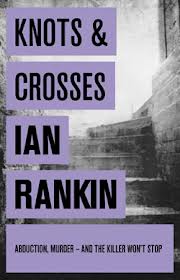
Preparing for Friday’s defense took up a lot of my time and energy last week, but there was routine class business to get done as well. I managed to return a set of papers in my first-year class, which was really worth the extra push so that they weren’t hanging over me this weekend. My conscience needs a break! In Mystery & Detective Fiction we were working through Ian Rankin’s Knots and Crosses. I know he doesn’t consider it his best, and in many ways it is also atypical, but it teaches awfully well because it is so deliberately literary–not to mention terse. Still, I’ve been wondering if next year I might take a chance on one of the longer ones and cut something else from the reading list. It’s such a challenge in that class finding the right balance between providing variety and overwhelming the students with too many different books. My own view has usually been that most of the books we read aren’t really complex enough to require a lot of classroom hours, so just taking longer on them would be counterproductive: we’d go more slowly, yes, but also feel that less was happening, that we were discovering less. The books are not particularly long or difficult reads, either, and I figure they can sub in easily enough for whatever leisure reading students might otherwise be doing! It’s hardly punishment to “have” to read The Murder of Roger Ackroyd or Indemnity Only, right? But students do often remark that there are a lot of books to keep track of. I might cut An Unsuitable Job for a Woman (even thought it’s a personal favorite) and put in Fleshmarket Close or The Naming of the Dead. Actually, since these are both in the 400-page range, I’d probably have to cut something else too. Well, something to think about. In the meantime, they write a mid-term on Monday which will be my next marking chore.

In the Somerville Novelists seminar, we have moved into the collaborative projects phase, and I’ll admit, I’m a bit worried. I had a sinking feeling last week that though we had been doing very well with our discussions of the individual novels–better and better, in fact, as the weeks went on–I had not done a good enough job keeping the larger frameworks of the course in view, or preparing the students to feel confident with the meta-level questions I’ve been hoping we’d address. I did some intervention once I realized that they were still thinking mostly in terms of local or close reading issues, and as I see the draft material starting to appear for their wiki projects, I think it worked. I also felt that they were tense and uncomfortable approaching their independent and collaborative projects despite the careful and detailed instructions and rubrics I’d given them. My intention was to make sure they had enough information about basic structures and expectations to think creatively and even have some fun working within them. What I’ve been feeling is that they still find them unpleasantly open-ended. I decided that I had to stop responding to this discomfort with yet more specifics. I tried to demystify the Pecha Kucha assignment by preparing one of my own–it worked better than intended, because if anything, I think they were underwhelmed by my efforts!* And now I want to keep out of their way a bit. We have one more group session, to discuss some secondary materials most of which we read before, as we were starting up the course: I’m really hoping that now they will feel ready to engage critically with this criticism, bringing their own sense of the material and its (and their) priorities to what these scholars have said and done about it. And then we don’t convene again until the first of their presentations: I’ll be available for consultations, and I hope they’ll take advantage of that, but otherwise it’s over to them.

In book news, I did manage to putter through Sue Grafton’s latest, ‘V’ is for Vengeance. I didn’t have much to say about it, but what I did say is here. I’ve been reading with interest the other posts on Crewe Train and resolving to make The Towers of Trebizond my next Rose Macaulay read, and I’ve started Wide Sargasso Sea for my local book group, which meets next Saturday. I have been feeling frustrated that nothing I’ve read recently has been really transporting, and when I’m done with Rhys I think I might either buckle down and get a lot more of Black Lamb and Grey Falcon read or start on Elizabeth Bowen’s The Death of the Heart, which has been beckoning to me from my TBR shelf–along with Anna Karenina, Alan Hollinghurst’s The Line of Beauty and Colm Toibin’s The Master. All of these look very tempting…but I worry that the last weeks of term are exactly the wrong time to commit to a book that really deserves my full attention.

*Speaking of those efforts, here are the slides. You’ll have to imagine the commentary that went with them! For this assignment we’re allowed two exceptions to the “1/1/5” rule, to demonstrate literary style.

Honourable Estatehttp://www.scribd.com/embeds/113685859/content?start_page=1&view_mode=slideshow&access_key=key-eo8lez5993z3yxtnrcc

This Week In My Classes: So Much To Do! Also, a New OLM!

It’s the time of term when I really just have to focus on doing one thing at a time: if I contemplate the big picture, it’s overwhelming. The truth is, everything does not in fact need to get done in a hurry or come due at once, but the constant appearance of more items on the ‘to do’ list creates that impression–and thus generates panic–if I’m not careful. Requests for reference letters are streaming in, for instance, and just fielding the inquiries and receiving and collating the documents and forms is a lot of virtual paper-pushing, but the deadlines are in fact spread out between now and January or later, so I have to be careful not to put these nice finite tasks ahead of more amorphous ones that are actually more urgent, if less defined. I do have one extraordinary event coming up next week, a Ph.D. defense (I’m the supervisor): it is not optimum to do these in the middle of term, but that’s how it’s happened, so by next Friday I need to review a 450-page thesis. Given just how important an event this is for the student and our graduate program, more routine business may have to get set aside–marking, for example. Nobody will suffer anything worse than a little suspense if the papers and responses currently awaiting my evaluation take a bit longer than usual to come back.

Routine business goes on, though, in all three of my courses. In Introduction to Literature, we’ve started our short fiction unit, which wraps up the basic ‘introduction to genres’ I’ve been focusing on this term. Next term we revisit all the genres but, as I said to my class today, from a position of strength! We won’t be beginners any more, so we will read longer texts as well as texts in thematic clusters that provoke different kinds of conversations than the ones we’ve been having. My expectations will go up, and they will have a larger role in presenting and analyzing the readings, including, I think, more collaborative group work. I’m really pleased with the good will and hard work I’m seeing from the students in this class so far. I know that they are feeling a lot of pressure at this point in the term too, but they’re hanging in there, and, I hope, feeling that at least in my class they are clear about what the expectations are and supported in meeting them.

In Mystery and Detective Fiction, we’re reading The Terrorists. It really is a superbly interesting and provocative book. Today’s focus was on the plural form of the title, and how the presentation of the different acts of violence and coercion in the novel challenge us to think about innocence and guilt, about motives and justifications, about not “whodunit” but about why. The two convicted murderers in the novel are both people for whom we feel a great deal of sympathy, while their victims hardly seem to deserve the protection of the state. Next class, when everyone has finished the whole book, we’re going to discuss our standard questions about the conclusion — is justice served? on whose terms? what does the novel present to us as a ‘just’ outcome, and how closely does that track what the law declares to be right or wrong? — and then I’m going to open up the discussion further to look back across our earlier readings and start trying to do some more comparative and synthesizing analysis, because whether they write the final exam or do the optional paper, they are going to have to reach a bit more than we’ve been doing on our assignments so far.

In The Somerville Novelists we are moving into the controlled chaos zone of planning the collaborative wiki project. It is a delicate balancing act for me. I need to avoid dictating exactly what I think will work and how I think they should do it (something I know some of them would prefer) but at the same time provide enough guidance and insight that they can make the best use of their time and resources. They’ve been doing some planning on their own, but we met as a class today and I think that it was just in time in some ways, because I realized that there was a risk of their thinking being a bit too narrow, a bit too zoomed in on the particular texts they’re working on, so that the larger framing issues the course aims to address were not part of the conversations they were having and thus not part of the plans they were making–issues like canonicity, for instance, or relationships between gender and genre. I had a chance to make this point today, I hope in a constructive way, and we will return to the discussion and to the planning process on Wednesday. I need to step back soon and let them build their wiki sections, but it’s really important that they not rush to formalizing the structure of their projects before we’ve worked out the conceptual issues better. In order to maintain the momentum of today’s conversation, I’m postponing Wednesday’s planned session on “Pecha Kucha,” which is actually a bit of a relief: I have been working industriously on my sample presentation and would have been ready for Wednesday, but I’ll be better rehearsed on Friday.

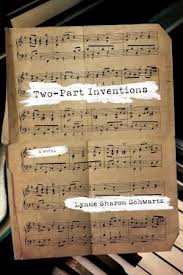
In other news, in case you missed the Twitter and Facebook announcements, there’s a beautiful new issue of Open Letters Monthly up, including what will almost certainly be my final OLM contribution for 2012: my review of Lynne Sharon Schwartz’s new novel Two-Part Inventions. I was so sorry not to be more enthusiastic about it, as her novel Disturbances in the Field is one of my all-time favorites. I wrote about it briefly here, and I wrote at length here also about my great admiration for Leaving Brooklyn. During the editing process, one of my co-editors asked if my review was an implicit response to the recent brou-ha-ha about critics being “too nice.” It certainly was not–at any rate, I did not set out to be not nice, and I hope the review does not come across as anything but what I believe it to be, which is honest and thoughtful. In his “Critic’s Manifesto,” Daniel Mendelsohn proposed that “The intelligent negative review … does its own kind of honor to artists: serious artists, in my experience, want only to be reviewed intelligently, rather than showered with vacuous raves—not least, because serious artists learn from serious reviews.” I agree that taking a work seriously is a way of honoring it and its author, and in this case (as with my review of Jeffrey Eugenides’s The Marriage Plot) I tried to write an “intelligent negative review.” It’s not the kind of reviewing that gets a lot of attention: it’s no good at all as link-bait, compared to the outrageous pan or the “vacuous rave”–but it’s hard work and I think does more service to readers and writers than either of the more extreme alternatives.

This Week In My Classes: More Margaret Kennedy

We had another session on The Constant Nymph today, and I think it’s safe to say we are getting more comfortable with it–which is not to say we have worked out our interpretations of it, but that we have a sharpening sense of what is interesting about it, of what critical conversation to have about it.

Today, for instance, we focused a lot on art, or more specifically, music, in the novel. Kennedy said herself that she meant the novel to focus on the conflict between “art” and “culture.” In the middle section we’re reading, we see this conflict embodied in the characters of Lewis Dodd, a composer, and his wife Florence. Florence fell for Lewis in part because she knows and admires Lewis’s “Symphony in Three Keys.” But she doesn’t know Lewis as we know Lewis from the first part of the novel, when we seem him to be single-minded and cruel, and also in love (in a slightly creepy, slightly idealized and otherworldly way) with the eponymous “nymph,” 14-year-old Tessa. Lewis represents, or at least stands for, art as an end in itself. In a revealing exchange with Florence, who is trying to use her social connections to further his career, she challenges his “arrogant” attitude:

“Your attitude is completely wrong. You put the wrong things first. Music, all art . . . what is it for? What is its justification? After all . . . “

“It’s not for anything. It has no justification. It . . . “

“It’s only part of the supreme art, the business of living beautifully. You can’t put it on a pedestal above decency and humanity and civilization . . .”

“You want to use it like electric light,” Lewis scoffs. He abhors the very idea of music that is commercial, consumable, even pleasurable. “Why do you write music?” asks Florence; “Don’t you want to give pleasure to people?” “No,” is Lewis’s blunt response.

Florence, as this dialogue shows, stands up for what it seems Kennedy means by “culture” (“My father’s cultured,” Lewis says scornfully). She wants her art, and her husband, domesticated: a major part of this installment focuses on the suburban home she establishes for them, which means nothing to Lewis (who literally can’t find his way around the rooms and is unable to describe it to his friends) and everything to her.

It’s easy to imagine a novel in which Florence’s belief that art can and should be commodified and incorporated into a suburban lifestyle of concert-going and outreach efforts at “bringing music to the people” would be ridiculed as tediously bourgeois, and there is something off-putting in the conventionality of her ideas. But Kennedy hasn’t set us up for quite such an easy call. The first part of the novel takes place in the chaotic home of Albert Sanger, Tessa’s father, an eccentric musical genius who lives with his family not only outside of England but conspicuously outside anything like ordinary English (or just ordinary!) morality. It’s not a pretty sight! Though the entire family has an unwavering devotion to music, which “was a sacred thing; perhaps the only sacred thing,” it’s hard to see this as very much in their favor when they are otherwise undisciplined, amoral, and just plain mean.

We had quite an animated discussion about this particular dialogue and how its terms help us think about the other parts of the novel. We also considered it as potentially reflecting on the novel itself: apparently Kennedy was quite self-conscious about the status of her own novel, which was initially received as high art (compared to Forster, for instance) but downgraded critically as it became a commercial success, so it’s odd that her characters almost anticipate the conflict between different ways of valuing art. And we talked about Tessa and tried to figure out where, if anywhere, she fits into this particular conflict in the novel. One of my students plausibly suggested that she’s a muse figure to Lewis, and I think we mostly agreed that she is at the center of the storm but not herself a part of it. She starts to get “civilized” by her time in England, which bothers Lewis in ways that reminded us of his dislike of having music packaged for a conventional audience: he likes her hair loose and wild, not plaited, and doesn’t like the way she starts to seem “sturdier.”

My favourite scene from today’s assigned reading is one in which Tessa, given a little money by her uncle and told to buy herself “something pretty,” comes back with a bowl. This too offends Lewis. “Tessa doesn’t want a bowl,” he states; “she oughtn’t to want one.”

“Why on earth not?” Florence was indignant. “It’s really an exquisite thing.”

“She has no house,” explained Lewis, taking the bowl and balancing it on one hand. “People with no houses ought to know when they are well off.”

“Take care! You’ll break it!”

“Bowls lead to houses. Houses are mainly to keep bowls in. If Tessa had a house she could buy as many bowls as she liked. She’d be done for. As it is, she should beware.”

And then, of course, he drops the bowl: “the lovely, brittle treasure lay in shivers on the floor.” Florence is more upset than Tessa.