 I knew I would read Noémi Kiss-Deáki’s Mary and the Rabbit Dream the first time I heard about it. It sounded like exactly my kind of thing: a fresh style of historical fiction, with a strange and subversive story to tell. It was published in the UK by Galley Beggar Press—and maybe that should have been a red flag for me, as they are the publishers and champions of Lucy Ellmann, whose Ducks, Newburyport I have begun three times, never making it more than 30 pages, but more significantly (because I still believe Ducks, Newburyport may be worth yet another try) whose Things Are Against Us I absolutely hated. On the other hand, I didn’t hate After Sappho, which they also published, and I do try, on principle, to push my own reading boundaries. So when Coach House Press here in Canada put out their edition of Mary and the Rabbit Dream, I promptly picked it up and happily began it.
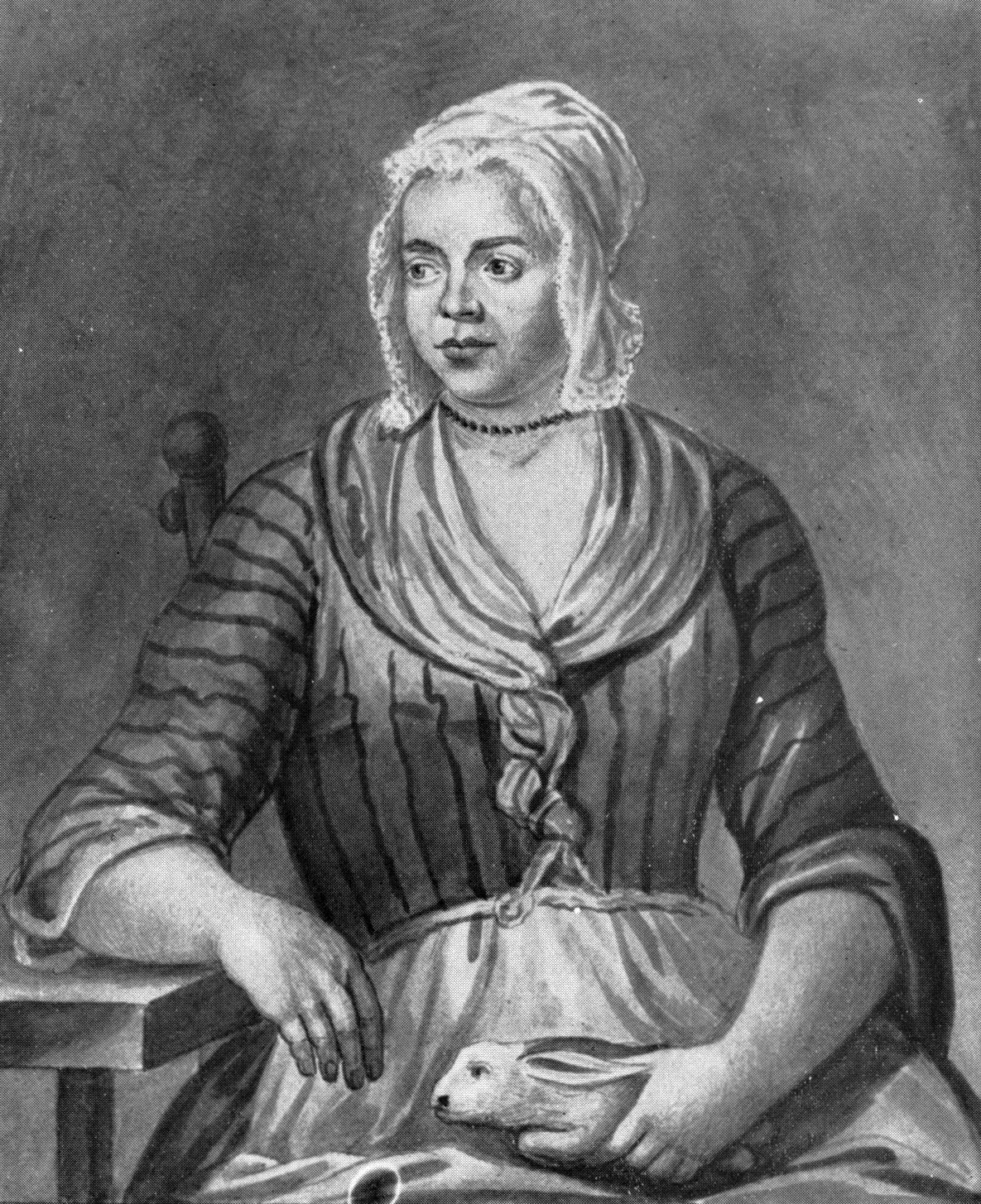
Happily began it . . . and much less happily finished it. I did finish it, because it really does tell a weird and fascinating story, and I genuinely wanted to find out how it ended. It is about Mary Toft, an impoverished laboring woman who in 1724 claimed to have given birth to rabbits, although as Kiss-Deáki tells it, the tall tale was never really Mary’s but was a scheme cooked up by her overbearing mother-in-law to get attention and hopefully money from their wealthier neighbors, who value rabbits much more highly than they do poor people.
The fraud is carried on for some time even as interested and increasingly expert men (always men) investigate, and in case you’re wondering what counts as “evidence” of the rabbit births, well, bits of rabbit (and sometimes of other animal parts) are shoved up into Mary’s body so that she can be seen to “birth” them. It’s exploitive and horrific, and Kiss-Deáki emphasizes Mary’s great suffering along with the appalling indifference to it of those around her, all of whom are using her—and more specifically her wracked and wretched body—for their own purposes. This includes her mother-in-law and her accomplices, but also many esteemed men of science and medicine, who stake their reputations on disproving what is advanced as an extreme example of the fairly widely held theory that what a mother feels, sees, dreams, or otherwise experiences during pregnancy impresses itself on her unborn child. “I just dreamt of a rabbit,” Mary says at one point,
I really did, all my dreams are full of rabbits now, rabbits and hands, they are vile, they are nightmares, but I had one dream that was not vile, not a nightmare, it was a little rabbit, a little rabbit in my womb, ears pink and its little nose shivering pink
and although she is rambling feverishly and we know that she is confusing the nightmare she is currently enduring with a miscarriage she previous suffered, her interlocutor does not.
 There is a lot that is good and interesting about this novel, especially the way that, while it centers sympathetically on Mary and her experience, it also uses her story as a device to expose the cruelty of misogyny and the punishing self-satisfaction of a certain species of scientific certitude. There is a particularly harrowing scene in which a powerful man, determined to break her and expose her as the fraud he is sure she is, threatens Mary with live vivisection, explaining to her with truly menacing “objectivity” that
a vivisection is an operation undertaken on a live body through a series of incisions for the purpose of the betterment of science.
Never mind what might be for the “betterment” of poor Mary Toft, whose eventual confession (in Kiss-Deáki’s version, at any rate) is a damning indictment of everyone’s readiness to make her suffer. (Nobody cares, and off she goes to jail.)
What wasn’t so good about Mary and the Rabbit Dream—and here I have to insert the obligatory disclaimer, as other people may feel very differently, and indeed other people do, unless they were lying in the blurbs they provided! so, what didn’t work about Mary and the Rabbit Dream for me—was Kiss-Deáki’s writing. In parts, it is (as my quotations may show) intense and effective, if you like a spare style. But those short snippets do not capture the oddly stilted and highly repetitive quality of the writing, which at times I found almost comical. A sample, and I promise it was not cherry-picked:
Ann Toft is opposed to it. All the women are opposed to it.
Even Joshua Toft is opposed to it.
But Mr. Howard insists.
And Mary Toft has no opinion.
Mary Toft has suffered too much to have an opinion.
Mary Toft has been listened to too little her whole life to have the courage to form any opinions of her own.
And now she has no opinions. Not even if she tries.
She has suffered too much.
She is stunned with pain and fear.
She is fearful of the women around her. She is fearful of her surroundings.
Everything, right now, inspires fear.
She is the ideal person to use for people who wish to use other people for their own ends.
I suppose you could call it rhythmic or incantatory or something, but I’ll stick with stilted and repetitive, especially because the tic of repeating phrases from line to line is so consistent across the book and serves (to my ear anyway) no purpose. What or who is that supposed to sound like? Is it meant to create an impression of archaism?
 I might have tolerated the long stretches of this kind of stuff better if they hadn’t so often devolved into heavy-handed comments on what is perfectly obvious from the story itself, about how vile and prejudiced and uncaring the men are; or about how unfair the whole system is, especially to Mary (as happens in the example above); or about the symbolic meaning of what is going on. The worst such moment was this one, right after Mary, in excruciating pain and exhausted from relentless examinations, breaks down and begins screaming (“she slips down on the floor, she starts screaming, she screams and screams and screams”):
Sir Manningham asks,
“Are you done?”
And what Sir Manningham doesn’t realize with that question, is that on this night, at his feet, on the floor, Mary has given birth to something, not a rabbit, but her voice, her own true voice, voicing all the pain, all the anguish, all the misery, all the humiliation.
Honestly, if by this point in the novel, we aren’t able to read her screams exactly that way ourselves, the previous 138 pages were wasted efforts, and besides, it’s just clunky: a moment of high drama, of real emotional consequence, deflates completely with the words “her own true voice.”
Your mileage may vary, as we like to say, which is a reasonable acknowledgment that taste varies and that style is idiosyncratic. That’s what keeps things interesting, when we talk about books! That’s why, as I have occasionally argued at length and try always to demonstrate in my writing here, criticism is, at its best, both conversational and provisional. Also, any book worth saying this much about surely is not a bad book. Books, like people, are rarely all one thing. Still, I really disliked Mary and the Rabbit Dream. I thought that it was badly written. The note on Kiss-Deáki explains that English is her third language, and maybe that accounts for some of the awkwardness I felt in her style—but it also says that English is the language in which “she has found her author’s voice,” so I have to respect that the prose I am reacting to is not accidental, that it is her “own true voice.”
 Novel Readings