 Before this term picks up much steam (today was the first day of classes, so we are still in the warming-up phase, with its illusions of ease), I thought I’d catch up a bit on last term. I had good intentions to post at least more regularly, if not weekly, as I once did. Maybe it’s boldly declaring such intentions that fatally undermines them! Just in case, I won’t make that mistake here.
Overall, I think last term was a pretty good one. I had my standard assignment of two courses a term, something we “achieved” (if that’s the right word) years ago by increasing class sizes. (Class sizes have gone up pretty steadily since then, and since numbers are the only case we can apparently make any more for our value, that’s a trend that seems likely to continue.) One of them was yet another iteration of “Literature: How It Works,” one of our core first-year writing requirement classes. I initially designed my current version of this course for online teaching in 2020, during the first COVID lockdown term. I put an enormous amount of effort into it, and especially into its specifications grading system. I taught it online three times and then moved to teaching it in person last fall, after a disastrous term in which 1 in 5 of the students in the class ended up in an academic integrity hearing. This was pre-Chat GPT, so it was all the old-fashioned (!!) “cut and pasted from the internet” variety of plagiarism. I admit I’m a bit nostalgic for those days, and even more for the era of “copied something from a book in the library,” when the student was suddenly using terms like “hermeneutics” or “ekphrasis” and then, when challenged, was unable to explain what they meant. At least they had to go to the library to do that! I remember distinctly showing a suspicious essay on Elizabeth Barrett Browning to my former colleague Marjorie Stone, who took one look at it and said “Oh, that’s from so-and-so’s book,” and of course it was.
 How much of a shadow did AI cast over my term? It’s actually a bit hard to say. I tried not to be preoccupied with it. I had just two cases of clear use, both evident from their hallucinations. There were many other submissions that made me wonder. I hated that. I don’t want to be suspicious about my students; I certainly don’t want fluency to become grounds for accusations. I’ve seen a lot of professors confidently declaring that they can spot AI usage. Maybe I’m naïve, or maybe I don’t assign tricky enough questions, or maybe my general expectations are too low, but I’m not nearly so confident. I know what they mean when they talk about the vacuity of AI responses and the other (likely) “tells”—previously rare (for students) words like “delve,” everything coming in threes, too-rapid turns to universalizing proclamations. I caught what I considered a whiff of AI from a lot of students’ assignments. But many of these things used to show up before there was Chat GPT, sometimes because of high school teachers who taught them that’s what good writing or literary analysis should look like, or because some students are authentically fluent, even glib, and nobody has pulled them up short before and demanded they say things that have substance, not just style. I honestly don’t really know how to proceed, pedagogically, beyond continuing to make the best case I can for the reasons to do your own reading, writing and thinking. I do know that I wish we could slow the infiltration of AI into all of the tools we and our students routinely use. I also believe that there are many students still conscientiously doing their own work, and they deserve to have teachers who trust them. I try hard to be that teacher unless evidence to the contrary really stares me in the face.
 Anyway. The first-year course went fine, I thought. I wish it didn’t have to be a lecture class, but with 90 students (next year we will all have 120), there’s really no other option. I always try to get some class discussion going, and we meet in tutorial groups of “only” 30 once a week as well, but the real answer to “what to do about AI” is the same as the answer to most pedagogical problems we have: smaller classes, closer relationships, more individual attention, especially to their writing. I probably won’t be teaching a first-year class next year, for the first time in a long time, because I will have a course release for serving as our undergraduate program coordinator. In part but not just because of AI, I am glad for the chance to give the course a refresh, maybe even a complete redesign. I want to keep using specifications grading but I’d like to reconsider the components and bundles I devised. I want to think about the readings again, too, maybe moving towards more deliberate thematic groupings, or including some full-length novels again. When you teach a course for several years in a row the easiest thing to do is repeat what you just did, because the deadlines for course proposals and timetabling and book orders come earlier and earlier. I’ve done a lot of different first-year classes since I started at Dalhousie in 1995. Who knows: the next version I develop might be my last! And maybe by the time I am offering it, probably in Fall 2026, the AI bubble will have burst. I mean, surely at some point the fact that it is no good—that it spews bullshit and destroys the environment and relies on theft—will matter, right? RIGHT?
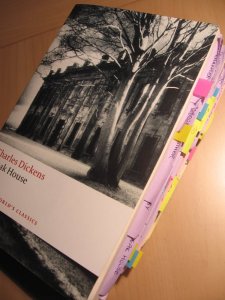 My other class was The 19th-Century British Novel from Dickens to Hardy. I enjoyed it so much! The reading list was one I haven’t done since 2017: Bleak House, Adam Bede, Lady Audley’s Secret, and Tess of the d’Urbervilles. It was particularly lovely to hear so many students say they had no fears about Bleak House because they had enjoyed David Copperfield so much last year in the Austen to Dickens course. I think I have mentioned before in these posts that in recent years I have been making a conscious effort to wean myself from my teaching notes. I still prepare and bring quite a lot of notes, but I try to let that preparation sit in the background and set up topics and examples for discussion that then proceeds in a looser way. The notes are always there if I think we are losing focus or running out of steam, but I don’t worry about whether I’m following the plan I came with. It was interesting, then, to dip into my notes from that 2017 version, because I realized how much my approach has in fact changed since then. I was very glad to have them to draw on and adapt, but although if you’d asked me in 2017 whether I did much “formal” lecturing I would have said I did not, in fact they show that I did run much more scripted classes than I do now. The things I want to talk about have not changed that much, although of course I do browse recent criticism and introduce new angles or approaches that interest me. Basically, though, I guess my attitude to this class (and the Austen to Dickens one) is “if it ain’t broke, don’t fix it”: I believe them to be rigorous, stimulating, and fun, and students seem to agree. Unlike the first-year course, then, these ones are likely to stay more or less the same until I retire. More or less, not exactly! They have evolved a lot already, in more ways than my own teaching style, and I will not let them go stale. I wouldn’t want that for my own sake, never mind for my students’.
 This is all very general, without the kind of “here’s what we talked about today” specificity that I used to incorporate when I really did post nearly every week about my classes. (There are 318 posts in that ‘category,’ can you believe it?!) The best reason I have for wanting to get back to that kind of routine posting is that I miss it: I think, too, that it helped my teaching evolve, that the writing both prompted and supported me as I tried to become a better—more reflective, more responsive, more effective—teacher. So without making a bold pronouncement, a promise I maybe won’t be able to keep, I will say that I would like to post more regularly about teaching in 2025. I said a little while ago that, after the past few very difficult and disruptive years, I wanted to be genuinely and meaningfully present for the last stage of my professional life. Odd as it may seem, blogging about it seems to me one way to live up to that aspiration.
OK, onward! This term I’m teaching a seminar on Victorian women writers and the mystery fiction class. I’m genuinely enthusiastic about both of them. Wednesday is “orientation day,” with overview lectures in both classes. Then on Friday it’s a selection of Victorian writing on women writers in the seminar, including George Eliot’s scathing and hilarious and, perhaps, inspirational “Silly Novels by Lady Novelists” and George Henry Lewes’s “The Lady Novelists” (don’t you wish you could overhear their dinner table conversations about this?); and in the mystery class it’s Poe’s delightfully gruesome “The Murders in the Rue Morgue” . . . and that’s what’s up this week in my classes!
 I had such good intentions to post regularly again this term about my classes . . . and somehow the first month has gone by and I’m only just getting around to it. The thing is (and I know I’ve said this a few times recently) there was a lot going on in my life besides classes in September, much of it difficult and distracting in one way or another—which is not meant as an excuse but as an explanation. Eventually, someday, maybe, my life won’t have quite so many, or at least quite such large, or quite such fraught, moving pieces. Honestly, I am exhausted by the ongoing instability—about which (as I have also said before) more details later, perhaps—and the constant effort it requires to keep my mental balance.
 There are still things I like about teaching first-year classes, though, chief among them the element of surprise, for them as well as for me: because students mostly sign up for them to fulfill a requirement, and choose a section based on their timetable, not the reading list, they often have low expectations (or none at all) for my class in particular, meaning if something lights them up, it’s kind of a bonus for them; and for me, it’s a rare opportunity to have a room full of students from across a wide range of the university’s programs who bring a lot of different perspectives and voices to the class. I do my best to keep a positive and personal atmosphere—and some interactive aspects—even in a tiered lecture hall that makes it essential for me to use PowerPoint and wear a microphone; we have weekly smaller tutorials that also give us a chance to know each other better.
 My other class is 19thC Fiction, this time around the Dickens to Hardy version. (Speaking of full-year classes, once upon a time I got to teach a full year honours seminar in the 19th-century British novel and let me tell you we did some real reading in that class! Ah, those were the days.) (Is talking like this a sign that I should be thinking more seriously about retirement?) I went with “troublesome women” as my unifying theme this time: Bleak House, Adam Bede, Lady Audley’s Secret, and Tess of the d’Urbervilles. We have been making our way through Bleak House all month; Wednesday is our final session on it, and I am really looking forward to it. I hope the students are too! But I’m also already getting excited about moving on to Adam Bede, which I have not taught since 2017. It was wonderful to hear a number of students say that they were keen to read Bleak House because, often against their own expectations, they had really loved studying David Copperfield with me last year in the Austen to Dickens course. (You see, this is why we need breadth requirements in our programs: how can you be sure what you are interested in, or might even love, if you aren’t pushed to try a lot of different things? And of course even if you don’t love something you try, at least now you know more about it than whatever you assumed about it before.)
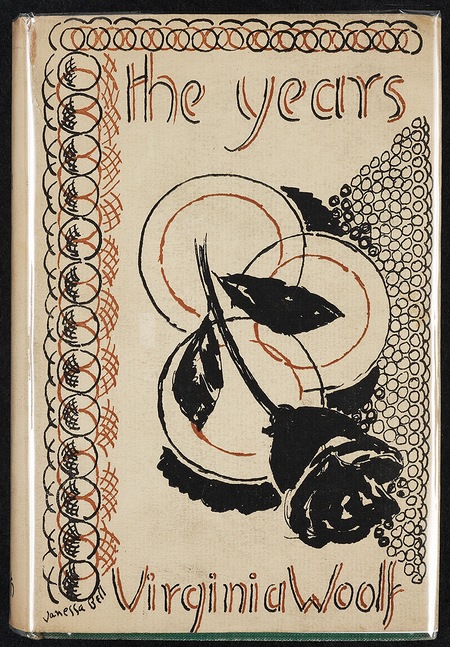 In many ways the first month of term is deceptively simple: things are heating up now, for us and for our students, as assignments begin to come due. After a fairly dreary summer, though, when the days often seemed to drag on and on, I appreciate how much faster the time passes when there’s a lot to do and I’m making myself useful (or so I hope) to other people. I also decided to put my name on the list for our departmental speaker series, to make sure the work I did over the summer didn’t go to waste, so I will wrap up this week by presenting my paper “‘Feeble Twaddle’: Failure, Form, and Purpose in Virginia Woolf’s The Years.” Wish me luck! It has been a long time since I did this exact thing; in fact, I believe the last presentation I made to my colleagues was about academic blogging, more than a decade ago. I have given
  Novel Readings