It’s All in the Frame: Reasons For Writing

I’ve been brooding (and pacing, and swearing, and procrastinating) about starting a new essay project, and what I find myself most stymied by is how to frame it. This is a problem I don’t have with blogging, which is perhaps why I find this such a liberating form. Here, having read something is reason enough to write something about it, and all that’s at stake is my own thoughts about it. I don’t have to attach my comments to anything or make them relevant or prove that they are somehow current or significant to anyone but me. They don’t need to be contributing to an ongoing debate or solving a critical problem. I don’t have to be engaging with someone else, or acknowledging everyone else, who has written on the same topic. Any or all of this kind stuff may emerge as I write, but the writing needs no further occasion for itself.

I think it is possible to write this way in any venue if you either are or believe yourself to be sufficiently wise and important that people ought to take an interest in your thoughts just because they come from you. But the rest of us usually need some sort of justification for writing–which is, after all, an implicit claim on other people’s attention. At least, that’s very much how I am feeling right now.

In academic writing about literature, there are a few fairly standard ways to build a frame around your specific analysis. All of them turn on the idea that you have something new to say. Probably most common nowadays is to claim a new insight into an ongoing interpretive argument: a revision, refinement, or refutation of some element of an established critical debate. This might be text-specific or have a broader reach, but you construct the frame by outlining the existing contributions and then explaining where you come in: ‘In the ongoing debates about Jane Eyre‘s implication in British imperialism, inadequate attention has been paid to the source of Jane’s drawing paper. Closer attention to the history of the production and importation of artists’ sketch pads shows that in the very art work often assumed to express Jane’s defiant Romantic individualism, Jane is dependent on a resource deeply embedded in an exploitative economic system’–most of you know the drill. A variation on this is the application of a particular theoretical model or idea to a particular text or body of texts: ‘Reading Jane Eyre through the lens of Levinas, we discover that…’ There’s also the ‘newly discovered’ frame: a text or author is unfamiliar and requires placing within appropriate theoretical, critical, and/or historical contexts. And so on. Both the preparatory and the rhetorical moves are well established. You do the reading and thinking and research that leads to the formulation of your idea. You do more  research, to be sure that your idea is novel and so that you can set up your account of what people have said so far in relevant discussions. Your introduction lays out the debate and sets up your new contribution, and then you write it out in detail, engaging as you go along with the other people in the critical conversation you are now part of. One of the hardest parts is defining just which conversation that is, so that you don’t end up trying to include, say, everything anyone has ever said about Jane Eyre since it was published! Lots of things about this kind of writing, in fact, are difficult. But as academics, we learn how it is done–usually by the implicit example of the other criticism we read (though some people are fortunate enough to get explicit instruction).

I’ve been trying to get a sense of the range of possibilities for framing writing about literature in non-academic contexts. The most obvious form is the basic ‘review of a new release.’ The occasion for the writing is the novelty of the book itself. Within that there is certainly room for different strategies, from contextualizing the book within the author’s oeuvre or within its genre to just giving a plot summary and a few remarks on style or form. For books that are not new, things are a bit more complicated. A book may get renewed attention because of an occasion or event–the author’s death, for example, or its anniversary, or perhaps an invocation of the book by another book or author (the way, say, novels about Henry James give us a reason to talk about Henry James’s novels). A film or TV adaptation is likely to prompt a flurry of attention to “the original.” A scandal is an attention-getter: if a book is banned by a school library, for instance. Hot-button issues like (to cite a recent example) debates about whether Young Adult fiction is too dark and dreary these days can also prompt lots of discussion of back-list or even out of print titles. Fads like vampire novels or Scandinavian crime fiction give us an excuse to write again about Dracula or the Martin Beck books. These all strike me as journalistic reasons: in all of these cases, books become (or are made into) news.

Then there’s book writing of the “personal journey” or “what it meant for me” variety–a combination of autobiography and literary essay or commentary. There seem to have been a lot of examples of this recently, from Elif Batuman’s The Possessed to Rebecca Mead’s “Middlemarch and Me” or William Deresiewicz’s A Jane Austen Education: How Six Novels Taught Me About Love, Friendship, and the Things that Really Matter (this one I haven’t read yet, so I may be making unfair assumptions about it, but I did read the excerpt at the Chronicle). This is literature in the service of self-knowledge. That’s fine, but it assumes a fairly extensive interest on our part in the autobiographical subjects. That seems reasonable if they are people of substance and significance, and they know it, and they aren’t afraid to assert it: we’re back, again, at a certain kind of self-confidence, even egotism, something inherent in all writing–again, a claim on other people’s attention–but more pronounced in this form. This form makes the books new by making them personal. (I’m not a huge fan of this approach, because I feel that too often the books get subordinated to, well, personal stuff. My own attempt at something in this vein is the essay I wrote on rereading Gone with the Wind, though I don’t think personal revelation was ultimately the main issue there, as I tried to use my own reading experience as a way to think hard about the novel itself.)

It seems to me to be harder to find book writing outside of blogs that simply, without special excuse or occasion, focuses on a particular book or author. One example I’m familiar with is Zadie Smith’s essay on George Eliot, originally published in The Guardian and now included in her book Changing My Mind. I can’t get at the Guardian version any more, but assuming she didn’t revise the beginning substantially, this essay has no journalistic or personal hook: she just starts talking about Middlemarch. But then, she’s Zadie Smith, so the novelty here is that she in particular is talking about Middlemarch: she is the news, her attention itself the frame needed to create an occasion for the piece. The pieces I wrote for Open Letters Monthly on Trollope, Felix Holt, and Vanity Fair are also examples of essays without occasion or special justification. Felix Holt was easiest in some ways because it’s Eliot’s least (or second-least) popular novel, so there’s some novelty just in focusing on it instead of Middlemarch. I motivated the Trollope piece (in my mind, at least) by figuring that he doesn’t have anything like the general popularity of Jane Austen so it was safe to imagine an audience that needed some kind of general introduction; focusing on The Warden (which I love, but which is hardly either his best or his best known novel) gave it a little helpful specificity. And I also felt reasonably sure Vanity Fair is not widely read these days, so again there’s some intrinsic novelty in trying to talk about it to a general audience. It surprises me a little, though, looking back, that I wrote all of these pieces with as little anxiety as I did about their place or reason. It didn’t even occur to me, for instance, to try to frame the Vanity Fair piece by talking about either the BBC adaptation or the weird Reese Witherspoon film (which Amardeep Singh appreciated much more than I did).

Do you think book writing needs to be framed in some way that makes the book new or relevant? Can you think of other strategies (ones you like? ones you dislike?) for writing about books, besides the ones I’ve thought of? Can you think of other examples of recent (mainstream, published [in print or online]) writing about books outside of the journalistic frameworks I’ve described? Do you worry about framing your writing? There has to be a reason to write something, doesn’t there? But can the reason be, ultimately, the book itself? Must it come from somewhere else?
Novel Readings 2010

My turn! Here’s my traditional look back at the highs and lows of my reading and blogging year.

Book of the Year:

Hands down, and entirely to my delighted surprise, since I had no particular expectations going into it, my favourite book of the year was Dear Genius: The Letters of Ursula Nordstrom. I raved about this book in my original post, and I’d like to emphatically repeat what I said there:

If you ever read a book, or were a child, or read a book to a child–if your childhood was shaped in any way by the books you read–then you should buy this book and read it immediately.

I don’t usually do this, but I feel strongly enough to provide a link straight to Amazon so you don’t waste any time getting your own copy. Mine was a gift, and for that, many, many thanks to the amazing Steve Donoghue of stevereads, book-giver extraordinaire.

More books I’m particularly glad I read:

After featuring it three times running on my ‘most looking forward to’ list and making at least one false start, I did finally read Vikram Seth’s A Suitable Boy (it took two posts to cover it, here and here). I enjoyed it thoroughly, proving my long-held theory that sometimes books simply have to ripen a while on the shelf before the reading experience can be perfectly tasty. “Would I read A Suitable Girl?” I asked, rhetorically, I thought; “You bet I would.” Imagine my pleasure in learning that just such a book is forthcoming!

Lynne Sharon Schwartz’sLeaving Brooklyn proved every bit as rich and satisfying a read as my long-time favourite Disturbances in the Field, though in quite a different style and register. It’s a coming-of-age story, “an intensely personal but also profoundly commonplace experience, movingly represented in a book by a woman, about a woman, that [I concluded my original review] I think deserves to be called ‘important.'” It would have been my ‘book of the year’ if it hadn’t been edged out by Dear Genius–but that’s OK, because Dear Genius is a book that advocates for all other books!

Hilary Mantel’s A Place of Greater Safety took longer to grip me than Wolf Hall, but once I was well into it, it really wouldn’t let me go, even though there was absolutely nobody in it to like or even (except sort of theoretically) to root for. A bit like A. S. Byatt, Mantel is resolutely severe, not only towards her characters, but also towards her readers, giving them little comfort or even encouragement as they press on:

if, as I recently suggested, reading Ian McEwan’s prose is like getting acupuncture to your brain, I found reading A Place of Greater Safety akin to walking barefoot across a stretch of gravel towards a graveyard: you aren’t particularly enjoying the experience, but it has its own vividness and particularity, and there’s a morbid fascination in the direction you know you’re headed.

Even at the end–the guillotine for pretty much everyone, as we know it will inevitably be–she avoids what I called “tumbril sentimentality” of the Tale of Two Cities variety (I can’t imagine Oprah ever assigning this novel to her followers). Impressed as I was by Wolf Hall, I read several other novels from Mantel’s back catalogue this year and was repeatedly startled by her range of styles and interests (not one, not even A Place of Greater Safety, really fits the marketing tag ‘by the author of Wolf Hall‘ as they are all simply too dissimilar). The other that resonated most deeply with me was The Giant, O’Brien. Fludd was under the tree for me this year, so there will be at least one more Mantel novel in 2011.

Penelope Fitzgerald, The Bookshop. I found this “a gem of a book: spare but revealing, quirky but unsentimental” (hmm, I’m noticing a trend away from sentimentality this year–even A Suitable Boy, though full of sentiment, does not ultimately cater to our more wistful or wishful emotions).  I’m glad finally to have begun my relationship with Fitzgerald; I’ve been meaning to read The Blue Flower for years and I look forward to doing so in 2011.

Elizabeth Hardwick, A View of My Own. When I grow up, I want to be Elizabeth Hardwick. Well, OK, not exactly, but I envy her the force and confidence of her critical voice. Even when I disagree with her, I really want to talk to her about what she says. I was particularly interested in her essay “George Eliot’s Husband,” which sets a high standard for biographical thinking not met at all by a particular more recent attempt to write about my favourite novelist–Hardwick says more worthwhile things in a few pages than that author comes up with in a couple hundred.

A. S. Byatt, The Children’s Book. Another tough-minded, unsentimental novel, as expansive in its own way as A Suitable Boy or A Place of Greater Safety. I called it “history as information management,” and I meant that as a tribute of a sort. Byatt is an accomplished novelist; while Seth’s abundance (though I loved it) occasionally seemed cluttered, Byatt’s somehow has a tautness to it. If Mantel writes historical fiction that defies conventional expectations of the genre, Byatt does the same with the ‘sweeping family saga.’

Laila Lalami, Hope and Other Dangerous Pursuits. I called this “a quietly harrowing account of hopes turned back and diminished,” and concluded that “hope is a dangerous pursuit, not just because of the risks of the pursuit itself, but because sometimes the chance you take brings you only further away from what you really wanted.”

Morley Callaghan, Such is My Beloved. This book, a classic of Canadian modernism, took me out of my comfort zone as a reader; talking about it with the new book group I belong to took me out of my comfort zone in other ways–but salutary ones! I ended up finding some kinship between Father Dowling and a couple of Victorian protagonists who founder, similarly, on the mismatch between their most strongly felt principles and the pragmatic realities of their world. But Callaghan’s setting, contexts, and language are not Victorian at all.

May Sarton, The Small Room. In the end I didn’t love this novel, but it interested me enormously, as did the conversation it generated on (and around) the Slaves of Golconda reading group. Its central themes certainly struck a chord with my ongoing anxieties about my professional work and the public discourse around higher education:

So much about the discourse of education today seems to disregard the value of that connection to the whole person–it’s all about outcomes and measures and productivity and, of course, jobs after graduation. Is that really what we want? We as teachers? or as parents? as students? If Lucy’s view seems dangerously personal, the current obsession with students as consumers seems dangerously limited and limiting. If we can’t ever hope to teach students as people, or to be people ourselves when we teach, who will ever, in the end, actually learn anything worth knowing?

Daphne du Maurier, Frenchman’s Creek. Dare I say that they don’t write pulp fiction like they used to? Purple prose, absolutely, but as I said in my original post, it’s ‘royal purple, richest velvet.’ I haven’t worked my way through the rest of the du Maurier collection on my shelf, but what’s a sabbatical for, if not to catch up on books you otherwise have no excuse at all for reading?

Books that disappointed, for one reason or another:

Happily, once again there weren’t very many of these. Leading the pack is certainly Brenda Maddox’s George Eliot in Love, which I reviewed for Open Letters Monthly. Here’s the money quote:

I wasn’t just disappointed in George Eliot in Love—by the time I finished it I was equal parts astonished and enraged. The book is not just George Eliot ‘lite’–it is superficial, prurient, and at times simply offensive. Maddox comes across as naively underqualified for her task: her good intentions are as painfully evident as the bad judgment and limited expertise she displays throughout. Focusing persistently on the pettiest details of Eliot’s biography, Maddox strips her of both dignity and intellectual substance and leaves us with an impoverished version that belies Elizabeth Hardwick’s confidence (expressed in her marvelous essay “George Eliot’s Husband”) that it was impossible to make this accomplished woman “look foolish and small.”

I was pleased (though hardly surprised!) that George Eliot in Love also won a spot in the ‘Worst Nonfiction, 2010‘ smackdown at stevereads: “Maddox should chronicle Paris Hilton next and leave the deep end of the pool to the grown-ups.” Ha! Between us we perhaps give the lie to the old saw about the only thing worse than not being talked about.

I was underwhelmed by Louis Menand’s The Marketplace of Ideas:

I really wish that, having grabbed people’s attention, Menand would have seized the opportunity, not to lob another petty grenade at his struggling colleagues but to insist that we not concede too much to either the rhetoric or the pressures of the marketplace. Surely an English professor who is also a public intellectual is uniquely positioned to make the case for, not against, the rest of us.

For quite different reasons, Tracy Chevalier’s Remarkable Creatures was also distinctly unremarkable: “The subject of the book is intrinsically interesting, but if a novelist can’t do any better than this, we might as well read non-fiction, or, better yet, poetry”–the salient example of the latter being, of course, In Memoriam A.H.H.

I think my expectations were just too high for David Mitchell’s Cloud Atlas. I really enjoyed reading some parts of it, but I don’t ordinarily seek out work in some of the genres he plays with (notably, science ficton) and I was frustrated by the way so many different kinds of storytelling were shoehorned into one book–even though Mitchell is dazzlingly smart (too conspicuously so, I sometimes thought) about the unifying threads. My conclusion after reading it was “after a while I found I was more aware of  his virtuosity and the ingenuity of the nesting narratives than I was actually engaged in them.”

The best of the not-entirely-satisfying collection is Ian McEwan’s Solar. I’d rather read an imperfect novel by Ian McEwan than any novel by probably the majority of other contemporary writers. I actually couldn’t quite decide which category to put Solar in, it’s so nearly excellent–but in the end, I decided McEwan set too high a standard for himself with Atonement and (for me, at least) Saturday, so for failing to live up to it, here he is down here.  A bit of my original post:

Of course it is not a universal prescription for excellence that a novel satisfy both heart and head, but that’s what I want, that’s what I think takes a novel from good to great, and Solar seems quite content to leave my heart untouched. I think this is a missed opportunity for a novelist with McEwan’s gifts. Why not set against the shabby opportunism of the protagonist (who is both brilliantly drawn and wholly unsympathetic) either some idealism not undermined by the general attitude of cynicism that permeates the novel–even if only to show it up as ineffectual against the absurd realities of political and scientific institutions–or some unembodied but evocative commitment to the beauties of the planet Michael Beard only pretends to cherish? Bleak House is an unforgettable critique of the stupidities of a system that serves, at most, only those who constitute it, because we see beyond it, unrealized, an idea of human flourishing, of love and justice, worth yearning for. Thus we find the yammering of innumerable lawyers both comic and tragic. Where is Miss Flite, or Lady Dedlock, never mind Jo the crossing sweeper, in McEwan’s universe?

Books I’m most looking forward to reading in 2011:

There are too many to enumerate, really, including all the treasures delivered for Christmas from my lovely family, but here are a few titles, if only to motivate me as the new year gets underway.

  1. Tolstoy, War and Peace. This is the new Suitable Boy: it will be on this TBR list until I get it read! Surely being on sabbatical, if only for half  the year, will remove most of the standard excuses.
  2. Flaubert, Madame Bovary. Yes, the new Lydia Davis translation. I’ve begun this, but it got pushed aside during the Great Cough and Cold of late 2010.
  3. Christina Stead, The Man Who Loved Children. I’ve been curious about this since reading about it in Hardwick’s A View of My Own.
  4. Sigrid Undset, Kristin Lavransdatter. This one is another object lesson in why you should never “purge” your book collection, no matter how often you move or how many times someone close to you mutters baleful warnings about running out of space. I owned this trilogy as a girl, never got around to reading it, purged it, and now–older and wiser–rejoice to have found a nice Penguin edition in a local bookstore.
  5. A delicious stack of old Virago Modern Classics, including novels by Margaret Kennedy, Antonia White, Rebecca West, and many others.
  6. Vikram Chandra’s Sacred Games. I’ve owned this for a couple of years without reading it–I think its time has come.
  7. Helen DeWitt, The Last Samurai. The discussion at Conversational Reading piqued my interest about this novel, which I’ve owned for many years without reading (note again the value of the ‘ripening on the shelf’ theory to justify these habits!).
  8. Graham Greene, The Power and the Glory. This is the next book up for the book group that read Such is My Beloved. I read it many years ago but Greene is an author I haven’t done anything with since turning ‘pro,’ and I’m finally, belatedly, interested.
  9. Colm Toibin, The Master and Brooklyn.
  10. Hermione Lee, Virginia Woolf. I’ve made some progress on this one, helped by an excursion into Woolf’s letters and diaries. I’d like to finish it in 2011!

I observe that not one of these is a work of literary history or criticism! There’s some chance that being on sabbatical will also give me a chance to recover some energy for that kind of reading! Certainly I will be doing some of it, as I am working (still!) on at least one academic paper which I hope to get into publishable form by the end of my leave.

Other Novel Readings highlights:

In 2008 I noted the invitation to contribute to The Valve as an important development in my blogging life. 2010 saw my farewell to The Valve, following on a resolution to “Get On With It!“–whatever, exactly, “it” is. The biggest development in 2010, congruent with this shift in emphasis, was the invitation from the fine folks at Open Letters Monthly, first to move Novel Readings to its new home, and then to join their editorial team. Both steps have been good ones for me, helping to sustain my blogging energy, bringing me into contact with all kinds of interesting writers and readers, even providing an excellent excuse for a trip to New York. Under the influence of these developments I increased my contributions to Open Letters, taking advantage of the flexibility and outstanding editorial input the magazine offers to write some more pieces on Victorian literature (Felix Holt and Vanity Fair), a couple of reviews (in addition to George Eliot in Love, I reviewed Claire Harman’s Jane’s Fame) and an essay on Gone with the Wind that took me a little outside my usual 19th-century ‘beat’ but reflected  my ongoing interest in ethical criticism–and my desire to write in a more personal voice. The Gone with the Wind essay earned me a link from Arts & Letters Daily, which helped me believe that I do have something interesting and even valuable to say as a critic–something that I have rarely felt in my almost 20 years as a practising academic critic. Looking ahead to 2011, I hope I can continue to build my confidence as a writer and critic, keep discovering what I have to say and saying it as well as I possibly can, in my own voice.

To everyone who reads and comments here at Novel Readings, and to all of you who keep up your own wonderfully thoughtful, diverse, and stimulating book blogs, thank you, and Happy New Year.

Best of ‘Novel Readings’: James Wood, How Fiction Works

This review first went up in March 2008. My brooding over deep vs. broad reading has had me thinking again about Wood’s criticism, which I wrote admiringly about when I first discovered him in 2007. (This remarkably belated discovery speaks volumes, I think, of the divide between academic and public criticism.) I have also been thinking a lot about Becky Sharp, because in an essay for the July issue of Open Letters Monthly I lay out a more elaborate version of the argument I touch on here for her incidental significance to the novel in which she is so captivating a heroine. Both lines of thought led me back to take another look at this piece. I haven’t kept up with all of Wood’s reviews since, mostly because he and I often choose different books to pay attention to, but when I do (as with his recent piece on David Mitchell) I’m still struck by the elegant erudition of his language and analysis. Still, as this review shows, I have some sympathy with Lauren Elkin’s proposal that Wood is “a fine specimen of a book reviewer” but not exactly a “literary critic.” Not, as they used to say on Seinfeld, that there’s anything wrong with that.

How Fiction Works was also very ably reviewed in 2008 in Open Letters Monthly, by Dan Green of The Reading Experience.


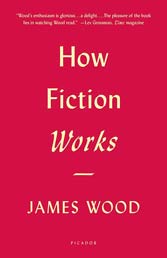
The dust jacket describes How Fiction Works as Wood’s “first full-length book of criticism.” Anyone led by this blurb to expect sustained analysis supported by extensive research and illustration will be disappointed, as in fact How Fiction Works turns out to be essentially a ‘commonplace book,’ a collection of critical observations and insights of varying degrees of originality and sophistication, developed with varying degrees of care and detail. Wood acknowledges having set deliberate limits on his project, likening it in his introduction to Forster’s Aspects of the Novel, proposing to offer practical “writer’s anwers” to “a critic’s questions,” and admitting (though with no tone of apology) that he used only “the books at hand in [his] study.” To some extent I agree with other reviewers who consider it only fair to evaluate the book Wood wrote, rather than regretting he didn’t write another one. Yet even within the parameters Wood sets, I think there are grounds for wishing he, with his exceptional gifts and qualifications as both reader and critic, had not sold himself (or us) short in fulfilling them. Further, beginning with the invocation of Forster but going well beyond it, the book has pretensions to grandeur: for instance, also in his introduction Wood remarks that Barthes and Shklovsky “come to conclusions about the novel that seem to me interesting but wrong-headed, and this book conducts a sustained argument with them” (2). With gestures such as this, Wood claims an elevated stature for his critical contribution that is undermined by its casual construction and over-confident approach to scholarship. Though How Fiction Works provides many further proofs of Wood’s critical gifts and considerable erudition, I think it also proves that even the best practical critic flounders when working only with what he has already to hand or in mind.

Right off the bat I was irritated by the book’s structure. Wood has said that he felt liberated by using the numbered “paragraphs” or sections, but allowing yourself to skip from thought to thought in this way means letting yourself off the hook too often. Frequently in the margins of my students’ work I write “And so? Finish the thought!” One effect of crafting, first paragraphs, and then longer pieces as sustained wholes is that in working out the overall movement of your ideas and building in appropriately specific transitions, you confront both the logic and the further implications of your claims: the form pressures you to think better. Numbered bits, however, relieve that pressure: you can just stop with one topic and start the next, and as long as they are more or less related, you can claim to be producing a unified whole, even if you are only papering over gaps. In How Fiction Works, the breaks often seem unnecessary: a new number sets off what is really just the next sentence in the idea already unfolding. Most of the time, however, they are substitutes for careful transitions. They allow a certain stream-of-consciousness effect to creep in: that last bit reminds me of this exception to a general principle, or of a writer who also does that, or of another favourite excerpt, or of a time I went to a concert with my wife. Well, OK, I guess, and no doubt it would have been much more difficult to do a coherent chapter offering a theory of, say, fictional character, realism, or morality and the novel. And I suppose it’s true that non-academic readers don’t want the kind of detail and complexity such a full account of these topics would require. Even so, the numbered bits felt lazy to me. The footnotes too had an aimlessness about them. Some of them covered ideas or examples that seemed no less important to their chapter than most of the bits allowed their own numbered section (note 53 on p. 150, to give one example) while others appeared entirely unnecessary to the book (note 40 on p. 121, or note 41 on p. 124, for instance).
The TLS reviewer objects to Wood’s “grace notes”: “It is sometimes hard to distinguish a gasp of admiration for another’s skill from the contented sigh when the books in one’s study satisfy one’s own theories.” I shared this reaction, not least because “how fine that is” (139) is an expression of taste, not criticism. But Wood is a compelling reader of details, even passages. It’s when he makes broader assertions that he leaves himself more open to objections. For one thing, he has some governing assumptions about what fiction is for that he treats as universal rather than historically or theoretically specific. In his chapter on “Sympathy and Complexity,” for instance, as a footnote to his remarks on fiction as a means of extending our sympathies (the occasion for one of his shockingly few references to George Eliot!), he adds this:

We don’t read in order to benefit in this way from fiction. We read fiction because it pleases us, moves us, is beautiful, and so on,–because it is alive and we are alive. (129)

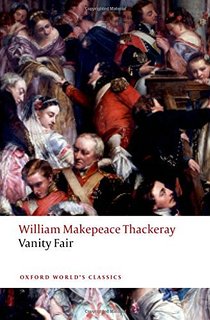
Well, maybe, but not everybody, and not all the time: for instance, most of the Victorian critics I have been editing for my Broadview anthology [now that the anthology is actually out, I wonder if Wood would like a copy–maybe I’ll send one along!] would not have recognized this highly aestheticized motive for novel reading. Is it fair, or even sensible, to say that they were simply wrong? Or to ignore how the formal developments of the Victorian novel furthered ends not adequately respected by Wood’s post-Jamesian formulations? His is in many respects a teleological account of the history of the novel. “Progress!” he exclaims after a quotation from Proust: “In Fielding and Defoe, even in the much richer Cervantes, revelation of this altering kind occurs at the level of plot” (125). But were Fielding and Defoe trying to do what Proust did and failing? How much better we might understand them if we allow them what James calls their “donnee.” “It is subtlety that matters,” he declares in his chapter on character; “subtlety of analysis, of inquiry, of concern, of felt pressure”: “I learn more about the consciousness of the soldier in Chekhov’s The Kiss than I do about the consciousness of Becky Sharpe [sic] in Vanity Fair.” But Becky Sharp’s consciousness is surely not the point of Vanity Fair; indeed, I argue in my own lectures [and now, in my essay in July’s Open Letters] that too close a focus on Becky risks diverting us from Thackeray’s grand gesture of holding the mirror up to ourselves, so that the novel becomes an opportunity for us to reflect on our own morality and mortality. “Was she guilty or not?” the narrator asks–and, remarkably, will not tell us, because ultimately she is not the point but the occasion, the device. Thackeray is not a failed Chekhov any more than Dickens is a failed Flaubert. To Wood, “the history of the novel can be told as the development of free indirect style” (58), but that history is partial and often distorting.

About the operations of free indirect discourse and the importance of knowing who ‘owns’ which words, on the other hand, Wood is typically astute. Here’s one place where examples from Middlemarch would have served him well, though at the risk of undermining his generalizations. Consider this passage from Chapter 1, for instance:
And how should Dorothea not marry? — a girl so handsome and with such prospects? Nothing could hinder it but her love of extremes, and her insistence on regulating life according to notions which might cause a wary man to hesitate before he made her an offer, or even might lead her at last to refuse all offers. A young lady of some birth and fortune, who knelt suddenly down on a brick floor by the side of a sick laborer and prayed fervidly as if she thought herself living in the time of the Apostles — who had strange whims of fasting like a Papist, and of sitting up at night to read old theological books! Such a wife might awaken you some fine morning with a new scheme for the application of her income which would interfere with political economy and the keeping of saddle-horses: a man would naturally think twice before he risked himself in such fellowship. Women were expected to have weak opinions; but the great safeguard of society and of domestic life was, that opinions were not acted on. Sane people did what their neighbors did, so that if any lunatics were at large, one might know and avoid them.

Think how much is lost on a reader who improperly identifies the source of that word “naturally”–or the last two sentences altogether!

Wood is good on the telling detail as well as the quality he calls “thisness”: “any detail that draws abstraction towards itself and seems to kill that abstraction with a puff of palpability” (54). But again, when he moves into prescription, he becomes less persuasive, as when he objects to the “layer of gratuitous detail” in 19th-century realist fiction. Again, the challenge is in defining “gratuitous” (as, clearly, Wood himself is well aware), but he can’t propose any principle except, perhaps, his idea that “insignificant” details avoid irrelevance if they are “significantly insignificant” (68). After recounting an incident in which he and his wife had “invented entirely different readings” of a violinist’s frown at a concert, he claims that a “good novelist would have let that frown alone, and would have let our revealing comments alone, too: no need to smother this little scene in explanation” (72). Again, well, maybe. I can imagine at least one “good novelist” who might have done great things with their “different readings” of that little moment, perhaps even using their “revealing comments” as a chance to reveal even more about perception and reality as well as human relationships (“these things are a parable…”). Doesn’t it depend on what your novel is about and on the formal methods you are using to realize those goals?

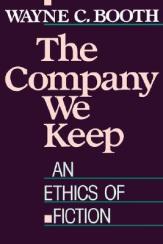
I’d like to return before I close to the “Sympathy and Complexity” chapter, because this is a topic close to my heart, one on which I have spent a lot of my own critical energy recently, and one I expected Wood to handle particularly well. “Perfunctory” is the best word I can think of to describe it. I’ve mentioned already his dehistoricizing assumption that “we” don’t read in order to receive moral benefits. I doubt this is true in practice, and I also question the separation he implies between moral and aesthetic readings. Here is a case in which even a little research outside “the books at hand in [his] own study” would have immeasurably enriched his discussion: Wayne Booth’s The Company We Keep, for instance, would have helped him complicate exactly that separation. And the conversation about how fiction might do “what [Bernard] Williams wanted moral philosophy to do” (135) has many participants besides Williams: Martha Nussbaum comes promptly to mind. Further, not all novels avoid providing “philosophical answers”; he replicates Nussbam’s error in generalizing about “the novel,” but as a professional novel reader, he should know better.

Here the hybrid character of How Fiction Works proves a genuine weakness, I think. This chapter is not a full, responsible, or authoritative inquiry into its subject. Of course, it does not pretend to be (remember, the book promises only “a writer’s answers” to “a critic’s questions”). But then how should we evaluate it? Doesn’t Wood do even his non-specialist audience a disservice by taking up complicated subjects on which there already exists a rich body of scholarship and offering his own fairly casual observations with the confidence of real expertise? What a much greater contribution it would be to distill that complex material and present it accessibly! To grab what’s at hand and say just what comes to mind bespeaks an enviable but also problematic degree of confidence. And while the non-expert reader is in no position to object, the expert reader is easily deflected with the excuse that she is not the intended audience…

After I read How Fiction Works I re-read some of my collection of Wood’s essays, including his reviews of Never Let Me Go, Saturday, and Brick Lane. This is really wonderful stuff, as I have remarked before; I admire it wholeheartedly for its critical acuity, its literary elegance, and its moral seriousness. But considering How Fiction Works strictly as one among many books about books (and Wood is wrong, or perhaps disingenuous, when he says “there are surprisingly few books” of this kind about fiction [1]), I think there are many better choices available. I continue to recommend David Lodge’s The Art of Fiction, for instance, which takes up many of the same topics as Wood, though under a less grandiose umbrella of prescriptive claims. I think it’s an exciting development that Wood has landed a job in Harvard’s English Department. In taking this now unconventional route from journalism to the academy, he is following in the footsteps of many eminent Victorian critics (David Masson, for instance). But considering how bitterly difficult it is for those following the established professional route to land any academic job at all, it’s frustrating to think that he may not be held to anything like the same standard of rigour as many critics far less lauded and applauded. Here’s hoping that he has more books in him as good as The Broken Estate.

(Original post cross-posted to The Valve.)

Novel Readings 2009

It’s time for my annual review of the highs and lows of my reading year.

Books I’m most glad I read, either for the intrinsic richness of the aesthetic, affective, or intellectual experience they offered, for the conversations they generated, or for the ideas and connections they offered for my teaching and research:

1. Daniel Mendelsohn, The Lost. This book made by far the strongest impression on me of any I read this year. Devastating though it is, it also manages to be surprising, suspenseful, and sometimes even comical. Mendelsohn manages to be self-reflexive about his research and writing, about his own assumptions and limitations, without ever compromising his dedication to reaching after the truth of the story he is telling or his respect for the suffering of those whose story it really is. It’s a remarkable accomplishment.

2. Naguib Mahfouz, Palace Walk. I ended up enjoying this novel as much for the way it implicitly chastised me for my own assumptions (about fiction, about families) as for the story it told. I’m happy to say that Santa (OK, my mom) sent me Sugar Street and Palace of Desire for Christmas, so I’ll be reading–and, I expect, writing about–Mahfouz again in 2010.

3. Khaled Hosseini, A Thousand Splendid Suns. Although (as I say also in my original review) I don’t think this is actually a great novel by literary standards, and in retrospect I feel my own emotional reaction to it was the result of some heavy-handed narrative and ideological manipulation (pain! suffering! injustice! misogyny!), it’s impossible to ignore the very real pain, suffering, injustice, and misogyny of the world it fictionalizes.

4. Mahbod Seraji, Rooftops of Tehran. Unlike A Thousand Splendid Suns, Rooftops of Tehran is not a sensational or particularly populist treatment of its material. It reaches across cultural differences to tell a story of yearning and love, emphasizing feelings that are universal, if differently embodied or characterized based on circumstances. At times a bit heavy-handedly pedagogical, it still avoids the trap of what I am now thinking about as ‘moral tourism’: it isn’t an Iran packaged for mass consumption and political ends, but something more inward-looking and sincere.

5. Charlotte Bronte, Villette. This year’s choice for our summer reading project at The Valve, Bronte’s perverse exploration of thwarted desire, religious conflict, surveillance, and narrative unreliability offers all kinds of fun and surprises, especially for those who think the Victorians were all naive realists. (D’oh! But there really are people who think that. In my experience, many of them are specialists in late 20th-century fiction whose favourite straw man looks a lot like Trollope, but doesn’t have his metafictional savvy.)

6. Ian Colford, Evidence. Understated, even insidious, these stories leave their mark on your consciousness, like inky thumbprints.

7. Virginia Woolf, Mrs Dalloway. It seems somehow significant that I quoted from this novel instead of writing much about it. It’s not that there aren’t ideas in it, or that its form and technique isn’t inviting to criticism, but for me this was a reading experience that was very much about easing up my critical grip (which seemed to be deforming my reading) and savouring the tactile quality of the language. My feelings about this book were also much affected by my thoughts about a special student, Samantha Li; I only wish I had read it before it was too late to talk to her about it.

8. William Boyd, Any Human Heart. Dear students: The main character in this book is not at all “relatable.” Guess what–that doesn’t matter! You don’t have to like him (though by the end I was fond of him after all, as you are of someone you’ve known their whole life). You just have to go along, feeling the pulses of his idiosyncratic life and personality. He has no special insight, into himself or any larger contexts; he isn’t even especially charismatic. But, as George Eliot points out in Adam Bede, most of the people around us are nothing special–we need to adapt our aesthetic to that reality, and it turns out to be a surprisingly moving experience.

9. Hilary Mantel, Wolf Hall. Wolf Hall surprised me by not resembling any other historical fiction I’ve read. For one thing, there is almost no exposition. Mantel’s trick of referring to Cromwell throughout as “he,” though it does create the occasional awkwardness, also creates an oddly intimate atmosphere: we are with him, in close proximity, as if standing by his shoulder, but there’s a little separation remaining. First-person narration would have overcome it, but then I think the novel would have felt more artificial, and the emotions would have had to run higher–a mistake in a novel remarkable for its restraint (yes, even at 650 pages, it feels tightly controlled). And the language: it is crafted with the precision of Ian McEwan’s prose, but with a higher sheen of poetic possibility. Here’s a little bit that describes and exemplifies the novel’s characteristically taut balance of eloquence and repression:

There’s a feeling of power in reserve, a power that drives right through the bone, like the shiver you sense in the shaft of an axe when you take it into your hand. You can strike, or you can not strike, and if you choose to hold back the blow, you can still feel inside you the resonance of the omitted thing.

The central conflict is not Henry VIII against God, or fate, or his wives, for denying him a son, or Anne against Katherine, or any of the other stock melodramas of Tudor fiction (and television), but Cromwell, the self-made man, the accountant, the bureaucrat, the statesman, the pragmatist, the modern man, against extremism, privilege, waste, indulgence–and especially against Thomas More, who delights in torturing heretics and seeks a pointless (to him, a martyr’s) death.

10. Nadeem Aslam, The Wasted Vigil. Is it wrong to make something so beautiful out of material so terrible? Is terrorism really analogous to vandalism? Both obliterate the beauty (realized or potential) and the creativity of humanity.

This year I’ll skip over the list of low points. There weren’t many, happily–most of the other books I read were in the OK – to – mediocre range, which only irks me when they win awards.

In last year’s post I noted the expansion of my blogging horizons that came with the invitation to write for The Valve. This year I have been pleased to contribute to Open Letters: I’m glad they made room for my piece on Trollope among their many astute and engaging essays and reviews, and I’ve got a little thing on Felix Holt appearing in their January 2010 issue, so stay tuned for that.

Looking ahead, I’m anticipating an unusually busy term coming up, with three classes including one all-new one and some new kinds of assignments. Still, I hope to have time to keep up my usual series on teaching, and also to fit in some reading for myself. Looking over my year-end posts for 2007 and 2008, it is notable how such ‘pleasure’ reading feeds into my research and teaching (the leading example being Ahdaf Soueif’s In the Eye of the Sun, which went from being just another book I’d read to the lynchpin of a reconceptualized research program). Perhaps something I read in 2010 will end up turning me in another new direction, or adding in some other unanticipated way to my life. But in any case here are some of the books I’m most looking forwarding to reading or re-reading:

  1. Sarah Waters, The Little Stranger. It’s great to feel so confident that a book will be both extremely smart and extremely entertaining.
  2. Hilary Mantel, A Place of Great Safety. Speaking of confidence, Wolf Hall gave me confidence in Mantel as both a stylist and a historical novelist.
  3. Naguib Mahfouz, Sugar Street and The Palace of Desire.
  4. Hermione Lee, Virginia Woolf.
  5. Marilynne Robinson, Gilead.
  6. War and Peace. Somehow, it didn’t get read in 2009, but I’m sure it will be there for me when I’m ready for it.
  7. Vikram Seth, A Suitable Boy. I’m going to keep putting this on my TBR list until I actually read it.
  8. Dickens, Our Mutual Friend. I haven’t read this since my undergraduate Victorian fiction class in 1989. Once every twenty years seems like a minimum for what I remember as one of the best of Dickens.
  9. George Eliot, Romola. I’ve assigned this for my graduate seminar on George Eliot this term. It was a tough call between it and Felix Holt, but Romola has been on the back burner the longest. When it is good, it is very, very, very good. When it is bad, characters say things like ‘You are as welcome as the cheese to the macaroni.’
  10. Audrey Niffenegger, Her Fearful Symmetry. All appearances (and movie adaptations) to the contrary, The Time Traveller’s Wife is a gritty, suspenseful, intellectual romance. Sure, you have to accept a wacky premise, but for me at least, it was worked through with surprising toughness. So I’m game to see how Niffenegger follows it up.
  11. David Mitchell, Black Swan Green. Because you told me to!

Globe and Mail Book Section Goes Online

The Toronto Globe and Mail, which fondly declares itself “Canada’s National Newspaper,” has, like many other newspapers, recently eliminated their stand-alone books section. I haven’t found the Globe‘s book section very stimulating for some time, so to me the loss is more symbolic than intellectual. (One of my theories about why the section is so often disappointing is that they ask too many authors–as opposed to, say, critics–to write their reviews.) Literary coverage will continue, but as part of the Focus section (odd, maybe, that it’s not the Review section?). At the same time, however, the paper has dramatically expanded its online books coverage. I haven’t had time to explore the site very thoroughly, but it seems to include many of the same features that the print version had as well as a range of interactive pieces, including a couple of blogs and an “Ask the Author” feature that looks like fun–P. D. James is scheduled for later this month, and she’s an author I’d like to ask a few questions myself. I see that their Blogroll so far is exclusively other Globe and Mail blogs. I wonder if they will get outside that box a bit and link to some of the wide range of other book blogs (affiliated with newspapers and not) in and out of Canada.

Novel Readings 2008

One of the best features of blogging is turning out to be the record it provides of my reading experiences. 2008 doesn’t seem to have been my most rewarding year of novel reading (being on sabbatical for part of last year accounted, in part, for the greater number and variety of books I went through in 2007), but there have certainly been highlights. Some of my most stimulating reading in 2008 was re-reading, and some was non-fiction. Here’s my look back at the highs and lows of my reading year.

Books I’m most glad I read, either for the intrinsic richness of the aesthetic, affective, or intellectual experience they offered, for the conversations they generated, or for the ideas and connections they offered for my teaching and research:

  1. Ann Patchett, Bel Canto. Without a doubt, this was my favourite new novel of the year: exquisite, finely tuned art about the beauty, value, and fragility of art.
  2. Olivia Manning, The Balkan Trilogy and The Levant Trilogy. Though the prose throughout these books is consistently, almost perversely, flat, I found the series consistently interesting, especially in its depiction of ordinary, flawed, but mostly likable people trying to organize meaningful lives for themselves amidst the constantly unfolding chaos and danger of war. The understated style comes to seem appropriate for characters who are never really dramatic, always on the periphery of the ‘real’ action and yet, of course, always the protagonists of their own stories.
  3. George Eliot, Adam Bede. I hadn’t read Adam Bede in a couple of years and have never paid it as much attention as my favourite George Eliot novels. When it emerged as the front-runner for our summer reading group at The Valve, I was uncertain how things would go, if relieved to be on somewhat familiar territory. In the end, I gained a greater appreciation of the uneven beauties and oddities of the novel. I also found it constantly stimulating seeing how other readers responded to it and learning from the range of approaches and expertise that inflected their readings. Of the many memorable passages, this is the one that I find has echoed in my mind since we wrapped things up:

    “It would be a poor result of all our anguish and our wrestling, if we won nothing but our old selves at the end of it–if we could return to the same blind loves, the same self-confident blame, the same light thoughts of human suffering, the same frivolous gossip over blighted human lives, the same feeble sense of that Unknown towards which we have sent forth irrepressible cries in our loneliness. Let us rather be thankful that our sorrow lives in us as an indestructible force, only changing its form, as forces do, and passing from pain into sympathy–the one poor word which includes all our best insight and our best love.”

  • James Wood, How Fiction Works. Though my assessment of this much-hyped book from today’s most talked-about literary critic was not altogether positive, Wood is certainly an inspiration to anyone who would like to see the gap between academic and public criticism bridged without false populism.
  • Ronan McDonald, The Death of the Critic. Like How Fiction Works, The Death of the Critic stood out in my reading year more because of the conversations it generated than because of its intrinsic merits. I’m still thinking about the emphasis McDonald (and others) places on evaluation as the key to critical relevance, and I’m still inclined to think that people’s everyday reading practices have at least as much to do with ethics (broadly construed, as Booth does in The Company We Keep). Eventually I hope to make this case–and, further, the case for ethical criticism as a useful framework for public criticism–in a careful way.
  • The Reader. I’ve been so happy to discover this excellent publication from The Reader Organization. I first came across it through this article on Scott and have since read several back issues and both of the issues made available as PDFs for download. I’ve been promised that a two-year subscription is part of my Christmas haul this year, and I really look forward to keeping up with its stimulating blend of intelligent but accessible literary analysis, readers’ reports, and new fiction and poetry.
  • Vanity Fair and Bleak House. The enormous pleasure and challenge of teaching both of these books in the same class nearly compensates for an academic year in which I am not teaching Middlemarch even once (I’ll have to make up for that in 2009-10).
  • The Wire. OK, it’s not a novel…but it was certainly one of the most enthralling narrative experiences of my year, and in its social and thematic ambition and its attempt to convey the connections between multiple layers of a complex socio-economic world and a sprawling cast of characters, it has much in common with the 19th-century ‘condition of England’ novels.
  • Two recent additions I haven’t had time to write up properly: Kate Atkinson’s Case Histories and One Good Turn. I first read the former on the way home from a trip to Sydney. I’m not a happy flier and I was fairly well medicated, which must be why I didn’t appreciate it much at the time and wantonly gave it away on landing. After hearing a number of people speak very highly of both of Atkinson’s mysteries, I got One Good Turn from the library last week and enjoyed it so much that I picked up a new copy of Case Histories, which I just finished reading and found thoroughly impressive.

Books I could have done without (happily, a shorter list than last year’s):

  1. Inger Ash Wolfe, The Calling. There’s a good book–even a good series–to be had from the materials in this creepy thing. Maybe the sequel will abandon the cheap thrills in favour of intelligent plotting and character development.
  2. Paul Auster, City of Glass. Actually, I wasn’t sure which list to put this one one. I hated it and yet I thought it was very smart, and I’ll be teaching it in April. Wish me luck!

Books I’m most looking forward to reading in 2009:

  1. Vikram Seth, A Suitable Boy. Yes, this was on my books to read in 2008 list too. I don’t blame the novel at all for my failure to get through it; I was enjoying it, but other things intruded and my attention wandered.
  2. Leo Tolstoy, War and Peace. My Christmas wish list this year reflected a certain impatience with hot new books that rather disappointed; War and Peace is one of those Great Classics that I have read only once (years ago, trying to look smart) and have often thought I should read properly. Now I have it in a highly praised new translation and I’m excited to get started.
  3. John Galsworth, The Forsyte Saga. This is another from my wish list. I’ve never read it, but it looks like just the kind of thing I’ll enjoy.
  4. Evelyn Waugh, Brideshead Revisited. See above.
  5. Daphne Du Maurier, Rebecca. I read this many times in my youth, but it was part of our family library and since I moved away from home I’ve never owned my own copy. Now I do!
  6. Raymond Chandler, The Big Sleep. For someone who teaches a course on detective fiction, this one is probably my “Humiliation” winner. I’m tiring a bit of The Maltese Falcon, so I figure it’s time I tried the other obvious one.

Not directly related to reading novels but of much significance to Novel Readings in 2008 was the invitation I received to become a contributor to The Valve. It has been invigorating, if sometimes intimidating, to share my posts with a wider audience and to participate in the lively exchanges that go on among the diverse community of readers and thinkers that write and comment there.

I have no bold new plans for Novel Readings in 2009 except to keep it up. Thanks to everyone who came here to read or comment!

Critical Questions: James Wood, How Fiction Works

woodThe dust jacket describes How Fiction Works as Wood’s “first full-length book of criticism.” Anyone led by this blurb to expect sustained analysis supported by extensive research and illustration will be disappointed, as in fact How Fiction Works turns out to be essentially a ‘commonplace book,’ a collection of critical observations and insights of varying degrees of originality and sophistication, developed with varying degrees of care and detail. Wood acknowledges having set deliberate limits on his project, likening it in his introduction to Forster’s Aspects of the Novel, proposing to offer practical “writer’s anwers” to “a critic’s questions,” and admitting (though with no tone of apology) that he used only “the books at hand in [his] study.”

To some extent I agree with other reviewers who consider it only fair to evaluate the book Wood wrote, rather than regretting he didn’t write another one. Yet even within the parameters Wood sets, I think there are grounds for wishing he, with his exceptional gifts and qualifications as both reader and critic, had not sold himself (or us) short in fulfilling them. Further, beginning with the invocation of Forster but going well beyond it, the book has pretensions to grandeur: for instance, also in his introduction Wood remarks that Barthes and Shklovsky “come to conclusions about the novel that seem to me interesting but wrong-headed, and this book conducts a sustained argument with them” (2). With gestures such as this, Wood claims an elevated stature for his critical contribution that is undermined by its casual construction and over-confident approach to scholarship. Though How Fiction Works provides many further proofs of Wood’s critical gifts and considerable erudition, I think it also proves that even the best practical critic flounders when working only with what he has already to hand or in mind.

Right off the bat I was irritated by the book’s structure. Wood has said that he felt liberated by using the numbered “paragraphs” or sections, but allowing yourself to skip from thought to thought in this way means letting yourself off the hook too often. Frequently in the margins of my students’ work I write “And so? Finish the thought!” One effect of crafting, first paragraphs, and then longer pieces as sustained wholes is that in working out the overall movement of your ideas and building in appropriately specific transitions, you confront both the logic and the further implications of your claims: the form pressures you to think better. Numbered bits, however, relieve that pressure: you can just stop with one topic and start the next, and as long as they are more or less related, you can claim to be producing a unified whole, even if you are only papering over gaps.

wood-10In How Fiction Works, the breaks often seem unnecessary: a new number sets off what is really just the next sentence in the idea already unfolding. Most of the time, however, they are substitutes for careful transitions. They allow a certain stream-of-consciousness effect to creep in: that last bit reminds me of this exception to a general principle, or of a writer who also does that, or of another favourite excerpt, or of a time I went to a concert with my wife. Well, OK, I guess, and no doubt it would have been much more difficult to do a coherent chapter offering a theory of, say, fictional character, realism, or morality and the novel. And I suppose it’s true that non-academic readers don’t want the kind of detail and complexity such a full account of these topics would require. Even so, the numbered bits felt lazy to me. The footnotes too had an aimlessness about them. Some of them covered ideas or examples that seemed no less important to their chapter than most of the bits allowed their own numbered section (note 53 on p. 150, to give one example) while others appeared entirely unnecessary to the book (note 40 on p. 121, or note 41 on p. 124, for instance).

The TLS reviewer objects to Wood’s “grace notes”: “It is sometimes hard to distinguish a gasp of admiration for another’s skill from the contented sigh when the books in one’s study satisfy one’s own theories.” I shared this reaction, not least because “how fine that is” (139) is an expression of taste, not criticism. But Wood is a compelling reader of details, even passages. It’s when he makes broader assertions that he leaves himself more open to objections. For one thing, he has some governing assumptions about what fiction is for that he treats as universal rather than historically or theoretically specific. In his chapter on “Sympathy and Complexity,” for instance, as a footnote to his remarks on fiction as a means of extending our sympathies (the occasion for one of his shockingly few references to George Eliot!), he adds this:

We don’t read in order to benefit in this way from fiction. We read fiction because it pleases us, moves us, is beautiful, and so on,–because it is alive and we are alive. (129)

Well, maybe, but not everybody, and not all the time: for instance, most of the Victorian critics I have been editing for my Broadview anthology would not have recognized this highly aestheticized motive for novel reading. Is it fair, or even sensible, to say that they were simply wrong? Or to ignore how the formal developments of the Victorian novel furthered ends not adequately respected by Wood’s post-Jamesian formulations? His is in many respects a teleological account of the history of the novel. “Progress!” he exclaims after a quotation from Proust: “In Fielding and Defoe, even in the much richer Cervantes, revelation of this altering kind occurs at the level of plot” (125). But were Fielding and Defoe trying to do what Proust did and failing? How much better we might understand them if we allow them what James calls their “donnee. “It is subtlety that matters,” he declares in his chapter on character; “subtlety of analysis, of inquiry, of concern, of felt pressure”: “I learn more about the consciousness of the soldier in Chekhov’s The Kiss than I do about the consciousness of Becky Sharpe [sic] in Vanity Fair.”

vanityfairoupBut Becky Sharp’s consciousness is surely not the point of Vanity Fair; indeed, I argue in my own lectures that too close a focus on Becky risks diverting us from Thackeray’s grand gesture of holding the mirror up to ourselves, so that the novel becomes an opportunity for us to reflect on our own morality and mortality. “Was she guilty or not?” the narrator asks–and, remarkably, will not tell us, because ultimately she is not the point but the occasion, the device. Thackeray is not a failed Chekhov any more than Dickens is a failed Flaubert. To Wood, “the history of the novel can be told as the development of free indirect style” (58), but that history is partial and often distorting. (About the operations of free indirect discourse and the importance of knowing who ‘owns’ which words, on the other hand, Wood is typically astute. Here’s one place where examples from Middlemarch would have served him well, though at the risk of undermining his generalizations. Consider this passage from Chapter 1, for instance:

And how should Dorothea not marry? — a girl so handsome and with such prospects? Nothing could hinder it but her love of extremes, and her insistence on regulating life according to notions which might cause a wary man to hesitate before he made her an offer, or even might lead her at last to refuse all offers. A young lady of some birth and fortune, who knelt suddenly down on a brick floor by the side of a sick laborer and prayed fervidly as if she thought herself living in the time of the Apostles — who had strange whims of fasting like a Papist, and of sitting up at night to read old theological books! Such a wife might awaken you some fine morning with a new scheme for the application of her income which would interfere with political economy and the keeping of saddle-horses: a man would naturally think twice before he risked himself in such fellowship. Women were expected to have weak opinions; but the great safeguard of society and of domestic life was, that opinions were not acted on. Sane people did what their neighbors did, so that if any lunatics were at large, one might know and avoid them.

Think how much is lost on a reader who improperly identifies the source of that word “naturally”–or the last two sentences altogether!)

Wood is good on the telling detail as well and the quality he calls “thisness”: “any detail that draws abstraction towards itself and seems to kill that abstraction with a puff of palpability” (54). But again, when he moves into prescription, he becomes less persuasive, as when he objects to the “layer of gratuitous detail” in 19th-century realist fiction. Again, the challenge is in defining “gratuitous” (as, clearly, Wood himself is well aware), but he can’t propose any principle except, perhaps, his idea that “insignificant” details avoid irrelevance if they are “significantly insignificant” (68). After recounting an incident in which he and his wife had “invented entirely different readings” of a violinist’s frown at a concert, he claims that a “good novelist would have let that frown alone, and would have let our revealing comments alone, too: no need to smother this little scene in explanation” (72). Again, well, maybe. I can imagine at least one “good novelist” who might have done great things with their “different readings” of that little moment, perhaps even using their “revealing comments” as a chance to reveal even more about perception and reality as well as human relationships (“these things are a parable…”). Doesn’t it depend on what your novel is about and on the formal methods you are using to realize those goals?

boothcompanyI’d like to return before I close to the “Sympathy and Complexity” chapter, because this is a topic close to my heart, one on which I have spent a lot of my own critical energy recently, and one I expected Wood to handle particularly well. “Perfunctory” is the best word I can think of to describe it. I’ve mentioned already his dehistoricizing assumption that “we” don’t read in order to receive moral benefits. I doubt this is true in practice, and I also question the separation he implies between moral and aesthetic readings. Here is a case in which even a little research outside “the books at hand in [his] own study” would have immeasurably enriched his discussion: Booth’s The Company We Keep, for instance, would have helped him complicate exactly that separation. And the conversation about how fiction might do “what [Bernard] Williams wanted moral philosophy to do” (135) has many participants besides Williams (Martha Nussbaum comes promptly to mind!). Further, not all novels avoid providing “philosophical answers” (here, he replicates Nussbam’s error in generalizing about “the novel,” but as a professional novel reader, he should know better). Here the hybrid character of How Fiction Works proves a genuine weakness, I think. This chapter is not a full, responsible, or authoritative inquiry into its subject. Of course, it does not pretend to be (remember, the book promises only “a writer’s answers” to “a critic’s questions”). But then how should we evaluate it? Doesn’t Wood do even his non-specialist audience a disservice by taking up complicated subjects on which there already exists a rich body of scholarship and offering his own fairly casual observations with the confidence of real expertise? What a much greater contribution it would be to distill that complex material and present it accessibly! To grab what’s at hand and say just what comes to mind bespeaks an enviable but also problematic degree of confidence. And while the non-expert reader is in no position to object, the expert reader is easily deflected with the excuse that she is not the intended audience…

After I read How Fiction Works I re-read some of my collection of Wood’s essays, including his reviews of Never Let Me Go, Saturday, and Brick Lane. This is really wonderful stuff, as I have remarked before; I admire it wholeheartedly for its critical acuity, its literary elegance, and its moral seriousness. But considering How Fiction Works strictly as one among many books about books (and Wood is wrong, or perhaps disingenuous, when he says “there are surprisingly few books” of this kind about fiction [1]), I think there are many better choices available. I continue to recommend David Lodge’s The Art of Fiction, for instance, which takes up many of the same topics as Wood, though under a less grandiose umbrella of prescriptive claims. I think it’s an exciting development that Wood has landed a job in Harvard’s English Department. In taking this now unconventional route from journalism to the academy, he is following in the footsteps of many eminent Victorian critics (David Masson, for instance). But considering how bitterly difficult it is for those following the established professional route to land any academic job at all, it’s frustrating to think that he may not be held to anything like the same standard of rigour as many critics far less lauded and applauded. Here’s hoping that he has more books in him as good as The Broken Estate.

Post About Books=Lackluster Response?

In his reflections on “The Best and Worst of Intellectual Blogs 2007,” Joseph Kugelmass remarks “the consistently lackluster response to posts about books.” I’ve noticed something similar in my expeditions around the ‘blogosphere,’ on both academic sites and litblogs, regretted it and wondered why blogging, which seems ideally set up for informal but thoughtful back-and-forth of the kind that so many readers value, does not seem to generate it. Anyone out there have any thoughts on the reasons for that “lacklustre response”? And are there any blogs at which you have seen rich conversations develop about books?

I’ve also seen and regretted the phenomenon that Kugelmass seems to see as a positive development, namely that in response to the apparent lack of enthusiasm for book chat, “most intellectual bloggers turned towards politics and professional matters with increasing frequency.” I’ve regretted it partly, as I noted in my previous posts, because by “politics” they usually mean “American politics,” partly because the political stuff often seems to lower the level of discourse (i.e. people become meaner and ruder, and discussion gets polarized and predictable), and partly because I went online to avoid some of the more confining aspects of professionalism. (It’s true, mind you, that one side-effect of my own blogging experiences has been to make me more appreciative of some features of professionalism in literary studies, including expertise and civility–though it’s precisely the spread of civility in the blogosphere that Kugelmass points to as a problem as he sees it leading to a kind of deadening blandness. He also sees “polish” as antithetical to the spirit of blogging, but given how fast and how publicly you can be taken to task for what you post–maybe rightly, maybe not, depending on the post and the context–there seems more chance of a high quality of debate if you slow down.)

More on the Purpose of Criticism

Some time ago I posted some thoughts on Cynthia Ozick’s Harper’s essay “Literary Entrails” (see “Academic Criticism Criticized”). Belatedly, I notice that there was a good posting in response to it at Scott Esposito’s Conversational Reading which concludes that “Ozick’s better criticism . . . would add another reason to read, a further way to engage a book once it had been closed and to continually re-think and re-evaluate books that have been around for a while. This might not bring any new readers into the fold, but it might make better readers out of those who already do so. Over time, I think that would make books better for everyone.” I like the idea that the critic’s role is to keep us engaged and to encourage us to “re-think and re-evaluate” what we have read; as both this author and Ozick emphasize, the pace of reviewing can be too hasty to allow for a “slower, more contemplative critical approach to literature.” For myself, I have been finding it exhausting trying to keep pace at all with the texts and topics addressed in litblogs and literary journals: I’m starting to look forward to the start of the teaching term in September because I will be back to worrying obsessively over a small handful of books, and to feel grateful for “the canon,” however unstable or elastic its definition, if only because the very idea of a canon implies that there is no obligation to pay attention to everything!

Meanwhile, at The Reading Experience, Dan Green has some good things to say about the distinction between reviewing and criticism: “The essential task of criticism is not to evaluate fiction. It is an essential task of reviewing, but criticism can take place entirely outside the context of judgment and evaluation, or at least it can take place in a context that assumes evaluation and judgment have already taken place. Some of the best criticism attempts not to argue for the merits of a particular work but to describe and analyze a work the critic already values and wants to “read” more closely. Sometimes this results in convincing readers of the quality of the work, but doing that has not been the critic’s primary task.” I like to think in terms of appreciation rather than evaluation, because it sidelines the issue of taste. I can appreciate a work of fiction for being artful, well-crafted, original, historically significant, etc. without actually liking it (Pamela, anyone?). Yet I am unlikely to devote a lot of critical time (or classroom time) to any text that I am not personally convinced has value, whether artistic, intellectual, social, or some combination. We value different books for different reasons, after all. I’m not sure I’d want to convince anyone of the quality of, say, Gaskell’s Mary Barton, though I enjoy reading and teaching it and consider it an important example of Victorian social problem fiction. On the other hand, I find I am prepared to expend a great deal of energy convincing people of the value of Bleak House or Middlemarch! Of course, when past works are the ones at issue, there’s presumably no longer any question of reviewing them–or is there? Actually, that’s an interesting question, and one linked to my ongoing musings about the potential role of something like a blog in my own work. How or why could writing about a ‘classic’ be relevant, useful, desirable to a contemporary audience? I still hold to the fairly simple distinction that reviewing is a form of literary journalism that requires a specific occasion as an incentive, while criticism has more abstract (longitudinal?) interests. In any case, I like Green’s comment that criticism is “a way of paying attention and of perhaps assisting others in the effort to pay closer attention.” Like the comments at Conversational Reading, this one reminds me of Booth’s idea of “coduction,” which seems to me an excellent model of the way our judgments of literature are in fact formed and reformed.

Blogging Reservations

Today’s New York Sun includes a short piece by Adam Kirsh on The Scorn of the Literary Blog. Kirsh is mostly writing about the much-noted rivalry between “professional” reviewers and literary bloggers, in the context of the also much-noted decline of book sections in print journalism. I don’t have much to say about these broader contexts, but I am interested in Kirsh’s remarks on the limitations of blogging as a form of literary criticism:

The blog form, that miscellany of observations, opinions, and links, is not well-suited to writing about literature, and it is no coincidence that there is no literary blogger with the audience and influence of the top political bloggers. For one thing, literature is not news the way politics is news — it doesn’t offer multiple events every day for the blogger to comment on. For another, bitesized commentary, which is all the blog form allows, is next to useless when it comes to talking about books. Literary criticism is only worth having if it at least strives to be literary in its own right, with a scope, complexity, and authority that no blogger I know even wants to achieve. The only useful part of most book blogs, in fact, are the links to long-form essays and articles by professional writers, usually from print journals.

That last bit seems disingenuous, as the links in fact take us to electronic versions of the longer pieces which are themselves seamlessly integrated into the web versions of journals, which include many features typical of blogs, including opportunities to comment and links to other related materials.

I agree that it makes a difference that “literature is not news” and that this distinction has implications for the kind of criticism that works on blogs. Literature can be news, in the sense that new books come out all the time and one function of book reviews is to let readers know about them. But not all kinds of literary criticism serve this market-oriented function. It’s not obvious to me that all blogs do either: many of the ones I’ve been reading don’t aspire to that kind of timeliness, but rather offer commentary on a range of reading material. If a book is not news, does that mean writing about it lacks relevance? It lacks urgency, I suppose, but surely not interest.

It’s also true that “bite-sized commentary” is common, but I’ve been reading a number of blogs that offer more of a mouthful–not in every post, perhaps, but often enough to make it seem unfair to dismiss all blogging as inevitably superficial. The literary posts on Amardeep Singh’s blog, for instance, can be quite extensive and detailed, as can those offered by The Reading Experience or The Little Professor.

Not coincidentally, I’ve used as my examples blogs maintained by writers who are are highly trained as professional readers and writers (two of them are English professors, one is a ‘reformed’ academic). While academic credentials are not the only things that can establish someone’s credibility as a literary critic, it’s hard to argue that the opinions of these three lack “authority,” even when offered in these less formal venues. Further, they set an example of thoughtful, historically-informed commentary that helps expose the inadequacy of the “anyone can say anything” culture of Amazon.Com reviewing and the many more slap-dash reading blogs. It’s hard not to see their efforts as complementary to those of the “professional writers” whose work Kirsh prefers.

And precisely because, as Kirsh says, “the whole point of a review is to set one mind against another, and see what sparks fly,” surely the bloggers who offer their expertise as generously as the three I’ve mentioned are doing us all a great service by putting their literary encounters out there for the rest of us to learn from and participate in.