The Ph.D. Conundrum

I recently followed a link to yet another post giving advice on “what to tell your graduate students.” This is something I worry about a lot, not just for the Ph.D. students I currently advise but for the B.A. and M.A. students who come asking for advice and reference letters, so I clicked over with interest. This latest one, at Inside Higher Education, responds to an earlier piece by Lennard Davis in the Chronicle of Higher Education, in which Davis explains how he tells students the secret to their future success:

First I inform them of the current job situation, whatever that is at the time. I don’t sugarcoat the dismal nature, say, of today’s academic market. But I also say that I have had very good success in placing my graduate students. Then I make it clear that the first thing they need to do is start thinking about the minimum requirements for going on the job market.

They often look a little stunned to be getting a lecture about professional development when they have just come in to ask me if I’ll be on their master’s-thesis defense. But I think it’s not just the early bird who gets the worm; it’s the very, very early bird.

The next thing I do is set the bar for the minimum requirements in my field. To even get into the race, I tell students, you need three published articles, two or three book reviews, attendance and paper presentation at professional conferences, and, ideally, a contract for the publication of the dissertation.

As others (including some in the comments) have discussed, these days even a student who meticulously and miraculously accomplished all of these things still might not win the job lottery; Davis’s piece problematically implies that students themselves bear the responsibility for their success or failure on the job market, that if they only do everything right, they will be OK. Plenty of “very, very early birds” will go hungry because there are so few worms at all; the idea that the best, or earliest, are the ones who are rewarded is one of the more demoralizing aspects of a failed job search. Davis also shows a discomfiting anti-intellectualism, in the guise of pragmatism, in his suggestion that students should be “strategic” in selecting their thesis topics. His advice here is also not as practical as he makes out: academic fads come and go, and by the time the student has completed 3-5 years (or more) of research and writing on that trendy topic, the jobs might all be in a different area. With outcomes impossible to predict or control, I’d think the only certainty is that students should do work they are passionate about and think is intrinsically interesting and important, so that whatever happens on the job market, they won’t regret the investment of their time and passion.

I do think we need to tell our students something like what Davis says: they need to understand that there are very few tenure-track positions available, and that if they hope to be competitive, they have to professionalize and publish. But we shouldn’t tell them, or even let them persist in thinking, that there’s any formula that guarantees they will win. The majority of them will not end up in tenure-track positions. So what else should we tell them?  In the Inside Higher Ed piece, Christine Kelly offers a corrective to Davis’s essay, focusing in particular on what she feels is his belittling of non-academic options:

First, tell them that even if they follow all your advice and build a strong C.V., the reality is there are not enough tenure-track jobs for all the Ph.D.s, so many candidates will not receive offers. Let them know that if they do not get a tenure-track job they are not failures. . . .

Second, tell your students there are viable career alternatives where they can use their skills. Don’t suggest that their options are between a tenure-track job or a low-level dead-end job . . . Tell your students that while they prepare for their academic career, they should also explore their alternatives. While they are doing all the activities that may help them land a tenure-track job, they are also developing skills that will be useful in other professions.

Kelly’s piece seems sensible and level-headed to me, overall, especially her point about having “honest and open” discussions about career prospects and non-academic options. I don’t think I’ve personally ever belittled or shut out anyone who talked to me about non-academic options, but there is a sort of cult-like assumption within the academy as a whole that anyone who’s got anything on the ball intellectually ought to want to join us, and it would be better all around if we stopped imagining that our goal as departments is self-replication. One of Kelly’s comments points out that she “still seems to regard careers outside academia as consolation prizes when she talks about students who seek ‘non-academic careers when they don’t land faculty positions.’ What about those of us who wanted the PhD but not faculty position?”I agree that her phrasing reflects the assumption that the first choice of all Ph.D. students is a professorial career.

That said, I myself have never once met with a prospective or current Ph.D. student who wasn’t primarily interested in the Ph.D. as preparation for an academic job. At least in my field, in my experience, people want a Ph.D. because they want to become professors. They are the ones who see non-academic options as second-best, because that is not what they were aiming for when they started down this path. And if someone came to me and said they had different career goals but thought they’d do a Ph.D. along the way, I would discourage them.

It’s not that I see no portable value in the deep learning and intensive skills training acquired through graduate work in English. But at least as currently constituted, Ph.D. programs in English (at least all those with which I am at all familiar) are designed as professional training, and the profession they train you for is Professor. I’ve already written at some length about my dissatisfaction with the “skills argument” when applied to graduate school; here’s an excerpt from that earlier post:

[D]oing a PhD in the humanities will certainly enhance a student’s critical analysis and writing skills. But . . . the particular specialized demands of a PhD make it an astonishingly indirect and inefficient way to master those skills[.] Most PhD students in the humanities complete at least a year of coursework, to increase the breadth and depth of their expertise in the materials and methodologies of their field.In English, that will almost certainly include not just sustained attention to literature from the medieval to the contemporary period, but also exhausting (if not, probably, exhaustive) engagement with esoteric theorists and critics of all persuasions. One goal is to become reasonably fluent in a style of argumentation and writing that is not universally practised, as anyone who has ever coached a student initially trained in, say, . . .  philosophy, to do work in literary criticism (as I have) would know. A related goal is mastery of, or at least familiarity with, a vocabulary that really has little or no place outside the academic study of literature. [2011 update: in fact, if you use it elsewhere, people typically stop listening to or reading you!] Then follows a year of really intensive reading in preparation for a set of qualifying exams. Precise requirements vary: at Dalhousie, our exam lists are field-specific and teaching oriented. The exam itself is a grueling combination of written essays and an oral examination–aha! writing to deadlines and oral presentation skills! And of course the final phase is the production of the thesis, a 300+ page document demonstrating your ability to first create and then resolve a critical ‘problem’ or ‘crux’ that hasn’t yet been addressed, or at least not from your unique angle. Anyone who has revised a PhD thesis into an academic book knows that even that step requires changing almost the entire tone, not to mention the supporting apparatus, of the original work, and probably expanding its scope.

Arguments for treating Ph.D.s as reasonable preparation for non-academic careers continue to abstract general skills from the work we specifically ask our students to do, as if the particulars don’t matter. For instance, a colleague directed me to Kel Morin-Parsons’ essay “Infinite Hope – and for Us; or, Come on in, the Real World is Fine.” Morin-Parsons did a Ph.D. in literature but decided to seek out non-professorial options and, at the time of the article’s publication, was “the manager of the Aid to Scholarly Publications Program, part of the Canadian Federation for the Humanities and Social Sciences.” Morin-Parsons is very happy with her decision and urges those of us “who teach PhD students [to] think beyond the pointless dichotomy of a PhD put to ‘proper’ use in the academy versus a PhD ‘wasted’ elsewhere.” Again, I think it’s the students themselves at least as much as their faculty advisors who consider an academic job the ‘proper’ use of their graduate training, but setting that quibble aside, here’s Morin-Parsons’ case for the benefits of the Ph.D.:

the graduate programs made demands on us that developed tremendously applicable capacities. As most of us not only took seminar courses but taught or assisted with undergraduate courses, we all had experience in organizing teaching material, developing it and presenting it as lectures, managing people, and managing time. Added to this experience were the skills developed by all graduate students as they learn to conduct research—the gathering and analyzing of information and the transformation of that raw data into coherent pieces of writing. On top of all of this is the fact that those of us trained in literature can, as a rule, write well—something not always a given—and tend to understand the basics of good communication. In a world inundated with information and people trying to extract from the pile some genuine knowledge, a graduate degree in English literature can situate a person beautifully. What I have not yet mentioned is what underpins all of this—the deep and wide understanding of connections, narratives, and the world in general that comes with humanities education. This is not some sop to the high-mindedness of higher education in some degraded context; this is the thing that seals the deal for those taking the things they’ve developed inside the academy and applying them outside. I have grown to cherish more and more warmly a notion which, I think, we have largely lost sight in the early twenty-first century—that which proposes that a liberal arts education, as we once termed it, is to fit people not just for a particular institution but for the world. The long view of history and the insight into human action nurtured by such an education combine with the often incredible demands for production, organization, and analysis now made upon graduate students as they turn into well-trained scholars. The world needs this, and wants it—not just in the classroom but virtually everywhere else.

Though I don’t doubt she’s right that graduate students have and hone those core skills, what I’m missing is why Ph.D. work that also involves (and indeed explicitly prioritizes) expert knowledge of highly specialized kinds is the best way to “deep and wide understanding of connections, narratives, and the world in general.” I don’t actually think understanding of “the world in general” really describes Ph.D. work very well: this all sounds more like what we hope a good undergraduate liberal education will achieve. Maybe the subtext here is that undergraduate education can no longer be counted on to turn out good writers (not with classes of 1500, that’s for sure!) or a “deep and wide” engagement with ideas and narratives. But many specific elements of Ph.D. programs still seem to me not so much unsuited as unnecessary to the “long view and insight into human action” Morin-Parsons emphasizes. Is this really what preparing for comprehensive exams gives us? What about writing a thesis? I’m not saying that doing this work in any way makes Ph.D. students unfit for the world, but I have a hard time finding it reasonable that someone should deliberately undertake it if they have already ruled out academia as a career path. It’s too much work, not just for them, but for me, as I would have to treat them (unless we institute streaming of some kind) as pre-professional students. Their course papers would have to be just as academic as anyone else’s. They would deserve just as much time for coaching sessions before their comprehensive exams. Their thesis would still need to be defensible to a panel of academic experts, so I’d give their drafts just as much time, and guide them in the same academically-approved directions. I guess if they were self-declared non-academics I wouldn’t urge them into publication, but they couldn’t escape the pedagogical training or experience. Well, marking stacks of first-year essays is good for time-management, after all.

Now, maybe there are people who are happy to do all the specific components of an English Ph.D. with no intention of going into academic work, who find it (or imagine they will find it) intrinsically interesting and rewarding enough that they don’t mind deferring the start of their actual career for seven years or so. My disbelief probably stems from my own Ph.D. years, which were marked by unhappiness, self-doubt, and intellectual uncertainty. I actually had it pretty easy: I had an excellent funding package, a supportive supervisor, small classes, lots of flexibility in setting up my exams and thesis topic. And even so I can’t imagine anyone choosing to do a Ph.D. for the sheer intellectual satisfaction of it! But maybe there are such people, and if so, may they flourish as Morin-Parsons has. I do consider hers a good-news story (and it’s one that also takes a stand for values I share); I think it’s a story we should share with our current Ph.D. students, as part of our attempt at having those open and honest discussions Kelly mentions. They can do other things with their Ph.D.–in fact, most of them, by recent statistics, will have to–and they can be happy doing them. Happier even, perhaps, than their tenure-track or tenured friends, who are expected to do more and more for more and more students with less and less encouragement and support. We should do everything we can to encourage and help them (including, of course, steering them to the many websites and resources now available to guide and assist them, like Versatile Ph.D or Jo VanEvery’s Conscious Career Course).

Still, I wonder if a different kind of program wouldn’t make more sense for those who are really after the broadly applicable skills Morin-Parsons (and those I cite in the earlier post about the “skills argument”) focus on. Even in today’s difficult circumstances, we do need Ph.D. programs to continue training new professors (don’t we?), but we could conceivably work on streaming students into academic and non-academic tracks. However, not only are the logistics and the differentiated curriculum hard to imagine (how many academics would know how to proceed? our training has been of a different kind), but the Ph.D. means certain things, professionally, academically, so I’m not sure any single institution could just transform what they considered worthy of the degree. And what if students didn’t know, or changed their mind about, their desired goals? Maybe multidisciplinary MA programs could be devised to provide the enhanced “liberal education,” with a focus on ‘deep wide understanding’ of ‘the world in general,’ that Morin-Parsons talks about. They could include a lot of research and writing–not of the micro-specialized, often highly technical / jargon-filled kind we generate for academic publication (which has its own value, but is not of universal application or interest), but work aimed at smart nonspecialists, with lots of emphasis on editing and revision, and more focus on fitting people for ‘the world’ than (as per Davis’s advice) molding them for departmental positions.

And these remain, for me, hypothetical cases. Again, in my 16-year experience, I have only ever met with students whose interest in a Ph.D. is as a path to the professoriate. (In fact, almost all of the undergraduates are primarily interested in it as a path to a teaching career: undergraduates are often quite surprised to learn that the Ph.D. is primarily a research degree, and that the work they see us doing in the classroom, the work that inspires them to follow in our footsteps, is a fraction [and the least valued fraction, at that, professionally speaking] of the job we have.) Those who actually want to do something else are making different choices earlier on. It’s not easy to counsel someone to want something else, but that still makes more sense to me than encouraging students to pursue a Ph.D. because while they struggle through their specialized coursework, teaching, and research, acquiring deep literary expertise, they will also be, as Kelly says, “developing skills that will be useful in other professions.”
This Month in My Sabbatical: Not a Bad Start

I’m sort of missing the routine of my weekly teaching posts–not just writing them, but the act of taking stock that they represent. So I thought I would have a go at a similar exercise reflecting on my  progress (if that’s what it is!) through my sabbatical term. It may be even more useful, in a way, to make sure I am self-conscious about the passage of time, because my days are much less structured and my goals are in some ways more diffuse! So here goes.

Ongoing Business: Despite what non-academics often think, being on sabbatical does not mean not being at work–it means shifting the focus of your work, particularly by re-allocating the time usually spent in class prep, teaching, marking, and administration to research and writing tasks. Most of that time, that is, because there are always teaching and administrative tasks that still need to get done. For instance, this month we were asked to turn in our course descriptions for next year, which means I have already spent some time thinking about reading lists. Book orders will be due later this spring, so at this point my choices are only tentative, but I did brood about how things went with specific books or courses the last time and make some changes accordingly; I also researched and then wrote away for exam copies of some alternative texts, particularly for the Mystery and Detective Fiction class. I set up and marked a make-up exam for a student who had a family crisis right before our December final. I worked through 100 pages of a draft thesis chapter from one of my Ph.D. students and about 40 pages from another (and I attended a colloquium paper presented by yet another whose committee I am on). I wrote a lot of reference letters (and have three more I plan to finish up today or tomorrow).

Housekeeping: During teaching terms, though I stay on top of the day-to-day business pretty well, I find there’s not a lot of time to spend thinking about how I organize things, or sorting through old materials to see what needs to stay and what can go. After 15 years in this job (and 10, now, in this particular office) stuff does rather pile up. One of the first things I did in the new year, then, was to begin going through my filing cabinets: so far I have three bags of paper ready for recycling, and much less duplicate or unnecessary material taking up space. I’ve also donated (or at least put out on our “help yourselves” shelf in the department lounge) an array of unwanted books. Equally important now that we do more and more of our work electronically, though, is electronic filing, and here I have begun a big project of reorganizing my files of course materials. Long ago I decided to keep my paper notes and handouts in files by author and text, rather than course, which has worked very well for me: if I’m teaching, say, Great Expectations, I pull out the DICKENS GREAT EXPECTATIONS folder and in it I find old lecture notes, discussion questions, overheads, essay topics, etc. But my computer files have always been by course and then by year. This worked well for a few years, but now I often find myself puzzling over which year it was that I taught The Tenant of Wildfell Hall or where the latest version of the exam questions on Jude the Obscure are filed. Of course, you can simply search for key terms, but inefficiencies still emerge if you’re trying to browse your materials for a particular text or topic–plus there’s redundancy here too, as I end up with many files of lecture notes revised, expanded, or improved on over the years but still stored in multiple versions. So I’m re-sorting all this stuff into the kinds of groupings that I think will help me quickly gather what I need when I’m prepping for class and deleting outdated or duplicate files. Once the teaching ones are better organized, I’d like to do the same for my research materials. Many of these files I might copy into OneNote, which is where I now organize my new notes and draft materials.

Research: My main research project for this sabbatical is getting a version of my essay on Ahdaf Soeuif ready for submission to a peer-reviewed journal–at least, I think that’s what I want to do with it, though I admit, the revolution still unfolding in Egypt has made me feel dissatisfied, somewhat, with what I’ve been doing. More about that later, perhaps. In any case, I have finished taking my fresh set of notes on The Map of Love (on January 25th, as it happens, I was just working through a scene of intense political discussion in the novel, a debate about the future of Egypt and the possibility of change). One of the challenges of academic writing is figuring out, not just what you want to say, but when you’re ready–or allowed–to say it, given the array of contextual and critical material that already exists. When can you stop reading, in other words, and feel entitled to contribute to the discussion? There is no right way to answer this, of course, and it is easy (at least for me) to get so overwhelmed by the vastness of the existing scholarship and the difficulty of drawing lines between what’s relevant and what’s peripheral that I can’t put two words of my own together. I find what helps me most, in this situation, is to go back to my primary text, allowing whatever else I’ve been reading to buzz around in the back of my mind and help me notice things and generate questions as I go. I make detailed notes, going page by page through the novel, and along the way I usually begin to see where the main questions are for me, and how I might begin to answer them. Then I am better able to see what I don’t have to read, and to position myself in the discussion I want to be a part of. In this case, because I am starting from my analysis of In the Eye of the Sun, I wanted to stay in roughly the same territory, thinking about the relationship between Soueif’s work and the English literary tradition she repeatedly invokes. But The Map of Love is a very different book, particularly in its form, and it seems much less confident about the idea of common ground (or ‘mezza terra’) that I argued is central to the earlier novel. Towards the end of last week I started roughing out the new section of the essay.

Other Reading and Writing: I’ve done quite a bit of reading this month. I began looking at some recent books in Victorian studies, in keeping with my goal of refreshing my own expertise for both teaching and criticism in “my” field. One was Patrick Brantlinger’s Victorian Literature and Postcolonial Studies, but it ended up not being of great interest, as it recapitulates texts and debates that I had already become reasonably familiar with. He’s a good writer and it’s a good overview, to be sure. I’ve begin Rachel Ablow’s The Marriage of Minds: Reading, Sympathy, and the Victorian Marriage Plot, and I have James Eli Adams’s A History of Victorian Literature out from the library–another overview, but given how specialized critical work has become, I thought I’d start big and zoom in. But, speaking of specialized, I saw Julie Fromer’s A Necessary Luxury: Tea in Victorian England in the library while I was browsing around and couldn’t resist checking it out as well. Necessary indeed! I’ve documented most of my other reading on this blog already, including the beginnings of my Margaret Kennedy project–I’m two books in and feeling, frankly, underwhelmed, but I will persist! And if the essay that results is along the lines of “Margaret Kennedy: As Well Known as She Deserves, Actually,” well, that will be as interesting in its own way as “Margaret Kennedy: Underappreciated!” Among the other books I’ve read and written up are Graham Greene’s The Power and the Glory and Tove Jansson’s The Summer Book, for the book clubs I now participate in, and I’m now reading Henning Mankell’s Faceless Killers, not really for fun (how could it be? too grim!) but with an eye to my mystery class in the fall.  In addition to the ‘other writing’ that I have done here on Novel Readings (including a long piece on Sex and the City 2), I also wrote a review of Sara Paretsky’s Body Work for Open Letters Monthly–though this is not an academic publication, it certainly draws on the work I’ve done preparing for my courses on detective fiction.

Overall, then, though I’d like to be a bit further along in the rough draft of the Soueif essay, and though I feel I have not, actually, done as much reading as I’d like, or (with the academic reading) as much as I probably should have, I think I have made a reasonable start on accomplishing my goals for this sabbatical. A lot of time I might have spent working on other things, I spent reading and watching coverage of events in Egypt–I’m not inclined, actually, to see that as in any way irresponsible. I’ve also been going fairly regularly to the gym, where I run around the dreary concrete track, and I’ve made good progress on my cross-stitch “Bookshelf” sampler, including changing the pattern to include more of the books and authors I like best! Maybe next weekend I’ll get the binding on the quilt that has been sitting unfinished on my sewing table for months, and then I’ll really feel I’m getting things done…

Sabbatical!

Today is the first day of the rest of my sabbatical! Much as I love being in the classroom (usually, anyway), it’s a good feeling to confront a term in which my time will not be overwhelmed with teaching tasks and I can concentrate on the other parts of my job description–particularly, of course, research and writing–that tend to get crowded out the rest of the time. The sabbatical system is a wonderful and very valuable feature of academic life. It’s impossible to imagine sustaining the commitment, creativity, and intellectual integrity that’s necessary to do this job well without these intermittent opportunities to update my own knowledge and exercise my own skills as a researcher, scholar, and writer. We bring our whole selves to the classroom; the richer, more energetic, and more imaginative our own intellectual lives, the more worthwhile that teaching time will be for everyone involved, but especially for our students.

Not that my teaching life screeches to a halt, of course. For one thing, class descriptions and book orders for the fall term will be due before too long, which means I’ll have to make a number of important decisions about how to approach the three classes I’m slated for. It will be nice to make those decisions a bit more reflectively, and in fact one of my sabbatical projects is to refresh my ideas and knowledge about the course topics by reviewing recent critical work as well as work on effective assignments and teaching strategies. All three are courses I have taught repeatedly in recent years, so it would be easy just to do basically the same readings and course structures as before, and to some extent I am likely to rely on the materials I’ve already developed (it’s not as if I have any reason to think they are no good at all!). But it’s important not to fall into a rut, or to assume I don’t have anything more to learn myself about the texts and topics I teach. Yesterday I began compiling a list of recent books in my field that look interesting, and I even picked up a few of them from the library, so I’m ready to get started on them. Also continuing is my work with four Ph.D. students, all of whom are in the thesis-writing stage of their degrees. At this moment I have about 140 pages of their draft material waiting for my input, and I expect more to come in pretty steadily over the next few months, as at least a couple of them hope to wrap the whole thing up this year. This is another task that will be much more pleasant–not to mention efficient–without the pressing distractions of a regular teaching term, and without competition for my time from M.A. students (my most recent one successfully submitted her thesis just before the break–hooray!). Requests for reference letters continue to come in pretty steadily. Otherwise, however, this term is clear of a number of the usual ongoing chores and commitments. Least missed will be marking undergraduate essays, with attending committee meetings a close second!

So, in addition to refreshing my stock of information and ideas for teaching, what are my sabbatical plans?

First of all, I’m committed to finishing the full version of the essay I’ve been working on for a couple of years on Ahdaf  Souief and George Eliot. I had worked through a lot of what I wanted to do with In the Eye of the Sun, but I want to cover The Map of Love also and have not come to terms yet with how it complements or complicates the arguments I made about the earlier novel. And then I stalled as I tried to figure out how to balance all of the potentially relevant aspects of this project, which include theoretical issues in postcolonial criticism,  postcolonial critiques of Victorian literature including George Eliot’s novels, historical and theoretical questions about Arabic literature and the novel tradition in Egyptian literature, work on neo-Victorian novels and on travel writing and on imperialism and on women travellers, specific interpretive questions about both In the Eye of the Sun and The Map of Love… Well, clearly one essay can’t do everything, and I don’t need to know everything about all of these topics before I can write my essay. But I need to regroup, review the work I’ve already done, and then go back to the novels themselves and focus on explaining what interests me so much about them, how they work both formally and thematically to get us somewhere new in our understanding. In order to write the essay I also need a target publication venue or two in mind; the decisions I make about where, finally, to place the emphasis of the essay (particularly its theoretical framing) will determine (or be determined by) the kind of journal I hope might accept it. I have been thinking about Edebiyat, but the Journal of Postcolonial Writing seems like another possibility. (Other suggestions?)

My second research and writing commitment is to a series of review essays I want to do for Open Letters Monthly on some titles from the Virago Modern Classics back catalogue. Looking at these early 20th-century titles will take me outside my usual Victorian beat, but I’ve spent more time in the modern period since working up my British Literature survey lectures, and I’m very interested in learning more about these texts and writers. I have been dithering about where to start, and yesterday I finally decided that absent any overwhelming reason to do anyone in particular, I’d just have to choose, so I’ve chosen Margaret Kennedy as my first subject, because Together and Apart was the title in the very enticing pile of VMC’s Steve Donoghue recently sent me that for whatever reason piqued my curiosity the most. I don’t intend to do a complete survey of all of her work, but I got The Constant Nymph from the library yesterday (it seems, also, to be the only one still in print at Virago), and I hope to read that, Troy Chimneys, Together and Apart, and The Ladies of Lyndon. My second pick, I think, is Barbara Comyns, for the excellent reason thatI loved the first line of Our Spoons Came from Woolworths. But Antonia White (whose Frost in May was the first VMC published) is another possibility. The key here, though, is committing to whatever I’ve chosen, so Margaret Kennedy it is, a writer I’ve never read and indeed had never heard of until Steve’s parcel arrived in the fall. Though I will do some light research, into both Kennedy and Virago (I’ve already read a very interesting interview with Virago’s founder, Carmen Callil), I want to focus more on the reading experience here than on contextualizing or theorizing–all part of my project to gain confidence in my own critical voice and perspective. Happily, there isn’t nearly the weight of critical opinion on Kennedy as there is on George Eliot or Virginia Woolf anyway, so the whole anxiety of authority is somewhat allayed from the start.

I have a third writing project on the go, of at once narrower scope and grander ambition, based on my years of reading and loving George Eliot’s novels. But at this point I think it’s too soon to make pronouncements or declarations about how or when this will get done. And I’m also wondering if I can or should make anything more solid out of the fairly substantial archives here at Novel Readings. I was struck by the opening line of Zadie Smith’s Changing My Mind–that she didn’t realize she had written a book. Blog posts aren’t ‘literary essays,’ but they can be revised into them. But then, I’m not Zadie Smith (or James Wood or Michael Dirda or whoever) and who would want to read a collection of my reviews and essays? But it’s something to think about, anyway.  I’ve been writing this blog since January 2007: I started it at the outset of my last sabbatical, and in fact my very first post was a short one on none other than Zadie Smith! When I look back at just how much I’ve written, I’m not altogether happy to let it just fade into the distance, as blog posts inevitably do.

In addition to writing projects, I have many reading plans–too many to list, and more flexible, not so much commitments as ambitions and interests. For an English professor, time to read widely and curiously is enormously valuable. You never know what books you read ‘just’ for yourself will end up infiltrating your research and teaching life (many of the books I now teach regularly, such as Atonement or Fingersmith, I first read purely out of interest). But also, the more you read the richer your sense is of what literature can do, of how it can be beautiful or interesting or problematic or mediocre. I am convinced that I talk better about Victorian literature because of the contemporary literature I read, and that I teach with more commitment, and more hope of making connections with my students and their interests, because I read around and talk to them about books as things of pressing and immediate significance. So I’ll read a lot, I hope–and write about it here! Up soon are two books for reading groups: Graham Greene’s The Power and the Glory for the local in-person group, and Tove Jansson’s The Summer Book for the Slaves of Golconda.

And with that, I’d better get going–apparently it’s going to be a very busy term for me!

Writing and Life: Influential Critics

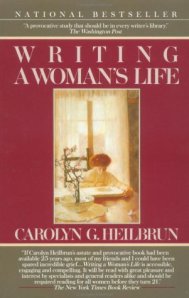
heilbrunSome time ago one of my most thoughtful readers (hi, Tom!) suggested I write about “a teacher/scholar whose work has had a significant influence on you.” I really liked this idea because, as I said in the resulting post, “It is impossible to overestimate the importance the right teacher at the right time can have on a student, though it may be impossible to foresee what will turn out to be ‘right’ ahead of time.” The teachers I wrote on included one from elementary school, one from high school, and one in particular among several who were important to my university years. At the close of the post, though, it occurred to me that the original question “may have been meant to elicit more about scholarly and critical, rather than personal, influences.” “I’m still thinking,” I concluded, “about that dimension of influence. No question, I have learned a lot from many teachers and scholars. But is that the same as having been ‘influenced’ by them? And have any of them actually inspired, moved, or motivated me?”

I’ve been thinking about those questions again recently because as I have tried to figure out what is most important to me to express as a critic (now that my long apprenticeship is over and I’m answerable primarily to myself for the future direction of my research and writing) I have identified two critics whose work indeed does inspire, move, and motivate me. More specifically, I have noticed that two critical books in particular repeatedly help me see and articulate what matters to me, or interests or challenges me, about many of the books I read, teach, and write about. One of these is Wayne Booth’s companionably plump and erudite The Company We Keep: An Ethics of Fiction, and the other is Carolyn Heilbrun’s slim but mighty Writing a Woman’s Life. Oddly, both were originally published in 1988. That means both were quite current when I started my PhD program at Cornell in 1990. But neither work–indeed, neither author, that I recall–was assigned, or even mentioned, in any course I took.

Booth’s book I discovered for myself when, soon after I earned tenure, I allowed myself to reconsider the focus of my scholarship, hoping to capture in my research the same excitement and urgency I felt in my teaching. I was dubious that I would ever feel much exhiliration pursuing increasingly esoteric projects about obscure women historians; I had done what I wanted to in that area with my thesis (which became my book). What I wanted to talk about was how and why novels actually mattered in our lives. I felt (feel!) that they do, profoundly, and I thought (think!) that one important facet of their significance is ethical. But I didn’t know how to talk about this in a rich way that would also be sensitive to fiction’s many other significant facets, including form, aesthetics, and history. The Company We Keep not only talks about exactly this, but it does so in Booth’s wonderfully engaging, unpretentious, open-minded way. It was criticism that talked about how we live in the world, and about literature as part of that living rather than something abstractly theoretical. Booth’s work was part of a wider debate about the ethics of fiction that included, among many others, Richard Posner, Martha Nussbaum, and, eventually, me: I published two academic essays as a result of this turn in my research (here’s one, in PDF; here’s the teaser for the other). The ideas it generated infused my teaching as well, particularly in a course I designed on ‘close reading’ that I will offer again, for the first time in 5 years, next fall. More recently, I wrote an essay on Gone with the Wind that attempted a “Boothian” reading of that problematic novel: an ethical reading that avoids (or so I hope) simplistic finger-pointing while accepting morality as a key aspect of literary evaluation. (Judging by the comments, not everyone was convinced! But I hope, in the spirit of what Booth calls ” coduction” [my favorite neologism!], some readers found themselves thinking about Gone with the Wind differently, even if they didn’t agree with me in all the details of my argument.) Clearly, Booth counts for me as an influential critic; I only wish I had read him earlier and been in a program where he and his interests had been prominent instead of–well, instead of much of what I was assigned.

I have a longer relationship with Heilbrun’s little book, which was given to me by my mother soon after its publication, with a lovely inscription noting that she had found it “interesting and provocative” and hoped we would talk about it “over tea.” It seems appropriate that Writing a Woman’s Life should have come to me in this way, as a gesture of shared interests and an invitation to intimacy and support, because that kind of female community and the strength it generates is one of Heilbrun’s major themes. Written relatively late in Heilbrun’s long career, its brevity is deceptive as it distills the accumulated insights of three decades of academic experience and feminist scholarship (for Heilbrun, often in a vexed relationship with each other). It’s wise, articulate, and insistent. I drew on it in formulating the central argument of my thesis and book, quoting from its first chapter, which is nominally on George Sand but is also on the difficulties and the vital necessity of finding appropriate ways to shape narratives of women’s lives. “Lives do not serve as models,” Heilbrun writes;

only stories do that. And it is a hard thing to make up stories to live by. We can only retell and live by the stories we have read or heard. We live our lives through texts. They may be read, or changed, or experienced electronically, or come to us, like the murmurings of our mothers, telling us what conventions demand. Whatever their form or medium, these stories have formed us all; they are what we must use to make new fictions, new narratives.

She moves immediately on to an example from George Eliot, to the Alcharisi in Daniel Deronda, who vehemently “protests women’s storylessness.” She writes in the book about women who lived lives that chafed against the stories they knew, and about biographies of these women that did, or, more often, did not find a better story to tell their lives in. She writes about anger and courage, about love and compromise, about age and beauty, about Dorothy Sayers and Virginia Woolf and herself. Writing a Woman’s Life is as much polemic (graceful and witty as it is) as theory, and it makes big claims supported by allusion and invocation rather than narrow claims defended by bulwarks of footnotes and metacriticism. It’s not, exactly, scholarly, but then it wasn’t exactly meant to be, because it’s a book that’s about living life as much as it is about writing it. “I risk a great danger,” Heilbrun remarks at the outset: “that I shall bore the theorists and fail to engage the rest, thus losing both audiences.” But Writing a Woman’s Life is never boring because it has all the urgency I wanted criticism to have. Though I didn’t immediately see it as a relevant book when I was reconsidering my own critical path, it’s urgent because it too is ethical criticism, in that broad sense of ethos that drives Booth’s arguments as well, and it’s urgent because it thinks it matters what and how we read: it takes fiction seriously because it sees reading as part of living, as shaping how we think and thus how we live.

I’ve found myself returning again and again to Heilbrun’s ideas about the limits of narrative forms and the problems of conceptualizing new stories (especially love stories) when talking with my students about many different novels, from The Tenant of Wildfell Hall to The Mill on the Floss to Sue Grafton’s ‘A’ is for Alibi. Like Booth’s book, Heilbrun’s has been recurrently useful not so much in the details but in the lens it offers for bringing key problems into focus–or, to try a different metaphor, for the way it illuminates the problems I want to talk about. Reviewing a new biography of George Eliot that frustrated and disappointed me, I turned to Heilbrun for help in explaining why. I just turned to her work again while teaching Death in a Tenured Position, which was written by Heilbrun under her pseudonym, Amanda Cross. (In another odd coincidence, Death in a Tenured Position is dedicated to May Sarton, whose novel The Small Room I just read and wrote up for the Slaves of Golconda.) Looking at it again, and also reading with great interest and pleasure the essays in her collection Hamlet’s Mother and Other Women, I found that after all these years, she more than most critics speaks in a voice I want to listen to. She’s infectiously passionate about the books and writers and issues she addresses, and she explains them sympathetically: her approach is inspiring, even, again, if we might differ on the details. Her  own story, also, with its brave ending, is moving in its effortful integrity. She was a controversial figure, but that in itself is motivating. As she says towards the end of Writing a Woman’s Life, those of us who are very privileged,

not only academics in tenured positions, … but more broadly those with some assured place and pattern in their lives, with some financial security, are in danger of choosing to stay right where we are, to undertake each day’s routine, and to listen to our arteries hardening.

“I do not believe,” she concludes, “that death should be allowed to find us seated comfortably in our tenured positions.” There, she is surely correct.

Finding My Voice: Posts on Criticism

I’ve been doing some housekeeping here on Novel Readings, setting up some index pages to make my archive of old posts accessible. I’m organizing them according to the categories you see on the tabs above: Academia, Criticism, Fiction, and Teaching. That’s not everything, but it turns out to be quite a lot! The process has been interesting and invigorating, because as I review and update the links I realize not just how many posts there are but how they reflect the evolution of my thinking about literature and criticism, as well as of my habits and practices as a critic. Most of the posts on criticism show me wrestling with my desire to reconcile the values inculcated over many years of academic training with a strong wish to write in a different way, with a different sense of purpose and for a different audience. In early 2008, for instance, I wrote a post for The Valve on “Literary Criticism in/and the Public Sphere”  that drew on my reading of scholars including Brian McRae, Morris Dickstein, and Ronan McDonald. When I wrote it, I wasn’t sure what criticism that lived up to some of its closing suggestions might look like. Now, however, I can point to my recent essay on Gone with the Wind at Open Letters as an example of the kind of thing I had in mind, what I called a “renewed and theoretically updated Victorianism”: a close reading with an emphasis on ethics but supported by an engagement with form. The Gone with the Wind essay also represents a step towards the goals I expressed in a more recent post about metacriticism and my sense that the conversation in academic blogging was going in circles:  “I just want to get on with it: trying to find a critical voice, and to hone and articulate perceptions that reflect both rigorous reading and a more personal, affective, and engaged vision of criticism.” I know I haven’t finished developing as a critic or a reader, but it is exciting to realize that I have moved forward and begun actually practising criticism differently, including speaking more as myself. Working on the index pages has really brought home to me how important blogging has been to this process.

The old post from The Valve is linked to from the ‘On Criticism’ page, but I thought I’d re-post it here (with updated links) as well in case anyone would like to comment on it (I don’t post at The Valve any more). It’s a bit long so if you want to read the whole thing be sure to click on the ‘read more’ link!

Literary Criticism and/as the Public Sphere

When I heard the learn’d astronomer,
When the proofs, the figures, were ranged in columns before me,
When I was shown the charts and diagrams, to add, divide, and measure them,
When I, sitting, heard the astronomer where he lectured with much applause in the lecture-room,
How soon unaccountable I became tired and sick,
Till rising and gliding out I wander’d off by myself,
In the mystical moist night-air, and from time to time,
Look’d up in perfect silence at the stars. (Walt Whitman)

It is a commonplace of the history of literary criticism that the character of criticism changed when and because criticism entered the academy and became professionalized, somewhere around the turn of the 20th century (and ever after). The nature and consequences of this change have been examined and re-examined often over the years, in books such as John Gross’s The Rise and Fall of the Man of Letters (1969), Morris Dickstein’s Double Agent: The Critic and Society (1992), Geoffrey Hartman’s Minor Prophecies: The Literary Essay in the Culture Wars (1991), Christopher Knight’s Uncommon Readers: Denis Donoghue, Frank Kermode, George Steiner, and the Tradition of the Common Reader (2003), or the essay collection Grub Street and the Ivory Tower: Literary Journalism and Literary Scholarship from Fielding to the Internet (1998)–to name just a few.

Brian McRae’s Addison and Steele Are Dead: The English Department, Its Canon, and the Professionalization of Literary Criticism (1990) is certainly among the more lively and provocative books I’ve read on this topic. As his title suggests, McRae frames his consideration of English departments as professional and institutional spaces with arguments about what features in the work of Addison and Steele “render it useless to critics housed in English departments”–not, as he is quick to add, that “their works are without value, but rather, that they are not amenable to certain procedures that English professors must perform” (11). The short version of his story is that professional critics require difficult, complex, ambiguous texts to do their jobs (e.g. 146); the “techniques of simplicity” that characterize Addison and Steele propel them, as a result, out of the canon. As he develops his argument, McRae offers an interesting overview of the 19th-century and then 20th-century critical reception of Addison and Steele. He explains the Victorians’ admiration for these 18th-century predecessors largely in terms of the different understanding that prevailed about the relationship of literature, and thus of the literary critic, to life. Rightly, I’d say (based on my own work on 19th-century literary criticism), he sees as a central Victorian critical premise that literature and criticism are public activities, that their worth is to be discussed in terms of their effects on readers; hence the significance attached, he argues, to sincerity as well as affect. Especially key to McRae’s larger argument is his observation that the 19th-century writers were not “academicians” or “specialists in a field” (89):

For Thackeray and his contemporaries, literature is a public matter, a matter to be lectured upon before large audiences, a matter to be given importance because of its impact upon morals and emotions. For the present-day academic critic, literature no longer is a public matter but rather is a professional matter, even more narrowly, a departmental matter. The study of literature has become a special and separate discipline–housed in colleges of arts and sciences along with other special and separate disciplines. The public has narrowed to a group of frequently recalcitrant students whose need for instruction in English composition–not in English literature–justifies the existence of the English department. (92)

As McRae tells the story (which in its basic outlines is pretty similar to that told in other histories of criticism), this decline in the critic’s public role has had both significant costs (among them, the critical ‘death’ of Addison and Steele) and significant benefits. At times the book has a nostalgic, even elegaic sound:

People who want to become English professors do so because, at one point in their lives, they found reading a story, poem, or play to be an emotionally rewarding experience. They somehow, someway were touched by what they read. Yet it is precisely this emotional response that the would-be professor must give up. Of course, the professor can and should have those feelings in private, but publicly, as a teacher or publisher, the professor must talk about the text in nonemotional, largely technical terms. No one ever won a National Endowment for the Humanities grant by weeping copiously for Little Nell, and no one will get tenure in a major department by sharing his powerful feelings about Housman’s Shropshire Lad with the full professors. (147)

Not that McRae thinks they should–and indeed we can all share a shudder at the very idea. But to me one strength of McRae’s discussion is his admission that marginalizing affect, pleasure, and aesthetic response is, in a way, to be untrue to literature, and that the professional insistence on doing so also, as a result, marginalizes our conversation, alienating us, as McRae says, “from our students, our counterparts in other academic departments, our families [unless, he allows, they include other professional critics–otherwise, as he points out, even they are unlikely to actually read our books and articles], and, ultimately, any larger public” (164-5). In Democracy’s Children: Intellectuals and the Rise of Cultural Politics (2002), John McGowan makes a similar point: “There remains a tension between the experience of reading literature and the paths followed in studying. . . . To give one’s allegiance to the academic forms through which literature is discussed and taught is to withdraw [at least partly] allegiance to literature itself” [65]. In A Mirror in the Roadway: Literature and the Real World (2005), Dickstein too remarks that “Since the modernist period and especially in the last thirty years, a tremendous gap has opened up between how most readers read if they still read at all, and how critics read, or how they theorize about reading” (1).

Continue reading

Louis Menand, The Marketplace of Ideas

The Marketplace of Ideas is not as interesting as I thought it would be. One reason may be that it is part of a series intended, as series editor Henry Louis Gates Jr. explains, to “invite the reader to reexamine hand-me-down assumptions and to grapple with powerful trends”–that is, the books are not rigorous analyses aimed at specialists but accessible and deliberately provocative commentaries meant to bring a wider public quickly up to speed on debates about (Gates again) “ideas that matter in the new millenium.” At just over 150 small-scale, large-type pages, The Marketplace of Ideas is not anything like a comprehensive examination of the many issues it addresses, whether the rise of the modern university, the vexed history of the “liberal arts” curriculum, the changing aspect of humanities research, or the causes and consequences of the current appalling academic job market. Rather, it offers a briskly coherent account of some historical contexts of particular relevance to certain elite universities (he shows this narrowness of focus throughout, which, as other reviewers have pointed out, eventually undermines a number of his more general claims and complaints). Then he transitions quite abruptly to consider political homogeneity as a feature of the academy, and then, with another awkward transition, to offer some interesting but often idiosyncratic or, worse, facile suggestions about what ails graduate education in the humanities today and how to fix it.

Of the contextual section of Menand’s book, Anthony Grafton at The New Republic writes, fairly, I think,

Menand’s account is consistently even-tempered, and he resists all temptations to succumb to nostalgia or to launch jeremiads, even when both might be appropriate. He does not portray the university in the age of New Criticism as a paradise of Serious Reading, or denounce the new forms of scholarship that have grown up more recently as one great betrayal of truth and high standards. Instead he sings a song of sclerosis. Through all these changes, he writes, the basic system of disciplines and departments remained intact–a hard and confining carapace that proved impossible to break, however humanists squirmed and pushed.

I appreciated his discussion of the mixed blessing that is professionalism, something addressed from a more discipline-specific angle in Brian McRae’s Addison and Steele are Dead (a book I discussed here at some length). I also found his comments on the unsatisfactory realities of “interdisciplinarity” very interesting: “interdisciplinarity” is a buzzword often invoked as if it represents a panacea to whatever ails our individual, disciplinary, or institutional limitations, but Menand suggests, persuasively, that our obsession with it is a symptom of anxiety about “the formalism and methodological fetishism of the disciplines and about the danger of sliding into an aimless subjectivism or eclecticism.”

Overall, though, this “structural explanation,” as Grafton calls it, wasn’t really what I went to the book for; rather, I was hoping for an elaboration on the provocative excerpt published last fall in the Harvard Magazine, focusing on “the PhD problem.” There, he talked about the dramatic rise in the number of doctoral students even as the number of available tenure track positions (relative to the number of candidates) fell off drastically, the long time to degree for doctoral students in the humanities, and some ideas for unclogging the system by, for instance, making an article the standard for the Ph.D. rather than the book-length thesis. It turns out he gave most of the milk away for free here, and my thoughts on reading that material over in the book version were the same as what I said at the time (if he can make his writing do double-duty, I figure I can do the same with mine):

. . . I was struck by Menand’s passing suggestion that “If every graduate student were required to publish a single peer-reviewed article instead of writing a thesis, the net result would probably be a plus for scholarship,” but this seems to me another of those ideas about changing “the system” (not unlike the MLA’s call to “decenter the monograph” as the gold standard for evaluating tenure and promotion files) that can never be addressed on a local level and so may never be addressed at all. Which department wants to be the first to say that they will award a Ph.D. without requiring a thesis? For that matter, which department could make such a change in policy without losing their accreditation or funding? Which department could independently assert its ability to evaluate the work of its members without the sacred stamp of “peer reviewed publications,” or at least giving equal weight to less conventional modes of knowledge dissemination? . . .

I was also struck by Menand’s remark that “Inquiry in the humanities has become quite eclectic without becoming contentious. This makes it a challenge for entering scholars to know where to make their mark.” This certainly echoes my strong feeling for the last several years that English, for one, has become a field so inchoate that it is unable to declare and defend itself in any compelling way that all of its members can agree on–at least, not without resorting to unbelievably bland formulations (all the world’s a text!). How can we sustain a sense of ourselves as a functioning discipline under these circumstances? Though I don’t want to fall into conservative lamentation about the good old days when everybody knew what books were valuable and why (when were those days, exactly, and how long did they last?), anyone who has worked on curriculum reform (and probably everyone working in an English department anywhere has done so at least once) knows that the lack of an identifiable core is a practical as well as an intellectual problem. It’s a problem for us, as we try to define priorities in hiring as well as teaching, and it’s a problem for students, whose programs include so much variety it is possible to meet a 4th-year honours student and be more struck, somehow, by what they don’t know or haven’t read than by what they do and have, and certainly impossible to predict what experience or knowledge they bring to your class . . . . But what, if anything, to do about that? Too often, I think, we resort to a rhetoric of skills (critical thinking!) that (as Menand points out with his remark about the dubious efficiency of studying Joyce to achieve more general ends) rather strips away the point of working through literature to achieve such general, marketable ends.

That last point about skills is something I have returned to recently, as I feel as if the pressure is mounting for humanities graduate programs to retool themselves as all-purpose training grounds for a (rarely specified) set of non-academic jobs. Here’s what Menand actually says on that issue:

The effort to reinvent the PhD as a degree qualifying people for non-academic as well as academic employment, to make the degree more practical, was an initiative of the Woodrow Wilson Foundation when it was headed by Robert Weisbuch. These efforts are a worthy form of humanitarianism; but there is no obvious efficiency in requiring people to devote ten or more years to the mastery of a specialized area of scholarship on the theory that they are developing skills in research, or critical thinking, or communication. . . . The ability to analyze Finnegan’s Wake does not translate into an ability to analyze a stock offering. If a person wanted to analyze stock offerings, he should not waste his time with Joyce. He should go to business school. Or get a job analyzing stock offerings.

As I’ve recently argued in response to just that kind of administrative “humanitarianism” (some might call it “pragmatism,” as well), I think there is indeed something fundamentally misguided about this trend to play up the skills set acquired during Ph.D. training, as if the content of the degree (and its specific constituent requirements, such as specialized comprehensive exams and a thesis) are somehow tangential. This “solution” to “the Ph.D. problem” sounds exactly like something an outside (non-specialist) administrator who doesn’t in fact care much about the content of individual disciplinary programs would propose, and our rapidity to embrace it, well-meaning though we certainly are (we really like our graduate students, in my experience, and want to help them), is in itself a kind of capitulation on the larger issue of the value of the work we specifically do (about which collapse of principle, see more here).

And here’s where Menand really turns out to disappoint, because with his throw-away line about the prospective stock analyst who should not “waste his time with Joyce” he (perhaps strategically) distances himself from one of his key audiences–not the skeptics or outsiders who already think that reading Finnegan’s Wake is at best a harmless (if bizarrely difficult) form of self-indulgence and at worst, yes, just a waste of time (and certainly not something that should be supported by public funding), but his fellow scholars and academics, the ones making decisions about curriculum and program requirement and advising undergraduate students to go on (or not) to Ph.D. programs, or Ph.D. students to complete (or not) their dissertations. How can they look for leadership to someone who doesn’t sound as if he thinks their work is important, whose suggestions for reform effectively trivialize it? He may well be right about Joyce as a means to that particular end, but why does he so blithly pass up the opportunity to explain why that work on Joyce might be vitally important to some other end not currently lauded or rewarded in the public culture he claims, in his closing peroration, must in fact be questioned and resisted by “the culture of the university”? He does spend a little time acknowledging what we have all gained: “the humanities,” he says

helped to make the rest of the academic world alive to issues surrounding objectivity and interpretation, and to the significance of racial and gender difference. Scholars in the humanities were complicating social science models of human motivation and behavior for years before social scientists began doing the same thing via research in cognitive science. That political and economic behavior is often non-rational is not news to literature professors. And humanists can hope that someday more social scientists and psychologists will consider the mediating role of culture in their accounts of belief and behavior. . . [Scholarship in the humanities] is pursuing an ongoing inquiry into the limits of inquiry. And it is not just asking questions about knowledge; it is creating knowledge by asking the questions. Skepticism about the forms of knowledge is itself a form of knowledge.

That’s something, though that’s about all I could find, and it strikes me as pretty tepid and unconvincing, all very abstract and general and vague about how exactly those literary scholars achieved the insight (?) that “political and economic behavior is often non-rational,” and promising nothing more than that humanities scholars will keep on keepin’ on, being skeptical and questioning about, well, everything. What’s Joyce to them, then, exactly, anyway? But I wouldn’t be so annoyed at these moments if it weren’t for this one:

It takes three years to become a lawyer. It takes four years to become a doctor. But it takes from six to nine years, and sometimes longer, to be eligible to teach poetry to college students for a living. . . . students who spend eight or nine years in graduate schools are being seriously overtrained for the jobs that are available.

I won’t get into the problem of his math (see the discussion at Historiann for some trenchant critiques). And I’ll concede that he means (I think) to be descriptive: it’s just true that the majority of jobs that are available for Ph.D.s in English right now are not at research-intensive universities or elite liberal arts colleges, or teaching specialized classes to majors and honours students in their fields. In a painfully literal way, then, he’s just telling the truth (though every time he talked about supply and demand I wondered why he wasn’t acknowledging the work of Marc Bousquet). But he makes it sound as if “teach[ing] poetry to college students for a living” is a pretty trivial occupation, one that really doesn’t depend on a base of specialized knowledge. What he doesn’t say, in this astonishingly dismissive remark, is that the eight or nine years people spend in graduate school are preparing, not just to teach Introduction to Poetry, but to rethink, and perhaps transform, how we teach poetry to undergraduates–not to mention what poetry we teach. I have only to compare the undergraduate training I received with what is standard in the curriculum today to realize what a seismic shift has gone on, in expectations, in contexts, in critical approaches. I had occasion to remark just this week, for instance, that when I studied “The Love Song of J. Alfred Prufrock” in my own first-year English class, the term “Modernism” never came up. Never. We read Joyce but no Woolf, just as in my Victorian novel class we read Trollope but not Gaskell or Braddon, and the term “imperialism” never came up. Now, I suppose you could argue that a small cadre of specially privileged researchers could be off doing the kind of work the effects of which would trickle down to the peons in the classroom, but as Menand himself argues, the fewer people engaged in an activity, the less likely it is that its norms and paradigms will be challenged. And as Grafton argues eloquently in his own response to Menand, “all this takes time,” and “the vocation of scholarship is difficult.” I think there are some difficulties with Grafton’s emphasis on the academic life as a “quest,” but I really wish that, having grabbed people’s attention, Menand would have seized the opportunity, not to lob another petty grenade at his struggling colleagues but to insist that we not concede too much to either the rhetoric or the pressures of the marketplace. Surely an English professor who is also a public intellectual is uniquely positioned to make the case for, not against, the rest of us. I’m not sure that someone who wants to be a stockbroker should finish a PhD either, but I’d rather have a stockbroker who reads Joyce (or Trollope or George Eliot) than one who doesn’t see the point of that stuff.

(cross-posted)

The Impact of the Humanities

At the TLS, Stefan Collini has a trenchant critique of the British government’s “Research Excellence Framework” for research funding in the universities. A key factor will the assessment of “impact”:

approximately 25 per cent of the rating (the exact proportion is yet to be confirmed) will be allocated for “impact”. The premiss is that research must “achieve demonstrable benefits to the wider economy and society”. The guidelines make clear that “impact” does not include “intellectual influence” on the work of other scholars and does not include influence on the “content” of teaching. It has to be impact which is “outside” academia, on other “research users” (and assessment panels will now include, alongside senior academics, “a wider range of users”). Moreover, this impact must be the outcome of a university department’s own “efforts to exploit or apply the research findings”: it cannot claim credit for the ways other people may happen to have made use of those “findings”.

Collini’s main interest is in the “potentially disastrous impact of the ‘impact’ requirement on the humanities”:

the guidelines explicitly exclude the kinds of impact generally considered of most immediate relevance to work in the humanities – namely, influence on the work of other scholars and influence on the content of teaching

Collini points out a number of profound “conceptual flaws” in the proposed process, among them the assumption that all disciplines across the university can and should be assessed in the same way, and the pressure on researchers to devote their time not to the “impact”-free zones of writing and teaching in their areas of specialization (because influence on work in your field, for instance, does not count as “impact”) but on marketing. His concluding peroration:

Instead of letting this drivel become the only vocabulary for public discussion of these matters, it is worth insisting that what we call “the humanities” are a collection of ways of encountering the record of human activity in its greatest richness and diversity. To attempt to deepen our understanding of this or that aspect of that activity is a purposeful expression of human curiosity and is – insofar as the expression makes any sense in this context – an end in itself. Unless these guidelines are modified, scholars in British universities will devote less time and energy to this attempt, and more to becoming door-to-door salesmen for vulgarized versions of their increasingly market-oriented “products”. It may not be too late to try to prevent this outcome.

Though I agree it is essential to make the argument about the intrinsic value of “the humanities,” it seems at least as important to challenge (as he does) the mechanisms for measuring impact, because the “end in itself” argument risks perpetuating popular misconceptions about the insularity of humanities research, when in fact it is quite possible to argue that our impact on the wider world (particularly, but not by any means exclusively, the cultural world) is already substantial, but probably too diffuse to be measured even by the “thirty-seven bullet points” comprising the “menu” of “impact indicators.” Two academic articles I read recently provide some supporting evidence for this claim.

Here’s Cora Kaplan, for instance, in a recent essay in The Journal of Victorian Culture:

Sarah Waters has a PhD in literature . . . ; she has said that her research on lesbian historical fiction suggested to her the potential of an underdeveloped genre. In its citation and imitation of their work, Fingersmith paid generous tribute to Victorian novelists; it also has a considerable indebtedness to feminist, gay, lesbian and queer critics and social and cultural historians of Victorian Britain. It would not be too frivolous to see Fingersmith – together with other examples of fictional Victoriana – in their synthesis of the detail and insights of several decades of new research on the Victorian world and its culture as one measure of the ways in which Victorian Studies has developed over the last half century. (JVC 13:1, 42)

And here are Patricia Badir and Sandra Tomc responding, in English Studies in Canada, to calls to take the humanities “beyond academia.” Offering a polemical summary of “what the humanities in general, fueled by highly esoteric post-structural theory, have accomplished in the way of widespread social and cultural contributions over the last twenty years,” they begin with the premise that poststructuralism began as a “theory propounded by a tiny priesthood of high intellectuals”:

But this priesthood had acolytes–graduate students at first, then, by the mid-1980s as “theory” inevitably made its way into the classrooms of ivy league professors, undergraduates. The undergraduates . . . did not uniformly move into Ph.D. programs, thereby assuring theory’s continued enclosure in a specialized community. They moved into a variety of illustrious professions and industries, including, most significantly, America’s powerful and ubiquitous culture industries. . . . [T]he Hollywood of today is ruled by ivy league degrees, most of them earned in the 1980s or 1990s, and most of them . . . heavily larded with humanities courses–courses in English, film studies, American studies, gender studies, history. These people were taught by their professors to value certain kinds of aesthetic objects. As they assumed positions of authority in the late 1980s and early 1990s, they began to patronize films and filmmakers that meshed with what they had been taught was cutting-edge culture. The signature films of the early 1990s . . . featured the “politically correct” identity issues and self-referential formal experimentation lauded in the postmodern classroom: Thelma and Louise; Philadelphia; The Crying Game; Priscilla, Queen of the Desert; The Piano; Pulp Fiction; The English Patient. In television, . . . the transformation to postmodern forms has been even more radical: Buffy, the Vampire Slayer; The X-Files; Alias. . .

“One could make the same argument,” they go on, “for the field of journalism,” and they go on to do so, and to the “massive industry” in “‘literary’ objects” including not just books but adaptations. To calls that the humanities address the interests of “civil society,” they reply that “the humanities have, in a large measure, already shaped contemporary civil society”: “the fashions we are being asked to follow are our own.” (ESC 29:1-2, 13-15). I’m sure it’s easy to argue about which are the “signature films” of the 1990s, but the general case that specialist research in the humanities makes its way into the wider world by way of our classrooms seems presumptively strong–but that is just the kind of “impact” apparently discounted by the Research Excellence Framework.

I’m sure more (and perhaps more concrete) examples could be provided by most academics looking at intersections between their own fields of specialization and the world “outside” the academy. A concerted campaign to demonstrate the “impact” of humanities research might do as much good as insisting also that, whatever its “impact,” the work is valuable in itself. And it should probably be carried on not (just), as with my two examples, in the pages of academic journals, but as publicly as possible–in the TLS, but also through blogs, letters to the editor, talking to our neighbours–you name it. Many thousands of our students are out there somewhere, too, who could surely testify to the “impact” of our work, not just on their cinematic tastes, but on their thinking, reading, and voting lives. After all, the REF may be specific to the UK, but the narrow version of utilitarianism it represents is not.*


*Narrower than J. S. Mill’s, certainly: “Next to selfishness, the principal cause which makes life unsatisfactory is want of mental cultivation. A cultivated mind – I do not mean that of a philosopher, but any mind to which the fountains of knowledge have been opened, and which has been taught, in any tolerable degree, to exercise its faculties- finds sources of inexhaustible interest in all that surrounds it; in the objects of nature, the achievements of art, the imaginations of poetry, the incidents of history, the ways of mankind, past and present, and their prospects in the future. It is possible, indeed, to become indifferent to all this, and that too without having exhausted a thousandth part of it; but only when one has had from the beginning no moral or human interest in these things, and has sought in them only the gratification of curiosity.”

Workday Miscellany: Ph.D. Problems, Institutional Inertia, Graduate Teaching, and the Yoke of Marriage

I’m feeling a bit scattered this week. Here are some of the things buzzing around in my head.

1. It’s hard not to want to say something about Louis Menand’s much-linked-to post on “the PhD problem,” but what? Readers of this blog will not be surprised that I nodded emphatically at this statement:

The non-academic world would be enriched if more people in it had exposure to academic modes of thought, and had thereby acquired a little understanding of the issues that scare terms like “deconstruction” and “postmodernism” are attempts to deal with. And the academic world would be livelier if it conceived of its purpose as something larger and more various than professional reproduction—and also if it had to deal with students who were not so neurotically invested in the academic intellectual status quo.

But I don’t really know how to assess some of his larger claims, especially the more sociological or statistical ones; I can’t even compare them to my own experience, really, because the information is exclusively about American institutions and I don’t know how closely the patterns he describes are repeated here in Canada–despite having spent two years as coordinator of our graduate program. One of the reasons is that the concerns of that position were, of practical necessity, extremely local: it’s a two-year stint by departmental policy, with an incessant stream of relatively small bureaucratic and advising tasks and intervals of intense labour around major fellowship deadlines and, of course, admissions. In the first year of the position the learning curve was steep and my dependence on our (exemplary!) office staff nearly total; the second year was slightly better but the end was already in sight. New initiatives? Policy development? Research into large-scale professional questions and how they might impact or play out in our tiny program? Not a chance: there was just no time, and frankly no incentive, to explore broader issues.

2. In a related vein, I was struck by Menand’s passing suggestion that “If every graduate student were required to publish a single peer-reviewed article instead of writing a thesis, the net result would probably be a plus for scholarship,” but this seems to me another of those ideas about changing “the system” (not unlike the MLA’s call to “decenter the monograph” as the gold standard for evaluating tenure and promotion files) that can never be addressed on a local level and so may never be addressed at all. Which department wants to be the first to say that they will award a Ph.D. without requiring a thesis? For that matter, which department could make such a change in policy without losing their accreditation or funding? Which department could independently assert its ability to evaluate the work of its members without the sacred stamp of “peer reviewed publications,” or at least giving equal weight to less conventional modes of knowledge dissemination? (How far, as the MLA report suggested, has “peer review” become an excuse for farming out the job of scholarly evaluation to editors?) Anecdotally, conversationally, there’s plenty of dissatisfaction with the professional status quo and interest in making various features of it more flexible and more responsive to changing conditions in, say, publishing or employment. But this week, in a couple of different contexts, I was reminded again of how rigidly current practices are enforced by administrative structures that assume certain models for estimating academic productivity and value (for instance, fellowship competitions in which quantity of publications is taken as the only ‘objective’ measure of excellence, or research models that promote applications for large grants as if more expensive projects are both necessary and desirable). People grumbled about the implicit principles but the atittude appears to be “that’s the way things are now, and we’d better stay in the game.”

3. I was also struck by Menand’s remark that “Inquiry in the humanities has become quite eclectic without becoming contentious. This makes it a challenge for entering scholars to know where to make their mark.” This certainly echoes my strong feeling for the last several years that English, for one, has become a field so inchoate that it is unable to declare and defend itself in any compelling way that all of its members can agree on–at least, not without resorting to unbelievably bland formulations (all the world’s a text!). How can we sustain a sense of ourselves as a functioning discipline under these circumstances? Though I don’t want to fall into conservative lamentation about the good old days when everybody knew what books were valuable and why (when were those days, exactly, and how long did they last?), anyone who has worked on curriculum reform (and probably everyone working in an English department anywhere has done so at least once) knows that the lack of an identifiable core is a practical as well as an intellectual problem. It’s a problem for us, as we try to define priorities in hiring as well as teaching, and it’s a problem for students, whose programs include so much variety it is possible to meet a 4th-year honours student and be more struck, somehow, by what they don’t know or haven’t read than by what they do and have, and certainly impossible to predict what experience or knowledge they bring to your class (in my 4th-year seminar on Victorian sensation fiction, I have students who have never studied 19th-century novels before–they have a lot of catching up to do, to participate effectively in some aspects of our discussions). But what, if anything, to do about that? Too often, I think, we resort to a rhetoric of skills (critical thinking!) that (as Menant points out with his remark about the dubious efficiency of studying Joyce to achieve more general ends) rather strips away the point of working through literature to achieve such general, marketable ends.

4. All of this mental muddle is particularly distracting because one of the things I’m trying to get done is course planning for next term, and particularly the plans for my upcoming graduate seminar on George Eliot. When I first taught such a class (in 1997-98), I thought it was pretty obvious what I should do: graduate courses are training for professional work in the field of literary criticism, right? That shouldn’t have seemed so obvious to me then (I didn’t take into account, for instance, that Dalhousie’s program includes a ‘terminal’ M.A. and thus serves a student population that is not necessarily headed down an academic path), and it certainly does not seem so obvious to me now. But what difference does, or should, it make that there seem to me to be a number of uncertainties about the purpose of their degrees more generally, our seminar in particular, and even literary criticism itself? Is a (real or mock) conference paper a reasonable goal, or a paper suitable to be revised and submitted to a peer-reviewed journal? Should I diversify the requirements to suit a wider range of possible applications of scholarly expertise–say, a resource-rich website, an experimental hyper-text edition of a chapter, a paper aimed at a general audience, a portfolio of book reviews, a class wiki? Is it possible to accommodate such a range and still to ensure equal workloads and fair evaluation? I’ve been reading and rereading a swathe of critical articles in preparation for the usual “secondary readings” requirements but if I can’t even be sure myself what we need to accomplish in the class, how can I choose what they should read? Probably I’ll just do what I usually do, which is pick some articles that seem particularly useful or interesting, or that stand for some reason as key or classic pieces; require a couple of short response papers, a seminar presentation, and a term paper (of the usual academic variety). It’s tempting to reinvent the course–but it’s part of a whole system of requirements and expectations, and so there I am again, reluctant to deviate from local norms, to point out that most of them will never need to do academic criticism (or get a permanent job in which it is required of them for tenure) and so we should really find something else to do about what we read.

In the meantime, my classes seem to be going fine. I was particularly pleased with the lively discussion in the Sensation Fiction seminar the last couple of meetings; I think we have some real momentum now, having bulldozed through four major novels in preparation for the next phase of the course, which involves a series of workshops and then a series of student presentations. In the other class, assignments just went back and besides the inevitable angst and resentment that generates, I think most of them are behind on their Middlemarch readings. But I’m doing my best to keep the energy up and to give them ideas about how to make the most of the reading as they work their way along. We talked about Lydgate and Rosamond, and the “ideal not the real yoke of marriage” (a phrase actually used about Dorothea and Casaubon, but widely applicable in this novel). For a happily “married” woman, George Eliot could sure put her finger on just how and why marital relations can turn from bliss to pain. To my knowledge there are only two married people in the class; they seem to be the ones doing most of the nodding as I explain the process of disillusionment and then adaptation to reality the novel describes.

Academic Blogging at ACCUTE

I’ve been meaning to say a little bit about the lunch-hour session on academic blogging that I convened at ACCUTE last week. As some of you will know, this session was the down-sized version of a panel I proposed for which there were, well, not many submissions. I’m not altogether sorry. Our informal discussion was certainly more fun and interactive, and probably more productive, than a series of well-rehearsed papers would have been. I enjoyed meeting other bloggers, including The Classroom Conservative and some of the founders of the new, and highly recommended, 19th-century blog The Floating Academy. (During the conference I also met a couple of lurkers: if you’re still out there, thanks for introducing yourselves! Who says the Internet can’t foster actual human interaction?) Also present were some academics who blog but don’t necessarily define themselves as “academic bloggers,” which in itself raised some interesting questions about how (or whether) we define our working or professional selves as distinct from our personal or other selves.

I began with a few words about how I stumbled into blogging and then some comments on what seem to me its benefits from a specifically academic perspective: writing often, writing for a potentially wider audience, getting feedback on work-in-progress, making contacts. I think I also mentioned the slow pace of academic publishing (not conducive to the steady or collaborative development of ideas) and the frustration with writing more for careerist than intellectual or scholarly reasons. The flip side of all this is (again, from a narrowly academic perspective) lack of professional recognition for this activity, which then raises questions about the time commitment, particularly for junior faculty. Then we just went around the room and everyone explained their own interest in or experience with blogging, academic or otherwise. I thought it was a friendly and productive discussion. Probably what emerged most strongly for me was that, just as it is difficult to define “blogging” because the form itself determines almost nothing about the content, so too “academic blogging” can take many forms, from the scholarly to the personal to the literary. As a result, academics who believe their blogging is contributing in some significant way to their professional development and therefore want some credit for it (and let’s face it, most of us have an interest in moving forward, not just intellectually, but also professionally, so the issue of “what does this count for?” is bound to come up, given how many demands there are on our time) will have to make the case based on the specific kind of work they are doing. Still, it also seems to me that the primary value of blogging, whether academic or not, is and should be intrinsic. Whether you blog because you find the mental exercise stimulating or clarifying, or because you find it useful to have a repository for your unfolding ideas, or just because you enjoy it, then whatever else comes of it, you won’t be sorry. And given the ways academic work tends to meld with everything else we do and think about, our work is bound to benefit, even if only indirectly. Many of us remarked, for instance, that the simple challenge of writing often and (implicitly) for a broader audience than other specialists was, in itself, one of the chief attractions and rewards of blogging: it brought us back in touch with the pleasure of writing. I’d like to hear any follow-up thoughts from others who were there.Thanks to all of you for coming! I was afraid it might be a lonely lunch for me.

As it turns out, there was another blogging panel at the Congress, sponsored by University Affairs; unfortunately I didn’t know this one was on the schedule until I had already booked my return ticket for that day, or I would certainly have attended it as well. (If any of you were there, I’d be interested in your report. I found a bit more information about it, here and here.) I was surprised to see only one Canadian blogger on the panel, though perhaps I shouldn’t have been, considering my own experience trying to uncover other Canadian academics who blog.

‘Tis Aw a Muddle…or Is It?

I’ve been trying for a while to find a conceptual framework that will unify the various reading and writing activities I’ve been doing. The immediate, pragmatic motivation for bringing things into some kind of order is that it’s about time I applied for some research grant money to support those activities (and by “support,” I mean pretty basic stuff, like buying ink cartridges for my office printer or paying for research-related xeroxing, not to mention buying books, renewing memberships in professional associations, or upgrading my take-home computer equipment–all expenses that are not covered by my department or faculty). There is money to be had, internally and externally, but of course to get any of it you need to have a research project defined clearly enough to justify your demands. I have a couple of objections to this system. One of them is just to the principle of the thing: doing research is part of my job, so I’ve never understood why I have to scrounge up the money necessary to get it done. Another is to the inflationary effect of the grant application process. Except for the occasional conference trip, I don’t actually need much money–what I really need is time to think and read. In terms of funding, what I’d like is enough to cover the basics (cartridges, xeroxing, books) on an ongoing basis. I’d like to feel I can keep reading and thinking and looking things up and writing things until I reach a point at which I can’t express my ideas and findings adequately in short form but need the time and resources to produce a book that will do them justice. Instead, I have to start the process assuming I’m writing a book, because that’s the kind of project that gets grants. So I have to inflate the significance and scope of what I’m currently doing, and what I plan to do next, so that I can ask for enough money to get taken seriously. (SSHRC standard grants, for instance, now require a minimum budget of $7000, but we’re generally advised to ask for a lot more). Our main internal source of research funding clearly spells out in its terms that it is seed money for SSHRC-fundable projects, so it is also not hospitable to exploratory work, and it also rules out what it calls “basic research overhead,” which it declares is the responsibility of our departments and faculties. It doesn’t say exactly what counts as “basic research overhead,” but I’m thinking that category probably includes things like printing and xeroxing, and maybe books (which I know SSHRC used to refuse to pay for)–and it specifically excludes computer equipment. So some fancy footwork is required to explain one’s research needs in a way that will at once meet the approved criteria and actually provide the things one needs for one’s research. And, to get back to my main point, the whole thing has to be framed as an attempt to accomplish some clearly defined research endeavor…ideally, one that builds in some coherent way on past research accomplishments.

Of course, I have applied for research funding before, and I have used the resources I obtained responsibly and gotten things done–published, even. I haven’t made a successful SSHRC application yet; my one attempt (which, in retrospect, I admit was enthusiastic but naive in its presentation) was slapped down hard enough that I wasn’t very motivated to try again, though it’s interesting to me that I have, after all, gone on to do some key parts of the ‘program of research’ described in it, so it can’t have been altogether wrongheaded. The most recent internal money I got was to help me get the Broadview anthology taken care of. But now that’s all gone, and so is my last print cartridge and any remaining credits on my copy cards. So it’s time to go back and ask for some more. But for what?

My problem is (and I realize that I have brought it on myself by the choices I’ve been making about how to use my time) my attention has been increasingly diffused over the past couple of years. Instead of picking one critical problem and pursuing it consistently, I’ve been looking around at a lot of different things. Why have I been doing this? Well, for one thing, I can’t seem to bring into focus any one critical problem that feels urgent to me: I can’t find something to work on that seems truly necessary and exciting, and I’ve chosen to indulge–or respect–my weariness with the flood of academic microcontributions that has resulted from the incessant pressure to publish as soon as possible and as often as possible. I felt that academic scholarship tended too far away from the liveliness and urgency of literature and I wanted to look outside to see how non-academics talked about books, or how academics talked about books outside of ‘work’ that maybe had more mobility and potency. And the first thing to really hit me once I started looking around in this way was just how ignorant my own specialized research had made me. Behold, I knew not anything! Or at least not anything that anybody else was likely to take an interest in–or so it seemed.

This was the point at which I began a relatively systematic exploration of books about books, as well as books about the relationship between academic criticism and what we might call ‘public’ criticism. This was also the point at which I began taking more time writing blog posts and tentatively looking for a place for myself (small, no frills, just a corner of my own) in the wider world of book talk. It took me almost no time to realize that I am very poorly equipped to be a public intellectual: graduate training does not produce generalists, and life pre-tenure, not to mention life post-babies, does not make it any easier to broaden your reach. Still, my professional work has given me some equipment for analyzing books that aren’t Victorian novels, and it was both educational and fun to see how that might work. I have also written about academic issues and about my teaching, both exercises in mobilizing what I know in new ways. Along the way, I think I’ve done some decent thinking and writing. (I’ve written before about the intrinsic benefits of blogging; making connections with other readers and writers, academic and not, has been the very best part of this experiment so far.) I’ve also completed the Broadview anthology and puttered along with my inquiry into Ahdaf Soueif’s In the Eye of the Sun as an engagement with Middlemarch, so it isn’t as if I’ve been doing nothing but playing online. However, I do feel that I have fallen behind in my supposed area of specialization, because while I was looking the other way, the flood of new publications continued. Now I feel inadequate in two directions!

Overall, though, I’ve been doing so much reading and writing that it seems as if it must add up to something. So far, however, I just can’t see what. I can see a strong convergence between my metacritical inquiry into the nature of academic criticism and its alienation from the wider reading public, on the one hand, and my attempt (primarily through blogging) to find a different kind of criticism, though so far that attempt is not systematic or particularly ambitious. I can see links, too, between those issues and my work on 19th-century criticism (very much an activity of the public sphere). But I don’t really want to do a project about criticism so much as I want to do criticism differently…but it’s hard to see how to do writing about the literature I’m best prepared to write about (Victorian literature) in a non-academic way, because non-academic book talk seems (reasonably enough) preoccupied with contemporary writers about whom, and about whose contexts, I discover I am in many respects an amateur. So perhaps the Soueif project stands as a way of bringing 19th-century literature into a modern discussion because that is what Soueif herself does by taking Middlemarch as in some way her starting point?

Well, I’m not going to arrive at any answers tonight, and there may in fact be no answer that draws these different threads together. Maybe what I need to do for the grant application is articulate fully the interests and goals of the Soueif essay and never mind the rest. But I’d like to think there’s a point to the rest of it too. I’m also aware that exploring without a shaping purpose eventually becomes dilettantism, and I’m convinced of the importance of being earnest even without a research grant to strive for, so any time I can clear some mental space, I’ll think about it some more.