She’s an ordinary woman leading a quiet life – no thrills, no romance, few expectations, just her work, her friends, and the comforting knowledge that everyone relies on her common sense. In a crisis, she can be counted on to make tea. All this changes when the new couple comes on the scene. The wife is an energetic professional in a whirl of commitments and contacts; the husband is a suave charmer. As she is drawn into their circle, our heroine finds herself both energized and resentful. What, exactly, is her role? What does she mean to these new people? What has happened to her life since they came — and what will happen when they leave?
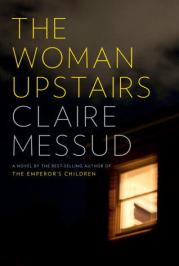 As my mash-up title suggests, this is the basic plot outline of two very different novels: Claire Messud’s The Woman Upstairs and Barbara Pym’s Excellent Women (1952). I read The Woman Upstairs a month or so ago and though I found it a page-turner, I ended up not liking it very much. It’s not that I minded the “unlikable” narrator: as I said in my piece on Olivia Manning (apparently quite an unlikable woman herself), “the chief obligation of a writer, . . . as of a character, is not that she be nice but that she be interesting.” The problem I ultimately had with Messud’s Nora was that I did not find her very interesting: she was too much up in my face all the time about how angry she was, and so the novel gave me no sense of discovery about her. The novel was a page-turner because I wondered what would happen and why exactly she was in such a rage. But the answers to both questions were rather disappointing. Nora’s anger especially seemed confused — which is fine for her as a character (she has no obligation to be crystal clear about her own emotional state, and anger does tend to mess things up) but not for the novel, which to me seemed to be trying to make a broader political and feminist case for anger out of one woman’s very personal neuroses and bad judgment.
But it was the artlessness of Nora’s narration that I found particularly tedious after a while: there’s no revelation to it, no subtlety compared to, for instance, Villette, which was the Brontë novel I kept thinking of as I read The Woman Upstairs. The explicit inter-text for Messud’s novel is Jane Eyre, which is a pretty angry novel, to be sure. But Jane’s retrospective narration adds a controlling layer of meaning, and Jane is more admirably assertive than Nora in pursuit of her own selfulfilment. That’s the Victorianist in me coming out, perhaps, but I got quite irritated at Nora’s complaining: stop moping (or ranting, which is just a louder version of the same thing) and get on with your life! Villette, in turn, is a much darker, twistier novel about the differences between calm surfaces and tormented desires, about repression and resentment and bitterness. And Lucy Snowe (cold, like her name, and coy, and judgmental, and yes, angry) makes us figure her out — and she doesn’t make it easy! There’s a readerly excitement in working out just who Lucy is and what she’s feeling that for me has no equivalent in The Woman Upstairs. For all its cleverness (and there are lots of smart things about it), Messud’s novel ultimately seemed kind of obvious (the big surprise at the end – who didn’t see that coming the minute they knew about Sirena’s cameras?).
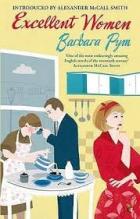 I think this is why I liked Excellent Women so much better. It’s so understated that a lot of it nearly slips past unnoticed, but as a result, while it lacks the driving forward momentum of The Woman Upstairs, its rewards are both more subtle and more surprising. We almost don’t know that Mildred is ever angry at the way those around her treat her as an accessory to their lives or assume they know what she needs or (most annoying of all) whom she loves. “Perhaps,” she observes dryly at one point, “I really enjoyed other people’s lives more than my own,” but over the course of the novel we can’t help but realize how tired she is of being one of the “excellent women” — the women who are always depended on but are somehow never part of the action on their own behalf – “excellent women whom one respects and esteems” but never truly sees. “I always think of you as being so very balanced and sensible,” says her friend William, “such an excellent woman.” “It was not the excellent women who got married,” Mildred reflects a bit later, “but people like Allegra Gray, who was not good at sewing, and Helena Napier, who left all the washing up.”
It’s Helena and her smoothly flirtatious husband Rocky who play the Shahids’ role in Excellent Women. “Things were much simpler before they came,” Mildred thinks. They stir things up, but in doing so they bring things to the surface that might have been better off left undisturbed. When they go, she’ll still have her old occupations, but the Napiers are more blunt than the Shahids ever are to Nora about how her options look to them:
‘What will you do after we’ve gone?’ Helena asked.
‘Well, she had a life before we came,’ Rocky reminded her. ‘Very much so – what is known as a full life, with clergymen and jumble sales and church services and good works.’
‘I thought that was the kind of life led by women who didn’t have a full life in the accepted sense,’ said Helena.
‘Oh, she’ll marry,’ said Rocky confidently. They were talking about me as if I wasn’t there.
‘Everard might take her to hear a paper at the Learned Society,’ suggested Helena. ‘That would widen her outlook.’
‘Yes, it might,’ I said humbly from my narrowness.
Right there we see the genius of Excellent Women in microcosm: if you weren’t already enraged on Mildred’s behalf at the complacent condescension of her supposed friends, that moment of self-deprecating bitterness ought to do the trick. She doesn’t have to yell at us about how angry she is, but we don’t have to be in her company long to understand that there’s a lot going on in her head that isn’t “excellent” at all.
Unlike Helena, Mildred spends a lot of time washing up – often, Helena’s dishes. After one particularly dramatic incident at the Napiers’, she finds herself in their flat, “with the idea of making some order out of the confusion there” — but also, really, to get some time to herself. The scene beautifully literalizes her discomfort and frustration at the life she’s living:
No sink has ever been built high enough for a reasonably tall person and my back was soon aching with the effort of washing up, especially as yesterday’s greasy dishes needed a lot of scrubbing to get them clean. My thoughts went round and round and it occurred to me that if I ever wrote a novel it would be of the ‘stream of consciousness’ type and deal with an hour in the life of a woman at the sink.
She feels “resentful and bitter towards Helena and Rocky” but she also admits “nobody had compelled me to wash these dishes or tidy this kitchen. It was the fussy spinster in me.” They aren’t altogether wrong, that is, in their assumptions about her, and yet (as her struggles through the novel with her hair, make-up, and clothing tell us) there’s nothing inevitable about the woman she is or is becoming. At the end of the novel she finds herself trapped once again in a part she doesn’t want to play but can’t seem to escape.
Messud’s novel suggests that anger is a necessary stage on the way to freedom, and in some ways its ending is triumphant: Nora has broken free of the Shahids’ spell and perhaps (though her narrative doesn’t convince me of this) gained some self-knowledge in the process. She is certainly fired up to do … something. There’s something infinitely sadder (if also, perversely, funnier) about Mildred’s conclusion, but I ended up a lot with a lot more invested in her fate, and feeling a lot more admiring of the art with which she was drawn.
Excellent Women is this month’s selection for the Slaves of Golconda reading group – look for more posts about it there in a few days.

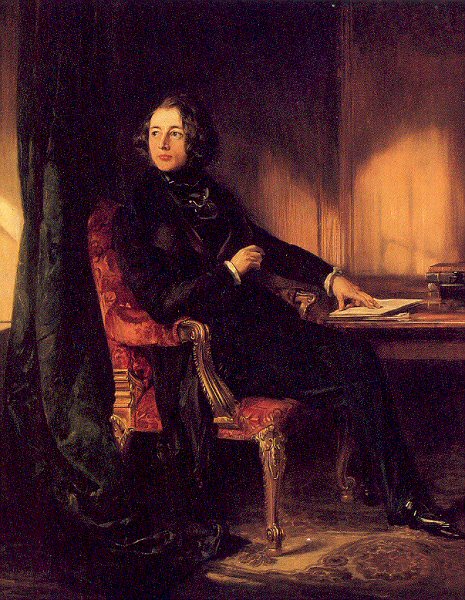

 What a fool I’ve been. It turns out that the solution was right there next to my reading chair all this time: the handsome Oxford World’s Classics edition of David Copperfield I’ve ordered for my fall class on the 19th-century novel. This too is duty reading — or, properly, rereading, as of course I haven’t made it this far without having read it before (including out loud to my husband, years ago when this was the kind of thing we did). But I haven’t read it in a long time, and I’ve also never actually assigned it for a course. My go-to teaching Dickens has been Great Expectations (it’s very good, after all, plus it’s short, for Dickens), with Hard Times a frequent alternate and Bleak House a favorite in terms when I’m not also assigning Middlemarch. Oh, and once or twice, A Tale of Two Cities. But I finally felt kind of tired of Great Expectations, and I did Bleak House last term, and it seemed like a good time to mix things up a little, so I put David Copperfield on the book list for next term and on my summer reading list so I could get started on my class prep. It’s been sitting there looking reproachfully at me for weeks (I mean, look at that cover — it practically screams “you’re not doing your duty!”) and I’ve puttered away at it a little, but only yesterday did I put everything else aside and just read it for a few hours — and I feel all my reading mojo coming back.


 A
A  Conversations about authors we love should not be approached in a competitive spirit. After all, there’s no need to rank writers, or to pit them against each other; happily, literary greatness is not a zero-sum game. As Henry James says in “The Art of Fiction” (included in that same collection),




 Novel Readings