Recent Reading: Micro Edition

The pile of books I’ve read but not written about is growing. I guess it’s a good sign that, however busy I am, I’m still getting some things read that aren’t strictly for work. But right now it feels like, between teaching and administrative responsibilities (which are heating up, inevitably, as the term moves along) , writing a book review, doing the usual round of editing for Open Letters, and resisting the temptation to get drawn into long debates with commenters on my Gone with the Wind essay (it turns out the down side to getting attention is getting negative attention!), I won’t do any long book posts for a while. But I had an idea: if Bookphilia can do 10 word reviews, surely, so can I–or as close to 10 as is reasonable to expect from a Victorianist!

Anita Brookner, A Start in Life. So depressing it made me want to draw the curtains, turn out the lights, and drink. Or go to Paris–which would probably cheer me up.

Leila Aboulela, The Translator. In the end, it didn’t seem a lot more to me than a love story, and not a very believable one at that. Evocative prose, though.

Robert B. Parker, Pale Kings and Princes. Spenser, Hawk, and lots of Susan–all’s well with the world, or at least it is when this invincible team is done its work.

Elif Batuman, The Possessed. This one I’d quite like to write about at more length. Maybe on the weekend. I had no such adventures as a graduate student, that’s for sure! She went to Uzbekistan, I went to, um, Buffalo. I’ve been out of graduate school longer than she has, also, and I’m still not able to find my experiences there funny. I consider myself still in recovery! If I ever write the story of those days, there’s a ‘townie’ bar that will represent a sanctuary from a world in which I had to keep my head up while someone told me (in front of others) that I was “intellectually calcified,” and another told me (in writing) that because I wanted to argue about concepts of literary merit (I was for them), I needed to prove I wasn’t D’nesh D’Souza. Did I mention I’m still in recovery?

If you’re looking for more substantial blog posts, I recommend Adam Roberts’s review of Room at Punkadiddle (and also see this helpful roundup at The Second Pass). Stefanie at So Many Books makes Rosy Thornton’s The Tapestry of Love sound very appealing (I recently read and enjoyed Hearts and Minds), and Craig Monk weighs in on Freedom at The Classroom Conservative. Stevereads turns to Rosemary Sutcliff, then has a bad day with comics, and at LikeFire Daniel Nocivelli writes about what sounds like a wonderful story in the New Yorker: “a magnificent look, through the eyes of a book, at the many and varied transformations occurring across a half-century of one woman’s life, from her junior year abroad to her deathbed.” Enjoy! And more substance from me soon.

This Week In My Classes: Gaskell, Sayers, and Literary Research

It was a short week, thanks to the Thanksgiving holiday–so why do I feel so flattened? It has something to do with the 6-8 hours I put in just trying to decide what to include in and how to present an introduction to literary research for my survey class. There are just so many things I want to say to them, to help them with, and to warn them against! They are doing a very particular kind of assignment that mimics the process of doing the research for a critical essay but with several specific steps that are really about learning to use (and discriminate among) the overwhelming array of potential sources of information now available. Having now heard not one but two presentations in my fourth-year seminar that relied heavily and unapologetically on Wikipedia, I’m more determined than ever, not to stop students from using Wikipedia (I use it myself, after all), but to make sure they start there, not stop there, and that they know why.

Anyway, I feel as if I hadn’t quite got to the point I wanted with the presentation, but here it is–without, of course, my running commentary including qualifications, elaborations, and acknowledgments of points of controversy. What I was most interested in accomplishing was getting them away from the idea that research means looking up ‘the right answer,’ and impressing upon them that research is not a linear journey from one question to one result but a kind of spiralling process. I tried to find the graphics that best represented the way I hoped they conceptualize their task. If anything strikes you as a major howler, do let me know, as it seems fairly likely I’ll get another chance at this course next year.

My other task for the survey class this week was setting up our study of Elizabeth Gaskell’s Mary Barton (which is what their research assignment focuses on–I used Hard Times for my examples as it seemed close enough to be useful and suggestive). I’m disappointed now in the way I did that, actually. The class size and room, along with the particular goals of the course, which make me feel pressured to ‘cover’ things, made it seem right to provide a lot of general context on the 19th-century novel and social problem fiction. But I used to do a lot more interactive teaching even in the early sessions on novels, and I think I’d like to go back to that even if it’s hard to pull off in a tiered lecture hall. While it’s true they don’t usually know much, if any, of that general context, it will probably mean more to them if I let the explanations arise more organically from developments in the novel itself and make sure they are getting involved sooner rather than later.

In Mystery and Detective Fiction, we wrapped up Gaudy Night. Here too I felt a bit disappointed. Maybe I’m losing my teaching mojo! It’s true that I haven’t been nominated for a teaching award since 2007 and my evaluations are not as consistently high as they once were… But actually in this particular example my disappointment was that the class just didn’t seem very excited about the novel, and since it is one of my very (very, very!) favourite books, I felt I had somehow failed it. Or them. Maybe that was the problem, though I tried not to make it too obvious that it is one of my very (very, very!) favourites but to entertain arguments on both sides about how effectively it achieves Sayers’s aims of integrating the ‘novel of manners’ with the detective story, or how intelligently Sayers unifies her characters and situations with the novel’s themes, including women and academic life and the difficulty of balancing the demands of the head with the desires of the heart. It’s funny how it is sometimes much easier to teach things you aren’t very invested in personally!

And now, home for the weekend. In my bag: Mary Barton and An Unsuitable Job for a Woman, for work; Elif Batuman’s The Possessed, for fun (and a little for ideas, as I keep turning around and around in my head different ideas for writing projects of my own); Brenda Maddox’s George Eliot in Love, for a review I must finish this weekend (!); and an advance copy of Jill Paton Walsh’s latest Peter Wimsey concoction–maybe, also, for a review, but also just because.

Reading David Copperfield

‘Amateur Reader’ is doing a lovely series of posts on his reading of David Copperfield over at Wuthering Expectations. Up so far:

I had seen it somewhere. But I could not remember where. – In David Copperfield, Dickens tames his prose.

Dickens had reached a dead end, and he knew it.  Many of his most rhetorically complex passages only barely serve the story of which they were nominally a part.  The Haunted Man, is, at times, barely comprehensible.  Dombey and Son is never that bad, but is still extraordinarily thick in places.

I had not read David Copperfield (1849-50) when I wondered if its switch to the first person was partly an attempt by Dickens to tame his own prose.  It was!

What ravages I committed on my favourite authors in the course of my interpretation of them – David Copperfield, Author.

Charles Dickens switched to a first person narrator in David Copperfield.  Once, influenced by baleful Modernists, I would have found myself surprised that Dickens was interested in, and wanted to answer, the usual first person questions.  No more, though.  Nineteenth century writers were no fools.

The sensation of the very airs that blew on me. – Proustian Dickens.

The whiff of Proust is in that air, with the smell of earth and leaves.  Standing at the window (a real action) evokes a more or less conscious memory, the visual image of the tramps, which reminds Copperfield of his own journey as a tramp (ending, more or less, at this window), accompanied, involuntarily, by some associated (non-visual) memories.

Dame Joan Sutherland (1926-2010)

Joan-Sutherland-005

Dame Joan Sutherland has died at her home in Switzerland. I wrote a little about my love affair with her voice here. For me, as for many, hers was the voice. What a legacy of beauty and joy she has left us. Here she is, from the treasure trove of material you can find on YouTube, singing ‘Regnava nel silenzio’ from Lucia di Lammermoor, recorded live at the Royal Opera House Covent Garden in 1959–the beginning. Updated: the Covent Garden video is gone from YouTube, so here’s another splendid rendition:

Reading Elizabeth Hardwick

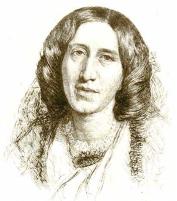
I’ve been really enjoying reading Elizabeth Hardwick’s criticism recently. I have owned Seduction and Betrayal for many years but I hadn’t really looked at it since I turned professional. More recently I picked up A View of My Own: Essays on Literature and Society, along with her novel Sleepless Nights, which I haven’t read yet but look forward to. I’ve been trying to put my finger on just what is so engaging about her essays on books and writers. It’s not their rigor or persuasive power, because they strike me (perhaps because I turned professional) as a bit rambling and digressive, and I don’t always agree with her insights (which are rarely offered as conclusions). I don’t think it’s her prose particularly: at least in the pieces I’ve just been looking at I don’t notice that she is an especially graceful stylist. It’s something more like the impression the essays give of her strong, distinctive, curious personality reacting vigorously–both intellectually and emotionally–to what she’s reading. She seems very interested in what she finds, and she doesn’t feel the need to surround or support her own response with explicit allusions to any theory or scholarship–which is partly a matter of form, of course, as she’s writing essays and not theory or scholarship, but it strikes me as also, somehow, a matter of confidence, in herself as a reader, a thinker, and a writer. Where does someone find that kind of confidence? After a while, of course, you earn it.

Here are a couple of samples. First, from the essay on the Brontes included in Seduction and Betrayal:

Sympathy, pity, intelligence, goodness, genuineness–these are the charms Charlotte Bronte wishes to impose. There is something a little overblown in the heroine’s hope to press virtues upon men who are conventional, and even somewhat corrupt, in their taste in women. The heroine’s moral superiority is accompanied by a superiority of passion, a devotion that is highly sexual, more so we feel than that of the self-centered and worldly girls the men prefer. (This same sense of a passionate nature is found in George Eliot’s writing.) Charlotte Bronte’s heroines have the idea of loving and protecting the best sides of the men they are infatuated with: they feel a sort of demanding reverence for brains, honor, uniqueness. Mr. Rochester, M. Paul, and Dr. John in Villette are superior men and also intensely attractive and masculine. Girls with more fortunate prospects need not value these qualities but instead may look for others, money in particular. That is the way things are set up in the novels.

Here she is on Sylvia Plath, also from Seduction and Betrayal, in an essay I found piercing in its own kind of ruthlessness, its total (and necessary) absence of sentiment about its subject:

Beyond the mesmerizing rhythms and sounds, the flow of brilliant, unforgettable images, the intensity–what does she say to her readers? Is it simple admiration for the daring, for going the whole way? To her fascination with death and pain she brings a sense of combat and brute force new in women writers. She is vulnerable, yes, to father and husband, but that is not the end of it all. I myself do not think her work comes out of the cold war, the extermination camps, or the anxious doldrums of the Eisenhower years. If anything, she seems to have jumped ahead of her dates and to have more in common with the years we have just gone through. Her lack of conventional sentiment, her destructive contempt for her family, the failings in her marriage, the drifting, rootless rage, the peculiar homelessness, the fascination with sensation and the drug of death, the determination to try everything, knowing it would not really stop the suffering–no one went as far as she did in this.

From A View of My Own, here’s a bit of “George Eliot’s Husband,” an essay that embraces the peculiarities of what she calls the “fantastic partnership” of Marian Evans and George Henry Lewes:

She and her husband, Lewes not Cross, are inconceivable as anything except what they were, two writers, brilliant and utterly literary. They led the literary life from morning to midnight, working, reading, correcting proofs, traveling, entertaining, receiving and writing letters, planning literary projects, worrying, doubting their powers, experiencing a delicious hypochondria. . . .

From later in the same essay,

Leslie Stephen thinks George Eliot’s powers were diminished by Lewes’s efforts to shield her from criticism, to keep her in a cozy nest of approval and encouragement. But Stephen’s opinion is based upon his belief that her later novels are inferior to the earlier ones. Stephen didn’t much like Middlemarch, nor did Edmund Gosse–both preferred the early work. It is hard to feel either of these men had anything more than respect for George Eliot.

‘Their mistake,’ she is clearly thinking, though she doesn’t quite say it. What she feels for “the Warwickshire novelist” is something warmer than respect, as we can tell from her remark that “As one grows older this industrious, slowly developing soul becomes dear for a secret reason–for having published her first story at the age of thirty-eight.”

One final excerpt, from her wonderful piece on Jane Carlyle in Seduction and Betrayal:

Jane Carlyle’s letters have something subversive in them; the tone is very far from the reverent modes that came naturally to Dorothy Wordsworth. Both the journals of the poet’s sister and the letters of the wife of the great prophet are ways of preserving and discovering self-identity. It is easy to imagine that the steady literary labors going on around the two women made a kind of demand upon them; a supreme value attached to sitting at the desk with a pen rushing over the pages. Both had gifts of an uncommon nature, but the casual, spontaneous form of their writings is itself the ultimate risk. We are not expected a hundred and fifty years later to have them in our hands, to read them. It is only by the luckiest chance that they survive, and no doubt many letters were lost. Jane’s letters might not have been collected, but The French Revolution would certainly have stepped forth; Recollections of a Tour Made in Scotland might have perished, while The Excursion was not written for obscurity.

Here again her judgment is left implicit, but I think we can tell perfectly well that she sees no reason to value The French Revolution or The Excursion any more highly than the “casual, spontaneous” writings, despite their greater pretensions.

Here are links to a couple of nice pieces I found online once I started poking around to get a better sense of Hardwick’s life and career: there’s Jim Lewis in Slate; Lisa Levy in The Believer; Chrisopher Lehmann-Haupt at the New York Times; and her NYRB page, with links to a lot more reviews and essays I want to read, including “Melville in Love” (June 15, 2000) and “The Genius of Margaret Fuller” (April 10, 1986–which I’ll be able to read as soon as my new NYRB subscription is official!), and to the NYRB editions of Seduction and Betrayal, her New York Stories, and Sleepless Nights.

Finding My Voice: Posts on Criticism

I’ve been doing some housekeeping here on Novel Readings, setting up some index pages to make my archive of old posts accessible. I’m organizing them according to the categories you see on the tabs above: Academia, Criticism, Fiction, and Teaching. That’s not everything, but it turns out to be quite a lot! The process has been interesting and invigorating, because as I review and update the links I realize not just how many posts there are but how they reflect the evolution of my thinking about literature and criticism, as well as of my habits and practices as a critic. Most of the posts on criticism show me wrestling with my desire to reconcile the values inculcated over many years of academic training with a strong wish to write in a different way, with a different sense of purpose and for a different audience. In early 2008, for instance, I wrote a post for The Valve on “Literary Criticism in/and the Public Sphere”  that drew on my reading of scholars including Brian McRae, Morris Dickstein, and Ronan McDonald. When I wrote it, I wasn’t sure what criticism that lived up to some of its closing suggestions might look like. Now, however, I can point to my recent essay on Gone with the Wind at Open Letters as an example of the kind of thing I had in mind, what I called a “renewed and theoretically updated Victorianism”: a close reading with an emphasis on ethics but supported by an engagement with form. The Gone with the Wind essay also represents a step towards the goals I expressed in a more recent post about metacriticism and my sense that the conversation in academic blogging was going in circles:  “I just want to get on with it: trying to find a critical voice, and to hone and articulate perceptions that reflect both rigorous reading and a more personal, affective, and engaged vision of criticism.” I know I haven’t finished developing as a critic or a reader, but it is exciting to realize that I have moved forward and begun actually practising criticism differently, including speaking more as myself. Working on the index pages has really brought home to me how important blogging has been to this process.

The old post from The Valve is linked to from the ‘On Criticism’ page, but I thought I’d re-post it here (with updated links) as well in case anyone would like to comment on it (I don’t post at The Valve any more). It’s a bit long so if you want to read the whole thing be sure to click on the ‘read more’ link!

Literary Criticism and/as the Public Sphere

When I heard the learn’d astronomer,
When the proofs, the figures, were ranged in columns before me,
When I was shown the charts and diagrams, to add, divide, and measure them,
When I, sitting, heard the astronomer where he lectured with much applause in the lecture-room,
How soon unaccountable I became tired and sick,
Till rising and gliding out I wander’d off by myself,
In the mystical moist night-air, and from time to time,
Look’d up in perfect silence at the stars. (Walt Whitman)

It is a commonplace of the history of literary criticism that the character of criticism changed when and because criticism entered the academy and became professionalized, somewhere around the turn of the 20th century (and ever after). The nature and consequences of this change have been examined and re-examined often over the years, in books such as John Gross’s The Rise and Fall of the Man of Letters (1969), Morris Dickstein’s Double Agent: The Critic and Society (1992), Geoffrey Hartman’s Minor Prophecies: The Literary Essay in the Culture Wars (1991), Christopher Knight’s Uncommon Readers: Denis Donoghue, Frank Kermode, George Steiner, and the Tradition of the Common Reader (2003), or the essay collection Grub Street and the Ivory Tower: Literary Journalism and Literary Scholarship from Fielding to the Internet (1998)–to name just a few.

Brian McRae’s Addison and Steele Are Dead: The English Department, Its Canon, and the Professionalization of Literary Criticism (1990) is certainly among the more lively and provocative books I’ve read on this topic. As his title suggests, McRae frames his consideration of English departments as professional and institutional spaces with arguments about what features in the work of Addison and Steele “render it useless to critics housed in English departments”–not, as he is quick to add, that “their works are without value, but rather, that they are not amenable to certain procedures that English professors must perform” (11). The short version of his story is that professional critics require difficult, complex, ambiguous texts to do their jobs (e.g. 146); the “techniques of simplicity” that characterize Addison and Steele propel them, as a result, out of the canon. As he develops his argument, McRae offers an interesting overview of the 19th-century and then 20th-century critical reception of Addison and Steele. He explains the Victorians’ admiration for these 18th-century predecessors largely in terms of the different understanding that prevailed about the relationship of literature, and thus of the literary critic, to life. Rightly, I’d say (based on my own work on 19th-century literary criticism), he sees as a central Victorian critical premise that literature and criticism are public activities, that their worth is to be discussed in terms of their effects on readers; hence the significance attached, he argues, to sincerity as well as affect. Especially key to McRae’s larger argument is his observation that the 19th-century writers were not “academicians” or “specialists in a field” (89):

For Thackeray and his contemporaries, literature is a public matter, a matter to be lectured upon before large audiences, a matter to be given importance because of its impact upon morals and emotions. For the present-day academic critic, literature no longer is a public matter but rather is a professional matter, even more narrowly, a departmental matter. The study of literature has become a special and separate discipline–housed in colleges of arts and sciences along with other special and separate disciplines. The public has narrowed to a group of frequently recalcitrant students whose need for instruction in English composition–not in English literature–justifies the existence of the English department. (92)

As McRae tells the story (which in its basic outlines is pretty similar to that told in other histories of criticism), this decline in the critic’s public role has had both significant costs (among them, the critical ‘death’ of Addison and Steele) and significant benefits. At times the book has a nostalgic, even elegaic sound:

People who want to become English professors do so because, at one point in their lives, they found reading a story, poem, or play to be an emotionally rewarding experience. They somehow, someway were touched by what they read. Yet it is precisely this emotional response that the would-be professor must give up. Of course, the professor can and should have those feelings in private, but publicly, as a teacher or publisher, the professor must talk about the text in nonemotional, largely technical terms. No one ever won a National Endowment for the Humanities grant by weeping copiously for Little Nell, and no one will get tenure in a major department by sharing his powerful feelings about Housman’s Shropshire Lad with the full professors. (147)

Not that McRae thinks they should–and indeed we can all share a shudder at the very idea. But to me one strength of McRae’s discussion is his admission that marginalizing affect, pleasure, and aesthetic response is, in a way, to be untrue to literature, and that the professional insistence on doing so also, as a result, marginalizes our conversation, alienating us, as McRae says, “from our students, our counterparts in other academic departments, our families [unless, he allows, they include other professional critics–otherwise, as he points out, even they are unlikely to actually read our books and articles], and, ultimately, any larger public” (164-5). In Democracy’s Children: Intellectuals and the Rise of Cultural Politics (2002), John McGowan makes a similar point: “There remains a tension between the experience of reading literature and the paths followed in studying. . . . To give one’s allegiance to the academic forms through which literature is discussed and taught is to withdraw [at least partly] allegiance to literature itself” [65]. In A Mirror in the Roadway: Literature and the Real World (2005), Dickstein too remarks that “Since the modernist period and especially in the last thirty years, a tremendous gap has opened up between how most readers read if they still read at all, and how critics read, or how they theorize about reading” (1).

Continue reading

This Week in My Classes: Head and Heart

Both of my class readings for today focus on conflicts–real, assumed, or perceived–between the demands of the head and the demands of the heart.

Balliol College, Oxford

In Women and Detective Fiction, it was our first session on Dorothy Sayers’s Gaudy Night. The novel opens as Harriet Vane revisits Oxford for her college’s Gaudy celebrations. She is pleased to be leaving behind her, as she thinks, the emotional disruptions of her life in London, including her troubled past as a murder suspect and her current relationship with Lord Peter Wimsey. Oxford, to her, represents at this point an oasis of order and clarity:

To be true to one’s calling, whatever follies on might commit in one’s emotional life, that was the way to spiritual peace. How could one feel fettered, being the freeman of so great a city, or humiliated, where all enjoyed equal citizenship? . . . In the glamour of one Gaudy night, one could realize that one was a citizen of no mean city. It might be an old and an old-fashioned city, with inconvenient buildings and narrow streets where the passers-by squabbled foolishly about the right of way; but her foundations were set upon the holy hills and her spires touched heaven.

This “exalted mood” does not altogether survive the ensuing encounters with old classmates or former teachers, but even as clues emerge that beneath its beautiful surface Oxford conceals its share of ugly truths and dark secrets, Harriet continues to be compelled by the ideal of a place in which the highest value is placed on “integrity of the mind.” Writing about Gaudy Night, Sayers recalls having been asked by her own Oxford college to give a toast at the Gaudy dinner:

I had to ask myself exactly what it was for which one had to thank a university education, and came to the conclusion that it was, before everything, that habit of intellectual integrity which is at once the foundation and the result of scholarship.

Much of the novel explores the implications of this commitment, and whether the intellectual life can, or should, be isolated from the life of the heart. For Sayers, the technical challenge was to integrate her interest in this problem, and in the characters she had invented who were living out its implications, with her chosen fictional form:

The new and exciting thing was to bring the love-problem into line with the detective-problem, so that the same key should unlock both at once. I had Harriet, feeling herself for the first time one equal ground with Peter, seeing the attraction of the intellectual life a means of freeing herself from the emotional obsession he had produced in her, and yet seeing (as she supposed) that the celibate intellectual life rendered one liable to insanity in its ugliest form. I had Peter, seeing the truth from the start and perfectly conscious that he had only to leave her under her misapprehension [about the causes of that insanity] to establish his emotional ascendancy over her. . . . Peter’s honesty of mind had to tell him that if Harriet accepted him under any sort of misapprehension, or through any insincerity on his part, they would be plunged into a situation even more false and intolerable than that from which they started. She must come to him as a free agent, if she came at all . . .

Sayers explains in the same essay that her creation of Harriet as a strong, deep, and independent woman necessitated her reinvention of Peter: she had to rewrite him from a caricature to a human being so that a relationship between the two was conceivable. More than that, though, and I think this is at the heart of why so many women writers and critics cherish this novel, she would not compromise Harriet’s autonomy in the interests of romance, so she devotes this entire novel to the struggle of both Peter and Harriet to find the necessary balance or equipoise in their relationship that they can achieve both love and respect, can satisfy both head and heart.

In British Literature Since 1800 we are spending this afternoon’s class on Elizabeth Barrett Browning’s Aurora Leigh. I am fortunate to have as a colleague one of the leading experts on EBB, Marjorie Stone, who recently co-edited the definitive annotated edition of EBB’s poetry for Pickering and Chatto. Marjorie has kindly agreed to do a guest lecture. I’m always very excited when someone else lectures in my class. I thoroughly enjoy lecturing myself, but I love feeling like a student again–that experience, after all, was what sent me down this path in the first place! It’s wonderful to hear someone speak with passion and wisdom about a subject really dear to their heart. We are reading just the excerpts in the Norton Anthology: the bits from Book I on Aurora’s education, from Book II in which she faces off against her conventional cousin Romney, and then from Book V in which she (meaning both Aurora and EBB) redefines the epic form for the modern age, and for the woman poet:

Never flinch,
But still, unscrupulously epic, catch
Upon the burning lava of a song,
The full-veined, heaving, double-breasted Age:
That, when the next shall come, the men of that
May touch the impress with reverent hand, and say
‘Behold,–behold the paps we all have sucked!
This bosom seems to beat still, or at least
It sets ours beating: this is living art,
Which thus presents, and thus records true life.

It’s an exciting moment, but one that Aurora has earned (or so she thinks) by choosing her head over her heart, rejecting Romney’s proposal that she give up her poetic ambitions to become his helpmate in social reform: “If your sex is weak for art,” he says,

(And I, who said so, did but honour you
By using truth in courtship), it is strong
For life and duty.

Romney’s assumptions about women reflect Victorian commonplaces about the division of the world into separate spheres of natural aptitude and interest. His assumptions about poetry are also representative, in this case of the Utilitarian prejudice against such frivolous pastimes (“men, and still less women, happily, / Scarce need be poets”). Aurora’s rebuttal is one of many great passages in the verse-novel that reject such polarizing binaries, not just between men and women or poetry and useful work, but between the real and the actual, the spiritual and the material, the individual and the social:

I hold you will not compass your poor ends
Of barley-feeding and material ease,
Without a poet’s individualism
To work your universal. It takes a soul
To move a body: it takes a high-souled man,
To move the masses, even to a cleaner stye:
It takes the ideal, to blow a hair’s-breadth off
The dust of the actual.

Just as Romney must learn to value the heart (or poetry, or the soul, or the spiritual), Aurora must let go of her own absolutism and make manifest the value of poetry as a force for social good, as well as reconciling her head and her heart by accepting the value of love. By the end of Aurora Leigh, they have achieved a rare equality of both passion and commitment, which they celebrate in some wonderfully erotic, ecstatic poetry that (sadly) is not included in the Norton excerpts:

But oh, the night! oh, bitter-sweet! oh sweet!
O dark, O moon and stars, O ecstasy
Of darkness! O great mystery of love,
In which absorbed, loss, anguish, treason’s self
Enlarges rapture, – as a pebble dropt
In some full wine-cup over-brims the wine!
While we too sate together, leaned that night
So close my very garments crept and thrilled
With strange electric life, and both my cheeks
Grew red, then pale, with touches from my hair
In which his breath was. . . .

Sure, it’s perhaps a bit excessive, but isn’t rapture precisely excessive? And even Jane Eyre doesn’t bring her physical response to Rochester to such sensory life.

Open Letters in October

The new issue of Open Letters Monthly is up and it is full of exciting stuff. First of all, October is the month for the annual Bestseller feature; this month the team takes on the NYT nonfiction bestsellers, and the results are not always pretty. Tuc MacFarland, for instance, is understandably discouraged by the #1 title, Sh*t My Dad Says, which he fears “could give hope to an entire San Fernando Valley of couch-dwelling stoners.” Greg Waldmann is similarly appalled at #2, The Obama Diaries, “a stupendously moronic and transparently racist satire,” and Rita Consalvos thinks # 5, Kendra Wilkinson’s Sliding Into Home, “may be the closest we ever get to a book written by an actual bunny, a petty, petted, fluffy, brainless, ruthlessly self-absorbed gnawing creature accustomed to being kept on display [and] used for pleasure.” There are bright spots, however, including #10, Rebecca Skloot’s The Immortal Life of Henrietta Lacks, which Maureen Thorson concludes “makes a poisonous tree a little less poisonous,” and #8, S. C. Gwynne’s Empire of the Summer Moon, described by Steve Donoghue as “both a superb work of history and a fast-paced, gripping narrative on par with the some of the smartest historical fiction on the market.”

The rest of the issue ranges as broadly as usual. Joanna Scutts writes about “The Daringly Sensible Marjorie Hillis,” author of such useful titles as Live Alone and Like It. Sarah Emsley reviews the new Annotated Pride and Prejudice, “a beautifully produced and informative guide to reading Austen’s brilliant and beloved novel in its historical context.” Anne Fernald reviews Adam Nicolson’s Sissinghurst: A Castle’s Unfinished History, a “story of land not merely owned but loved and understood.” Bartolomeo Piccolomini reports on a new biography of Machiavelli, and David Michael examines a history of English anti-Semitism. Ingrid Norton continues the series ‘A Year with Short Novels’ with Elizabeth Smart’s By Grand Central Station I Sat Down and Wept, while Irma Heldman adds to her ‘It’s a Mystery’ series with a look at S. J. Rozan’s On the Line. Elisa Gabbert appeals to our senses and our memories this time in her monthly perfume column, while Abigail Deutsch engages with Anne Carson’s form-defying Nox. I have an essay there as well, a reconsideration of one of my long-time favorites, Gone with the Wind. This is my first attempt to do book writing that’s also personal writing–my first attempt outside this blog, that is–so I’m a little apprehensive but also excited about it. And that’s not all that’s in the issue, so head on over and check it out for yourself.

Reading Franzen’s Freedom

I’m not, actually, not on principle or anything but just because I have literally stacks of other books I want to read slightly more. But the interesting reports on it that keep coming  in from the bloggers I follow are nudging me closer to buying it, not because they all love it but because it does seem to give us plenty to talk and think about. Also, after a while it’s like being a wallflower at the dance or something!

At Like Fire, Lisa Peet judges the book good but “overweight,”

The writing is observant and intelligent about how we live and how we mess that up: parenting gone awry in small, shattering ways; political tradeoffs that make sense until they suddenly don’t; lovers and spouses caught looking over each other’s shoulders at something else in the distance. Freedom is a very moral story. Still, the novel felt like getting into a slightly drunken dinner-party political discussion with a left-leaning Libertarian—each separate argument holds, but when taken together they add up to something you wish you’d argued against more cogently when you wake up the next morning. Franzen has a lot to say, and he says it well. But although the parts all work—I couldn’t point my finger at any set piece in particular that dragged the book down—that doesn’t mean they all needed to be there.

She concludes her judicious review in the reasonable tone that seems to have eluded many commentators:

The hype surrounding Franzen will eventually die down, and what we’ll be left with is the book we deserve: sprawling and personal and deeply entrenched in its present. Whether it will endure the tests of time is mostly irrelevant—Freedom, as the title asserts, is a fun ride while it lasts.

Jeanne at Necromancy Never Pays began admiring Franzen’s writing but has some particular complaints from (as she somewhat wryly notes) a female perspective on a male writer who notoriously did not want his previous book “to get a reputation as a woman’s novel”:

Franzen is very good at presenting character. Even his female character, Patty, thinks in a way that I have to admit seems genuine. In her forties, she finally “acknowledged realities about her physical appearance which she’d been ignoring in her fantasy world…she humbled herself.” Having just done this myself, I can’t say it doesn’t ring true.

But it really rubs me the wrong way (ahem) to read that a woman’s intelligence lies in her sexual organs: “Connie had a wry, compact intelligence, a firm little clitoris of discernment and sensitivity….”

At Tales from the Reading Room, litlove is part way through and finding herself intrigued by the novel’s “emotional coldness”:

When I think of the books I’ve read recently – Sarah Water’s The Night Watch, which will rip the beating heart from your body without the tiniest shred of sentimentality involved, Austen’s Emma with its pervasive, profound compassion, Orwell’s 1984 with its nightmarish darkness, it becomes all the clearer how far away Franzen stays from the murky depths and the scintillating highs of his characters’ experience. Take for instance the character of Patty Berglund, whose autobiographical account, written as I mentioned in a gender-neutral third person, makes up a fair chunk of the narrative. Something terrible happens to Patty in her adolescence, compounding a problematic childhood as the relatively stupid, sporty one in a family of eccentric creative types. This is the toxic root to her behavioural problems, but Franzen doesn’t want to get involved in what it really means for a woman to suffer terrifically low self-esteem. The emotional punch of anxiety, anguish, passion, possessiveness, these are irrelevant to the narrator. Patty’s story is flattened out, the incident forgotten, her ‘crimes’ no worse than any woman might commit in a dissatisfactory marriage and yet she is viewed with a jaundiced eye. Patty’s a messy person, but who isn’t? Without a vital emotional aura surrounding Patty’s story, it’s hard to know what to make of it, whether we should condemn or sympathise. There are two possibilities here. One is that Franzen just can’t write women and I fear that banal explanation may be justified. . . .

The other possibility is more interesting. . .

At zunguzungu, Aaron Bady, also not quite finished, is finding the book “superbly written but sort of wrong“:

I’m particularly drawn to readings of novels and movies as exploring the breakdowns of their own interpretive matrix, and it may be that the novel is, in this way, about the failures of realism. What I do know is that, as a novel, it tells me very little that strikes me as true in the way it describes MTR activists, even as it makes quite ambitious claims to generic realism. Which is the problem: how does a “realist” novel address the fact that it might be wrong? In that vein, in fact, I can’t help but notice all the little fuck-ups I’m coming across; the character who catches shingles from someone with chicken pox, for example, was written by an author who doesn’t know what shingles is (you catch chicken pox from someone with chicken pox; shingles you catch from yourself).

At Blographia Literaria, Andrew Seal (who has finished the book), takes the comparisons between Freedom and War and Peace as his starting point:

I don’t know whether Franzen means for this allusion to War and Peace to be a red herring of sorts or not, the kind of thing which is designed to catch a critic who is on a hunt for a hook to bite down on, for something portentous to compare the year’s biggest novel to. Franzen does preface Patty’s later recounting of Natasha’s story with the comment, “And she became a better reader. At first in desperate escapism, later in search of help.” Patty’s first connection to War and Peace is escapist; she uses it to justify sleeping with the Andrei character, Richard, literally making life resemble art. Later, Patty becomes a better reader by accepting that the analogy between Tolstoy and her life is imperfect and not to be lived through, just to be consulted for truth or “help.”

This, in a nutshell, is in fact Franzen’s own ethics of reading, at least as they are articulated in the Harper’s essay: Franzen’s own autobiographic narrative there is a similar story of recognizing that the imperfect fit between life and art is the real source of its power—just as long as we recognize that art is not meant to make a perfect fit, is not meant to act directly as a model, that we’re not supposed to act like characters. Understanding characters helps us understand ourselves, yes, but we err when that understanding is of ourselves-as-characters. And the fact that War and Peace is in fact only mentioned five times in the novel—and four of those instances within twenty pages—suggests that this episode similarly is not meant to be so fundamental to our understanding of the novel: not a code or a key but a symptom, a single instance of a leitmotiv at most. To do more with War and Peace or Tolstoy is merely to fetishize allusion for its own sake—exactly the type of conflation of art and life that Franzen is (at least in my reading) trying to guard against.

He moves on to propose that “there is, perhaps, something we can recover from this comparison between Franzen and Tolstoy”–but you’ll have to read his post yourself to find out!

At American Fiction Notes, Mark Athitakis excerpts from his Chicago Sun-Times review to highlight why he things “the novel doesn’t quite come off”:

Throughout the novel are glimpses of people who are more coddled by art than inspired by it. A rock club is full of fans of a “gentler and more respectful way of being . . . more in harmony with consuming.” When Richard gives an interview saying rock “never had any subversive edge,” the provocation is subsumed into blogosphere noise. But writing can hurt, Franzen insists, and art can reshape us.

“Richard” is Richard Katz, a musician friend of the couple at the center of the novel, and something of a mouthpiece for the frustration/contempt/weltschmerz Franzen feels toward the way culture is made and consumed in America. There’s no question that Franzen is a firm believer in the power of storytelling—the whole novel is a study in how the stories we tell one another or ourselves can have a huge impact, sometimes literally wound us. Yet in nearly every scene in which Richard arrives, Franzen appears to be wringing his hands over the usefulness of pursuing art in a society that’s dead to it. It’s a valuable question, but Franzen pursues it awkwardly, and doesn’t resolve it in a satisfying way.

Not a blog, of course, but at the Wall Street Journal another writer I follow attentively, Open Letters Monthly‘s own Sam Sacks, finds Miltonic echoes in Franzen’s “situat[ing] hell wherever there is least duty and most license–”

in this case, in leafy Midwestern suburbs and East Coast townhouses. Hell’s denizens are the members of white middle-class nuclear families, the very people, one supposes, who compose Mr. Franzen’s readership. Like “The Corrections” (2001) before it, “Freedom” is an allegorical novel smuggled into the mainstream it rails against by seeming to be a work of highly polished narrative realism.

And, last but certainly not least, at stevereads Steve Donoghue is having none of it, taking Sam Tanenhaus to task for his “deeply, blandly dishonest” review of Freedom in the New York Times Book Review:

Fundamentally, this is the way a reviewer writes when he doesn’t believe what he’s writing. And in this case it’s appropriate enough, because in Freedom Franzen has written a nearly 600-page novel in which he doesn’t believe a single godforsaken word. Every particle of the book’s grotesquely self-indulgent length is pure artifice, pure hypocrisy, pure lie. Franzen started out with the idea of mocking certain things – most especially the specific kind of mindlessly opinionated and entitled suburbanites with whom he spends his every waking minute and whose ranks he himself long ago joined, if indeed he was ever outside them to begin with – but he found he actually liked them instead, viewed them as genuine civilizing forces (just for clarification: you and I, no matter who we are? We’re the ones who need civilizing). But rather than abandon the envisioned evisceration, he thought to turn it elaborately, I’m-smarter-than-you-can-even-see faux-satirical, pretending to hate the thing he loves in order to torture it a little. Call it assaultive fiction. And even that quasi-plan fell apart completely, probably after endless nights spent drinking and endless mid-mornings spent speed-writing to make page counts. What’s left – what gets published to unprecedented fanfare this week and collects a National Book Award (at least) in a few months – is nothing at all, a rote exercise in verbiage.

I sympathize with Jessa Crispin‘s annoyance about the implicit pressure to read what everyone else is reading:

The idea that as a literary person there are a certain set of books you must read because they are important parts of the literary conversation is constantly implied, yet quite ridiculous. Once you get done with the Musts — the Franzens, Mitchells, Vollmanns, Roths, Shteyngarts — and then get through the Booker long list, and the same half-dozen memoirs everyone else is reading this year (crack addiction and face blindness seem incredibly important this year), you have time for maybe two quirky choices, if you are a hardcore reader. Or a critic. And then congratulations, you have had the same conversations as everyone else in the literary world.

But sometimes, if the right people are talking, it’s a conversation you want to be part of. Still, I’ll probably wait for the paperback version. I’m in no real hurry: the book will be good or it won’t, whether I read it sooner or later, and in the meantime, I’ve got L. P. Hartley’s The Go-Between on my nightstand, a tempting pile of Virago classics on my desk, Elizabeth Hardwick’s A View of My Own by my reading chair, and I’m starting Gaudy Night with my class next week. Gaudy Night: now there is a book you must read–why? Because I love it, that’s why.

Update: Ron Hogan posted about Freedom last night too, at Beatrice. He focuses on a couple of prominent reviews in the big mags, specifically Ruth Franklin’s in the New Republic and B. R. Myer’s in the Atlantic, and on the possibility that there’s a “liberal backlash” against the novel:

The headline promised to consider the “liberal backlash” against Freedom, because it struck me that the two harshest reviews of the novel so far have come from The Atlantic and The New Republic, with the latter’s Leon Wieseltier going out of his way to offer a justification for brutal criticism (”I pride myself on this negativism… Anger at the false and the fake… is an admirable anger, because it is the heat of a cause, and our causes are the spurs of our culture”). Now, I’ve got my opinions about that line of logic, but that’s a bigger subject for another day… For now, I’m just wondering if maybe, in the same way Franzen’s prose is just “literary” enough to dazzle many readers/critics with its technical polish, his themes are just liberal enough that readers/critics of the centrist-left persuasion will see him as delivering an insightful critique, perhaps even bordering on the progressive—and, since he doesn’t excuse the flaws of his liberal-seeming characters, nor does he refrain from poking fun at things like environmentalism or immature critiques of consumer culture, right-centrists can also find plenty to appreciate. Which may leave readers/critics who consider themselves to be much more left of center with a desire to re-affirm their position by pointing out the shabbiness of Franzen’s political satire… and if they can hook that up to an aesthetic attack, all the better.

His piece made me reflect on why the mainstream coverage of Freedom did less to engage my own interest in the novel, as a reader, than the blog posts I’ve rounded up here. My tentative conclusion is that the big reviews feel the need to pronounce on the novel, while bloggers–though they make some pronouncements–have more modest goals. They’re thinking about it and talking about their thinking; they’re OK with ambivalence, with not taking sides or being definitive. That leaves room for me, in their conversation, whereas Franklin or Myers really don’t care what I think at all (not just literally, but because the form they’r working in, the ‘official’ review, is just more closed). I like a review that takes a strong stand. Sometimes I write such pieces myself! But in this case the discussion seemed offputtingly extreme until I turned my attention to a different crowd.

This Week in My Classes: Nancy Drew and Tennyson

That’s perhaps the oddest couple I’ve ever put together in the title of a post! Yet both in their own wildly disparate ways provided plenty of material for my Monday classes.

I was nervous heading into our first session on Nancy Drew in Women and Detective Fiction that The Secret of the Old Clock would not bear up well under close examination. Luckily, we didn’t head into it cold but have spent a couple of weeks already setting up some of the major themes and tropes we’ll be following as we move along through the course, from the relationship of women to the law and authority to ways women detectives and their creators manipulate conventional expectations about gender to set up their cases and provide ingenious solutions–Miss Marple, for instance, sometimes finds it advantageous to be underestimated, while her expertise in domestic ‘trivia’ repeatedly turns out to be as useful as her insights into human nature.

We started off our discussion today by reading the first two pages of Chapter 1 aloud and then going over all the information we get about Nancy from them. This exercise, which I settled on as my opening gambit partly to be sure we did focus on details and not skip too merrily along, proved more fruitful than I’d hoped, actually. We talked about her appearance, her mobility (specifically her car), her relationship to her “Dad” (who relies on her “intuition”), her quick response to a crisis, her apparent expertise as a paramedic (is there any situation she can’t handle?), her rapid adoption into the homes of strangers who immediately become her intimate friends and confidantes. We moved on to discuss the case: I usually suggest looking at the central case in a detective novel as symptomatic of what needs to be fixed in the imagined world we’re in, and then the investigation helps us see what qualities or elements are needed to resolve it. In this case, right away we are focused on problems of inheritance and the damage done by depriving good people (in this novel, particularly nice women) of the resources they need to sustain their homes and families. We talked about Nancy’s strengths–her father’s good connections, her own unexplained freedom from other duties or obligations (in the first version of the novel, she was only sixteen, so at least at her revised age of eighteen there’s no expectation that she’d be in school), her resolute niceness.

In preparation for this part of the course I read around in some of the critical literature on the Nancy Drew series; among the most interesting explanations I read of her strong and lasting appeal is that she exists in a paradoxical place, in between childhood and adulthood, enjoying the perks of both but not the drawbacks, just as she both is and is not a rebel against conventional expectations. To me she seems like a child’s idea of what it is like to be grown up, something I see in my daughter’s pretend play in which she mimics things like going to work or having children. In the imagined version, it’s all about being the one who is in control, who copes, who solves problems–with no suggestion that the control may be hard won, or temporary, that the coping sometimes takes more effort than collapsing would, that some problems are not, after all, within our power to fix. Having begun thinking through the ways in which Nancy is exemplary and inspiring, we also considered the limits on her “universal” appeal. She’s not necessarily someone every girl can “relate” to, representing as she does quite a particular ideal of the All-American girl. I think it was a good discussion overall. One additional benefit of bringing Nancy Drew into the syllabus seems to have been that she has tempted a few students to speak up who have been pretty quiet so far! I hope they keep up this momentum.

In British Literature Since 1800 it was time for an introduction to the Victorian age (yes, we’re done with the Romantics already–shocking! but in about 10 weeks we have to have made it to Ian McEwan, so onward we go, relentlessly). Just as Wordsworth does nicely for setting up Romanticism, so Tennyson–who takes up his mantle as Poet Laureate, after all–does fine as our lead-in to Victorianism. I proferred some generalizations about things like an Age of Transition, faith and doubt, science and nature, the importance of the novel, and the role of sage writing. That was fine, I think, but what really got me worked up today was trying to sell them on the importance of prosody. There’s the sort of technical issue that they are being trained to write analytically about literature and that’s a hard thing to do about poetry without the vocabulary and a sense of what form is and how meter works. But more important, because it motivates that kind of analysis, is just grasping how fundamental rhythm is to our experience of poetry–to the sound and feeling of it. We spent last Friday’s tutorial on this and it turned out (again!) that almost none of them had any idea how to scan a line, or even that there was such an exercise as scanning a line. Then, in my group at least (and yes, NYT, there are ‘actual’ professors who lead tutorials–and mark papers, too!) they tried to get the hang of it and mostly got confused–so much so that I overhead one group arguing strenuously about how to pronounce ‘hamburger’ (I start them out with ordinary words and just ask them to mark in the stressed and unstressed syllables). I’m pretty sure not one of them would go into Wendy’s and ask for a hamBURger, or a hamburGER. Anyway, I knew they were (are) going to need more than that one session, but I also can’t take a great deal of lecture time on it, and besides, it’s the sort of thing you have to learn by actually doing. So today was all about dramatizing the sound and rhythm and demonstrating how great poets work with and against their basic meter to make things exciting. I had collected a bunch of good examples but it occured to me as I reviewed ‘The Passing of Arthur’ that I might be able to make them hear what I meant if I read this passage with all the feeling I could muster, and so that’s what I did:

Nor ever yet had Arthur fought a fight
Like this last, dim, weird battle of the west.
A deathwhite mist slept over sand and sea:
Whereof the chill, to him who breathed it, drew
Down with his blood, till all his heart was cold
With formless fear; and even on Arthur fell
Confusion, since he saw not whom he fought.
For friend and foe were shadows in the mist,
And friend slew friend not knowing whom he slew;
And some had visions out of golden youth,
And some beheld the faces of old ghosts
Look in upon the battle; and in the mist
Was many a noble deed, many a base,
And chance and craft and strength in single fights,
And ever and anon with host to host
Shocks, and the splintering spear, the hard mail hewn,
Shield-breakings, and the clash of brands, the crash
Of battleaxes on shattered helms, and shrieks
After the Christ, of those who falling down
Looked up for heaven, and only saw the mist;
And shouts of heathen and the traitor knights,
Oaths, insult, filth, and monstrous blasphemies,
Sweat, writhings, anguish, labouring of the lungs
In that close mist, and cryings for the light,
Moans of the dying, and voices of the dead.

Try reading it for yourself, as if you really, really mean it. Tennyson may be a better poet than he is a thinker, but OMG, when he’s a good poet, he’s very, very good, and I think these lines are just marvellous. There’s hardly a line in there, either, that scans as ‘straight’ iambic pentameter. Then after going over a few more simple examples, I went through a few lines of Donne’s Holy Sonnet ‘Death, be not proud’:

Death, be not proud, though some have called thee
Mighty and dreadful, for thou art not so;

and
One short sleep past, we wake eternally,
And death shall be no more; Death, thou shalt die.
I’m not a wildly outgoing person by nature, so my willingness to make a fool of myself in class amazes and amuses me sometimes. There I was striding around declaiming “For THOU ART NOT SO! Death! Thou! Shalt! Die!” and asking them “So? Who’s the boss of Death here? Who’s the boss of the meter? Who’s the boss of the sonnet form?” I’m sure they were mostly wondering “Who’s the crazy lady at the front of the room?” but if just a couple of them were thinking “OK, wow, poetry really is amazing,” then it was worth it. And really, if you can’t get excited about “Death, be not proud,” you shouldn’t be an English major in the first place.
As for the rest of the week, it’s Nancy Drew again on Wednesday in Women and Detective Fiction, with a student presentation on Friday, and in the survey class it’s Browning and then Arnold.