Weekend Miscellany: Huffing and Puffing and Toasting 19th-Century Novels

Anyone who has been to an academic conference is familiar with the “question” from an audience member the entire subtext of which is “You didn’t present the paper I would have written on this topic.” (Some of us may even have asked such a question — in which cases I’m sure we were all 100% justified, because our papers would have been so much better than the ones we were listening to, right?!) Questions like these are bound to provoke some eye-rolling. For one thing, these aren’t usually the most constructive or welcome questions, and wouldn’t the world be a dull place, anyway, if we all approached our topics in exactly the same way? Yet when it’s a subject close to your heart, it’s still hard to accept that other people are going to do different things with it.

Now, imagine that the internet is a giant conference … and prepare to roll your eyes, because I’ve been feeling particularly curmudgeonly about people who are writing about Victorian novels online and not doing it right! By which, of course, I mean they are not doing it the way I would do it, or the way I think it should be done and can be done.

oxford jane eyreMy first example is an article from the Huffington Post called “Everything I Knew About Dating I Learned from 19th-Century Novels. Big Mistake.”  I know this piece doesn’t claim to be serious, much less pretend to be serious literary criticism. Yes, it’s tongue-in-cheek, and surely (surely!) the author knows perfectly well that the “readings” of the novels trotted out here are precisely as shallow and solipsistic as you’d expect from the teenager she claims to have been when she first “loved” them. (Not all teenagers, mind you, are that incapable of reading with  insight and nuance.) Nonetheless, I hate to see these complex works of art pimped out as link-bait like this. (Their piece on “11 Lessons that Jane Eyre Can Teach Every 21st-Century Woman About How to Live Well” was pretty stupid also.) “But why do you even care what the Huffington Post says about 19th-century novels?” I hear you asking. Good question. Is it just silly that I feel this kind of cheesy crap degrades the whole enterprise of literary journalism? It’s the bookish equivalent of tabloid journalism — and like the tabloids, it clearly “sells,” too, which is certainly frustrating. It’s disappointing, if not surprising, that this kind of thing (and there’s plenty of it online, goodness knows) is so much more successful in getting readers than we’ll ever be at Open Letters. In this case, though, my main aggravation really is that the novels deserve so much better than to be used as part of a parade of faux-intellectual self-display. Think of the social and artistic and intellectual risks their authors took! And this is how you repay them? And then you get paid in page views? Shame on us all if this works … which is why I have not included a link to the piece itself.

Adelle Waldman’s essay in The New Yorker on the enduring interest of the marriage plot is much less offensive but it’s still irksome. You could say that it’s the highbrow equivalent of the HuffPo piece: it too offers little insight into the 19th-century novels it discusses (though at least it addresses them reasonably and seriously) and it makes them relevant primarily by appealing to our needs and interests (but at least to our literary ones, not our dating ones). My real gripe in this case, though, is that the essay is both dull and leaden, which it ought not to be if it’s published by the New Yorker. I’m also puzzled at why Eugenides’s The Marriage Plot needs a response so long post-publication anyway. Wasn’t it put firmly in its place back in 2011? (I think my review actually did a lot of the same work as Waldman’s essay, though I took just one paragraph to explain why 19th-century novels aren’t just about the happy ending and I wasn’t at all concerned with whether other contemporary novelists could or should explore related territory.) Could it be that this essay is (implicitly) more about Waldman’s new novel than about Eugenides or Madame Bovary? Like the New York Review of Books, the New Yorker does sometimes seem to be produced by a rather tight circle of friends.

Life-in-Middlemarch-hires-coverIn possibly more heartening news, The Toast is going to be running a ‘My Life in Middlemarch’  Book Club. Ever since I launched ‘Middlemarch for Book Clubs’ in the summer I’ve been hoping some book club somewhere would actually take on the novel, and it’s hard not to hope that there might be some synergy between their project and mine. It’s true that I was (ahem) not the biggest fan of Rebecca Mead’s earlier New Yorker article, but I’ve been reading her book with much more pleasure (could it be that I just don’t have a New Yorker frame of mind?), and I’ll be reviewing it for Open Letters in the new year, so I’ll be well briefed to participate–if there’s any place for me in the discussion, and if it’s a discussion I’m interested in. I’m not sure what kind of conversation The Toast will encourage or attract. My sense of the site (from reading it and from following some of its key figures on Twitter) is that the tone is snappy and irreverent (“It’s a long-ass book”), which isn’t really my style, but the aims of the book club are noble (“challenging and fun and gripping and life-affirming and a wonderful bonding experience for us all”). The first “deadline” for discussion is December 2: I’m very curious to see how they run it and what it’s like. At the very least I might take some tips away from their book club that will help me revise or expand my own site — though I’m not going to turn away from my own fundamental concept of it. I’d rather offer something valuable to a smaller group of dedicated readers than chase the masses HuffPo style!

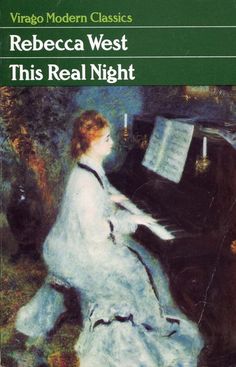
“In the courts of heaven”: Rebecca West, The Fountain Overflows

fountainPejorative generalizations about the ‘traditional novel,’ like debates over the ‘death of the novel,’ often seem to me unduly preoccupied with form, as if broadening the range of human possibilities expressed through fiction isn’t also a literary innovation or revision. The Fountain Overflows is a good reminder that  just because a novel is linear, has characters, and tells a story attached (however lightly) to life at all four corners, it isn’t necessarily derivative, tired, or predictable. All the way through it I was marveling how unfamiliar it was — even though to all appearances it is perfectly conventional. It is its own strange world, populated with utter conviction, and, best of all, told in West’s endlessly unexpected (and always, in unexpected ways, thrilling) sentences.

The Fountain Overflows tells the story of the formative years of the Aubrey children: Cordelia, Mary, Rose (who narrates), and Richard Quin. Their father Piers is a journalist and political radical, fierce, inspiring, improvident. His indifference to his family’s well-being is a palpable thing (“I had a glorious father,” Rose reflects, only to conclude the thought, “I had no father at all”), yet they are devotedly loyal to him even as their lives follow his erratic, disruptive path from job to job and patron to patron. Their mother Clare is a pianist whose brilliant career was cut short by illness. Her absolute, uncompromising commitment to music pervades the children’s lives and, ultimately, the novel, which turns out to be as much an exploration of art as a values system as it is a family saga. Though a sensational murder story takes over the plot of the novel at one point, it seems a drearily mundane crisis compared to the catastrophe that is Cordelia’s insistence on playing the violin. “Cordelia had no idea that she was not musical,” Rose explains, and once she began lessons, she had “shown an extreme and mistaken industry”:

She had a true ear, indeed she had absolute pitch, which neither Mamma nor Mary nor I had, which was a terrible waste, and she had supple fingers, she could bend them right back to the wrist, and she could read anything at sight. But Mamma’s face crumpled, first with rage, and then, just in time, with pity, every time she heard Cordelia laying the bow over the strings. Her tone was horribly greasy, and her phrasing always sounded like a stupid grown-up explaining something to a child. Also, she did not know good music from bad, as we did, as we had always done.

“It was not Cordelia’s fault that she was unmusical,” as Rose makes sure to acknowledge, but it does define her to Clare, to whom “Cordelia was someone who could not play the violin and insisted on doing so.” Worst of all, Cordelia’s technical proficiency deceives her pathetic teacher Miss Beevor into believing she has a great talent, and so the tension builds: how far will Miss Beevor’s insistence on fostering Cordelia’s “genius” take her? Will Cordelia ever realize that her playing is wholly inadequate? To her sisters, ruthless purists, her performances are an abomination:

Had the spirit of music appeared before her, it would have spanked her for there was nothing, absolutely nothing, in her performance except the desire to please. She would deform any sound or any group of sounds if she thought she could thereby please her audience’s ear and so bribe it to give her its attention and see how pretty she looked as she played her violin.

The contest between Cordelia’s determination to keep on playing and the visceral horror her “musical idiocy” arouses in her family is at once acidly hilarious, and — once we realize that Cordelia hopes her violin will be her ticket out of her family’s isolating poverty — tragic. That Cordelia is profoundly misguided in thus attempting to use music to her own ends is never in doubt, though: all the energy of the novel supports Clare’s dedication to the highest ideals of art, by which “being fit to play Beethoven to Beethoven and Mozart to Mozart in the courts of heaven . . . is the impossible aim that all pianists must hold before themselves.” One of the most moving moments in the novel occurs when seedy, leering Cousin Jock — a man with no saving graces otherwise — stuns the gathered family with an extraordinary performance of the flute solo from Gluck’s Orpheo and Eurydice:

When I had heard Cousin Jock play before, I had thought he played too perfectly; it was as if he had sold his soul to the devil for power of performance and naturally enough performed without a soul. But now his powers dwelt humbly and faithfully with the triply mystery of the music he had chosen . . . That passage is sublime as pure sound; the mere relationship between the notes must cause delight. It is also a clear rendering of the climate of the legend, of the pure light of imagined classic Greece. It also states what is felt by all human beings when they have suffered a deep grief which is still, because they are not barbarians, within control, but is yet irreparable, even if its consequences should be afterwards annulled. . . .

When he came to an end we sat silent in the darkness.

Any sense we might have had that their revulsion at Cordelia’s playing was absurd, or at least disproportionate — that to compain “the music was profaned” when she played was to take music too seriously — is dispelled as we share in the respectful hush. To be “row[ed] away to the land where people were who are not musical” seems an exile more painful than the more literal isolation of the Aubreys in their shabby suburban home.

So that is one great surprise and pleasure and provocation of The Fountain Overflows: it challenges us to think about what music really is, and what it is worth — which is another way of saying that the novel is about life, and what it is for. “What is music about,” Rose asks Mary near the end of the novel. “Oh, it is about life, I suppose,” answers Mary, “and specially about the parts of life we do not understand, otherwise people would not have to worry about it by explaining it by music.”

Rose and Mary — and, in her own way, Cordelia — are part of this cerebrally artistic world, but another fascination of the novel is that they are nonetheless children, and the novel also evokes the child’s world of imaginary animals and perverse adults who refuse to treat children as whole people. As the narrator, Rose seems anything but innocent, as she and her sister manage their unworldly mother and cope with their father’s eccentricities and withdrawals, yet she also reports things she sees but does not fully understand, West playing her point of view with Jamesian subtlety. She also (something else unexpected) accepts without question the presence of supernatural elements, from poltergeists at her cousin Rosamund’s home to her own ability to read minds — which, to her mother’s displeasure, she uses as a party trick. “We are Scottish,” Clare finally explains as she tries to deflect the interest Rose’s display has attracted; “we take these things more seriously than the English,” but the real reason is that Clare considers it unsafe to unleash these forces, which are not to be dismissed as childish fancies but rather repressed as only too real: “If there is a wall between the present and the future it is not for us to pull it down.”

The Fountains Overflow is apparently autobiographical: my Virago edition has an introducton by Victorian Glendinning that lays out the many connections between characters in the Fairfield family and those in the novel. I never know quite what this kind of information adds to our understanding of a novel: it’s not as if saying that Cordelia “is a portrait of Rebecca’s eldest sister Letitia” tells us what to make of Cordelia. It’s more revealing about West, really, that she would draw up such a portrait and then, apparently, have the nerve to dedicate the novel to Letitia, as if — what? she wouldn’t recognize herself in it? In a way, that would be the ultimate insult, perfecting the critique of Cordelia’s self-deception. I don’t know much about West’s personal life or character, but from that gesture I intuit that she (like Rose) put many qualities higher than kindness. There is in fact a cruel edge to The Fountain Overflows; that it’s expressed through aesthetics makes it none the less lacerating, and indeed another way of reading Clare and Rose’s musical idealism is as an elitism every bit as exclusive as the social snobbery the Aubreys disdain. Yet as I’ve said before, I think “the chief obligation of a writer . . . is not that she be nice but that she be interesting,” and I found The Fountain Overflows consistently interesting — not only for its intellectual preoccupations but for its human drama, which is as intense as it is bizarre. And I just loved turning every page wondering what sentence — funny or fierce, poetic or pathetic — would catch me up next.

“It is only War in the abstract that is beautiful”: Letters from a Lost Generation

poppyIn remembrance, from the Novel Readings archive.


This volume is subtitled “The First World War Letters of Vera Brittain and Four Friends: Roland Leighton, Edward Brittain, Victor Richardson, Geoffrey Thurlow.” The editors, Alan Bishop and Mark Bostridge, explain in their ‘Note to the Text’ that they have abridged the letters, sometimes significantly, in order to “lay bare the vivid and moving personal stories they tell, against the historical background of a cataclysm that destroyed four of the five writers.” In their ‘Introduction,’ they sum up the story the letters tell, one of “idealism, disillusionment, and personal tragedy.” Though excerpts always make me wonder whether the material omitted might have changed the story, there’s no doubt that the letters as presented here do follow just that arc. The four young men in the correspondence are all products of the British public school system which taught them the values they lived and then died for: “traditions of chivalry,” the editors explain, “the values of self-sacrifice, fair play, selfless patriotism, honour, duty.” War, in their view, was the ultimate proving ground for these qualities as well as their defense. Remnants of what can only look to us like a narrow-minded as well as naive idealism linger on throughout their letters, especially in their poignant wish to show courage in the face of incessant horror and imminent death: “I only hope I don’t fail at the critical moment,” writes Geoffrey, in what turns out to be his last letter to Vera, “as truly I am a horrible coward: wish I could do well especially for the School’s sake.” But it doesn’t take long for the realities of the trenches to disillusion them about war itself. “I used to talk of the Beauty of War,” Vera’s fiancé Roland writes to hear early in August 1915, “but it is only War in the abstract that is beautiful.”

After Roland’s death, in late December 1915, Vera’s brother Edward writes to her that Roland “considered that in War lay our one hope of salvation as a Nation, War where all the things things that do not matter are swept rudely aside and one gets down to the rock-bottom of the elementary facts of life.” Their friend Victor, the most militaristic of them (Geoffrey, in contrast, is the least militaristic, telling Vera that “he objects to War on principle”) argues at one point to Edward that “the Allies are God’s instrument by which He will remove that spirit and doctrine which is the cause of such Wars as this one.” To Vera, Victor writes that “The thing one appreciates in the life here more than anything else is the truly charming spirit of good fellowship & freedom from pettiness that prevails everywhere.” But these theoretical, wishful, or compensatory arguments are inadequate bulwarks against passages like this one:

I have been rushing around since 4 a.m. this morning superintending the building of dug-outs, drawing up plans for the draining of trenches, doing a little digging myself as a relaxation, and accidentally coming upon dead Germans while looting timber from what was once a German fire trench. This latter was captured by the French not so long ago and is pitted with shell holes each big enough to bury a horse or two in. The dug-outs have been nearly all blown in, the wire entanglements are a wreck, and in among this chaos of twisted iron and splintered timber and shapeless earth are the fleshless, blackened bones of simple men who poured out their red sweet wine of youth unknowing, for nothing more tangible than Honour or their Country’s Glory or another’s Lust [for] Power. Let him who thinks that War is a glorious thing, who loves to roll forth stirring words of exhortation, invoking Honour and Praise and Valour and Love of Country with as thoughtless and fervid a faith as inspired the priests of Baal to call on their own slumbering deity, let him but look at a little pile of sodden grey rags that cover half a skull and a shin bone and what might have been Its ribs, or at this skeleton lying on its side, resting half crouching as it fell, supported by one arm, perfect but that it is headless and with the tattered clothing still draped around it; and let him realise how grand & glorious a thing it is to have distilled all Youth and Joy and Life into a foetid heap of hideous putrescence. Who is there who has known & seen who can say that Victory is worth the death of even one of these? (Roland to Vera, 11 September 1915)

“It seems to me now,” Vera writes back soon after, “that this War is scarcely for victory at all, for even if victory comes it will be at the cost of so much else, so many greater things, that it will be scarcely worth having. No, this War will only justify itself if it puts an end to all the horror & barbarism & retrogression of War for ever.” After Roland’s belongings are returned to his family, Vera writes to Edward,

I was glad that neither you nor Victor nor anyone else who may some day go to the front was there to see. If you had been you would have been overwhelmed by the horror of war without its glory. For though he had only worn the things when living, the smell of those clothes was the smell of graveyards & the Dead. The mud of France which covered them was not ordinary mud; it had not the usual clean pure smell of earth, but it was as though it were saturated with dead bodies – dead that had been dead a long, long time. All the sepulchres and catacombs of Rome could not make me realise mortality and corruption as vividly as did the smell of those clothes.

“Dear child,” Edward writes to Vera after the news of Geoffrey’s death, “there is no more to say; we have lost almost all there was to lose and what have we gained?”

What’s so surprising and touching about their letters is not what was gained or lost, but what was somehow retained–in spite of everything, you never lose the awareness that they are just (just!) five young people making their way forward a day at a time, in the best way they can find. They have school memories and career ambitions, favorite novels and poems, families that frustrate as well as comfort them. They worry, too, about how the war might be changing them. “I don’t think,” Roland writes to Vera, “that when one can still admire sunsets one has altogether lost the personality of pre-war days. I have been looking at a bloodred bar of sky creeping down behind the snow, and wondering whether any of the men in the trenches on the opposite hill were watching it too and thinking as I was what a waste of Life it is to spend it in a ditch.” Geoffrey’s final letter (paraphrased in Testament of Youth) includes an evocative description  of the trenches in the setting sun, a line of men “outlined against a pale yellow sky with dark purple clouds low down in the sky: over to the right tall trees astride a river also looking gold in the last rays of the sun and beyond the river more ruined houses from which occasionally flashed a large gun.” Though his life will so shortly be wasted, he at least has not lost his ability to appreciate that “it was all quite beautiful.”

geoffreyGeoffrey’s letter ends with lines from Rupert Brooke’s sonnet “Safety” – “War knows no power safe shall be my going / Safe tho’ all safety’s lost, safe where men fall / And if these poor limbs die, safest of all.” (Vera to Edward: “I had a letter from him, within 3 days before his death, which was in all ways a farewell. . .. it made you feel that Death could not conquer a person of such fine & courageous natures.”) He had written earlier to Vera about Brooke: “Yes! I love Rupert Brooke & took him up with some of the other verses which Edward gave to me, to the trenches the last time but owing to wet, mud and squashed cake in my pack, which, the cake, seemed to permeate everything my edition is somewhat dilapidated now tho’ the dearer for that.” But much of their daily life is much more mundane than poetry, and that’s really where we realize “the pity of war.” There’s the long saga of Edward’s missing valise, for instance. Apparently claiming lost luggage wasn’t any easier in the trenches than it is with Air Canada: “I have got various papers on which to write my claim but I don’t konw when I shall have time to write it all out as it will probably take about 2 hours as it has to be done in duplicate,” he writes in some frustration to Vera, asking her to send along new shorts and sundries. Then there are his confidential remarks to Vera that he never seems to meet any “decent girls”–“Can you throw any light on the matter and do you think I shall ever meet the right one because at present I can’t conceive the possibility?” (Vera replies, “I think very probably that older women will appeal to you much more than younger ones”). These are the moments that restore these painfully young men to the normalcy that their extraordinary circumstances have stripped away, the moments that help us see them as our own sons or brothers or loved ones. “The reason why your last letter was so beautiful,” Victor writes to Edward in May 1916, “was because it was so very human. And after all to be human is better, and greater, and more beautiful than anything else.”

Originally posted March 14, 2012

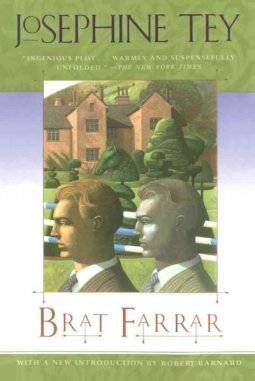
Josephine Tey, Brat Farrar: ‘Who are you?’ ‘Retribution.’

Brat Farrar

I’ve been rereading The Daughter of Time for decades, so it’s odd that until now I had never read another novel by Josephine Tey. Mind you, in some respects The Daughter of Time is sui generis. And indeed all Brat Farrar has in common with it is Tey’s refreshing prose and keen eye for character.

If I were writing one of those annoying sales blurbs for Brat Farrar, I’d describe it as “The Talented Mr. Ripley meets Flambards.” I’m reading it now, in fact, because it was one of two titles I came up with as follow-ups to my book club’s reading of Ripley: I went scouting for other books connected to it in some way (which is part of our selection process), and I discovered that there were two other classic suspense titles from around the same time featuring imposters and identity theft: Brat Farrar and Daphne du Maurier’s The Scapegoat. My book club voted for du Maurier, but I was too tempted by Brat Farrar not to order it as well.

Aside from the structural similarity of one man impersonating another, though, the two novels could hardly be more different, and of the two, much as I admired and enjoyed Highsmith’s deadpan sociopathy, it’s Brat Farrar that plays more to my personal tastes. For one thing, Brat — odd as he is — has a conscience, and so in this case a lot of the tension in the novel arises from his own discomfort with the fraud he’s perpetrating:

 He felt guilty and ill at east. Fooling [the lawyer] Mr. Sandal — with a K. C. sitting opposite you and gimletting holes in you with cynical Irish eyes — had been one thing. Fooling Mr. Sandal had been fun. But fooling Bee Ashby was another thing altogether.

Both protagonists are driven by a desire to belong, but in Brat’s case there’s a poignancy to his yearning:

He lay on the bed and thought about it. This sudden identification in an unbelonging life. He had a great desire to see this twin of his; this Ashby boy. Ashby. It was a nice name: a good English name. He would like to see the place too: this Latchetts, where his twin had grown up in belonging quiet while he had bucketed round the world, all the way from the orphanage to that moment in a London street, belonging nowhere.

 Later, when he’s well along in establishing his stolen identity, he is unexpectedly moved by a simple gesture from “his” Aunt Bee:

No one else had taken his hand in just that way. Casual but — no, not possessive. Quite a few had been possessive with him, and he had not been gratified in the least. Casual but — what? Belonging. It had something to do with belonging. The hand had taken him for granted because he belonged. It was the unthinking friendliness of a woman to one of her family. Was it because he had never “belonged” before that made that commonplace gesture into a benediction?

What Brat wants is not just to “belong” to a family but also to be part of the larger story Latchetts represents. Ashbys have lived there for generations: the estate — established but unpretentious, like its family (who will never change their traditional inn rooms for better ones when they attend the local agricultural fair) — represents the continuities and privileges of English country life. Brat is drawn into the scheme initially because he learns Latchetts is a stud farm and horses are his one love. This sets Tey up to include lots of horsiness in the novel, just for its own sake and for the fun of show-jumping and racing. But horses have histories, and thus they also embody that sense of lineage and tradition that Brat cherishes about Latchetts. He spends happy hours, in his new life as an Ashby, poring over the stud books: ironically, it’s his genuine passion for this part of the family lifestyle that makes him a better fit as master of Latchetts than Simon, the “brother” he displaced by showing up on the eve of Simon’s coming-of-age and bilking him of his inheritance.

Simon’s resentment at “Patrick’s” return from the dead is perfectly understandable, in the context of that displacement, and it stands to reason that as the one who loses the most by regaining his brother, he would be Brat’s chief antagonist — the chief skeptic about whether this young man who looks so much like him, and who knows so much about their family, their history, and their home, can actually be his long-lost brother. Surely it’s the heir who ought to represent and fight for the integrity of the line. That Simon’s resistance is both stronger and stranger than is completely accountable on those terms occurs, after a while, to Brat and to us, and thus the more sinister question arises: where was Simon when Patrick disappeared, presumably to his self-inflicted death? Could it be Simon himself who is the threat to the family and the estate? Is it possible that — what would it mean if — the interloper is a better Ashby than the one he supplants? How might Brat’s invasion become a tribute to the lost son of the house with whose life — and death — he increasingly identifies himself? “Out here in the open,” he reflects while riding the hills around Latchetts,

it had a reality that it had never had before. Up here, on that straggling path on the other side of the valley a boy had gone, so loaded with misery that this neat green English world had meant nothing to him. He had had horses like Timber, and friends and family, and a belonging-place, and it had all meant nothing to him.

For the first time in his detached existence Brat was personally aware of another’s tragedy.

“From being vaguely anti-Patrick,” he realizes, “he had become Patrick’s champion.” When he later confronts the man he holds responsible for Patrick’s death and is challenged to offer something “in return for my confidences,” he completes his transformation from invader to defender of the family:

“Who are you?”

Brat sat looking at him for a long time.

“Don’t you recognize me?” he said.

“No. Who are you?”

“Retribution,” said Brat.

But would exposure really be best — for the Ashby’s, for Latchetts, for his own hope of belonging? How can he prove his suspicions without revealing his own crime? And what’s to be done about the “sister” who arouses feelings in Brat that are not at all fraternal?

Some day the foundation of the life he was living here would give way; Simon would achieve the plan he was devising to undo him, or some incautious word of his own would bring the whole structure crashing down; and then there would be no more Eleanor.

It was not the least of his fears for the future.

Is there any hope that Brat can escape from the trap of his own making into a world where he really does belong and can be loved as himself? As Tey works her ingenious way through her story, the suspense of the crime plot becomes less interesting than the emotional and moral puzzle she’s created. And it’s beautifully fitting that the solution to that mystery, to “the problem of Brat,” turns on looking back through the records for connections and continuities that might turn a calculated deception into an unexpected restoration.

This Week In My Classes: Moving Right Along!

We seem to have passed that tipping point past which we hurtle towards the end of term. I feel as if it was only just the weekend, and tomorrow it will be Friday again! Happily, it will also be the Friday before a long weekend, which will give us all time to catch up, or rest up, a bit.

beckIn Mystery & Detective Fiction it continues to be a good term. For whatever reason, I have one of the most lively groups I’ve had in that class, with 15-20 students who pitch in regularly to discussion. In a class of about 80, that’s a pretty good percentage, especially considering that larger classes can themselves be intimidating. It makes the class time go by very fast, and it keeps me on my toes: the closer I stick to the notes I’ve brought in, the less likely I am to be asked a question I can’t answer easily enough, whether it’s about a detail of the plot or a broader issue of interpretation. In my own rereadings I don’t (I can’t) pay equal attention to absolutely everything, and I’m usually focused on the elements that are most important to what I’m planning to talk about. The more open the conversation, the more likely, in contrast, that I’ll discover what I don’t know, or know enough about. I like it, even if it’s sometimes disconcerting. I hope my having to say, occasionally, “Actually, I don’t know,” or “I really can’t remember — can anyone help me out by finding a relevant passage?” doesn’t undermine my students’ confidence in my expertise. Besides, keeping the plot of The Big Sleep straight is hard enough that Chandler himself couldn’t do it, right? This week we’ve wrapped up our discussion of The Terrorists, and tomorrow we start on Ian Rankin’s Knots and Crosses. In what’s probably becoming a boring refrain about readings for this class, I’ve been wondering for ages about switching it out for one of his longer, richer ones — but Knots and Crosses is usually a crowd-pleaser, and I do enjoy working through its Gothic twists and turns.

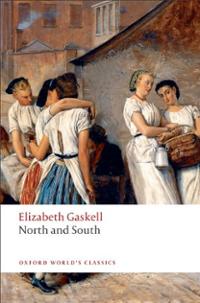
In 19thC Fiction from Austen to Dickens we are almost done our time on David Copperfield. It was a rocky start, but the last couple of classes have felt better to me, not just because the level of participation has been higher but because my own sense of what I want us to get out of the conversation is also improving. It has been feeling like a somehow spongier novel to work with than Bleak House or Great Expectations, and though I thought I had a lot of ideas about it, I haven’t been entirely clear in my own mind about how to bring them into focus. The further we read, though, the clearer Dickens’s own patterning becomes, and that has helped. Tomorrow we will have read up to the end of the amazing chapter called “Tempest,” so I’m going to focus on the three major crises of this installment (**spoiler alert**!): Micawber’s take-down of Uriah HEEP, Dora’s decline and death, and Steerforth’s drowning. We’ll talk about them as things that have to happen for David to complete his development — but why? I’ve got some suggestions about Steerforth and Heep as important examples of “not-David”: reflections of David himself that he has to outgrow or reject, figures of what he isn’t, or doesn’t want to be. (There’s plenty of critical writing about this that has been helpful to me as I’ve thought about this, including Oliver Buckton’s essay on ‘Homoerotic Secrets in David Copperfield” and Tara MacDonald’s on ‘race, sexuality, and Uriah Heep‘). As for Dora, I think it’s painfully obvious that she’s not the mature choice for David (some students have already expressed their shock that he actually marries her, instead of realizing his mistake in time). So we’ll talk about his love for her as evidence of his ‘undisciplined heart,’ I expect; I’m interested in why she’s presented with so much pathos and tenderness, too, rather than satirically, given how bad a choice she is. I expect we’ll tie his feelings for her into his love for Steerforth. There is something precious and beautiful in these mistakes, I think: just because childish love is not right (and may even be destructive) doesn’t mean the world would be a better place if we were all smart and knowing and invulnerable to error. My idea for our final class, next Wednesday (after the long weekend!) is to go through some of the claims made for David Copperfield in the context of ethical criticism, looking especially at work by Martha Nussbaum and Marshall Gregory, so trying to get at the value Dickens places on Dickens’s loving mistakes should be good preparation.

Maclise DickensI will be a bit relieved to be done with David Copperfield and on to North and South, which I know much better, but I do relish the challenge of working up a new novel, and I do think, too, that I should assign it again before too long, because teaching it is definitely a learning experience for me as well as for the students. I like the open-endedness of working through a novel without a strong pre-existing interpretation or set of priorities, but it is also hard to lead a discussion without being entirely committed to a particular direction! The ideal class discussion is a good blend of purpose and freedom: next time I think I will get closer to that.

The other major assignment I had this week was presenting to our graduate students’ professionalization seminar, something I also did last year (which prompted this post on whether graduate students should blog). I think it went fine! I have lots to say, and there was plenty of discussion and, as far as I could tell, interest. One thing I found myself stressing that I don’t remember feeling as strongly about last year was that there is exciting literate life outside the academy. My understanding is that the majority of our current cohort of MA students are not heading into PhD programs, and of course PhD students too need to be thinking about non- or alt-academic routes. Lately I have heard from quite a lot of students that they think about doing at least an MA because they want to continue the serious discussion of literature that they have enjoyed as undergraduates. So a new part of my “thinking of going to grad school?” talk is “but you don’t have to be in school to do that”! I don’t think I would have really understood that myself, despite having grown up among passionate readers, if it weren’t for the time I’ve spent among bloggers and reviewers in the last few years.

Uncritical: Jess Walter, Beautiful Ruins

beautifulruinsI have little to say about Jess Walter’s Beautiful Ruins. I enjoyed it very much — but it didn’t provoke me to critical thought. A symptom: not once, while reading it, did I reach for a pencil to jot down a note or a page number, which I almost always do — partly because I anticipate writing posts or reviews on most books I read, and partly because writing things down helps me bring my reading into focus. If I’m reading and discover I don’t have a writing implement nearby, I usually get more and more fretful until finally I discombobulate myself from whatever comfy position I’ve nestled into and go get one — and often some post-it notes, to boot, just to be on the safe side! But my copy of Beautiful Ruins is pristine.

In one sense, this is a good sign: a sign of the pleasure and ease with which I read the novel. But as I’ve reflected on the odd blankness I feel approaching it as a critic, I think it’s also the result of Walter putting some of the more interesting (provoking, challenging) moments of the story off-stage and letting us just carry on. We don’t, for example, go with Dee Moray as she makes her fateful choice between fame and family. We spend more time with Pasquale as he becomes man enough to take on his responsibilities as a father, but we only learn about the details, and the life that followed, in retrospect, and then it’s in the context of a reunion that idealizes a love that is, shall we say, more fantasy than reality. That’s fine, in a novel that’s a lot about how we live with and in our dreams , but for me that kind of love story requires a suspension of disbelief that does mean disengaging critically: oh, so it’s that kind of book, one in which two strangers meet for a short time, hardly communicate, and yet form a bond that survives decades of separate experience! It’s lovely, because it’s entirely non-ironic, and because the potential for it to be saccharine is controlled by its pathos and by the sharper edges of the other stories interconnected with it, some of which are acerbically satirical. But for me at least, its very loveliness makes it strangely uninteresting to talk about. As for those other stories  — well, the more I think about them, the less I want to talk about them either, because they start to seem kind of obvious riffs on predictable motifs for a Hollywood novel, but saying that devalues the fun it was to read them.

In the end I think I would have liked the novel better (and perhaps found more to say about it) if it had been a saga of a more traditional kind: sticking with our lovers through thick and thin, richer in context and depth and avoiding the borderline-too-clever interspersing of other styles and voices. But Walter’s right that his title neatly encapsulates the book’s unities: when he read the phrase used to describe Richard Burton (who has a cameo appearance), he tells us,

I immediately went back through the novel, stunned at how many times I had used words like ruins and rubble to describe the people and places, the remnants of the Hollywood system, the shards of our culture; the very novel itself was constructed of artifacts, bits of movies and books and plays.

And so it is.

This (therefore) will not have been a proper post. Sorry about that! But I do (perversely, perhaps) recommend Beautiful Ruins if you want a book that will take you to Italy, and to the movies, and to some funny and touching places along the way.

Weekend Miscellany: Ethical Criticism, Long-Awaited Reads, Literary Lines, and #AcWriMo

It’s the third dark, rainy day in a row, just the kind of weather to inspire gloom and brooding! Even David Copperfield isn’t entirely working its magic, not only because I don’t feel as if my class sessions on it have been going very well (in response to which I opted to not even try to elicit discussion on Friday — about which I now feel kind of guilty), but because we are deep into the Dora phase of the novel and I hate, hate, hate, HATE Dora. It helps a bit that I know perfectly well we aren’t supposed to adore her the way David does, but she’s still insufferable company, and I don’t like Agnes all that much better: this is the point in the novel at which I can understand why someone might turn against Dickens.

However! Happily, there are people on the internet doing more interesting things than grumbling, so I thought I’d revive an old habit and link around to some of them. I haven’t been a very linky blogger lately, and I feel bad about that, as I have always believed that the connections are a large part of what makes blogging fun, and the generosity of spirit I’ve found among bloggers, too, has always been one of my favorite things about the blogosphere. So without further ado, here are some posts that I’ve enjoyed this weekend.

sophyAt Something More, Liz gives a great example of ethical criticism in practice, as she works through concerns about the Goldhanger scene in Heyer’s The Grand Sophy:

I think Sophy’s judgment of Goldhanger (she tells him exactly what she thinks of his character) is of a piece with the other character judgments she makes in the novel, and the narrative asks us to accede to her judgments–something I do willingly in the other cases. We’re meant to think she is right about people. And her judgments about the right partners for her cousins are partly about who is “the right sort” in a class-based sense. It’s hard to articulate this (and maybe, really, it’s nonsense to see this as at least akin to judging people based on their class), because all the novel’s candidates for marriage are from aristocratic families, but they don’t all share the right aristocratic values and the right type of “good breeding.” Miss Wraxton may be “very English,” as the Marquesa says, but she is also Not Our Kind in some ways.

What I especially appreciate about her thoughtful exploration (brought on by listening to the book and thus being made more self-conscious about “every ugly word”) is that she doesn’t shy away from the problems but she also doesn’t become what Wayne Booth talks about as a “hanging judge.” We have complex responses and responsibilities when it comes to our moral differences from the past. It’s not enough just to say “well, people had different values back then” (because for one thing, even “back then” people did not all think the same — which is one reason why that’s such an inadequate response to the racism in Gone with the Wind). But it’s also inappropriate to say “well, I don’t agree with this book / author in every way and therefore this work is worthless” — though you might well conclude, as Lee Edwards did about Middlemarch, that it can’t be “one of the books of my life.”

At Things Mean a Lot, Ana announces the return of Long-Awaited Reads Month. I love this idea! It’s just the kind of little spur that will be helpful to make me pick up one thing instead of another when I’m browsing my shelves for my next read. I’m actually thinking that since a lot of my non-work reading is 20th-century fiction these days, I might use this as a spur to read one of the Victorian novels I keep meaning to get around to – Collins’s No Name, or Dombey and Son, or perhaps (inspired by Colleen and Tom) something else by Margaret Oliphant.

At Shelf Love, Teresa shows off an elegant Jane Eyre-inscribed coffee mug and invites us to post our own favorite literary lines. This turned out to be surprisingly hard for me! As she notes with a very good example from Dorothy Dunnett’s Pawn in Frankincense, some memorable lines don’t work well out of context. Also, some of my favorite bits are too long to fit on a mug — though I’m inspired now to think about how I might incorporate something from Middlemarch into my next effort at Clay Cafe. I did make my mother a tile there once with a line from Mrs. Dalloway on it — and I made a Jane Austen tile for my sister, too, that I was quite proud of. Do you think a mug that said “Children may be strangled, but deeds never” would give the wrong impression? How about a line of Mr. Casaubon products — perhaps a wall plaque that says “I trust I may be excused for desiring an interval of complete freedom from guests whose desultory vivacity makes their presence a fatigue”?

IMG_0909

Teresa also stepped up to provide a great list of choices for the Slaves of Golconda group to vote on. Participation has been a bit sparse recently, though the posts that do get shared are as interesting as ever. If you think you’d enjoy a group read and discussion, you’re welcome to participate.

And at Read React Review, Jessica outlines her admirable plans for #AcWriMo. I’ve never participated in anything like this myself, but her post made me think I should consider it: I have writing projects I want to get done, and it is sometimes difficult (practically and/or psychologically) to give them the time they need. I was also quite struck by her remark that the biggest obstacle to progress is not the internet, but the inner doubts about the value of the work that become “a recipe for staring at a blank screen until the urge to check Twitter takes over.” I’ve been contemplating a “proper” academic article on a book I’ve taught often but never written about. That seems to me a good concrete objective that would be well served by an #AcWriMo. But I am motivated less by a sense that writing and publishing in that way is the best way to share my ideas about it than by a nagging anxiety about the dearth of peer-reviewed publications at the top (i.e. ‘current’) part of my c.v. But the prospect makes me kind of claustrophobic. Shouldn’t the process be the other way around, anyway — shouldn’t I begin by believing that the conversation I want / need to join is going on in those pages (or among their readers)? A well-meaning colleague said to me a while back, after reading one of my Open Letters essays, that I should “really” publish it somewhere. Putting aside the casual ignorance about the way in which the piece was already published, it seems to me a genuine question why I would want it in a less accessible form. Confusions such as these about form and purpose do indeed become recipes for writer’s block and refuge on Twitter — so using Twitter for “social writing” and accountability might be a good thing.

Open Letters, November 2013!

olmcover

The November issue is up! Headlining it is Steve Donoghue’s review of Thomas Pynchon’s Bleeding Edge (spoiler: he doesn’t like it!). Other recent fiction reviewed includes Jhumpa Lahiri’s The LowlandChimamanda Ngozi Adichie’s Americanah, and Richard Kadrey’s YA novel Dead Set. Sam Sacks takes a look at a new book on Hamlet that “attempts to illuminate the play’s darker corners, and in the process provides useful glosses on some of the more rebarbative thinkers of the modern era”; Greg Waldmann reviews Collision 2012, another entry in the usually short-lived genre of the campaign book; Ivan Keneally explores what sounds like a wonderful exhibition of Sargent’s watercolors at the MFA; and our new poems for the month, from Katy Bohinc, take the form of letters to Alain Badiou. My contribution this time is a ‘second glance’ at one of my long-time favorites to read and teach, Wilkie Collins’s The Moonstone: I needed a break from disappointing contemporary fiction! Add in Irma Heldman’s regular mystery column and some well-chosen pieces from our archives (especially worth another look is John Cotter’s piece on Sargent’s El Jaleo), and that’s a wrap! Please go on over and check it out, and if you like what you find, help us get the word out.

Book Club: Patricia Highsmith, The Talented Mr. Ripley

talented-mr-ripleyMy local book club met Monday night to discuss The Talented Mr. Ripley. We were all newcomers to Highsmith, and though not everyone exactly enjoyed reading the novel (I definitely did), I think we were all intrigued and impressed by it — or perhaps I should say by her, and the quietly insidious way she got us on Tom’s side, even to the point that we would catch ourselves rooting for him at the worst possible moments.

How exactly does Highsmith pull this off? It’s certainly important that the novel keeps very closely to Tom’s point of view, but that doesn’t make it inevitable that we will fall into sharing his point of view: even with first-person narration, after all, we can learn to distance ourselves (think of the gap that opens up between us and, say, Stevens in The Remains of the Day, to pick just one of many possible examples). And it’s not that Highsmith plays any tricks on us with Tom. There’s no ambiguity about his actions; even the most horrific ones, which risk alienating us completely, are related with the same cool, remorseless detail as the scenery:

Tom glanced at the land. San Remo was a blur of chalky white and pink. He picked up the oar, as casually as if he were playing with it between his knees, and when Dickie was shoving his trousers down [to go swimming], Tom lifted the oar and came down with it on the top of Dickie’s head.

“Hey!” Dickie yelled, scowling, sliding half off the wooden seat. His pale brows lifted in groggy surprise.

Tom stood up and brought the oar down again, sharply, all his strength released like the snap of a rubber band.

There’s an element of horror, but there’s an equally strong feeling of impatience: Die already, Dickie! And why is it so hard to get you overboard? Much later, when Marge finds Dickie’s rings, don’t we wait with Tom to learn her fate, not so much with dread as with anticipation? To be sure, he’s not looking forward to “beating her senseless with his shoe heel,” but just as “his stories were good because he imagined them intensely, so intensely that he came to believe them,” this story is good because somehow we come to believe in Tom as our guy — the guy we’re interested in and thus, however perversely, rooting for.

How can this happen, though? Is he like Becky Sharp or Shakespeare’s Richard III — an anti-hero we appreciate because at least he’s active? It’s true that Tom is more interesting than any of the other characters. It’s partly that he’s busy, and it’s suspenseful wondering what he’ll come up with next and how he’ll get away with it. His constant spinning of new stories, duly adjusted to fit the new facts in evidence, is actually quite the feat; it’s remarkable that he manages to keep all the details straight. I wonder if some of the readerly pleasure the novel offers, as well as our investment in Tom himself, doesn’t come from his creativity, which is itself quite novelistic. There’s also not much about the other characters — especially his victims — to make us really care what happens to them. It’s an old trick of the mystery novelist to offer up an unsympathetic corpse, to minimize the tragedy and maximize the suspects — but we are still supposed to root for the detective, not the murderer, whereas here we have a decentered crime novel, one in which there’s no mystery, no anchoring moral weight from the detective or the police — who here are just risks and obstacles in Tom’s plots.

And Tom himself is not completely despicable. Indeed, for a sociopathic killer, he’s really quite an ordinary guy, even kind of a sad one. Is it because it’s possible to feel sorry for Tom that it’s hard to completely condemn him? He seems a kind of Everyman. He’s a dreamer. He wants such simple things: acceptance, friendship, a place to belong, a better life. Oh, and not to be himself. Is that so strange? Who hasn’t wanted to be someone more successful or interesting? It’s so much better being Dickie than Tom, or so he thinks:

He hated becoming Tom Ripley again, hated being nobody, hated putting on his old set of habits again, and feeling that people looked down on him and were bored with him unless he put on an act for them . . . He hated going back to himself as he would have hated putting on a shabby suit of clothes, a grease-spotted, unpressed suit of clothes that had not been very good even when it was new.

The path he’s chosen, too, isn’t an easy one: “it was a lonely game he was playing.” Secrets and lies — and Tom has so many, tells so many — isolate us from each other.

If only that were the wholesome lesson of The Talented Mr. Ripley: that it’s better to be ourselves and genuine than to play a part (OK, steal an identity) and be alone (better Tom Ripley dissatisfied than Dickie clobbered and dead?). But there’s no such comforting conclusion to Tom’s adventures. Instead, he walks away with “Dickie’s money and his freedom.” Is that the point, that there’s no harm in doing as he has done — and there might even be profit in it? No again, for even Tom realizes that “he’s going to see policemen waiting for him on every pier.” That’s a relief, anyway.

This Week In My Classes: Fictions of Development – Brontë, Dickens, and P. D. James

oxford jane eyreWe had our last class on Jane Eyre in 19th-Century Fiction on Monday. Reflecting on my own diminishing enthusiasm for the novel, I’ve been thinking that one of my problems is not only over-familiarity but also difficulty seeing the novel anymore — it just doesn’t rise fresh from the page anymore but comes trailing clouds of interpretation. Why is this any different from any other novels I assign? I’m not sure! But somehow Jane Eyre just feels blurry to me now rather than sharp and exhilarating. I’m not saying I couldn’t work up any enthusiasm for it, especially during class discussion or while talking through essay ideas with students. And I’m certainly not saying I don’t think it’s a great and important novel. I just think it’s time to put it on hiatus from my syllabus for a bit. Maybe next time around I should take the plunge and assign Wuthering Heights instead. I’ve subbed in The Tenant of Wildfell Hall a few times, and it is one of my very favourites to read and to teach, but I’ve never actually taught Wuthering Heights, mostly because I have never liked it. And really, what kind of excuse is that?

Next up for us in this class is David Copperfield. This is all going to be quite fresh, as I come into it with no stash of pre-existing teaching materials or lecture notes. I’ve been mapping out a tentative set of topics for each of our eight (eight!) class meetings but I also want to defer some planning until I see how discussion goes. Also, given the luxury of so many sessions (it takes time, after all, to read 855 pages) I want to use more class time for group discussion and perhaps some collaborative exercises, in addition to the usual mix of call-and-response ‘lecture’ time. Today I did lecture for most of the time, setting up some context for Dickens himself and also some frameworks I hope will be helpful as they read on. One thing I wanted to address up front, for example, was the question of “excess.” I quoted that bit by Nick Hornby about the current preoccupation with “spare” writing and made some suggestions about what ethos is served by an aesthetic of abundance, from a principle of social inclusivity to an anti-utilitarian joy in the sheer possibilities of language and story-telling.* I also usually start a big novel like this with some suggestions about information management: the idea that Dickens’s novels are often structured as a ‘theme and variations,’ for instance. Motifs that get started right away in David Copperfield include bad husbands and child wives, education, parenting, and childhood: on Monday we’ll have a less structured discussion just collecting lots of examples under some of these headings to get a preliminary sense of what pattern emerges, and we’ll spend time, too, just getting to know the people. I’ll probably leave careful discussion of David’s narration until a bit later, but we’ve worked on retrospective narration as an important feature of Jane Eyre, so we should be ready to think about its effects here too. Oh, how I hope they get some pleasure out of the novel! I urged them today to let themselves have fun with it, which means, among other things, making sure to manage their time well enough that they aren’t reading it in such a rush that its length is just frustrating.

unsuitableIn Mystery and Detective Fiction we are also working on a story about growing up, P. D. James’s An Unsuitable Job for a Woman. One of the things I usually emphasize when teaching this novel is the extent to which James is self-consciously working less in the tradition of the sensation or crime novel than of the domestic realists of the 19th-century. She cites Austen in particular as an influence, along with Trollope and George Eliot. Her interest in moral questions is really clear in this novel, which is one of the darkest in this course — not because the crime is necessarily the most violent (though I wonder how exactly we would measure that!) but because, as Cordelia reflects, it comes from something “stronger than wickedness, cruelty or expedience. Evil.” “Evil” is a strong word, and a powerfully moral one. It also has theological connotations, but it’s a strictly, and shockingly, human form of evil that plans and executes Mark Callender’s horrible death. Monday, when everyone should have read to the end, we’ll focus on the confrontation between Cordelia and the murderer, which continues a very Victorian theme of love countering calculation — the language of the killer is explicitly utilitarian, though in the narrowest sense of that philosophy. We’ve been talking about Cordelia’s youth and what will be required for her to grow up into a successful private investigator: will she have to outgrow things like compassion, give up getting personally involved, in order to become professional? Does a P.I. have to be tough? I find James’s exploration of this problem (an ongoing one for female private investigators especially) subtle and interesting. Unsuitable Job is one of my favourite books on the class list — but it is typically the least popular one (well, next to The Moonstone) on class evaluations. I might swap it out next year for something new, not because I don’t think it works well in the course but because of all the books assigned it’s probably the least integral to the overall history of the genre we trace out over the term. If I took it out, maybe I could also take out Knots and Crosses and then replace the two together with a longer, more complex Rebus novel. On the other hand, there is a strong preference among students in this class for shorter books, so that might be risky. (Why am I already thinking about next year? Because we’ve already had to work out our offerings, which means the call for class descriptions and at least tentative reading lists can’t be far away.)

*As an aside, I asked if they had heard of Nick Hornby and they didn’t recognize him at all until I linked his name to a couple of film adaptations of his books. I seem to draw blanks all the time now when I try to make connections from our readings to other books — in class but also one on one with students. This has me wondering, since a lot of my references are not (I don’t think) to particularly obscure writers: what are they reading? Perhaps (as they often say) they don’t have time to read outside of class, but I don’t get the impression that they are much engaged with books in kind of a general way, or with the ‘book world’ reflected through reviews or prizes — much less blogs. This is only a very cursory impression, of course, but it has me thinking about how we could do more as a department to connect what we do with what goes on with books elsewhere, which is of course the ongoing motivation of this blog!